Willamette Valley · Oregon
Living in Corvallis: The Ultimate Relocation Guide (2026)
Maybe you've been watching the Portland market for two years and finally accepted that $700,000 doesn't buy much in the city anymore. Maybe your partner just accepted a position at Oregon State University, or you've been quietly researching mid-sized college towns with good schools, real seasons, and a downtown you can actually walk. Maybe you drove through Corvallis on a foggy November afternoon and thought it seemed smaller than expected — and you're not sure if that's a problem. Here's the tension no one leads with: Corvallis is one of the most intellectually alive, naturally beautiful, and genuinely walkable cities in Oregon, and it's also a university town where the housing market is chronically undersupplied, the median resident age is 27, and roughly half the social energy in any given coffee shop is attached to a student ID.
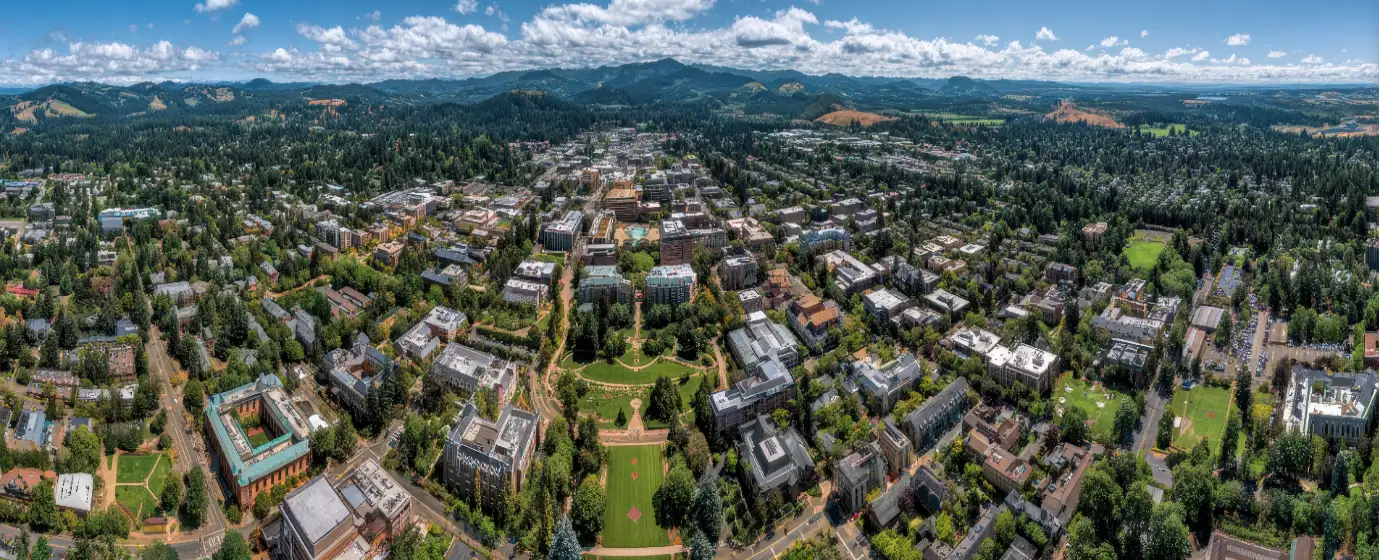
Geographically, Corvallis sits in the heart of the mid-Willamette Valley, roughly midway between Portland and Eugene along Highway 99W, with the Pacific Coast Range rising to the west and the Willamette River defining its eastern edge. The city is surrounded by farmland and forest, with Oregon State University occupying a 422-acre historic campus that functions as the city's gravitational center — economically, culturally, and socially. Getting to Portland takes about 90 minutes on a good day; Eugene is a 45-minute drive south. The city's roughly 61,250 residents include a large student population that cycles in and out, which shapes everything from rental vacancy rates to which restaurants survive.
This guide is built for the buyer or renter who needs to understand Corvallis before committing — not the version of the city that shows up in listicles, but the one that shows up in month seven, when the rain has settled in and you've figured out which side of town you should have looked at first. We'll cover who Corvallis genuinely suits, what the housing market looks like right now, which neighborhoods fit different budgets and lifestyles, and the honest reasons some people love it here forever while others pack up after two years.

Corvallis isn't a city that works for everyone. It works exceptionally well for specific types of people — and understanding whether you're one of them will save you a frustrating first year.
| Best For | Why |
|---|---|
| OSU faculty, staff & affiliated professionals | Campus access on foot or bike; social life tied to university events; stable employer base |
| Families with school-age children | Above-average public schools, strong parks system, low violent crime rate |
| Remote workers who want a livable small city | Affordable relative to Portland, fast internet, downtown walkability, no sales tax |
| Retirees downsizing from larger metros | Quiet residential neighborhoods, OSU lifelong learning programs, excellent medical access via Good Samaritan |
| First-time buyers priced out of Portland | Entry point roughly $150,000 below the Portland metro median; real ownership is achievable here |
| Outdoor enthusiasts | Bald Hill Natural Area, Chip Ross Park, Peavy Arboretum, and Coast Range trailheads all within 20 minutes |
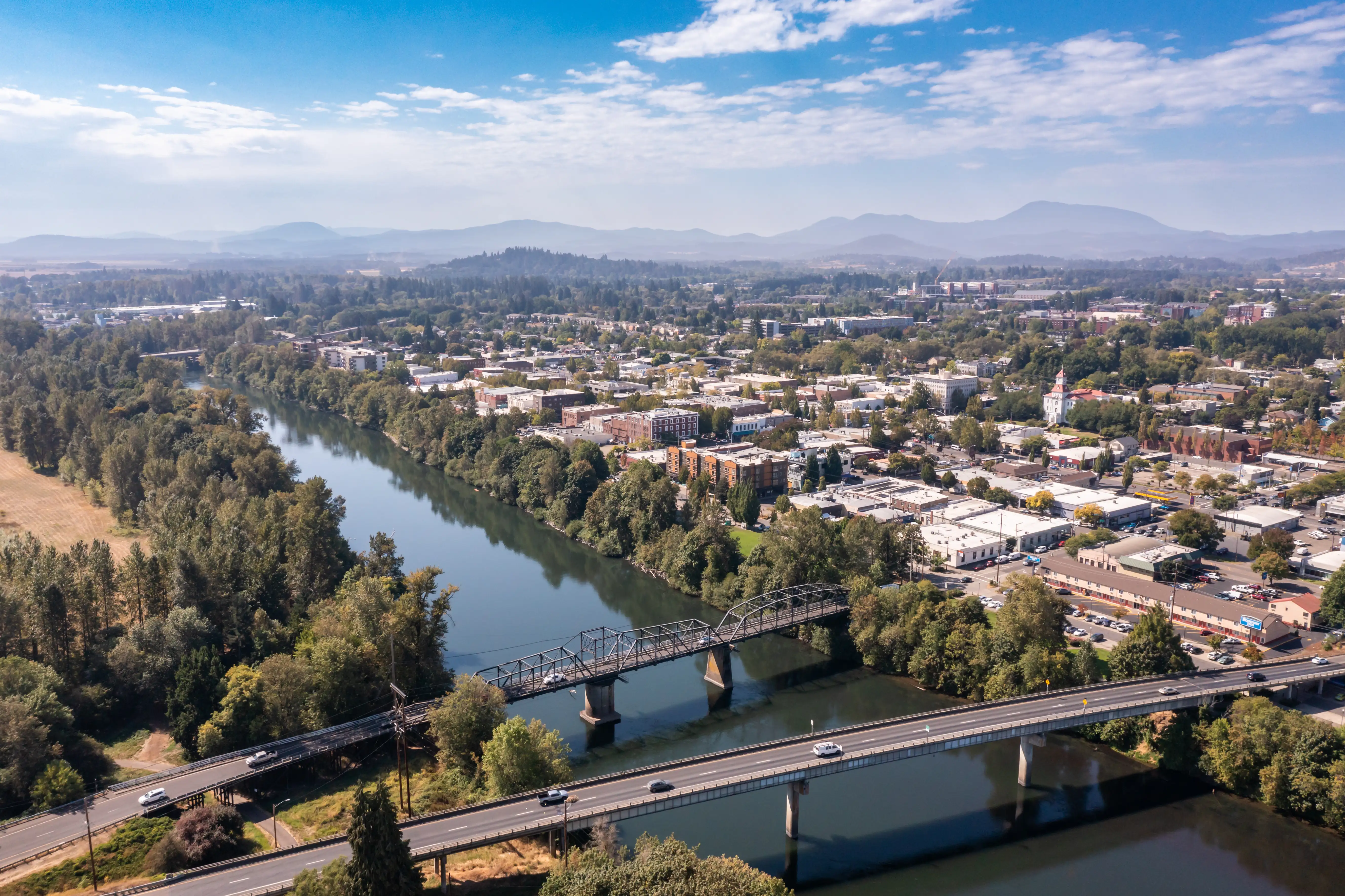
The first thing most newcomers notice is how much of daily life in Corvallis happens outdoors and on foot. The city has an exceptionally developed trail and bike network — OSU's campus and the Riverfront Commemorative Park along the Willamette create a continuous greenway that connects large parts of the city without requiring a car. On any dry afternoon, the path from downtown to Avery Park fills with cyclists, joggers, and families pushing strollers, which gives the city an energetic, unhurried quality that's genuinely unusual for a city its size.
The OSU campus is woven into the city's daily life in ways that are both a feature and a friction point. The university is the city's largest employer, its largest cultural venue, and its most consistent source of community programming — Reser Stadium on a fall football Saturday transforms the entire downtown. But the student population also means a significant portion of residents are transient, which can make certain neighborhoods feel less rooted. Blocks near the campus core see more rental turnover than most buyers expect.
Downtown Corvallis is real downtown, not a tourist strip. The stretch along 2nd and 3rd Streets includes independent restaurants, coffee shops, bookstores, and a Saturday farmers market that locals treat as a genuine weekly ritual. The average commute inside the city runs about 13 minutes, and for many residents living west of campus, the commute is measured in bike minutes rather than drive times. That said, getting to Portland or Salem for anything not available locally means a 90-minute commitment each way — and that reality shapes which types of buyers ultimately stay.
The city's median age sits around 27, skewed heavily by the student population. Families with school-age children and retirees often find that the city's social fabric feels more peer-like once they connect with neighborhood groups, OSU programs, or the Corvallis Advocate community. The non-student permanent population is tight-knit, highly educated, and genuinely engaged in local government and civic life — Corvallis has the feel of a city where people actually show up to city council meetings.
Oregon State University is the economic and cultural spine of this city, and for residents connected to it — or simply adjacent to it — that's an extraordinary asset. OSU's status as an R1 research institution means constant intellectual programming, world-class speakers, arts events through the Lois Westerfield Illumination Gallery, and athletics across a dozen sports. The university's campus itself is a National Historic District, the only one of its kind in Oregon, and the 422-acre arboretum doubles as public greenspace.
The outdoor access in and around Corvallis is genuinely exceptional without requiring a long drive. Bald Hill Natural Area on the city's western edge offers 1,200 acres of trails with panoramic valley views. Chip Ross Natural Area connects via trail to McDonald-Dunn Research Forest, which gives hikers and mountain bikers access to tens of thousands of forested acres. Peavy Arboretum, managed by OSU's College of Forestry, adds another 40 acres of old-growth and planted forest within 10 minutes of the city center. For buyers weighing lifestyle against price, this level of trail access at this distance from a walkable downtown is genuinely rare in Oregon.
The public school quality here outperforms what the city's size would predict. The Corvallis School District consistently scores above the state average in both math and reading proficiency, and schools like Bessie Coleman Elementary, Franklin School, and Kathryn Jones Harrison Elementary carry strong reputations with families who've relocated from competitive metro districts. The district's student-teacher ratio and overall Niche rating place it comfortably in the top 20% of Oregon public schools — a meaningful data point for households prioritizing education in their location decision.
Oregon's lack of a sales tax compounds every purchase made in Corvallis, and while it sounds minor, it adds up meaningfully for households buying appliances, vehicles, outdoor gear, or furnishings. Combined with home prices that remain $100,000–$150,000 below the Portland metro median, the city offers a quality-of-life calculation that remote workers and transplants increasingly notice. Good Samaritan Regional Medical Center, operated by Samaritan Health Services, provides a high level of medical care without requiring a drive to Portland — and for families and retirees, that proximity matters more than it appears on a spreadsheet.
Looking to buy in Corvallis? Estimate your payment.
Enter your numbers to see an estimated monthly mortgage payment.
Estimate only. Excludes HOA fees and mortgage insurance.
The housing cost-to-income gap in Corvallis is one of the most important things buyers need to understand before falling in love with the city. The median sold price sits at approximately $568,000 as of mid-2026, while the median household income runs around $65,000. That's a home value-to-income ratio of roughly 8.7x — among the highest in mid-sized Oregon cities, and a figure that has made Corvallis the most rent-burdened community in Oregon by some state assessments. The city is beautiful and livable, but it is not cheap relative to local wages, and buyers who aren't bringing Portland-level equity or dual professional incomes should run the numbers carefully.
The weather deserves an honest paragraph. Corvallis sits in the Willamette Valley, which means 150+ overcast or rainy days per year, concentrated between October and April. This isn't the dramatic Pacific rain of the coast — it's persistent gray drizzle punctuated by stretches of fog. Most people who grew up in the Northwest barely register it. Transplants from California, the Southwest, or the Midwest sometimes find that the cumulative effect by February is heavier than expected. The summers, however, are among the best in the country: long days, low humidity, and temperatures that rarely exceed the mid-80s.
The commute reality is straightforward: Corvallis is not a suburb of anything. If your job is in Salem, the drive runs 45–50 minutes each way. Portland is 90 minutes in good traffic, which is not always available on Highway 99W or I-5. Buyers who are fully remote or whose employer is OSU, Samaritan Health, or HP rarely feel this constraint. But buyers who are considering a "compromise" — living in Corvallis and commuting to a Portland employer two or three days per week — often find the drive more fatiguing than the map suggests, particularly on the two-lane stretches of 99W through Adair Village and Monmouth.
Why do some people leave? The honest reasons are: limited job market diversity outside of OSU and healthcare, a social scene that can feel heavily oriented toward students for permanent residents who aren't connected to the university, and housing costs that outpace local wages when families grow and need more space. Corvallis also has essentially no nightlife infrastructure for people who want that — it's a city of excellent coffee shops, craft breweries, and Saturday markets, not clubs, late-night venues, or a dense entertainment district.
Downtown Corvallis centers on 2nd and 3rd Streets between Van Buren and Harrison, where independent retail, restaurants, and the weekly Saturday Farmers Market create a genuinely walkable core. Homes here are often older craftsman and Victorian-era properties, and they come at a price premium for buyers who want to walk everywhere. The median sold price city-wide runs approximately $568,000, but well-maintained historic homes on downtown blocks can push significantly higher.
Best for: Professionals and empty nesters who want walkable access to restaurants, OSU events, and the riverfront trail without owning two cars.
College Hill sits immediately west of the OSU campus and contains one of the densest concentrations of rental housing in the city. Single-family homes here attract buyers who want proximity to campus — either because they work at OSU or because they see rental income potential — but the neighborhood's character is shaped heavily by student occupancy. Owner-occupant buyers who want quiet residential streets will likely be more satisfied elsewhere.
Best for: OSU-affiliated buyers or investors comfortable with a high-renter neighborhood and strong rental demand year-round.
Northwest Corvallis is the city's most consistently competitive submarket, with a median sold price of approximately $571,000 as of early 2026 and individual four-bedroom homes in the Timberhill area exceeding $1 million. The housing stock ranges from 1970s ranch-styles and split-levels to newer two-story homes, with the corridor offering trail access, strong schools, and the Timberhill shopping area's practical amenities. Buyers looking here should expect multiple-offer situations on well-priced listings.
Best for: Families with children who want trail access, strong school proximity, and a neighborhood with long-term resale value.
South Corvallis is the most price-accessible part of the city, with a median sold price closer to $500,000 — roughly $70,000 below the city median. The tradeoff is distance: getting to downtown, OSU, or the west-side trail network requires a drive, and the area's commercial infrastructure is thinner than other quadrants. For first-time buyers who've been priced out everywhere else, South Corvallis is often where ownership first becomes mathematically possible.
Best for: First-time buyers prioritizing ownership over location optimization, and households comfortable with car-dependent daily routines.
West Hills sits at the city's western edge, where residential streets begin to give way to forest and the trailheads for Bald Hill Natural Area are genuinely walkable from some addresses. Homes tend to be larger and on bigger lots than the city average, and the neighborhood attracts buyers specifically for the outdoor adjacency — morning trail runs from the back door rather than a drive to the trailhead. Prices reflect the premium: expect the upper range of the city-wide market.
Best for: Outdoor-focused households who want forest access as a daily reality, not a weekend trip.
Timberhill functions as Northwest Corvallis's commercial and residential anchor, centered around the Timberhill Shopping Center on NW Tyler Avenue, which provides grocery access, services, and practical daily amenities without driving downtown. The residential streets surrounding the shopping area contain a mix of 1980s and 1990s construction — generally larger, well-maintained homes with established landscaping. This is one of the most practical neighborhoods in the city for families who want convenience and school quality in the same ZIP code.
Best for: Families who want grocery and errand access walkable from home without sacrificing neighborhood quality.
Willamette Landing is a newer planned community along the eastern side of the city near the Willamette River, offering more contemporary construction than most of Corvallis's housing stock. The neighborhood's proximity to the river and newer infrastructure attracts buyers who want move-in-ready homes with modern floor plans. It's somewhat removed from downtown and campus, which keeps it quieter — and slightly more affordable than the northwest quadrant's premium addresses.
Best for: Buyers who want newer construction, river proximity, and a quieter residential feel without paying Northwest Corvallis prices.
Grand Oaks is a newer residential development in South Corvallis featuring contemporary homes with larger lots than the urban core, appealing to buyers who prioritize space and newer construction. The neighborhood's southern location means longer drives to downtown and campus, and the area lacks the established tree canopy and neighborhood character of older west-side communities. For families who need square footage over proximity, the price-per-foot calculation often works in Grand Oaks' favor.
Best for: Growing families who need more space than the city's older neighborhoods typically offer and are willing to drive for it.
| City | Best For | Median Home Price | Commute to Portland | Vibe |
|---|---|---|---|---|
| Corvallis | University-connected professionals, outdoor lifestyle, school quality | ~$568,000 | 90 min | College-town intellectual, walkable, rainy |
| Albany | Budget buyers, blue-collar workforce, commuters | ~$365,000 | 75 min | Working-class historic, less amenity-dense |
| Philomath | Rural feel near Corvallis, acreage buyers | ~$440,000 | 95 min | Small-town, OSU-adjacent, outdoor-oriented |
| Eugene | Larger city amenities, University of Oregon | ~$430,000 | 115 min | Progressive university city, more urban options |
| Salem | State government employment, metro access | ~$395,000 | 50 min | State capital, commuter-friendly, sprawling |
| Lebanon | Maximum affordability, rural character | ~$310,000 | 85 min | Rural small-town, limited services, tight-knit |
| Metric | Figure |
|---|---|
| Population (2025 estimate) | ~61,250 |
| Median sold home price (mid-2026) | $568,000 |
| Median household income | $65,012 |
| Property tax rate | ~1.01% |
| Violent crime per 1,000 residents | 1.8 |
| Property crime per 1,000 residents | 25 |
| Average commute (local) | ~13.6 minutes |
| School district rating | B+ (Niche, above average) |
| Major employer | Oregon State University |
| Oregon sales tax | None |
The Saturday Farmers Market is a genuine civic institution. Held in Central Park from April through Thanksgiving, it draws a consistent crowd of locals — not as a tourist attraction but as an actual weekly food-shopping and social ritual. Regulars have their vendor relationships, their market coffee order, and their routes through the stalls. New residents who show up expecting a typical farmers market often leave a little surprised by how large, how organized, and how seriously the city takes it.
OSU's Civil War rivalry weekend reshapes the city. When the Beavers host the Ducks, downtown Corvallis and the areas around Reser Stadium experience a population surge that's hard to describe without seeing it. Parking near campus becomes functionally impossible, local restaurants operate with hour-long waits, and visitors from Eugene fill the hotels. Residents who know this — and adjust accordingly — experience it as electric. Residents who didn't know and scheduled a move-in weekend near a home game do not.
The bike culture here is unlike most cities its size. Corvallis consistently ranks among the most bicycle-friendly cities in the nation, and the infrastructure backs that up: dedicated lanes on major corridors, a connected trail network, and a culture where cycling to work or school is a genuine daily choice for a significant portion of residents. Newcomers from car-centric metros are sometimes surprised to find that the bike lane on Monroe Avenue is legitimately busy at 8 a.m. on a Tuesday.
What I Would Not Do: Don't buy in the blocks immediately adjacent to OSU's Greek Row or the dense rental corridors along NW Kings Boulevard without spending a Thursday night in the neighborhood first. The daytime character of those blocks is pleasant enough, but the evening and weekend dynamic during the academic year is fundamentally a student environment. Owner-occupant buyers who purchase there based on proximity to campus frequently report noise and parking frustration that wasn't apparent during a Sunday afternoon showing.
Local Expert Takeaway: If you're serious about Corvallis, prioritize Northwest Corvallis and the Timberhill corridor for the best combination of school access, trail proximity, and long-term resale strength — but go in understanding that $568,000 is the median, not the entry point, in those neighborhoods. South Corvallis around the Grand Oaks and Willamette Landing areas offers the most realistic path to ownership if your budget is closer to $450,000–$500,000. Whatever quadrant you're targeting, plan your offer timeline around OSU's academic calendar: inventory typically improves in June and July when faculty relocations peak, and competition softens slightly compared to the spring buying rush.
✅ Corvallis delivers genuine quality of life — walkable downtown, excellent schools, extraordinary outdoor access, and a university that brings consistent economic and cultural energy to a mid-sized city.
⚠️ The housing cost-to-income gap is real. At roughly 8.7x the median income, Corvallis homes are not a bargain relative to local wages. Buyers coming from equity-rich Portland sales or dual-professional households will find the market manageable; buyers relying on a single local-market income may find ownership a significant stretch.
📍 Location within the city matters enormously. Northwest Corvallis and Timberhill offer the best daily-life combination of trail access, school quality, and amenity proximity. South Corvallis is the most affordable quadrant. Understand the tradeoffs before you fall in love with a specific listing.
Is Corvallis a good place to raise a family?
Yes — Corvallis is widely considered one of the stronger family environments in mid-sized Oregon cities. The Corvallis School District consistently outperforms state averages in math and reading, the violent crime rate sits at 1.8 per 1,000 residents, and the trail and parks system gives families genuine outdoor infrastructure within the city. The main caveat is housing cost: families who need three or four bedrooms will be working with a market where the median sits above $568,000.
What is the cost of living like in Corvallis compared to the rest of Oregon?
Corvallis runs roughly 9% above the national average in overall cost of living but sits about 13% below Oregon's state average — meaning it's genuinely more affordable than Portland or Bend while still being more expensive than Albany or Lebanon. Oregon's lack of a sales tax and Corvallis's food and transportation costs, which track below national averages, help offset the housing premium. The city's biggest cost outlier is housing, where prices run approximately 74% above the national average.
How does Corvallis compare to Albany for someone considering both?
Albany's median home price runs roughly $200,000 below Corvallis's, which is the number most buyers lead with. What the number doesn't capture is the difference in walkability, school quality, amenity access, and the economic stability that Oregon State University provides. Albany is a practical, affordable city with an improving downtown; Corvallis has a richer cultural and outdoor infrastructure. The decision typically comes down to whether the buyer's income is local-market-based — in which case Albany's affordability may be necessary — or whether they're bringing outside income and prioritizing lifestyle, in which case Corvallis's premium is easier to justify.
Explore the full Corvallis series: The Ultimate Corvallis Relocation Guide · Is Corvallis Safe? · Cost of Living in Corvallis · Best Neighborhoods in Corvallis · Corvallis Schools & Family Life · Corvallis Youth Sports · Corvallis Parks & Recreation · Retiring in Corvallis · 1031 Tax-Deferred Exchange in Corvallis · Corvallis First-Time Homebuyers Guide · · Moving to Corvallis from California
Tell us what you need help with and we'll connect you with local resources.

About the Author
Todd Davidson is the founder of Living in Oregon and Living in Washington, where he publishes in-depth city guides, neighborhood resources, and local market insights covering more than 180 communities across the Pacific Northwest. While his background is in home financing and real estate, he created these digital platforms to help families research and compare regions before making a move.