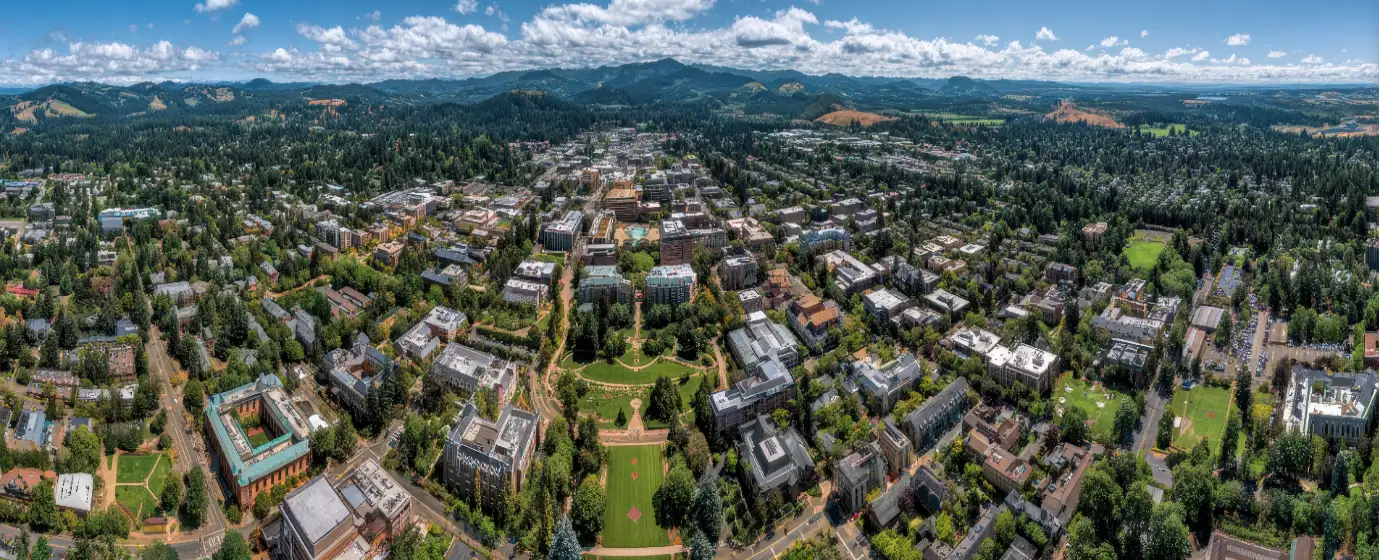
Willamette Valley · Oregon
Best Neighborhoods in Corvallis: Where to Buy or Rent (2026)
Corvallis is not a city where you can throw a dart at the map and land somewhere livable. The difference between buying on the northwest side versus south of town — or renting a block off campus versus two miles away — plays out in daily life in ways that no listing price can capture. Get the neighborhood wrong and you're dealing with a commute that didn't need to exist, a school boundary you didn't expect, or a rental market driven entirely by the academic calendar.
The geographic logic here runs on two axes: proximity to Oregon State University and elevation. The university anchors the city's eastern and central core, pulling rental demand, foot traffic, and historic housing stock toward its edges. The hills to the west offer views, quiet, and newer construction — but trade away walkability and, in some cases, easy access to the highway. South Corvallis is the city's most affordable quadrant and its fastest-moving submarket right now. The northwest is the family-oriented growth corridor. These distinctions matter when you're making a six-figure decision.
This guide breaks down the eight most significant Corvallis neighborhoods in detail — what they actually feel like to live in, what the trade-offs are, and who each one suits best. Whether you're a buyer comparing price-per-square-foot on quiet streets or a renter figuring out where to land before you know the city, the sections below will help you narrow your focus before you start scheduling showings.

| Neighborhood | Best For | Price Range | Vibe |
|---|---|---|---|
| Downtown | Renters, walkers, urban lifestyle seekers | $450K–$650K | Walkable, eclectic, lively |
| College Hill | OSU-adjacent buyers, investors | $420K–$580K | Historic, student-heavy, character-rich |
| Northwest Corvallis | Families, professionals, retirees | $520K–$720K | Quiet, suburban, top schools |
| South Corvallis | First-time buyers, value seekers | $370K–$530K | Affordable, up-and-coming, community feel |
| West Hills | Luxury buyers, outdoor enthusiasts | $650K–$1M+ | Scenic, private, trail access |
| Timberhill | Families, suburban commuters | $530K–$700K | Established, peaceful, well-kept |
| Willamette Landing | Retirees, families seeking newer builds | $500K–$680K | Planned, tidy, quiet |
| Grand Oaks | Move-up buyers, large-lot seekers | $580K–$850K | Spacious, upscale-suburban, established |
| Brooklane / Walnut Park | Budget-conscious buyers, OSU employees | $390K–$530K | Modest, accessible, neighborhood feel |
| Country Club / North College Hill | Mid-range buyers, families | $480K–$640K | Traditional, tree-lined, settled |
| Buyer Type | Best Neighborhood | Why |
|---|---|---|
| First-time buyer | South Corvallis | City's most accessible price point; fastest-moving inventory |
| Luxury buyer | West Hills | Views, privacy, upscale construction, trail-adjacent |
| Walkability seeker | Downtown | Steps from dining, parks, OSU, and the riverfront |
| Families with kids | Northwest Corvallis | Top school access, quieter streets, quality construction |
| Commuters (Albany/Salem) | South Corvallis or Timberhill | Easier highway access without driving through city core |
| Large-lot buyers | Grand Oaks | Spacious parcels, established trees, more room per dollar |
| Renters | College Hill / Downtown | Highest rental supply, walkable to campus and amenities |
Buyers who've gone through the Corvallis purchase process consistently flag a few things that surprised them — and they're worth knowing before you start touring.
The most common theme: Corvallis moves faster than it looks on paper. Days on market can be deceiving here because well-priced homes in South Corvallis and the established Northwest neighborhoods attract multiple offers quickly, often within the first weekend. Buyers who spend a few weeks "getting a feel for the market" before making offers frequently find themselves watching homes they wanted go under contract. The competitive pressure is real even in segments where the price points feel modest relative to Portland or the coast.
A second recurring observation is the OSU rhythm. Buyers who close in late summer or early fall — right as the academic year starts — report more competition because faculty and university-connected buyers are also active in that window. Buyers with flexibility to close in late winter or early spring find slightly less competition, though inventory is also thinner. Neither window is dramatically better; knowing the pattern just helps you calibrate expectations.
Third: contingent offers are harder here than in many comparable Oregon cities. Sellers in the most desirable Corvallis neighborhoods — especially anything walkable to campus or with a large lot — tend to have options, and they exercise them. Buyers coming from out of state who need to sell a California property first should talk to their lender about bridge loan options before assuming a contingent offer will be accepted in the neighborhoods they're targeting.
Looking to buy in Corvallis? Estimate your payment.
Enter your numbers to see an estimated monthly mortgage payment.
Estimate only. Excludes HOA fees and mortgage insurance.
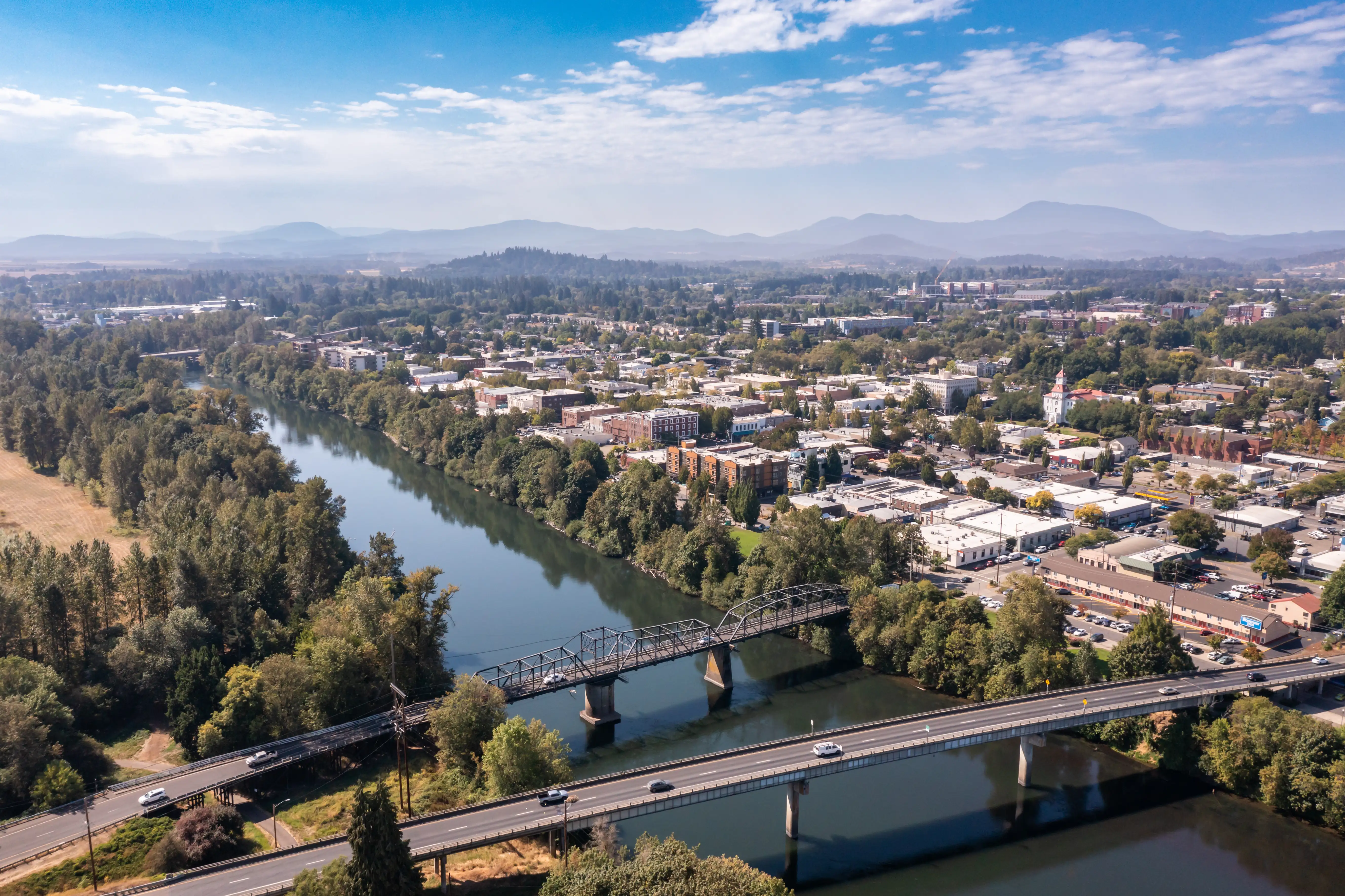
Downtown is where Corvallis makes its most convincing case for itself — walkable riverfront, the Corvallis Art Center, independent restaurants and shops along 2nd Street, and a genuine pedestrian culture that most Oregon cities this size never quite achieve. Housing here runs from Craftsman bungalows and Victorian-era homes to renovated apartments like The Park at Fifth Street, with a wide variety of floor plans aimed at renters who want urban access without leaving for Portland. The honest downside is noise and density: proximity to OSU means weekends can feel like a college town in the best and worst ways, and parking, particularly for multi-car households, is a recurring frustration.
Best for: Renters, OSU faculty, and buyers who prioritize walking to everything over square footage and quiet.
Designated on the National Register of Historic Places in 2002, College Hill sits along NW Johnson and Polk Avenues near Arnold Way and 36th Street — close enough to OSU that a bicycle commute to campus is genuinely effortless. The housing stock reflects the neighborhood's age: older Craftsmans, bungalows, and turn-of-the-century builds with the kind of architectural detail that newer subdivisions can't replicate. The catch is that the rental market here is heavily student-driven, which creates turnover, weekend noise patterns, and property maintenance habits that can frustrate owner-occupants who weren't expecting it.
Best for: Buyers who want historic character and walkable university access, and investors comfortable with a student-tenant market.
This is where Corvallis families most consistently land, and the price data reflects it — the median sold price here hit $571,000 in early 2026, up nearly 9% year over year, which signals demand that isn't fading. You get quieter residential streets, newer construction, larger lots, access to hiking trails near Chip Ross Natural Area and Bald Hill Natural Area, and the school assignments that tend to satisfy parents doing their research. The catch is that northwest Corvallis is not particularly walkable for daily errands, and if you work in Albany or travel Highway 20 regularly, the routing through the city core adds real time to your commute.
Best for: Families with school-age children, OSU and Samaritan Health professionals who want to put down roots in a quieter residential corridor.
South Corvallis is currently the most financially accessible entry point into the Corvallis market, with a median sold price around $500,000 — nearly $70,000 below the northwest corridor. Homes here are moving faster than anywhere else in the city, averaging about 31 days on market, which suggests buyers have figured out the value story before most of the city catches up. The area has real character: river access through Willamette Park, larger yard sizes than the city average, and a genuinely diverse, international community shaped in part by the university's graduate student population. The honest friction is that the neighborhood lacks the infrastructure polish of the northwest, some blocks feel more transitional than established, and school-boundary research is essential before making an offer.
Best for: First-time buyers, value-oriented families, and buyers willing to trade finished-neighborhood feel for the most competitive price in the city.
West of downtown, the terrain tilts upward and the housing shifts accordingly — mid-century modern homes with views, contemporary builds tucked into ridge lots, and properties that back directly into natural reserves and trail systems leading toward Bald Hill Natural Area. West Hills buyers are generally paying a premium of $100,000 or more over the citywide median for that combination of privacy, elevation, and access to Corvallis's best outdoor corridors. The trade-off is practical: the hills that make the views possible also make winter driving genuinely unpredictable on steeper streets, and the distance from the grocery and errand infrastructure of the city's flatter zones adds up over time.
Best for: Luxury buyers, outdoor-oriented households, and buyers who value privacy and natural surroundings over walkability and convenience.
Timberhill sits in the northwest quadrant of the city and reads as the more established, less-frenzied counterpart to the faster-appreciating northwest corridor — tree-lined streets, well-maintained homes, and a quiet suburban character that has attracted families and professionals for decades. Pricing in Timberhill generally tracks the northwest median, landing in the $530,000–$700,000 range depending on lot size and construction vintage. The neighborhood's one structural limitation is that it lacks a genuine commercial or amenity core of its own, meaning most daily errands require driving, and buyers who expected a more walkable suburban experience sometimes find themselves surprised by how car-dependent the area feels.
Best for: Families and professionals seeking a settled, quiet neighborhood with good school access and strong long-term hold value.
Willamette Landing offers some of the most thoughtfully planned residential streets in Corvallis — newer builds, consistent landscaping, and a tidy, orderly feel that appeals to buyers relocating from suburban environments elsewhere in Oregon or from out of state. The neighborhood sits in a quieter section of the city and attracts a mix of retirees and families who want newer construction without the West Hills price premium. The planned character that makes it appealing is also its primary limitation: Willamette Landing lacks the architectural variety and organic neighborhood texture that older Corvallis districts carry, and buyers who want a more layered, street-life feel tend to drift toward downtown or College Hill instead.
Best for: Retirees, relocating professionals, and buyers prioritizing newer construction and low-maintenance living over neighborhood character.
Grand Oaks is where Corvallis buyers go when square footage and lot size become the primary variables — larger parcels, established mature trees, and home footprints that the denser inner neighborhoods simply can't match. Prices here run from the upper $500s into the mid-$800s for the most substantial properties, placing it above the citywide median but below the West Hills price ceiling. The neighborhood draws buyers who've already lived in Corvallis and are stepping up, as well as relocating households who want space and permanence over proximity to downtown. The honest drawback is that Grand Oaks is genuinely suburban in its daily rhythm — there's nothing walkable nearby, and the assumption that you'll drive everywhere is baked into the neighborhood's design.
Best for: Buyers prioritizing large lots, established trees, and more square footage per dollar than the inner-city neighborhoods can offer.
Assuming all northwest neighborhoods perform the same. Northwest Corvallis is a wide geographic zone, and the difference between a home near Chip Ross Natural Area with trail access and a home closer to 9th Street near the commercial strip is significant in terms of daily quality of life. Buyers who search "northwest Corvallis" without narrowing by specific street patterns often end up closer to traffic corridors than they expected. Walk the blocks before you bid — the quiet side of the northwest and the busy-edge side are genuinely different places to live.
Misjudging the South Corvallis trajectory. Some buyers discount the south side too quickly based on older impressions of the area or concern about school assignments. The 31-day average days-on-market in South Corvallis as of early 2026 tells you that other buyers aren't making that mistake. Families who invest in understanding the school boundary map precisely — rather than assuming the whole district is equivalent — often find that South Corvallis offers real value that the northwest simply can't match at similar price points.
Buying near campus without pricing in the rental dynamic. Homes within a five-to-ten-minute walk of OSU in College Hill and the downtown edges of the city carry rental pressure baked into their character. That's excellent news for investors but genuinely disruptive for owner-occupants who didn't expect September move-in noise, weekend parking competition, and neighbor turnover every lease cycle. The boundary between "charming historic neighborhood" and "high-density student corridor" in this part of Corvallis is not always obvious from a listing photo.
Underestimating the Highway 20 chokepoint. If your job is in Albany or you're commuting east toward Lebanon and beyond, the Highway 20 / 9th Street corridor is your daily reality, and it slows meaningfully during morning and afternoon peak windows. Buyers who choose west-side or northwest neighborhoods for school access without accounting for that eastbound commute sometimes find the timing doesn't work the way the map suggested it would. The buyers who manage it best tend to time their departures before 7:45 a.m. or after 9:00 a.m. heading east.
| Area | Ideal For | Typical Rent Range | Trade-off |
|---|---|---|---|
| Downtown / Riverfront | OSU students, young professionals | $1,200–$2,000/mo | Noise, limited parking, higher turnover |
| College Hill | OSU students, faculty | $1,100–$1,800/mo | Student-dominated market, older building stock |
| Northwest Corvallis | Working professionals, families | $1,600–$2,400/mo | Highest rents, limited rental supply |
| South Corvallis | Budget renters, grad students | $950–$1,500/mo | Fewer amenities nearby, transitional feel on some blocks |
| Timberhill / NW Suburban | Families, transferees | $1,500–$2,200/mo | Car-dependent, limited walking options |
Corvallis has one of the highest renter-to-owner ratios of any city its size in Oregon — roughly 59% of households rent, a number driven by the university's graduate and undergraduate population. That creates a rental market with deep supply near campus but genuine scarcity of quality family rentals in the northwest corridor, where most of the housing stock is owner-occupied. Renters relocating for OSU or Samaritan Health positions will find the best selection in the downtown and College Hill zones, but should budget for September rent spikes when the academic calendar drives competition. South Corvallis remains the most affordable rental quadrant and has improved meaningfully in the past two years, making it worth serious consideration for renters prioritizing square footage and yard access over walkability.

Local Expert Takeaway: If your budget is under $550,000, spend real time in South Corvallis before defaulting to the northwest. The 31-day average days-on-market tells you the market has already figured out the value story — and buyers who get in early on a transitioning neighborhood tend to build equity faster than those who pay the premium for a corridor that's already peaked. For buyers above $600,000, West Hills and Grand Oaks offer the most differentiated product in the city: views and lot size that the inner neighborhoods simply can't replicate. The critical mistake either way is ignoring school boundary maps — Corvallis School District assigns by address, and two homes on the same block can sometimes feed different schools depending on where exactly the boundary line falls.
What are the best places to live in Corvallis for families?
Northwest Corvallis is the neighborhood most families with school-age children prioritize, given its access to top-rated Corvallis School District schools, quieter streets, and newer construction. Timberhill is a strong secondary option with similar suburban character at a slightly more varied price range. Families who need to stretch their budget often find South Corvallis worth a serious look once they've done the school-boundary homework.
What is the typical home price in Corvallis OR real estate?
The citywide median sold price in Corvallis sits at approximately $547,000, with meaningful variation by neighborhood. South Corvallis runs closer to $500,000, Northwest Corvallis closer to $571,000, and West Hills properties regularly exceed $650,000 and can reach $1 million or more for larger ridge lots. Active listings span roughly $336,000 to $1.6 million, which reflects the genuine diversity of the housing stock.
How does living in Corvallis Oregon compare to nearby Albany for renters?
Corvallis rents run noticeably higher than Albany's, primarily because the OSU student population creates persistent demand that keeps vacancy rates tight. A two-bedroom apartment near downtown Corvallis typically runs $1,400–$2,000 per month, while comparable space in Albany often lands $200–$400 lower. The payoff for the Corvallis premium is walkability, proximity to the university's cultural and recreational amenities, and a more active street-level environment — but renters who work in Albany and don't need to be in Corvallis daily sometimes find it easier to base themselves in Albany and commute in.
Explore the full Corvallis series: The Ultimate Corvallis Relocation Guide · Is Corvallis Safe? · Cost of Living in Corvallis · Best Neighborhoods in Corvallis · Corvallis Schools & Family Life · Corvallis Youth Sports · Corvallis Parks & Recreation · Retiring in Corvallis · 1031 Tax-Deferred Exchange in Corvallis · Corvallis First-Time Homebuyers Guide · · Moving to Corvallis from California
Tell us what you need help with and we'll connect you with local resources.

About the Author
Todd Davidson is the founder of Living in Oregon and Living in Washington, where he publishes in-depth city guides, neighborhood resources, and local market insights covering more than 180 communities across the Pacific Northwest. While his background is in home financing and real estate, he created these digital platforms to help families research and compare regions before making a move.