Oregon Coast · Oregon
Living in Florence: The Ultimate Relocation Guide (2026)
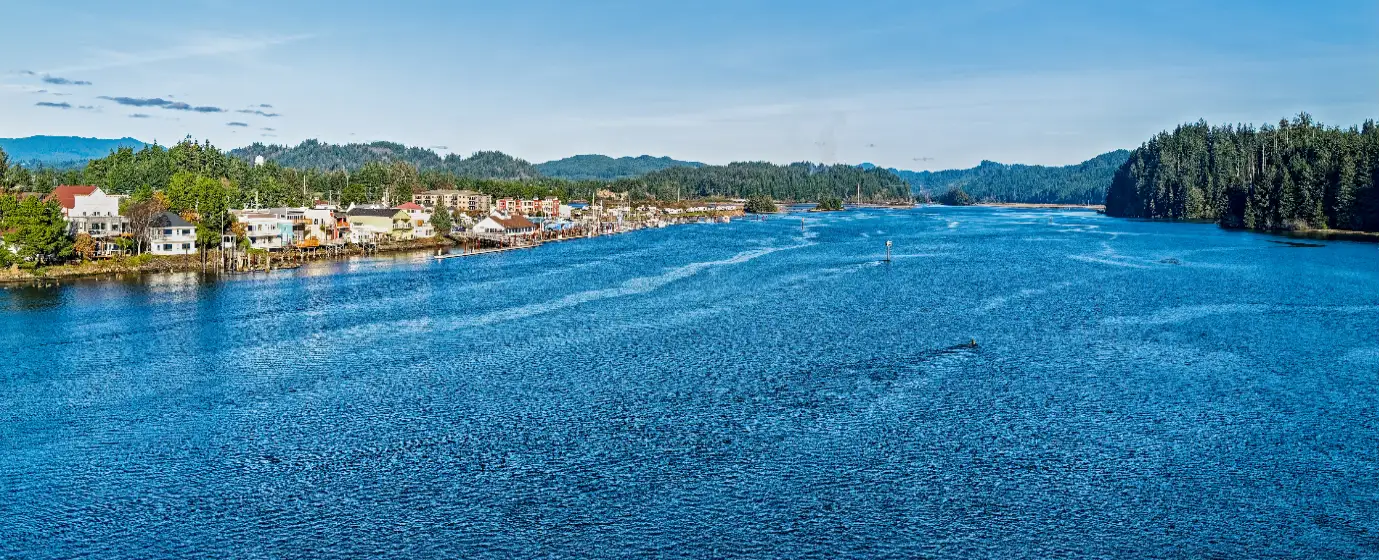
Maybe you've been scrolling real estate listings on a rainy Portland evening, watching your budget shrink against the city's price floor, and someone in a Facebook group typed "have you looked at Florence?" Maybe your doctor mentioned retiring to the coast and you started doing the math. Maybe you drove through once on a road trip, saw the Art Deco bridge and the river bending toward the ocean, and filed it away as somewhere you'd come back to. Florence has a way of planting that seed.
The tension at the heart of Florence isn't the one most coastal towns face. It's not just about trading city convenience for ocean views — it's about moving to a town where 44% of residents are over 65, the nearest major hospital is right here but the nearest Target is an hour away, and the median household income sits around $53,000 in a market where oceanfront custom builds can cross $650,000. Florence is simultaneously one of Oregon's most genuinely affordable coastal towns and a place where the lifestyle requires real trade-off thinking. The geography defines daily life: you're 60 minutes from Eugene on US-101 through the Coast Range, surrounded by Oregon Dunes to the south, the Siuslaw River to your east, and the Pacific everywhere else.
This guide will help you decide whether Florence is actually the right fit for your life — not just your Instagram feed. We'll walk through the neighborhoods, the real housing market, the commute reality, who thrives here, and who tends to leave after two years wishing they'd done more research.
Not everyone should move to Florence. But for the right person, it's one of the most compelling small-city options on the entire Oregon Coast.
| Best For | Why |
|---|---|
| Retirees & pre-retirees | Walkable Old Town, PeaceHealth hospital on-site, no state sales tax, social Security benefits untaxed, deeply active outdoor culture |
| Remote workers | Low cost of living relative to Portland/Eugene, home prices below $500K median, stunning daily scenery, fiber internet expanding |
| Nature-driven buyers | Oregon Dunes, Heceta Head Lighthouse, six nearby lakes, beach access throughout — this is the whole point |
| First-time coastal buyers | Entry-level manufactured homes from $270K; more accessible than Lincoln City or Cannon Beach |
| Small-business operators | Tourism-driven economy rewards hospitality, wellness, food, and outdoor retail; lower overhead than metro markets |
| Buyers leaving Eugene/Portland | 60-minute drive to Eugene provides a lifeline; Florence's $460K median is significantly below Eugene's trajectory |

The table above breaks down who Florence actually works for, and in my experience it's accurate — I see retirees drawn to walkable Old Town and the tax picture, remote workers priced out of Portland and Eugene chasing the sub-$500,000 median, and first-time coastal buyers finding real entry points in manufactured housing from the $270,000s that just don't exist in Lincoln City or Cannon Beach anymore.
I've lived and worked on this coast since 1994, with a stretch on Molokai, Hawaii before I came back to the Pacific Northwest, so I've made this kind of relocation decision myself and I've helped a lot of people through it since. If you're weighing whether Florence is the right fit for your move, I'd welcome the opportunity to talk through your specific situation and point you toward the neighborhoods and properties that actually match it.
Florence operates on a rhythm that surprises people who move from larger cities. The town is genuinely compact — just 5.5 square miles — and the population of roughly 9,500 means you'll recognize faces at the farmers market within your first few months. The Florence Farmers Market runs every Tuesday from 3 to 6 PM at the Port of Siuslaw Boardwalk in Old Town from mid-May through mid-October, and it's the kind of community anchor that becomes a weekly habit fast.
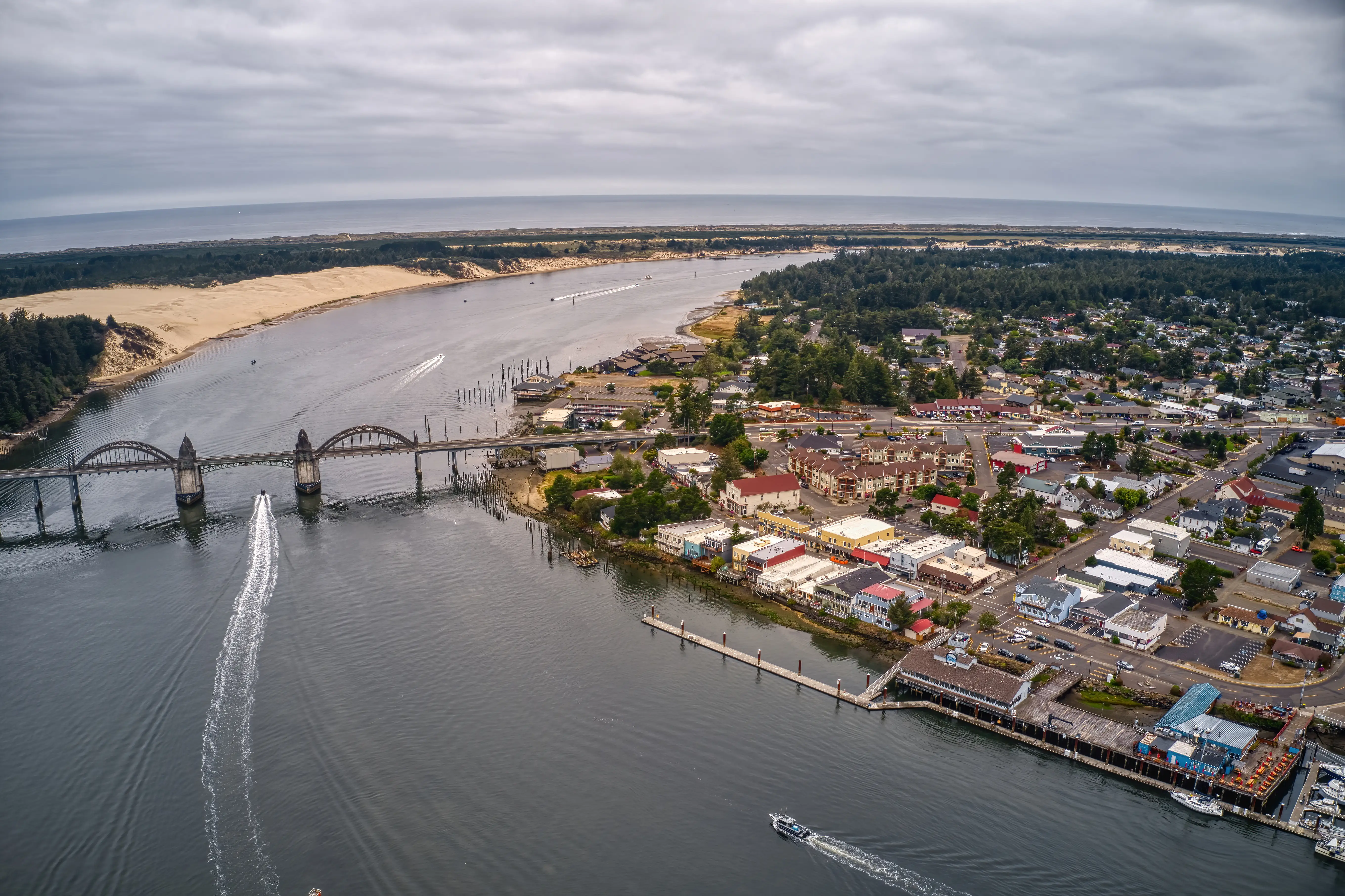
The geographic reality matters more here than in most Oregon cities. Highway 101 is your primary north-south artery, and it runs directly through town — which means beach access is genuinely easy, but so is the tourist traffic in summer. The Siuslaw River Bridge, Florence's signature Art Deco landmark, divides the north and south banks and funnels most of the town's traffic through a single crossing. If you're commuting to Eugene for work, plan for that 60-minute drive through the Coast Range on State Route 126, and plan for it to feel longer on the Fridays when summer visitors are heading in the opposite direction.
The honest friction moment most new residents mention is the grocery situation. Florence has a Fred Meyer that handles most of your staples, but for specialty items, specific medical appointments, or anything resembling a metro shopping run, you're making a Eugene trip. People who move from Portland expecting a weekly Target run are the ones who adjust hardest. The residents who thrive here approach that Eugene drive as an intentional trip rather than an inconvenience — combining a Costco run, a medical appointment, and a nice lunch into a day out rather than treating it as a failure of local infrastructure.
The community skews older, and that shapes the social texture of the town. The median age is 60.8 years, and the energy in Old Town reflects that — thoughtful dining, art galleries, wine tasting along Bay Street, kayak rentals on the river. There's a specific Florence personality: outdoors-oriented, genuinely friendly, not in a hurry, and deeply attached to the place.
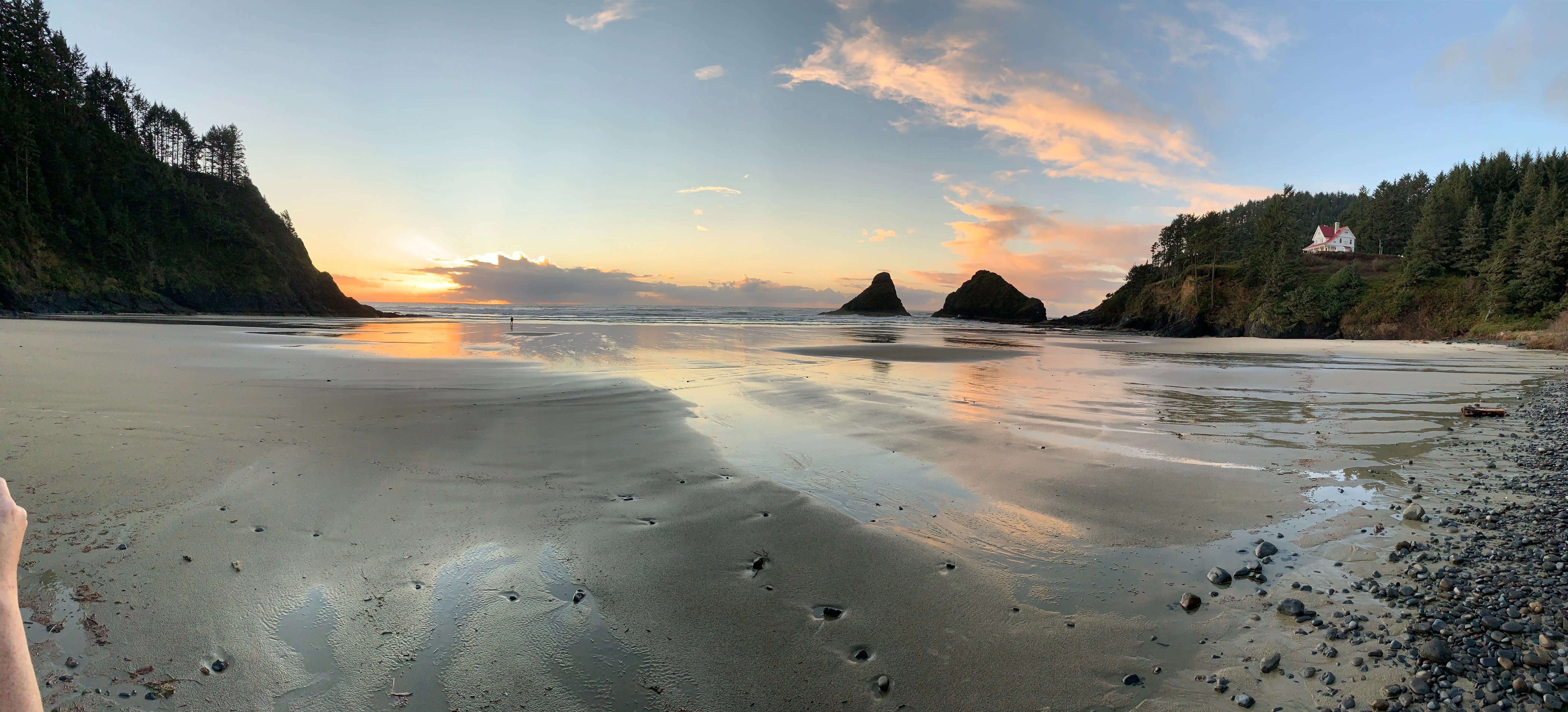
The access to natural Oregon is simply without peer. The Oregon Dunes National Recreation Area begins essentially at Florence's southern edge, stretching 40 miles down the coast and offering sandboarding, ATV riding, hiking, and some of the most cinematic landscape in the Pacific Northwest. Jessie M. Honeyman Memorial State Park sits just three miles from town with Woahink and Cleawox Lakes — both swimmable — plus camping and year-round trail access. Heceta Head Lighthouse, one of the most photographed on the West Coast, is a 13-mile drive north on 101. Residents don't have to plan a trip to access any of this. It's the Tuesday afternoon walk.
The healthcare situation is meaningfully better than most towns this size. PeaceHealth Peace Harbor Medical Center provides full hospital services right in Florence — a critical factor for older residents and families that most small coastal Oregon towns simply cannot offer. For a town of 9,500, having a full acute-care hospital is a genuine lifestyle differentiator, and it's a significant reason why the retirement community here continues to grow.
Oregon's tax structure works in Florence residents' favor. There is no state sales tax anywhere in Oregon, and Social Security benefits are not taxed at the state level — two provisions that matter enormously for retirees on fixed incomes. Property taxes, governed by Oregon's Measure 50 system, mean that assessed values are typically held below real market value, which softens the annual tax bill relative to what buyers from California or Washington might expect.
The cost of living index for Florence sits right around 98 — essentially at the national average — which means your dollar goes further here than in Eugene, Portland, or any coastal California market. Median gross rent runs roughly $1,365 per month, and the housing entry point for manufactured homes in communities like Greentrees Village starts around $271,000, making Florence genuinely accessible to buyers who've been priced out of more prominent coastal towns.
Looking to buy in Florence? Estimate your payment.
Enter your numbers to see an estimated monthly mortgage payment.
Estimate only. Excludes HOA fees and mortgage insurance.
Florence is coastal isolation with a community infrastructure. The 60-minute Eugene commute is real and should not be romanticized. State Route 126 through the Coast Range is a beautiful drive exactly once; by the fifth round trip in a single week, it's a fatiguing two-lane mountain road with limited passing opportunities. Workers who need to be in Eugene for regular in-person responsibilities typically find that commute manageable two or three times a week — not five.
The economic picture is narrower than most buyers recognize. Per capita income in Florence sits at roughly $33,500, which is about 75% of the Oregon state average. The local job market is concentrated in healthcare, tourism, gaming at Three Rivers Casino Resort, retail, and public sector employment. For buyers who are not retired or remote-working, career optionality inside Florence itself is genuinely limited. The lifestyle works beautifully if your income is portable; it requires compromise if it isn't.
The weather deserves honest treatment. Florence averages more fog, overcast days, and coastal drizzle than inland Oregon markets — and more consistently than Portland, because the Coast Range doesn't provide the same rain shadow effect. Summer temperatures are mild to cool, which is a feature for some buyers and a dealbreaker for others. If you're moving from Bend, Medford, or Southern California expecting summer warmth, Florence's 60-degree July afternoons with marine layer will take adjustment.
Why some people leave Florence within two years tends to come down to one of three things: the social scene feels too slow for people under 50 who want urban nightlife and cultural programming, the commute to Eugene becomes genuinely unsustainable when life circumstances change (a new job, a partner's schedule), or the isolation of coastal winter fog — beautiful in photos, relentless by February — wears them down emotionally. None of these are failures of the city. They're mismatches of lifestyle expectation.
Old Town Florence is the city's most walkable zone and its most recognizable face. Bay Street runs along the Siuslaw River with Victorian storefronts, restaurants, galleries, wine tasting, and clam chowder shops that draw both tourists and locals year-round. Pricing here reflects the walkability premium — expect to pay at or above the city median for anything in close proximity to the riverfront. The downside is the summer tourist volume, which can make Bay Street feel crowded from June through August.
Best for: Retirees and remote workers who want to walk to coffee, restaurants, and the farmers market without owning a second car.
Heceta South is one of Florence's more upscale residential pockets, characterized by custom and semi-custom homes set among natural coastal vegetation. Properties here tend to price above the city median, with the broader Heceta Beach corridor averaging closer to the high $400Ks to $500Ks. It offers proximity to the beach and a quieter residential character than Old Town, with the trade-off being that walkable amenities require a short drive.
Best for: Buyers seeking a higher-end primary residence with coastal access and natural surroundings without the resort-style density of Driftwood Shores.
The Reserve sits in the Heceta Beach corridor north of town, positioned as a private planned community with lake and ocean proximity. It appeals to buyers who want the security of a planned neighborhood with access to both natural amenities and quick highway access to Florence proper. Pricing trends align with the broader Heceta area.
Best for: Buyers seeking privacy, a planned community structure, and dual lake-and-ocean proximity in a single location.
Named for the rhododendron corridors that define much of Florence's green infrastructure, Rhodo View Dunes offers mid-market single-family ramblers and bungalows set among pine, cedar, and cherry trees. This is the neighborhood that most closely matches what people imagine when they picture "a Florence house" — accessible, tree-lined, and close to the dunes without oceanfront pricing.
Best for: First-time buyers and budget-conscious households looking for a single-family home in the $400K–$460K range with outdoor character.
Bayshore sits along the Siuslaw River and bay corridor, offering a category of Florence real estate that's distinct from oceanfront or dunes-adjacent neighborhoods: river and bay views with boating and fishing access. The housing mix runs from older construction to newer builds, and the lifestyle here is water-oriented in a different way than the beach neighborhoods — think kayaking and crabbing more than surfing.
Best for: Buyers who prioritize river and bay access, fishing and boating lifestyle, and a quieter residential feel at prices that can come in below the Heceta Beach premium.
South Florence is the city's gateway to its most dramatic outdoor assets. Six lakes, Honeyman State Park, and the full expanse of the Oregon Dunes are within easy reach, and the neighborhood character reflects that outdoor orientation. Pricing in this zone, particularly extending toward Dunes City, trends above the city median — the south-of-Florence average runs around $540,000 — reflecting both the land values and the lifestyle access.
Best for: Buyers whose primary motivation for moving to Florence is outdoor recreation — specifically lakes, dunes, and state park access as part of daily life.
Driftwood Shores is Florence's only true oceanfront resort-residential hybrid, anchored by the Driftwood Shores Resort with its indoor pool, hot tub, and restaurant. Condos here offer unobstructed Pacific views and can function as full-time residences, vacation properties, or units placed in the resort rental pool. The area has been annexed into Florence city limits. Pricing reflects the oceanfront premium and the turnkey amenity package.
Best for: Buyers who want true oceanfront living, the option for rental income, and resort amenities without the full custom-build commitment of a standalone beachfront property.
Heceta Beach is a tranquil coastal neighborhood roughly five miles north of Florence, known for its expansive beaches and straightforward highway access to both town and Eugene. The housing mix is genuinely varied — ramblers, A-frames, split-levels, cottages, and beachfront condos — which makes it one of the more interesting areas in terms of buyer options. The NeighborhoodScout median for Heceta Beach runs in the $550K–$560K range, placing it above the Florence city-limits median.
Best for: Buyers who want beach-neighborhood character and commute access to Eugene, and who have the budget to step above the city-limits median price.
| City | Best For | Approx. Home Price | Eugene Commute | Vibe |
|---|---|---|---|---|
| Florence | Coastal retirement, remote work, outdoor lifestyle | ~$460,000 | 60 min | Small-town coastal, older demographic |
| Yachats | Artistic, quieter, ultra-coastal | $550,000–$650,000+ | 80 min | Intimate, slower, highly walkable |
| Newport | Families, more services, fishing culture | ~$400,000–$450,000 | 95 min north | Busier, more working-coast feel |
| Reedsport | Affordability, dunes access | ~$250,000–$320,000 | 90 min south | Smaller, more rural, fewer services |
| Coos Bay | Services, employment, value | ~$280,000–$360,000 | 100 min+ | More urban, commercial coast |
| Eugene | Career access, services, diversity | ~$450,000–$500,000+ | N/A (hub) | University city, metro amenities |
| Metric | Data |
|---|---|
| Population | ~9,482 (2024 ACS) |
| Median Home Price | ~$460,000 (city limits, mid-2026) |
| Median Household Income | ~$53,333 |
| Property Tax Rate | ~0.67% effective (Measure 50 assessed basis) |
| Median Gross Rent | ~$1,365/month |
| Violent Crime per 1,000 | ~1 |
| Property Crime per 1,000 | ~21 |
| Median Age | 60.8 years |
| Commute to Eugene | ~60 minutes via Hwy 126 |
| School District | Siuslaw School District (B- Niche rating) |
| Cost of Living Index | ~98.1 (near U.S. average) |
The Rhododendron Festival is the event that defines the Florence calendar. Every May, the city hosts the Rhody Festival — one of Oregon's oldest civic celebrations — drawing up to 10,000 visitors to Old Town over the festival weekend. There's a parade, food, live music, and an arts and crafts component that takes over Bay Street. Locals know to plan ahead for parking, and new residents quickly learn that the week of Rhody Fest is both the town's most energetic weekend and its most congested one.
Sea Lion Caves is not just a tourist attraction for locals. The sea cave about 11 miles north on Highway 101 — the largest sea cave in the United States — is the kind of place you visit with every houseguest you've ever had, but longtime residents also find themselves stopping on solo drives. It's open year-round, and the elevator descent into the cave where Steller sea lions winter is genuinely remarkable on a foggy December morning when the tourists have gone home.
The fishing culture runs deep. The Siuslaw River is a serious salmon and steelhead fishery, and the culture around it — charter boats out of the Old Town docks, the crabbing off the pier, the informal knowledge-sharing at Bayshore — is one of the community's quiet social adhesives. New residents who engage with it, even casually, tend to plug into the community faster than those who don't.
What I would not do if moving to Florence: I would not buy in the Heceta Beach corridor without driving Highway 101 north from Florence at 7:45 AM on a weekday morning in October. That corridor is beautiful, and the neighborhood is genuinely desirable, but the summer tourist traffic on that stretch — and the fog-narrowed visibility on 101 in winter — adds a dimension to the commute that doesn't show up on a map. If your daily life requires regular trips in and out of town, account for that reality before you fall in love with a listing five miles up the road.

Local Expert Takeaway: If you're choosing between Old Town proximity and beach or lake access, make that decision before you start touring — Florence will pull you in multiple directions and the pricing gap between those choices is real. Buyers serious about the south end of town near Honeyman Park and the lakes should budget closer to $540,000; buyers who want walkable Old Town access can often find a foothold closer to the $430,000–$460,000 range. The Bayshore corridor along the river is consistently underrated and worth adding to your tour list if water access matters to you but oceanfront pricing doesn't.
✅ Florence delivers genuine coastal living at a price point far below Lincoln City, Cannon Beach, or Yachats — with a full hospital, a walkable historic downtown, and proximity to some of Oregon's most dramatic natural landscapes.
⚠️ The demographic skew is real. With a median age of 60.8 and nearly half the population over 65, buyers under 45 should evaluate whether the social and cultural landscape matches their lifestyle expectations before committing.
📍 Neighborhood choice determines your actual daily life. The difference between an Old Town property, a Heceta Beach listing, and a South Florence home near Honeyman Park isn't just price — it's how you spend every morning, where you grocery shop, and what your commute looks like.
Is Florence a good place for families?
Florence can work well for families, particularly those with school-age children who value outdoor lifestyle and a close-knit community. The Siuslaw School District serves the city, and PeaceHealth Peace Harbor Medical Center provides accessible healthcare locally. The catch is that extracurricular options and peer social infrastructure are more limited than in a city like Eugene — families who need robust youth sports programming, arts academies, or diverse high school electives may find the smaller district requires more supplementing.
What is the crime rate in Florence?
Florence's violent crime rate runs approximately 1 per 1,000 residents — meaningfully lower than Oregon's statewide average. Property crime sits closer to 21 per 1,000, which is moderate for a tourist-economy coastal town and worth factoring into home security planning, particularly in neighborhoods with high vacation rental turnover. Overall, Florence is considered one of the safer small coastal communities in Oregon.
How does Florence compare to nearby coastal cities?
Florence sits in a practical middle ground: more affordable than Yachats to the north, better-serviced than Reedsport or Coos Bay to the south, and significantly quieter than Newport in terms of commercial activity. The key differentiator is the combination of a full hospital, a functioning historic downtown, and direct highway access to Eugene — assets that neither Reedsport nor Yachats can match at this price point. Buyers who need more services or employment options will find Eugene's metro area compelling; buyers who want a slower, more nature-embedded life will find Florence a stronger fit than any of its immediate coastal neighbors.
Explore the full Florence series: The Ultimate Florence Relocation Guide · Is Florence Safe? · Cost of Living in Florence · Best Neighborhoods in Florence · Florence Schools & Family Life · Florence Youth Sports · Florence Parks & Recreation · Retiring in Florence · 1031 Tax-Deferred Exchange in Florence · Florence First-Time Homebuyers Guide · · Moving to Florence from California · Florence Realtor's Perspective · Top 10 Questions a Realtor Gets About Florence
Tell us what you need help with and we'll connect you with local resources.

About the Author
Todd Davidson is the founder of Living in Oregon and Living in Washington, where he publishes in-depth city guides, neighborhood resources, and local market insights covering more than 180 communities across the Pacific Northwest. While his background is in home financing and real estate, he created these digital platforms to help families research and compare regions before making a move.
Check Out the Oregon Coast Rankings: Oregon Coast Cost of Living — All 16 Cities Ranked · Best Places to Retire on the Oregon Coast · Best Oregon Coast Cities for Families · Best Oregon Coast Cities for Remote Workers · Oregon Coast Real Estate Market Report 2026 · Oregon Coast vs. Washington Coast