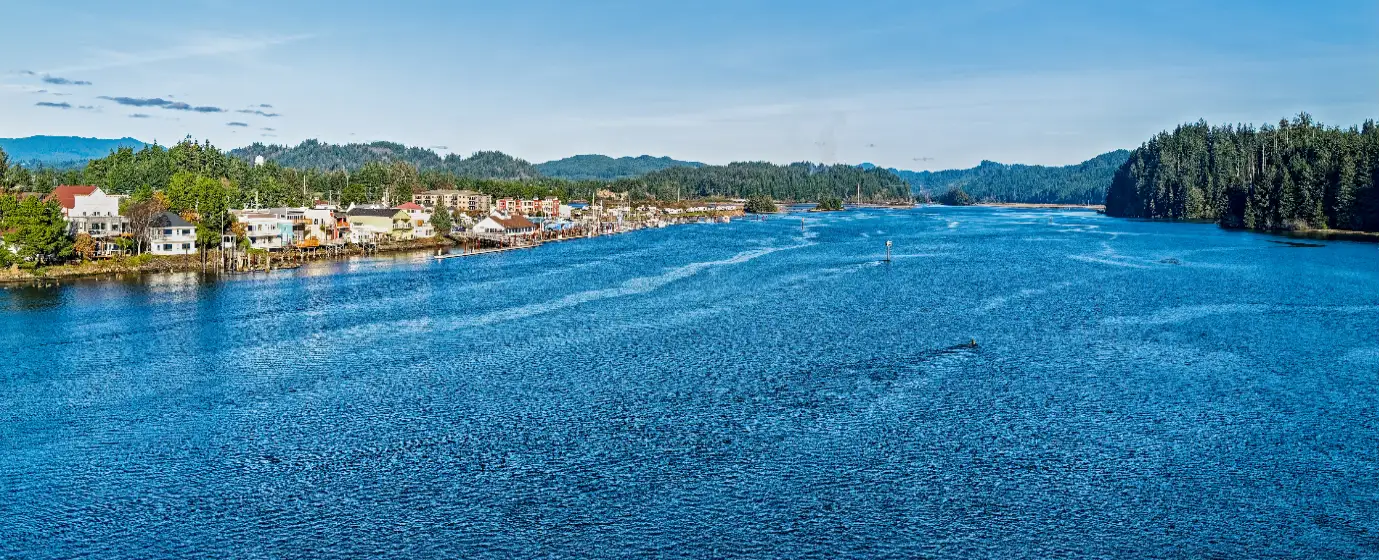
Oregon Coast · Oregon
Is Florence Safe? Crime Rates, Safest Neighborhoods & Local Reality (2026)
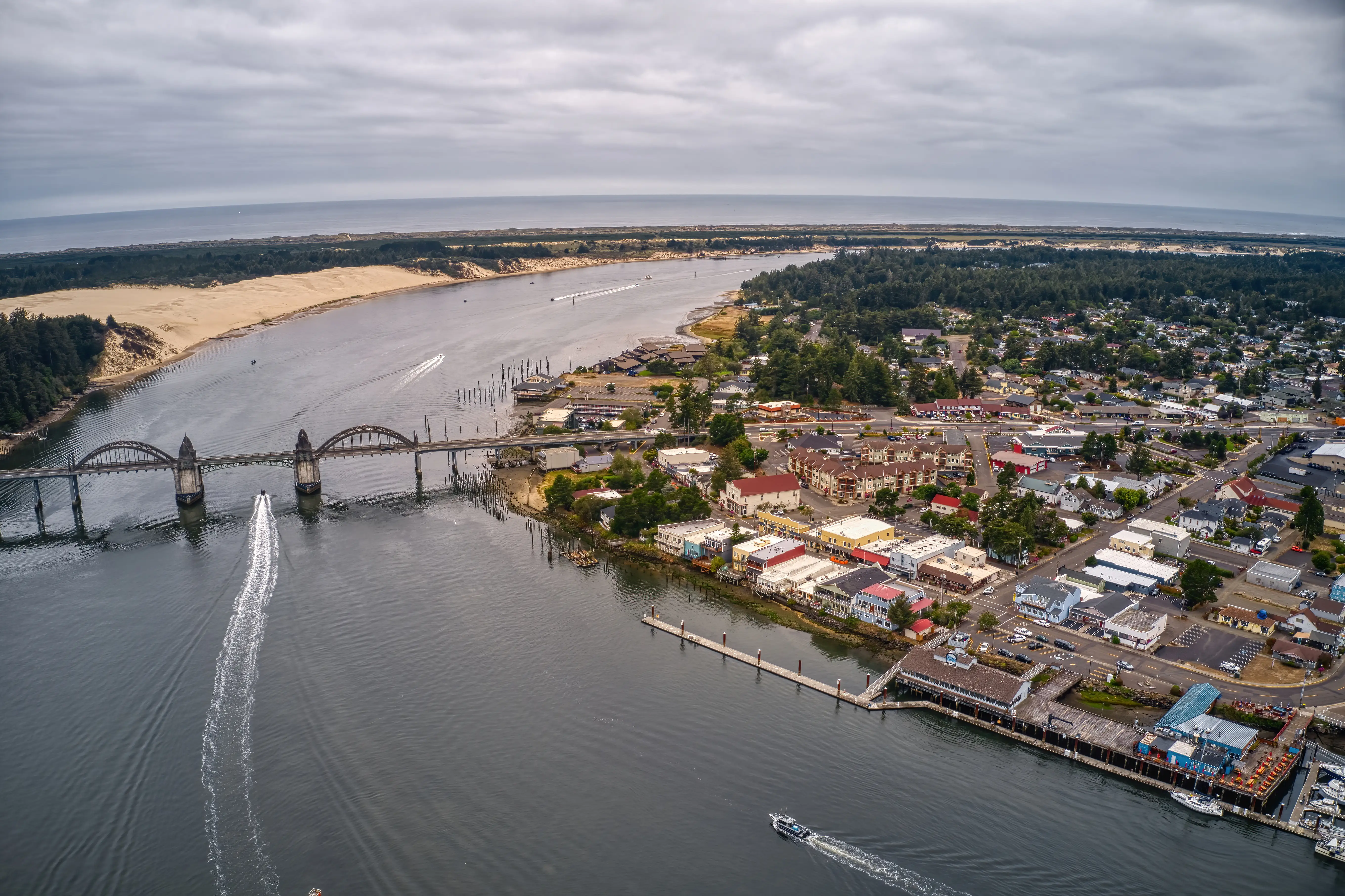
Florence doesn't have the crime profile of a big city, and it doesn't pretend to. With roughly 9,500 permanent residents tucked between the Oregon Dunes and the Siuslaw River, this is a place where people leave kayaks on their front porches and know their neighbors by name. But the safety picture here is more layered than a quick Google search reveals — because Florence's property crime numbers, shaped heavily by summer tourist traffic and a concentrated commercial corridor, tend to alarm buyers who haven't yet learned to read coastal small-town crime data correctly.
The numbers that matter most for daily life are these: violent crime runs at approximately 1 per 1,000 residents, which puts Florence comfortably below both the Oregon and national averages on that metric. Property crime is the headline concern, sitting around 21 per 1,000 — higher than the national average and driven largely by the southern retail corridor and the transient population that peaks between May and September. In practice, the northwest residential neighborhoods experience a fraction of that exposure.
This guide breaks down what the crime data actually means for someone considering buying a home here, which neighborhoods sit in quieter pockets of the city, and what locals do — not out of fear, but out of habit — to protect their property in a town that otherwise feels about as low-stakes as small-town life gets.
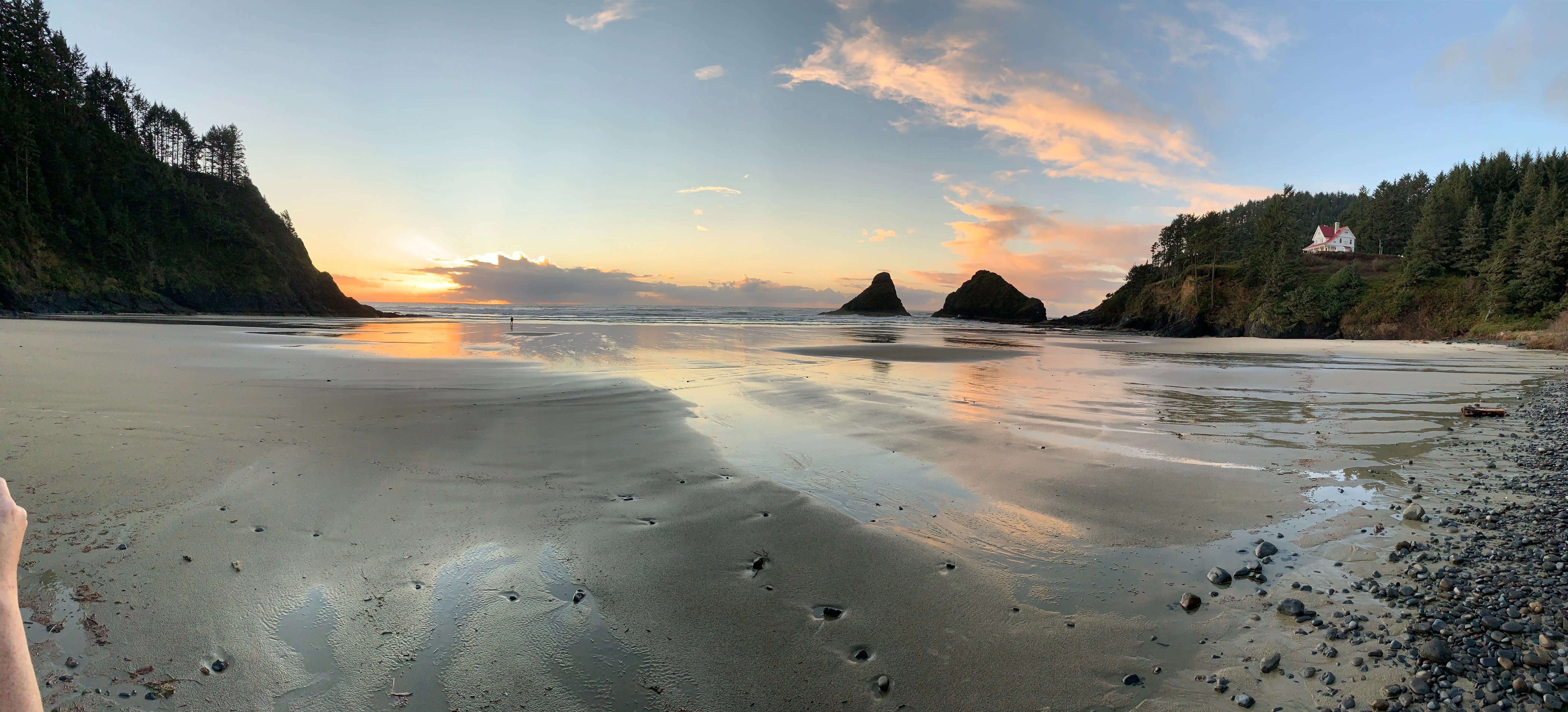
Florence's overall crime rate lands around 22 incidents per 1,000 residents, a figure that positions the city higher than roughly 80% of Oregon's communities when looking at total crime. That context matters — Oregon as a whole ranks in the 14th percentile for safety nationally, meaning the state's baseline is already elevated. Florence, while not at the top of the safety rankings, performs meaningfully better than Oregon's statewide average specifically on violent crime, the metric that most directly affects daily quality of life.
What makes Florence's numbers genuinely different from, say, a similarly sized inland city is the denominator problem. Florence's permanent population of around 9,500 swells to an estimated 15,000–20,000 during the summer season, with tourists flooding Old Town, the dunes, and Sea Lion Caves. Crime rates are calculated against the resident population, not the seasonal footprint — so when a car window gets smashed in a dune access parking lot in July, that incident counts against a base of fewer than 10,000 people. The per-capita rate climbs fast when your city temporarily doubles in size.
The five-year trend is actually encouraging. Both violent crime and property crime have declined over that window, with the most recently reported year showing a 22% drop in property crime and a 21% reduction in total crime. The violent crime uptick of 1% in that same period amounts to a handful of incidents in a town this size and doesn't represent a structural trend worth alarming yourself over.
Florence's violent crime rate of approximately 1 per 1,000 residents is one of the clearest arguments that this city's overall crime grade — which some aggregators rate as a "D" — is being dragged down entirely by property incidents, not personal safety concerns. AreaVibes data suggests Florence's violent crime rate of roughly 84–137 per 100,000 residents runs well below the national average, and the chance of becoming a victim of violent crime is closer to 1 in 720. For the vast majority of residents, daily life here — walking Old Town, driving Highway 101, taking the kids to Jessie M. Honeyman State Park — carries no meaningful elevated personal safety risk.
Property crime is where Florence earns scrutiny, and the geography tells the real story. The south part of the city, where the commercial density concentrates along Highway 101, accounts for a disproportionate share of annual incidents — roughly 110 per year by some estimates — while the north end logs as few as 15. The crimes that dominate are auto theft, vehicle break-ins, and retail theft rather than residential burglary. Tourist-heavy areas with high parking turnover, particularly near Old Town and the southern retail strip, create the conditions that property crime follows: unattended vehicles, unfamiliar faces, and limited overnight surveillance.

The property crime concentration along the Highway 101 corridor and near Old Town tracks with what I see as a broker — it's overwhelmingly auto break-ins and retail theft tied to tourist season parking, not the kind of thing that should scare off a buyer looking at residential neighborhoods. The violent crime numbers, sitting around 1 per 1,000 residents, are genuinely low, and the five-year trend of declining property and total crime is a real pattern, not a cherry-picked stat.
I've been working properties across every part of this city since 1994 and I've watched the crime numbers move in both directions over that time, so I don't take a single year's data at face value and I don't think buyers should either. If you're weighing how safety factors into which Florence neighborhood makes sense for you, I'd welcome the opportunity to give you my honest, unfiltered read on specific streets and areas.
Old Town Florence carries the highest daytime foot traffic of anywhere in the city, which cuts both ways. The concentration of restaurants, galleries, and boutiques along Bay Street draws crowds from spring through fall, and with crowds comes the kind of opportunistic property crime — parking lot break-ins, bike theft, occasional retail shoplifting — that aggregates into the city's numbers. Residents who live in the Old Town area itself tend to feel comfortable walking at night, but the practical advice from locals is consistent: don't leave valuables visible in your car anywhere near the waterfront during tourist season.
Best for: Buyers who want walkable access to the Siuslaw River waterfront and can tolerate elevated summer activity.
Heceta South sits south of the main commercial corridor along the coast, closer to the Oregon Dunes and away from the retail density that drives most of the city's property crime clustering. The neighborhood has attracted a mix of retirees and families with school-age children who specifically chose it for the quieter residential character. The catch is that you're farther from grocery and pharmacy access, which means more driving — but the reduced commercial traffic translates directly into fewer opportunistic incidents.
Best for: Buyers prioritizing residential quiet and proximity to dunes access over walkable errands.
This planned community around Heceta Lake draws buyers who want a structured neighborhood environment with natural surroundings. The lake setting and community layout contribute to a more controlled access feel — fewer transient vehicles passing through, more owner-occupied homes, and the social accountability that comes with neighbors who know each other. Crime exposure here tends to reflect the residential baseline rather than the commercial corridor spike.
Best for: Buyers who want a cohesive neighborhood community and a natural amenity without remote isolation.
Rhodo View Dunes sits in the southern reaches of the city, closer to the dune access points that generate significant tourist traffic in summer. The proximity to recreation areas means the seasonal population bump is more visible here than in the lake neighborhoods. That said, the residential streets themselves are quiet, and the crime that follows dune tourism tends to concentrate at trailheads and parking areas rather than spilling into surrounding homes. Locals in this area typically lock gates and secure outdoor equipment during peak season as a matter of habit, not panic.
Best for: Buyers who want dunes access without the price premium of lake-adjacent properties.
Bayshore occupies the area along the north side of the Siuslaw River estuary, where the geography itself provides a natural buffer from the southern commercial concentration. The neighborhood blends established homes with some vacation rental properties, which introduces more turnover than purely residential neighborhoods — but the waterfront character and north-of-center location keep it well away from the crime clusters that dominate the southern data. Florence residents frequently identify the northwest and north areas of the city as the quietest from a safety standpoint, and Bayshore fits that description.
Best for: Buyers drawn to riverfront and estuary character who want to stay north of the tourist corridor.
South Florence is the most commercially active quadrant of the city, home to Fred Meyer, the major chain retailers, and the density of Highway 101 businesses that generate the bulk of the city's property crime incidents. Living here means convenience — groceries, hardware, medical offices, and Three Rivers Casino Resort are all accessible within minutes. But it also means you're in the neighborhood where the crime-per-year counts are highest. For most residents this translates to being thoughtful about locking cars, securing garages, and not leaving packages unattended — not to feeling unsafe, but to treating the environment like a busy commercial district rather than a sleepy subdivision.
Best for: Buyers who prioritize errand convenience and don't mind the trade-off of a busier commercial environment.
| City | Violent Crime / 1K | Property Crime / 1K | Overall Safety Profile |
|---|---|---|---|
| Florence | ~1.0 | ~21 | Below-average violent crime; elevated property crime driven by tourism |
| Reedsport | ~3.5 | ~38 | Higher across both metrics; smaller, more economically challenged community |
| Yachats | ~0.5 | ~12 | Among the quieter coastal towns; very small population limits data reliability |
| Newport | ~4.2 | ~44 | Larger coastal city with more commercial density; higher across both categories |
| Coos Bay | ~5.1 | ~52 | Regional center with significantly higher crime rates on both metrics |
| Eugene | ~4.8 | ~47 | University city; notably higher violent and property crime than Florence |
| Mapleton | Data limited | Data limited | Very small rural community; limited reporting |
Florence compares favorably on violent crime against every neighboring community of meaningful size. The property crime gap between Florence and Reedsport, Newport, Coos Bay, and Eugene is substantial — Florence's elevated property rate looks less alarming in context when you see where the regional benchmarks actually sit.
Looking to buy in Florence? Estimate your payment.
Enter your numbers to see an estimated monthly mortgage payment.
Estimate only. Excludes HOA fees and mortgage insurance.
The conversation locals have about safety in Florence almost never involves violent crime — it's always about car break-ins and whether you left your stuff visible. The Highway 101 corridor from the Fred Meyer intersection south through the dune access roads is where the overwhelming majority of Florence's property crime concentrates. Locals who live near that corridor know to treat their vehicles the way you'd treat a car in any busy commercial district: garage it if you have one, take everything inside, and don't assume that because you're in a small town it can't happen to you.
What the crime aggregator apps miss entirely is the distinction between seasonal and year-round exposure. A rating generated from annual crime data doesn't capture that Florence's peak crime window runs roughly Memorial Day through Labor Day, when the tourist population can more than double the city's daily footprint. A home near Munsel Lake or in the northwest residential areas experiences a meaningfully different day-to-day safety environment than the raw city-wide data suggests. Buyers who rely solely on a neighborhood rating app without understanding this seasonal and geographic distinction commonly misjudge Florence's livability.
The Florence Police Department fields approximately 2.5 officers per 1,000 residents — about 10% higher than the Oregon average — and operates a city jail, which matters in a coastal town where transient populations and seasonal workers create a need for local detention capacity. The department also gets supplemental coverage from the Lane County Sheriff, Oregon State Police, and the US Coast Guard Siuslaw Station. For a city of under 10,000, that's a meaningful public safety network. Locals broadly report feeling comfortable in their neighborhoods; the practical safety habits here are less about vigilance and more about the same common-sense routines you'd apply anywhere.

Local Expert Takeaway: Focus your search north of the commercial Highway 101 corridor — the Bayshore area and the lake-adjacent neighborhoods consistently show lower crime exposure and tend to hold value better through seasonal fluctuations. If you're considering the southern end of the city for the convenience factor, budget mentally for securing your vehicle and outdoor equipment during peak season, and factor in proximity to South Florence's retail amenities as the genuine upside that balances the busier environment.
✅ Florence's violent crime rate is well below Oregon and national averages — personal safety is not the headline concern here, and the city's five-year trend on both violent and property crime is moving in the right direction.
⚠️ Property crime is elevated and geographically concentrated — the southern Highway 101 commercial corridor accounts for a disproportionate share of incidents, while northwest and lake-adjacent residential neighborhoods experience significantly lower exposure.
📍 The tourist season effect is real and matters for how you read the data — Florence's permanent population of around 9,500 can swell to nearly double that in summer, compressing seasonal crime into a per-capita rate calculated against a much smaller baseline.
Is Florence, Oregon a safe place to live?
For most residents, day-to-day life in Florence feels quite safe — particularly in the residential neighborhoods north and northwest of the commercial corridor. Violent crime rates run below both the Oregon and national averages, and the property crime that does occur clusters around tourist-heavy commercial areas rather than residential streets. Buyers who understand the geographic patterns and seasonal dynamics tend to be very comfortable here long-term.
What type of crime is most common in Florence?
Property crime dominates Florence's crime picture, with vehicle break-ins, auto theft, and retail theft accounting for the bulk of reported incidents. These tend to concentrate along the Highway 101 retail corridor and near high-traffic tourist destinations like dune access points and Old Town parking areas. Violent crime remains rare and well below state and national averages.
How does Florence compare to Eugene for safety?
Florence compares favorably on both metrics. Eugene's violent crime rate runs approximately four to five times higher than Florence's, and Eugene's property crime rate is roughly double Florence's. For buyers considering a coastal alternative to Eugene's larger urban environment, Florence represents a meaningfully quieter safety profile — though the 60-minute commute between the two cities means most people aren't choosing between them for the same job market.
Explore the full Florence series: The Ultimate Florence Relocation Guide · Is Florence Safe? · Cost of Living in Florence · Best Neighborhoods in Florence · Florence Schools & Family Life · Florence Youth Sports · Florence Parks & Recreation · Retiring in Florence · 1031 Tax-Deferred Exchange in Florence · Florence First-Time Homebuyers Guide · · Moving to Florence from California · Florence Realtor's Perspective · Top 10 Questions a Realtor Gets About Florence
Tell us what you need help with and we'll connect you with local resources.

About the Author
Todd Davidson is the founder of Living in Oregon and Living in Washington, where he publishes in-depth city guides, neighborhood resources, and local market insights covering more than 180 communities across the Pacific Northwest. While his background is in home financing and real estate, he created these digital platforms to help families research and compare regions before making a move.
Check Out the Oregon Coast Rankings: Oregon Coast Cost of Living — All 16 Cities Ranked · Best Places to Retire on the Oregon Coast · Best Oregon Coast Cities for Families · Best Oregon Coast Cities for Remote Workers · Oregon Coast Real Estate Market Report 2026 · Oregon Coast vs. Washington Coast