Oregon Coast · Oregon
Retiring in Florence: Is It the Right Fit for Your Next Chapter? (2026)
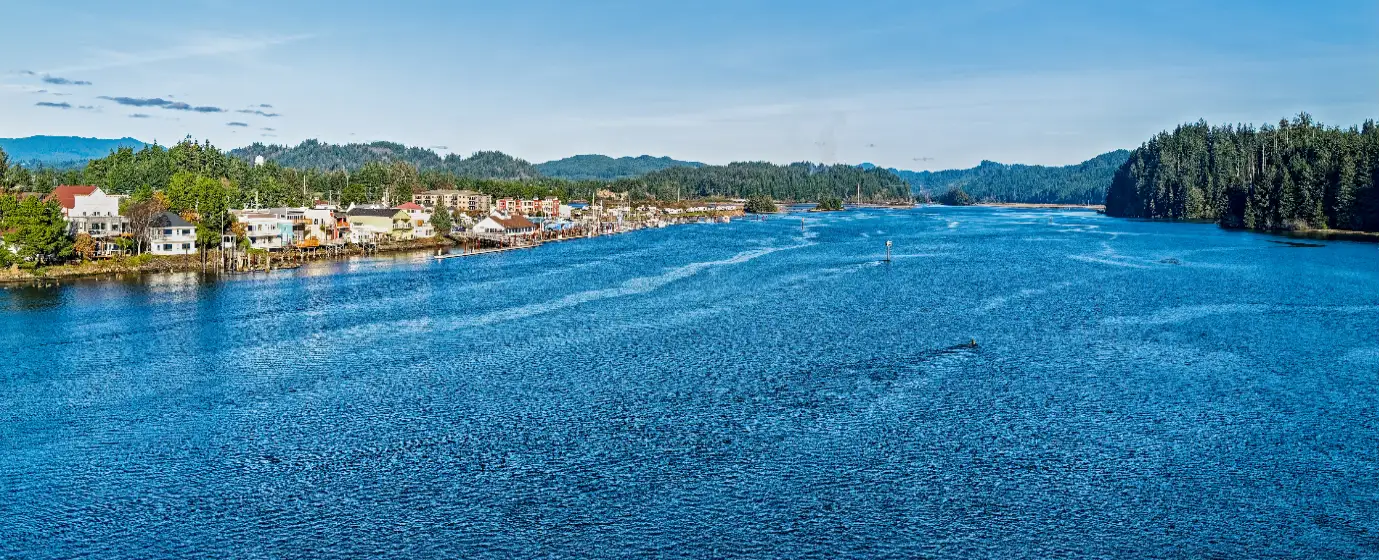
Florence doesn't pretend to be something it's not. There's no manicured resort feel here, no golf-community gatehouse, no planned retirement village with matching architecture and a clubhouse that smells like chlorine. What Florence offers is something harder to find: a real Oregon coastal town where retirees actually make up the majority of the population, the pace is genuinely unhurried, and a $460,000 median home price buys you a livable home a short drive from the Pacific. For the right retiree, this place delivers. For the wrong one, the remoteness and limited services will grind on you faster than you'd expect.
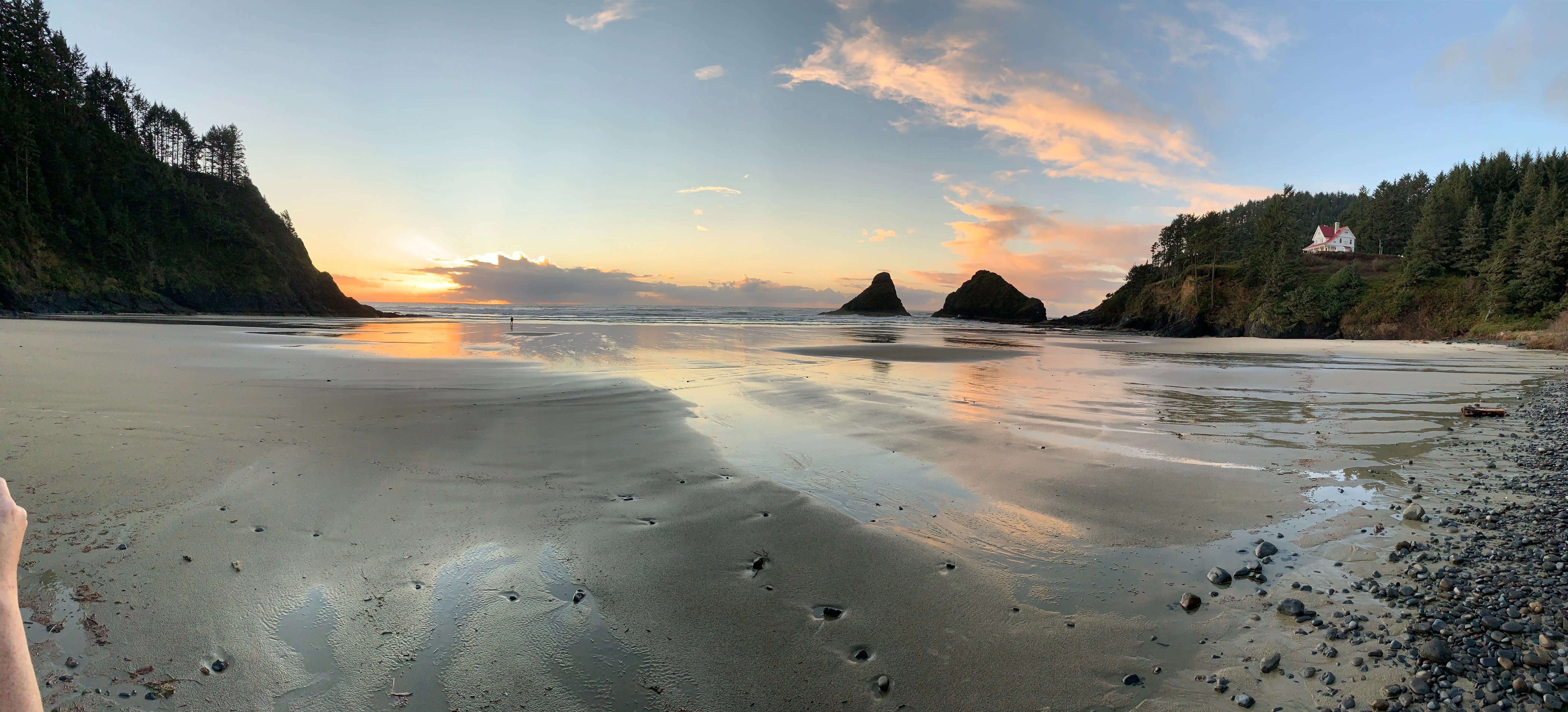
The retiree who thrives in Florence is not looking for big-city culture, a world-class medical system, or a neighborhood that buzzes on Friday nights. They want morning walks through old-growth coastal forest, afternoon drives to Heceta Head, and a community where 43% of residents are over 65 — meaning you are emphatically not the odd one out. Florence has a median resident age of 60.8, which means the coffee shop conversations, the activity calendars, and the general rhythm of daily life are calibrated around people in your stage of life.
This guide covers everything that actually matters before you commit: the Oregon tax picture for retirees, what PeaceHealth Peace Harbor can and can't handle medically, which neighborhoods fit different retirement styles, what daily life actually looks like without a car, and how Florence stacks up against the coastal and inland alternatives most people are weighing against it.
| Income Type | Oregon Tax Treatment |
|---|---|
| Social Security Benefits | Not taxed at the state level |
| Public Pension (Oregon PERS) | Taxable as ordinary income |
| Private Pension / 401(k) | Taxable as ordinary income |
| IRA Distributions | Taxable as ordinary income |
| Investment Income / Capital Gains | Taxed as ordinary income (up to 9.9%) |
| Property Tax Rate (Florence) | Approximately 0.67% of assessed value |
| Estate / Inheritance Tax | Oregon has an estate tax (threshold: $1M) |
| Sales Tax | None |
Oregon is not a low-tax retirement state in the traditional sense, but the exemptions that matter most to fixed-income retirees are real. Social Security income is fully exempt from Oregon state income tax, which provides meaningful relief for retirees whose primary income comes from benefits. The sting comes from ordinary income tax rates, which top out at 9.9% — so if your retirement income is heavily weighted toward pension distributions or IRA withdrawals, Oregon will take a meaningful slice.
The property tax picture is more favorable. At approximately 0.67%, Florence's effective rate is well below the national average, and Oregon's Property Tax Deferral Program for seniors allows qualifying homeowners — generally those 62 and older with limited income — to defer property taxes as a lien against the home, paid back when the property is sold or transferred. That program can significantly reduce annual cash-flow pressure for retirees on fixed incomes. Compared to Washington, which has no income tax but does tax Social Security indirectly through other mechanisms, Oregon's deal is roughly comparable for most retirement income profiles — the calculus depends almost entirely on how your retirement income is structured.

The property tax deferral program for seniors 62 and older is something I bring up with almost every retiree client, because at Florence's roughly 0.67% effective rate, it can meaningfully ease cash flow for buyers on a fixed income. Oregon's exemption on Social Security income is the other piece that consistently surprises retirees moving here from states that tax it.
I've spent three decades renovating and investing in property on this coast, which means I've also watched a lot of retirees settle in and figure out what day-to-day life here actually looks like versus what they expected. If you're weighing whether retiring in Florence makes sense for your situation, I'd welcome the opportunity to share what three decades on this coast have taught me about the properties and neighborhoods that hold up well for retirees long-term.
PeaceHealth Peace Harbor Medical Center at 400 9th Street is the anchor of healthcare in Florence, and for a coastal town of under 10,000 people, it punches meaningfully above its weight. The hospital operates 24 hours a day, seven days a week, and holds a Level III Trauma Center designation — meaning it can stabilize serious emergencies, perform initial interventions, and manage a wide range of acute situations. The emergency department has nine private single-patient rooms including two dedicated trauma bays, and advanced imaging — MRI, CT scanner, digital radiography — sits directly adjacent to the ED. In a coastal community where the nearest major hospital is an hour away, that on-site imaging capability is not a small thing.
The full PeaceHealth campus in Florence has grown substantially. Cardiology services are available at 310 9th Street, behavioral health at 390 9th Street, internal medicine and family medicine nearby, and a Rehabilitation & Wellness Center at 685 Highway 101 offering physical, occupational, and speech pathology services. The 2025 addition of ENT (ear, nose, and throat) care — including both clinical and surgical services — was a direct response to the reality that nearly 200 Florence-area patients had been driving to Eugene for routine ENT appointments. That's the kind of service expansion that matters practically for retirees managing chronic conditions.
What Florence doesn't have is a comprehensive cancer center, cardiovascular surgery suite, or neonatal unit. For anything in those categories, the referral destination is PeaceHealth Sacred Heart Medical Center at RiverBend in Springfield — a 347-bed Level II Trauma Center roughly 60 miles east that offers oncology, cardiovascular surgery, orthopedics, and neurosurgery. That's a 60-minute drive on a clear day, longer in winter. For retirees managing active cancer treatment or conditions that require frequent specialist visits, the drive to RiverBend becomes a real weekly reality, not just a contingency plan. Nine in ten Peace Harbor patients report they would recommend the hospital to others — a strong patient satisfaction number for a community hospital of its size.
Florence has approximately 20 senior living communities — a strikingly deep inventory for a city of under 10,000 — reflecting both the outsized senior population and the demand that's built up from decades of coastal retirement migration.
| Community | Type | Location | Est. Monthly Cost |
|---|---|---|---|
| Shorewood Senior Living | Independent Living | Florence (near 101 corridor) | $2,800–$4,200 |
| Spruce Point Assisted Living & Memory Care | Assisted Living / Memory Care | 375 9th St | $4,500–$6,500 |
| Regency Florence | Assisted Living / Memory Care | 1951 E. 21st St | $4,200–$6,000 |
| Elderberry Square Community | Assisted Living | 3321 Oak St | $3,500–$5,000 |
| New Friends Memory and Residential Care | Residential / Memory Care | Florence | $3,200–$5,500 |
| Bernice Bex Adult Foster Home | Adult Foster Care | 5253 Heceta Beach Rd | $2,500–$4,000 |
| Kerry C. Waller Adult Foster Home | Adult Foster Care | 3855 Spruce St | $2,500–$4,000 |
Spruce Point at 375 9th Street and Regency Florence on East 21st Street both offer the combination of assisted living and memory care on one campus — an important feature for couples who may need different levels of care simultaneously. Regency can accommodate up to 72 residents and provides around-the-clock staffing. New Friends Memory and Residential Care stands out for accepting Medicaid and operating as a locally-run facility — a meaningful option for families navigating memory care without unlimited financial resources.
🌅 Oregon Coast: Best Places to Retire
Wondering how Florence compares to other Oregon Coast cities for retirees? Our complete rankings guide covers every coast city — walkability, healthcare access, scenery, quiet livability, and retirement lifestyle side by side.
See the Full Oregon Coast Best Places to Retire Rankings →Looking to buy in Florence? Estimate your payment.
Enter your numbers to see an estimated monthly mortgage payment.
Estimate only. Excludes HOA fees and mortgage insurance.
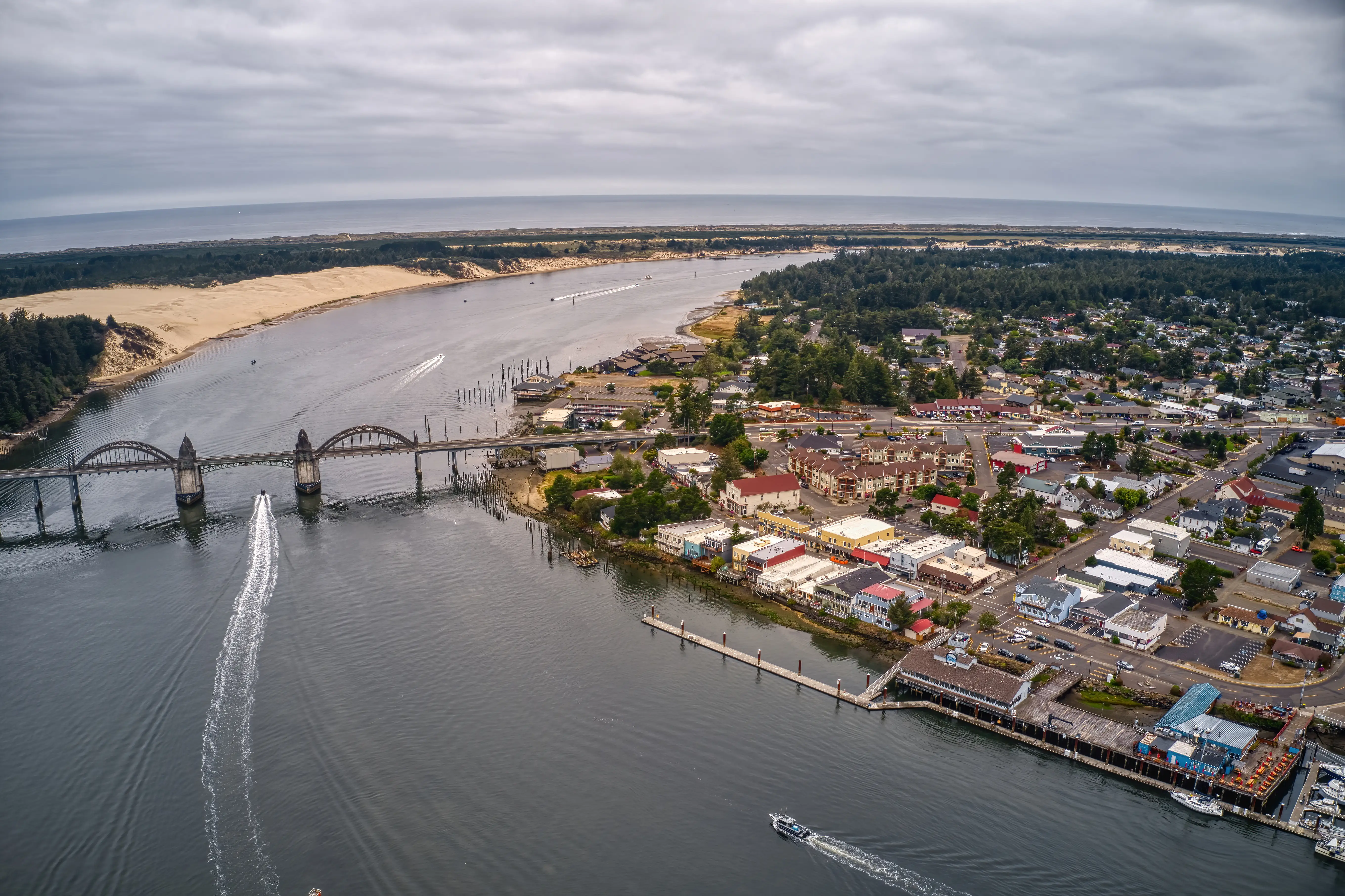
Florence's walkability is honest but limited. Old Town is the exception — the compact historic district along the Siuslaw River waterfront has genuine on-foot access to restaurants, galleries, the farmers market, and the Bay Street Promenade. Outside of Old Town, Florence is a car-dependent town. The surrounding neighborhoods are spread across several miles of Highway 101 frontage, and getting from Heceta Beach or South Florence to Fred Meyer without a vehicle is not practical. A car is not optional here — it's infrastructure.
That said, what daily life offers in exchange for the driving is exceptional. Jessie M. Honeyman Memorial State Park, just three miles south of town, gives retirees year-round access to freshwater lakes, hiking through coastal dunes, and some of the most reliably beautiful scenery in the Pacific Northwest. The Oregon Dunes National Recreation Area stretches along the coast for miles. Morning walks to Darlingtonia State Natural Site — a botanical preserve featuring the carnivorous cobra lily — are a strange, quiet pleasure that never quite gets old for residents who discover it.
The cultural calendar is modest but real. The Florence Rhododendron Festival, held every May, is one of the oldest community festivals on the Oregon Coast and anchors the spring social calendar with a parade, art shows, and the coronation of a festival queen that locals take more seriously than outsiders expect. The Florence Area Farmers Market runs seasonally in Old Town. The Siuslaw Pioneer Museum and Florence Events Center provide a framework for community gatherings, lectures, and arts events throughout the year. None of this compares to Eugene's cultural depth — but for retirees who've already done the city thing and want something quieter, the scale fits.
Getting around without a car requires advance planning. Lane Transit District does not extend to Florence — the city is served by the Cascades East Transit (for eastern Oregon connections) and the South Lane Wheels paratransit and senior transportation service, which provides rides for qualifying seniors and people with disabilities. Grocery delivery and telehealth have also meaningfully expanded the practical independence of Florence retirees who can no longer drive safely. For most retirees, the honest planning question is: what happens if I can't drive in five years? Florence has answers to that question, but they require more coordination than an urban retirement setting would.
| City | Median Home Price | Hospital Access | Walkability | Senior Services Depth | Overall Retirement Fit |
|---|---|---|---|---|---|
| Florence, OR | $460,000 | Level III (on-site) | Low (Old Town only) | High (20+ communities) | ★★★★☆ |
| Yachats, OR | $550,000+ | None (ER in Florence) | Moderate | Low | ★★★☆☆ |
| Newport, OR | $440,000 | Samaritan North Lincoln (Level IV) | Moderate | Moderate | ★★★★☆ |
| Coos Bay, OR | $300,000 | Bay Area Hospital (Level III) | Moderate | Moderate | ★★★☆☆ |
| Reedsport, OR | $220,000 | None (referral to Coos Bay/Eugene) | Low | Low | ★★☆☆☆ |
| Eugene, OR | $425,000 | Level II Trauma (RiverBend) | High | Very High | ★★★★★ |
Coos Bay is the budget alternative. At around $300,000 for a median home, it's substantially more affordable, has Bay Area Hospital with Level III trauma capability, and a more commercial downtown. What it doesn't have is Florence's natural setting or the density of established senior living infrastructure. Eugene is the choice for retirees who want urban amenities and the full PeaceHealth RiverBend system within minutes — but at Florence's median home price, you're getting similar dollars for a much more urban setting without the coast.

Local Expert Takeaway: Retirees who thrive in Florence are typically those who arrive knowing the trade-offs, not discovering them. If your retirement model involves frequent specialist visits, prioritize homes in central Florence — within five minutes of Peace Harbor on 9th Street — rather than the more remote Heceta Beach or Munsel Lake corridors. Couples where one partner is active and one may need assisted care within the next decade should seriously evaluate Spruce Point and Regency Florence early, before a health event forces the conversation. The retirees I'd recommend look at Newport or Eugene first are those who can't drive and don't have family nearby to coordinate transportation — Florence rewards independence and struggles to replace it.
🌅 Oregon Coast: Best Places to Retire
Wondering how Florence compares to other Oregon Coast cities for retirees? Our complete rankings guide covers every coast city — walkability, healthcare access, scenery, quiet livability, and retirement lifestyle side by side.
See the Full Oregon Coast Best Places to Retire Rankings →Is Florence a good place to retire?
Florence is an excellent fit for self-sufficient, active retirees who prioritize natural beauty, a genuine community feel, and a slower pace over urban amenities or medical-system depth. The combination of a 43% senior population, 20-plus senior living communities, and a coastal setting that's hard to match at the price point makes it one of the more compelling retirement destinations on the Oregon Coast. Retirees who need frequent specialist care or prefer walkable urban access tend to find the remoteness limiting over time.
What is healthcare like for retirees in Florence?
PeaceHealth Peace Harbor Medical Center at 400 9th Street provides 24/7 emergency and trauma care at a Level III designation, with on-site imaging, cardiology, behavioral health, internal medicine, and rehabilitation services. For major surgeries, cancer treatment, or cardiovascular procedures, the referral destination is PeaceHealth Sacred Heart at RiverBend in Springfield — about 60 miles east. Retirees managing active complex conditions should factor that drive into their planning.
How does Florence compare to retiring in Eugene?
Eugene offers a Level II trauma center minutes away, far greater walkability, a larger cultural calendar, and a more connected urban infrastructure — at a comparable median home price around $425,000. Florence offers the Pacific coast, a dramatically quieter pace, and a community where being retired is the norm rather than the exception. The decision usually comes down to whether you're retiring toward the coast or toward city infrastructure — both are legitimate retirement strategies, and they point to different places.
Explore the full Florence series: The Ultimate Florence Relocation Guide · Is Florence Safe? · Cost of Living in Florence · Best Neighborhoods in Florence · Florence Schools & Family Life · Florence Youth Sports · Florence Parks & Recreation · Retiring in Florence · 1031 Tax-Deferred Exchange in Florence · Florence First-Time Homebuyers Guide · · Moving to Florence from California · Florence Realtor's Perspective · Top 10 Questions a Realtor Gets About Florence
Tell us what you need help with and we'll connect you with local resources.

About the Author
Todd Davidson is the founder of Living in Oregon and Living in Washington, where he publishes in-depth city guides, neighborhood resources, and local market insights covering more than 180 communities across the Pacific Northwest. While his background is in home financing and real estate, he created these digital platforms to help families research and compare regions before making a move.
Check Out the Oregon Coast Rankings: Oregon Coast Cost of Living — All 16 Cities Ranked · Best Places to Retire on the Oregon Coast · Best Oregon Coast Cities for Families · Best Oregon Coast Cities for Remote Workers · Oregon Coast Real Estate Market Report 2026 · Oregon Coast vs. Washington Coast