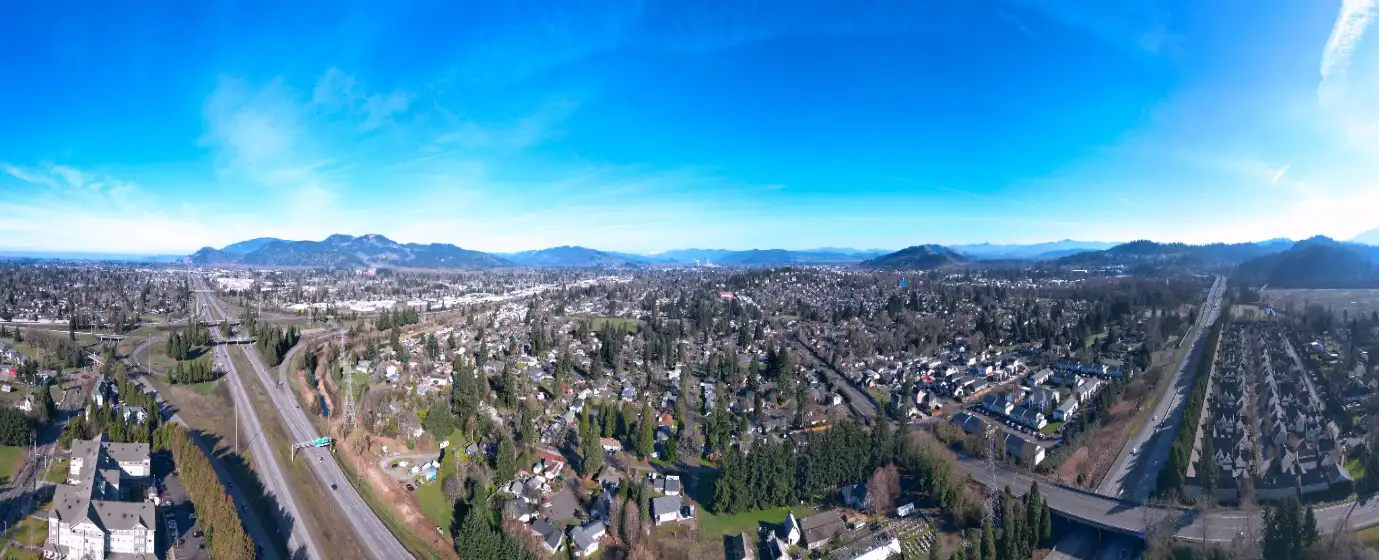
Willamette Valley · Oregon
Retiring in Springfield: Is It the Right Fit for Your Next Chapter? (2026)
Springfield doesn't make the retirement destination shortlists you'll find in travel magazines, and that's exactly why retirees who end up here tend to stay. The honest answer is this: if your retirement looks like access to serious healthcare, a paid-off home with low carrying costs, and proximity to Eugene's arts and outdoor scene without Eugene's prices, Springfield fits. If you're picturing a walkable downtown, a buzzing restaurant row, or a retirement community with a golf course on the premises, you'll want to keep reading before you commit.
The retiree who thrives here tends to be mobile — meaning they're comfortable driving five minutes to reach most things — and practical in the best sense. They want a mortgage-free or low-cost home, a world-class hospital within a few miles, and real nature access. The Willamette Valley's mild climate, the proximity to Mount Pisgah Arboretum, and the fact that Eugene's symphony, university lectures, and medical specialists are a 10-minute drive all matter to people who've decided that quality of life doesn't require a trendy zip code.
This guide covers the Oregon tax picture for retirees, Springfield's two hospitals, senior living options across the city, what daily life actually looks like on a fixed income here, and how it stacks up against Eugene, Cottage Grove, and other Willamette Valley alternatives worth comparing.
Oregon's tax treatment of retirement income is a mixed picture — genuinely favorable on some fronts and harder to swallow on others. The table below captures what matters most for retirees moving to Springfield.
| Income / Asset Type | Oregon Tax Treatment |
|---|---|
| Social Security Benefits | Not taxed by Oregon |
| Public pension (PERS/federal/military) | Taxed as ordinary income; limited retirement credit available |
| Private pension / 401(k) / IRA distributions | Taxed as ordinary income |
| State income tax rate (retiree income) | 8.75%–9.9% for most retirement income |
| Capital gains | Taxed as ordinary income |
| Property tax rate (Springfield) | Approximately 0.85% of assessed value |
| Estate / inheritance tax | Oregon estate tax applies; exemption starts at $1 million |
| Sales tax | None — Oregon has no sales tax |
Oregon's high income tax rate on pension distributions and IRA withdrawals is the headline that catches retirees off guard. A retired couple drawing $80,000 from a 401(k) will pay Oregon income tax on most of that — there's no blanket pension exclusion the way some Sun Belt states offer. The retirement credit available to taxpayers over 62 helps partially offset that burden, but it phases out quickly as income rises, so retirees with moderate-to-comfortable distributions should run the numbers with a CPA before the move.
On property taxes, Springfield is genuinely competitive. At approximately 0.85%, a home at the city's median sold price produces an annual tax bill of roughly $3,870 — meaningfully lower than most Portland suburbs. Oregon also offers a Property Tax Deferral Program for seniors 62 and older who meet income requirements, allowing the state to pay property taxes on a lien basis until the home is sold or transferred. For retirees on fixed incomes who own their home outright, that program can be a meaningful cash-flow tool. The no-sales-tax environment provides daily relief that partially compensates for the income tax hit — over a year, that adds up for households buying furniture, appliances, and vehicles.
Springfield's healthcare story is the strongest argument the city has for retirees weighing their options. Most cities this size have one community hospital. Springfield has two — and one of them is a regional medical powerhouse that rivals anything outside of Portland.
PeaceHealth Sacred Heart Medical Center at RiverBend at 3333 RiverBend Drive is the anchor. The 388-bed facility opened in 2008 and operates a 24-hour Level II Trauma Center serving an eight-county region across Western and Southern Oregon. For retirees, the relevant detail is the Oregon Heart and Vascular Institute and the Oregon Neurosciences Institute, both housed on campus. The hospital operates 24 smart operating suites handling roughly 20,000 surgical cases per year, including robotic-assisted procedures, and its Comprehensive Stroke Center is among the most advanced in the Pacific Northwest outside of OHSU in Portland. When serious cardiac or neurological events occur — events that statistically become more common after 65 — having this level of care within a 10-minute drive from most Springfield neighborhoods is not a minor convenience. It's a reason to choose this city.
The second hospital, McKenzie-Willamette Medical Center at 1460 G Street, serves a different but complementary role. The 113-bed community hospital earned a Forbes Top Hospitals designation for 2026 and consecutive Leapfrog "A" grades for patient safety — distinctions that signal consistent operational quality rather than just size. U.S. News designates it as High Performing in hip replacement, spinal fusion, and heart bypass surgery, which speaks directly to the orthopedic and cardiovascular needs that dominate retirement-age healthcare. The 30-minutes-or-less emergency service pledge and the Healthgrades Outpatient Joint Replacement Excellence Award make it particularly relevant for active retirees who want fast access to orthopedic care. Specialty procedures requiring academic medical center depth — transplants, complex oncology trials — would involve travel to OHSU in Portland, roughly 110 miles north, but for the vast majority of what retirees need day to day, Springfield's two hospitals cover it.
The senior living market in Springfield has grown to match its demographics. With roughly 18% of residents over 65 — a share that has grown meaningfully in recent years — the city now supports a range of options from independent living through memory care.
| Community | Type | Location | Est. Monthly Cost |
|---|---|---|---|
| The Esther at Riverbend | Assisted Living | Riverbend corridor | $4,500–$6,500 |
| The Rawlin at Riverbend | Memory Care | Riverbend corridor | $5,500–$7,500 |
| Timber Pointe Senior Living | Independent & Assisted | West Springfield | $3,200–$5,000 |
| Spring Valley Assisted Living | Assisted Living & Respite | 770 Harlow Rd | $3,500–$5,200 |
| Woodside Senior Living | Assisted Living | Near local hospital | $3,800–$5,500 |
| Bayberry Commons Senior Living | Assisted Living & Memory Care | Springfield | $3,800–$5,800 |
| Sweetbriar Villa | Assisted Living & Memory Care | Springfield | $3,500–$5,200 |

Looking to buy in Springfield? Estimate your payment.
Enter your numbers to see an estimated monthly mortgage payment.
Estimate only. Excludes HOA fees and mortgage insurance.
The honest walkability picture is this: Springfield has a Walk Score of 46, which means a car is not optional for most daily errands. Retirees who have given up driving, or plan to soon, need to factor that into the neighborhood decision carefully — some parts of the city, particularly around the Gateway corridor near Pioneer Parkway, have better access to services on foot than the residential south or east portions.
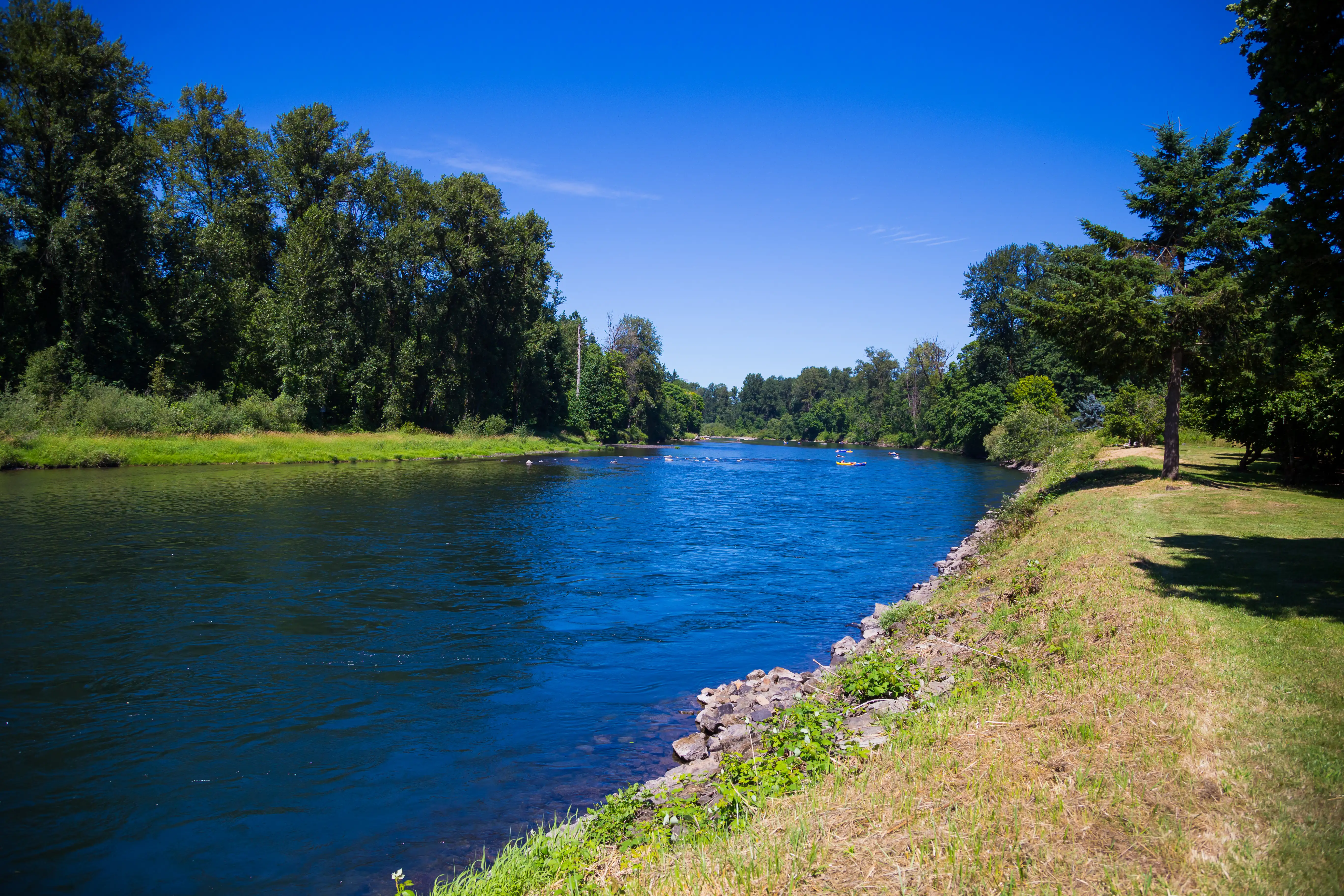
That said, the daily texture of life here has more going for it than the walkability score suggests. Dorris Ranch — Oregon's oldest living filbert orchard and a working fruit farm — is a place locals walk year-round along the Willamette River. The trails are flat, shaded in summer, and genuinely peaceful in a way that Forest Park in Portland can't replicate because they're not crowded. Mount Pisgah Arboretum, technically in the adjacent Howard Buford Recreation Area, sits just minutes southeast and offers accessible trails through old-growth trees and native plant gardens — the kind of daily walk that retired naturalists move here specifically to access. The annual Fall Festival at Mount Pisgah Arboretum draws thousands each October with crafts, local food, and guided walks, and has run for decades without interruption.
Island Park and Clearwater Park along the river give retirees easy picnic access and summer programming without needing to go to Eugene. The Springfield History Museum on A Street provides a low-key cultural anchor, and for retirees who want larger cultural programming — the Hult Center for the Performing Arts, University of Oregon athletic events, Lane Community College lectures — that 10-minute drive to Eugene makes it genuinely accessible rather than theoretical. Getting around without a car is manageable but not easy: Lane Transit District's bus system connects Springfield to Eugene with reasonable frequency, but routes within Springfield itself require patience, and not all senior living communities are positioned near LTD stops. Retirees who remain mobile will find daily convenience largely adequate — Safeway, Fred Meyer, and a Costco are accessible with a short drive — while those planning to age in place without a vehicle should choose their neighborhood deliberately.
What surprises many people after six months here is how much the Eugene adjacency actually changes daily life. You're effectively in a college town with medical resources and 60,000-person-city taxes and prices. The Lane County Farmers Market runs from April through November, the Whiteaker neighborhood's food and brewery scene is minutes away, and UO campus events are freely accessible — but you come home to a quieter street and a lower property tax bill. For retirees who want urban access without urban density, that pairing is the actual value proposition of Springfield.
| City | Median Home Price | Hospital Access | Walkability | Senior Living Depth | Retirement Value Rating |
|---|---|---|---|---|---|
| Springfield, OR | ~$422,000 | Excellent (2 hospitals, Level II Trauma) | Low (Walk Score 46) | Strong | ⭐⭐⭐⭐ |
| Eugene, OR | ~$475,000 | Shared PeaceHealth system | Moderate | Very strong | ⭐⭐⭐⭐ |
| Cottage Grove, OR | ~$320,000 | Limited (no trauma center nearby) | Low | Limited | ⭐⭐⭐ |
| Corvallis, OR | ~$490,000 | Good (Samaritan Health) | Moderate | Moderate | ⭐⭐⭐½ |
| Roseburg, OR | ~$340,000 | Moderate (Mercy Medical) | Low | Moderate | ⭐⭐⭐ |
| Junction City, OR | ~$370,000 | None local | Very low | Very limited | ⭐⭐ |

Local Expert Takeaway: Retirees who thrive in Springfield are typically those who want to own outright at a lower price point, remain close to PeaceHealth RiverBend for peace of mind, and access Eugene's cultural and dining scene without paying Eugene prices. The Riverbend corridor and west Springfield near Timber Pointe Senior Living are the two zones I'd point active retirees toward first — newer single-level construction, proximity to both hospitals, and quick I-5 access for day trips. Retirees who need walkability or who are planning to age without a vehicle should either choose the Gateway area carefully or lean toward Eugene's Friendly Street or South Hills neighborhoods instead.
Is Springfield a good place to retire?
For retirees who prioritize healthcare access, home affordability, and outdoor recreation, Springfield is a strong fit. The combination of PeaceHealth RiverBend's Level II Trauma Center, McKenzie-Willamette's high-performing orthopedic and cardiac programs, and median home prices around $422,000 creates a value proposition that's hard to match in Western Oregon. The trade-off is limited walkability and a modest downtown — retirees who want a pedestrian lifestyle may prefer Eugene.
What is the property tax rate in Springfield, Oregon?
Springfield's property tax rate is approximately 0.85% of assessed value, making it one of the more affordable tax environments in the Willamette Valley. On a home at the city's median sold price, that translates to roughly $3,870 per year. Oregon also offers a Property Tax Deferral Program for homeowners 62 and older who qualify by income, allowing the state to cover taxes on a lien basis until the home transfers.
How does Springfield compare to Eugene for retirement?
The two cities share the same hospital system and are 10 minutes apart, which makes the comparison largely about price and lifestyle. Springfield offers lower home prices and property taxes in exchange for less walkability and a smaller cultural footprint. Eugene's downtown neighborhoods near the Whiteaker district and campus offer more on-foot access and a broader senior living selection. Many retirees split the difference by living in Springfield and spending weekends in Eugene.
Explore the full Springfield series: Relocation Guide · Is Springfield Safe? · Cost of Living · Best Neighborhoods · Schools & Family Life · Youth Sports · Parks & Recreation · Retiring in Springfield · 1031 Exchange · First-Time Buyer · · Moving from California
Tell us what you need help with and we'll connect you with local resources.

About the Author
Todd Davidson is the founder of Living in Oregon and Living in Washington, where he publishes in-depth city guides, neighborhood resources, and local market insights covering more than 180 communities across the Pacific Northwest. While his background is in home financing and real estate, he created these digital platforms to help families research and compare regions before making a move.