Willamette Valley · Oregon
Living in Springfield: The Ultimate Relocation Guide (2026)
Maybe you've been priced out of Eugene and someone mentioned Springfield as the obvious alternative just across the freeway. Maybe your employer — PeaceHealth, PacificSource, or one of the manufacturing operations anchoring the local economy — is drawing you to Lane County and you're trying to figure out which side of I-5 makes more sense. Or maybe you drove through downtown Springfield, noticed the Official Simpsons Mural, and thought the place looked rawer and more interesting than you expected from a mid-sized Oregon city. Whatever brought you here, Springfield is a city that consistently surprises people — and occasionally disappoints them for reasons nobody bothered to explain upfront.
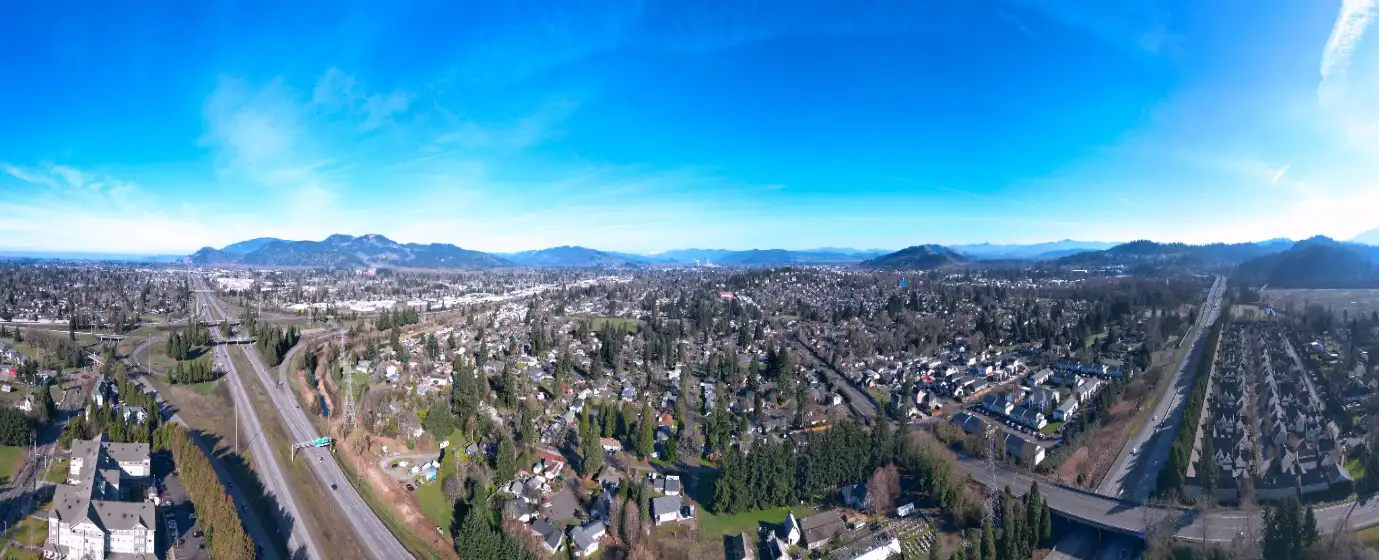
Springfield sits on the eastern edge of the Eugene metro, separated from its much-better-known neighbor mostly by a freeway and a significant gap in median home prices. The McKenzie River traces the northern city limits, Thurston Hills rises to the east, and the Willamette Valley flatlands stretch south and west. It's genuinely working-class in a way that Eugene hasn't been for a generation — more Franz Family Bakeries than farm-to-table, more LTD EmX commuter than Lyft. That identity isn't a flaw. It's the reason housing here remains accessible while Eugene drifts upward, and it shapes everything from the school culture to the Saturday-morning energy at Island Park.
This guide will help you figure out whether Springfield is the right fit for your household in 2026. You'll find honest assessments of the neighborhoods, a clear-eyed look at the schools and crime picture, a breakdown of who stays and why, and the specific tradeoffs that cause some buyers to regret the decision six months in. If you're weighing Springfield seriously, read it before you make an offer.
Not every city works for every buyer. Springfield has a distinct profile — and knowing who it genuinely suits will save you weeks of second-guessing.
| Best For | Why |
|---|---|
| Commuters to Eugene | A 10-minute drive or EmX bus ride puts you in Eugene's core — at a price point typically $50K–$80K below comparable Eugene homes |
| First-time buyers | Citywide median sold prices in the low-to-mid $400s keep entry-level homeownership realistic for households earning near the median income |
| Healthcare workers | PeaceHealth Sacred Heart Riverbend and McKenzie-Willamette Medical Center are both here — eliminating the cross-town commute entirely |
| Families seeking outdoor access | Thurston Hills Natural Area, Dorris Ranch, and Mount Pisgah Arboretum put serious trail systems within a 15-minute drive of nearly every neighborhood |
| Remote workers on a budget | Lower housing costs than most West Coast metros, solid broadband infrastructure, and easy freeway access when travel is required |
| Retirees on fixed income | No sales tax, property taxes well below the national average, and a growing healthcare infrastructure make the cost math work for many retirees |
The geographic reality of Springfield is that it functions as a single metro with Eugene while feeling like a separate city in almost every meaningful way. Eugene has the university, the downtown dining scene, and the political identity that shows up in national headlines. Springfield has the river access, the working waterfront past, and a community that tends to mind its own business and get things done. That divide runs deeper than geography — it shapes how people spend their weekends, where they eat, and what they expect from neighbors.
Daily life in Springfield revolves heavily around the car. With a Walk Score of 46, most errands require driving, and the city's layout reflects decades of auto-oriented development along Main Street, Pioneer Parkway, and the Gateway commercial corridor. The EmX rapid transit line connecting Springfield to Eugene is legitimately useful for commuters — it runs frequently and takes about 20 minutes to reach downtown Eugene from the Springfield Transit Station — but it doesn't solve the last-mile problem for most residential errands. If walkability matters to your household, you'll need to choose your neighborhood deliberately.
The commute picture is genuinely favorable. Getting from a Springfield neighborhood to Eugene's core takes about 10 minutes by car under normal conditions, and even during morning peak hours the Gateway District to downtown Eugene run rarely exceeds 20 minutes. The one consistent friction point locals mention is the I-105 interchange near Gateway during the 7:30–8:30 a.m. window — it backs up noticeably when there's any incident on the main lanes. Knowing to leave five minutes earlier or cut through Mohawk Boulevard typically solves it.
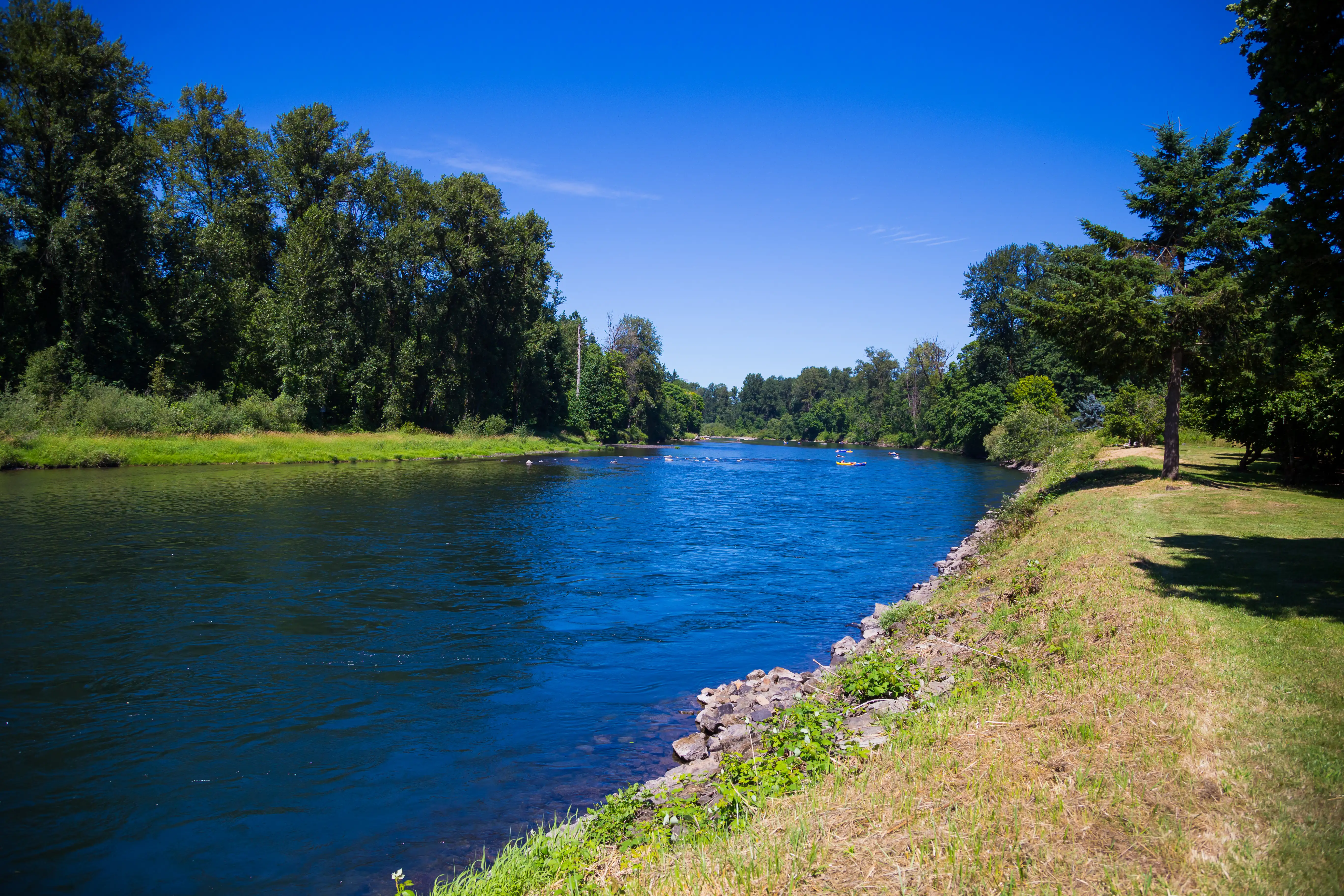
What surprises most people after six months of living in Springfield is how much of the social fabric happens outdoors. Island Park along the Willamette, the Clearwater Park boat launch, and the Willamalane Park and Recreation District facilities pull families and retirees alike into a consistent outdoor rhythm that feels nothing like the indoor-focused suburban experience you'd have in a strip-mall suburb. The city is rougher around the edges than Eugene, and parts of downtown haven't fully turned the corner, but the parks and river access give Springfield a quality-of-life floor that keeps residents who discover it from leaving.
The price-to-space ratio is real. For buyers coming from Portland, the Bay Area, or even Eugene's tighter neighborhoods, the ability to buy a three-bedroom home in the low $400s — with a yard, in an established neighborhood — recalibrates what homeownership feels like. Springfield isn't cheap in an absolute sense, but relative to the rest of the Pacific Northwest coast, it represents genuine value for households earning in the $65K–$90K range.
The outdoor infrastructure surrounding Springfield is exceptional for a city this size. Thurston Hills Natural Area offers miles of forested trails that start essentially at the edge of the Thurston neighborhood. Dorris Ranch — the oldest commercial filbert orchard in the United States — doubles as a Willamalane-managed natural area with walking trails along the Middle Fork Willamette. Mount Pisgah Arboretum, technically just outside the city limits, functions as Springfield's premium trail destination for residents willing to drive 10 minutes south. For households that structure their weekends around hiking, paddling the McKenzie, or trail running, Springfield's location is hard to beat.
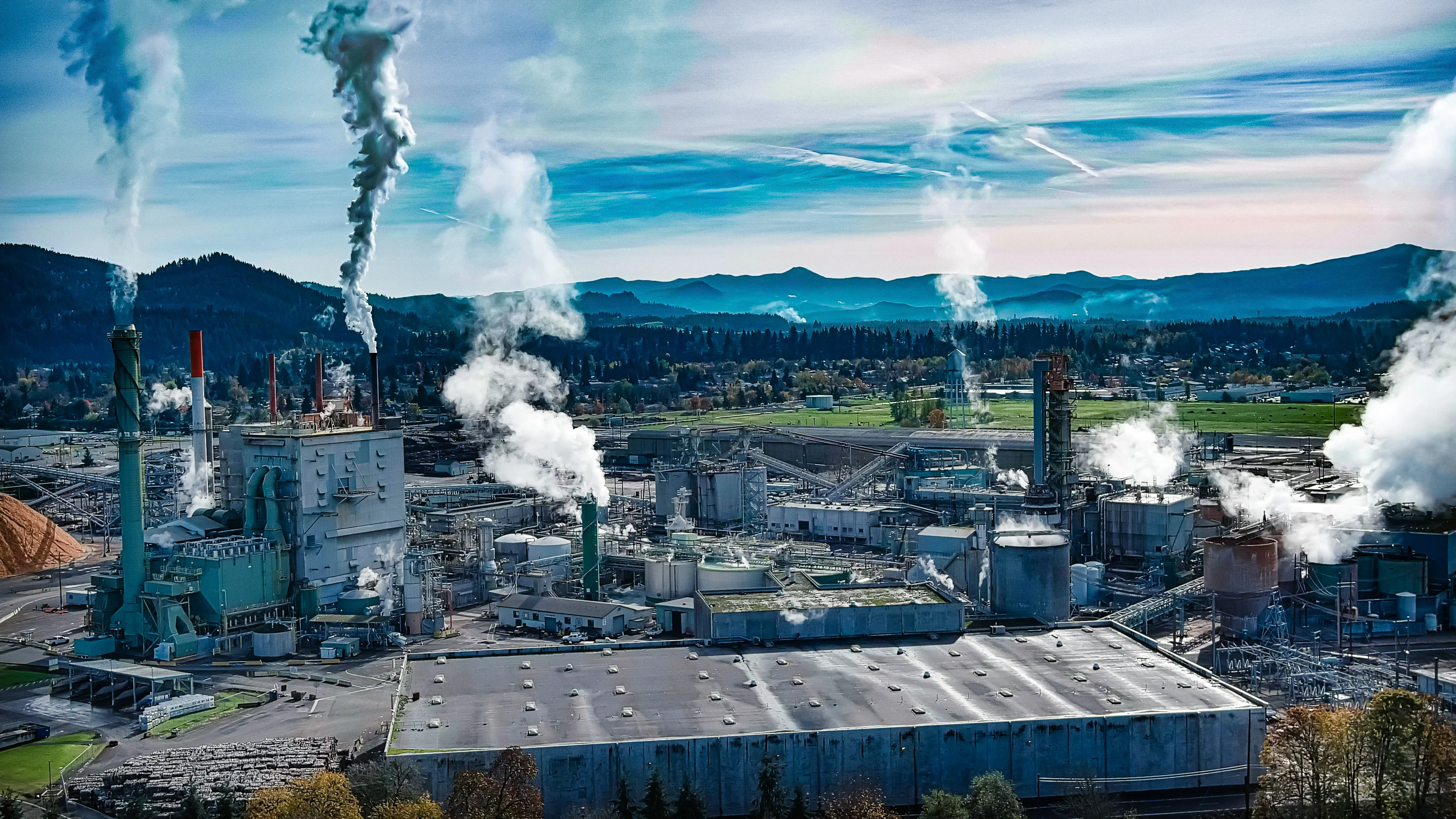
The employer base has diversified meaningfully over the past two decades. PeaceHealth's Sacred Heart Medical Center at Riverbend now supports more than 2,700 jobs and anchors a healthcare corridor that has made Springfield's economy more recession-resistant than its timber-industry roots would suggest. PacificSource Health Plans, Royal Caribbean's customer service operations, and Wayfair's regional presence add white-collar employment that didn't exist here a generation ago. For households with one or both partners in healthcare, insurance, or customer operations, the ability to live close to work is a genuine lifestyle advantage.
Springfield also benefits enormously from Oregon's tax structure. There's no sales tax anywhere in the state, property taxes here run approximately 0.85% of assessed value — below the national average — and the lack of a local income tax add-on keeps the overall burden manageable. For buyers comparing Springfield to Washington state cities or California markets, the tax picture is one of the most underrated arguments in Springfield's favor. Combine that with housing costs that are roughly 67% lower than San Francisco and the math becomes difficult to argue with.
Looking to buy in Springfield? Estimate your payment.
Enter your numbers to see an estimated monthly mortgage payment.
Estimate only. Excludes HOA fees and mortgage insurance.
The schools are the most significant concern for families with children, and the data doesn't allow for comfortable hedging. The Springfield School District earned a C+ rating in most current assessments, and state test score proficiency figures — roughly 25% in math and 35% in reading — run below Oregon state averages. The district's 2025 graduation rate of 76.9% is a historic high and a genuine achievement, but it still trails what families moving from higher-rated suburban districts typically expect. Thurston High School performs meaningfully better than the district average, and the Academy of Arts and Academics posts a 100% graduation rate for its specialized program. But if schools are the deciding factor, understanding which specific school serves your address — not just the district grade — is essential before you close.
The property crime rate is elevated. At 28 incidents per 1,000 residents, Springfield's property crime figure is higher than what buyers from quieter suburban markets are used to seeing. This doesn't mean every neighborhood is equally affected — the experience in Thurston or Hayden Bridge differs significantly from parts of downtown and the Gateway corridor — but it's a number that shapes insurance costs, parking habits, and garage discipline in ways that catch some buyers off guard. The violent crime rate of 3.3 per 1,000 is more moderate, roughly in line with comparably sized Oregon cities.
Walkability is a structural limitation rather than something a specific neighborhood can fully overcome. The city's layout was built for cars, and while the EmX line provides a real commuting option, daily life without a vehicle is difficult in most of Springfield's residential areas. Buyers coming from Portland's inner eastside or any dense Pacific Northwest city should recalibrate their expectations before committing to a lifestyle that assumed on-foot access to groceries and restaurants.
Why do people leave Springfield? The honest answer, based on what shows up in local conversations, comes down to two things: schools and upward mobility. Families whose children are approaching middle school age sometimes make the decision to move into the South Eugene or Bethel attendance zones for the high school experience. And households whose incomes rise significantly sometimes find the social and cultural gravity of Eugene — the restaurants, the university events, the Whiteaker neighborhood energy — pulls them west. Springfield is where people start their Pacific Northwest chapter; for some, Eugene is where they finish it.
Thurston occupies Springfield's southeastern corner, climbing into the hills toward Thurston Hills Natural Area, and it delivers the clearest picture of what Springfield looks like at its most family-friendly. Homes trend toward newer construction — many built from the 1980s onward — with larger lots, hillside views, and a suburban feel that is noticeably quieter than the city's central corridors. The median sold price in Thurston runs around $468,000, and the main draw beyond the price point is proximity to trail access and the attendance zone for Thurston High School, which posted a 90.4% graduation rate for the Class of 2025.
Best for: Families with school-age children who want newer construction and trail access without leaving Springfield's price range.
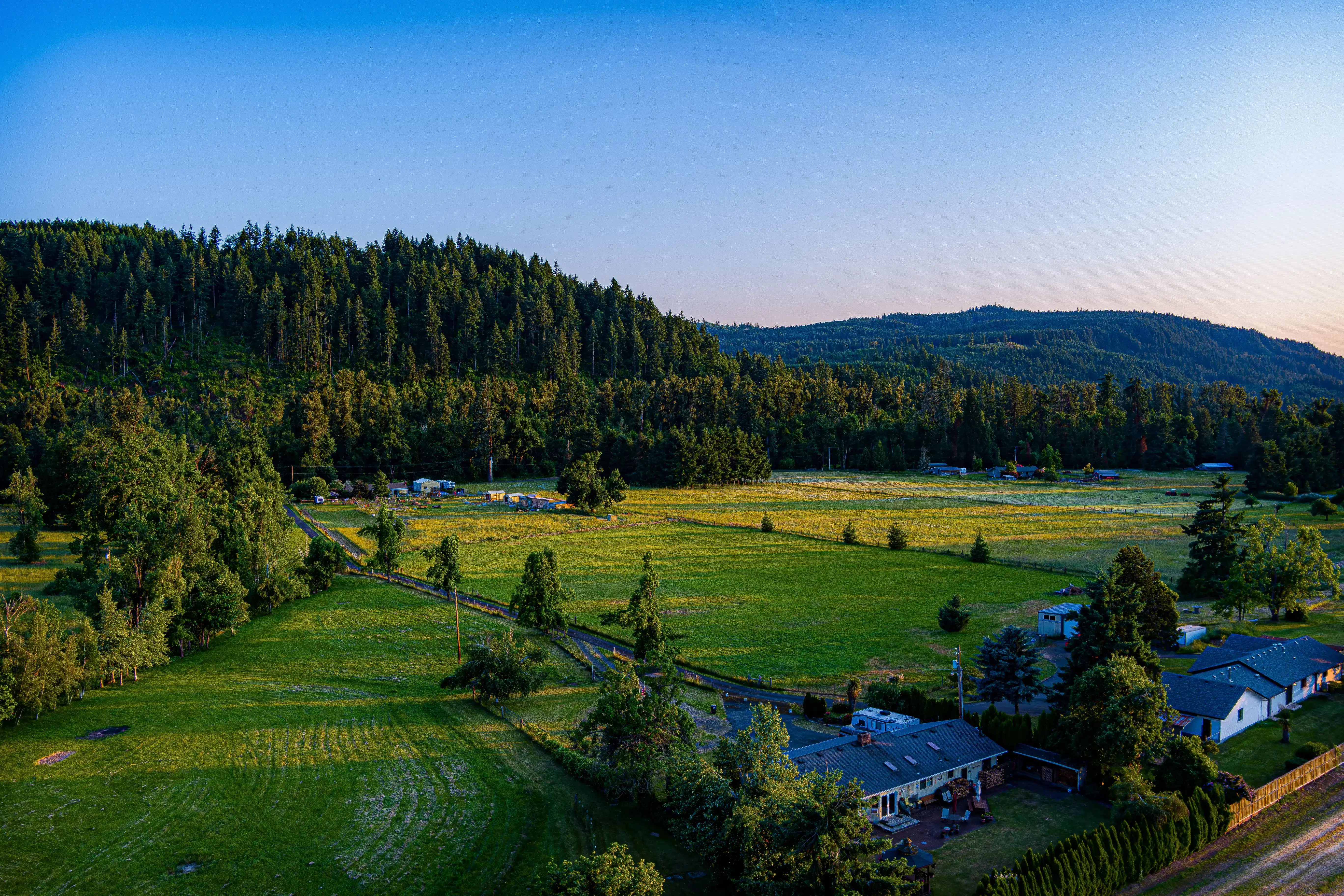
Hayden Bridge sits in northeastern Springfield near the McKenzie River, and it draws buyers who prioritize outdoor access over urban convenience. The neighborhood has a somewhat rural character at its edges, with views toward the river corridor and easy access to fishing and kayaking put-ins that Eugene-side buyers rarely know exist. Pricing runs at market rate for newer and mid-vintage construction, and the trade-off is distance — getting to Eugene or Springfield's retail core requires a deliberate drive rather than a quick hop.
Best for: Outdoor-focused households, remote workers, and buyers who want a quieter riverside setting without a long commute to work.
Gateway is Springfield's primary commercial corridor, anchored by the retail cluster near Beltline Highway and Pioneer Parkway, and it functions more as an activity hub than a residential destination. Homes in the area have a median in the upper $390s, reflecting the trade-off between lower price points and proximity to high-traffic commercial development. The positive case for Gateway is transit access — the EmX line runs directly through this corridor — and the density of everyday errands within a short drive.
Best for: Commuters who prioritize transit access and budget, and buyers who don't mind a busier surrounding environment.
The Washburne District is Springfield's most architecturally interesting neighborhood, a stretch of early 20th-century Craftsman bungalows, arts spaces, and small commercial nodes that give it more character per block than almost anywhere else in the city. Median prices run in the $440K–$480K range for restored bungalows, and the catch is that some blocks are still working through revitalization — the neighborhood's appeal varies noticeably by block. This is where Springfield's arts community, the Springfield History Museum, and what passes for a walkable residential experience converge.
Best for: Buyers who want character architecture, proximity to Springfield's emerging arts identity, and don't need everything to already be polished.
Glenwood occupies a politically interesting position — technically part of Springfield, it sits physically between the two cities along the Willamette River, and residents can access South Eugene High School's IB program through boundary lines. That school access is Glenwood's biggest story: Camas Ridge Community School and Roosevelt Middle School both carry strong ratings, and South Eugene High — considered one of the stronger public high schools in Lane County — is the assigned school for much of the neighborhood. Home prices run below the citywide median, making Glenwood one of the more strategically valuable addresses for families focused on school quality.
Best for: Families who want access to Eugene-side schools at Springfield-level prices — a genuinely rare combination in this metro.
Midtown Springfield is the city's geographic and commercial center, a mix of post-war housing stock, small businesses along Main Street, and the kind of lived-in residential texture that comes from decades of working-class homeownership. Prices tend to run in the mid-to-low $400s for decent condition homes, and the upside is central access — getting anywhere in Springfield from Midtown takes 10 minutes or less. The downside is that some blocks reflect the city's ongoing effort to elevate its commercial core, and buyers should tour the specific streets around any listing rather than assuming neighborhood-wide consistency.
Best for: Buyers who want central location and affordability over polish, and aren't deterred by block-level variability.
Kelly Butte sits on Springfield's outer edges and offers a more semi-rural character — larger parcels, less density, and a quieter pace that appeals to buyers who want space without committing to a true rural property. Prices vary significantly depending on lot size and condition, but the general profile is below the Thurston-level ceiling with more land per dollar. The catch is that services and amenities require a deliberate drive, and the neighborhood lacks the walkable infrastructure and school proximity that anchor Thurston and Glenwood.
Best for: Buyers who want breathing room, larger lots, and quiet — and are fully comfortable being car-dependent.
Downtown Springfield is the most honest indicator of where the city is in its arc. The Simpsons Mural on Main Street is legitimately famous among fans — Springfield, Oregon holds a strong claim to being the inspiration for the show — and the History Museum and a handful of local businesses give the district genuine points of interest. But downtown is still in active transition, with commercial vacancy and some blocks that reflect years of disinvestment. Residential options here suit buyers who want to be early in a revitalization story rather than buyers who need things already figured out.
Best for: Buyers who are comfortable with urban grit, want the lowest price points in the city, and see potential in a neighborhood still finding its footing.
| City | Best For | Approx. Median Home Price | Commute to Eugene | Vibe |
|---|---|---|---|---|
| Springfield, OR | First-time buyers, healthcare workers, outdoor access | ~$430K | 10 min | Working-class, river access, improving |
| Eugene, OR | University culture, downtown dining, walkability | ~$490K–$520K | N/A (is Eugene) | College city, progressive, higher-density |
| Coburg, OR | Small-town quiet, rural character | ~$400K–$440K | 15 min | Historic small town, tight-knit |
| Creswell, OR | Deep budget buyers, rural commuters | ~$360K–$390K | 30 min | Rural, fast-growing, limited services |
| Junction City, OR | Space, lower prices, agricultural setting | ~$350K–$380K | 25 min | Agricultural town, quiet, spread out |
| Pleasant Hill, OR | Rural acreage, McKenzie River corridor | ~$480K–$550K | 20 min | Rural, property-focused, very quiet |
| Metric | Data |
|---|---|
| Population (2026) | Approximately 60,840 |
| Median Sold Home Price | ~$422K–$435K (citywide); $455K–$460K in select sub-markets |
| Median Household Income | $68,761 |
| Property Tax Rate | Approximately 0.85% of assessed value |
| School District | Springfield School District (C+) |
| Violent Crime Rate | 3.3 per 1,000 residents |
| Property Crime Rate | 28 per 1,000 residents |
| Walk Score | 46 (minimally walkable) |
| Commute to Eugene | ~10 minutes by car |
| Transit | LTD EmX rapid transit, bus network |
| Major Employers | PeaceHealth, McKenzie-Willamette Medical Center, PacificSource Health Plans, Franz Family Bakeries, International Paper |
| No Sales Tax | ✅ Oregon statewide |
Springfield has a legitimate, documented claim to being the real-world inspiration for the fictional Springfield on The Simpsons. Matt Groening grew up in Portland and has cited Springfield, Oregon as a childhood touchstone — and the city leaned fully into that legacy when it commissioned the Official Simpsons Mural on Main Street. It's become a genuine pilgrimage destination for fans and a consistent source of local pride that feels genuinely earned rather than manufactured.
The Dorris Ranch Living History Farm holds an annual Filbert Harvest Festival in October that draws families from across Lane County for a hands-on agricultural experience at the oldest commercial hazelnut orchard in the country. The event is specific, quirky, and exactly the kind of local tradition that doesn't exist in newer suburbs — it reflects Springfield's deeper agricultural and working-class identity in a way that a farmers market never quite captures.
Willamalane Park and Recreation District runs one of the most comprehensive public recreation programs in Lane County, encompassing Splash! at Lively Park (a popular indoor water park), multiple community centers, and the trail systems that connect Springfield's residential neighborhoods to the river and hills. Locals who tap into Willamalane's programming — swim lessons, senior fitness, youth camps — quickly discover that the recreation infrastructure here punches well above what a city this size typically offers.
What I would not do if moving to Springfield: I would not buy in downtown Springfield or the lower stretches of the Gateway corridor without walking those specific blocks at different times of day, including evenings. The variability between a block that's genuinely turning around and one that's still struggling is significant, and the difference in your daily experience — and your resale timeline — is real. Map your address against the specific school serving it and against the nearest commercial node before making an offer, rather than trusting the neighborhood name alone.
Local Expert Takeaway: If I had one piece of advice for buyers coming into Springfield in 2026, it would be this: the Glenwood neighborhood is the market's least-understood value play. You get Springfield home prices with Eugene-side school access — specifically South Eugene High School's IB program — and a Willamette River location that only a handful of buyers know to look for. In Thurston, the market moves fast and school quality is genuinely strong; get pre-approved and get your offer ready before you fall in love with a listing. And for buyers who are purely budget-driven, Midtown offers central access at prices that will look significantly different in five years if the Main Street revitalization continues its current trajectory.
✅ Springfield offers the most accessible entry point into the Eugene metro — citywide median sold prices in the low-to-mid $400s give first-time buyers and income-constrained households a realistic path to equity that Eugene's market no longer provides.
⚠️ Schools and property crime require homework — the district-wide C+ rating and elevated property crime rate are real factors that vary significantly by neighborhood and specific school zone. Thurston and Glenwood outperform the district average; downtown and parts of Gateway require more diligence.
📍 Glenwood is the strategic sleeper neighborhood in this market — Springfield prices, Eugene-side school access, and a river-adjacent location that most out-of-area buyers never consider until a local points it out.
Is Springfield, Oregon a good place for families?
Springfield can work well for families, particularly those in the Thurston and Glenwood neighborhoods where school quality runs above the district average. Thurston High School's 90.4% graduation rate and Glenwood's access to South Eugene High School give households with children meaningful options. The Willamalane recreation district, trail systems, and Splash! at Lively Park give families a robust outdoor and recreational infrastructure that supports an active family lifestyle.
What is the crime rate in Springfield?
Springfield's violent crime rate runs approximately 3.3 per 1,000 residents — a moderate figure for a city of this size in Oregon. The property crime rate of 28 per 1,000 is elevated and worth taking seriously when choosing a specific neighborhood and block. Thurston and Hayden Bridge experience notably different conditions than the downtown and lower Gateway corridor, so neighborhood-level research matters more here than a citywide average would suggest.
How does Springfield compare to Eugene?
Springfield sits about 10 minutes from Eugene's core and shares its metro economy, but delivers a meaningfully different daily experience. Home prices in Springfield run roughly $60,000–$80,000 below comparable Eugene properties, the community has a stronger working-class and outdoor-recreation identity, and the university-driven cultural density of Eugene is a quick drive rather than a walk away. Buyers who want Eugene's lifestyle and can afford it typically choose Eugene; buyers who want Eugene's employment base and the Pacific Northwest outdoor lifestyle at a lower price point increasingly land in Springfield.
Explore the full Springfield series: Relocation Guide · Is Springfield Safe? · Cost of Living · Best Neighborhoods · Schools & Family Life · Youth Sports · Parks & Recreation · Retiring in Springfield · 1031 Exchange · First-Time Buyer · · Moving from California
Tell us what you need help with and we'll connect you with local resources.

About the Author
Todd Davidson is the founder of Living in Oregon and Living in Washington, where he publishes in-depth city guides, neighborhood resources, and local market insights covering more than 180 communities across the Pacific Northwest. While his background is in home financing and real estate, he created these digital platforms to help families research and compare regions before making a move.