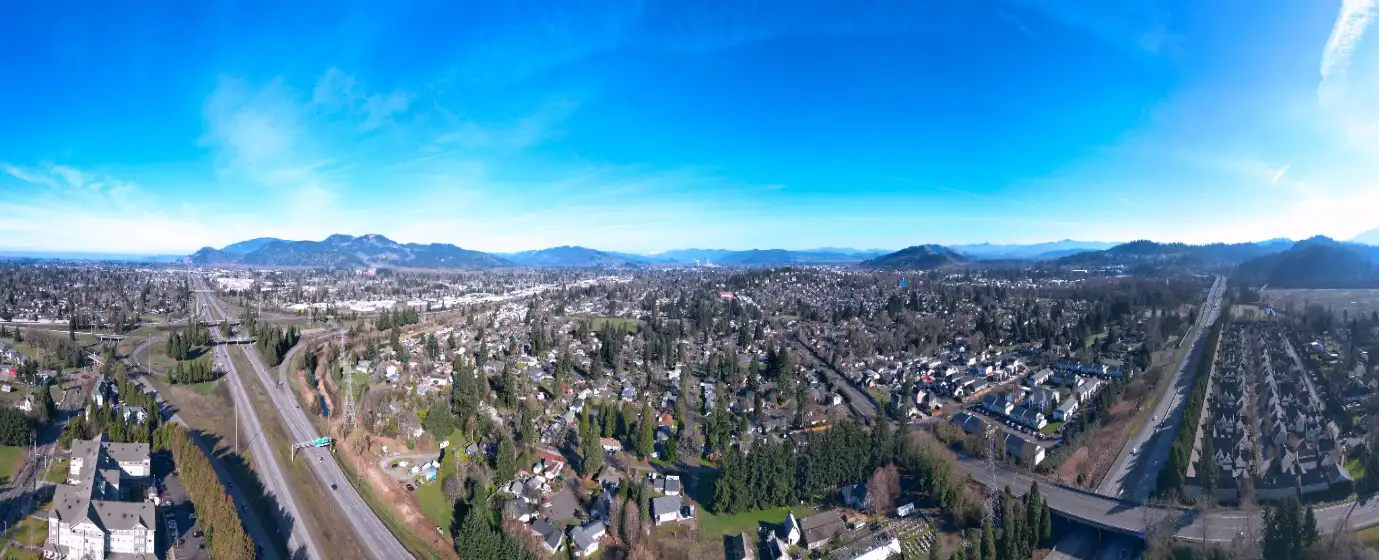
Willamette Valley · Oregon
Moving to Springfield from California: The Honest Comparison (2026)
The pattern is familiar by now. A software engineer in San Jose hits year seven of renting a two-bedroom apartment and realizes she could buy a four-bedroom house with a yard — and still eliminate her mortgage — by selling her California condo equity and moving to Springfield, Oregon. A family in Rancho Cucamonga does the math on their summer utility bills, their property tax assessment, and their kids' 45-minute school commute, and decides the Pacific Northwest is worth a serious look. A Sacramento buyer who sold a townhome for $580,000 discovers that same money buys a move-in-ready single-family home in Springfield with meaningful cash left over. In 2025, the Eugene-Springfield metro ranked first in the entire country for inbound moves, with 85% of all moves arriving rather than leaving — and California alone accounted for 22% of those transplants.
The honest part of this guide starts here: Springfield is not California, and it was never trying to be. The winters are gray in a way that no amount of research fully prepares you for. February averages just 3.8 hours of sunlight per day — a number that sounds manageable until you're living it. The food scene, the density of cultural options, and the social energy of cities like Oakland or San Diego don't have a direct equivalent here. Springfield is a mid-sized Oregon city with a working-class character, a strong outdoor culture that hibernates somewhat in winter, and a pace that either settles into your bones comfortably or quietly frustrates you.
This guide covers what the move actually costs and saves you — broken down by California region of origin, what your equity buys at each price point, how Oregon's tax picture compares to California's, the weather reality without the sugarcoating, and what California transplants most commonly get wrong about Springfield specifically. An interactive comparison tool in Section 6 lets you look up your exact California city against Springfield's numbers.
| Springfield, Oregon | Bay Area | Southern CA | Sacramento Metro | Central Valley | |
|---|---|---|---|---|---|
| Median Home Price (approx. 2026) | $455,000 | $1,300,000–$1,800,000 | $750,000–$1,100,000 | $480,000–$580,000 | $320,000–$420,000 |
| Property Tax Rate (effective) | ~0.85% | ~1.1% | ~1.15% | ~1.1% | ~0.95% |
| State Income Tax (top bracket) | 9.9% | 13.3% | 13.3% | 13.3% | 13.3% |
| State Sales Tax | None | 7.25%–10.75% | 7.25%–10.75% | 7.25%–9.0% | 7.25%–8.75% |
| Avg Utilities (monthly est.) | $130–$160 | $200–$280 | $220–$300 | $175–$230 | $160–$210 |
| Avg 1BR Rent | $1,100–$1,350 | $2,900–$3,800 | $2,200–$3,200 | $1,500–$1,900 | $1,100–$1,500 |
A buyer leaving Walnut Creek with $1.4 million in home equity and purchasing in Springfield at the $455,000 median is looking at eliminating their mortgage entirely — with nearly $1 million remaining to invest, remodel, or hold. Even a Sacramento seller clearing $480,000 on their outgoing home can land in Springfield without a mortgage and without touching their retirement accounts. The savings on state sales tax alone are meaningful: an Oregon household spending $60,000 annually on taxable goods and services pays zero at the register, versus an estimated $4,300–$6,450 per year in California depending on county.
The utility picture compounds the savings. Springfield's moderate climate — genuine summers that rarely crack 90°F for more than a few days, and winters that rely more on rain than extreme cold — keeps energy bills well below what Southern California families pay running air conditioning through six months of heat. Buyers moving from Fresno or Bakersfield consistently report their monthly utility spend dropping by 30–40% within the first year.
The assumption that Oregon means no income tax is one of the most common and costly misconceptions California transplants carry across the state line. Oregon has no sales tax — that part is true — but it does have a graduated state income tax that reaches 9.9% at the top bracket, which kicks in at roughly $125,000 for single filers and $250,000 for joint filers. For a California household earning $150,000 and coming from a state where that income faced a 13.3% top marginal rate, the Oregon move still delivers real income tax relief, but it is not the zero-tax situation some buyers expect.
| Tax Item | California | Oregon | Net Impact |
|---|---|---|---|
| State Income Tax (top bracket) | 13.3% | 9.9% | Oregon saves ~3.4 pts at top bracket |
| State Sales Tax | 7.25%–10.75% | 0% | Full elimination of sales tax |
| Effective Property Tax Rate | ~1.1% | ~0.85% | Lower in Oregon |
| Property Tax Growth Cap | Prop 13 (2% annual cap) | Measure 50 (3% annual cap) | Both protect long-term owners |
| Senior Property Tax Deferral | Available | Available (62+) | Comparable benefit |
| Estate / Inheritance Tax | None | Oregon estate tax applies | Oregon disadvantage for estates 1M+ |
For a California household earning $150,000 annually who relocates to Springfield, the rough income tax savings land around $5,000–$6,000 per year purely from the rate differential, before accounting for any changes in deductions or federal treatment. Layer in the sales tax elimination — worth $3,000–$5,000 annually for an average family — and the lower property tax rate on a $455,000 home (approximately $3,868/year in Oregon vs. roughly $5,005/year on the same value in California), and the total annual tax relief can exceed $10,000 for a solidly middle-class household. Buyers with Oregon-sourced investment income or significant capital gains should model their specific scenario carefully, since Oregon taxes all income, including capital gains, as ordinary income.
A buyer leaving Palo Alto or San Jose with $1.5 million in equity is, frankly, in a position to rewrite their financial life in Springfield. At the $455,000 median, an all-cash purchase leaves over $1 million free — enough to fund a full renovation budget, a rental property acquisition, and a meaningful investment account simultaneously. The upper end of Springfield's market — custom homes in Jasper Estates, larger properties in the Thurston Hills area, and newer construction near the Hayden Bridge corridor — tops out in the $600,000–$750,000 range, meaning Bay Area equity buyers are shopping well below their means and paying cash or near-cash.
For Bay Area sellers, the strategic question is rarely "can I afford Springfield" — it's "what do I do with the spread." If the California property was an investment or rental, a 1031 exchange into an Oregon investment property can defer the capital gains tax on the California sale entirely. The Springfield 1031 Exchange guide covers this in detail, but the short version is that Springfield's inventory of smaller rental properties and multi-family units in the $250,000–$400,000 range makes it a workable like-kind exchange destination for California rental owners.
A seller leaving Irvine or Pasadena with $900,000 in equity has plenty of room to buy at the top of Springfield's market, make it debt-free, and still retain meaningful liquidity. South Springfield and the Jasper Estates area tend to attract this buyer profile — larger footprints, newer construction, and a cleaner neighborhood character than some of the older in-town corridors. The $500,000–$650,000 price tier in Springfield represents the city's upper end, and a SoCal buyer with this equity level is typically looking at that range as a cash purchase with money left over.
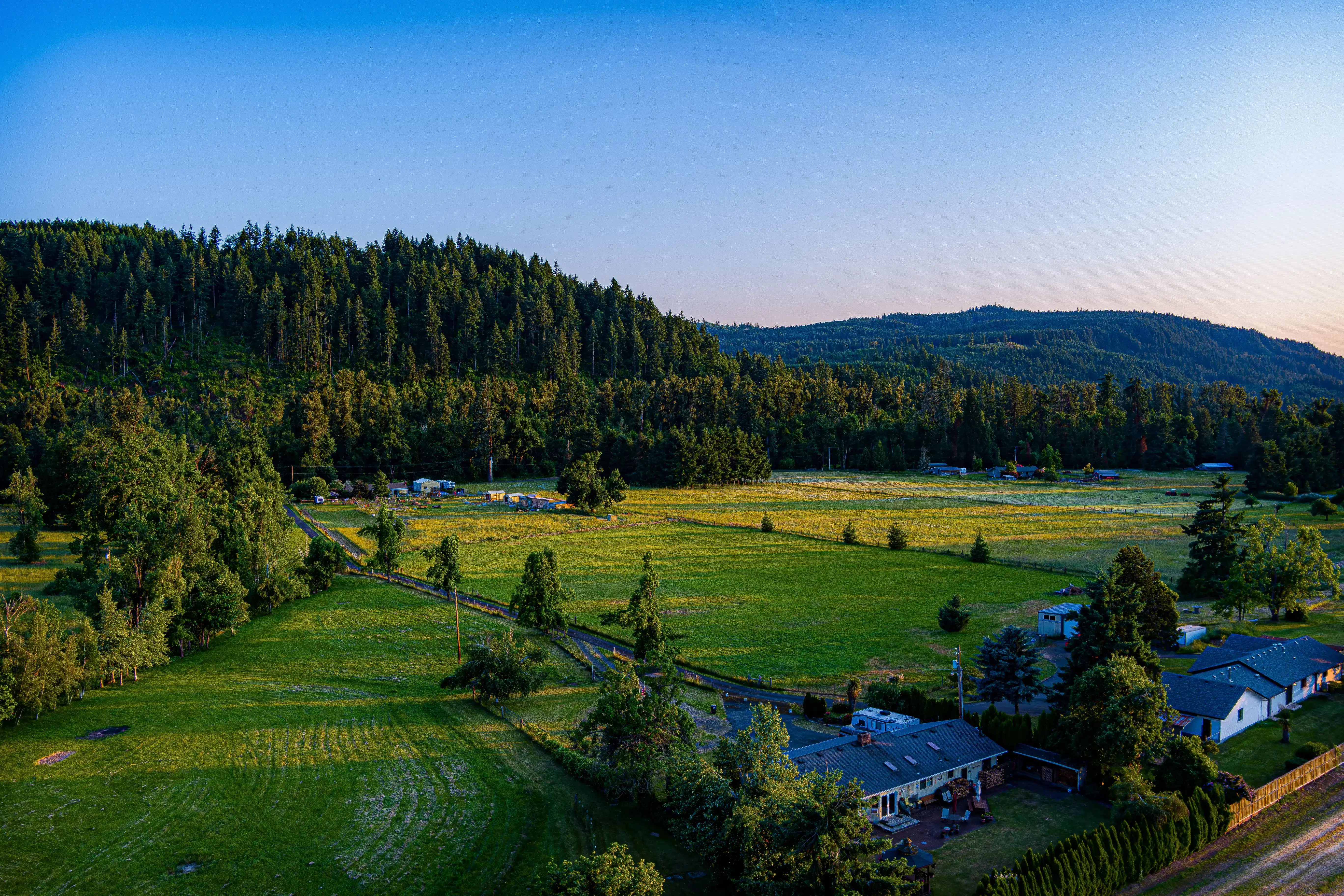
What surprises Southern California buyers in this equity bracket is not the price — it's the land. A $550,000 home in Springfield's eastern neighborhoods commonly sits on a half-acre or larger, with a garage, outbuildings, and mature landscaping. That same $550,000 in Torrance or Burbank is a modest three-bedroom with a shared wall and a 5,000-square-foot lot. The lifestyle shift in terms of space and privacy is significant, and it's one of the things Southern California transplants report appreciating most after the first year.
This buyer has a closer relative advantage than Bay Area or SoCal sellers, but the Springfield move still makes strong financial sense. A Sacramento seller clearing $520,000 who buys at the $455,000 median arrives with a paid-off home and $65,000 cash — while eliminating state sales tax, reducing their effective property tax rate, and (if they're a top-bracket earner) cutting their income tax rate by 3.4 percentage points. The Midtown Springfield corridor and North Springfield neighborhoods offer solid value in the $350,000–$430,000 range, giving Sacramento buyers room to buy below the median and retain more liquidity.
Inland Empire sellers — Riverside, San Bernardino, Rancho Cucamonga — with $400,000–$500,000 in equity are landing comfortably in Springfield's mainstream market. Most Springfield inventory in the $380,000–$460,000 range is single-family with a garage and a real yard, which is a meaningful step up from comparable price points in the Inland Empire where that money goes to tract housing in high-density subdivisions.
Fresno, Stockton, or Modesto sellers with $350,000 in equity are making a lateral-ish move in raw price terms, but the lifestyle and tax math still favors the move. Oregon's zero sales tax is particularly impactful for households who spend heavily — a family running a ranch or small business saves real money at the register every month. The Glenwood neighborhood and older Midtown blocks offer Springfield's most accessible price points, with single-family homes occasionally appearing in the $290,000–$380,000 range.
Central Valley buyers who do their homework often end up in the Downtown Springfield or Washburne District areas, where the price-per-square-foot is lower than the city average and walkability to the Willamalane Park system and the McKenzie River corridor is a lifestyle upgrade from Valley suburbia. The catch is that some of these corridors have rougher edges than buyers from newer Central Valley subdivisions are used to — doing a neighborhood-specific walkthrough before committing is worth the trip.

Looking to buy in Springfield? Estimate your payment.
Enter your numbers to see an estimated monthly mortgage payment.
Estimate only. Excludes HOA fees and mortgage insurance.
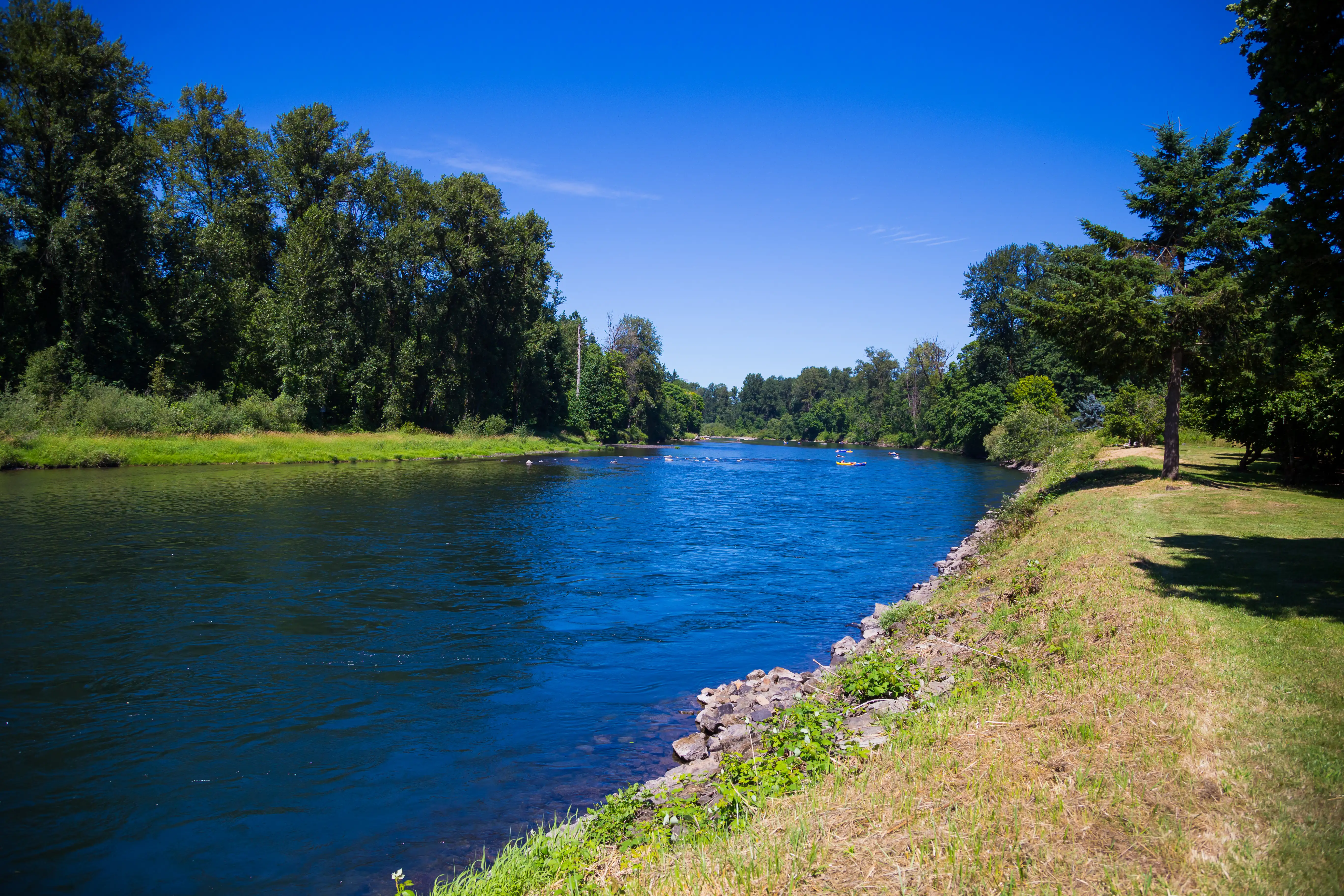
Here is what a good friend who moved from San Diego to Springfield three years ago would actually tell you: the summers are genuinely excellent, and the winters are genuinely hard. Springfield averages about 158 sunny days per year against Los Angeles's much more generous baseline, and that gap — roughly 713 additional sunshine hours per year in LA — is something your body will notice by February. The driest stretch runs July through September, and during those months the McKenzie River corridor, the Thurston Hills trails, and Dorris Ranch are as beautiful as anything in the Pacific Northwest. Outdoor culture here is real and active during summer.
But from November through March, Springfield logs roughly 21 rainy days in December alone, with February averaging under four hours of sunlight per day. California transplants who planned to maintain their year-round hiking and outdoor social routine often find themselves adjusting significantly during the first winter. The outdoor culture does not disappear — it adapts, with waterproof gear and a higher tolerance for mud — but the spontaneous Saturday morning beach run or the after-work hike in the sunshine is not a Springfield winter experience.
What transplants consistently report loving after a full year: the summers are legitimately spectacular, traffic that felt like a crisis in their Bay Area life is now a mild inconvenience, and the housing space changes daily quality of life in ways they underestimated. Farmers markets, the Bohemia Mining Days festival, the accessible nature along the McKenzie River, and the low-key community pace tend to land well for buyers who were already feeling overstimulated in California. What they miss: year-round beach access, the breadth of restaurant options in larger California metros, and the social density that comes with larger cities.
If you want to see how Springfield compares directly to the city you're leaving, use the tool below — it covers the 120 largest California cities with current housing and tax data.
Home prices: Redfin median sale data, Q1–Q2 2026. Select your city to compare.
Ready to talk through what your specific California equity could do in Springfield? Todd can model your exact scenario in a single call.
Assuming the whole city is uniform. Springfield has genuinely distinct neighborhood characters that a weekend visit won't reveal. The Glenwood area along the Willamette River is one of the most affordable in town, but it's also in the middle of a long-term redevelopment process that has produced some infrastructure inconsistencies. The Thurston corridor in east Springfield feels suburban and quiet, while Downtown Springfield and the Washburne District are in active revitalization with a rougher-edged character. Buyers who purchase in Thurston and buyers who purchase near Main Street are having meaningfully different experiences of the same city. Underwriting the neighborhood as carefully as the property is worth the extra due diligence.
Skipping the radon test. California buyers are accustomed to the standard inspection and disclosure protocols of their home state, but Oregon has elevated radon zones in parts of Lane County that don't show up on a standard inspection. Radon testing adds minimal time and cost to the transaction, and skipping it is the kind of thing that seems obvious in retrospect. Request a radon test as part of any Springfield inspection period — it takes 48 hours and can save a significant remediation conversation later.
Underestimating the winter commuting and outdoor access shift. A buyer relocating from Marin County or Pasadena who plans to hike three times per week year-round will find that Oregon winter requires a genuine gear and mindset adjustment. The trails at Thurston Hills Natural Area are open year-round, but they are muddy, often cold, and frequently overcast from November through March. Interstate 5 and the Springfield local roads don't have the winter closure risk of Sierra Nevada passes, but the seasonal shift in daily outdoor life is more significant than California transplants anticipate. Building this into lifestyle expectations before the move prevents the year-one disappointment pattern.
Not accounting for Oregon income tax in cash flow planning. A remote worker earning $180,000 moving from California to Oregon and assuming they are trading 13.3% state income tax for 0% is making a roughly $17,000 planning error annually. Oregon's 9.9% top bracket means the income tax savings are real — but not total. Buyers who've run their Springfield budget on a zero-income-tax assumption and then receive their first Oregon tax bill sometimes feel genuine sticker shock. Model the actual Oregon income tax liability before closing, not after.
Bay Area sellers with large equity are often most advantageously positioned as all-cash buyers in Springfield's market. At $455,000 median, a buyer bringing $1 million+ in equity doesn't need a mortgage — and in a market where 71% of homes close within 30 days, cash offers frequently win on timeline alone even when other buyers are offering near-list price with financing. If the California property was an investment, the 1031 exchange option deserves a conversation with a qualified intermediary before closing in California — the exchange must be set up before the California sale completes, not after.
Southern California sellers with $700,000–$900,000 in equity are well-positioned for conventional financing with a large down payment, or a cash purchase at Springfield's median and below. Most Springfield transactions fall well under the conforming loan limit, so jumbo financing is rarely necessary at this market's price point — a meaningful difference from California, where conforming loan limits still don't cover the median in most metros.
Sacramento and Inland Empire buyers with more modest equity separation can still land in Springfield's lower price tiers with a manageable conventional loan, particularly on entry-level inventory below the $455,000 median. Buyers in this equity bracket benefit from a lender conversation before the California home closes, not after, to understand exactly what down payment structure maximizes their monthly cash flow in Springfield. The Springfield First-Time Homebuyers Guide covers financing basics for buyers going the traditional mortgage route.
Local Expert Takeaway: The single thing California buyers most consistently underestimate about Springfield is market pace. Homes priced well in Thurston, Hayden Bridge, and South Springfield regularly go under contract in 10–14 days. California buyers accustomed to 30-60 day decision windows in slower markets sometimes lose two or three properties before adjusting their timeline. Arrive with pre-approval or proof-of-funds already in hand, know which neighborhoods match your priorities before the first showing, and be prepared to write on a property within 48 hours of seeing it. The buyers who struggle in this market aren't the ones with less equity — they're the ones who came to browse and ended up competing.
✅ The tax and housing math is genuinely compelling — Bay Area and SoCal sellers can frequently eliminate a mortgage entirely while banking six figures in equity. Even Sacramento sellers land in a stronger position than their current California reality.
⚠️ Oregon has a state income tax — the top bracket is 9.9%, not zero. Remote workers, equity-income earners, and high-W2 buyers should model their actual Oregon tax liability before relying on California-vs-Oregon savings estimates.
📍 Neighborhood selection matters more than the city average — Thurston and Jasper Estates offer a very different experience from Downtown Springfield or Glenwood. Knowing which corridor fits your lifestyle before the first offer prevents the most common buyer regret in this market.
Is moving from California to Springfield worth it financially?
For most California sellers, the financial case is strong. A Bay Area buyer selling at $1.4 million and purchasing at Springfield's $455,000 median walks away with a paid-off home and nearly $1 million in freed equity — while eliminating state sales tax and reducing their effective property tax rate. Even a Sacramento seller with $500,000 in equity arrives without a mortgage. The income tax picture is real but partial: Oregon's 9.9% top bracket saves Bay Area earners meaningful money versus California's 13.3%, but it is not the zero-income-tax environment some buyers expect.
What does California home equity actually buy in Springfield?
At the $455,000 median, Bay Area equity typically covers a full cash purchase with significant money remaining. Southern California sellers in the $700,000–$1,000,000 equity range are looking at Springfield's upper tier — newer construction in Jasper Estates, larger lots in Thurston, south Springfield properties around $500,000–$650,000 — often debt-free. Sacramento and Inland Empire sellers with $400,000–$550,000 in equity can typically buy at or below the median outright, landing in the Midtown, North Springfield, or Hayden Bridge corridors without carrying a mortgage.
How competitive is the Springfield real estate market for cash buyers from California?
Very. Springfield's market currently runs at 2.0 months of inventory — a seller's market — with 71% of homes going under contract within 30 days citywide. In hot ZIP code 97477, the average days on market is 30, and the list-to-sold ratio is at or above 100% in some corridors. California cash buyers have a real structural advantage in this environment, but that advantage disappears if they slow their decision-making to California pacing. Arriving pre-qualified or with proof-of-funds and a clear neighborhood target is what separates California buyers who win their first offer from those who lose three before adjusting.
Explore the full Springfield series: The Ultimate Springfield Relocation Guide · Is Springfield Safe? · Cost of Living in Springfield · Best Neighborhoods in Springfield · Springfield Schools & Family Life · Springfield Youth Sports · Springfield Parks & Recreation · Retiring in Springfield · 1031 Tax-Deferred Exchange in Springfield · Springfield First-Time Homebuyers Guide · · Moving to Springfield from California
Tell us what you need help with and we'll connect you with local resources.

About the Author
Todd Davidson is the founder of Living in Oregon and Living in Washington, where he publishes in-depth city guides, neighborhood resources, and local market insights covering more than 180 communities across the Pacific Northwest. While his background is in home financing and real estate, he created these digital platforms to help families research and compare regions before making a move.