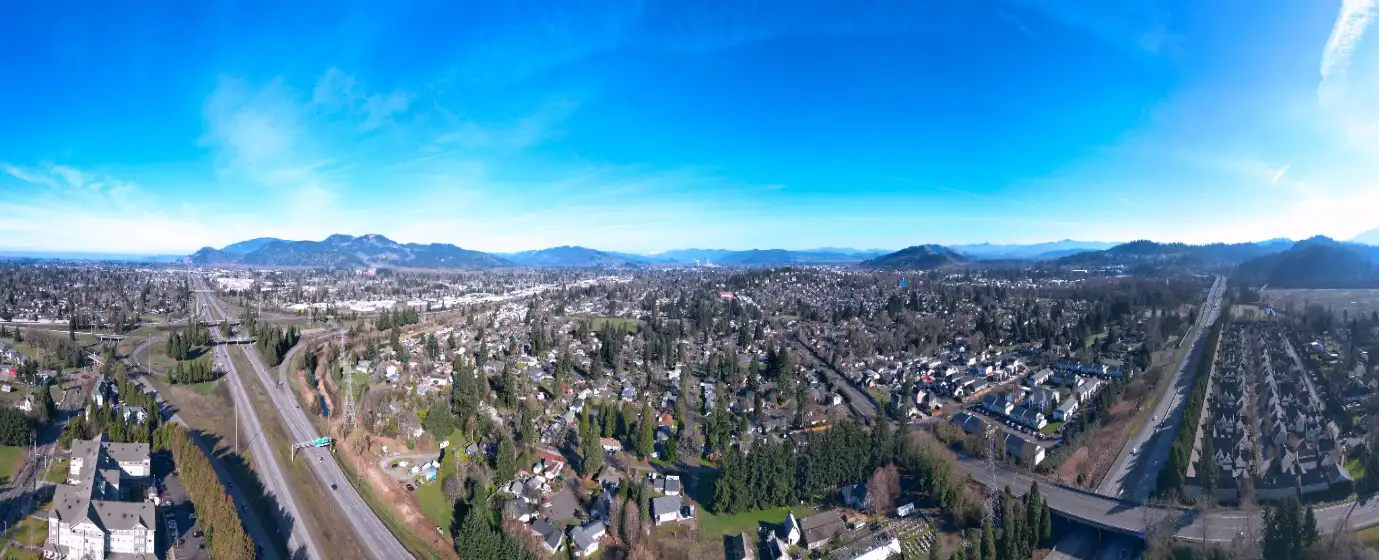
Willamette Valley · Oregon
Cost of Living in Springfield: Housing, Taxes, Utilities & Lifestyle (2026)
Springfield has a reputation problem — and it works in your favor. Most buyers researching the Eugene metro get tunnel vision around Eugene itself, skipping Springfield entirely because it sounds like the suburb that settled for less. What they miss is a city where the median list price hovers around $455,000, homes still go pending in about 36 days, and you're 10 minutes from downtown Eugene without the Eugene price premium attached to your mortgage.
The cost picture here is shaped by a few practical realities. Springfield sits in Lane County, runs its own utility district, and draws wages from a mix of healthcare, manufacturing, and insurance employers rather than the tech-heavy payroll that inflates living costs in cities like Bend or Portland. That mix creates a housing market that's competitive but not irrational — one where a first-time buyer with a reasonable down payment can still land a three-bedroom home without being outbid by a dozen cash offers.
This guide breaks down exactly what you'll spend in Springfield across housing, utilities, transportation, food, and taxes — and compares those costs honestly against the neighboring cities most buyers are weighing. Whether you're deciding between Springfield and Eugene, trying to figure out whether renting or buying makes more sense right now, or just building a relocation budget, the numbers below will tell you what the listing photos won't.
The median list price in Springfield sits at $455,000 as of mid-2026, while median closed-sale prices run somewhat lower — in the $422,000–$435,000 range based on trailing 12-month data. That gap between list and sale price is useful context: the market is competitive enough that well-priced homes attract multiple offers, but it hasn't detached from reality the way some Pacific Northwest markets did during the pandemic frenzy. At roughly $283–$288 per square foot, Springfield delivers meaningfully more space per dollar than Eugene across the river.
What does $455,000 actually buy here? In most parts of the city, that figure lands you a three-bedroom, two-bathroom home on a standard lot — often with a garage and a usable backyard. Move toward Thurston or the Hayden Bridge corridor and the same budget gets you newer construction with updated finishes; move toward Midtown or the Washburne District and you're looking at older homes with more character, sometimes larger lots, and occasionally a price that dips below $400,000. Entry-level buyers still find townhomes around $300,000 and condos starting in the low-to-mid $200s, which are genuinely rare options in this metro.
The market moves with purpose. About 71% of homes go under contract within 30 days, and inventory sits around two months — classified as a seller's market, but a functional one. Springfield isn't a bidding-war-every-weekend market; it's a market that rewards buyers who move decisively on well-priced homes. The Thurston neighborhood carries the highest price points in the city, with a 12-month median sold price around $486,000 and appreciation running roughly 8% year-over-year — outpacing the city average.
| Budget Range | What to Expect |
|---|---|
| Under $300,000 | Entry-level condos, 1-bed units, select Midtown homes between Mohawk Blvd and 28th St |
| $300,000–$400,000 | Townhomes citywide; older SFR in Washburne, Gateway, and Midtown |
| $400,000–$500,000 | Most of Springfield's core inventory; 3BR/2BA SFR in Hayden Bridge, West Springfield, Kelly Butte |
| $500,000+ | Thurston hillside homes, newer construction, Mountaingate area, premium East Springfield |
Lane County's effective property tax rate for Springfield homes runs approximately 0.85%, which translates to roughly $3,868 per year on a $455,000 home — or about $322 per month added to your housing cost. Oregon's Measure 50, passed in 1997, caps annual property tax increases at 3% on assessed value, which tends to keep long-term owners' tax bills well below what you'd expect based on current market value. Buyers purchasing at today's prices will see their assessed value reset closer to purchase price, so the full 0.85% applies — but the 3% cap going forward provides meaningful long-term predictability that Oregon homeowners tend to appreciate.
Springfield is roughly a 45/55 split between renters and owners, and the rental stock reflects that balance. The majority of the city's apartments are low-rise, garden-style complexes — no high-rises, no dense urban towers. About 38% of the rental inventory has been built since 2000, which means a mix of updated units and older properties depending on where you land.
| Unit Type | Avg Monthly Rent |
|---|---|
| Studio | $1,069–$1,225 |
| 1 Bedroom | $1,157–$1,335 |
| 2 Bedroom | $1,514–$1,588 |
| 3 Bedroom | $2,019–$2,170 |
The Springfield Gateway neighborhood carries the highest concentration of available rentals in the city, and it's also where the most apartment turnover happens. Rents across the city have risen about 2.3% over the past year — modest by Oregon standards — with the largest share of available units falling in the $1,001–$1,500 per month range. For a metro area with Eugene on one side and a tight statewide rental market on the other, Springfield remains one of the more affordable places to rent in the Willamette Valley.
Springfield Utility Board (SUB) handles electricity and water for most of the city, and it's a genuine advantage over residents who pay Pacific Power rates elsewhere in Oregon. SUB is a community-owned utility — not an investor-owned company — and its residential electricity rates run below the state average. A typical household can expect combined electric and water costs in the range of $120–$160 per month, with higher usage in summer (air conditioning) and winter (heating) months. Natural gas service runs through NW Natural for homes with gas appliances, adding roughly $40–$80 per month depending on the season.
Springfield is a car-dependent city. Most daily errands require a vehicle, and the practical reality for most residents is owning at least one car. The good news is that Lane Transit District (LTD) runs frequent service into Eugene and throughout the metro, and the EmX Bus Rapid Transit line connects Springfield's Gateway area to downtown Eugene efficiently enough that commuters who work along that corridor can genuinely go car-light. Fuel costs track regional averages, and the relatively compact geography of the Eugene-Springfield metro means commute distances — and therefore fuel bills — tend to be shorter than in spread-out metros like Portland.
Grocery access is reasonable across most of the city. Fred Meyer, Safeway, and WinCo provide full-service options in multiple locations, and WinCo in particular draws budget-conscious households from across the metro. Dining out in Springfield skews casual — local spots and chains rather than the restaurant-forward scene you'll find in Eugene's Whiteaker neighborhood — but the 10-minute drive into Eugene means access to the broader restaurant and retail landscape without relocation. Monthly grocery spending for a typical two-person household runs approximately $500–$700 depending on shopping habits.

Looking to buy in Springfield? Estimate your payment.
Enter your numbers to see an estimated monthly mortgage payment.
Estimate only. Excludes HOA fees and mortgage insurance.
| City | Median Home Price | Approx. Property Tax Rate | Avg Rent (1BR) | Commute to Eugene | Sales Tax |
|---|---|---|---|---|---|
| Springfield, OR | $455,000 | 0.85% | $1,157–$1,335 | 10 min | None |
| Eugene, OR | $510,000–$540,000 | ~1.0% | $1,400–$1,600 | — | None |
| Coburg, OR | $475,000–$500,000 | ~0.9% | Limited rental stock | 15 min | None |
| Junction City, OR | $395,000–$420,000 | ~0.9% | $1,050–$1,200 | 25 min | None |
| Creswell, OR | $380,000–$410,000 | ~0.9% | $1,000–$1,150 | 30 min | None |
| Pleasant Hill, OR | $440,000–$470,000 | ~0.85% | Very limited | 20 min | None |
The pattern is consistent across all comparisons: Springfield delivers meaningful cost savings over Eugene, with a commute measured in minutes rather than miles. Junction City and Creswell come in cheaper, but buyers trading price for distance tend to feel that trade-off most acutely when school pickups, evening plans, and weekend logistics add up. The Springfield sweet spot is precisely that middle position — close enough to Eugene to access its amenities, priced below it, and large enough to have its own employment base.
This table reflects a household purchasing at the $455,000 median price with 10% down ($45,500), financing $409,500 over 30 years at a prevailing mid-2026 rate.
| Expense Category | Monthly Estimate |
|---|---|
| Mortgage (principal + interest) | $2,580–$2,720 |
| Property taxes (0.85% / 12) | $322 |
| Homeowner's insurance | $110–$140 |
| HOA fees (if applicable) | $0–$200 |
| Electricity + water (SUB) | $120–$160 |
| Natural gas (NW Natural) | $40–$80 |
| Internet | $60–$90 |
| Groceries (2-person HH) | $500–$700 |
| Transportation (1 vehicle) | $350–$500 |
| Dining out / entertainment | $250–$400 |
| Total Estimated Range | $4,332–$5,312 |
Against Springfield's median household income of $68,761 — roughly $5,730 per month — that budget is tight but workable for a dual-income household or a single earner on the higher end of local wages. Many Springfield residents employed at PeaceHealth, McKenzie-Willamette Hospital, or PacificSource fall in the $60,000–$90,000 range, which places a $455,000 purchase at the higher end of comfortable. The math improves significantly for two-income households, which makes Springfield a city where the housing cost-to-income ratio rewards couples and families more than solo buyers.
Oregon's tax structure is one of the most buyer-friendly in the country from a consumption standpoint. There is no sales tax — none on groceries, clothing, electronics, or vehicles. For households moving from California, Washington, or most other states, this represents a real monthly savings that compounds over time. A household spending $3,000 per month on taxable goods and services saves $250–$300 per month compared to living in a state with a 10% sales tax.
The offset is Oregon's income tax, which runs among the higher state rates in the nation — the top marginal rate reaches 9.9% for higher earners, though most Springfield households fall in the 8.75% bracket. For median-income earners, the absence of a sales tax and the relatively modest property tax rate (especially compared to states like New Jersey or Illinois) still leaves Oregonians in a favorable net position. Oregon also offers a Property Tax Deferral Program for qualifying seniors and people with disabilities — the state pays your property taxes and collects repayment when the property is sold, which is a meaningful benefit for fixed-income homeowners.
One often-overlooked financial advantage for Springfield specifically: because property taxes are capped under Measure 50, long-term owners whose homes have appreciated significantly may be paying effective rates well below the nominal 0.85%. That dynamic makes staying in Springfield financially advantageous the longer you remain, and it softens the concern about rising assessed values in an appreciating market.

Local Expert Takeaway: The buyers who get the most out of Springfield financially are the ones who treat the Eugene gap as a feature, not a consolation prize. Buy in Thurston or Hayden Bridge and you're getting newer construction with faster appreciation than most of Eugene's established neighborhoods — at a price that's still $50,000–$80,000 below comparable Eugene inventory. If you're a first-time buyer focused purely on entry price, Midtown between Mohawk and 28th Street is the last place in the Eugene metro where sub-$300,000 single-family homes still exist. Don't wait for that window to close.
Is Springfield, Oregon affordable compared to other Pacific Northwest cities?
Springfield ranks among the more affordable mid-size cities in the western Oregon region. The median list price of $455,000 is well below Portland's metro average and roughly $60,000–$80,000 less than Eugene for comparable single-family homes. Combined with no sales tax and below-average utility costs through Springfield Utility Board, the overall monthly cost of living tends to run lower than most western Oregon cities of similar size.
What are property taxes like in Springfield?
Lane County's effective rate for Springfield properties runs approximately 0.85%, translating to around $3,868 per year on a $455,000 home. Oregon's Measure 50 caps annual increases to assessed value at 3%, which provides long-term stability — buyers who purchase today and stay for a decade typically see their effective rate decline relative to their home's appreciated market value.
Is it cheaper to rent or buy in Springfield right now?
At current rent levels — one-bedrooms running $1,157–$1,335 per month and two-bedrooms in the $1,514–$1,588 range — renting carries lower upfront costs but builds no equity. A buyer financing a $455,000 home at 10% down pays roughly $3,000–$3,200 per month in mortgage, taxes, and insurance combined. For households planning to stay three or more years and who qualify at that payment, buying in Springfield's appreciating market has historically made stronger long-term financial sense than renting — especially given Thurston's recent 8% annual appreciation.
Explore the full Springfield series: Relocation Guide · Is Springfield Safe? · Cost of Living · Best Neighborhoods · Schools & Family Life · Youth Sports · Parks & Recreation · Retiring in Springfield · 1031 Exchange · First-Time Buyer · · Moving from California
Tell us what you need help with and we'll connect you with local resources.

About the Author
Todd Davidson is the founder of Living in Oregon and Living in Washington, where he publishes in-depth city guides, neighborhood resources, and local market insights covering more than 180 communities across the Pacific Northwest. While his background is in home financing and real estate, he created these digital platforms to help families research and compare regions before making a move.