Portland Metro · Oregon
Living in Portland: The Ultimate Relocation Guide (2026)
Maybe your company just told you the new office is in Hillsboro. Maybe you've been watching Seattle rents for two years and someone finally said Portland out loud at dinner, and the number they quoted was 41% lower. Maybe you drove through on a summer weekend — the bridges, the mountains in every direction, the coffee shops spilling onto sidewalks — and it didn't match anything you expected from the news coverage. Portland has a reputation problem and a reality that's considerably more complicated than either its boosters or its critics will admit.
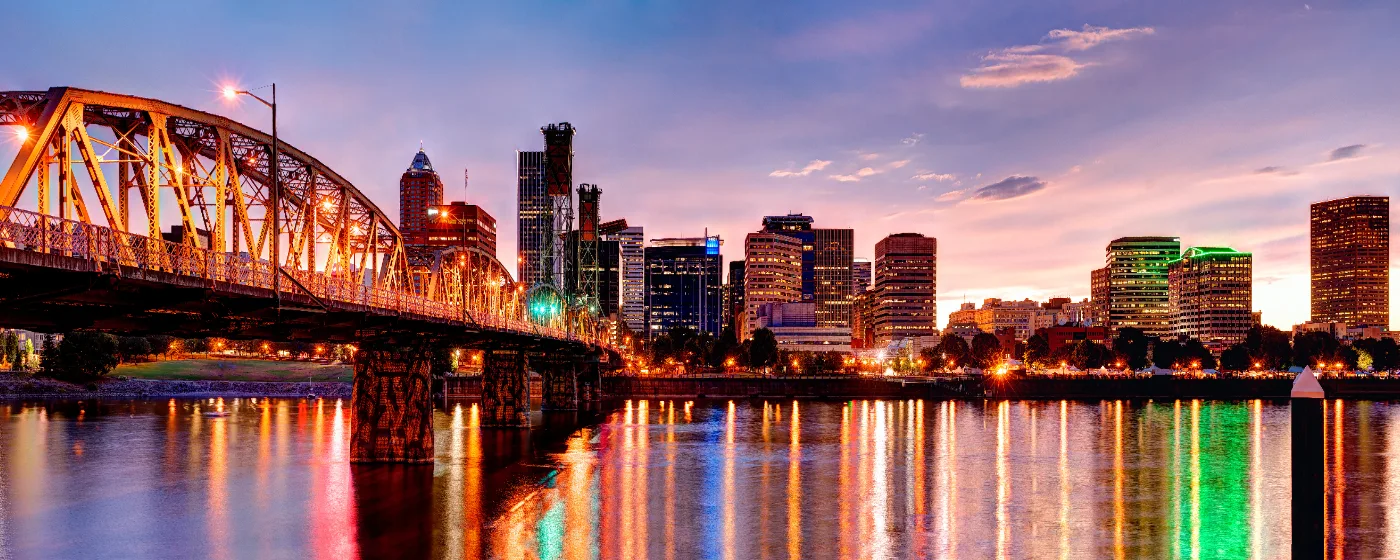
What shapes daily life here is geography as much as anything else. The Willamette River cuts the city in half, and Burnside Street divides it north from south, which means Portland effectively operates as four cities layered on top of each other — with 95 official neighborhoods spread across those quadrants. The east side is grittier, more affordable, and more architecturally interesting. The west side climbs into the West Hills and gets pricier fast. The Silicon Forest tech corridor runs west into Beaverton and Hillsboro, where Intel anchors one of the state's most significant economic engines. Nike's campus sits just outside the city limits to the southwest. The commute reality, the school quality, the neighborhood character, and the housing value all shift dramatically depending on which part of Portland you're actually buying into.
This guide is built for the buyer who wants the real picture — not the brochure version and not the Reddit panic spiral. You'll find the neighborhoods worth understanding, the tradeoffs that don't show up on Zillow, the commute math, and the specific parts of the city where the $525,000 median buys you something genuinely livable versus where it barely gets you in the door.
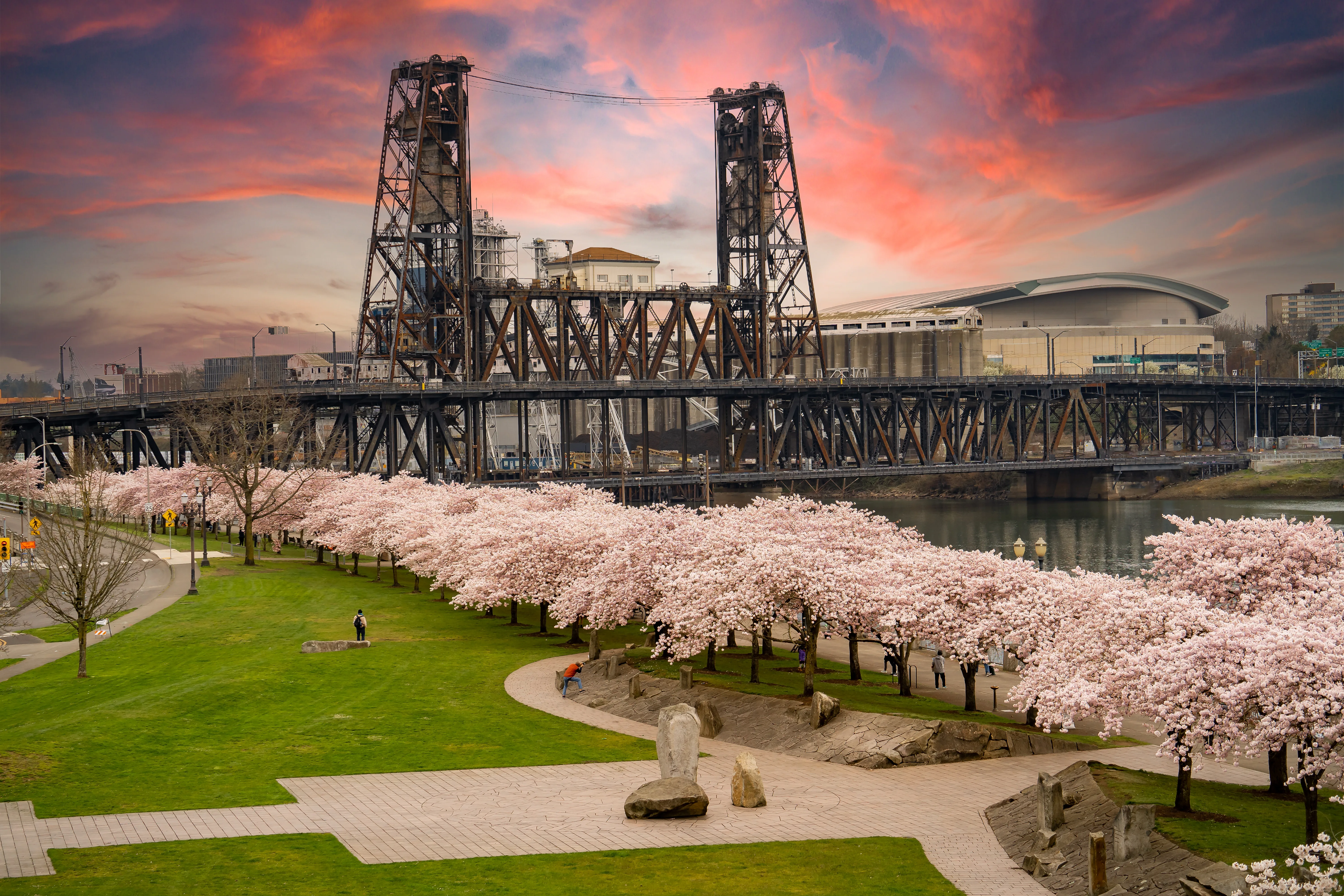
Portland isn't a city that works equally well for every buyer. The people who thrive here tend to have one or two things in common: they value outdoor access and cultural variety over suburban quiet, or they've done the math and realized they can buy a historic craftsman with a yard for what gets them a condo in Seattle. Before diving into the specifics, here's a quick read on who typically finds Portland a genuine fit.
| Best For | Why |
|---|---|
| Tech commuters | Easy freeway and MAX access to Intel, Nike, and the Hillsboro corridor; closer to work than a Seattle equivalent |
| Outdoor enthusiasts | Forest Park is inside city limits; the Gorge and coast are under two hours |
| Remote workers | Portland's neighborhoods offer walkable coffee-shop culture without San Francisco prices |
| Healthcare professionals | OHSU, Providence, Legacy, and Kaiser all run major facilities here — the job market is deep |
| First-time buyers | More purchasing power than Seattle or the Bay Area; historic craftsmans and bungalows at accessible price points |
| Retirees | World-class medical infrastructure, no sales tax, TriMet access, and a food and arts scene worth staying for |

Portland's east side has been one of the most consistent value stories in the Pacific Northwest over the past two years. Neighborhoods like Laurelhurst and Alameda — where fully restored craftsmans on tree-lined streets were trading in the low-to-mid $700,000s as recently as 2023 — have held their value remarkably well even as the broader condo market softened. Buyers who come in expecting Portland to be "on sale" relative to Seattle are often surprised to find that the best historic blocks still move quickly, sometimes with multiple offers. The opportunity isn't a bargain — it's a quality-of-life-per-dollar ratio that's hard to match elsewhere on the West Coast.
What buyers consistently underestimate is how much the east-west divide affects daily life. A household buying in the Pearl District and working in Hillsboro will face a meaningfully different commute than one buying in Beaverton — and the price difference between those two starting points is significant. The buyers I see make the most confident decisions are the ones who've spent a Saturday in Hawthorne, a Tuesday morning commuting from Sellwood, and an evening in the Alberta Arts District before they ever make an offer. Portland rewards that kind of research. If you're considering Portland and want insight into which neighborhoods align with your priorities and budget, I'd welcome the opportunity to share what I've learned from helping hundreds of families make this move successfully.
Portland is one of those cities where the first six months feel like discovery and months seven through eighteen feel like reckoning. The summer — July through September — is legitimately spectacular. Temperatures hover in the low-to-mid eighties, daylight stretches past 9:00 PM, and the whole city seems to move outdoors. Rooftop bars fill up. The farmers markets at PSU and the Hollywood District draw serious weekend crowds. The Gorge glows. Most people who move here in summer think they've found the secret.
What surprises most people after six months is the psychological weight of the gray season. Portland's total annual rainfall isn't dramatically higher than many East Coast cities, but the frequency is relentless — a fine, persistent drizzle that starts in October and rarely lifts until May. It's not dramatic weather. It's just present, almost daily, for seven months. Locals develop elaborate coping rituals: coffee shops as second living rooms, weekend drives to the coast specifically for the drama of winter waves, a certain cultural pride in not carrying an umbrella. Newcomers who come from climates with defined seasons sometimes find the flatness of it harder to adjust to than they expected.
The commute reality depends entirely on your destination. Intel's Ronler Acres campus in Hillsboro sits about 18 miles west of Portland's east side via Highway 26 — a drive that runs 25 minutes at 7 PM and 55 minutes at 8 AM. The Sunset Highway/US-26 bottleneck between Portland and Beaverton is one of the region's most consistent pain points, and buyers who don't account for it when choosing a neighborhood sometimes find themselves living the wrong life. OHSU sits on a hill in Southwest Portland accessible by the Portland Aerial Tram from South Waterfront, and that commute is genuinely pleasant — until you try to drive up Terwilliger Boulevard at 8:15 AM. MAX Light Rail handles the east-west corridor reasonably well, but north-south trips often require transfers or streetcar connections that add time.
Day-to-day, Portland operates on neighborhood scale in a way that larger cities don't. Most residents have a "home coffee shop," a weekend farmers market, a go-to food cart pod, and a park they default to — and many of those routines fit inside a ten-block radius. That hyperlocal texture is one of the city's genuine advantages.
No sales tax is a real financial benefit that compounds over time in ways that feel abstract until you actually live here. Large purchases — furniture, electronics, cars — land measurably cheaper than in Washington or California. For households spending heavily on goods, the Oregon tax structure redirects money that would otherwise go to the state.
The food culture is legitimately exceptional and unusually democratic. Portland's food cart "pods" — permanent clusters of carts serving everything from hand-pulled noodles to wood-fired pizza — deliver meals that would cost $22 at a sit-down restaurant for $10 to $14 at a cart. Cartopia on SE 12th, the pods along SE Division, and the cluster near the PSU campus have been anchors of the scene for years. The restaurant scene itself has earned national recognition, particularly in the James Beard nomination landscape.
Outdoor access from inside city limits is genuinely rare for a metro of this size. Forest Park — over 5,100 acres of forested trails inside the city — borders the Nob Hill and Northwest District neighborhoods. The Columbia River Gorge, one of the most scenic day-hiking corridors in the country, sits 30 minutes east on I-84. The Oregon Coast is reachable in about 90 minutes on US-26 or US-30. For a certain kind of buyer, this geography alone closes the deal.
Portland's public transit infrastructure punches above its weight for a city of 630,000. TriMet operates buses and five MAX Light Rail lines; the Portland Streetcar loops through the Pearl, the South Park Blocks, and the Lloyd District; the Portland Aerial Tram connects South Waterfront to OHSU. A monthly pass typically runs around $100. The city holds a Platinum rating for cycling infrastructure, and a meaningful percentage of residents — particularly in the inner eastside — commute year-round by bike on dedicated greenways. For households willing to go car-light, Portland's transit options make it possible in a way that most comparably sized American cities simply don't.
The athletic and outdoor industry concentration here is also worth naming for the right buyer. Nike, Adidas North America, Columbia Sportswear, and Under Armour all maintain significant Portland-area operations. For professionals in product design, marketing, or supply chain in the outdoor and apparel world, this city represents one of the deepest job markets in the country.
Looking to buy in Portland? Estimate your payment.
Enter your numbers to see an estimated monthly mortgage payment.
Estimate only. Excludes HOA fees and mortgage insurance.
Oregon's income tax structure is the financial shock most out-of-state buyers don't fully calculate before moving. The top marginal rate of 9.9% kicks in at $125,000 for single filers — a threshold that many dual-income households clear easily. The no-sales-tax benefit is real, but it doesn't fully offset a state income tax that ranks among the higher ones in the country. Factor in Portland's separate $35 annual "Arts Tax" on every income-earning adult and the Multnomah County income tax surcharge, and the overall tax picture is more complex than the sales-tax headline suggests.
Downtown Portland's ongoing challenges are real and shouldn't be glossed over. The retail core has a visible homelessness and property crime presence that affects how residents use the area, particularly in the evenings. Property crime citywide runs at 45 incidents per 1,000 residents — a figure that reflects both auto break-ins and retail theft, and one that ranks Portland notably higher than many comparable cities. This doesn't characterize the whole city equally: inner eastside neighborhoods, the Pearl, and most of the residential west side feel materially different from the Old Town/Chinatown area. But buyers who expect a sanitized urban core will be disappointed.
Oregon's income tax hits high, gas prices are persistently elevated — often hovering around $4.00 per gallon or more — and healthcare costs run roughly 18% above the national average. Housing costs sit about 36% higher than the national norm, even with a median home price lower than Seattle's. The combination of these factors means the monthly budget math for a Portland household looks more expensive than many Sun Belt or Midwest comparisons, even without a state sales tax.
Why some people leave comes down to a few recurring patterns. Remote workers who discovered they could live anywhere during the pandemic often ended up moving to Bend, Hood River, or the Washington side of the Columbia River, where property crime rates are lower and the outdoor access is comparable. Others leave specifically because of the gray-season mental health toll. And a cohort of families with school-age children ultimately chooses suburban districts — Beaverton, Lake Oswego, or West Linn — after researching Portland Public Schools' academic outcomes more closely. The 84% graduation rate at PPS is respectable and ranks ahead of Salem-Keizer and Eugene, but the 69.1% post-secondary readiness figure — meaning the share of graduates leaving high school ready for college or a career — tells a more complicated story.
Portland's 95 neighborhoods are genuinely different from each other. The following eight represent the most discussed, most searched, and most relevant for buyers making a relocation decision in 2026.
The Pearl is Portland's most urban neighborhood — a former industrial district north of Burnside between the Willamette and the West Hills that was rebuilt into a grid of condominiums, galleries, and high-end restaurants starting in the late 1990s. It's walkable, transit-rich, and dense in a way that most of Portland isn't. The Powell's City of Books flagship sits on the Pearl's southern edge; the Saturday farmers market at PSU is a short walk south. Prices in the Pearl skew heavily toward condominiums, with listings typically ranging from the mid-$400,000s for a one-bedroom to $900,000-plus for larger units in premium buildings. The downside is proximity to Old Town and the Burnside corridor, where visible urban challenges are most concentrated.
Best for: Urban professionals who want to live without a car and don't mind condominium ownership.
The Hawthorne corridor on SE Hawthorne Boulevard between 20th and 50th Avenues is one of Portland's most enduring and genuinely walkable commercial streets — bookstores, vintage shops, coffee roasters, and restaurants alongside bungalows and craftsmans that define Portland's architectural identity. Prices here typically run in the $550,000–$750,000 range for single-family homes, with smaller bungalows occasionally appearing in the high $400,000s. The neighborhood attracts buyers who want the east side's character without going all the way out to the suburbs — and it delivers on that promise consistently.
Best for: Buyers who want walkable neighborhood retail, east side character, and a home with architectural detail.
Nob Hill — often called the Northwest District — sits at the base of the West Hills along NW 21st and 23rd Avenues, two of the city's most commercially dense residential streets. Victorian-era apartment buildings and single-family homes share blocks with restaurants, wine bars, boutiques, and one of the city's highest concentrations of independent retail. Forest Park's Leif Erikson trailhead is accessible on foot from the residential blocks. Single-family homes are relatively rare here and price accordingly — often $700,000 and above — while the apartment rental stock is among the most expensive in the city, with some listings exceeding $2,100 per month.
Best for: Buyers or renters who want urban density, immediate Forest Park access, and a neighborhood with a genuine "city" feel.
NE Alberta Street between Martin Luther King Jr. Boulevard and 33rd Avenue has been Portland's arts and culture corridor for decades — murals, galleries, independently owned restaurants, and the monthly Last Thursday street art walk that draws crowds through the summer. Homes in the surrounding Woodlawn, Vernon, and King neighborhoods range from the high $400,000s to the low $600,000s, offering some of the best value on the inner east side for buyers willing to look a few blocks off the main commercial strip. The neighborhood has gentrified significantly over the past fifteen years, which has raised both prices and tensions around displacement.
Best for: Buyers who want inner northeast character, community arts culture, and more purchasing power than Hawthorne or the Pearl.
Sellwood sits in Southeast Portland near the Willamette, anchored by antique shops and coffee roasters along SE 13th Avenue and bordered by the Sellwood Riverfront Park and the multi-use Springwater Corridor trail. It's one of Portland's most family-oriented inner neighborhoods — relatively quiet, well-maintained, and increasingly expensive because of it. Single-family home prices in Sellwood have climbed into the $600,000–$800,000 range for well-maintained mid-century and craftsman stock. The neighborhood offers a suburban texture without the suburban commute, though the Sellwood Bridge is a genuine bottleneck during peak hours.
Best for: Families with kids who want inner-city walkability paired with a quieter residential feel.
Alameda is one of Portland's most architecturally intact historic neighborhoods — a northeast Portland hillside with sweeping views, mature trees, and a concentration of early-20th-century craftsmans and colonials that attract buyers willing to pay for preservation quality. Homes here typically range from the high $600,000s into the $900,000s and above for fully renovated examples on larger lots. The neighborhood is primarily residential with limited commercial presence, which makes it quieter but requires driving for most daily errands. Alameda Elementary has a strong reputation within Portland Public Schools.
Best for: Buyers who prioritize architectural quality, neighborhood stability, and northeast Portland's historic character.
Laurelhurst sits just east of Buckman and borders the 26-acre Laurelhurst Park — one of Portland's most beautiful green spaces, with a duck pond, mature Douglas firs, and a National Register of Historic Places designation. The neighborhood's Craftsman-era housing stock is among the city's most coveted, and prices reflect that: expect the low $600,000s for entry-level bungalows and $800,000-plus for larger renovated homes on premium lots. Access to the Laurelhurst neighborhood school and the overall stability of the neighborhood make it a consistent top choice for households with school-age children.
Best for: Buyers willing to pay for Portland's best combination of park access, historic architecture, and neighborhood stability.
| City | Best For | Median Home Price | Portland Commute | Vibe |
|---|---|---|---|---|
| Portland | Urban lifestyle, outdoor access, arts & food culture | $525,000 | — | Dense, eclectic, walkable in pockets |
| Beaverton | Intel/Nike commuters, newer construction, school quality | ~$500,000 | 20–35 min | Suburban, diverse, family-oriented |
| Hillsboro | Tech workers, affordability, Beaverton School District | ~$465,000 | 25–40 min | Newer suburban, growing, practical |
| Lake Oswego | Top-tier schools, upscale living, walkable town center | ~$770,000 | 20–30 min | Affluent, polished, family-focused |
| Gresham | Affordability, east metro access, first-time buyers | ~$385,000 | 25–40 min | Working-class, improving, suburban |
| Vancouver, WA | No Oregon income tax, newer homes, lower crime | ~$460,000 | 25–45 min | Sprawling, quieter, tax-advantaged |
| Category | Detail |
|---|---|
| Population | Approximately 630,447 |
| Median Home Price | $525,000 |
| Median Household Income | $90,919 |
| Property Tax Rate | Approximately 0.98% (Multnomah County) |
| School District | Portland Public Schools (Niche: B rating) |
| Violent Crime per 1,000 | 5.3 |
| Property Crime per 1,000 | 45 |
| Average Days on Market | 44 days |
| Average Rent (all unit types) | ~$1,748/month |
| Public Transit | TriMet buses, MAX Light Rail, Portland Streetcar, Portland Aerial Tram |
| Nearest Major Airport | Portland International Airport (PDX) — ~30 min from most neighborhoods |
Portland has a few genuine traditions that tell you something real about the city's culture.
Last Thursday on Alberta is a monthly outdoor art walk along NE Alberta Street that runs May through October — free, loosely organized, and genuinely crowded with local artists, food carts, and street performers. It predates the neighborhood's gentrification and has outlasted dozens of attempts to formalize it. It's a reliable temperature gauge for what this city values. The Saturday Farmers Market at PSU's South Park Blocks runs spring through December and is one of the largest in the Pacific Northwest — serious vendors, prepared food, and a social ritual for a significant slice of the city.
Portland's food cart pod culture deserves its own mention as a living institution, not just a dining option. The pods aren't food trucks — they're permanent lots with long-term carts that have been operating for years. Cartopia at SE 12th and Hawthorne is open late; the pod near SW 10th and Alder draws the downtown lunch crowd. Regulars have "their cart" the way people have their coffee shop, and the social fabric around them is real.
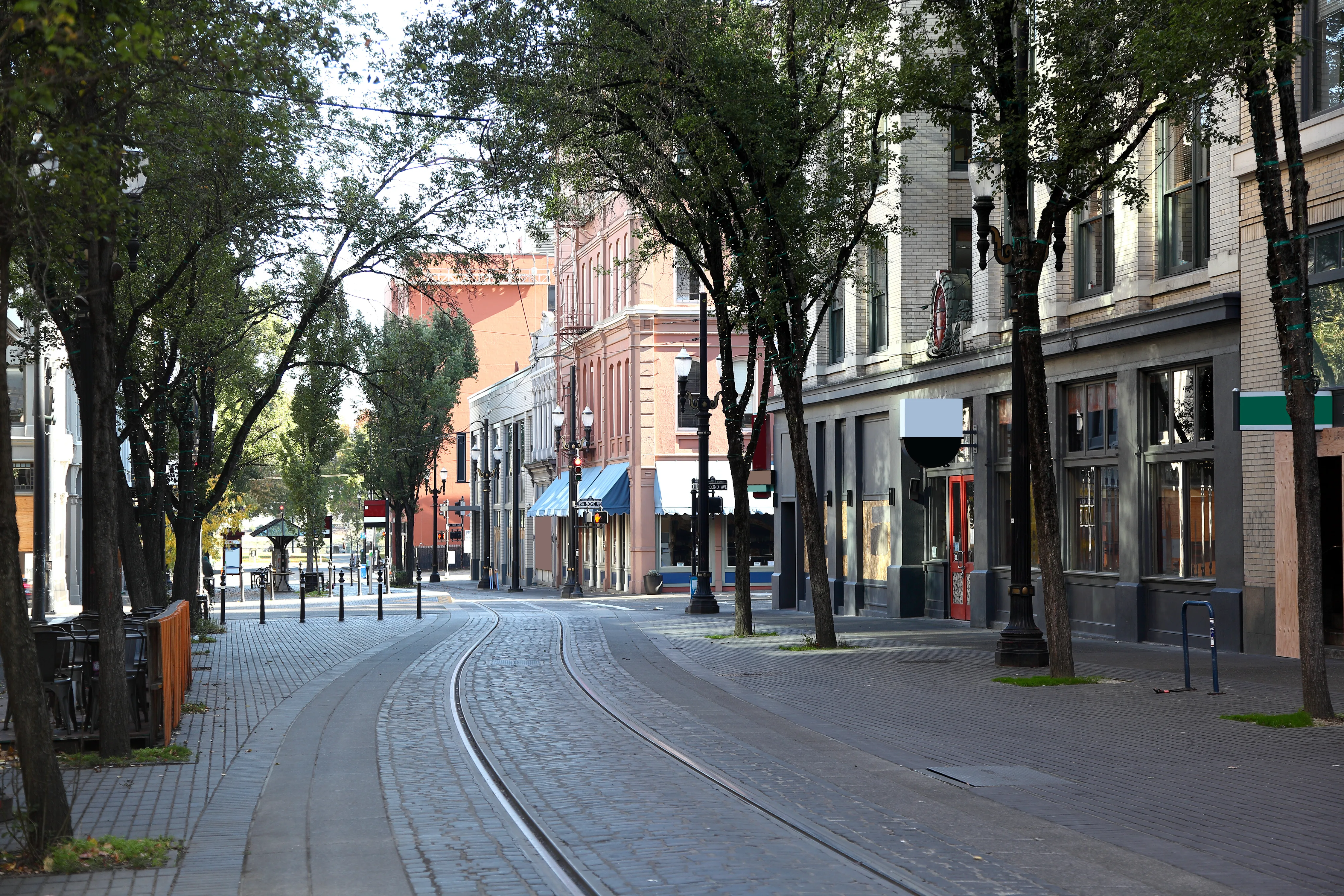
What I would NOT do if moving to Portland: Buy west of I-405 in the Old Town or Chinatown area based on the price point alone. Units in those blocks come to market at tempting prices — sometimes 20% to 30% below comparable Pearl District listings — and the discount reflects conditions that don't improve simply because you've bought in. The SW Burnside and NW Glisan corridor between approximately 4th and 14th Avenues concentrates the city's most persistent urban challenges, and buyers who underestimate that during the purchasing process typically regret it within the first year.
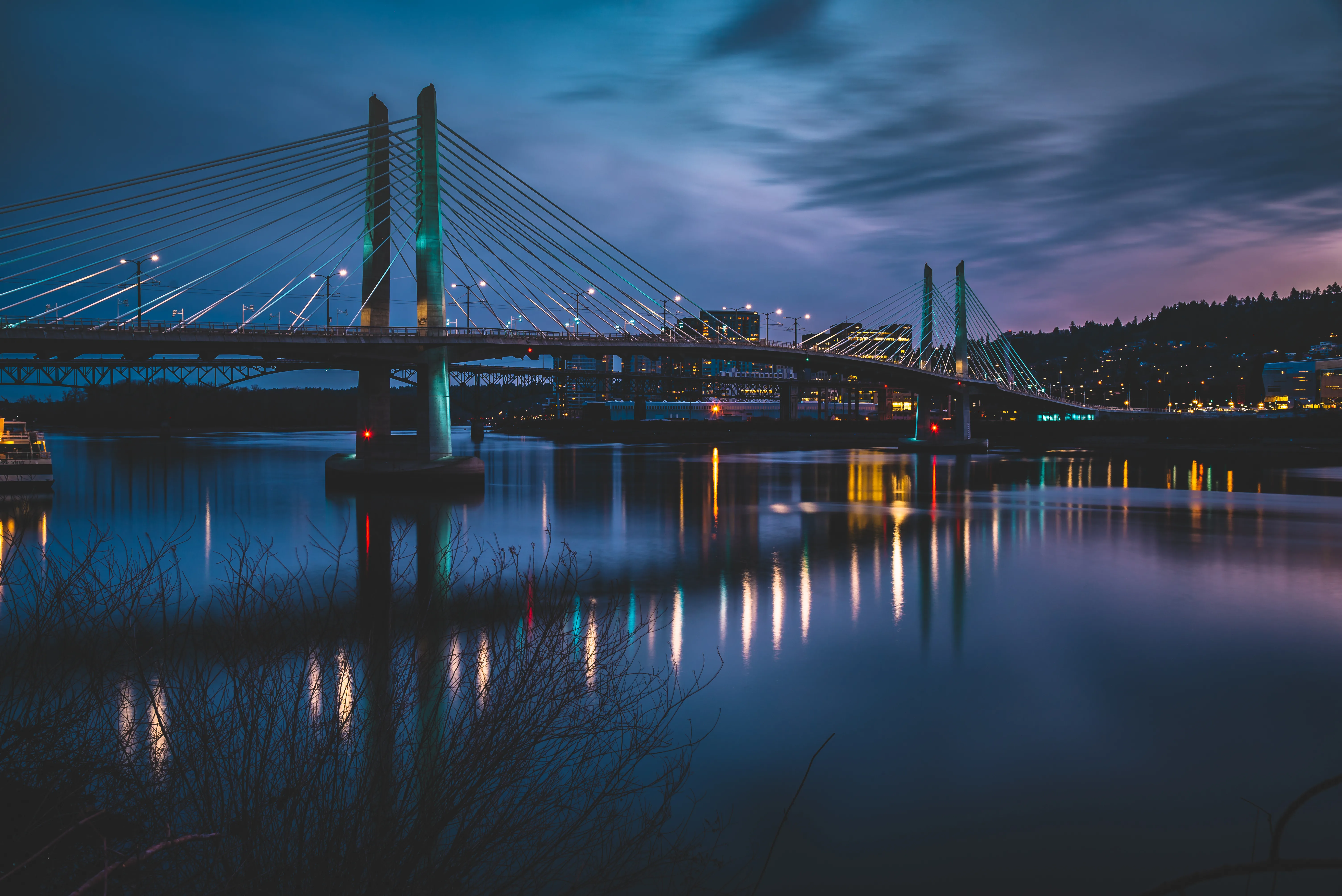
Local Expert Takeaway: If you're targeting Portland's east side — which most serious buyers should consider before defaulting to the Pearl — the neighborhoods between SE Division and SE Hawthorne in the $525,000–$650,000 range represent some of the best long-term value in the metro. Laurelhurst and Alameda remain the east side's most stable historic neighborhoods, but first-time buyers with flexibility should also look at the Concordia and Woodstock corridors, where the price points are meaningfully lower and the neighborhood fundamentals are solid. Whatever you buy, run the Oregon income tax math before you set your budget ceiling — it moves the number more than most out-of-state buyers expect.
✅ Portland delivers genuine urban quality of life — walkable neighborhoods, deep outdoor access, no sales tax, and a food and culture scene that rivals much larger cities.
⚠️ The tradeoffs are real: persistent gray winters, elevated property crime, Oregon's steep income tax, and a downtown core that requires eyes-open navigation rather than blind enthusiasm.
📍 Location within Portland matters enormously — buying in Laurelhurst or Sellwood is a fundamentally different life than buying near Old Town, even at similar price points. Do the neighborhood research before the offer.
Is Portland a good place to live in 2026?
Portland remains one of the Pacific Northwest's most compelling cities for buyers who want urban texture, outdoor proximity, and a cultural scene that punches above its weight. The challenges — visible homelessness downtown, elevated property crime, and a progressive income tax — are real and shouldn't be minimized. But for households who've weighed those factors honestly, Portland offers a quality-of-life-per-dollar ratio that's hard to replicate elsewhere on the West Coast.
What is the crime rate in Portland?
Portland's violent crime rate runs approximately 5.3 incidents per 1,000 residents, and property crime is the more significant concern at 45 per 1,000 — one of the higher rates among comparable Pacific Northwest cities. Crime is not evenly distributed across the city; the Old Town, Chinatown, and lower Burnside corridor carry a disproportionate share of those incidents. Residential neighborhoods like Alameda, Sellwood, and Laurelhurst report materially lower incident rates.
How does Portland compare to Seattle for relocation purposes?
Portland's overall cost of living runs roughly 24% below Seattle's, with housing costs approximately 41% lower. Both cities share a rainy-winter climate, strong outdoor access, and a tech-adjacent job market. Seattle's income tax situation is actually simpler (Washington has none), while Portland's 9.9% top marginal rate is a meaningful offset against the savings on housing. For buyers who can work remotely or find employment locally, Portland typically offers more purchasing power per dollar and more architectural character per neighborhood.
Browse current listings updated daily — filtered for Portland buyers by Elizabeth Davidson, your local expert.
Powered by Elizabeth Davidson · Cascade Hasson Sotheby's International Realty · 503-939-2035
Explore the full Portland series: The Ultimate Portland Relocation Guide · Is Portland Safe? · Cost of Living in Portland · Best Neighborhoods in Portland · Portland Schools & Family Life · Portland Youth Sports · Portland Parks & Recreation · Retiring in Portland · 1031 Tax-Deferred Exchange in Portland · Portland First-Time Homebuyers Guide · · Moving to Portland from California · The Portland Realtor's Perspective · Top 10 Questions a Realtor Gets About Portland
Tell us what you need help with and we'll connect you with local resources.

About the Author
Todd Davidson is the founder of Living in Oregon and Living in Washington, where he publishes in-depth city guides, neighborhood resources, and local market insights covering more than 180 communities across the Pacific Northwest. While his background is in home financing and real estate, he created these digital platforms to help families research and compare regions before making a move.