Portland Metro · Oregon
Moving to Portland? Top 10 Questions Realtors Get About Living in Portland, Oregon (2026)

I'm Elizabeth Davidson, a principal broker with Cascade Hasson Sotheby's International Realty, and I've been helping buyers and sellers navigate the Portland metro market for over fifteen years. I'm consistently ranked in the top 2% of brokers by volume across the Portland metro area, which means I see a lot of transactions — and more importantly, I see which decisions people regret and which ones they celebrate years later.
Portland proper is the heart of my practice. I've sold homes in the Pearl District to young tech professionals relocating from San Francisco, helped growing families find their forever home in Sellwood-Moreland, and guided retirees into condos with views of Mount Hood. I've also talked people out of Portland when another city in the metro made more sense for their situation. That's part of the job — giving you real information, not just telling you what you want to hear so I can close a deal.
This post covers the questions I actually get asked, sometimes multiple times a week. Some answers are straightforward. Others require context that most real estate websites skip over entirely — like why your property tax bill will look nothing like the previous owner's, or which neighborhoods have hidden flood risks that won't show up until your first atmospheric river. If you're considering Portland, this is the unvarnished version of what you need to know.
Portland is a genuinely unique American city — and that cuts both ways. If you value walkable neighborhoods, access to nature, a thriving food and arts scene, and a culture that doesn't take itself too seriously, Portland delivers in ways few other cities can match. You can hike 80 miles of trails in Forest Park before work, grab lunch at a food cart, and catch a show at a venue where the headliner might be drinking at the bar afterward. The "weird" reputation is earned, and for the right person, it's exactly why they stay.
But I'd be doing you a disservice if I didn't mention the challenges. Homelessness remains visible and concentrated in certain areas. Property crime — particularly car break-ins and catalytic converter theft — is a genuine concern, especially in some close-in neighborhoods. Winters are gray and wet from November through March, and seasonal affective disorder is real here. The political environment skews heavily progressive, which is a plus or minus depending on your perspective.
Here's my honest take: Portland rewards people who engage with it. If you want a city that hands you a pre-packaged experience, look elsewhere. If you want a place with independent businesses, genuine neighborhoods with distinct personalities, and access to mountains, coast, and wine country within ninety minutes, Portland might be exactly what you're looking for. For a deeper dive into what daily expenses look like, our Cost of Living in Portland guide breaks down housing, groceries, and transportation costs.
Families gravitate toward neighborhoods where the combination of schools, safety, parks, and community feel comes together — and Portland has several that deliver. Sellwood-Moreland consistently ranks at the top of my list. Located along the Willamette River, it has a village-like atmosphere with antique shops on Sellwood Avenue, excellent parks like Westmoreland Park Nature Playground, and proximity to Llewellyn Elementary School. It's also more affordable than some of Portland's trendier neighborhoods, though that's relative.
Eastmoreland is the classic Portland family neighborhood — tree-lined streets, craftsman homes with established gardens, and Reed College's campus adding cultural amenities. The neighborhood association is active, and the elementary school (Duniway) is well-regarded. Homes here hold their value and rarely sit on the market long.
Alameda, in Northeast Portland, pairs top-rated Alameda Elementary with nearby Grant High School. The homes are substantial — many are early 20th century with real architectural character — and the neighborhood has a cohesive feel without being insular. Hillsdale offers a more suburban experience while being just 12 minutes from downtown, with strong schools and the kind of community events that actually get attendance.
I'd also put Southwest Hills on the radar for families who want space and views. The tradeoff is hillier terrain and more reliance on cars, but the proximity to Washington Park, the Oregon Zoo, and Ainsworth Elementary makes it compelling. Our full Best Neighborhoods in Portland guide goes deeper into what each area offers.
Portland Public Schools carries an overall B rating from Niche, placing it #21 among Oregon school districts. That aggregate number masks significant variation — some Portland schools rank among the best in the state, while others struggle. The top-performing public schools include Findley Elementary, Winterhaven School (a K-8 with a math and science focus and lottery admission), and Alameda Elementary.
On standardized measures, Portland schools outperform state averages: 39% math proficiency versus 31% statewide, and 50% reading proficiency versus 44% statewide. The average school ranking is 8/10, putting Portland in the top 30% of Oregon public schools. But averages don't tell you whether your specific neighborhood school will work for your kid.
Here's what I tell families: neighborhood matters more than district. A home in Alameda puts you in a different school pipeline than a home in outer East Portland, even though both are PPS. Focus schools and lottery schools (like Winterhaven) add options but require planning — application windows open in January, and popular programs fill quickly.
Private and charter options are robust, including Catlin Gabel, Oregon Episcopal School, and Portland Village School. But they come with tuition bills that rival some college costs. For families serious about optimizing for schools, I recommend visiting during a school year, talking to actual parents in the neighborhood, and not relying solely on ratings websites. Our Portland Schools and Family Life post covers the nuances in detail.
This depends entirely on where in Portland you live and where you're commuting to. Portland's average commute is 22.3 minutes — almost exactly the national average — with an average commute distance of just 7.1 miles. But those numbers include the 25.3% of workers who work from home, which skews things considerably.
If you're commuting to downtown Portland from neighborhoods like Sellwood, Alameda, or Hawthorne, expect 15-25 minutes by car during non-peak hours, and 30-40 minutes during rush hour. The Pearl District and inner Southeast are genuinely bikeable to downtown — many of my clients in those areas don't own cars at all.
If you're commuting to the tech corridor (Intel in Hillsboro, Nike in Beaverton), you'll be using U.S. 26 westbound. From downtown Portland, that's 8-10 miles taking about 15 minutes without traffic — but during peak hours, it can triple. Many buyers working in Beaverton or Hillsboro choose to live on the west side to avoid this entirely.
Public transit is viable for certain corridors. The MAX Light Rail connects downtown to Hillsboro, Gresham, and Clackamas Town Center. The Portland Streetcar serves the Pearl District and inner neighborhoods. TriMet buses fill gaps. But Oregon isn't a transit-first state — most commuters still drive.
My advice: if your job is location-specific, test the commute before buying. Drive it during rush hour, multiple times. For more on how commute costs factor into overall expenses, see our Cost of Living in Portland breakdown.
As of May 2026, Portland's median home price sits around $535,000-$545,000, depending on which data source you prefer — roughly 24% higher than the national average. Prices are up modestly (1.8% year-over-year), but the more significant story is competition: the market scores 80 out of 100 on competitiveness, and homes go pending in around 9 days.
Inventory is tight. Months of supply sits at just 2.5, down from 4.08 last year. That means buyers have limited choices and need to be prepared to move quickly when the right property appears. Multiple offers are common on well-priced homes in desirable neighborhoods.
What does this mean practically? If you're buying, get fully pre-approved (not just pre-qualified) before you start looking. Have your down payment funds verified and accessible. Be ready to make decisions within 24-48 hours of seeing a property. Buyers who hesitate lose out to buyers who've done their preparation.
For sellers, the low inventory works in your favor — but condition still matters. Homes that are priced right and show well sell fast. Overpriced homes sit, even in a seller's market, because buyers have enough information to recognize when something doesn't pencil out.
Interest rates remain a factor; many potential sellers with locked-in low rates are reluctant to move, which contributes to the inventory squeeze. Our Ultimate Portland Relocation Guide covers the buying process from start to finish.
Portland proper doesn't have many traditional 55+ communities within city limits — the urban density doesn't lend itself to that model. But the greater Portland area has approximately 11 established 55+ communities, and several are worth serious consideration.
King City, about 20 minutes southwest of downtown, is one of the oldest and most established 55+ communities in the Portland area, with 1,287 residences including condos, townhomes, and single-family homes. It's an incorporated city unto itself, with a real sense of community identity.
Summerfield in Tigard offers 1,231 homes along with significant amenities: a nine-hole golf course, clubhouse, heated pool, and tennis courts. It's well-maintained and has an active social calendar.
Claremont, also in the metro area, comprises over 550 homes across three subdivisions. It's smaller and more intimate than Summerfield or King City.
For golf enthusiasts, Woodburn Estates & Golf — about 35 minutes south — has over 1,500 homes and an 18-hole golf course, plus fitness center, library, and numerous clubs.
Retirees who want to stay in Portland itself often look at condo options in the Pearl District or inner Southeast, which offer walkability and culture without yard maintenance. Some of my clients specifically avoid age-restricted communities in favor of multigenerational neighborhoods. Our Retiring in Portland guide explores both approaches in detail.
Portland has over 275 parks within city limits, and the outdoor access is genuinely one of the city's defining features. I'll highlight the three that matter most to residents, not just tourists.
Forest Park is the crown jewel — one of the largest urban forests in the United States at over 5,000 acres of wilderness just minutes from downtown. It has over 80 miles of trails, from easy walks to challenging hikes. Wildwood Trail alone is 30 miles. You can be on a forested trail surrounded by old-growth fir trees within fifteen minutes of leaving a downtown office. I've had clients buy homes specifically to be near a Forest Park trailhead.
Washington Park is more developed but equally essential. It houses the International Rose Test Garden (free admission, over 10,000 rose bushes), the Portland Japanese Garden (one of the most authentic outside Japan), and the Oregon Zoo. The combination of cultivated beauty and forested trails makes it worth multiple visits.
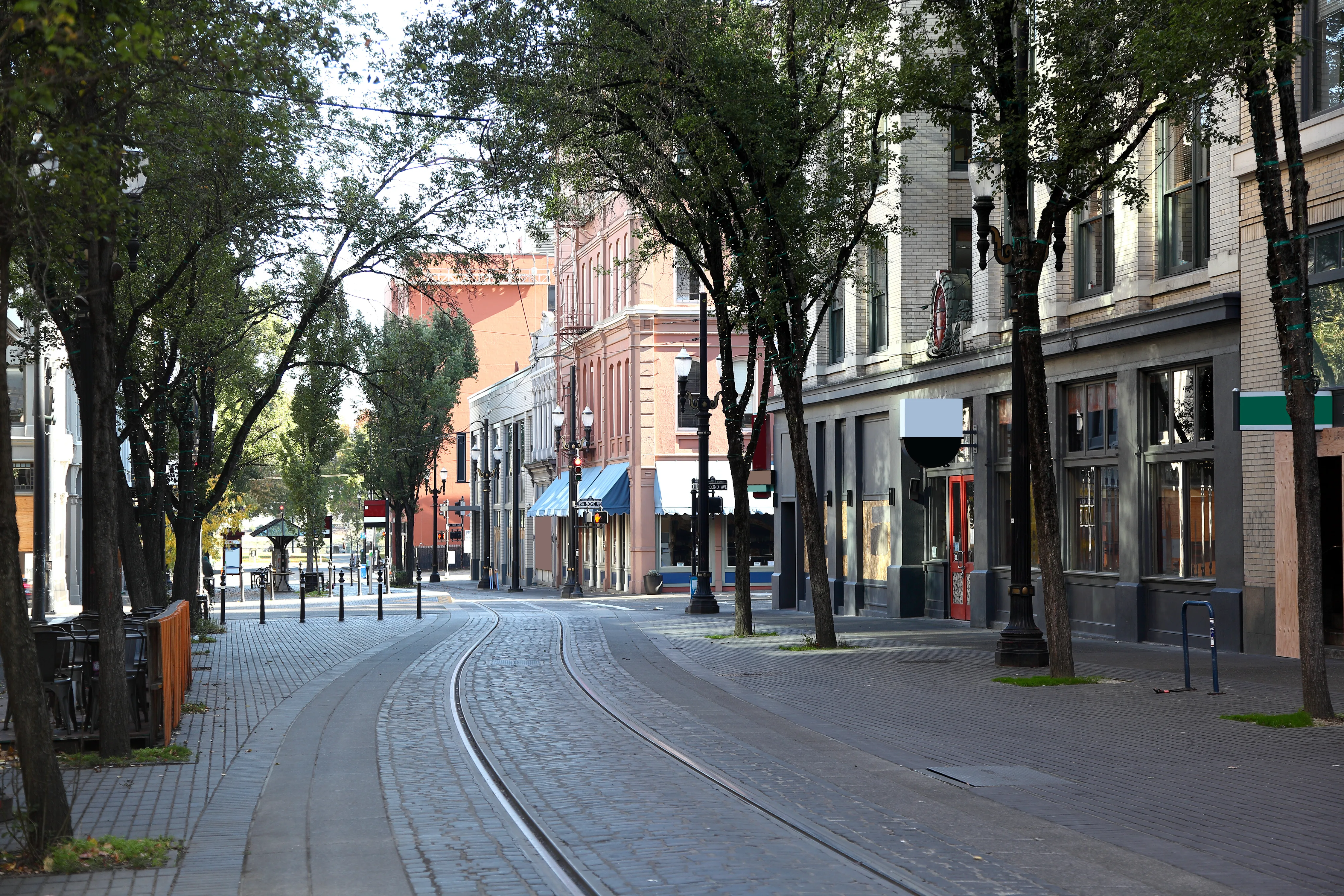
Tom McCall Waterfront Park stretches along the Willamette River from the Steel Bridge to the Hawthorne Bridge. It's the weekday lunch spot for downtown workers, the Saturday market location, and the route for countless joggers and cyclists. The park exists because Governor Tom McCall fought to remove a freeway and return the riverfront to public use — a decision that shaped Portland's identity.
Beyond the marquee names, neighborhood parks like Laurelhurst Park, Mt. Tabor (an extinct volcanic cinder cone with reservoirs), and Sellwood Riverfront Park provide daily-use green space that makes Portland livable. Our Portland Parks and Recreation guide covers seasonal activities and lesser-known spots.
The biggest mistake I see: assuming all of Portland is the same. Portland spans 145 square miles across dramatically different neighborhoods. Inner Southeast has a completely different character than outer East Portland. The West Hills feel nothing like St. Johns. The Hawthorne District and the Pearl District share a zip code but not much else. Buyers who say "I want to live in Portland" without getting more specific end up either in the wrong neighborhood or frustrated by the search.
Second mistake: underestimating weather impact on lifestyle. Portland isn't Seattle-level gray, but we get legitimate rain from November through March. If you're relocating from somewhere sunny, understand that the dark, drizzly months affect everything — your energy levels, your home (moisture management matters), and your social patterns. Successful transplants either embrace the indoor season or develop rain-proof hobbies.
Third: ignoring infrastructure age. Many of Portland's most desirable homes are 80-120 years old. Craftsman bungalows and Old Portland four-squares have character, but they also have galvanized plumbing, knob-and-tube wiring, and foundation issues. Older doesn't mean worse, but it means budgeting for maintenance and getting thorough inspections.
Finally: expecting Portland to be like it was in 2010 or even 2018. The city has changed — population growth, housing pressure, visible homelessness, political shifts. The Portland you read about in travel articles from a decade ago isn't quite the Portland you'll find today. It's still a distinctive, worthwhile city, just not frozen in amber.
Oregon property taxes confuse almost every out-of-state buyer, so let me break this down clearly. Under Measure 50, passed in 1997, your property's assessed value (what you're taxed on) is capped at 3% annual growth — regardless of how much the market value increases. This means long-time owners often have assessed values far below what their homes would sell for.
Here's the catch: when a property sells, the assessed value does not automatically reset to the sale price. However, if you make significant improvements or if the assessed value has fallen too far behind a calculated real market value ratio, adjustments can occur. In practice, a buyer often sees a higher tax bill than the seller had, because the county may recalculate upon sale — though it's not a full reset to purchase price.
In Multnomah County, Portland's median effective property tax rate is approximately 1.08% of market value, with a median annual bill around $5,381. On a $535,000 home, you might expect roughly $5,700-$6,000 annually — but this varies by specific location within Portland. Some neighborhoods have additional local option levies (schools, parks, Metro bonds) that stack on top of base rates.
The critical point: never assume the seller's current tax bill will be your tax bill. Always calculate your own estimate based on current tax rates and the purchase price.
Budget 1.1-1.2% of your purchase price for property taxes in your first year — that gives you cushion above the median rate. Ask me or your lender to run a specific estimate based on the property's tax lot before you make an offer.
Portland's geography — rivers, creeks, and hills — creates genuine flooding concerns that don't always show up on a standard home search. The Willamette and Columbia Rivers define the city's boundaries, and smaller waterways like Johnson Creek, Fanno Creek, and the Columbia Slough have flood histories that matter.
Johnson Creek is the most significant concern for residential buyers. It runs through Southeast Portland (Lents, Foster-Powell, Woodstock areas) and has a well-documented pattern of flooding during atmospheric river events — those warm, moisture-laden storms that dump inches of rain over several days. FEMA flood maps show the 100-year floodplain, but I've seen homes just outside the official zone take water in their basements during major storms.
The Columbia Slough area (North and Northeast Portland near the airport) includes industrial zones but also some residential pockets. Low-lying areas along it can flood. The Willamette's historical flood stages are mostly managed by upstream dams, but events like the 1996 floods show the system has limits.
Practical advice: pull the FEMA flood map for any property you're serious about. If the home is in or near a flood zone, expect to need flood insurance (not covered by standard homeowner's policies). Ask sellers about basement water history — and get a straight answer. Look for signs during your tour: water stains, musty smells, sump pumps.
Portland requires sellers to complete a property disclosure form that asks about flooding, but memories are selective. Your own due diligence matters.
Before making an offer in Southeast Portland, specifically east of 82nd Avenue, search "your address + flooding" and check Portland's online flood map tool. A $400,000 house with basement flooding history is a very different investment than one that stays dry.
Portland works for people who want an engaged urban life with exceptional outdoor access — and who are willing to accept a city that's still figuring itself out. It's not a polished, predictable place. The food scene is remarkable, the arts community is real, the parks are world-class, and the access to mountains, coast, and wine country is hard to match anywhere in the country. If that combination speaks to you, Portland delivers.
But be honest with yourself about the challenges. If property crime statistics keep you up at night, if gray winters will genuinely affect your wellbeing, or if you want a lower cost of living, Portland may not be the right fit — and there are other excellent cities in the metro area worth considering. I'd rather help you find the right place than sell you on the wrong one.
If you're serious about exploring Portland, I'm happy to have a real conversation about what you're looking for and whether the city matches. No pressure, no sales pitch — just honest information from someone who knows these neighborhoods deeply. Reach out whenever you're ready.
Browse current listings updated daily — filtered for Portland buyers by Elizabeth Davidson, your local expert.
Powered by Elizabeth Davidson · Cascade Hasson Sotheby's International Realty · 503-939-2035
Explore the full Portland series: Living in Portland · Is Portland Safe? · Cost of Living in Portland · Best Neighborhoods in Portland · Portland Schools & Family Life · Portland Youth Sports · Portland Parks & Recreation · Retiring in Portland · 1031 Exchange in Portland · Portland First-Time Buyer Guide · · Moving to Portland from California · The Portland Realtor's Perspective · Top 10 Questions a Realtor Gets About Portland