
Portland Metro · Oregon
Retiring in Portland: Is It the Right Fit for Your Next Chapter? (2026)
Portland is a genuinely exciting retirement destination — and an honestly demanding one. The city's walkable neighborhoods, world-class medical infrastructure, and cultural depth rival cities twice its size. But the property crime rate is high, the cost of living is real, and the grayest winter months can wear on people who underestimated what 40+ consecutive cloudy days actually feels like. If you're coming from Arizona or California expecting an easy soft-landing, Portland will require some adjustment.
The retirees who thrive here tend to share a specific profile: curious, physically active, and comfortable in a city that still feels like a work-in-progress. Portland rewards people who want to walk to independent bookstores, ride the MAX to the symphony, or spend Saturday morning at a farmers market before heading to a trailhead. It is emphatically not the right fit for retirees whose top priorities are sunshine, low crime, and country-club quiet.
This guide covers the real tax picture for Oregon retirees, the healthcare system in honest detail, the senior living landscape with actual cost ranges, what daily life genuinely looks like without a car, and how Portland stacks up against nearby alternatives. By the end, you'll have a clear answer on whether this city fits your next chapter.

Oregon's tax treatment of retirement income is one of the most consequential financial facts for anyone considering this move. The state collects income tax — and it collects it aggressively — but it also offers meaningful relief for seniors that many people overlook when comparing Portland against its neighbors.
| Income Type | Oregon Tax Treatment |
|---|---|
| Social Security Benefits | Exempt — Oregon does not tax Social Security at any income level |
| Public Pension (PERS/Federal) | Taxable at ordinary income rates; partial credit available for some retirees |
| Private Pension | Fully taxable as ordinary income |
| 401(k) / IRA Withdrawals | Fully taxable as ordinary income |
| Capital Gains | Taxed as ordinary income (no preferential rate) |
| Oregon Retirement Income Credit | Up to $75 credit per qualifying retiree with qualifying retirement income |
| Oregon Senior Property Tax Deferral | Available to eligible seniors 62+ — state pays your property taxes, recovers at sale |
| Property Tax Rate | 0.98% of assessed value |
| State Sales Tax | None |
For a retiree drawing primarily from a 401(k) or IRA, Oregon's income tax rate — which tops out at 9.9% — is the most important number on this table. A couple drawing $80,000 a year from retirement accounts will owe meaningful state income tax, which is the primary reason some financially-focused retirees cross the river to Vancouver, Washington. Washington has no income tax, which can translate to thousands of dollars in annual savings for households with significant taxable retirement income.
That said, Oregon's Senior Property Tax Deferral Program is a genuine lifeline that gets overlooked in the income-tax conversation. Homeowners 62 and older who meet income thresholds can defer property taxes entirely — the state pays them on your behalf as a low-interest lien, recovered only when the home is sold or transferred. On a $525,000 Portland home, the annual property tax bill runs roughly $5,145 at the 0.98% rate, making deferral a significant cash-flow benefit for retirees on fixed incomes. Oregon also exempts Social Security entirely, which means the practical tax burden depends heavily on where your income actually comes from. Retirees whose income is primarily Social Security and modest investment income will find Oregon considerably gentler than the headline rates suggest.

Portland's retirement market has genuinely shifted over the past two years, and I'm seeing buyers make moves I wouldn't have predicted in 2022. The Pearl District and Laurelhurst are holding value incredibly well — Pearl District condos in the $450,000–$600,000 range are attracting out-of-state buyers who want walkability and cultural access without the single-family maintenance burden. What surprises most of my retirement-age clients is how much they can get in Sellwood: a well-maintained craftsman, a walkable main street, and the Springwater Trail literally in the backyard — often for the same price they'd pay for a far less convenient condo in a trendier zip code.
The one thing buyers consistently underestimate is the HOA landscape in Portland's condo buildings. Many of the Pearl District and South Waterfront high-rises carry HOA fees between $600 and $900 per month, and I've seen buyers overlook that when running their retirement budget numbers. The buildings with the best amenities and most responsive management — which genuinely matters when you're aging in place — tend to be on the higher end of that range. Don't let a lower purchase price on an older building mislead you; get the reserves report before you commit. If you're considering Portland and want insight into which neighborhoods align with your priorities and budget, I'd welcome the opportunity to share what I've learned from helping hundreds of families make this move successfully.
Portland's healthcare infrastructure is one of the strongest arguments for retiring here, and it's not close. OHSU Hospital, located at 3181 SW Sam Jackson Park Road on Marquam Hill, is the anchor of the entire system — a 576-bed academic medical center, Level I Trauma Center, and the only NCI-designated cancer center in Oregon. U.S. News & World Report ranks it the top hospital in the state, with national recognition in five adult specialties and high-performing ratings in areas that matter acutely to aging patients: heart arrhythmia treatment, colon cancer surgery, aortic valve surgery, and abdominal aortic aneurysm repair. The August 2025 announcement of a $2 billion gift from Phil and Penny Knight — directed largely toward cancer care and survivorship services — signals that OHSU's trajectory is upward.
OHSU isn't the only option. Legacy Emanuel Medical Center, at 501 N. Graham St. in the Eliot neighborhood, is the other Level I Trauma Center in Oregon and houses the only burn center between Seattle and Sacramento. Its 554-bed facility covers heart treatment, neurology, stroke care, and high-acuity surgical care. Providence Portland Medical Center and Providence St. Vincent Medical Center round out a system that U.S. News rated the Portland Metro's Best Regional Hospital across 15 care categories. Providence St. Vincent, at 9205 SW Barnes Road, brings 523 licensed beds and specialized programs through its Heart and Vascular Institute and Brain and Spine Institute. Legacy Health adds six hospitals and over 70 clinics across the metro. For a retiree navigating the complexity of age-related healthcare needs, Portland offers a depth of specialist access that smaller Oregon cities simply cannot match.
The South Waterfront campus deserves a specific mention for retirees considering that corridor. OHSU's Center for Health & Healing there is connected directly to the Marquam Hill main campus via the city's aerial tram — a three-minute scenic ride that's become one of Portland's genuine urban landmarks. Retiring near the South Waterfront or the Pearl means OHSU specialty care is functionally on your doorstep.
Portland has over 100 independent living communities, and the range in price, philosophy, and location is wide enough to require careful navigation. The average monthly cost for senior living in Portland typically falls between $4,900 and $6,000, with assisted living running higher and memory care — generally the most intensive and specialized tier — ranging from $6,500 to over $7,500 monthly. Oregon's labor costs and regulatory environment push prices roughly $600 above the national average for assisted living, which is worth factoring into any long-term financial projection.
At the top of the market, continuing care retirement communities (CCRCs) require substantial entrance fees. Mirabella Portland and Mary's Woods both operate on this model, with entrance fees that can range from $200,000 to over $1,000,000 depending on the unit and contract type — though many are 50% to 90% refundable to the estate. For retirees with significant home equity and a preference for aging in one community through multiple care transitions, that structure can offer genuine financial and logistical security.
| Community | Type | Location | Est. Monthly Cost |
|---|---|---|---|
| The Watermark at the Pearl | IL / AL / Memory Care | Pearl District | $5,500–$7,500+ |
| MorningStar at Laurelhurst | AL / Memory Care | 3140 NE Sandy Blvd | $5,200–$7,500+ |
| Mirabella Portland | CCRC | South Waterfront | Entrance fee + $4,500–$7,000+ |
| Russellville Park | IL / AL / Memory Care | I-5 & I-84 corridor | $3,800–$6,000 |
| Touchmark in the West Hills | CCRC / IL / AL | West Hills | Entrance fee + $4,800–$7,000+ |
| Chaucer Court | IL (Historic) | Northeast Portland | $3,500–$5,000 |
| West Hills Village | IL / AL | West Hills | $3,800–$5,500 |
| Courtyard at Mount Tabor | IL / AL | Southeast Portland | $3,600–$5,200 |
Looking to buy in Portland? Estimate your payment.
Enter your numbers to see an estimated monthly mortgage payment.
Estimate only. Excludes HOA fees and mortgage insurance.
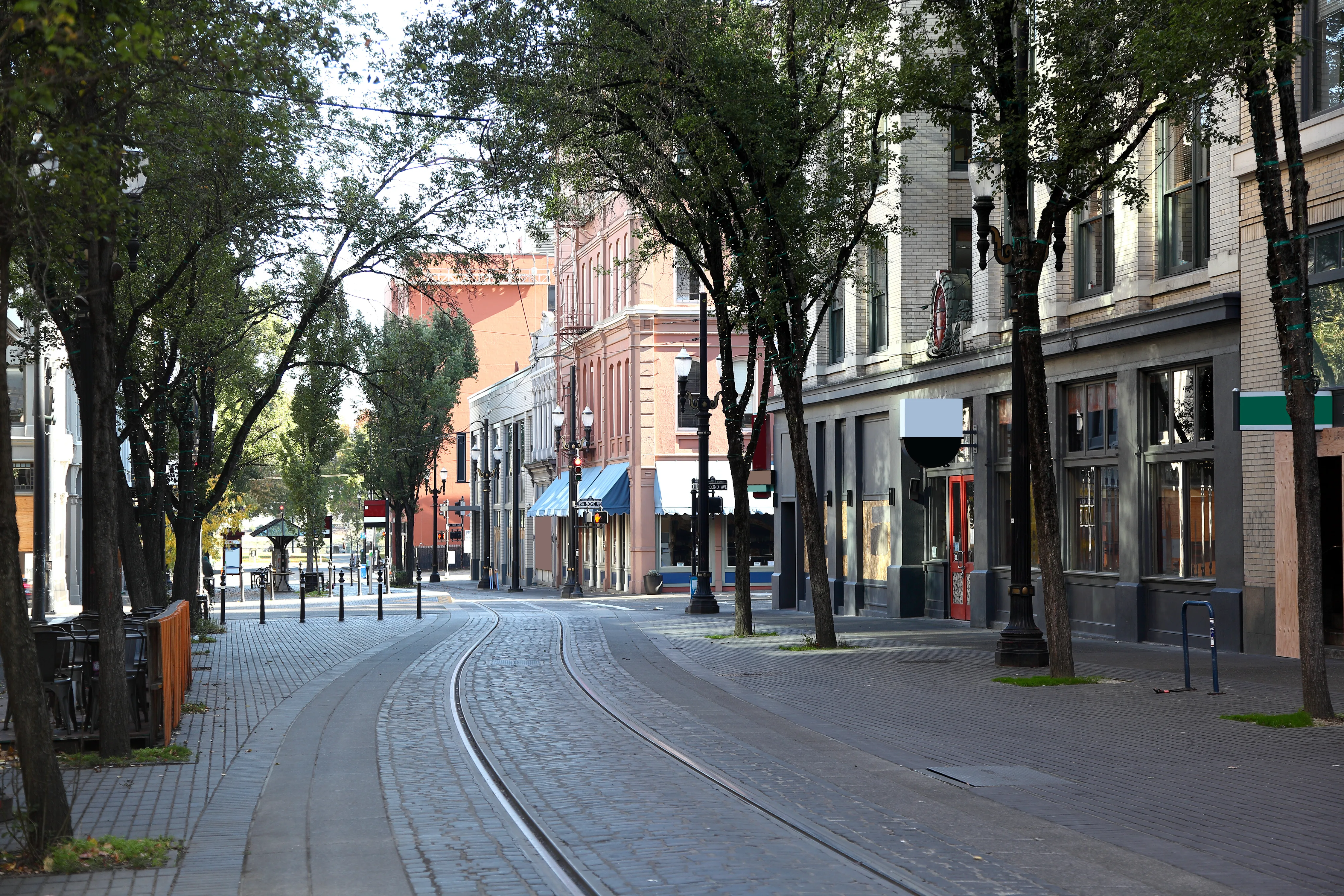
The honest answer to "can you live in Portland without a car?" is: it depends entirely on which neighborhood you choose. In the Pearl District, Hawthorne, or the South Waterfront, the answer is genuinely yes — TriMet's MAX light rail, Portland Streetcar, and the city's flat inner-grid make car-free living practical, not heroic. In the West Hills or outer Southeast, you'll want a vehicle. The distinction between inner and outer Portland shapes daily retirement life more than almost any other factor.
Cultural access is Portland's most underrated retirement asset. The Oregon Symphony plays at Arlene Schnitzer Concert Hall on Broadway, the Portland Art Museum is one of the oldest and largest art museums on the West Coast, and Portland Center Stage at the Armory offers a consistently respected theater season. The Saturday Market under the Burnside Bridge — one of the longest-running open-air markets in the country — runs from March through December and draws the kind of local artisan and food culture that retirees moving from smaller cities find unexpectedly rich. The Portland International Film Festival, held annually in late winter, brings weeks of international cinema to downtown venues. None of these require a car from any inner neighborhood.
Grocery access is strong in the central city. New Seasons Market has multiple Portland locations and has built a loyal following among health-conscious shoppers. The Pearl District has walkable access to Whole Foods. Fred Meyer's full-service stores are scattered across the metro. What retirees moving here from suburban markets sometimes find surprising is that Portland's inner neighborhoods feel much more like a genuine urban grid — with corner stores, coffee shops, and transit stops woven into daily walking routes — than the car-dependent suburban model they may have left behind.
The weather reality deserves a direct statement: Portland averages around 144 rainy days per year, and the stretch from November through February can feel relentlessly overcast. Retirees who've lived in Seattle or spent time in the UK often adapt without issue. Those coming from the Southwest or Southeast frequently struggle. The upside is summer: Portland's July and August are genuinely spectacular — low humidity, temperatures typically in the mid-70s to mid-80s, long evenings, and a city that fully comes alive outdoors. Rose Festival events in June, outdoor concerts at Waterfront Park, and the farmers market scene at Portland State University make Portland's warm months among the best in the Pacific Northwest.
What surprises many people after six months is how physically active Portland's senior population tends to be. Forest Park's 80+ miles of trails are not a destination — they're a Tuesday morning option. The Springwater Corridor runs from Sellwood to Boring along a flat, paved path that accommodates walkers, cyclists, and mobility aids. The waterfront along Tom McCall Waterfront Park offers an accessible, flat walking route with views of the Willamette that draw residents year-round. For retirees whose sense of wellbeing is tied to daily movement and outdoor access, Portland's infrastructure genuinely delivers.
| City | Median Home Price | Top Hospital | Walkability | Senior Living Depth | Overall Fit |
|---|---|---|---|---|---|
| Portland | $525,000 | OHSU (Level I, #1 OR) | High (inner neighborhoods) | Extensive — 100+ communities | ★★★★☆ |
| Lake Oswego | $770,000+ | Close to OHSU/Providence | Moderate | Strong suburban options | ★★★★☆ |
| Vancouver, WA | $430,000 | PeaceHealth SW Medical | Moderate | Growing market | ★★★☆☆ |
| Beaverton | $480,000 | Close to Providence St. Vincent | Moderate | Good suburban selection | ★★★☆☆ |
| Gresham | $380,000 | Legacy Mt. Hood nearby | Low | Limited urban options | ★★☆☆☆ |
| Milwaukie | $445,000 | Close to Providence Milwaukie | Low–Moderate | Modest selection | ★★★☆☆ |

Local Expert Takeaway: Retirees who want walkable urban living with immediate access to world-class healthcare should focus their search on the Pearl District, Laurelhurst, and the South Waterfront — these three neighborhoods offer the best combination of on-foot daily living, transit access, and proximity to OHSU or Providence without requiring a car. If budget is the primary constraint, Sellwood and the Hawthorne corridor offer the same walkable ethos at meaningfully lower price points. Retirees who prioritize financial efficiency over urban access should seriously model out a Vancouver, WA comparison before signing a Portland purchase agreement — the income tax difference is real money over a 20-year retirement horizon.
Is Portland a good place to retire?
For the right retiree, Portland is genuinely exceptional — culturally rich, medically elite, and more walkable than most West Coast cities its size. The strongest fits are active retirees who want urban engagement, trail access, and specialty healthcare without moving to a major metropolitan area like Seattle or San Francisco. The weakest fits are retirees prioritizing tax minimization, low crime, or consistent sunshine.
What is the crime rate in Portland?
Portland's violent crime rate runs roughly 5.3 incidents per 1,000 residents, and property crime sits at 45 per 1,000 — the property crime figure in particular is elevated compared to suburban neighbors like Lake Oswego or Beaverton. Inner neighborhoods like the Pearl District, Laurelhurst, and Sellwood tend to experience lower incident rates than outer corridors, and neighborhood selection is one of the most important decisions a retiring buyer can make in this city.
How does Portland compare to Vancouver, WA for retirement?
Vancouver offers lower home prices, no state income tax, and a quieter suburban pace — all meaningful advantages for financially-minded retirees. Portland counters with far greater cultural depth, walkable urban neighborhoods, direct access to OHSU's nationally ranked medical system, and one of the Pacific Northwest's most active senior living markets. Many retirees near the Columbia River end up making this comparison the central decision of their relocation process, and the right answer depends heavily on how much weight you give to tax savings versus daily quality of life.
Browse current listings updated daily — filtered for Portland buyers by Elizabeth Davidson, your local expert.
Powered by Elizabeth Davidson · Cascade Hasson Sotheby's International Realty · 503-939-2035
Explore the full Portland series: The Ultimate Portland Relocation Guide · Is Portland Safe? · Cost of Living in Portland · Best Neighborhoods in Portland · Portland Schools & Family Life · Portland Youth Sports · Portland Parks & Recreation · Retiring in Portland · 1031 Tax-Deferred Exchange in Portland · Portland First-Time Homebuyers Guide · · Moving to Portland from California · The Portland Realtor's Perspective · Top 10 Questions a Realtor Gets About Portland
Tell us what you need help with and we'll connect you with local resources.

About the Author
Todd Davidson is the founder of Living in Oregon and Living in Washington, where he publishes in-depth city guides, neighborhood resources, and local market insights covering more than 180 communities across the Pacific Northwest. While his background is in home financing and real estate, he created these digital platforms to help families research and compare regions before making a move.