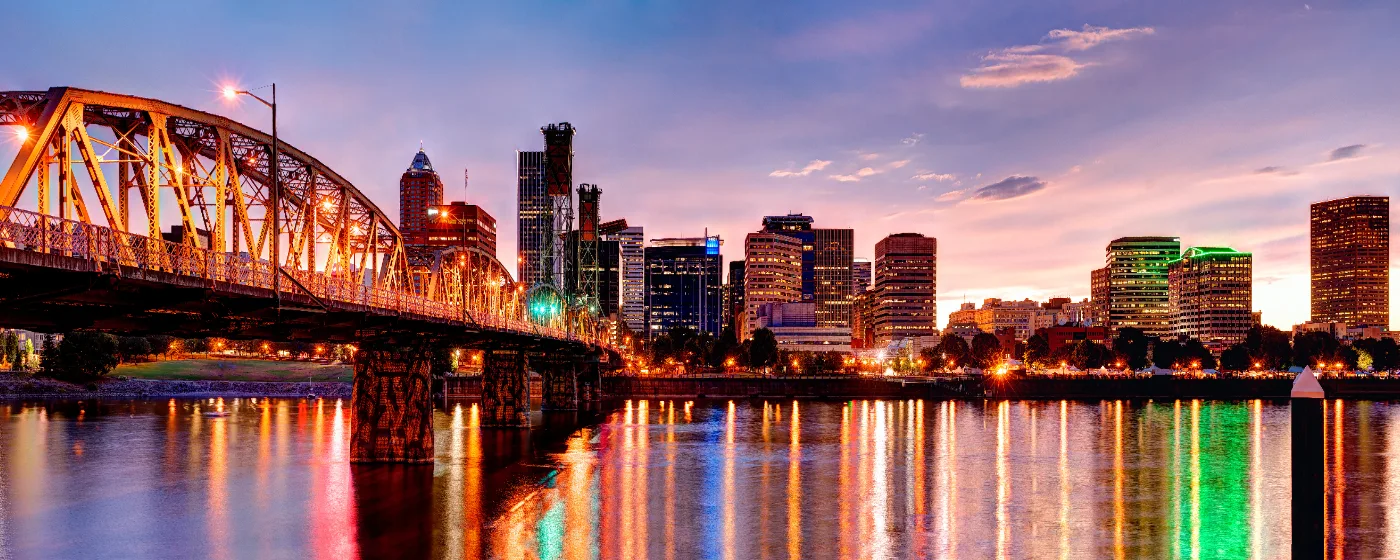
Portland Metro · Oregon
Best Neighborhoods in Portland: Where to Buy or Rent (2026)
Choosing a neighborhood in Portland is genuinely one of the most consequential decisions a relocating buyer can make — more so here than in most American cities. The price gap between a condo in Goose Hollow and a craftsman in Laurelhurst isn't a rounding error; it's the difference between a $300,000 entry point and a $1 million purchase. Get the neighborhood wrong and you've also gotten the commute, the school boundary, and the daily feel of your life wrong.
Portland's core geographic divide is the Willamette River, which splits the city into the more walkable, denser west side and the sprawling, more affordable east side — but that's a simplification that will mislead you almost immediately. The real divisions run deeper: neighborhood by neighborhood, each pocket of the city has its own price ceiling, its own commute logic, and its own character. Northeast Portland's Irvington and Alameda feel nothing like Southeast's Sellwood. Northwest's Nob Hill is a different world from Alberta Arts in the north.
This guide covers the best places to live in Portland for buyers and renters at every budget — from the most walkable urban cores to the quieter residential streets where families with school-age children tend to land. Use it to calibrate where you actually belong before you make an offer.
💰 Portland Metro Cost of Living Rankings
Wondering how Portland stacks up against all 15 Portland Metro suburbs at once? Our complete rankings guide covers every suburb — home prices, monthly PITI, income needed to buy or rent, and property tax rates by county.
See the Full Portland Metro Cost of Living Rankings →| Neighborhood | Best For | Price Range | Vibe |
|---|---|---|---|
| Pearl District | Urban renters, condo buyers | $365K–$455K | Sleek, walkable, loft-heavy |
| Nob Hill (NW District) | Walkability seekers, young professionals | $340K–$400K | Victorian charm, boutique retail |
| Hawthorne | First-time buyers, creatives | $480K–$580K | Eclectic, bohemian, bookshop culture |
| Alberta Arts District | Value seekers, artists, renters | $330K–$420K | Hip, colorful, rapidly changing |
| Sellwood-Moreland | Families, river lovers | $580K–$680K | Quiet, historic, antique-district feel |
| Alameda | Established buyers, families | $700K–$900K | Stately, tree-lined, understated prestige |
| Laurelhurst | Luxury buyers, park proximity | $900K–$1.2M | Classic Pacific NW, lush, spacious |
| Irvington | Move-up buyers, history lovers | $800K–$950K | Edwardian grandeur, walkable to NE shops |
| Goose Hollow | Budget-conscious condo buyers | $290K–$340K | Dense, convenient, transit-first |
| Southwest Hills | Luxury buyers wanting seclusion | $900K–$1M+ | Forest-edge estates, private, elevated |
| Buyer Type | Best Neighborhood | Why |
|---|---|---|
| First-time buyer | Alberta Arts District | Below-median entry points, strong appreciation |
| Luxury buyer | Laurelhurst or SW Hills | $1M+ homes with serious land and character |
| Walkability seeker | Pearl District or Nob Hill | Walk Scores in the 90s, everything on foot |
| Families with kids | Sellwood-Moreland or Alameda | Top school proximity, quieter streets, parks nearby |
| Commuters (to Intel/Nike/OHSU) | Nob Hill, Goose Hollow, or SW Hills | Freeway access or close-in location |
| Large lot buyers | Irvington, Alameda, or SW Hills | Mature lots, setbacks, mature tree canopy |
| Renters | Pearl District or Alberta Arts | Rental stock, amenities, neighborhood momentum |

Portland's neighborhood market is sharply bifurcated right now, and that's actually great news for buyers who do their homework. The close-in westside — Pearl District, Nob Hill, South Waterfront — has softened meaningfully from its 2022 peak. Condo buyers in the Pearl are finding real negotiating room, with days on market stretching past 100 days on some listings and prices down year over year. Meanwhile, the established northeast neighborhoods of Irvington and Alameda have barely blinked — inventory stays tight and well-priced homes in those corridors still generate competing offers within the first weekend. Knowing which micromarket you're shopping in changes everything about your strategy.
What buyers consistently underestimate is how dramatically school boundaries cut across neighborhoods that look identical on a map. Two homes on the same street in Northeast Portland can feed into different elementary schools with meaningfully different reputations — and the market prices that in. My advice for anyone seriously considering living in Portland: get the Portland Public Schools boundary lookup tool open before you fall in love with a specific block. The homes that look slightly overpriced in Alameda and Laurelhurst are almost always priced that way deliberately, because the buyers who understand the school picture know exactly what they're buying. If you're considering Portland and want insight into which neighborhoods align with your priorities and budget, I'd welcome the opportunity to share what I've learned from helping hundreds of families make this move successfully.
The Pearl District sits at the northwest edge of downtown, bounded by the Willamette to the north, I-405 to the west, NW Broadway to the east, and Burnside to the south — and it runs almost entirely on vertical living. Named in 1985 by a gallery owner who described the neighborhood's artists working inside rundown industrial buildings as pearls inside funky oysters, the Pearl has evolved into one of the most walkable addresses in the Pacific Northwest, with a Walk Score of 97. Median condo prices currently sit around $410,000, down from recent highs, and the market has cooled noticeably — homes here average over 100 days on market, and buyers willing to be patient are finding real leverage. The catch is that 74% of residents rent rather than own, which makes the Pearl feel more like a rental-market neighborhood with a thin ownership layer than a community with deep neighborhood roots.
Best for: Urban professionals, condo buyers who want maximum walkability, renters eyeing an eventual purchase
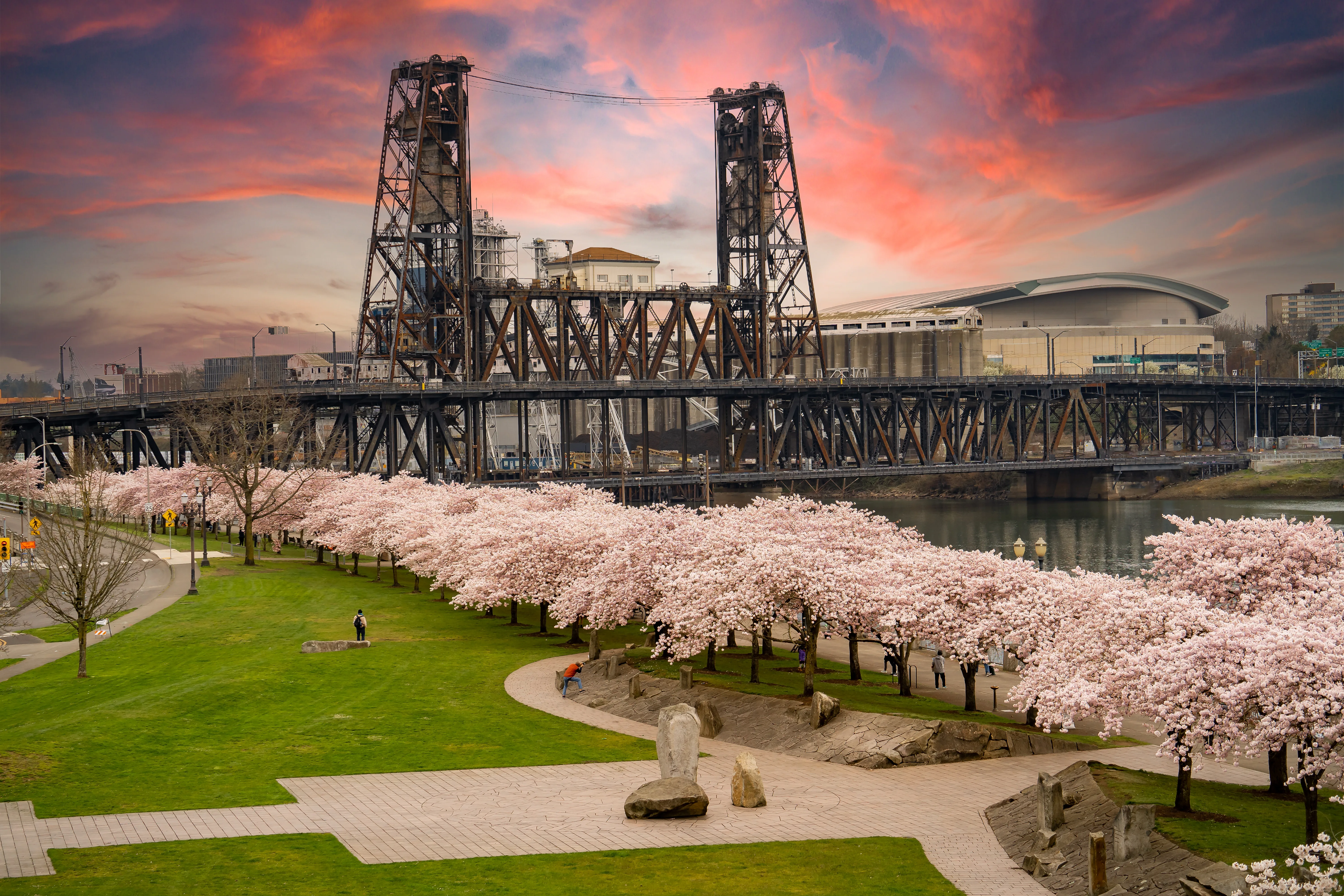
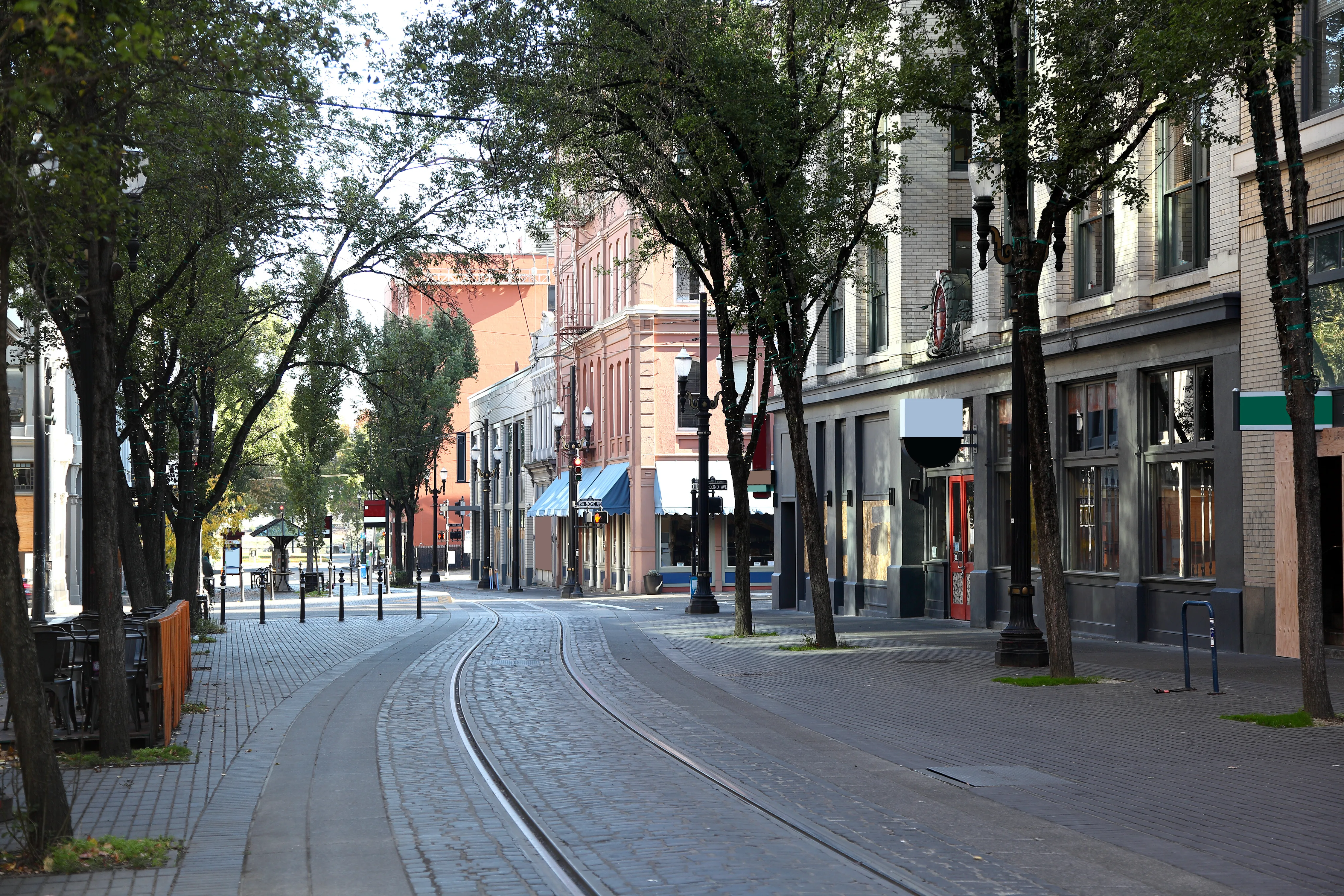
Stretching along NW 23rd Avenue — locally nicknamed "Trendy-Third" — Nob Hill occupies the 97210 ZIP code and packs more Victorian and Craftsman architecture per block than almost anywhere else in Portland. The shopping and restaurant corridor on NW 23rd is genuinely walkable in a way that most Portland neighborhoods only approximate, and the proximity to Forest Park gives residents an unusual combination of urban density and immediate trail access. Median listed prices in the Northwest District sit around $367,000, heavily influenced by the condo stock, though single-family homes in the hillside sections run considerably higher. The downside buyers don't always anticipate is parking — street spots are fiercely contested, and if you're commuting by car rather than by foot or bus, the neighborhood's charm can erode quickly on a Tuesday morning.
Best for: Walkability seekers, professionals who use transit or bike, buyers who want a true neighborhood feel with urban amenities
Hawthorne is Southeast Portland's most recognizable corridor, anchored by SE Hawthorne Boulevard between roughly 20th and 50th Avenues, and it draws buyers who want Portland to feel like Portland. Independent bookshops, vinyl record stores, coffee roasters, and Thai restaurants sit elbow-to-elbow along the main strip, and the residential side streets off the boulevard are lined with craftsman bungalows that absorb demand as fast as inventory arrives. Homes in the Hawthorne corridor typically sell in the $480,000–$580,000 range, moving quickly when priced right — this is one of the more competitive pockets in Southeast. The trade-off is lot size: the bungalows that look so appealing in listing photos often sit on 4,000-to-5,000-square-foot lots with minimal yard space, which matters more once you're actually living there.
Best for: First-time buyers, buyers relocating from dense coastal cities who want walkable culture, people who genuinely use bookstores
Alberta Arts District runs along NE Alberta Street in North Portland and has spent the past decade in a state of ongoing transformation — the kind of neighborhood where a kombucha bar and a longtime neighborhood barber still share the same block. Median sale prices have been running around $350,000–$420,000, with the market showing strong year-over-year appreciation in the range of 6%, which reflects both pent-up demand and the continued arrival of buyers priced out of pricier Northeast neighborhoods. The Last Thursday art walk, held on the final Thursday of each month from spring through fall, is one of the most authentic neighborhood traditions in Portland — street vendors, live music, and local galleries spilling onto Alberta Street in a way that still feels genuinely community-driven rather than curated. The honest negative: parts of Alberta's surrounding blocks have faced property crime pressure that buyers from lower-crime markets aren't always prepared for.
Best for: First-time buyers, renters building toward ownership, buyers who prioritize neighborhood character over square footage
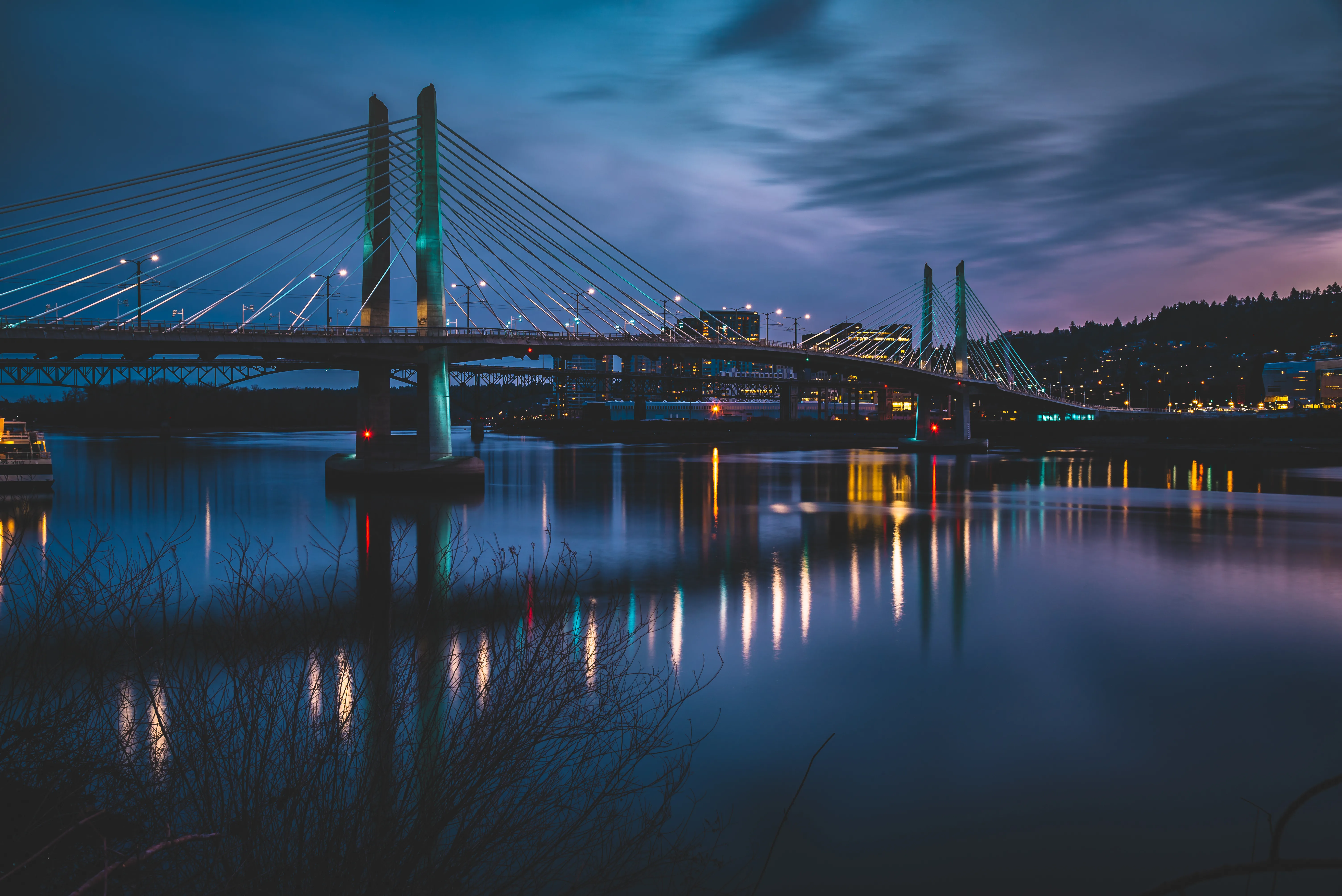
Sellwood sits at the southern end of Portland along the Willamette River, and it's one of those neighborhoods that people move to and then refuse to leave. The antique district along SE 13th Avenue, the easy access to the Springwater Corridor trail, and the general quietness of the residential blocks give it a small-town texture that's unusual for a neighborhood inside Portland's city limits. Homes here run roughly $580,000–$680,000, with the median sitting around $630,000 — a premium over the city's overall median that the market consistently sustains. Inventory is tight, and what does come available tends to move. The downside is geographic: Sellwood is tucked away, and commuting north to downtown or to the Pearl can mean grinding through SE McLoughlin Boulevard or the Sellwood Bridge, both of which get congested during peak hours.
Best for: Families with kids, buyers wanting a quieter pace without leaving Portland, Willamette River enthusiasts
Alameda is one of Northeast Portland's most established neighborhoods, defined by its ridge geography, towering street trees, and a housing stock that leans heavily toward Craftsman and Tudor homes built between 1910 and 1940. The neighborhood doesn't have a commercial strip of its own, which is part of what makes it feel so residential — buyers come here specifically for the streets, the schools, and the canopy. Prices in Alameda run $700,000–$900,000, with well-maintained properties on premier blocks occasionally pushing past that ceiling. The compromise buyers accept in Alameda is that the neighborhood's prestige comes without the neighborhood walkability that draws buyers to Pearl or Nob Hill — you are dependent on a car for most errands, and the nearest compelling retail is a drive away on NE Broadway.
Best for: Established buyers prioritizing school access and neighborhood stability, families with children, buyers who value mature residential streetscapes
Laurelhurst is the neighborhood that Portland buyers tend to end up in after they've done their research and decided they want the best available combination of park access, architectural quality, and school proximity. The centerpiece is Laurelhurst Park — a formal 31-acre park with a spring-fed pond that was designed by the Olmsted Brothers firm and is one of the most genuinely beautiful neighborhood parks in the Pacific Northwest. Homes in Laurelhurst range from roughly $900,000 to $1.2 million, with the tightest inventory and fastest movement in the sub-$1 million range on updated properties. This is not a neighborhood where you find undiscovered value; everyone who's been shopping Portland OR real estate for more than a month knows Laurelhurst. What buyers don't always anticipate is that even at these prices, multiple-offer situations still occur on the best homes, and deferred-maintenance properties at the low end of the range can require significant investment.
Best for: Luxury buyers who want neighborhood character alongside price appreciation, families prioritizing school access, buyers seeking long-term equity in an established Portland address
Looking to buy in Portland? Estimate your payment.
Enter your numbers to see an estimated monthly mortgage payment.
Estimate only. Excludes HOA fees and mortgage insurance.
Treating East Burnside as a mental border and ignoring what's on either side. A surprising number of relocating buyers default to a simple "close-in east side" search and end up shopping a corridor that spans neighborhoods with genuinely different characters, price profiles, and school boundaries. Buckman, Kerns, and Richmond all sit within a few blocks of each other and look similar on a map — but their everyday realities and their long-term market trajectories differ. Slow down and look at each neighborhood on its own terms.
Underestimating the Sellwood Bridge and McLoughlin chokepoints. Sellwood is a genuinely appealing place to live, but buyers who work downtown or near OHSU and don't stress-test their commute before closing often discover the problem after move-in. The Sellwood Bridge and southbound McLoughlin Boulevard both congest reliably between 7:30 and 8:30 a.m., and what looks like a 20-minute commute on a Sunday afternoon can run 40 minutes on a Tuesday morning.
Buying in the Pearl District without understanding the HOA and condo association landscape. Pearl condos can look like exceptional value on price-per-square-foot relative to single-family alternatives — until you add monthly HOA fees, which in newer Pearl buildings commonly run $500 to $900 per month. That changes the effective cost of ownership dramatically and often makes a comparably priced craftsman in Hawthorne or Alberta a more financially straightforward purchase.
Assuming school quality is consistent across Portland Public Schools. PPS is a single district, but the range of individual school performance within it is wide. Buyers who assume that landing anywhere inside Portland's city limits gives their children access to comparable educational options are consistently surprised when they dig into individual school data. This matters most in the transition from the close-in eastside to the outer SE and outer NE zones, where school quality becomes meaningfully less uniform.
| Area | Ideal For | Typical Rent Range | Trade-off |
|---|---|---|---|
| Pearl District | Urban professionals, couples | $1,800–$2,800/mo | HOA-style fees, limited parking, high cost |
| Alberta Arts District | Young renters, creatives, students | $1,200–$1,800/mo | Property crime pressure, limited amenities |
| Hawthorne / Division | Renters wanting SE culture | $1,400–$2,000/mo | Limited parking, older building stock |
| Nob Hill (NW 23rd area) | Walkability seekers, professionals | $1,500–$2,200/mo | Street parking wars, hillside access issues |
| South Waterfront | Luxury renters, OHSU employees | $2,200–$3,200/mo | Very high cost, limited neighborhood feel |
Portland's rental market in 2026 sits in an interesting middle position — softer than its 2021–2022 peak but still meaningfully above pre-pandemic baselines. The Pearl and South Waterfront anchor the luxury rental tier, and vacancy rates in those buildings have given renters more negotiating room than they've had in years. Alberta Arts and the Hawthorne/Division corridor remain the most active rental zones for budget-conscious renters, with the tradeoff being older buildings and the property crime rates that accompany some of the more affordable blocks. If you're relocating to Portland and working near OHSU, South Waterfront's aerial tram connection makes it the most logical first rental — the convenience of eliminating a car commute tends to outweigh the rent premium once you've done the math on Portland parking costs.
Local Expert Takeaway: If you're moving to Portland and have a firm budget under $500,000, your best long-term equity plays are Alberta Arts District and the edges of Hawthorne — both have shown consistent appreciation and still have room to run relative to the city's established northeast neighborhoods. For buyers willing to stretch toward $600,000–$700,000, Sellwood-Moreland remains one of the most underappreciated family neighborhoods in the metro. And if you're weighing the Pearl for its walkability, run the full ownership cost with HOA fees included before comparing it against a craftsman in Nob Hill — the all-in numbers frequently favor the single-family option even at a higher purchase price.
💰 Portland Metro Cost of Living Rankings
Ready to compare all 15 Portland Metro suburbs side by side — home prices, monthly PITI, and income needed to buy? Our complete rankings guide covers every suburb — home prices, monthly PITI, income needed to buy or rent, and property tax rates by county.
Portland Metro Suburbs Cost of Living: Top 15 Ranked →How much do Portland Public Schools vary by neighborhood, and should school boundaries drive a buyer's neighborhood decision?
Significantly, and yes for families with school-age children. Portland Public Schools operates under a system where individual school quality, test scores, and programming vary considerably by address — two homes six blocks apart can feed into elementary schools with meaningfully different reputations and resources. Neighborhoods like Alameda, Laurelhurst, and Sellwood-Moreland are associated with stronger elementary school assignments, which is one reason those areas carry premium pricing beyond their walkability and park access. Buyers with children should run every address through the PPS school finder tool and visit the assigned schools before making an offer — neighborhood reputation is not a reliable proxy for individual school assignment.
Is Portland a good place for families?
Portland offers genuine appeal for families with children, particularly in neighborhoods like Sellwood-Moreland, Alameda, and Laurelhurst, where school access, park proximity, and quiet residential streets combine well. The caveat is that Portland Public Schools vary significantly by individual school, so doing school-boundary research before committing to a neighborhood is essential rather than optional.
What are the most affordable neighborhoods in Portland?
Goose Hollow consistently offers the lowest entry points for condo buyers, with median prices in the $290,000–$340,000 range. On the single-family side, Powellhurst-Gilbert in outer Southeast Portland offers homes around $395,000. Alberta Arts District sits in between and tends to offer more neighborhood energy for buyers willing to accept some rough edges.
How does Portland's real estate market compare to nearby cities?
Portland's median home price of $525,000 sits above neighboring Gresham and Milwaukie but below Lake Oswego, which runs considerably higher. The real advantage Portland offers over its suburbs is neighborhood variety — the gap between the most affordable and most expensive Portland neighborhoods is wider than in most surrounding cities, giving buyers at every budget level a legitimate option inside city limits.
Browse current listings updated daily — filtered for Portland buyers by Elizabeth Davidson, your local expert.
Powered by Elizabeth Davidson · Cascade Hasson Sotheby's International Realty · 503-939-2035
Explore the full Portland series: The Ultimate Portland Relocation Guide · Is Portland Safe? · Cost of Living in Portland · Best Neighborhoods in Portland · Portland Schools & Family Life · Portland Youth Sports · Portland Parks & Recreation · Retiring in Portland · 1031 Tax-Deferred Exchange in Portland · Portland First-Time Homebuyers Guide · · Moving to Portland from California · The Portland Realtor's Perspective · Top 10 Questions a Realtor Gets About Portland
Tell us what you need help with and we'll connect you with local resources.

About the Author
Todd Davidson is the founder of Living in Oregon and Living in Washington, where he publishes in-depth city guides, neighborhood resources, and local market insights covering more than 180 communities across the Pacific Northwest. While his background is in home financing and real estate, he created these digital platforms to help families research and compare regions before making a move.