

I'm Elizabeth Davidson, a Real Estate Broker with Cascade Hasson Sotheby's International Realty, and I've spent years working this market full-time — ranking in the top 2% of Portland Metro REALTORS® by volume sold. That standing isn't something I lead with to impress people; I mention it because it reflects how much time I've spent actually watching prices move block by block across this city, not just reading about it.
Portland is genuinely complex terrain for a buyer coming in from outside the region. The citywide median — currently running around $530,000–$535,000 — tells you almost nothing useful about what you'll actually pay in Pearl District versus Sellwood versus Alameda. Those markets behave differently, attract different buyers, and reward different strategies.
My approach is straightforward: I tell buyers what I'd want to know if our positions were reversed. That means being honest about tradeoffs, naming the neighborhoods where a given budget actually works, and flagging the assumptions that tend to cost buyers the most.
In this post, I'll walk you through the neighborhoods worth knowing, what Portland's three main price tiers actually buy you, how the city stacks up against its neighbors, and who Portland genuinely fits — and who should probably keep looking elsewhere.
Pearl District. This is Portland's most walkable urban core — the place where you step out of a condo and walk to Powell's Books on a rainy Tuesday evening without thinking twice. The tradeoff right now is that the condo market here has softened noticeably, with inventory sitting longer and HOA fees climbing. Pearl District falls in the entry tier (under $500K) for most condo purchases, which makes it a legitimate option for buyers who want urban density and don't need a yard.
Hawthorne / Richmond. Saturday morning on Hawthorne Boulevard feels like what people imagine Portland to be before they move here — independent coffee shops, bookstores, farmers market energy on Division Street nearby. Single-family homes along the Hawthorne corridor are genuinely competitive and sit firmly in the middle tier ($500K–$700K), with well-priced houses going quickly. If you want walkability and a real neighborhood feel without the condo dynamic, this is where I tell most buyers to start their search.
Alberta Arts District. Northeast Portland's Alberta Street has a gallery-walk energy on the last Thursday of every month that's hard to replicate — food carts, local art, front porches with people actually on them. Prices here span the entry tier into the middle tier, making it one of the more accessible corridors in the city for buyers who want character without a Southwest Hills price tag. It's also one of the areas where I've watched buyer interest pick back up over the past year.
Sellwood-Moreland. Sellwood sits on the east bank of the Willamette with an antique-district main street and easy trail access to Springwater Corridor for weekend bike rides. This is where families tend to land when they want a quiet, residential feel within the city proper. Most single-family inventory here falls in the middle tier ($500K–$700K), and demand from families is steady — well-maintained homes here don't sit long.
Alameda. Alameda is a Northeast Portland neighborhood built on a ridge with older Craftsman and Tudor homes and a genuine front-porch culture. Parents walk kids to school, neighbors know each other's names, and you can be in Lloyd District or the Pearl in under 15 minutes. This neighborhood runs solidly in the middle to upper tier — expect $600K–$700K+ for most single-family homes — and it attracts buyers who want urban access with a neighborhood that doesn't feel urban.
Nob Hill (Northwest Portland). Nob Hill's 23rd Avenue is one of the better streets in the city for an afternoon out — boutique retail, good restaurants, walkable enough that some residents genuinely don't need a car on weekends. The market here is quieter than it was a few years ago, partly due to condo inventory weight dragging down overall numbers. Single-family homes push into the upper tier ($700K+), while condos and attached homes can still be found in the entry to middle range.
The biggest mistake I see is treating Portland as one market. It isn't. The condo-heavy urban core, the competitive single-family neighborhoods on the east side, and the larger-lot pockets in Southwest and outer Northeast are three completely different products — and the citywide median doesn't tell you much about any of them.
The second mistake is assuming the Pearl District represents what $450K–$500K buys across the city. In Pearl, that budget gets you a condo with rising HOA fees in a market where sellers have real negotiating pressure. In North Portland or the Alberta corridor, that same budget gets you into detached homes on real lots. Buyers who anchor to the Pearl number and then generalize citywide consistently underestimate their own options.
Third: buyers relocating from Seattle or the Bay Area sometimes assume Portland's softer-feeling market means they can take their time on anything they like. On condo inventory, that's mostly true right now. On well-priced single-family homes in Hawthorne, Sellwood, or Alameda, it is absolutely not — those still move fast when they're priced right.

| Budget | What You'll Typically Find | Where to Look |
|---|---|---|
| Under $500K | Condos, townhomes, smaller attached homes; some entry detached homes in outer NE/N Portland | Pearl District (condos), Alberta Arts District, North Portland |
| $500K–$700K | Solid single-family homes in established east-side neighborhoods; updated Craftsman and bungalow styles | Hawthorne/Richmond, Sellwood, Alameda, Alberta Arts |
| $700K+ | Larger single-family homes, premium lots, Southwest Hills, NW Portland single-family; luxury condos | Nob Hill (SFR), Southwest Hills, outer NW Portland, Alameda upper end |
The middle tier is where most of my buyer activity concentrates, and for good reason — $500K–$700K is where Portland's strongest single-family inventory lives. If your budget is at or above $700K and you're not locked into a specific neighborhood, I'd also have you look at Lake Oswego and parts of Beaverton, which offer comparable homes with different school districts worth comparing.
Portland's market right now is balanced leaning toward buyers in most segments — with homes citywide taking roughly 55 to 80 days from list to close for standard inventory, though well-priced single-family homes in high-demand neighborhoods still attract quick offers. Prices are up modestly year over year, roughly 3–4%, but the gains are uneven: Northeast Portland has seen stronger movement while the Pearl District condo segment continues to soften. This is not a market where you need to panic-buy, but it's also not one where you can afford to be unprepared when the right house appears.
Portland fits buyers who want genuine urban amenities — walkable neighborhoods, serious restaurant and coffee culture, trail access, and a functioning transit network — without paying Seattle or Bay Area prices for them. It's a strong match for healthcare and tech workers tied to OHSU, Providence, Intel, Nike, or the Columbia Sportswear campuses, where commutes are manageable from the right neighborhood. Buyers with kids who are willing to research school options carefully — Portland Public Schools has standout programs alongside more variable ones — tend to do well here if they go in with their eyes open.
It's a weaker fit for buyers who prioritize low property taxes, minimal city income tax exposure, or suburban simplicity without much research. If that's your profile, Hillsboro or Vancouver often make more financial sense, and I tell buyers that directly.
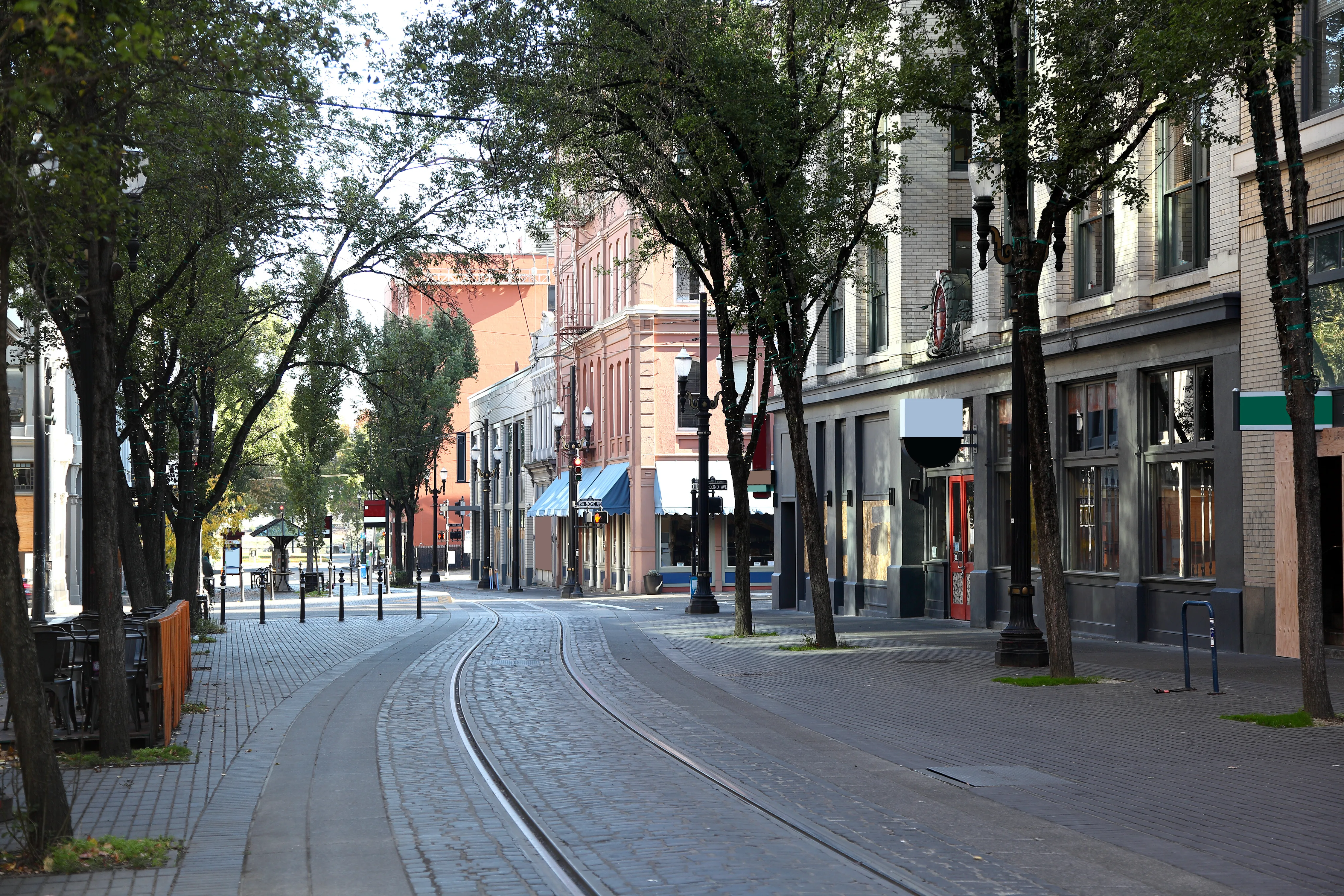
Buyers coming from California — especially the Bay Area — are consistently surprised by how neighborhood-specific Portland's character is. They expect one coherent city personality and instead find that Sellwood, Alberta, and the Pearl feel like completely different towns separated by 20 minutes. That turns out to be a feature for most of them once they understand it, but it does mean the homework required before buying here is more neighborhood-level than citywide.
The other consistent surprise is the property tax structure. Oregon's Measure 50 caps annual assessed value increases at 3%, which sounds straightforward, but it means a home's assessed value can diverge significantly from its market value over time — and two nearly identical homes on the same street can carry very different tax bills depending on when they last sold. Buyers from states with simpler tax systems often don't realize they need to look at the current assessed value, not just the market price, before making an offer.
| City | Schools | Commute to Portland | How It Compares |
|---|---|---|---|
| Portland | Portland Public Schools (B) | — | Urban core; widest neighborhood variety |
| Beaverton | Beaverton SD (B+) | 20–30 min west via Hwy 26 | Lower prices, stronger suburban schools, Intel proximity |
| Lake Oswego | Lake Oswego SD (A) | 20–25 min south via I-5 | Premium schools, higher prices, quieter feel |
| Hillsboro | Hillsboro SD (B) | 30–40 min west via Hwy 26 | Most affordable; tech-corridor location near Intel/Nike |
| Milwaukie | North Clackamas SD (B) | 20–25 min south via 99E or McLoughlin | Entry-friendly prices, improving, good light rail access |
| Vancouver, WA | Various (B/B+) | 25–40 min north via I-5 (bridge dependent) | No Oregon income tax; commute depends heavily on I-5 congestion |
The practical calculus is this: if schools are your primary driver, Lake Oswego is the clear premium option, but you'll pay for it. If taxes are the driver, Vancouver deserves a serious look — just run the actual numbers on commute cost and time before assuming the income tax savings make it a clean win. For buyers who genuinely want to live in Portland itself, none of the suburbs replicate what the city's best neighborhoods actually offer day-to-day.
Is Portland still affordable compared to Seattle? Yes, meaningfully so. Portland's median sold price is running around $530,000–$535,000 right now, while Seattle's is substantially higher — the gap is real and has persisted. That said, Oregon does have a state income tax, which Seattle residents don't pay, so buyers crossing from Washington need to run the full financial comparison, not just the home price.
Which neighborhoods have the best commute to OHSU or downtown? For OHSU, neighborhoods in Southwest Portland offer the shortest drive, though parking and traffic on the hill can be their own problem. For downtown, the Pearl District and Nob Hill are the obvious walkable options, and Hawthorne and Sellwood have solid connectivity via transit and bike infrastructure on the Springwater Corridor. I'd put Alameda and Alberta in the middle tier for downtown access — drivable in under 20 minutes most mornings.
Is the Pearl District actually a good buy right now? It depends on what you mean by good. For buyers who want urban walkability and are comfortable with the condo structure, the Pearl offers real negotiating leverage right now — inventory is elevated and sellers know it. It's in the entry tier (under $500K) for most units. What I caution buyers about is the HOA exposure: fees have been rising, and you need to underwrite those costs carefully before assuming the sticker price tells the whole story.
Where does the middle tier ($500K–$700K) get you the most house? Sellwood and the Hawthorne/Richmond corridor are consistently where that budget performs best for single-family buyers. You're getting established homes with real lots, walkable streets, and genuine neighborhood infrastructure. Alberta Arts District is also worth a serious look — buyer interest has picked back up and inventory still carries some value compared to the southeast side.
How competitive is the market right now — should I expect bidding wars? The honest answer is: it depends on the segment. The condo market in Pearl and Northwest Portland is relatively calm — you have time and leverage. In well-priced single-family homes in Sellwood, Richmond, or Alameda, you should still expect competition when a house is priced right. Prepare your offer before you find the house, not after.
If you're seriously considering Portland, the most useful thing you can do before we talk is decide which of the three price tiers you're actually working in — not aspirationally, but realistically — and then spend time physically in two or three of the neighborhoods that fit that tier. The difference between Sellwood and Alberta is something you'll feel in an afternoon, and that feeling matters more to long-term satisfaction than almost any data point I could give you.
What I've learned over years of doing this is that the buyers who end up happiest in Portland are the ones who bought for the neighborhood first and the house second. The specific house you buy will age, need work, and eventually be something you think about selling. But walking to a farmers market on a Saturday morning, biking a trail on a Wednesday evening, knowing your neighbors — that's what people are still talking about five years later. Portland has a remarkable ability to deliver that when buyers land in the right pocket of it. If you're thinking about making a move to Portland, I'd genuinely love to help you figure out which pocket that is.
Browse current listings updated daily — filtered for Portland buyers by Elizabeth Davidson, your local expert.
Powered by Elizabeth Davidson · Cascade Hasson Sotheby's International Realty · 503-939-2035
Explore the full Portland series: The Ultimate Portland Relocation Guide · Is Portland Safe? · Cost of Living in Portland · Best Neighborhoods in Portland · Portland Schools & Family Life · Portland Youth Sports · Portland Parks & Recreation · Retiring in Portland · 1031 Tax-Deferred Exchange in Portland · Portland First-Time Homebuyers Guide · · Moving to Portland from California · The Portland Realtor's Perspective · Top 10 Questions a Realtor Gets About Portland