
Portland Metro · Oregon
Moving to West Linn? Top 10 Questions Realtors Get About Living in West Linn, Oregon (2026)

I'm Elizabeth Davidson, a broker with Cascade Hasson Sotheby's International Realty, and I've spent the last decade helping buyers and sellers navigate the Portland Metro market. I'm consistently ranked in the top 2% of Portland Metro brokers by volume, which really just means I've seen enough transactions go sideways to know what actually matters versus what sounds good on paper.
West Linn is one of my core markets, and I'll be honest — it's a city that generates strong opinions. Some buyers fall in love with the tree-lined streets and top-rated schools. Others balk at the price tags and limited inventory. I've walked the trails at Mary S. Young Park more times than I can count while previewing properties in nearby neighborhoods, and I've sat in plenty of backed-up traffic on the Terwilliger curves of Highway 43. That firsthand experience shapes everything I'm about to tell you.
This post covers the ten questions I hear most often from buyers considering West Linn: whether it's actually a good place to live, which neighborhoods fit different lifestyles, how the schools really perform, what commuting looks like in practice, and some specifics about property taxes that trip people up. I've also included a question about flood zones and creek areas — because West Linn's topography means this matters more than most buyers realize. Let's get into it.
West Linn is genuinely one of the most desirable cities in Oregon — but "desirable" comes with trade-offs. The schools are excellent, the natural surroundings are stunning, and crime rates stay consistently low. If you're raising a family and can afford the entry price, it delivers on what it promises.
Here's the honest part: West Linn is the second most expensive city in Oregon, behind only Lake Oswego. The overall cost of living runs about 25% above the national average. With a median home price hovering around $738K-$738K, you're paying a premium for the schools, the safety, and the access to nature. If you're stretching your budget to get here, you might find yourself house-poor in a city where the restaurants and activities also skew pricier.
The other reality is that West Linn is car-dependent. Public transit options are limited, and the commercial areas are small. If you want walkable urban living with coffee shops and restaurants on every corner, this isn't your place. But if you want space, trees, good schools, and access to hiking trails within city limits, West Linn earns its reputation. It works best for families with stable incomes who prioritize schools and outdoor access over nightlife and urban convenience. For a deeper look at expenses, our Cost of Living in West Linn breakdown covers the numbers in detail.
This depends on your priorities, but three neighborhoods consistently rise to the top for families.
Hidden Springs sits in northern West Linn and checks the most boxes for family buyers. It's well-established with a strong neighborhood feel, abundant green spaces, and walking paths throughout. Hidden Springs Elementary is literally in the neighborhood, which means younger kids can often walk to school. Homes here range from traditional to contemporary, and the price points tend to be more accessible than West Linn's most expensive enclaves.
Barrington Heights is the upscale option. Perched above the city with sweeping views of the Willamette Valley, this master-planned neighborhood features larger custom homes, manicured lots, and quiet streets. It's private, it's beautiful, and it carries the price tag to match. Families who want space and aren't commuting daily often gravitate here.
Willamette Historic District offers character over uniformity. You'll find vintage cottages, updated craftsman-style homes, and newer construction designed to honor the area's history. It's charming and walkable to the historic downtown strip, but the lots tend to be smaller and some homes need updating.
Each of these neighborhoods feeds into West Linn-Wilsonville schools, so you're not making academic trade-offs between them. The Best Neighborhoods in West Linn guide breaks down all fifteen neighborhoods if you want the full picture.
The short answer: they're legitimately excellent, not just locally but statewide. West Linn-Wilsonville School District ranks #3 in Oregon according to Niche, with an overall A grade. The public schools specifically earn an A+ rating — the second-best public school system in the state.
What does that mean practically? Test scores are high, teacher retention is strong, and the district offers programming you won't find everywhere. The elementary schools feed into well-regarded middle schools, which then feed into West Linn High School — a school that consistently places in state rankings for academics and extracurriculars.
That said, "excellent schools" doesn't mean perfect fit for every kid. The district is competitive academically, which works well for motivated students but can feel pressured for others. If your child needs specialized support services, ask specific questions about the programs at your assigned school before assuming the district rating tells the whole story.
The other factor: these schools drive property values. Families pay a premium to be in this district, and that demand keeps home prices elevated. You're essentially paying private school tuition through your mortgage. Whether that math works depends on your family's finances. For families researching the connection between schools and lifestyle, the West Linn Schools and Family Life post goes deeper.
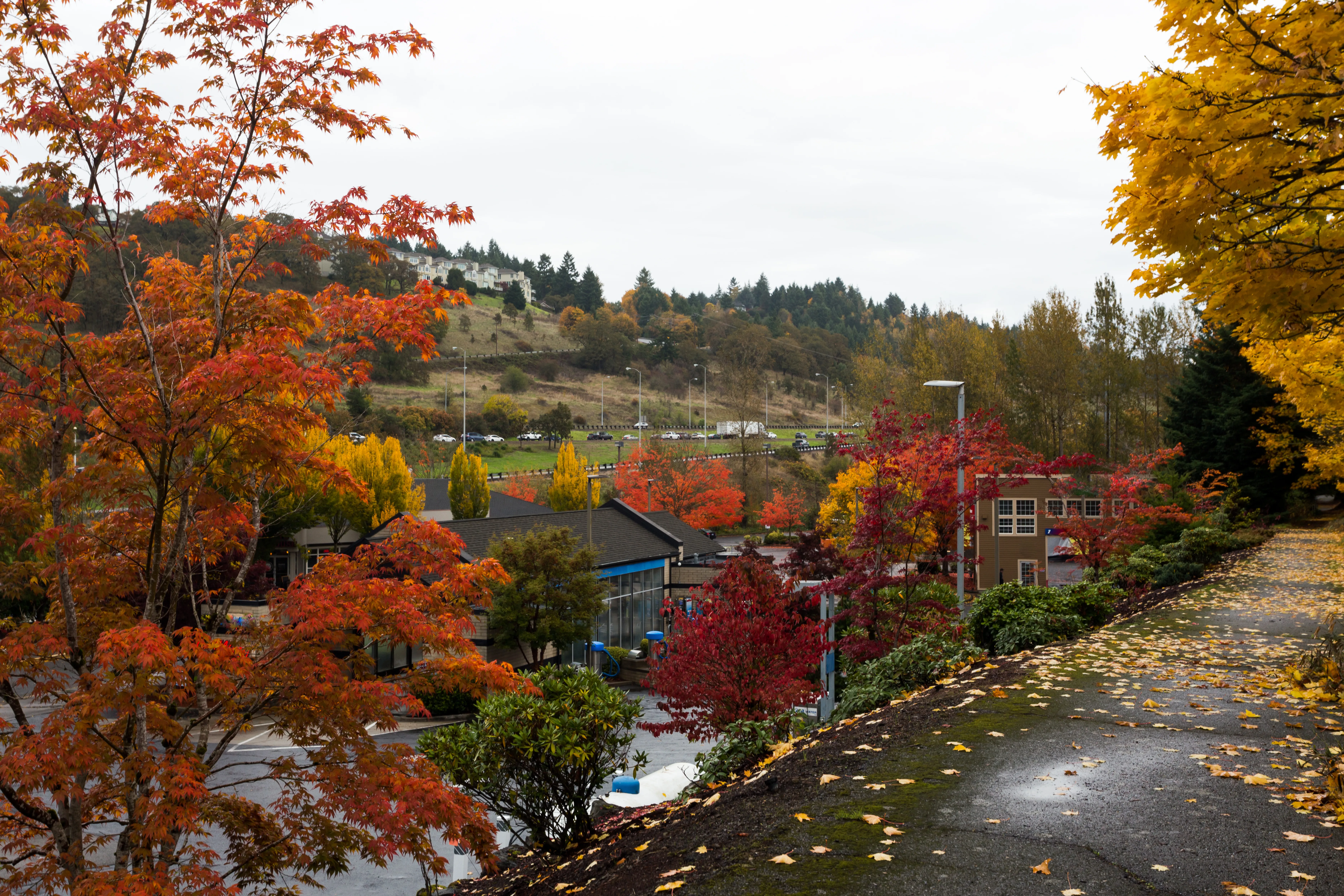
The 24-minute commute to Portland you'll see quoted is accurate — under ideal conditions. The reality involves more variables.
West Linn's main arteries are Interstate 205 along the southern border and Highway 43, which runs north along the Willamette River toward Lake Oswego and eventually downtown Portland. I-205 connects to I-5 both north and south, so you have route options depending on where you're headed.
During peak hours, Highway 43 becomes the bottleneck. The Terwilliger curves — a winding section as 43 approaches Portland — can add 10 to 15 minutes in both directions. I've had clients who budgeted 25 minutes and found themselves sitting in 45-minute crawls during morning rush.
I-205 handles volume better but adds distance if downtown Portland is your destination. For employers in the east side — Milwaukie, Clackamas, Happy Valley — I-205 works efficiently. If you're commuting to the west side or downtown, you're choosing between 43's scenery-and-delays or the longer-but-steadier I-205 route.
Remote workers don't face this trade-off, obviously, and the pandemic shifted a lot of West Linn's appeal toward people who don't commute daily. If you're in an office five days a week in downtown Portland, stress-test that commute during rush hour before committing. The Cost of Living in West Linn guide factors commute costs into its calculations.
The market here is doing what it always does: moving deliberately, holding value, but not setting speed records.
The median sale price sits at $738,000, up a modest 0.4% over the past year. Sale prices have bounced in a range around that figure depending on which three-month window you're examining — some sources show slight dips, others show gains, which tells you the market is essentially flat with normal seasonal variation.
Days on market have stretched notably. Homes are going pending in about 36-37 days on average, compared to 19 days last year. That shift gives buyers more breathing room but also signals that sellers can't just list and expect multiple offers within a week anymore.
Inventory remains tight because West Linn is geographically constrained. It's 7.39 square miles surrounded by the Willamette River, Lake Oswego, and unincorporated Clackamas County. New construction is limited, so most transactions involve existing homes. When something priced well hits the market in a desirable neighborhood, it still moves quickly.
For buyers, this means patience pays off. You'll see more options than you would have in 2021-2022, but you're still competing in a premium market with limited supply. For a comprehensive view of buying here, the Ultimate West Linn Relocation Guide covers the full landscape.
Yes, though the options differ from what you might find in Arizona or Florida-style retirement communities.
West Linn has about 20 senior living communities ranging from independent living to assisted care. Rose Linn Vintage Place at 2330 Debok Road offers 55+ apartment-style living for seniors who want independence without home maintenance. Tanner Spring Assisted Living on Horizon Drive provides more support services with 90 units for residents needing assistance.
For truly active adults who want resort-style amenities, many buyers look to nearby Charbonneau Country Club in Wilsonville. It's technically outside West Linn's city limits but close enough to matter. Charbonneau offers a full community with golf, tennis, dining, and a social calendar built around active retirement. It's one of the more established 55+ communities in the region.
The West Linn Adult Community Center serves residents 50 and up with social, recreational, health, and educational programming. It's not housing, but it anchors the social life for many local retirees.
One note: West Linn's hilly terrain and lack of sidewalks in some neighborhoods can be challenging for anyone with mobility concerns. If walkability matters for aging in place, certain neighborhoods work better than others. The Retiring in West Linn guide discusses which areas suit different retirement lifestyles.

West Linn punches above its weight here. The city maintains over 600 acres of parkland within just 7.39 square miles — that's an unusual ratio of green space to developed land.
Mary S. Young Park is the flagship: 128 acres bordering the Willamette River with eight miles of trails through forested terrain. It's the largest green space within city limits and offers some of the best river views in the metro area. Locals use it year-round for hiking, bird watching, and getting the dogs tired out.
Tanner Creek Park opened in 2003 and won a design award from the Oregon Recreation and Park Association in 2006. It's the go-to multi-use park for families — play structures, a skate park, summer splash pad, basketball courts, tennis and pickleball courts. Centrally located and heavily used.
Camassia Natural Area is something special. Owned by The Nature Conservancy, this preserve hosts over 300 plant species including the common camas that blooms brilliant blue in April and early May. Birders spot wood ducks, western bluebirds, and California quail. It's a quieter, more contemplative experience than the larger parks.
For day-to-day outdoor life, West Linn delivers. The trails, the river access, and the preserved natural areas add genuine quality of life. The West Linn Parks and Recreation guide covers the full inventory including smaller neighborhood parks.
Three misconceptions come up repeatedly.
First, they underestimate the traffic. Buyers visit on a Saturday, drive around, think "this seems easy," and don't experience rush hour on Highway 43. Then they move in and discover the Terwilliger curves during their Monday morning commute. Always, always drive the route during peak hours before you buy.
Second, they assume all West Linn neighborhoods are the same. The city has fifteen distinct neighborhoods with different characters, price points, and practical considerations. Pete's Mountain feels completely different from Willamette Historic District. Robinwood has different traffic patterns than Hidden Springs. Treating West Linn as monolithic leads to surprises.
Third, they don't budget for the full cost. The mortgage is one thing, but property taxes, higher-than-average home insurance (more on the flood zones below), maintenance on larger lots, and the general cost of living in a premium area add up. I've seen buyers stretch to afford the house and then feel squeezed by everything else.
The flip side: some buyers assume West Linn is out of reach when it might not be. Entry-level homes in neighborhoods like Sunset or Bolton occasionally come in under $600K. They're not the showcase properties, but they get you into the schools and the community. First-time buyers should check the West Linn First-Time Home Buyer guide for realistic entry points.
Oregon's property tax system confuses nearly everyone, so let me break it down.
Under Measure 50, your property's assessed value (what you're taxed on) is capped — it can only increase by a maximum of 3% per year, regardless of what the actual market does. This means long-time homeowners often have assessed values far below market value. The seller's tax bill reflects their assessed value history, not what you'll pay.
When you buy, the assessed value typically gets adjusted closer to the purchase price. In Clackamas County, effective tax rates run roughly 0.9% to 1.1% depending on exact location and local levies. On a $738,000 West Linn home, expect property taxes in the range of $6,750 to $8,250 annually — but this varies based on the specific property's assessment history and any bonds or levies in your tax district.
West Linn schools are well-funded partly because voters approve levies, and those show up on your tax bill. It's not an accident that good schools and higher property taxes correlate.
The key mistake: looking at the listing's "annual taxes" field and assuming that's what you'll pay. You need to calculate based on your purchase price and current rates, not the seller's legacy assessed value.
Before making an offer, ask your lender to estimate property taxes based on your purchase price — not the seller's current bill. Budget for taxes at roughly 1% of purchase price annually, then adjust once you have exact numbers. This prevents surprise escrow adjustments in your first year.
West Linn's terrain — steep hillsides, multiple creek drainages, and proximity to the Willamette River — creates flooding considerations that don't apply in flatter cities.
The major creek systems include Tanner Creek, Trillium Creek, and portions of various seasonal drainages that flow toward the Willamette. During atmospheric river events (the heavy, sustained rain systems that hit the Pacific Northwest in winter), these creek corridors can experience significant water flow. Properties adjacent to these drainages have flooded in past events.
FEMA flood zone maps identify the highest-risk areas, but West Linn's hilly topography means even properties outside official flood zones can experience drainage issues. Water flows downhill, and some homes sit at natural collection points even if they're not creek-adjacent.
The Willamette River itself rarely threatens West Linn's developed areas because most neighborhoods sit well above river level. The exception is some lower-lying areas near Willamette Park and along the river's edge, where river flooding has occurred historically.
Practically, this means: check FEMA flood maps for any property, ask about past flooding or water intrusion during inspections, and verify insurance costs before closing. Flood insurance, if required, adds significant annual expense. Even properties not requiring flood insurance may benefit from it given our increasingly intense rain events.
When viewing homes near any creek or drainage area, look for signs of past water management: French drains, sump pumps, or grading work. Ask the seller directly about water intrusion history — and verify their answer through neighbor conversations and inspection. Drainage problems don't always appear on disclosure forms.
West Linn works best for a specific buyer: someone who prioritizes excellent public schools, access to nature, and a safe, established community — and can afford the premium without financial strain. If those are your priorities and your budget supports it, West Linn genuinely delivers. The schools are as good as advertised, the parks and trails add real quality of life, and the neighborhoods maintain the kind of stability that appreciates over time.
It's not the right fit if you need walkable urban living, rely on public transit, or would be stretching your finances to afford entry. The commute adds up if you're in an office daily. The cost of living extends beyond your mortgage. And the limited commercial areas mean you'll drive for most errands and entertainment. These aren't criticisms — they're trade-offs worth understanding before you commit.
If you're considering West Linn and want to talk through whether it actually fits your situation, I'm happy to have that conversation. I won't steer you toward West Linn if another city makes more sense for your life. That's not my job. My job is helping you make a decision you won't regret in three years. Reach out anytime — I'll give you the same honest answers I've shared here.
Browse current listings updated daily — filtered for West Linn buyers by Elizabeth Davidson, your local expert.
Powered by Elizabeth Davidson · Cascade Hasson Sotheby's International Realty · 503-939-2035
Explore the full West Linn series: Living in West Linn · Is West Linn Safe? · Cost of Living in West Linn · Best Neighborhoods in West Linn · West Linn Schools & Family Life · West Linn Youth Sports · West Linn Parks & Recreation · Retiring in West Linn · 1031 Exchange in West Linn · West Linn First-Time Buyer Guide · · Moving to West Linn from California · The West Linn Realtor's Perspective · Top 10 Questions a Realtor Gets About West Linn