
Portland Metro · Oregon
1031 Exchange & Investment Real Estate in West Linn (2026)
Not everyone reading a 1031 exchange guide is a full-time investor with a portfolio of apartment buildings. Many are California homeowners — people who bought in the Bay Area or Southern California two decades ago, watched the equity compound beyond anything they planned for, finally sold, and now need to deploy proceeds into a replacement property before the IRS takes a significant cut. West Linn, Oregon has quietly become one of the more serious options on that shortlist. It sits inside the Portland Metro, carries one of the highest median household incomes of any suburb in the region at $138,526, and offers a stable, high-income renter base in a market where supply is structurally constrained.
The West Linn rental market is not a high-turnover, high-yield environment. The city is 84% owner-occupied, which means rental supply is thin and quality units attract long-term, professional tenants. Renters here tend to be highly educated — roughly half hold bachelor's degrees or higher — and the dominant renter cohort is aged 35 to 54. The property types that trade as investment vehicles are mostly single-family homes, the occasional duplex, and smaller multifamily buildings. This is an appreciation-and-stability market, not a cap rate play, and understanding that distinction before you identify a replacement property is what separates investors who are happy with their acquisition three years later from those who aren't.
This guide walks through the mechanics of a 1031 exchange, the realistic investment landscape in West Linn in 2026, what California investors typically get wrong here, the Oregon tax picture, property management realities, and a full due diligence checklist built for someone operating on a 45-day identification clock. If you're considering deploying California equity into the Pacific Northwest, this is the local context you need before making an offer.

The core of a 1031 exchange is straightforward: sell a qualifying real property, reinvest the proceeds into a like-kind replacement property, and defer the capital gains tax that would otherwise be due. "Like-kind" in the IRS's interpretation is broader than most people expect — you can exchange a commercial building for a residential rental, a raw land parcel for a duplex, or a California SFR for an Oregon multifamily. The defining requirement is that both properties must be held for productive use in a trade, business, or investment. A primary residence does not qualify. A vacation home that you personally use extensively likely does not qualify either.
The two deadlines define everything. You have 45 days from the sale closing to formally identify potential replacement properties in writing to your qualified intermediary. That identification is binding — you can name up to three properties under the standard three-property rule, or more properties under specific value rules. The second clock runs 180 days from your sale closing (not from identification) to actually close on the replacement property. These timelines run simultaneously, not sequentially, and they do not pause for due diligence delays, financing complications, or title issues. Investors who treat the 45-day window as flexible often discover too late that it isn't.
A qualified intermediary — sometimes called an exchange accommodator — is legally required. You cannot take constructive receipt of the sale proceeds at any point during the exchange; the money must flow directly to the QI and then to the replacement property closing. If you touch the proceeds, the exchange is disqualified. The boot trap catches investors who under-identify or don't fully reinvest: any cash left over after the replacement purchase, or any debt relief that isn't offset by new debt, is taxable in the year of the exchange. Maximizing your deferral means matching or exceeding both the sale price and the debt load of the relinquished property in the replacement transaction.

West Linn is one of those markets where out-of-state investors consistently underestimate the entry price for anything that pencils as a rental. A California buyer who sold a Bay Area property at $1.4 million and expects to find a clean duplex near Willamette Falls in the $600,000 range is going to have a rough first week of searching. The investment-grade inventory here starts above $750,000 for anything with more than one unit, and single-family rentals that attract the kind of long-term, professional tenants West Linn is known for are priced well north of that. What I tell 1031 buyers coming in from out of state is this: your proceeds may buy you more property here than back home, but the yield profile is different from what you're used to. You're not buying a 6% cap rate — you're buying into a school district with an A rating, a city with some of the lowest crime in the Portland Metro, and a tenant base that renews leases and maintains properties.
What I watch for in investment-grade West Linn properties is the condition of the sewer lateral and the age of the mechanical systems. Many of the SFRs in neighborhoods like Bolton and Robinwood were built in the 1970s through early 1990s, and deferred maintenance on older systems can turn what looks like a clean acquisition into a significant first-year capital expenditure. For investors on a 1031 deadline who need to identify and close quickly, I strongly recommend getting a pre-inspection done on your top two candidates within the first two weeks of the identification window. The buyers who move fastest and close cleanest in this market are the ones who already have their financing structured and their inspection team lined up before the QI clock starts running. If you're considering West Linn and want insight into which neighborhoods align with your priorities and budget, I'd welcome the opportunity to share what I've learned from helping hundreds of families make this move successfully.
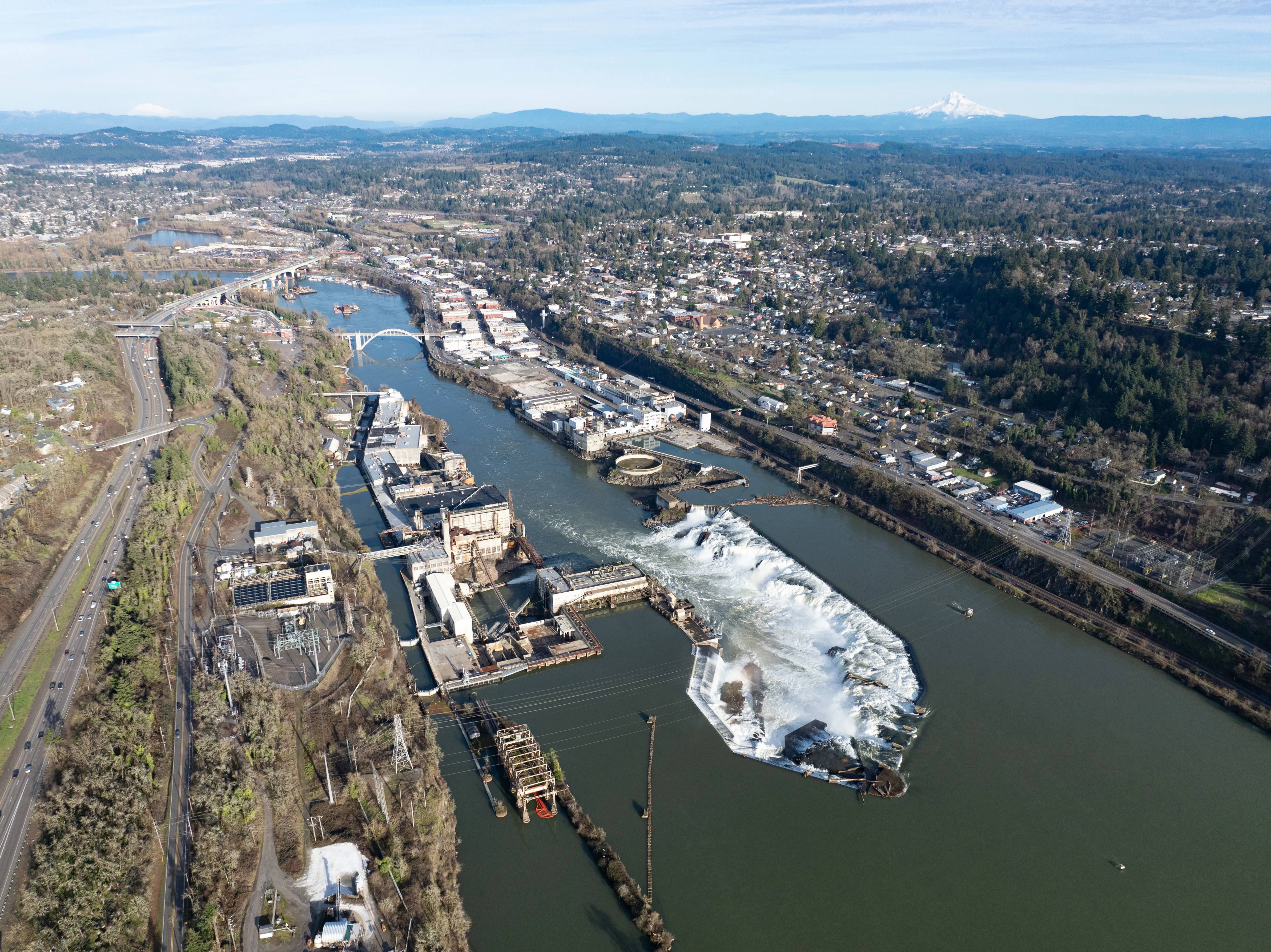
West Linn does not have a deep bench of investment-grade inventory at any given time. The city's predominantly owner-occupied character — again, 84% of occupied units are owner-occupied — means that rentals, duplexes, and small multifamily buildings come to market infrequently and move quickly when they do. The median home price sits at $738,000, and the investment property segment largely tracks that figure, with duplexes and small multifamily assets priced in the $750,000 to $1.1 million range depending on condition, location, and current lease status. Investors on a 45-day identification clock need to understand that waiting for the "right" property to appear after the clock starts is a strategy that frequently fails in this market.
The price-to-rent ratio in West Linn runs approximately 30 to 31 times annual rent — the territory where long-term appreciation carries the investment thesis, not current cash flow. A single-family rental priced at $738,000 generating $2,100 per month in rent produces a cap rate in the 2% to 2.5% range after a standard expense load. That figure improves meaningfully with duplexes, where combined rents of $4,200 to $4,800 per month on a $800,000 to $900,000 asset can push estimated cap rates into the 3% to 4% range. The market rewards patience and property selection, not formulaic yield chasing.
| Property Type | Typical Price Range | Est. Cap Rate | Avg Days to Close |
|---|---|---|---|
| Single-family rental (SFR) | $680,000 – $900,000 | 1.9% – 2.5% | 45 – 60 days |
| Duplex / owner-occupied rental | $750,000 – $1,100,000 | 3.0% – 4.0% | 45 – 55 days |
| Small multifamily (3–4 units) | $900,000 – $1,400,000 | 3.5% – 4.5% | 50 – 65 days |
| ADU-equipped SFR | $720,000 – $950,000 | 2.5% – 3.5% | 40 – 55 days |
SFRs with accessory dwelling units are currently the fastest-moving investment asset in West Linn. The combination of primary unit rent plus ADU rent on a single parcel improves the yield profile noticeably, and ADU-equipped properties attract owner-occupant buyers as well, which compresses days-on-market relative to other investment types.

A Bay Area homeowner who sold a property at $1.4 million is looking at enough proceeds to acquire a West Linn duplex outright — no financing, no debt-service risk, no bank qualifying a rental property on personal income. At that purchase price, even a conservative 3.5% cap rate generates meaningful passive income against a zero-debt basis. The depreciation benefit alone provides significant tax shelter in the early years.
Los Angeles and San Diego investors selling properties in the $900,000 to $1.2 million range are entering the West Linn market with enough equity to purchase an ADU-equipped SFR with moderate leverage, or a small duplex near the Willamette corridor with minimal debt. Southern California investors often find the price-to-rent math here similar to what they're used to, which removes the sticker shock that investors from lower-cost markets sometimes experience.
Sacramento and Inland Empire sellers operating in the $600,000 to $850,000 range have a narrower window in West Linn but can still identify qualifying replacement properties — particularly older SFRs in Bolton or Robinwood that need updating, or properties where a permitted ADU conversion is feasible post-acquisition. The key for this buyer profile is arriving with pre-arranged financing to stretch the equity further.
Looking to buy in West Linn? Estimate your payment.
Enter your numbers to see an estimated monthly mortgage payment.
Estimate only. Excludes HOA fees and mortgage insurance.
Oregon's tax profile for real estate investors is a genuinely mixed picture, and the California-to-Oregon comparison deserves honest framing rather than boosterism. The headline advantage is real: Oregon has no state sales tax. For an investor renovating a rental property — replacing flooring, updating a kitchen, purchasing appliances — every dollar of materials and fixtures costs exactly what it costs, with nothing added at the register. On a $40,000 renovation, that's a meaningful savings compared to California's 7.25% to 10.75% sales tax environment.
Oregon's income tax applies to net rental income at rates up to 9.9% — comparable to California's rental income treatment and not a reason to celebrate. What offsets this for most leveraged investors is depreciation. A $738,000 residential property with 20% allocated to land carries a depreciable basis around $590,000, generating roughly $21,500 in annual depreciation against net rental income. For a property with moderate leverage and realistic expenses, that depreciation shelter often reduces or eliminates net taxable rental income in the early years of ownership.
| Tax Item | California | Oregon |
|---|---|---|
| Income tax on net rental income | Up to 13.3% | Up to 9.9% |
| Property tax rate (new purchase) | 1.0% – 1.2% (Prop 13 resets at purchase) | ~1.06% (Clackamas County blended) |
| State sales tax | 7.25% – 10.75% | 0% |
| Capital gains (state, at sale) | Up to 13.3% | Up to 9.9% |
One nuance that trips up California 1031 buyers: Oregon taxes Oregon-source income, which means if you complete a 1031 into an Oregon property, your rental income will be taxed in Oregon. The depreciation carry from the relinquished property transfers in a 1031 — the basis is not stepped up, it carries over — so the depreciation available on the replacement property reflects the adjusted basis of what you sold, not the full purchase price of the new asset. For investors who want the passive income without any management exposure, a Delaware Statutory Trust structured as a 1031-qualifying replacement property is worth exploring with your QI and tax advisor.
Oregon has some of the most tenant-protective landlord-tenant law in the country, and investors arriving from California — which has significant tenant protections of its own — sometimes assume they already know what to expect. Oregon's no-cause eviction restrictions have been in place since 2019 under HB 2001 and related legislation, and rent increase notifications and caps in some jurisdictions have continued to evolve. For 2026, Oregon's statewide rent increase cap (7% plus CPI annually, applied to most residential tenancies) remains in effect, which means your rental income growth is not entirely market-driven after year one of a tenancy. Understanding this ceiling before underwriting your acquisition is essential.
Local property management companies operating in the West Linn and Clackamas County area include firms such as Rent Portland Homes and Pacific Crest Real Estate, both of which manage SFR and small multifamily assets in the greater Portland Metro. Typical management fees in this market run 8% to 10% of gross collected rent, with leasing fees of roughly one-half to one full month's rent for new tenant placement. For an out-of-state investor on a West Linn SFR generating $2,200 per month, annual management costs run approximately $2,100 to $2,600 before leasing events.
What out-of-state owners consistently underestimate is the cost and timeline of tenant transitions. West Linn renters skew long-term — the dominant demographic is 45 to 54-year-old professionals who stay for years and maintain properties well. When that tenant leaves, the re-leasing process in a high-ownership market with thin rental inventory can take longer than the broader Portland average, and the cost of preparing an older SFR for a quality tenant — paint, carpet, landscaping, appliance updates — frequently runs $8,000 to $15,000 on a property that hasn't turned over in five years.
| Item | What to Verify | Local Resource |
|---|---|---|
| Title search | Clear title, existing liens, easements | Clackamas County title company |
| Sewer / septic status | City sewer connection vs. septic system; lateral condition | City of West Linn Public Works |
| Radon testing | Oregon has elevated radon zones; test before close | Oregon Radon Awareness Program |
| Flood zone status | FEMA flood map zone; proximity to Tualatin River or Willamette | FEMA Flood Map Service Center |
| Rental permit requirements | West Linn rental registration status | City of West Linn Community Development |
| HOA rental restrictions | Some neighborhoods cap renter percentage or require HOA approval | Review CC&Rs directly |
| Zoning / ADU potential | R-2 or R-5 zoning; ADU feasibility for yield improvement | Clackamas County Zoning Maps |
| School district verification | Confirm property is in West Linn-Wilsonville SD | West Linn-Wilsonville School District |
| Current lease status | Month-to-month vs. fixed term; existing security deposit amount | Request leases and rent rolls at offer |
| Deferred maintenance inspection | Age of roof, HVAC, water heater, sewer lateral scope | Licensed Oregon home inspector |
| Rent roll and expense history | Actual rents vs. proforma; expense patterns for 24 months | Request from seller at offer acceptance |
| Oregon landlord-tenant law compliance | Notice requirements, habitability, deposit handling | Oregon Revised Statutes Chapter 90 |
| Property management referral | Established local manager with small multifamily experience | Local agent referral |
| Title company recommendation | Experienced with 1031 exchange closings and QI coordination | Confirm 1031 experience before engaging |
Local Expert Takeaway: The most common mistake California 1031 buyers make in West Linn is underwriting to California cap rate expectations and then feeling surprised when the market doesn't deliver them. A $738,000 SFR here will not generate the cash-on-cash return a similarly-priced Inland Empire fourplex might — and that's by design. The investors who succeed in this market buy for tenant quality, appreciation trajectory, and low vacancy, then treat the income as a supplement rather than the primary return driver. If you want cash flow over appreciation, West Linn is the wrong target market. If you want a stable, hands-off asset in a school district parents move specifically to access, it's one of the stronger plays in the Portland Metro.
✅ West Linn is a stability and appreciation play — cap rates run 2% to 4% depending on property type, but vacancy is structurally low and the tenant profile is among the strongest in the Portland Metro.
⚠️ Oregon's tenant protections are real — no-cause eviction limits and statewide rent increase caps apply. Factor these into your hold strategy before identifying replacement properties.
📍 ADU-equipped SFRs are currently the fastest-moving investment asset in West Linn — they outperform plain SFRs on yield and attract broader buyer demand when you eventually exit.
Does a 1031 exchange work for out-of-state property?
Yes — a 1031 exchange has no geographic restriction within the United States. You can relinquish a California property and replace it with an Oregon property (or any other state) as long as both are held for investment or business use. Oregon will tax your rental income as Oregon-source income from the point of acquisition.
What is the cap rate on rental property in West Linn?
Single-family rentals in West Linn currently yield estimated cap rates in the 2% to 2.5% range, while duplexes and ADU-equipped properties push into the 3% to 4% range. This is a below-average cap rate market by national standards, consistent with high-income, high-demand suburban markets where appreciation and tenant stability carry the return thesis rather than current yield.
Do I need a local property manager for a 1031 investment in Oregon?
You're not legally required to use one, but out-of-state owners who self-manage Oregon rentals frequently run into compliance problems with Oregon's detailed landlord-tenant statute — notice periods, habitability obligations, deposit accounting rules, and rent increase notification requirements all carry specific timelines and consequences. Most experienced 1031 advisors recommend establishing a local management relationship before your first tenant interaction, particularly if you're not familiar with ORS Chapter 90.
Browse current listings updated daily — filtered for West Linn buyers by Elizabeth Davidson, your local expert.
Powered by Elizabeth Davidson · Cascade Hasson Sotheby's International Realty · 503-939-2035
Explore the full West Linn series: The Ultimate West Linn Relocation Guide · Is West Linn Safe? · Cost of Living in West Linn · Best Neighborhoods in West Linn · West Linn Schools & Family Life · West Linn Youth Sports · West Linn Parks & Recreation · Retiring in West Linn · 1031 Tax-Deferred Exchange in West Linn · West Linn First-Time Homebuyers Guide · · Moving to West Linn from California · The West Linn Realtor's Perspective · Top 10 Questions a Realtor Gets About West Linn
Tell us what you need help with and we'll connect you with local resources.

About the Author
Todd Davidson is the founder of Living in Oregon and Living in Washington, where he publishes in-depth city guides, neighborhood resources, and local market insights covering more than 180 communities across the Pacific Northwest. While his background is in home financing and real estate, he created these digital platforms to help families research and compare regions before making a move.