
Portland Metro · Oregon
Living in West Linn: The Ultimate Relocation Guide (2026)
Maybe your company is relocating you to the Portland metro and someone flagged West Linn as the smart play — great schools, low crime, twenty-some minutes to downtown. Maybe you've been watching Lake Oswego prices and someone mentioned West Linn as the alternative. Maybe you drove through on Highway 43 and couldn't quite figure out where the town center was, or why the hills looked so steep, or how a city of 27,000 people could feel simultaneously affluent and unhurried. Whatever brought you here, the central tension in West Linn is this: it's one of the most genuinely desirable places to live in the entire Portland metro, and it doesn't make that easy to discover on a weekend drive-through.
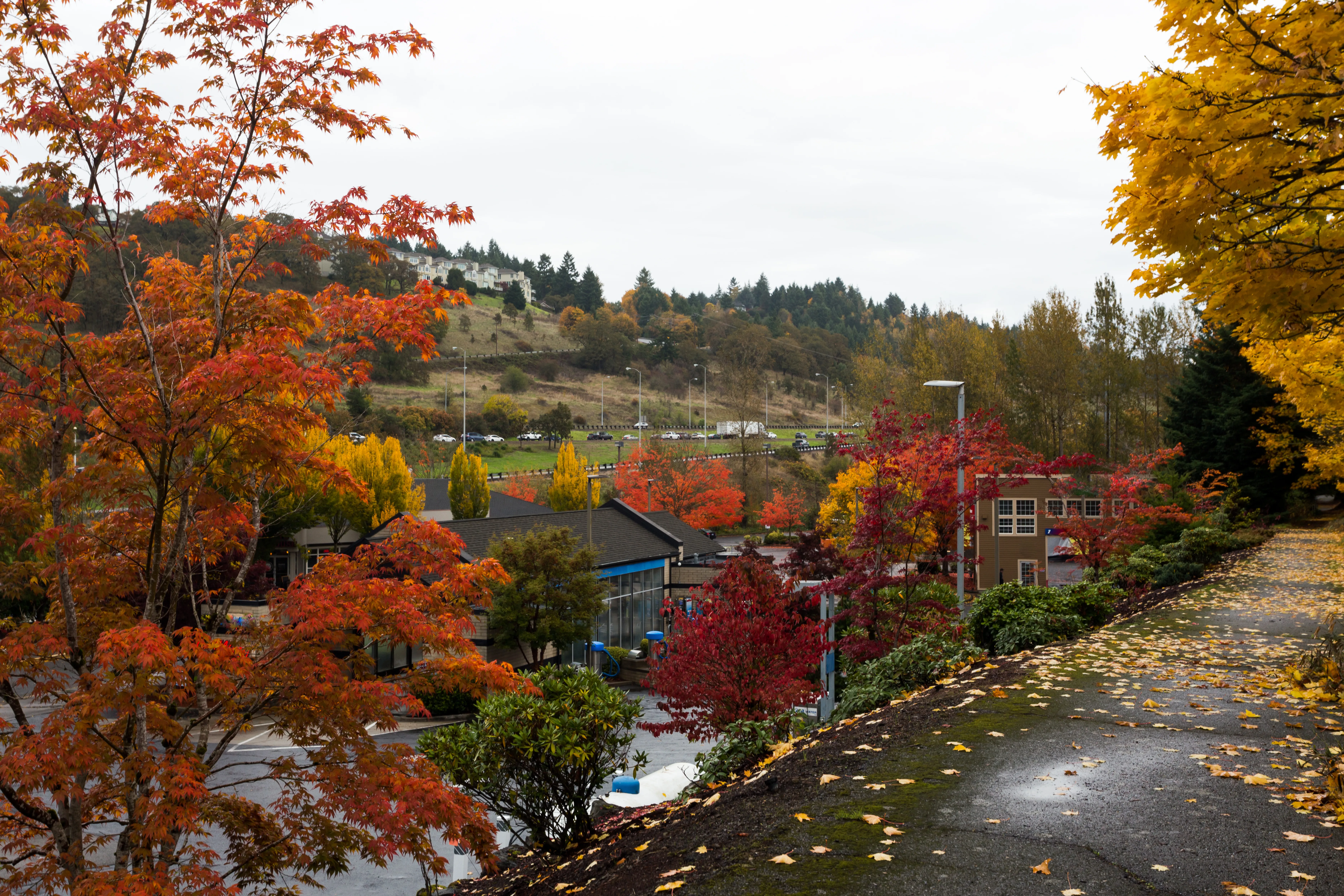
Geographically, West Linn occupies a challenging and beautiful corner of Clackamas County — roughly 15 miles south of downtown Portland, squeezed between the Willamette River to the north and east, the Tualatin River to the south, and the forested hillsides that define its character. The city's 7.4 square miles are almost entirely residential. There's no commercial strip to anchor your mental map, no obvious downtown that announces itself. What you get instead are tree-lined streets that crest into ridgelines, neighborhoods tucked behind natural buffers, and the kind of mature landscaping that takes four decades to grow. The city's nickname — "city of hills, trees and rivers" — is not a marketing slogan. It's a literal description of the terrain.
This guide will help you figure out whether West Linn is actually right for you. Not whether it's "nice" — it clearly is — but whether the tradeoffs work for your specific life. The commute math, the neighborhood distinctions, the school picture, what the housing market actually looks like at the $738,000 median, and why some people who love this city eventually leave it anyway. All of that, honestly.
| Best For | Why |
|---|---|
| Families with school-age children | West Linn-Wilsonville SD earns an A rating; West Linn High School's Class of 2025 posted a 98.6% graduation rate — among the highest in Oregon |
| Portland commuters | A 24-minute average drive to downtown; Highway 43 and I-205 both accessible depending on your neighborhood |
| Remote workers and executives | High household incomes ($138,526 median), large lots, fast internet, and quiet streets make it genuinely functional as a work-from-home base |
| Retirees and pre-retirees | Low violent crime (0.6 per 1,000), natural recreation, and a stable, educated community; active adult lifestyle without urban friction |
| Move-up buyers from Oregon City or Tualatin | Familiar suburb feel with a significant step up in school quality, natural setting, and long-term resale strength |
| Nature-first households | Camassia Natural Area, Mary S. Young State Recreation Area, and the Tualatin River trail system all within the city footprint |

West Linn is one of those markets where buyers who hesitate tend to look back and wish they hadn't. Over the past 18 months, I've watched inventory stay persistently tight — homes in established neighborhoods like Sunset and Bolton frequently attract multiple offers within the first week, particularly anything priced in the $650,000–$850,000 range with updated kitchens and views. What buyers consistently underestimate is the long-term appreciation story here. West Linn has held value through every correction the Portland metro has experienced over the past two decades, and the combination of school quality and natural setting creates a floor that other suburbs simply don't have.
The one thing I see buyers get wrong most often is focusing too narrowly on Highway 43 access and not considering how neighborhoods like Barrington Heights or Parker Crest — which sit higher on the ridge — can actually offer faster I-205 access depending on where you're commuting. Before you rule out a neighborhood because of the hill, drive it at 7:45 a.m. on a Tuesday. The commute picture is often more nuanced than buyers expect, and in a market where the right house doesn't come up often, eliminating a neighborhood prematurely can cost you six months of searching. If you're considering West Linn and want insight into which neighborhoods align with your priorities and budget, I'd welcome the opportunity to share what I've learned from helping hundreds of families make this move successfully.
West Linn doesn't have a traditional downtown. That's the first thing to accept, and it shapes almost everything about daily life here. There's a small commercial cluster near the intersection of Willamette Falls Drive and Highway 43 — a handful of restaurants, a Market of Choice, some professional services — but nothing that functions as a town square. Residents describe the city as "a collection of neighborhoods connected by hills," which is both accurate and a fair preview of the lifestyle. If you need a coffee shop walkable from your front door, you'll be choosing your neighborhood very carefully.
The commute to Portland is the sleeper advantage that doesn't show up in most relocation spreadsheets. Twenty-four minutes on paper becomes 30 to 40 minutes in practice during peak hours — but that's still materially better than what buyers endure from Beaverton, Hillsboro, or even parts of Lake Oswego. The primary routes are Highway 43 along the river, which can back up at the Marylhurst corridor during school hours, and I-205 via Stafford Road, which tends to flow better for commuters heading to the east side of Portland or to the airport. The chokepoint most locals know to avoid is the intersection of Willamette Falls Drive and 10th Street between 7:30 and 8:30 a.m. — add five minutes to your mental model if your route crosses it during that window.
The community vibe is educated, civically engaged, and genuinely outdoors-oriented in a way that goes beyond lawn maintenance. With roughly 98% of residents 25 and older holding high school diplomas and over 56% holding bachelor's degrees or higher, the social fabric leans toward professional households who moved here for the school district and stayed for the lifestyle. That creates a particular kind of place — well-resourced, organized, occasionally opinionated about things like school board decisions, and deeply attached to the natural surroundings that make West Linn feel distinct from other suburbs at a similar price point.
What surprises most people after six months of living here: how rarely they leave. Residents who expected to commute frequently into Portland for restaurants, events, and social life often find themselves choosing the trails, the river views, and the lower-key pace instead. It's not that West Linn pulls people inward artificially — it's that the things it does well are the things that fill a weekend naturally.
The schools are the obvious headline, and they're worth stating plainly. West Linn High School graduated 98.6% of its Class of 2025 — compared to the Oregon statewide rate of roughly 83% — and ranks in the top tier of Oregon high schools by multiple independent measures. AP course participation runs at 58%, and approximately 90% of district graduates go on to two- or four-year colleges. The elementary and middle school picture is equally strong: feeder schools like Sunset and Trillium Creek Primary rank among Oregon's 15 best public elementary schools, and Rosemont Ridge Middle School typically appears in Oregon's top five at that level. For households with school-age children, this is the single most powerful reason to pay the premium.
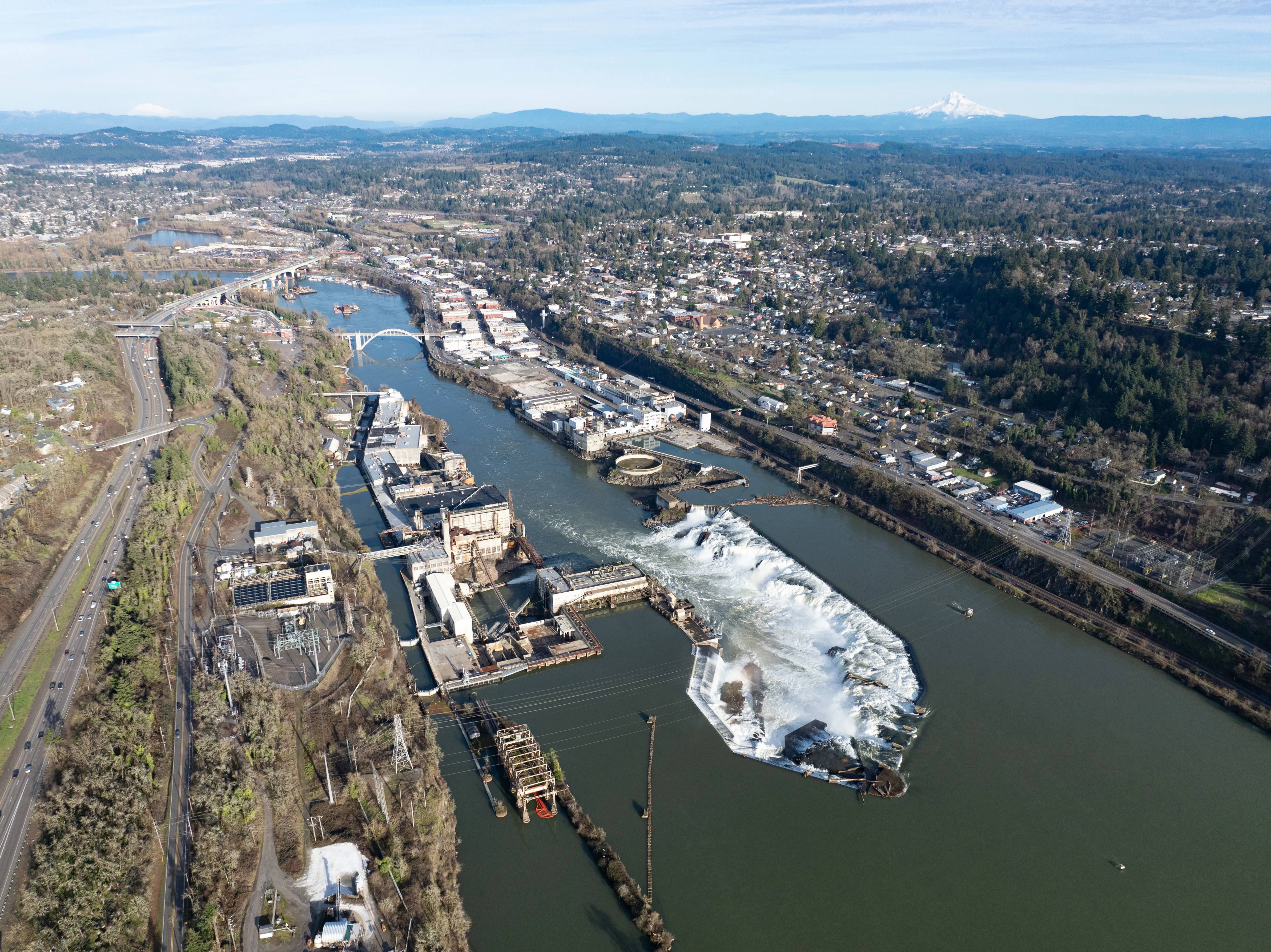
The natural setting is the second reason, and it's harder to quantify. Willamette Falls — the largest waterfall by volume in the Pacific Northwest — sits at the city's northern edge. Camassia Natural Area, managed by The Nature Conservancy, protects 25 acres of rare Oregon white oak savanna and hosts more than 300 plant species, with camas blooming spectacularly every April and May. Mary S. Young State Recreation Area offers forested river trails with views that feel nothing like a suburb. These aren't attractions people visit — they're places residents walk to on Tuesday evenings. That integration of nature into ordinary life is West Linn's most underappreciated asset.
Safety is a third reason that holds up to scrutiny. Violent crime sits at 0.6 incidents per 1,000 residents — a figure that places West Linn among the safer communities in the entire Portland metro by a significant margin. Property crime at 7.7 per 1,000 is higher than the violent crime rate by comparison, but still materially below metro and national averages. Families with kids, retirees, and buyers coming from high-crime areas of other cities consistently cite this as a genuine quality-of-life factor, not just a statistic.
The long-term stability of the market itself is a fourth draw. West Linn has posted consistent, modest appreciation across multiple market cycles. The city's 78% owner-occupancy rate and high household incomes create a demand base that doesn't evaporate when interest rates move. Buyers in neighborhoods like Bolton, Sunset, and Pete's Mountain have seen their investment hold value through cycles that rattled other Portland-area suburbs. For buyers who plan to stay 7-10 years, West Linn tends to reward patience.

Looking to buy in West Linn? Estimate your payment.
Enter your numbers to see an estimated monthly mortgage payment.
Estimate only. Excludes HOA fees and mortgage insurance.
There is no walkable core. For buyers moving from inner Portland neighborhoods — Sellwood, Multnomah Village, even parts of Lake Oswego — the absence of a functioning downtown is a genuine lifestyle shift. Errands require a car. The Market of Choice on Willamette Falls Drive is the primary grocery anchor; for specialty items, you're driving to Lake Oswego or Oregon City. If getting around on foot or by bike is core to how you want to live, West Linn will disappoint you regardless of how beautiful the trails are.
The hills are a feature and a friction point simultaneously. Icy winter mornings on the steep residential streets in Sunset or Barrington Heights are a reality that buyers from California, Texas, or the flat parts of the Portland metro genuinely don't anticipate. Some neighborhoods require AWD or chains during weather events. The hills also fragment the city in ways that make neighborhood selection consequential — buying on the wrong side of a ridge for your commute route can add 10 minutes each way that adds up over years.
Housing inventory is tight and the entry price is high. At a $738,000 median, West Linn is not a market where first-time buyers typically get their footing. The lower end of the market — roughly $450,000 to $550,000 — does exist in pockets, but it's competitive and often requires compromise on condition or lot size. Homes are averaging 56 days on market currently, which is slightly above the national average, but well-priced properties in desirable school zones still attract multiple offers.
Why some people leave: The city's biggest exit driver, based on what longtime residents report, is the cost of aging in place — particularly for retirees on fixed incomes who bought before prices climbed. A second cohort that leaves is younger buyers who want urban energy and find that 24 minutes to Portland feels longer when you're doing it every day in both directions. And a third group, perhaps counterintuitively, leaves because they want more land: the city's 7.4-square-mile footprint doesn't offer the rural acreage that Pete's Mountain adjacent areas can, and buyers who discover Stafford or Chehalem Mountain sometimes migrate outward in search of it.
The oldest and most historically rooted part of West Linn, Willamette sits close to the river and carries the character of a neighborhood that remembers being a mill town. Housing stock here is genuinely eclectic — you'll find modest mid-century ranches alongside carefully updated Craftsmans — and prices tend to run in the $550,000 to $750,000 range, making it one of the more accessible entries into West Linn proper. The tradeoff is that it's the flattest part of a hilly city, which is either a feature or a flag depending on your commute route.
Best for: Buyers who want West Linn's address and school access without paying ridge-premium prices.
Bolton is the neighborhood that longtime West Linn residents often claim as their favorite without being able to fully explain why to outsiders. It sits in a quieter central pocket of the city, with established tree cover and a mix of 1970s and 1990s homes in the $650,000 to $850,000 range. It feeds into strong elementary schools and benefits from relatively easy access to both Highway 43 and Stafford Road, which gives commuters options.
Best for: Families with school-age children who want an established neighborhood feel without the premium of a ridge view.
Sunset is one of the more sought-after addresses in West Linn, and the school connection is the primary reason. The neighborhood feeds into Sunset Primary — one of Oregon's top-ranked elementary schools — and is close enough to Rosemont Ridge Middle School that the school run is genuinely easy. Homes here typically range from $700,000 to $950,000, with larger lots and a mix of newer construction and well-maintained 1990s builds.
Best for: Families prioritizing elementary school quality above all else.
Barrington Heights sits on one of West Linn's higher ridgelines, and the views — on clear days, Mount Hood and Mount St. Helens both visible — are among the most dramatic in the city. Homes tend toward the $800,000 to $1.1 million range, with newer construction and larger footprints than the city's older neighborhoods. The practical catch is that the ridge location means steeper streets and a commute that routes through the hills before reaching a main arterial.
Best for: Buyers who want newer construction, space, and views, and are comfortable with the hill factor in their daily commute.
Hidden Springs is a quieter, tucked-in neighborhood that earns its reputation partly from the school quality associated with its attendance boundaries. It's one of the neighborhoods Niche and similar ranking sites consistently flag as having access to West Linn's highest-rated schools. Homes are typically in the $720,000 to $950,000 range and tend toward larger lots with mature trees. It doesn't have a neighborhood commercial center, which means you're in the car for everything, but residents consistently say the privacy is worth it.
Best for: Buyers who prioritize school quality and wooded privacy over walkability.
Rosemont Summit occupies a distinctive ridgeline position in the city's southeast quadrant, offering a combination of I-205 accessibility and elevated views that attracts commuters heading to the east side of the metro. Homes here typically range from $750,000 to $1 million, with a mix of custom builds and newer planned development. The commute advantage over Highway 43-dependent neighborhoods is real — I-205 access from Rosemont Summit can meaningfully shorten the drive to Clackamas, the airport, or east Portland.
Best for: Commuters heading toward I-205 destinations who also want ridge-level views and strong schools.
Marylhurst occupies the southwestern corner of West Linn near the former Marylhurst University campus, and it has the feel of a neighborhood that's slightly apart from the rest of the city — in a good way. The area has long-established homes on generous lots, a more pastoral character than the hillside neighborhoods to the north, and consistent recognition for its school quality. Prices range from roughly $650,000 to $900,000, and the neighborhood's proximity to Highway 43 gives river-road commuters a clean run north without fighting the city's internal hill network.
Best for: Buyers who want a quieter, pastoral feel and prioritize a straightforward Highway 43 commute.
Parker Crest is among the neighborhoods frequently mentioned by local agents as offering strong school access combined with a newer housing stock — many homes were built in the 1990s and 2000s and have been updated since. Prices typically range from $750,000 to $1 million, and the neighborhood benefits from its position on the west side of the city's ridge system, giving it relatively clean I-205 access. It's one of the neighborhoods Niche consistently flags for school quality, alongside Hidden Springs and Marylhurst.
Best for: Buyers who want newer construction, I-205 commute access, and top school ratings in one package.
| City | Best For | Median Home Price | Commute to Portland | Vibe |
|---|---|---|---|---|
| West Linn | Families, school quality, nature access | $738,000 | ~24 min | Educated, quiet, outdoors-oriented |
| Lake Oswego | Walkability, lake lifestyle, urban amenities | ~$825,000 | ~20 min | Polished, social, commercial core |
| Oregon City | Value, history, more square footage per dollar | ~$475,000 | ~30 min | Working-class roots, growing fast |
| Tualatin | Commuter access, newer builds, I-5 corridor | ~$550,000 | ~25 min | Practical, family-oriented, less scenic |
| Wilsonville | New construction, tech corridor, WLWSD schools | ~$565,000 | ~32 min | Planned, suburban, strong schools |
| Tigard | Affordability, MAX access, urban amenities nearby | ~$520,000 | ~22 min | Diverse, transitional, walkable pockets |
| Metric | Details |
|---|---|
| Population | ~27,065 |
| Median Home Price | $738,000 |
| Median Household Income | $138,526 |
| Property Tax Rate | ~1.06% |
| School District | West Linn-Wilsonville SD (A rating) |
| Commute to Portland | ~24 minutes |
| Violent Crime Rate | 0.6 per 1,000 residents |
| Property Crime Rate | 7.7 per 1,000 residents |
| Owner-Occupied Homes | ~78% |
| Residents with Bachelor's Degree or Higher | ~56% |
| City Size | 7.4 square miles |
| County | Clackamas |
Camas season is a genuine community event. Every April and May, Camassia Natural Area erupts in purple blooms — a landscape that looks almost surreal given how close it is to a suburban neighborhood. Locals plan their walks around peak bloom, and it's become one of those unofficial West Linn traditions that residents reference when explaining why they don't want to leave. The Nature Conservancy hosts periodic guided walks during bloom season; getting on that list early is a small but satisfying piece of local life.
The Willamette Falls redevelopment is a long-game story worth watching. In 2025, the City adopted a Waterfront Community Vision Plan for the area around the falls — one of the most powerful natural landmarks in the Pacific Northwest, and one that has been largely inaccessible to the public for decades. The planning process is ongoing, but the long-term vision involves public riverfront access at a landmark that most West Linn residents have never been able to walk near. It's the kind of infrastructure improvement that could meaningfully change the city's character over the next decade.
The school board is local news. With a median household income of $138,526 and a community where over half of adults hold college degrees, West Linn is not a city where school board decisions happen quietly. In 2025, the board declined to close any of the district's primary schools — a decision that followed months of community engagement. New residents consistently note that school policy is a genuine civic conversation here in a way that feels different from cities where parents are less organized. That's worth knowing before you move in.
What I would not do if moving to West Linn: I would not buy on Willamette Falls Drive between Sunset Avenue and the commercial cluster without spending a full week of morning commutes understanding how that corridor backs up during school drop-off. It's not a dealbreaker for everyone, but buyers who purchase in that zone without experiencing a Tuesday morning at 8:15 a.m. frequently express frustration about it in year two. Drive it first. Drive it more than once.
Local Expert Takeaway: If you're comparing West Linn to Lake Oswego at a similar price point, the question to ask yourself is whether you're buying for lifestyle amenities or for school quality and natural setting — because those two cities deliver different answers. In West Linn, the $738,000 median buys you significantly more square footage and lot size than Lake Oswego, stronger elementary school ratings in most attendance zones, and a quieter daily pace. Buyers who prioritize walkable retail and a visible social scene tend to choose Lake Oswego; buyers who care most about where their kids go to school and what they can see from their back deck tend to stay in West Linn. If you're in the second category, focus your search on Sunset, Hidden Springs, or Parker Crest — those neighborhoods combine the school access and natural character that make West Linn worth the premium.
✅ West Linn delivers on its core promise. School quality, low crime, natural setting, and long-term market stability are all genuine and well-documented — not marketing claims.
⚠️ The lifestyle requires a car. There is no walkable commercial core. Buyers who need on-foot access to daily errands should explore Lake Oswego instead.
📍 Neighborhood selection is consequential. West Linn's hills create real differences in commute time, school access, and daily experience. Buying without understanding which ridge or corridor your neighborhood sits on is one of the most common mistakes relocating buyers make here.
Is West Linn a good place for families?
Yes — West Linn is consistently among the top destinations in the Portland metro for households with school-age children. The West Linn-Wilsonville School District earns an A rating, West Linn High School has one of the highest graduation rates in Oregon, and feeder elementary schools like Sunset and Trillium Creek rank among the state's best. Families with kids also benefit from low violent crime, extensive trail access, and a community culture that's deeply oriented around schools and outdoor life.
What is the crime rate in West Linn?
West Linn's violent crime rate of 0.6 per 1,000 residents places it among the safer cities in the entire Portland metro area. Property crime comes in at 7.7 per 1,000 — higher than the violent crime rate by comparison, but still well below Oregon and national averages. For context, many comparable suburbs in the region run property crime rates two to three times higher.
How does West Linn compare to Lake Oswego?
Both cities attract educated, professional households and offer strong schools, but they deliver different living experiences. Lake Oswego has a true downtown with walkable retail, restaurants, and a lake-centric social scene; West Linn has more natural land, generally lower entry prices for comparable square footage, and school ratings that match or exceed Lake Oswego's in many individual school comparisons. The commute from West Linn to downtown Portland is roughly comparable — 24 minutes versus Lake Oswego's 20 — and buyers at the $738,000 level often find they get more home for their dollar on the West Linn side of the line.
Browse current listings updated daily — filtered for West Linn buyers by Elizabeth Davidson, your local expert.
Powered by Elizabeth Davidson · Cascade Hasson Sotheby's International Realty · 503-939-2035
Explore the full West Linn series: The Ultimate West Linn Relocation Guide · Is West Linn Safe? · Cost of Living in West Linn · Best Neighborhoods in West Linn · West Linn Schools & Family Life · West Linn Youth Sports · West Linn Parks & Recreation · Retiring in West Linn · 1031 Tax-Deferred Exchange in West Linn · West Linn First-Time Homebuyers Guide · · Moving to West Linn from California · The West Linn Realtor's Perspective · Top 10 Questions a Realtor Gets About West Linn
Tell us what you need help with and we'll connect you with local resources.

About the Author
Todd Davidson is the founder of Living in Oregon and Living in Washington, where he publishes in-depth city guides, neighborhood resources, and local market insights covering more than 180 communities across the Pacific Northwest. While his background is in home financing and real estate, he created these digital platforms to help families research and compare regions before making a move.