
Portland Metro · Oregon
Best Neighborhoods in West Linn: Where to Buy or Rent (2026)
Choosing West Linn is the easy part. Choosing where in West Linn is what determines whether you love your daily life or spend three years wishing you'd bought two miles in the other direction. The city spans dramatically different terrain — riverfront historic streets, forested blufftop ridges, master-planned hilltop communities, and quiet wooded enclaves — and each of those environments produces a genuinely different living experience. The price difference between a cottage in the Willamette district and a custom estate on Sunset Hill can exceed $1.5 million, and both addresses carry the same West Linn zip code.
The sharpest divide in this city runs between the lower, river-adjacent west side and the elevated neighborhoods that climb into the hills above I-205. Down near the water, you get historic streets, the most walkable commercial blocks in the city, and older home styles that carry both character and maintenance. Up on the ridges, you get newer construction, larger lots, longer driveways, and the kind of territorial views that show up in listing photos but require a car for nearly everything. Understanding which version of West Linn fits your actual daily life matters more than any price-per-square-foot comparison.
This guide covers the most significant West Linn neighborhoods — what they actually feel like to live in, who they're right for, where the trade-offs are, and where renters and buyers are finding the best value in 2026. If you're seriously considering moving to West Linn, this is where to start.
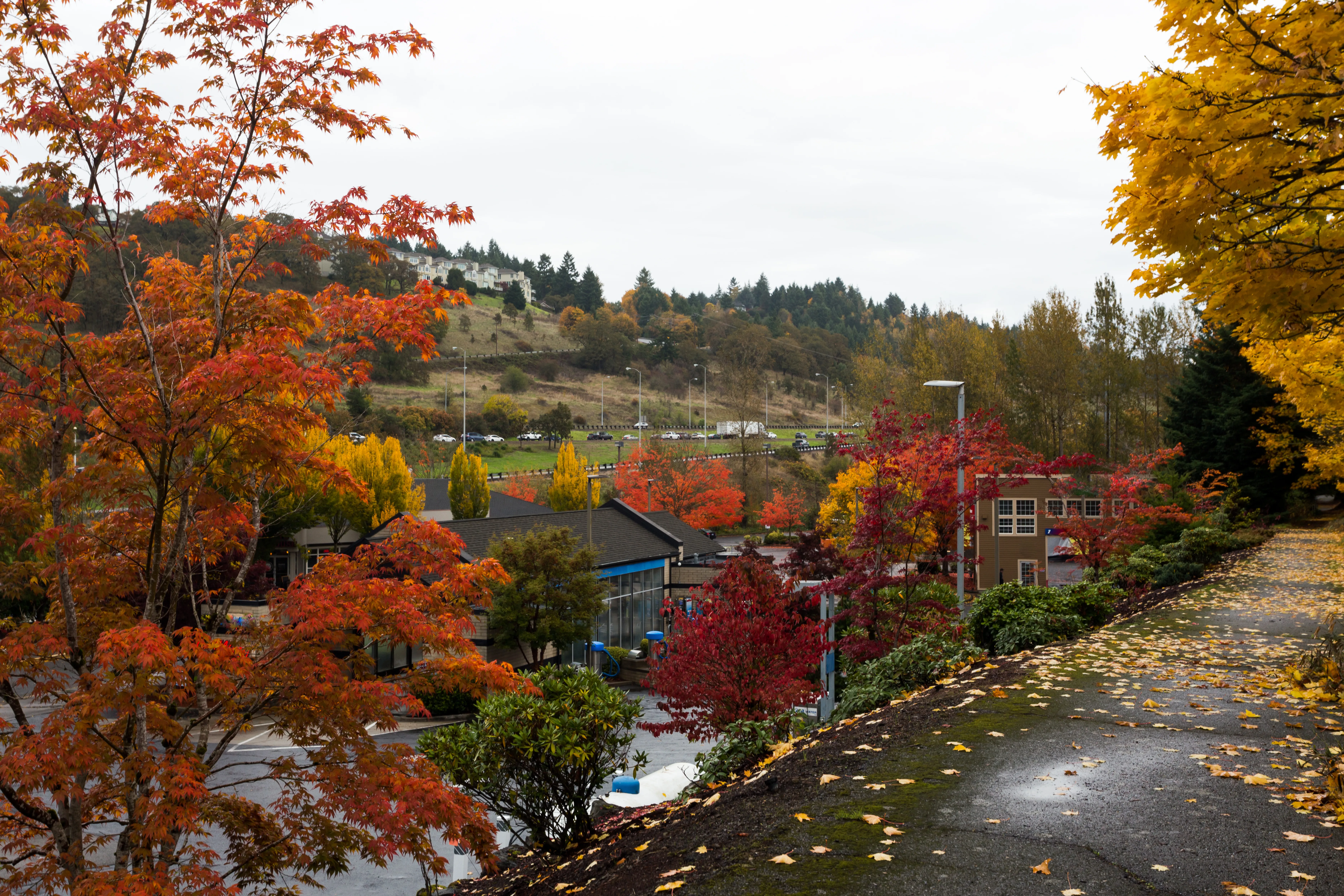
More than almost any other Portland suburb, West Linn's value tiers are determined by elevation and river access — not just square footage or school proximity. Understanding this divide is the single most important piece of research you can do before making an offer anywhere in the city.
The lower, river-adjacent west side — anchored by the Willamette Historic District along Willamette Falls Drive — is the only part of West Linn with genuine walkability. Twelve blocks of registered historic commercial buildings dating from 1885 to 1915, the Willamette Garage food cart pod, a seasonal farmers market, and Mary S. Young State Recreation Area are all reachable on foot. This is a living, breathing neighborhood center in a city that otherwise doesn't have one.
As you climb east and south into the hills, the character shifts completely. The elevated neighborhoods — Sunset, Barrington Heights, Hidden Springs, Rosemont Summit — offer newer construction, larger lots, and territorial views of the Cascades and Willamette Valley. But nearly every daily errand requires a car, access roads can be narrow and steep, and what looks like a 20-minute Portland commute on Saturday can become 35 minutes on a Tuesday morning after the I-205 interchange backs up from the Tualatin River bridge.
The Rule Buyers Wish They Knew Earlier: If walkability and neighborhood character matter to you, stay west and low. If you're prioritizing newer construction, views, and school proximity over daily on-foot convenience, the hillside neighborhoods deliver. The mistake is mixing up which version you want — spending $900K on a Barrington Heights cul-de-sac when you'd actually be happier in a Willamette Craftsman at $650K, or vice versa. Spend a full weekday morning in each neighborhood type before writing any offer.
| Neighborhood | Best For | Price Range | Vibe |
|---|---|---|---|
| Willamette | WalkabilityHistory Lovers | Mid-$500s–$3M+ | HistoricEclectic |
| Bolton | Nature LoversAffordable Entry | Mid-$500s–$1M+ | BlufftopWooded |
| Sunset | FamiliesLuxury | Upper $600s–$2M+ | Hillside ViewsSuburban |
| Barrington Heights | FamiliesCommuters | Upper $700s–$1M+ | Low-TrafficSchool-Adjacent |
| Hidden Springs | LuxuryPrivacy Seekers | Mid-$700s–$900s+ | WoodedUpscale |
| Rosemont Summit | FamiliesTrail Enthusiasts | $800K–$1M+ | Master-PlannedScenic |
| Marylhurst | Quiet Ridge Living | Upper $600s–$1M+ | Ridge-TopMature Trees |
| Parker Crest | ContemporarySouth WL | Upper $700s–$1M | ModernNewer Builds |
| Robinwood | Mid-RangeNature Access | $400K–$2M | River-AdjacentWooded |
| Tanner Basin | FamiliesNature-Oriented | Mid-$500s–$800s | Park-AdjacentRelaxed |

West Linn has been one of the most consistent performers in the Portland metro over the past two years, and what I keep telling buyers is that the opportunity here isn't just about the school district — it's about long-term land scarcity. The city's topography limits where you can build, which means established neighborhoods like Hidden Springs and Sunset aren't going to see significant new competition from infill development. When I'm working with buyers who've been priced out of Lake Oswego's waterfront but still want that level of finish and community, Rosemont Summit and Barrington Heights come up repeatedly — both offer newer construction, excellent school proximity, and price points that pencil better than comparable Lake Oswego addresses.
The single thing buyers consistently underestimate is how much neighborhood character diverges within West Linn's relatively small footprint. I've worked with clients who fell in love with the Willamette district's Craftsman bungalows only to realize they actually spend their weekends hiking — and they would have been far better served in Bolton or Marylhurst, where the trail access is immediate and the lots are larger. Spend a weekend morning in the specific neighborhood you're considering before writing any offer. The difference between a sunny Barrington Heights cul-de-sac and a shaded Marylhurst ridge road in February is not a small thing. If you're considering West Linn and want insight into which neighborhoods align with your priorities and budget, I'd welcome the opportunity to share what I've learned from helping hundreds of families make this move successfully.
| Buyer Type | Best Neighborhood | Why |
|---|---|---|
| First-Time Buyer | Bolton or Robinwood | Most accessible entry prices in WL; Bolton starts in the mid-$500s |
| Luxury Buyer | Hidden Springs or Sunset | Custom estates, territorial views, privacy, prices well into seven figures |
| Walkability Seeker | Willamette | Only neighborhood with genuine on-foot access to shops, food, and parks |
| Families with Kids | Barrington Heights | Near Tanner Creek Park, low traffic, top school access, quiet streets |
| Commuters to Portland | Parker Crest or Barrington Heights | South and central locations shave time off the I-205 on-ramp run |
| Large Lot Buyers | Pete's Mountain or Stafford | Rural-edge parcels, acreage available, most open land in the city |
| Renters | Willamette or Savanna Oaks | Only areas with meaningful apartment inventory; rest of WL is predominantly owner-occupied |

Looking to buy in West Linn? Estimate your payment.
Enter your numbers to see an estimated monthly mortgage payment.
Estimate only. Excludes HOA fees and mortgage insurance.
West Linn's oldest and largest neighborhood — home to roughly 6,000 residents — Willamette sits at the base of the bluffs along Willamette Falls Drive, where 12 blocks of registered historic buildings dating from 1885 to 1915 give the commercial corridor a genuinely distinct character. The Willamette Garage food cart pod anchors the culinary scene with rotating vendors, a covered outdoor seating area, and a community energy that feels nothing like a conventional suburb. You can walk to independent shops or catch the seasonal farmers market that runs May through October without touching your car keys — and Mary S. Young State Recreation Area, with its 1.5 miles of Willamette River frontage and wooded hiking trails, is directly accessible from the neighborhood's western edge. Homes range from the mid-$500s into the multi-millions, spanning Craftsman bungalows, Victorian cottages, and newer townhome developments — but the older stock means buyers need to budget for updates that newer neighborhoods don't require.
Best for: Buyers who want the most walkable streets in West Linn, direct access to Mary S. Young trails, and a neighborhood with genuine character — and don't mind older homes or the maintenance that comes with them.
Bolton climbs from the river's edge up into the West Linn hills, which means it contains both the lowest-lying riverfront parcels and some seriously dramatic blufftop terrain. Mary S. Young State Recreation Area anchors the neighborhood's outdoor identity, and immediate access to Maddox Woods — a forested preserve with natural surface trails that wind through second-growth Douglas fir — gives residents trail access without driving to it. Prices range from the mid-$500s to over $1 million, with older ranch-style homes at the lower end and custom river-view builds pushing the ceiling.
Bolton Insider Note: The neighborhood's vertical range creates real micro-market dynamics that flat-neighborhood buyers aren't used to. A home on lower Bolton Road near the park entry might be a 1960s ranch that needs a kitchen update. A home on upper Bolton half a mile away might be a newer custom build with Willamette River views from the master bedroom. Same neighborhood name, different universe — and the hillier upper streets have access road conditions and retaining wall situations that deserve specific attention in a wet Pacific Northwest winter. Always walk the lot on a rainy day before going under contract.
Best for: Buyers prioritizing nature access and the most affordable entry points into West Linn's west-side neighborhoods — particularly those who'll use Mary S. Young and Maddox Woods trails regularly.
Perched on West Linn's hillside with territorial views that include the Willamette River and the Cascades on clear days, Sunset draws buyers who want suburban quiet with a premium finish level. The homes here skew larger — primarily single-family properties with generous setbacks — and the neighborhood's elevated position provides a sense of remove from the city's commercial activity. Prices run from the upper $600s into the $2 million range, but the catch is that Sunset's topography makes it almost entirely car-dependent, and the winding hill roads can add meaningful time to even short errands during peak hours.
Best for: Families and professionals who prioritize views, privacy, and larger homes over on-foot access or proximity to commercial activity.
Barrington Heights consistently comes up when buyers ask local agents about the intersection of school quality, low traffic, and manageable price points in West Linn. The neighborhood sits adjacent to Tanner Creek Park, giving residents immediate access to forested creek trails without leaving the neighborhood — the kind of feature that sounds nice in a listing description and is genuinely transformative for daily life with kids or dogs. Homes generally fall in the upper $700s to $1 million-plus range, which reflects both the school district access and the neighborhood's sustained demand. The main limitation is that there's essentially no walkable commercial activity, so daily errands require a drive in every direction.
Barrington Heights Insider Note: The school boundary for Barrington Elementary is tighter than buyers assume. Homes on the neighborhood's outer edges — particularly near Salamo Road and toward the Tanner Basin boundary — can fall just outside it. This matters because Barrington Elementary is specifically one of the draws for buyers choosing this neighborhood over comparable-priced homes in Hidden Springs or Marylhurst. Confirm your specific address assignment directly with the West Linn-Wilsonville School District before that school boundary becomes the deciding factor in your offer.
Best for: Families with school-age children who want low-traffic streets, Tanner Creek Park access, and strong elementary school proximity in one package.
Hidden Springs earns its name — tucked into the forested hillside in west-central West Linn, it's one of the city's most private and heavily wooded neighborhoods. The lot sizes tend to be generous, the canopy cover is significant, and the homes lean toward custom and semi-custom builds with upscale finishes. Prices typically land in the mid-$700s to high-$900s, though exceptional properties push beyond that range. The seclusion is the point, but it comes with narrow, winding access roads that can feel isolating in winter and require careful navigation for larger delivery vehicles or moving trucks.
Best for: Buyers who want wooded privacy, upscale construction, and a genuine sense of remove — and are comfortable with limited on-foot access to anything.
Rosemont Summit is West Linn's most cohesive master-planned community, featuring trail-connected streets, newer construction, and the kind of neighborhood organization that produces actual community events rather than just HOA newsletters. Rosemont Ridge Middle School is directly within or adjacent to the neighborhood, which is a meaningful differentiator for families planning ahead for secondary school transitions — most West Linn neighborhoods require busing for middle school, but Rosemont Summit residents can often walk. Prices land roughly in the $800K to $1 million-plus range, which is competitive for the level of finishes and amenity access. The master-planned character is a feature for many buyers — but buyers who want older architecture, irregular lot shapes, or less neighborhood uniformity tend to find Rosemont Summit too polished.
Best for: Families seeking newer construction, trail connectivity, walkable middle school access via Rosemont Ridge, and a cohesive neighborhood identity at West Linn's upper-middle price tier.
Marylhurst runs along a ridge in the southern part of West Linn, where mature Douglas firs line quiet residential roads and the views stretch toward the Tualatin Valley. It has a distinctly private, almost rural feel despite being within the city limits — the kind of neighborhood where neighbors wave from driveways rather than sidewalks, because sidewalks are sparse. Homes range from the upper $600s to over $1 million, with a mix of mid-century properties and more recent custom builds. The absence of sidewalks and walkable destinations is a genuine trade-off; this neighborhood rewards buyers who've consciously decided they don't need either.
Best for: Buyers who want ridge-top serenity, mature tree cover, and a quieter version of West Linn living — without expecting to walk anywhere for coffee.
Parker Crest occupies the southern portion of West Linn and skews toward more contemporary construction than the city's historic west-side neighborhoods. The homes tend to be newer, the layouts more open, and the overall feel more conventionally suburban — which is exactly what draws the buyers who choose it. Prices run from the upper $700s to $1 million, and the neighborhood's position gives commuters heading north on I-205 a slightly shorter drive to the on-ramp than residents of the city's western hillsides. The catch is that Parker Crest doesn't have the character or trail access that draws buyers to Bolton or the Willamette district.
Best for: Commuters and contemporary-home buyers who want newer construction, efficient layouts, and a South West Linn address that positions them well for I-205 access.
Assuming the 24-minute Portland commute applies to their specific neighborhood. The 24-minute average is real — but it applies most accurately to neighborhoods with direct I-205 access. Buyers who purchase in the Willamette district or the far western hillsides often find themselves funneling down Willamette Falls Drive or navigating Salamo Road before they even reach the freeway interchange. During afternoon reverse-commute hours, that approach can add 10 to 15 minutes to a commute that looked straightforward on a map. Test your actual route at 5:15 p.m. on a Tuesday before committing to a neighborhood.
Buying into a hillside neighborhood without walking the lot in the rain. West Linn's elevated neighborhoods — Hidden Springs, Marylhurst, Bolton's upper sections — are photographed and shown on sunny weekend afternoons. The dramatic views that justify the price premium look very different when the access road is wet and steep, when a retaining wall is doing heavy work below the backyard, or when the driveway grade makes backing out of the garage a genuine calculation. Several buyers who've focused on views and finishes end up surprised by what the Pacific Northwest winter reveals about hillside properties that weren't disclosed in the listing.
Overlooking school boundary lines when buying near neighborhood edges. The West Linn-Wilsonville School District is the reason many buyers choose this city, and the district's quality is genuine. But the elementary school boundaries don't follow neighborhood names — they follow specific streets. Buyers purchasing near the edges of Tanner Basin, Bolton, or the Robinwood area have occasionally found themselves just outside the boundary for the school that influenced their decision. Confirm the exact school assignment for any specific address with the district directly before using it as a deciding factor.
Treating the Robinwood and Willamette areas as interchangeable because the prices overlap. Both neighborhoods can produce listings in the $500,000 to $700,000 range, which tempts buyers to comparison-shop them purely on square footage and price per foot. They are fundamentally different environments — Willamette offers historic character and the city's only meaningful walkability, while Robinwood offers wooded river-adjacent quiet with almost no on-foot access to commercial activity. Buyers who optimize for price without understanding that distinction often end up in the wrong neighborhood for their actual lifestyle.
| Area | Ideal For | Typical Rent Range | Trade-off |
|---|---|---|---|
| Willamette District | Young ProfessionalsDownsizers | $1,600–$2,400/mo | Limited inventory; competes with owner-occupants |
| Summerlinn (Willamette) | Singles & Couples | $1,500–$2,200/mo | Smaller units; fills quickly |
| Savanna Oaks / Cascade Summit | FamiliesLonger-Term Renters | $1,800–$2,800/mo | Car-dependent; limited walkability |
| Bolton / Robinwood | Nature-Focused | $1,700–$2,500/mo | Very few dedicated rental units; mostly single-family homes |
| Marylhurst Ridge | Remote WorkersQuiet-Seekers | $2,000–$3,000/mo | Isolated; no walking destinations |
Renting in West Linn is genuinely difficult — roughly 84% of the city's housing is owner-occupied, which means the rental market is thin, competitive, and largely made up of single-family homes rather than apartment complexes. The Willamette district and the Savanna Oaks area near Cascade Summit offer the most concentrated apartment-style inventory, but availability moves quickly and the supply doesn't meaningfully expand. Renters who need flexibility should expect to move fast when a unit becomes available and should set up alerts well before their target move-in date.
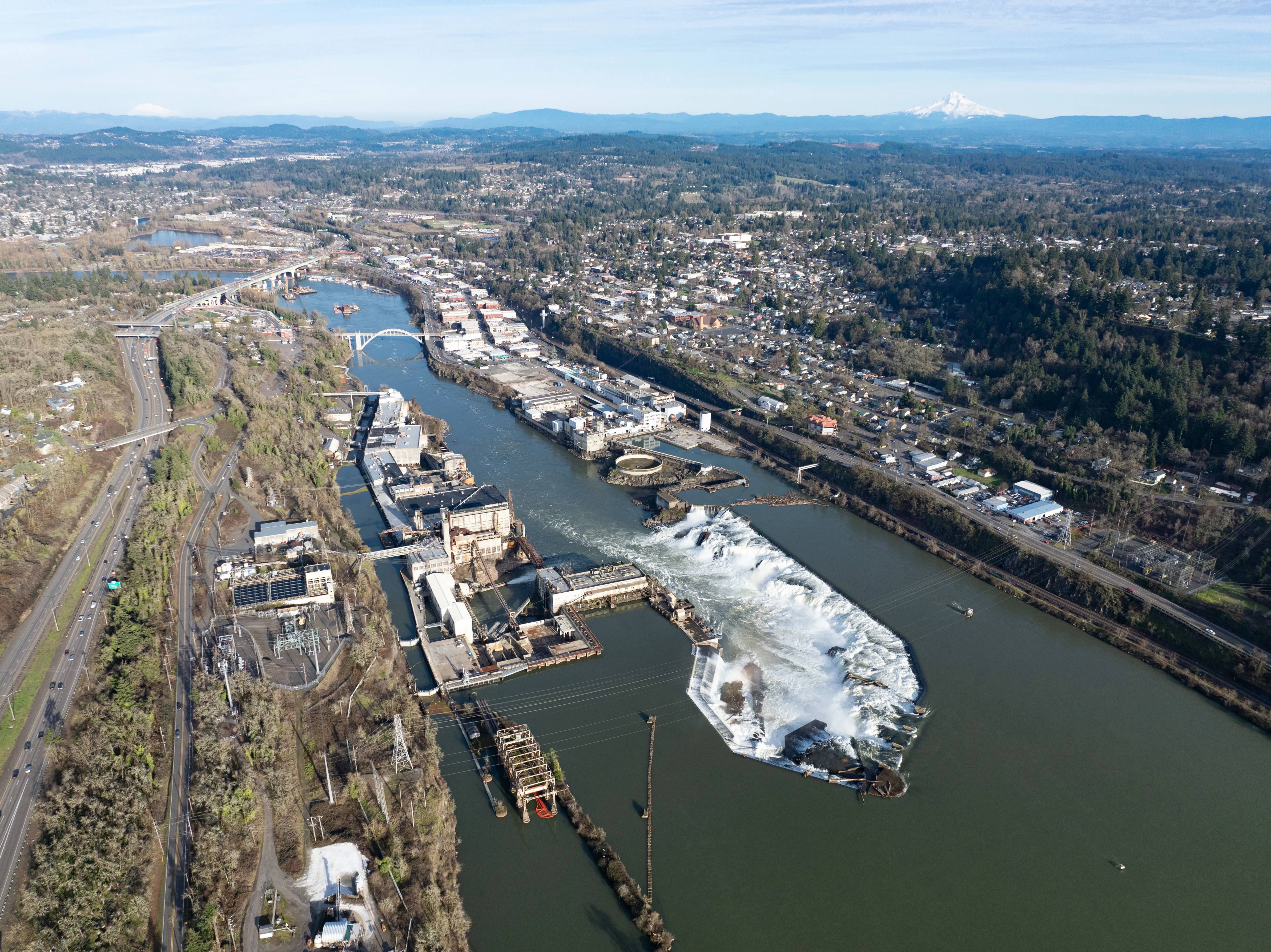
Local Expert Takeaway: West Linn's geographic variation is the most underestimated factor in the buying decision. If walkability and neighborhood character matter to you, stay west and low — the Willamette district and lower Bolton are the only parts of the city where daily life on foot is actually possible. If you're prioritizing newer construction, views, and school proximity over walkability, the hillside and ridge neighborhoods from Barrington Heights to Rosemont Summit deliver the full West Linn package at a price point that still competes favorably with comparable Lake Oswego addresses. And regardless of which neighborhood you target, verify your school boundary assignment by address — the district's quality is real, but the boundaries don't follow neighborhood names.
Do West Linn school boundaries follow neighborhood names?
No — and this is one of the most common sources of post-purchase regret in West Linn. The West Linn-Wilsonville School District assigns elementary schools by specific street address, not neighborhood name. Buyers purchasing near the outer edges of Barrington Heights, Tanner Basin, or Robinwood have occasionally found themselves just outside the boundary for the elementary school that drove their neighborhood decision. The district's quality is real and consistent across all its elementary schools — but if you're paying a Barrington Heights premium because of a specific school name, confirm the assignment at the district's boundary tool before you write the offer, not after.
What are the best neighborhoods in West Linn for families?
Barrington Heights, Rosemont Summit, and Sunset are among the most popular choices for households with children. All three offer quiet residential streets, proximity to parks, and strong school access within the West Linn-Wilsonville School District. Barrington Heights in particular tends to attract families who want low-traffic streets and immediate park access without the fully master-planned feel of Rosemont Summit.
Is West Linn affordable compared to nearby cities?
West Linn's median home price of $738,000 positions it above most Portland Metro suburbs but generally below comparable Lake Oswego addresses with similar school quality and neighborhood finish. Buyers coming from California or Seattle often find West Linn competitive for what it delivers — but buyers comparing it to Tualatin or Oregon City will find it significantly more expensive. The entry point varies dramatically by neighborhood, with Bolton and Robinwood offering the most accessible prices and Hidden Springs or Sunset commanding a meaningful premium.
What should I know about renting in West Linn before moving here?
West Linn's rental market is one of the thinnest in the Portland Metro — the city is overwhelmingly owner-occupied, which means apartment inventory is limited to a handful of areas, primarily around the Willamette district and Savanna Oaks. Renters who need flexibility should budget time to search before their move-in window and should expect competition for available units. Many renters ultimately land in single-family homes rather than apartment complexes, which broadens options but also raises monthly costs.
Browse current listings updated daily — filtered for West Linn buyers by Elizabeth Davidson, your local expert.
Powered by Elizabeth Davidson · Cascade Hasson Sotheby's International Realty · 503-939-2035
Explore the full West Linn series: The Ultimate West Linn Relocation Guide · Is West Linn Safe? · Cost of Living in West Linn · Best Neighborhoods in West Linn · West Linn Schools & Family Life · West Linn Youth Sports · West Linn Parks & Recreation · Retiring in West Linn · 1031 Tax-Deferred Exchange in West Linn · West Linn First-Time Homebuyers Guide · · Moving to West Linn from California · The West Linn Realtor's Perspective · Top 10 Questions a Realtor Gets About West Linn
Tell us what you need help with and we'll connect you with local resources.

About the Author
Todd Davidson is the founder of Living in Oregon and Living in Washington, where he publishes in-depth city guides, neighborhood resources, and local market insights covering more than 180 communities across the Pacific Northwest. While his background is in home financing and real estate, he created these digital platforms to help families research and compare regions before making a move.