Southern Oregon · Oregon
Living in Myrtle Creek: The Ultimate Relocation Guide (2026)
Maybe you've been priced out of Grants Pass or Roseburg and someone in a Facebook group mentioned Myrtle Creek as the alternative nobody's talking about. Maybe you're moving south from the Portland metro, done with the rain and the traffic, and Southern Oregon's 300 days of sunshine finally won the argument. Or maybe you've driven I-5 through the South Umpqua canyon a dozen times and wondered what life actually looks like behind those tree lines. Whatever got you here, Myrtle Creek presents a genuine tension that every serious buyer needs to sit with before making an offer: this is one of the most affordable small cities in Oregon, with real natural beauty, genuinely low housing costs, and a tight-knit community — but it's also a place that asks real sacrifices in amenities, school quality, and economic mobility.
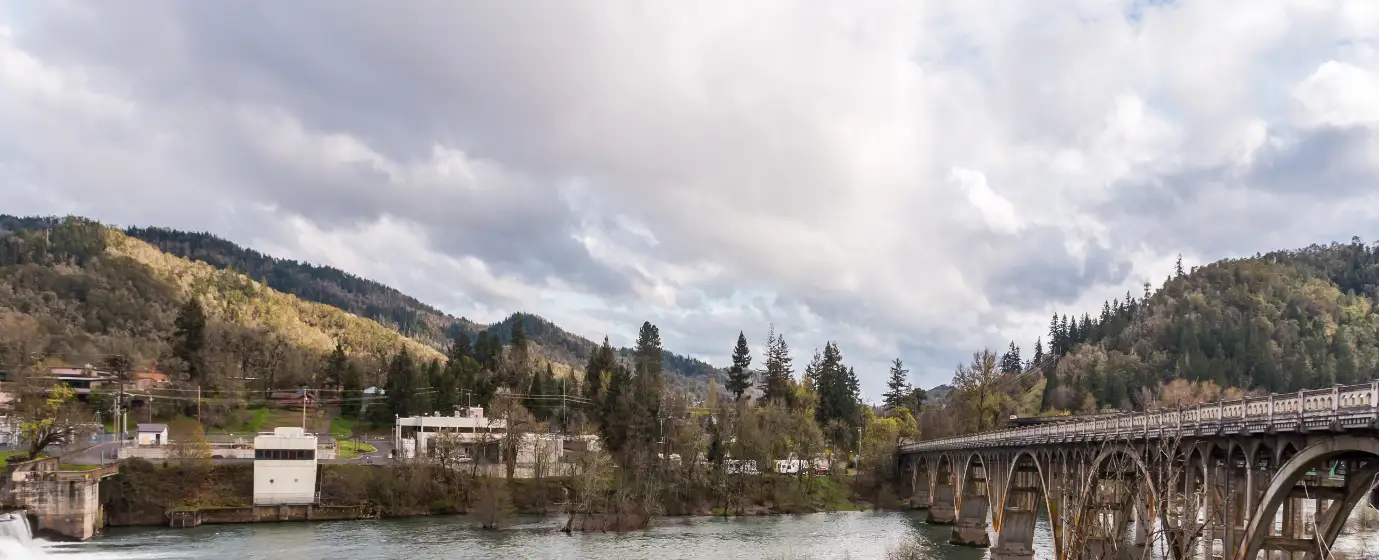
Myrtle Creek sits in Douglas County, about 20 miles south of Roseburg along the I-5 corridor at elevation 820 feet. The South Umpqua River defines the city's character as much as its street grid does, running through the heart of town and giving residents access to fishing, swimming, and hiking that most Oregonians drive hours to find. With a population of approximately 3,500, it functions as a true small town — not a suburb in any meaningful sense. You will know your neighbors. You will drive to Roseburg for Costco runs and specialty medical care. The trade-off between what you gain in cost and landscape and what you give up in convenience is the central calculation every relocating household has to make honestly.
This guide will help you make that calculation clearly. We'll walk through who Myrtle Creek actually works for, what the housing market looks like right now, which neighborhoods make sense for different buyers, how the city compares to alternatives like Canyonville and Winston, and the honest reasons some people arrive with high hopes and leave within two years. By the end, you'll know whether Myrtle Creek belongs on your short list — or whether one of its neighbors is actually the better fit.
Not every city works for every buyer, and Myrtle Creek is more specific in its appeal than most. The table below cuts through the noise.
| Best For | Why |
|---|---|
| First-time buyers on a tight budget | Median sold prices in the low-to-mid $300s put homeownership within reach without FHA gymnastics |
| Retirees seeking quiet and nature access | Older median age (46.5), low cost of living index of 87.6, river access, and a slower pace suit retirement well |
| Remote workers who need affordability | Fiber or satellite internet increasingly accessible; home prices well below national medians |
| Commuters to Roseburg | The drive north on I-5 runs about 20 minutes in normal conditions — manageable for a daily round trip |
| Outdoor-oriented households | South Umpqua River fishing, Cougar Canyon Golf Course, and canyon trail access in every direction |
| Buyers who want space and privacy | Single-family detached homes make up nearly 74% of all housing units; lots are generous by Pacific Northwest standards |
The physical layout of Myrtle Creek will recalibrate your expectations within the first week. Maple Street runs through the core of town, and most errands — a gas fill-up, a stop at Tractor Supply, grabbing a Subway sandwich — happen within a half-mile stretch. There's no downtown in the Portland sense, no restaurant row, no weekend farmers market with artisan cheese vendors. What there is instead is a genuinely functional small-town commercial strip flanked by residential streets that quiet down fast once you turn off the main road.
The South Umpqua River is not just scenery — it's the organizing principle of outdoor life here. Millsite Park sits right along the river and functions as the town's primary gathering space, with a swimming hole that locals treat as their collective backyard from June through September. On summer evenings, you'll find families with kids, older couples walking the path, and teenagers doing what teenagers do. The Horse Creek Covered Bridge, one of Douglas County's historic covered bridges, sits nearby and gives the area a visual identity that separates Myrtle Creek from the generic I-5 corridor towns further north.
Commute reality deserves honesty. The 20-minute drive to Roseburg moves smoothly on most mornings — I-5 north is not congested at small-town commute volumes, and you're largely past the Roseburg bottleneck before rush hour fully builds. The friction shows up differently: if you need a specialist medical appointment, a decent hardware store beyond the basics, or a grocery store with more than a single option, Roseburg is where you go. Plan for two or three Roseburg trips per week in most households, and budget the gas accordingly.
What surprises most people after six months here is how quickly the pace rewires your expectations. You stop being annoyed by the limited restaurant options and start actually cooking more. You start recognizing faces at the park. The Vietnam War veteran community is a real presence — Myrtle Creek has one of the highest concentrations of Vietnam-era veterans in Oregon — and that demographic shapes the community's culture in quiet but noticeable ways: strong respect for service, traditional values, and a suspicion of rapid change.
The cost structure is real. A median sold price in the low-to-mid $300s — and plenty of homes available below that figure — means your mortgage payment in Myrtle Creek is likely half of what you'd pay for a comparable home in the Willamette Valley. Add Oregon's lack of a sales tax, a cost of living index that runs about 12% below the national average, and property taxes that, thanks to Oregon's Measure 50 cap on assessed value growth, often run well under 1% effective rate on your purchase price, and the monthly financial picture becomes genuinely liberating for households earning median incomes.
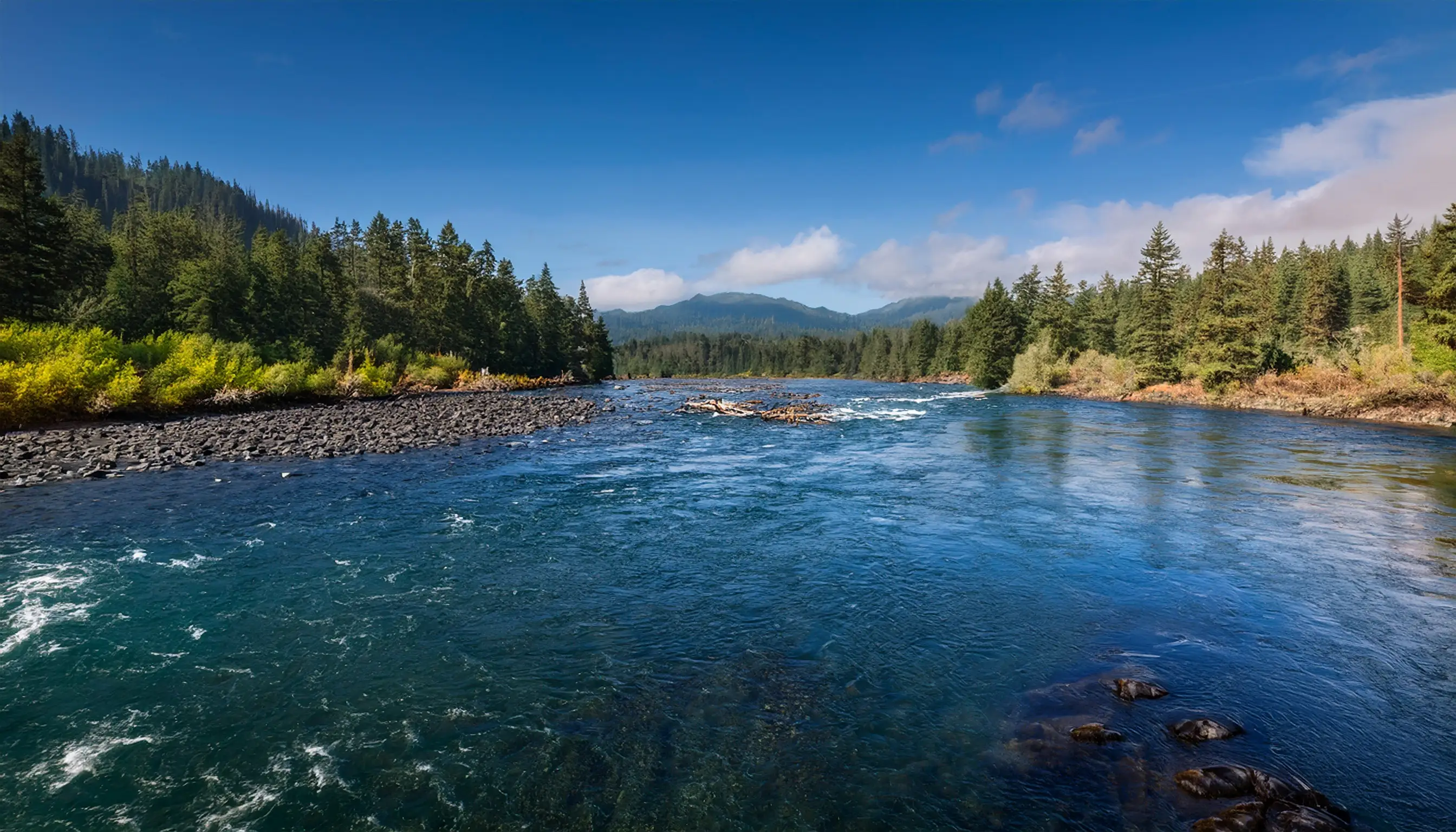
The outdoor access is not hypothetical. The South Umpqua River corridor offers steelhead and trout fishing that draws anglers from across Southern Oregon, and the river is clean enough for swimming and tubing in summer. Cougar Canyon Golf Course provides an 18-hole option without driving to Roseburg. The network of forest roads and BLM land south and east of town opens up hiking, mountain biking, and hunting access that most urban Oregonians spend entire weekends chasing. If you moved here partly for an outdoor lifestyle, the geography delivers.
The sense of community is one of those things that sounds like a cliché until you actually experience it. Stinebaugh Park and Evergreen Park both host informal community gatherings, and the scale of the town means your kids will know the same classmates K–12, your neighbors will notice if your truck hasn't moved in three days, and the local institutions — churches, the high school sports programs, the volunteer fire auxiliary — provide social scaffolding that larger cities have largely lost. For households coming from anonymous suburban developments, this feels like a genuine rediscovery.
The housing stock itself is worth noting. Nearly three-quarters of all units are single-family detached homes, with a significant portion of the inventory built during the 1970s through 1990s — meaning you get full lots, larger floor plans, and established landscaping at prices that feel out of step with the rest of Oregon. First-time buyers who've been losing out in competitive markets elsewhere often find that Myrtle Creek is where they finally land a home with a garage, a yard, and a spare bedroom, all at a payment that doesn't require two full-time incomes to sustain.
Looking to buy in Myrtle Creek? Estimate your payment.
Enter your numbers to see an estimated monthly mortgage payment.
Estimate only. Excludes HOA fees and mortgage insurance.
The school district situation is the most significant friction point for families with children. The South Umpqua School District 19 currently carries a D rating — a figure that reflects both test score outcomes and resource constraints. For households where school quality is a top-three priority, this is not something to minimize or explain away. It's a real consideration, and some families do make the calculation that the cost savings here justify accepting the school situation, especially if they're prepared to supplement with private tutoring, extracurriculars in Roseburg, or homeschool hybrid options. But others arrive expecting to make it work and find themselves considering a move within two years.
Amenities are genuinely thin. There is no movie theater in Myrtle Creek. The restaurant options are limited to fast food and a small number of local spots. The nearest hospital is in Roseburg. Shopping for anything beyond basics means a Roseburg trip or an online order. Buyers coming from mid-sized cities often underestimate how much this matters day-to-day — not on the first weekend when the river view is spectacular, but on a Tuesday in November when you want Thai food and the nearest option is 25 miles away.
Wildfire and flood risk are not abstractions here. Every property in Myrtle Creek carries some wildfire risk over a 30-year horizon, with the city rated at the extreme end of the wildfire risk spectrum for Oregon. About 22% of properties also carry severe flood risk due to the South Umpqua River. Homeowners insurance in communities with this risk profile has become meaningfully more expensive in recent years, and some insurers have reduced their coverage options in Southern Oregon. Any buyer doing a serious financial analysis of a Myrtle Creek purchase needs to factor insurance costs into their monthly payment — not as a footnote, but as a real line item.
The economic ceiling here is worth acknowledging honestly. Poverty runs at roughly 16%, above the national average, and the job market within Myrtle Creek itself is limited — education, retail, food service, and timber employment make up the bulk of local work. Remote workers and retirees with pension or investment income insulate themselves from this reality, but workers who need to find local employment will likely find their options constrained unless they're willing to commute to Roseburg daily. The lack of any public transit means a car is not optional — it is the only way life here functions.
The streets closest to Millsite Park and the South Umpqua River represent the most desirable address in Myrtle Creek for buyers who want to feel connected to the outdoors daily. Homes here tend to be single-family with established lots, priced across a wide range from the mid-$200s to the low $400s depending on condition and river proximity. The honest tradeoff is flood risk — the 22% severe flood risk figure is concentrated heavily in properties nearest the water, and insurance costs reflect that.
Best for: Outdoor-oriented buyers and retirees who prioritize nature access over financial predictability.
The northern stretch of town nearest the I-5 interchange offers the most practical day-to-day access to commercial services and the cleanest shot at the Roseburg commute. Housing here leans toward older stock from the 1960s and 1970s, with entry-level prices in the $220,000–$280,000 range and more turnover than the quieter south side. It's functional rather than scenic, and noise from the interstate is noticeable in some blocks.
Best for: Commuters to Roseburg and first-time buyers prioritizing affordability over ambiance.
South of the town center, the residential streets between Maple Street and the hills quiet down quickly and offer a more settled, privacy-focused living experience. Lots tend to be larger, tree cover is denser, and the pace is slower. Prices here track the city-wide median closely, generally in the $260,000–$320,000 range for move-in-ready homes. The downside is distance from even the limited commercial strip — grocery runs require a short drive.
Best for: Remote workers and retirees who want quiet and space without being truly rural.
The neighborhood surrounding Myrtle Creek Memorial Park sits in one of the calmer residential pockets in town, with a mix of mid-century and more recently updated homes. The park itself provides greenspace access without the flood risk of the river corridor. Prices tend to be modest, often in the $240,000–$300,000 range, and the housing stock is stable if not flashy.
Best for: Families and budget-conscious buyers who want a neighborhood feel with park access.
The streets near the Neal Lane Bridge span the South Umpqua on the east side of town and provide a quieter, more rural-feeling approach to the city center. Properties in this area sometimes include larger parcels or older homes on half-acre or larger lots. Prices vary significantly with lot size and condition — buyers willing to do some updating can find the best square-footage value in the city here, sometimes in the $210,000–$270,000 range.
Best for: Buyers wanting acreage character at an in-town price, comfortable with older homes that may need updating.
| City | Best For | Home Price | Commute to Roseburg | Vibe |
|---|---|---|---|---|
| Myrtle Creek | Affordability, nature access, quiet | ~$300K median | 20 min north | Small-town, older demographic, outdoorsy |
| Roseburg | Amenities, jobs, services | ~$340K–$380K median | — (is Roseburg) | Regional hub, mid-sized city feel |
| Canyonville | Even smaller, quieter, casino employment | ~$225K–$270K | 30 min north | Rural, Seven Feathers area workers |
| Winston | Family-oriented, slightly larger | ~$280K–$320K | 15 min north | Suburban-rural blend, Wildlife Safari area |
| Riddle | Rural maximum, very limited services | ~$190K–$240K | 30 min north | True rural, timber community |
| Days Creek | Ranchland, acreage buyers | ~$280K–$380K varies | 40 min north | Remote rural, large-parcel living |
| Category | Data Point |
|---|---|
| Population (2026) | ~3,506 |
| Median Sold Home Price | ~$300K–$315K (mid-2026) |
| Median Household Income | ~$55,000–$57,000 |
| Cost of Living Index | 87.6 (U.S. avg = 100) |
| Commute to Roseburg | ~20 minutes via I-5 |
| Violent Crime per 1,000 | 3.2 |
| Property Crime per 1,000 | 17.6 |
| School District | South Umpqua SD 19 (D rating) |
| Median Age | 46.5 years |
| Public Transit Usage | 0% — car essential |
Myrtle Creek takes its myrtle trees seriously. The Pacific myrtle — Oregon myrtle, technically — grows natively in this part of the state and shows up in local craft traditions, particularly in the woodworking community that produces myrtle wood bowls, cutting boards, and decorative items sold at local shops and regional markets. If you mention the city to any Oregonian who grew up in the south, their first association is almost always either the river or the myrtle wood.
The Vietnam veteran community shapes local culture in ways that are invisible until they're not. Myrtle Creek has a per-capita concentration of Vietnam-era veterans that is more than three times higher than veterans of any other conflict represented in the population. This demographic has historically organized social events, supported the Veterans of Foreign Wars post, and contributed to the city's conservative civic character. New arrivals who engage respectfully with this community tend to integrate into the fabric of town much faster than those who don't.
Summer at Millsite Park is a genuine local institution. When the South Umpqua runs low and warm in July and August, the park becomes the community gathering point — families, teenagers, retirees, and visitors from surrounding communities all converge on the swimming access. It's unorganized and informal, which is partly the point. There's no fee, no lifeguard, and no schedule. It simply happens, year after year, and it's one of the genuine pleasures of life here.
What I would not do if moving to Myrtle Creek: I would not buy a home in the lowest-lying blocks nearest the river — specifically properties on the flood-plain side of Millsite Park — without first pulling the full FEMA flood map and getting two independent insurance quotes. The views are compelling and the river access is real, but buyers who skip this step sometimes discover in year two that their insurance renewal has jumped several hundred dollars annually, or that their lender requires flood insurance their original budget didn't account for. The elevated south-side streets carry virtually none of this risk at very similar prices. That trade-off is worth understanding before you fall in love with a riverfront address.

Local Expert Takeaway: If you're choosing between Myrtle Creek and Roseburg, the decision usually comes down to one question: how much of your daily life genuinely requires city-level amenities? Buyers who can run weekly errands in Roseburg and spend the rest of their time at home tend to love Myrtle Creek within months — the cost savings are real, the space is real, and the pace genuinely improves quality of life for people ready to slow down. Where buyers run into trouble is underestimating the school situation and the insurance cost of wildfire and flood exposure. If you have school-age children, get specific about South Umpqua SD's program options before you close. If you're targeting a river-adjacent home, price out insurance before you make an offer, not after.
✅ Myrtle Creek offers some of the most affordable homeownership in Oregon — median sold prices in the low-to-mid $300s, a cost of living index below 88, and effective property tax rates well under 1% make the monthly numbers work for buyers who've been priced out elsewhere.
⚠️ The school district and amenity situation require honest advance planning — a D-rated school district and an Amenities score of F from major livability indices aren't dealbreakers for every household, but they require a clear-eyed plan before you commit.
📍 Wildfire and flood risk are real budget line items — 100% of properties carry some wildfire risk and 22% carry severe flood risk; insurance costs in Southern Oregon have risen meaningfully and should be factored into any purchase analysis.
Is Myrtle Creek a good place to live?
For the right household, genuinely yes. Retirees, remote workers, outdoor enthusiasts, and first-time buyers who prioritize affordability and space over urban amenities consistently report high satisfaction with the trade-offs. The cost of living, natural setting, and community character offer something that's hard to find at this price point anywhere in the Pacific Northwest. Families with school-age children should research the South Umpqua SD situation carefully before committing.
What is the crime rate in Myrtle Creek?
The violent crime rate runs approximately 3.2 per 1,000 residents — lower than many small cities of comparable size and economic profile. Property crime is higher at roughly 17.6 per 1,000, which is a more relevant concern for most households. Locking vehicles and securing outbuildings is standard practice here, as it is throughout rural Southern Oregon.
How does Myrtle Creek compare to nearby Roseburg?
Roseburg offers meaningfully more in terms of employment, medical services, restaurants, retail, and school options — and home prices reflect that, running roughly $40,000–$80,000 higher than Myrtle Creek's median. Myrtle Creek's appeal is the inverse: lower prices, lower density, and a quieter daily experience for households willing to make the 20-minute commute when Roseburg's resources are needed. Many buyers eventually choose based on whichever city's lifestyle gap they can live with.
Explore the full Myrtle Creek series: The Ultimate Myrtle Creek Relocation Guide · Is Myrtle Creek Safe? · Cost of Living in Myrtle Creek · Best Neighborhoods in Myrtle Creek · Myrtle Creek Schools & Family Life · Myrtle Creek Youth Sports · Myrtle Creek Parks & Recreation · Retiring in Myrtle Creek · 1031 Tax-Deferred Exchange in Myrtle Creek · Myrtle Creek First-Time Homebuyers Guide · · Moving to Myrtle Creek from California
Tell us what you need help with and we'll connect you with local resources.

About the Author
Todd Davidson is the founder of Living in Oregon and Living in Washington, where he publishes in-depth city guides, neighborhood resources, and local market insights covering more than 180 communities across the Pacific Northwest. While his background is in home financing and real estate, he created these digital platforms to help families research and compare regions before making a move.