Southern Oregon · Oregon
Is Myrtle Creek Safe? Crime Rates, Safest Neighborhoods & Local Reality (2026)
Myrtle Creek is not a dangerous town. That sentence needs to be said upfront, because a surface-level search will return crime index scores and percentile rankings that look alarming without the context that makes them meaningful. For a community of roughly 3,500 people in Southern Oregon's timber country, the honest safety story is more nuanced: violent crime here is genuinely low — comparable to the Oregon state average and below the national average — while property crime runs higher than most buyers expect, driven largely by a concentration of retail activity in the central corridor and a poverty rate that reflects the economic realities of rural Douglas County.
What shapes daily life in Myrtle Creek is less about street-level danger and more about the practical reality of living in a small town where police resources are limited, commercial and residential land uses sit close together, and economic stress runs through parts of the community. The South Umpqua River splits the city roughly east and west, and that geography has real implications for where crime concentrates and where residents feel most at ease. Most people in Myrtle Creek own their homes, walk their dogs along the river trail, and go years without a serious incident. The risk profile here is nothing like a mid-size Oregon city — it's a small town with small-town dynamics, both good and problematic.
This guide unpacks the verified numbers, explains what the data actually means at street level, breaks down how safety varies across different parts of the city, and gives you the honest picture that a crime index score never will.

FBI data from 2023 — the most recent year with published actuals — puts Myrtle Creek's total crime rate at approximately 27 to 30 incidents per 1,000 residents annually, depending on the methodology applied. CrimeGrade.org places the city in the 33rd percentile for overall safety, meaning it is safer than roughly a third of U.S. cities. Those numbers sound worse than they feel on the ground, partly because small-city crime statistics are highly volatile: a handful of incidents can swing percentile rankings dramatically when the population base is 3,500 people.
The structural drivers behind the numbers matter here. Central Myrtle Creek — where the commercial strip, fast food, and retail run along the main corridor — accounts for a disproportionate share of total reported incidents. Roughly 52 crimes per year concentrate in the central part of the city, compared to near-zero in some western residential areas. That retail clustering effect is well-documented in small-town crime analysis: shops, parking lots, and high-turnover commercial spaces generate more reported property incidents than quiet residential streets do, even when the underlying residential community is stable and safe. Myrtle Creek's crime picture is shaped far more by its commercial concentration than by endemic neighborhood danger.
The city's poverty rate — estimated around 18%, compared to a national average closer to 15% — provides additional context. Douglas County has faced persistent economic headwinds since the timber industry contracted, and Myrtle Creek is not immune to those pressures. Economic stress correlates with property crime in virtually every small Oregon city, and Myrtle Creek is no exception. That said, the city's violent crime rate tells a meaningfully different story, and it's the number that most directly affects how safe daily life actually feels.
Local police data and FBI reporting suggest Myrtle Creek's violent crime rate runs approximately 3.2 per 1,000 residents — consistent with Oregon's state average and below the national average. In raw numbers, the 2023 reporting year recorded roughly 7 violent incidents citywide, with zero murders. For context, BestPlaces data puts Myrtle Creek's violent crime index at 13.4 against a U.S. average of 22.7 — a figure that consistently positions the city as less dangerous for personal safety than most American communities of comparable size. For residents, this means the practical day-to-day experience — walking in the evening, letting kids bike to a friend's house, heading to Millsite Park on a weekend afternoon — carries a level of risk that most people from larger metros would find reassuringly low.
Property crime is where Myrtle Creek's numbers diverge from the national picture. The city's property crime rate runs approximately 17.6 per 1,000 residents, and the dominant offenses are theft and vehicle-related incidents rather than burglary or home invasion. The risk is not evenly distributed: southeast neighborhoods carry the highest concentration, with odds of property crime victimization running roughly 1 in 33 in those areas versus closer to 1 in 92 in the east side of the city. The commercial strip along the central corridor — where Tractor Supply, fast food, and high-traffic retail operate — sees the bulk of incidents, which follows the same pattern seen in similarly-sized rural Oregon towns. Residents who live in quieter residential pockets, particularly east of the commercial core, report significantly fewer incidents and describe their blocks as genuinely peaceful.
East Myrtle Creek consistently shows up as the city's safest area in geographic crime analyses. The property crime victimization odds here run roughly 1 in 92 — dramatically lower than the city average — and the residential character reflects it: owner-occupied homes, modest but well-maintained lots, and the kind of low through-traffic that keeps opportunistic property crime down. Households with children and buyers prioritizing street-level quiet tend to find this side of the city most comfortable.
Best for: Families and owner-occupants who want the lowest property crime exposure in the city.
The commercial corridor that runs through central Myrtle Creek is where the crime numbers concentrate. This area hosts the highest density of retail, food service, and parking — and it accounts for a disproportionate share of the city's total incident count, roughly 52 reported crimes annually. That doesn't make it dangerous to live near, but it does mean residents closest to the main commercial strip will notice more visible activity, including the occasional vehicle break-in in parking areas.
Best for: Buyers who prioritize walkable access to services and can tolerate more ambient commercial activity.
Southeast Myrtle Creek carries the city's highest property crime concentration among residential areas, with victimization odds closer to 1 in 33. The pattern here mirrors what researchers find in many small Oregon cities: neighborhoods adjacent to high-traffic commercial zones and situated near lower-income pockets tend to absorb elevated property crime, particularly vehicle-related theft. None of this translates to a dangerous neighborhood in any urban sense — but buyers should price that risk into their decision and look carefully at specific blocks rather than the broader southeast designation.
Best for: Value-focused buyers who understand the trade-off and are doing their homework at the block level.
The western portion of the city presents an interesting anomaly in the data: crime incident counts here run near zero annually in some analyses. This is partly a function of lower residential density and less commercial activity, but the practical outcome is a part of town that generates almost no reported crime. Access to central services is somewhat more limited from this side, and the area has a more rural character than east or central Myrtle Creek.
Best for: Buyers who want maximum quiet and don't mind limited walkability to commercial areas.
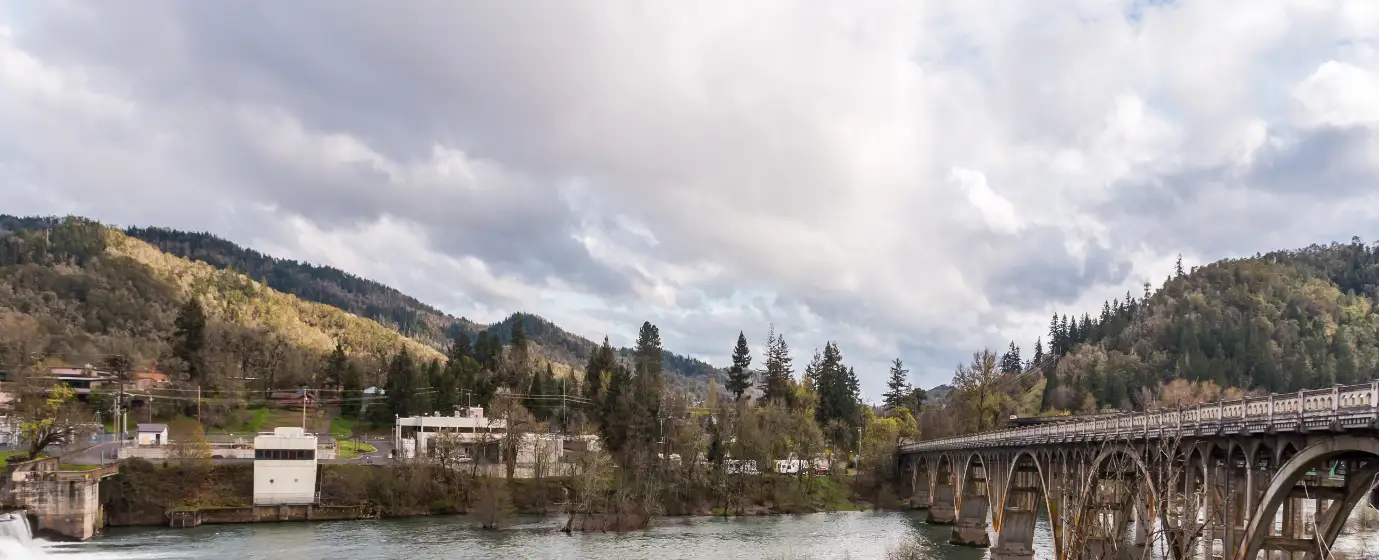
The stretch of the city that runs along the South Umpqua River — near Millsite Park and the Neal Lane Bridge — functions as a genuine community gathering space and draws both locals and visitors. It's not a high-crime zone, but it does see more foot traffic than purely residential streets, which can occasionally attract minor incidents after dark. During daylight hours, the river corridor is among the most pleasant and well-used public spaces in the city, with locals walking dogs, fishing, and using the park regularly.
Best for: Active outdoor households who want proximity to the city's main natural amenity.
The neighborhoods around Myrtle Creek Memorial Park and Stinebaugh Park tend to attract families with younger children precisely because the parks themselves are active, well-used, and effectively self-policed by the foot traffic of community members who use them regularly. Residential streets adjacent to these parks generally feel settled and owner-occupied. Police bike patrol and community visibility in these pockets keep the feel of these areas closer to east Myrtle Creek than central.
Best for: Parents with young children who want a neighborhood organized around park access.

| City | Violent Crime/1K | Property Crime/1K | Overall Safety Profile |
|---|---|---|---|
| Myrtle Creek | ~3.2 | ~17.6 | C− overall; violent crime near state average |
| Roseburg | ~5.8 | ~52.3 | Higher crime, larger city with more retail density |
| Canyonville | ~2.1 | ~12.4 | Small town, lower overall volume, less commercial activity |
| Winston | ~3.0 | ~14.1 | Comparable to Myrtle Creek; quieter commercial footprint |
| Riddle | ~1.8 | ~8.2 | Very small, low incident count, limited services |
| Days Creek | ~1.2 | ~5.5 | Rural community; extremely low crime, very few services |
Looking to buy in Myrtle Creek? Estimate your payment.
Enter your numbers to see an estimated monthly mortgage payment.
Estimate only. Excludes HOA fees and mortgage insurance.
Residents who have lived in Myrtle Creek for more than a year tend to say the same thing: the town is calm but not without friction, and knowing the difference between the commercial strip and the residential areas changes everything about how you experience it. The main drag through central Myrtle Creek — where the fast food, Tractor Supply, and gas stations cluster — is the source of most of the property crime that makes the statistics look worse than daily life feels. Locals don't avoid it; they just don't leave valuables visible in parked cars and they move through it with the same casual awareness you'd apply in any small Oregon city.
The year-over-year property crime increase flagged in recent reporting — a roughly 50% jump — is the number that gives thoughtful buyers pause, and it should be examined honestly. Small absolute numbers amplify dramatically as percentages in a city this size: a dozen additional incidents can produce a headline-worthy percentage spike even when the underlying reality remains a small town with manageable crime. That context doesn't make the trend irrelevant, but it does mean the 50% figure should be read alongside the raw count, not as a standalone alarm.
Practically, most Myrtle Creek residents treat personal security the way people in comparable rural Oregon towns do: doors get locked, cars don't get left unlocked overnight, and the community's Nextdoor presence functions as an informal neighborhood watch. The Myrtle Creek Police Department, based at 215 NW Pleasant Street, runs with a small force — roughly seven sworn officers for the city — which means response times can stretch longer than buyers from larger cities are used to. Community visibility matters here more than in places with deeper patrol coverage, and most long-term residents know that being a recognizable, engaged neighbor is the most effective safety strategy available.

Local Expert Takeaway: Focus your home search on east Myrtle Creek and the neighborhoods around Stinebaugh Park and Myrtle Creek Memorial Park — these pockets show the lowest property crime concentration in the city and have the residential character that holds value over time. Avoid anchoring your safety perception on the commercial strip along the central corridor; those incidents inflate the citywide numbers but have little bearing on what daily life feels like in a well-chosen residential block. At a $299,000 median price point, you can buy into east Myrtle Creek at a fraction of what comparable stability costs in Roseburg — that's the real opportunity hiding behind the headline crime grade.
✅ Violent crime is genuinely low — Myrtle Creek's violent crime rate runs near the Oregon state average and below the national average, with zero murders in the most recent reporting year.
⚠️ Property crime is the real concern — theft and vehicle incidents concentrate in the central commercial corridor and southeast residential areas; east Myrtle Creek sees dramatically lower rates.
📍 Geography matters more than the headline grade — a C− overall rating reflects central commercial activity, not the character of the city's quieter residential neighborhoods on the east and west sides.
Is Myrtle Creek safe to live in?
For most residents, yes — with the important caveat that "where in Myrtle Creek" matters more than the citywide grade. Violent crime is low and personal safety in daily life is generally not a concern. Property crime runs above the national average, but it concentrates in specific commercial and transitional areas rather than spreading evenly across the city. Buyers who choose east Myrtle Creek or the neighborhoods around the city's parks tend to experience a calm, owner-occupied community that feels nothing like the aggregate statistics suggest.
What is the biggest safety concern in Myrtle Creek?
Property crime — specifically theft and vehicle-related incidents near the commercial corridor — is the primary safety concern local residents and law enforcement track. The Myrtle Creek Police Department actively uses bike patrol and community policing to address these patterns, but the small force size means residents play a meaningful role in their own neighborhood security through engagement and visibility. Locking vehicles overnight and avoiding leaving valuables in plain sight are the practical habits most locals adopt without much thought.
How does Myrtle Creek compare to Roseburg for safety?
Myrtle Creek compares favorably to Roseburg on both violent and property crime metrics. Roseburg, as a significantly larger city with more commercial density and a larger transient population, carries a higher crime rate across the board. Buyers who choose Myrtle Creek over Roseburg — accepting the 20-minute commute — typically find the safety profile more consistent with what they were looking for, alongside a considerably lower median home price and a quieter residential character.
Explore the full Myrtle Creek series: The Ultimate Myrtle Creek Relocation Guide · Is Myrtle Creek Safe? · Cost of Living in Myrtle Creek · Best Neighborhoods in Myrtle Creek · Myrtle Creek Schools & Family Life · Myrtle Creek Youth Sports · Myrtle Creek Parks & Recreation · Retiring in Myrtle Creek · 1031 Tax-Deferred Exchange in Myrtle Creek · Myrtle Creek First-Time Homebuyers Guide · · Moving to Myrtle Creek from California
Tell us what you need help with and we'll connect you with local resources.

About the Author
Todd Davidson is the founder of Living in Oregon and Living in Washington, where he publishes in-depth city guides, neighborhood resources, and local market insights covering more than 180 communities across the Pacific Northwest. While his background is in home financing and real estate, he created these digital platforms to help families research and compare regions before making a move.