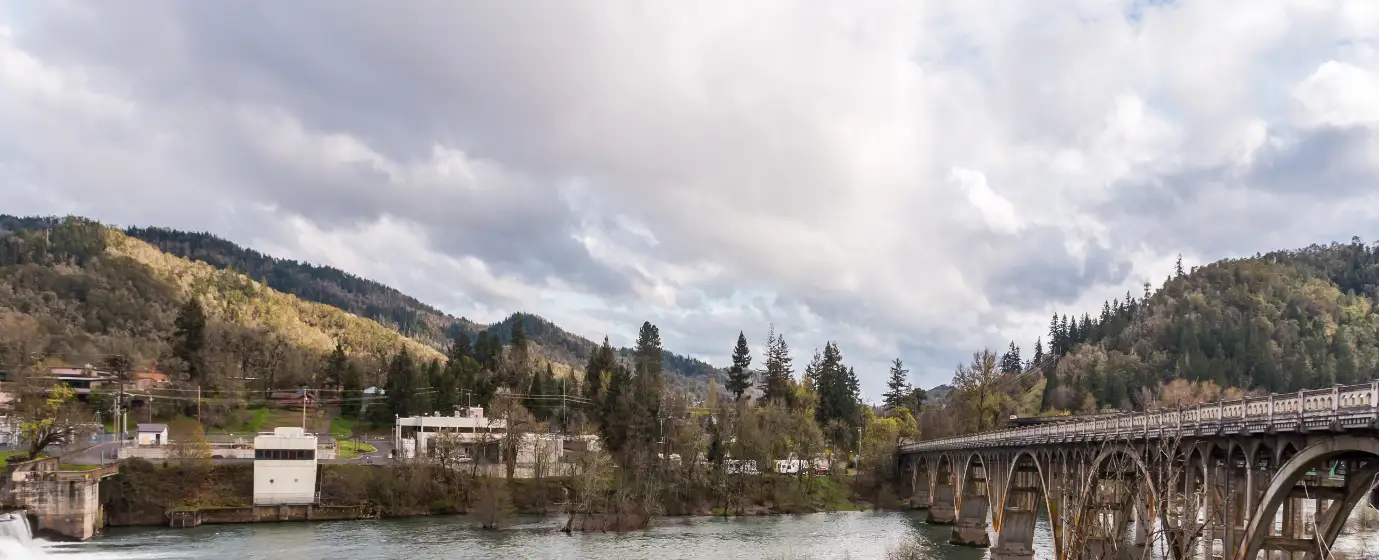
Southern Oregon · Oregon
Myrtle Creek Schools & Family Life: Top Districts, Academics & Community (2026)
If you're relocating to Myrtle Creek with kids starting school in six months, the honest answer is that South Umpqua School District 19 will require you to go in with clear eyes. The district sits near the bottom tier of Oregon's 139 school districts, with state test scores showing roughly 14% of students proficient in math and 25% in reading. That's a hard number to read when you're trying to decide where to plant your family.
What shapes those numbers matters as much as the numbers themselves. Nearly half the student body qualifies for free or reduced-price lunch, the student-teacher ratio runs higher than the state average, and the community's economic base — timber, retail, small-town services — doesn't generate the tax base that funds the arts programs and enrichment layers you'd see in a suburban Portland district. These are structural realities, not failures of individual teachers or administrators.
This guide gives relocating parents an honest look at every school inside Myrtle Creek city limits, what the ratings actually mean for a motivated family, where the genuine gaps are, and what the community offers beyond the classroom. The goal isn't to talk you into or out of anything — it's to make sure you're deciding with full information.
| Metric | Data |
|---|---|
| Total Enrollment | Approximately 1,451 students, PK–12 |
| Schools in District | 6 (3 elementary, 1 middle, 1 high school, 1 alternative) |
| Student-Teacher Ratio | 27:1 district-wide |
| Free/Reduced Lunch Eligibility | 47.8% of students |
| Per-Pupil Spending | $13,278 per year |
| Licensed Teachers | 96.4% |
| Math Proficiency (District) | Approximately 14% |
| Reading Proficiency (District) | Approximately 25% |
| SchoolDigger State Rank | 127th of 139 Oregon districts |
The district has two elementary schools physically inside Myrtle Creek city limits. A third district elementary, Canyonville School, is located in the neighboring town of Canyonville and won't be in the daily drop-off rotation for most Myrtle Creek families.
Located at 651 NE Division Street, Myrtle Creek Elementary serves Pre-K through 5th grade with an enrollment of approximately 264 students and a student-teacher ratio of around 17:1 — meaningfully lower than the district average, which means more individual attention in the early grades. Academic proficiency scores run low by state standards, with roughly 7.5% of students reaching math proficiency and 17% in reading, so families counting on test scores as a primary measure of school quality will find the numbers discouraging. What matters more for young children, many parents here would argue, is whether the classroom environment is safe and supportive — and on that dimension, the lower student-teacher ratio at this campus is a real advantage.
Best for: Families in the northeast and central parts of Myrtle Creek who want smaller class sizes in the elementary years.
Tri City Elementary sits at 546 SW Chadwick Lane, just 0.3 miles from South Umpqua High School, and serves Pre-K through 5th grade for roughly 272 students. GreatSchools rates the school as performing around average compared to Oregon schools serving similar grade levels — which puts it in a more favorable light than Myrtle Creek Elementary when you account for the demographics and economic context of the student body. The student-teacher ratio runs higher here at approximately 32:1, so classroom density is something parents should ask about directly when visiting. The school's proximity to the high school creates a natural campus continuity for families who will eventually have students at multiple grade levels at the same time.
Best for: Families on the southwest side of town who want a slightly higher comparative rating and the convenience of a shared campus zone with the high school.
Coffenberry Middle School at 591 NE Rice Street serves grades 6–8 and is the single transition point for district students moving from elementary into the upper grades. The middle school years here follow a fairly traditional structure, and families moving from a larger district should expect fewer elective options than they're used to.
South Umpqua High School — home of the Lancers — serves grades 9–12 at 501 Chadwick Lane with an enrollment of 443 students. The school competes in the OSAA 3A classification within the Far West League, which means athletes compete against comparably sized rural and small-town Oregon programs. The graduation rate for the class of 2023 came in at approximately 80–82%, which tracks just below the Oregon state average of 81.3% and meaningfully above Douglas County's overall rate of 73.1% — a distinction worth noting for families calibrating expectations. The high school's strongest offerings are its CTE vocational programs and Early College courses, which give motivated students a pathway toward credential-building that traditional academic tracks at this school size don't always provide.

Looking to buy in Myrtle Creek? Estimate your payment.
Enter your numbers to see an estimated monthly mortgage payment.
Estimate only. Excludes HOA fees and mortgage insurance.
A D district rating and a 2/10 GreatSchools score are real signals, but they measure a specific thing: aggregate test score performance relative to statewide peers, heavily weighted toward socioeconomic indicators. What they don't measure is whether a particular motivated student, with engaged parents and access to outside enrichment, will be underserved here. Many students at South Umpqua High School graduate with Early College credits and go on to community college or four-year programs — the average GPA of 3.41 at the high school suggests that students who engage with the academic environment can find traction.
The honest limitation is at the ceiling, not the floor. If your child is academically advanced and needs AP coursework, competitive academic teams, or a peer cohort of high-performing students to stay engaged, South Umpqua's offerings will feel constrained. The school doesn't carry the program depth of a larger district, and that gap is real for families with students who need challenge and acceleration to stay motivated.
Families with students who require specialized services, gifted programming, robust AP tracks, or a large peer cohort for competitive academics will likely find South Umpqua's structure limiting. The district does offer an Extended Diploma Program and Resource Rooms for students with different learning needs, but the breadth of specialized support available in an urban or larger suburban district isn't replicable here.
Nearby alternatives worth researching before making a final decision:
| Name | Grades/Ages | Type |
|---|---|---|
| South Umpqua Early Learning Center | Pre-K | Public preschool |
| Myrtle Creek Head Start | Ages 3–5 | Federal program |
| Faith-based preschools (Roseburg area) | Pre-K | Private |
| Home daycare providers (Myrtle Creek) | Infant–Pre-K | Licensed family care |
The Myrtle Creek Public Library, part of the Douglas County Library System, anchors community learning for kids outside school hours — summer reading programs, story times for early readers, and computer access for students who need it. Millsite Park along the South Umpqua River gives families a natural gathering point through the warmer months, with open green space that regularly fills with youth sports activities and informal community events. For families who define a good childhood partly through what happens outside school walls, Myrtle Creek's outdoor access and low cost of living create room for exactly that kind of life.

Local Expert Takeaway: If you're relocating with school-age children, prioritize visiting both Myrtle Creek Elementary and Tri City Elementary in person before closing — ask specifically about class size at your child's grade level and what after-school academic support looks like, because the difference between the two campuses matters more than the ratings suggest.
Are the schools in Myrtle Creek good enough for families relocating from out of state?
That depends almost entirely on what "good enough" means for your family. State proficiency scores and district rankings are low, but families with engaged parents who supplement with outside enrichment — tutoring, library programs, sports and arts activities — often report their children thriving here. The $299,000 median home price creates financial breathing room that higher-rated, higher-cost districts don't.
What is the graduation rate at South Umpqua High School?
The graduation rate for the most recent verified class runs approximately 80–82%, which sits just below the Oregon state average of 81.3% but significantly above the broader Douglas County average of 73.1%. The rate has been trending upward over recent graduating classes, which is a meaningful sign for families evaluating the high school's trajectory.
How does South Umpqua School District compare to Roseburg schools?
Roseburg Public Schools is the most direct comparison for Myrtle Creek families weighing a 20-minute commute-to-work tradeoff. Roseburg's district ranks higher statewide, offers more AP and elective options at the high school level, and serves a larger, more economically diverse student population. Families who prioritize academic program depth often choose to live in Roseburg or accept the daily commute; families who prioritize homeownership cost and small-town community life tend to choose Myrtle Creek and build the academic supplement structure themselves.
Explore the full Myrtle Creek series: The Ultimate Myrtle Creek Relocation Guide · Is Myrtle Creek Safe? · Cost of Living in Myrtle Creek · Best Neighborhoods in Myrtle Creek · Myrtle Creek Schools & Family Life · Myrtle Creek Youth Sports · Myrtle Creek Parks & Recreation · Retiring in Myrtle Creek · 1031 Tax-Deferred Exchange in Myrtle Creek · Myrtle Creek First-Time Homebuyers Guide · · Moving to Myrtle Creek from California
Tell us what you need help with and we'll connect you with local resources.

About the Author
Todd Davidson is the founder of Living in Oregon and Living in Washington, where he publishes in-depth city guides, neighborhood resources, and local market insights covering more than 180 communities across the Pacific Northwest. While his background is in home financing and real estate, he created these digital platforms to help families research and compare regions before making a move.