Southern Oregon · Oregon
Best Neighborhoods in Myrtle Creek: Where to Buy or Rent (2026)
Myrtle Creek is small enough that some buyers assume location within the city doesn't matter much. That assumption costs people. In a city of 2.51 square miles and just over 3,500 residents, the differences between living near the South Umpqua River corridor, on a quiet hillside lot above town, or along one of the main commercial corridors are not subtle — they shape your daily noise level, your lot size, your flood zone exposure, and how much of the city you can actually reach on foot.
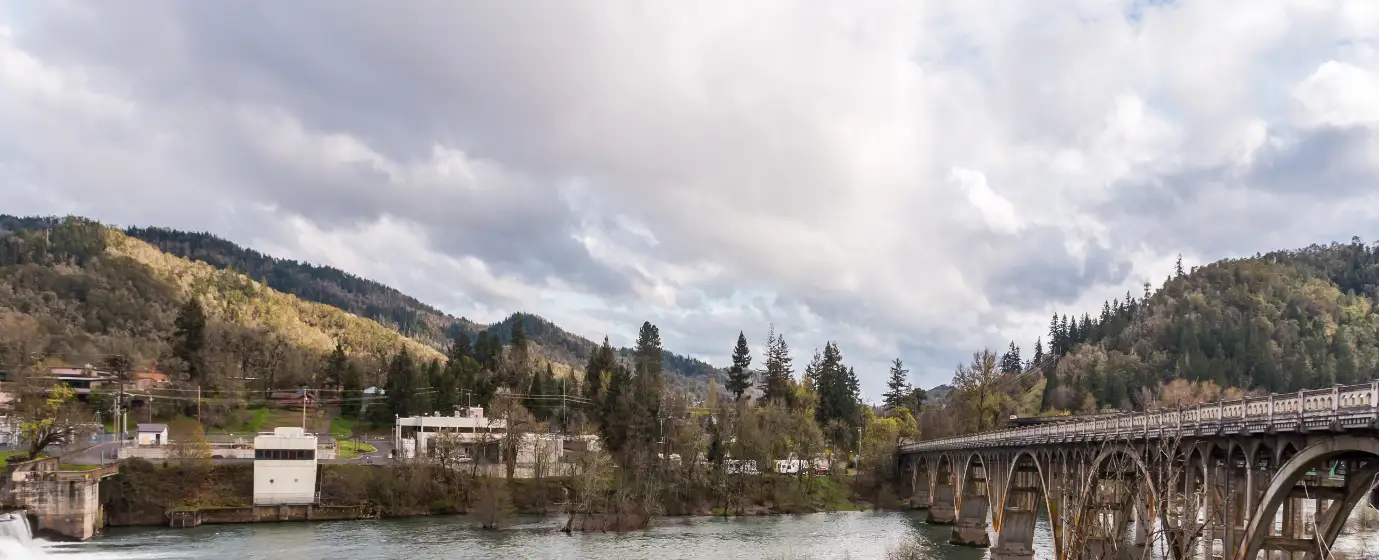
The city's defining geographic reality is the relationship between the valley floor and the ridgelines that hem it in. Interstate 5 bisects the community from north to south, and the South Umpqua River runs through the heart of it. Properties near Millsite Park and the river tend to sit on smaller lots with older housing stock, while homes pushed toward the edges of town — particularly east toward the canyon areas — tend to offer more land, more quiet, and more distance from traffic. That divide shapes everything from price per square foot to how your mornings sound.
This guide breaks down the most meaningful neighborhood distinctions in Myrtle Creek for buyers and renters in 2026 — including which pockets are seeing the strongest price growth, which areas offer the most land for the money, and where the common mistakes get made.
| Neighborhood | Best For | Price Range | Vibe |
|---|---|---|---|
| Millsite / River District | Walkability, retirees, outdoor lovers | $180,000–$280,000 | Historic, riverside, compact |
| North Myrtle Creek | First-time buyers, affordability seekers | $150,000–$240,000 | Working-class, older stock |
| South Myrtle Creek | Families, larger lots | $220,000–$320,000 | Quieter, more residential |
| Cougar Canyon / East Side | Large lot buyers, rural feel | $280,000–$450,000 | Semi-rural, wooded, private |
| Highway 99 Corridor | Commuters, renters | $140,000–$220,000 | Commercial-adjacent, practical |
| Stinebaugh Area | Value buyers, space seekers | $160,000–$260,000 | Low-density, laid-back |
| Neal Lane / Bridge Area | Acreage buyers, horses | $300,000–$600,000+ | Rural residential, large parcels |
| Evergreen / Park District | Families with kids, community feel | $220,000–$310,000 | Suburban, near parks |
| Upper Ridgeline Estates | Privacy, views, remote lifestyle | $320,000–$550,000 | Elevated, forested, quiet |
| Downtown / Main Street Adjacent | Renters, walkability, older homes | $150,000–$230,000 | Central, mixed-use, aging stock |
| Buyer Type | Best Neighborhood | Why |
|---|---|---|
| First-time buyer | North Myrtle Creek | Lowest entry points in the city; older homes with room to build equity |
| Luxury / acreage buyer | Neal Lane / Bridge Area | Large rural parcels, the city's top price tier, genuine privacy |
| Walkability seeker | Millsite / River District | Closest to parks, river trail access, and the city core |
| Families with kids | Evergreen / Park District | Near Evergreen Park, lower traffic, more residential street feel |
| Commuter to Roseburg | Highway 99 Corridor | Fastest I-5 access; 20-minute drive made easier from this side of town |
| Large lot buyer | Cougar Canyon / East Side | Most acreage within city limits at mid-range prices |
| Renter | Downtown / Main Street Adjacent | Most rental inventory; proximity to services; lower average rents |
The Millsite area sits closest to the South Umpqua River and Millsite Park, giving residents immediate access to the city's most-used green space and the paved paths along the river — a genuine daily amenity in a city where outdoor access is a primary draw. Homes here are among the city's oldest, with much of the housing stock dating to the mid-20th century, and lot sizes tend to be compact by Myrtle Creek standards. The trade-off is real: river proximity in this valley comes with flood zone considerations that affect insurance costs and what buyers can build or add.
Best for: Outdoor-focused buyers and retirees who want walkable access to the river and parks without needing a large yard.
This is the city's most affordable pocket by entry-level pricing, with a mix of older single-family homes, manufactured housing, and small rentals that keep the floor price accessible. Buyers looking at the $150,000–$180,000 range will find more options here than anywhere else in the city. The honest downside is that deferred maintenance is common in this price tier, and the neighborhood's proximity to the commercial stretch along the highway means traffic noise is part of the daily environment.
Best for: First-time buyers or investors looking for the city's lowest acquisition costs and willing to take on some renovation.
The south side of town tends to feel more residential and quieter than the northern commercial corridor, with a slightly newer vintage of housing and more consistent lot sizes in the quarter-acre range. Price points here cluster in the $220,000–$320,000 range, which puts them right at or just above the city's recent median sold price. The catch is that retail access requires a drive — there's no walkable commercial core on this end of town, and the nearest grocery options mean a trip back through central Myrtle Creek or up toward Roseburg.
Best for: Families with kids or households looking for a conventional suburban feel at mid-range prices.
The east side of Myrtle Creek, moving toward the canyon terrain that gives this area its character, is where buyers find the most land within or just outside the city limits. The Cougar Canyon Golf Course anchors this part of town, and the semi-rural atmosphere is genuine — wooded lots, more elevation change, and noticeably less traffic than anywhere near the highway corridor. Prices here trend higher than the city median, ranging from $280,000 to $450,000 depending on parcel size, but the trade-off is distance: getting to a grocery store or the I-5 on-ramp takes more time than it would from the west side.
Best for: Buyers prioritizing land, privacy, and a more outdoor-lifestyle feel without leaving the city entirely.
The stretch along Highway 99 through Myrtle Creek is the city's most practical address for commuters — quick access to I-5, proximity to what retail exists in town, and some of the fastest drive times to Roseburg. Housing prices here are lower, partly because of traffic exposure and partly because the commercial adjacency reduces the quiet residential character that most families are seeking. Buyers who work long hours and spend evenings at home rather than outside won't mind the tradeoffs; buyers who care about neighborhood feel or a quiet street will likely find this corridor disappointing for daily life.
Best for: Commuters and practical buyers for whom I-5 access and service proximity matter more than neighborhood atmosphere.
The Neal Lane corridor — centered near the historic Neal Lane Bridge — represents the city's upper market, where larger rural parcels and genuine acreage properties push prices well past the city median into the $300,000–$600,000+ range. This is where buyers who want horses, shops, creek access, or simply a property that feels nothing like a suburb come to look. The distance from town services is the most significant practical reality: daily errands require planning, and the rural road network can make winter weather a legitimate consideration.
Best for: Acreage buyers, equestrian households, and anyone prioritizing land and privacy over convenience.
The area near Evergreen Park offers one of the more conventionally suburban environments in Myrtle Creek — residential streets, proximity to the park, and a housing stock that skews toward the 1970s–1990s era of construction. Prices here run $220,000–$310,000 and sit in the city's middle tier. The school district serving this area is South Umpqua School District 19, which carries a D rating on Niche — families moving specifically for school quality will want to factor that in heavily, as it applies citywide regardless of which neighborhood you choose.
Best for: Families with kids who want a park-adjacent neighborhood and don't mind the district's academic challenges.
The Stinebaugh neighborhood — anchored by Stinebaugh Park — offers a lower-density, laid-back residential character that attracts buyers who want space between homes without committing to full rural acreage. Prices generally fall between $160,000 and $260,000, making this one of the more accessible pockets for buyers trying to stay below the city's median. The honest assessment is that this area lacks strong commercial or amenity proximity, and the housing stock is aging — buyers should budget for deferred maintenance when purchasing in this price range.
Best for: Value-oriented buyers and retirees looking for a quiet low-density neighborhood at the lower end of Myrtle Creek's price spectrum.
Looking to buy in Myrtle Creek? Estimate your payment.
Enter your numbers to see an estimated monthly mortgage payment.
Estimate only. Excludes HOA fees and mortgage insurance.
Treating the city as uniform. Myrtle Creek's 2.51 square miles can make buyers assume that location within the city is a minor consideration. It isn't. A home on the Highway 99 corridor and a home on the east side near Cougar Canyon sit in fundamentally different environments — one faces daily traffic exposure and commercial adjacency, the other trades that for a longer drive to literally everything. Buyers who skip this assessment and focus purely on square footage or listing price often end up with a property that works on paper but frustrates them within six months.
Underestimating the gap between asking and sold prices. Movoto's April 2026 median list price runs around $404,000 — nearly $90,000 above the most recent median sold price from mid-2025 MLS data. In a market with this few monthly transactions, sellers frequently list optimistically. Buyers who walk into negotiations anchored to listing prices without understanding what homes have actually closed for tend to overbid in a market that doesn't demand it. Track sold comps, not active listings.
Ignoring flood zone mapping near the river. Properties in and around the Millsite corridor near the South Umpqua River are scenic for exactly the reasons that make them worth researching carefully on FEMA flood maps. Flood zone designation adds insurance costs that won't show up in a listing price or a Zillow estimate. Some of the city's most appealing riverside homes come with annual insurance premiums that change the effective cost of ownership meaningfully — this is a step that relocating buyers consistently skip.
Assuming a 20-minute Roseburg commute means all of Roseburg. The 20-minute figure from Myrtle Creek to Roseburg assumes highway driving under normal conditions — and applies most accurately to destinations near the southern end of Roseburg. Buyers who work or shop at Roseburg's north end or northeast industrial corridor should add time, and anyone using this commute during winter weather events should build in margin. The drive is genuinely easy on most days; it just isn't immune to the realities of a mountain-valley corridor in southern Oregon.
| Area | Ideal For | Typical Rent Range | Trade-off |
|---|---|---|---|
| Downtown / Main Street Adjacent | Singles, short-term renters | $800–$1,100/mo | Aging housing stock, limited parking |
| North Myrtle Creek | Budget renters, mobile home renters | $650–$950/mo | Older units, more deferred maintenance |
| Highway 99 Corridor | Commuters, practical renters | $900–$1,200/mo | Traffic noise, commercial surroundings |
| South Myrtle Creek | Families, longer-term renters | $950–$1,350/mo | Less inventory, fewer multi-family options |
| Millsite / River District | Retirees, outdoor-focused renters | $900–$1,250/mo | Limited rental supply, flood zone risk |

Local Expert Takeaway: If you're buying in Myrtle Creek and your budget is under $300,000, focus your search on the North Myrtle Creek and Stinebaugh areas — they hold the most inventory at that price point and offer real potential for equity growth given the city's 7.8% average annual appreciation over the last decade. If you have flexibility above $350,000 and want land, the Neal Lane corridor and east side near Cougar Canyon are where your dollar goes furthest in terms of acreage per dollar in all of southern Douglas County. Do not anchor to list prices in this market — the spread between asking and sold has been wide, and buyers who negotiate from sold comps consistently come out ahead.
What are the best neighborhoods in Myrtle Creek for families?
The Evergreen/Park District area and South Myrtle Creek offer the most conventionally residential feel for families with children, with lower traffic exposure and proximity to the city's parks. That said, the South Umpqua School District serves the entire city with a D rating, so families focused on school quality should weigh whether Myrtle Creek or a neighboring district better fits their priorities.
Is Myrtle Creek Oregon affordable compared to nearby cities?
Yes — Myrtle Creek's median sold price around $313,000 sits meaningfully below Roseburg's listing median of $367,000 and well below Rogue River at $480,000. It's one of the more affordable owner-occupied markets in southern Oregon, particularly for three-bedroom homes, which have been the segment seeing the strongest price growth. Buyers who can tolerate a 20-minute commute to Roseburg get real price advantage by choosing Myrtle Creek.
What should I know before renting in Myrtle Creek?
Rental inventory is limited citywide, with the majority of housing stock built for ownership rather than rental. The best rental availability is concentrated downtown and along the northern corridor, with typical rents running $650–$1,350 depending on size and location. Well-maintained units move quickly — prospective renters should expect to act fast when something quality becomes available, as the market doesn't have the depth of larger cities.
Explore the full Myrtle Creek series: The Ultimate Myrtle Creek Relocation Guide · Is Myrtle Creek Safe? · Cost of Living in Myrtle Creek · Best Neighborhoods in Myrtle Creek · Myrtle Creek Schools & Family Life · Myrtle Creek Youth Sports · Myrtle Creek Parks & Recreation · Retiring in Myrtle Creek · 1031 Tax-Deferred Exchange in Myrtle Creek · Myrtle Creek First-Time Homebuyers Guide · · Moving to Myrtle Creek from California
Tell us what you need help with and we'll connect you with local resources.

About the Author
Todd Davidson is the founder of Living in Oregon and Living in Washington, where he publishes in-depth city guides, neighborhood resources, and local market insights covering more than 180 communities across the Pacific Northwest. While his background is in home financing and real estate, he created these digital platforms to help families research and compare regions before making a move.