
Oregon Coast · Oregon
There's a specific moment every first-time buyer remembers — the one where the abstract idea of "buying a house" becomes a real number on a real piece of paper. In Warrenton, that moment tends to feel more manageable than it does across most of Oregon's coast. At a median sold price of $405,000, you're looking at a market where a genuine three-bedroom home on a private lot is still within reach for a household earning a regional income. That's not nothing. In a state where coastal towns routinely price out the people who actually work in them, Warrenton holds a position worth paying attention to.
The current market is softer than it's been in years. Homes are sitting longer, sellers are negotiating, and the gap between what owners are asking and what they're actually accepting runs wide. That $405,000 median sold price exists alongside active list prices that often start significantly higher — which means buyers who know how to read the market can find real leverage. For a first-time buyer currently renting a two-bedroom apartment in the area for $1,400–$1,700 a month, the math on owning a three-bed home at a similar monthly payment is closer than you might think.
This guide walks through everything a first-time buyer needs to understand about purchasing in Warrenton specifically — not Oregon real estate in general. You'll find what your budget actually buys here, how competitive offers really get, which neighborhoods make sense at entry-level price points, what mistakes are most common in this specific market, and what programs can help close the gap on cash to close.
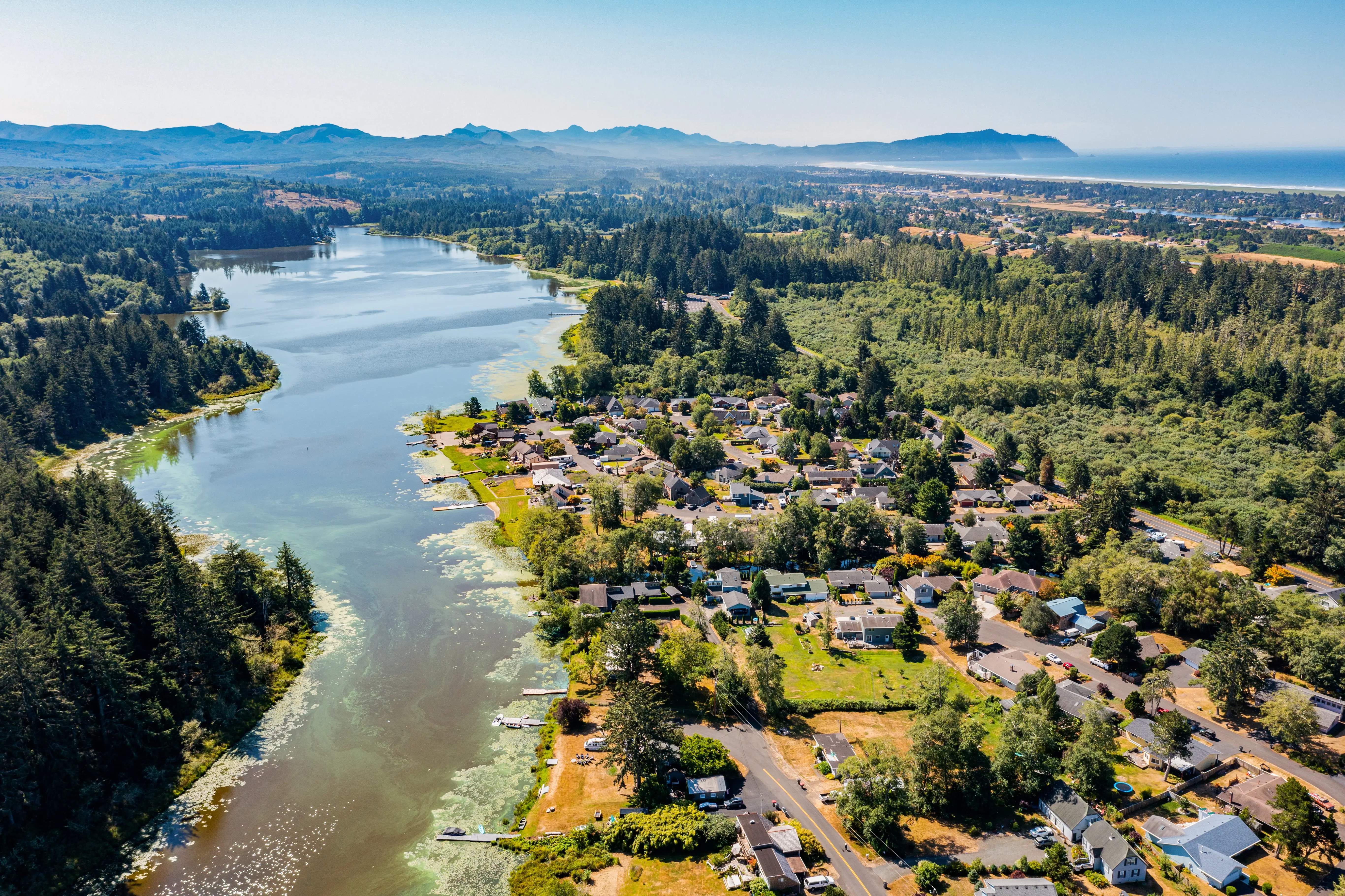
Warrenton's case for first-time buyers starts with price. Compared to Astoria, where older Victorian homes on the hill regularly list above $500,000, or Seaside, where coastal premiums push median prices well above Warrenton's, this city offers genuine value for buyers entering the market. The Warrenton-Hammond School District holds a B+ rating, the community is small enough that you actually know your neighborhood, and Fort Stevens State Park is essentially your backyard. For buyers who don't need a 30-minute commute to Portland — or who work remotely — the trade-offs are minimal.
What first-timers need to understand upfront is that the sub-$450,000 inventory in Warrenton skews toward older ranch-style homes, modest newer construction, and the occasional townhome. You're not going to find a turnkey 2,200-square-foot craftsman at $380,000. What you will find is honest, livable housing stock with low property taxes — approximately 0.60% annually — and room to build equity in a market that's currently tilted toward buyers. Neighborhoods like Candy Park and areas near Fort Stevens on the south side of the city tend to offer the best combination of condition, lot size, and realistic price for a first purchase.
| Price Range | What You Typically Find | Neighborhood Examples | Competition Level |
|---|---|---|---|
| Under $350K | Land, mobile homes, fixer-uppers, distressed properties | Scattered across city | Low — patient buyers only |
| $350K–$450K | 3-bed/2-bath ranches, updated single-level homes, some new townhomes | Candy Park, near downtown | Moderate — best first-time buyer window |
| $450K–$550K | Updated homes, newer builds, larger lots, some coastal proximity | Skipanon Peninsula, Hammond | Low-moderate |
| $550K–$650K | Newer construction, coastal views beginning, better finishes | Surf Pines area, DeLaura Beach | Low |
| $650K+ | Oceanfront access, premium coastal properties, new custom builds | Surf Pines, Del Rey Beach | Very low — highly specific buyers |
The $350,000–$450,000 band is where most first-time buyers in Warrenton will find their home, and it's a genuinely competitive price range in terms of what it delivers. Active listings in this window include brand-new townhomes with quartz countertops and open-concept layouts near downtown, three-bedroom single-level homes on wooded lots with gas fireplaces and LVP flooring, and updated ranches on corner lots close to schools and retailers. Assumable mortgages at rates well below current market have started appearing in this segment — worth asking your agent to flag any listings that carry that option.
The most important thing to understand about Warrenton's pricing is that the median sold price reflects a market with low transaction volume — only a handful of homes close each month — and a significant spread between list and sold. Buyers who anchor to list prices will feel sticker shock; buyers who focus on what homes are actually closing at will feel significantly better about their purchasing power here.
| Step | What Happens | Typical Timeline | What First-Timers Get Wrong |
|---|---|---|---|
| Get finances in order | Review credit, pay down debt, calculate DTI | 1–3 months before searching | Waiting until they find a house they love |
| Pre-approval | Submit docs to lender; get a real loan commitment letter | 3–7 days with a prepared lender | Settling for a pre-qualification, not a pre-approval |
| Find an agent | Interview agents with Clatsop County transaction history | Before active searching | Calling the listing agent directly on a property |
| Active search | Browse MLS, tour homes, understand pricing patterns | 2–8 weeks | Touring without a clear budget ceiling |
| Making offers | Write competitive offers with your agent | 1–5 days after finding the home | Anchoring offer to list price, not comparable sold prices |
| Under contract | Seller accepts; earnest money due (typically $2,000–$5,000 in Clatsop County) | Within 2–3 days of acceptance | Not having earnest money liquid and ready |
| Inspection | Licensed inspector reviews property; report in 24–48 hours | Within 7–10 days of acceptance | Skipping inspection to seem more competitive |
| Appraisal | Lender orders appraisal; takes 1–2 weeks in rural Oregon | Week 2–3 under contract | Not budgeting for a low appraisal gap |
| Final walkthrough | Verify home condition matches contract | Day before or morning of closing | Skipping this step entirely |
| Closing | Sign documents, fund loan, receive keys | Typically 30–45 days from acceptance | Being surprised by final cash-to-close figure |
Warrenton's market is currently slower-paced than the frenzied bidding environment of 2021–2023, which is genuinely good news for first-time buyers. Waiving inspections is not standard practice here, and you should not feel pressure to do so — the older housing stock in Warrenton includes 1970s-era ranches with deferred maintenance, and a $400–$500 inspection can save you from a $15,000 surprise. Earnest money in Clatsop County typically runs $2,000–$5,000 on a standard residential transaction, and sellers in the current market are rarely in a position to demand more.
Closing timelines on USDA or FHA loans can run slightly longer than conventional — budget 45 days to be safe. Warrenton's location in a designated rural county means USDA loan eligibility is real here, which opens a zero-down pathway that simply doesn't exist in most Oregon metro markets.

Looking to buy in Warrenton? Estimate your payment.
Enter your numbers to see an estimated monthly mortgage payment.
Estimate only. Excludes HOA fees and mortgage insurance.
A conventional loan requires a minimum 620 credit score, but the rate difference between a 650 and a 740 score on a $420,000 loan is meaningful — the difference in interest rate can translate to $150–$200 per month, which over 30 years is a significant number. If your score is in the mid-600s, it's worth spending 3–6 months improving it before locking a rate. FHA loans allow scores as low as 580 with 3.5% down, or 500–579 with 10% down, but they carry mortgage insurance that stays for the life of the loan unless you refinance out of it.
On income, the rough rule of thumb lenders use is that your total housing payment shouldn't exceed 28% of your gross monthly income. At a $400,000 purchase with 5% down, your payment (principal, interest, taxes, and insurance) runs approximately $2,600–$2,800 per month depending on your rate — meaning you'd want to show gross income of roughly $9,300–$10,000 per month, or about $112,000–$120,000 annually. At $450,000, that figure climbs to approximately $130,000. At $500,000, you're looking at $140,000+.
Your debt-to-income ratio — or DTI — is what lenders use to measure whether you can handle the mortgage alongside your existing obligations. DTI combines all your monthly debt payments (car, student loans, credit cards, the new mortgage) divided by gross monthly income. Most conventional programs want that total below 43–45%. If you have a $500 car payment and $300 in student loans, those directly reduce how much house you can qualify for. Understanding DTI before you start shopping saves a lot of painful conversations later.
Mistake 1: Treating list price as market price. The gap between what sellers ask and what homes actually close at in Warrenton runs wide right now. Buyers who anchor to list prices end up either overbidding on overpriced homes or feeling confused when their offers keep falling apart. Your agent should be pulling recent sold comparables — not active listings — to anchor your offer strategy.
Mistake 2: Skipping the inspection on older homes. A significant portion of Warrenton's housing stock was built in the 1970s and 1980s. Coastal humidity accelerates wear on roofing, crawl space moisture barriers, and siding. In neighborhoods like Hammond and Roosevelt where older homes are common, a professional inspection isn't a formality — it's the most important $450 you'll spend in the entire transaction.
Mistake 3: Shopping at the top of what you qualify for instead of what you're comfortable with. A lender may approve you for $480,000. That number reflects what you're mathematically eligible for, not what lets you sleep at night. Warrenton's low property tax rate helps keep carrying costs reasonable, but buyers who stretch to their qualification ceiling often find the monthly payment strains their actual lifestyle. Shop with a self-imposed ceiling $30,000–$50,000 below your max approval.
Mistake 4: Waiting for prices to drop further. Warrenton's market has already softened — prices are down year-over-year and homes are sitting longer. But buyers waiting for another meaningful leg down in a coastal Oregon town with limited buildable land and a fixed housing supply tend to wait longer than the market rewards. The buyers currently under contract in this market are capturing the soft conditions, not the buyers sitting on the sideline.
Mistake 5: Not understanding school district boundaries before making an offer. The Warrenton-Hammond School District boundary affects resale value and buyer pool for future sales. Homes that sit at the edge of the district — particularly near the Gearhart or Astoria borders — can be harder to resell to families with school-age children. Before making an offer, confirm the specific address maps to the school you expect.
Candy Park is consistently one of the most realistic entry points for first-time buyers in Warrenton. Located near Fort Stevens State Park on the south side of the city, the subdivision offers single-level homes that were built more recently than much of Warrenton's stock, with some properties featuring assumable low-rate mortgages that can materially lower your effective rate. The $350,000–$430,000 range is active here, and the neighborhood has a settled, residential feel without being isolated.
The area near downtown Warrenton — particularly streets within walking distance of NW Warrenton Drive — offers newer townhomes and updated ranches in the $360,000–$450,000 window. The walkability to shops and services is one of the few places in Warrenton where on-foot access to daily needs is genuinely convenient. New construction townhomes with modern finishes have appeared in this corridor, giving first-time buyers a lower-maintenance option without the premium of a waterfront address.
Hammond, on the north end of the Skipanon Peninsula adjacent to Fort Stevens, offers older homes at prices that reflect their age and condition. A patient buyer comfortable with a renovation project can find entries well below the city median here. The catch is that older coastal homes require careful inspection — moisture intrusion, aging systems, and deferred maintenance are common — so the lower price often comes with a real cost to bring the home up to standard. For first-timers who want move-in-ready, Hammond warrants caution. For those with contractor relationships and a renovation budget, it offers equity potential.
✅ Warrenton's $405,000 median sold price is among the most accessible on the Oregon Coast — and with homes sitting 184 days on average, buyers currently hold real negotiating leverage.
⚠️ Older housing stock means inspections aren't optional — coastal humidity accelerates wear on roofs, crawl spaces, and siding, and skipping this step on a 1970s ranch is the most expensive shortcut in this market.
📍 USDA zero-down loans are genuinely available in Warrenton — Clatsop County's rural designation makes this a real option that doesn't exist in most Oregon metro markets.
How much do I need to buy my first home in Warrenton?
At a $405,000 purchase price, a conventional loan with 5% down requires roughly $20,250 for the down payment plus closing costs of approximately $8,000–$12,000 — bringing total cash to close to around $28,000–$32,000. FHA reduces the down payment to 3.5% (about $14,175) but adds upfront mortgage insurance. USDA eliminates the down payment entirely for income-qualifying buyers, which can bring total cash to close down to just closing costs for those who qualify.
Is FHA financing a good option for first-time buyers in Warrenton?
FHA financing is a strong option for many first-time buyers in Warrenton, since it allows a lower down payment and more flexible credit requirements than most conventional loans. USDA financing may also be worth checking if your property and income are eligible, since it can eliminate the down payment entirely. A local lender can walk you through your specific numbers based on today's rates.
How long does it take to buy a home in Warrenton from start to close?
From the day you go under contract to the day you get keys, budget 30–45 days on a conventional loan and 45–60 days on FHA or USDA. The full process from "I'm starting to look" to closing typically runs 2–4 months for a prepared buyer — longer if your credit needs work or you're competing in a segment with thin inventory. Warrenton's current market is slow enough that you're unlikely to feel rushed, but pre-approval should happen before you tour a single home.
What is the difference between pre-qualification and pre-approval?
Pre-qualification is an estimate based on information you provide verbally or through a quick online form — it's not verified, not binding, and won't help you win an offer. Pre-approval means a lender has actually reviewed your tax returns, pay stubs, bank statements, and credit report and issued a conditional commitment to lend. In Warrenton's market, where inventory is limited and motivated buyers are moving quickly on well-priced homes, showing up with a pre-approval letter is the difference between being taken seriously and being ignored.
Explore the full Warrenton series: The Ultimate Warrenton Relocation Guide · Is Warrenton Safe? · Cost of Living in Warrenton · Best Neighborhoods in Warrenton · Warrenton Schools & Family Life · Warrenton Youth Sports · Warrenton Parks & Recreation · Retiring in Warrenton · 1031 Tax-Deferred Exchange in Warrenton · Warrenton First-Time Homebuyers Guide · Moving to Warrenton from California
Tell us what you need help with and we'll connect you with local resources.

About the Author
Todd Davidson is the founder of Living in Oregon and Living in Washington, where he publishes in-depth city guides, neighborhood resources, and local market insights covering more than 180 communities across the Pacific Northwest. While his background is in home financing and real estate, he created these digital platforms to help families research and compare regions before making a move.
Check Out the Oregon Coast Rankings: Oregon Coast Cost of Living — All 16 Cities Ranked · Best Places to Retire on the Oregon Coast · Best Oregon Coast Cities for Families · Best Oregon Coast Cities for Remote Workers · Oregon Coast Real Estate Market Report 2026 · Oregon Coast vs. Washington Coast