Oregon Coast · Oregon
1031 Exchange & Investment Real Estate in Warrenton (2026)
Not every investor reading this is a professional with a portfolio of doors. A significant slice of people doing 1031 exchanges right now are California homeowners who sold a primary residence, an inherited property, or a small rental — and are staring at a tax bill large enough to reshape their retirement. Warrenton, Oregon keeps surfacing in those conversations because the math is hard to ignore: a market where the median sold price sits at $405,000, rental supply is genuinely tight, and the Pacific Coast draws a consistent tenant base of workers, retirees, and short-term visitors. That combination is rare enough that it warrants a serious look before your 45-day identification window runs out.
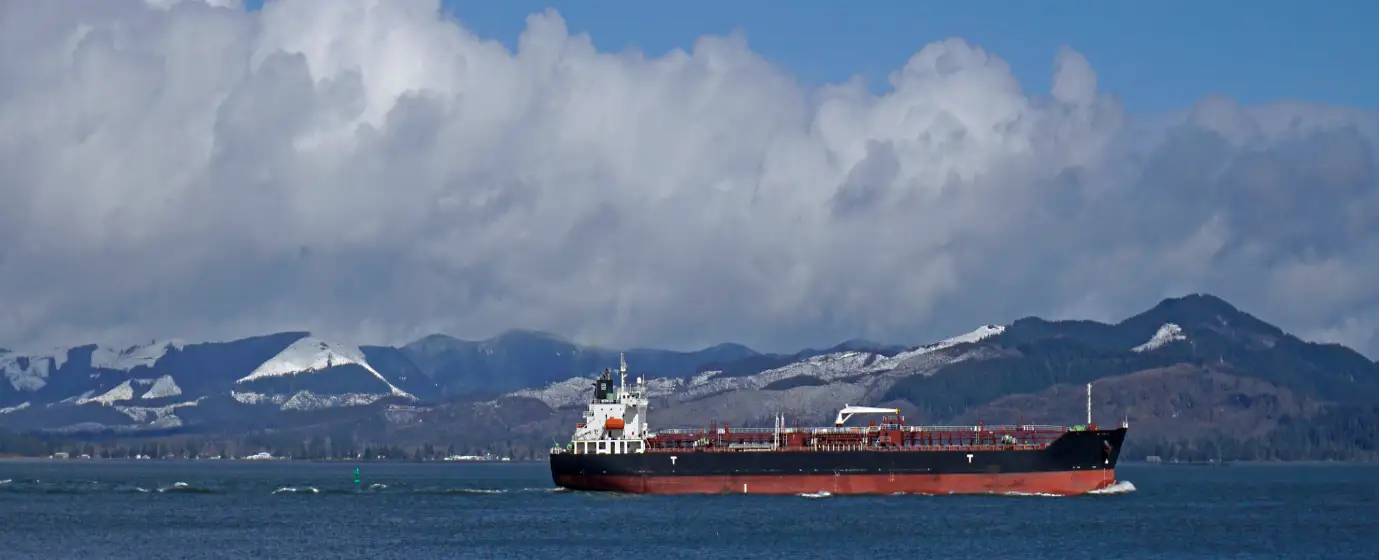
The rental market here is shaped by geography more than demographics. Warrenton sits at the mouth of the Columbia River, flanked by Fort Stevens State Park and a coastline that pulls tourism from the entire Pacific Northwest. Year-round tenants tend to be working households — employees at Costco, Fred Meyer, the school district, and the federal agencies with facilities in Clatsop County. Seasonal demand from short-term rental guests adds a second income layer that many long-term rental markets can't offer. Active rental listings on platforms like Zillow rarely exceed two or three units at any given time, which tells you something meaningful about supply-demand balance in a town of 6,300 people.
This guide covers 1031 exchange mechanics in plain English, what the Warrenton investment property market actually looks like in 2026, why California capital is moving up the coast, Oregon's tax profile for investors, the landlord-tenant realities you need to understand before closing, and a due diligence checklist built for buyers on an exchange deadline. If you're deciding whether Warrenton belongs on your replacement property shortlist, this is what you need to know.
The 45-day identification window is the rule that trips most people up. From the moment your relinquished property closes, you have exactly 45 calendar days to identify potential replacement properties in writing to your qualified intermediary — no extensions, no exceptions. Most investors identify three properties under the "three-property rule," which lets you name up to three candidates regardless of value, keeping your options open if one falls through. The 180-day closing deadline runs concurrently from the same relinquished-property closing date, not from the end of the 45-day window.
A qualified intermediary is non-negotiable. You cannot receive the sale proceeds personally — not even for a day. The QI holds the funds between the sale and the purchase, and if the money touches your account, the exchange is disqualified. The like-kind rule is more flexible than most people realize: "like-kind" means real property to real property. A California single-family rental qualifies as like-kind to an Oregon duplex, a commercial building, or raw land. Property type doesn't restrict the exchange — only the asset class does.
The boot trap catches investors who don't pay attention to the math. Boot is the taxable portion of an exchange — typically created when the replacement property's value or debt is lower than the relinquished property's. If you sell a $1.4M California rental and only deploy $900,000 into the replacement, the $500,000 difference becomes boot and triggers capital gains tax on that portion. To fully defer all taxes, the replacement property must equal or exceed the relinquished property's sale price, equity, and debt. Buying more than one replacement property — a duplex plus a single-family rental in Warrenton, for example — is a legitimate strategy to deploy the full amount.
The investment property market in Warrenton is small, illiquid, and surprisingly nuanced. The median sold price for residential properties sits at $405,000, with typical homes spending roughly 75–160 days on market depending on price point and condition. Single-family rentals dominate the transaction landscape, but small multifamily — duplexes and occasional fourplexes — surfaces regularly in Clatsop County listings, often trading in the $250,000–$570,000 range. Commercial investment properties are rare in a city this size, though the Highway 101 corridor near downtown does have some mixed-use and retail assets that occasionally trade.
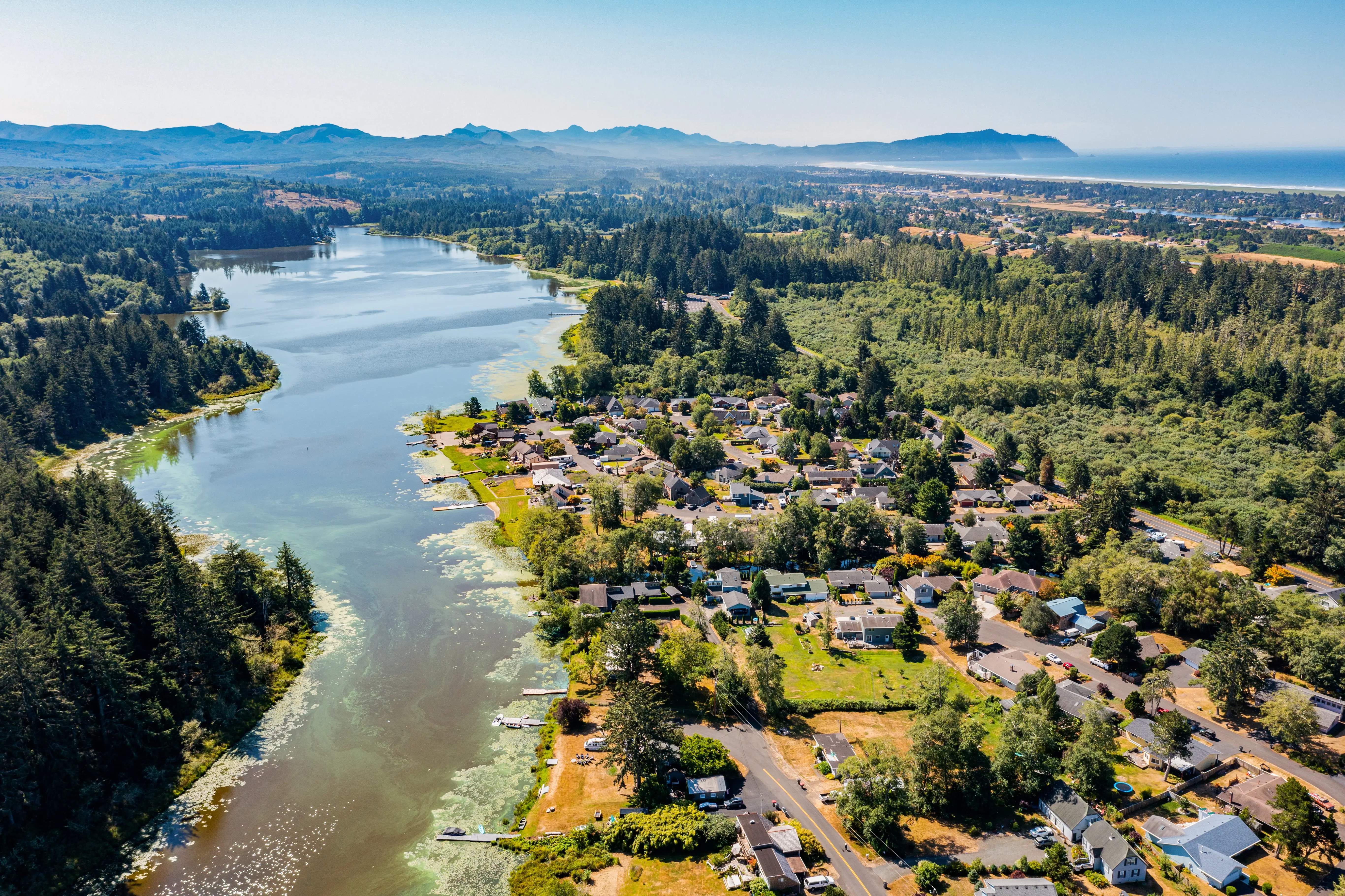
The short-term rental segment is where cap rate math improves meaningfully. With 59 active STR listings in Warrenton, AirROI data from late 2025 puts average annual STR revenue at approximately $52,000 on properties averaging a 42% occupancy rate and a $390 average daily rate. Against a $405,000 purchase price, that's a gross yield approaching 12% before expenses — a fundamentally different return profile than long-term rental alone. The catch is that STR performance varies significantly by proximity to Fort Stevens, the Peter Iredale shipwreck beach, and Coffenbury Lake, so location within Warrenton matters more for STR viability than it does for a traditional rental.
| Property Type | Typical Price Range | Est. Cap Rate | Avg Days to Close |
|---|---|---|---|
| Single-Family Rental (LTR) | $350,000–$500,000 | 2.5–4.5% | 75–100 days |
| Duplex / Small Multifamily | $250,000–$570,000 | 4.5–6.5% | 90–130 days |
| STR-Optimized SFR (coastal) | $380,000–$550,000 | 8–12% (gross) | 60–90 days |
| Commercial / Mixed-Use | $400,000–$900,000 | 5–8% | 90–150 days |
STR-optimized properties near Fort Stevens and the beach access points move the fastest. Long-term rental SFRs in standard residential neighborhoods tend to sit longer, especially above $450,000, where the price-to-rent ratio stretches well past 30x and LTR cash flow alone rarely pencils without significant equity.

The case for the Oregon Coast as a 1031 destination has been building for several years, and Warrenton specifically is drawing attention because of its price point and tourism infrastructure. The Pacific Northwest offers landlord-friendly zoning in many jurisdictions, no state sales tax on building materials, and replacement property values well below what California investors are selling. That gap creates genuine opportunity to deploy proceeds into multiple properties or significantly reduce leverage.
A Bay Area investor selling a $1.4M rental can realistically acquire a duplex and a single-family STR in Warrenton debt-free — full exchange value deployed, zero new mortgage payment, and two income streams. Multifamily in the $450,000–$570,000 range leaves room for a second acquisition near $350,000, with change to spare for reserves and closing costs. The psychological shift from Bay Area prices to Clatsop County prices tends to be significant; buyers often have trouble believing the numbers until they're walking properties.
Southern California investors — particularly those exiting San Diego, Orange County, or LA-area rentals in the $800,000–$1.2M range — are frequently looking for one clean replacement property with STR potential. Warrenton's coastal access and proximity to Fort Stevens State Park make it a legitimate STR market without the heavy regulation found in some Oregon coastal communities. A $405,000 coastal-adjacent SFR generating STR revenue in the $45,000–$55,000 range annually allows investors to cut their basis nearly in half while maintaining income.
Sacramento and Inland Empire investors are typically working with smaller exchange amounts — $400,000–$700,000 — which maps almost perfectly onto Warrenton's mid-range SFR and duplex inventory. These buyers tend to be more focused on cash flow than appreciation, and the honest answer is that Warrenton's LTR yields are modest unless combined with an STR strategy or purchased at the lower end of the price range. The duplex market in the $250,000–$350,000 range in Hammond is where the cash-flow math works best for this investor profile.
Looking to buy in Warrenton? Estimate your payment.
Enter your numbers to see an estimated monthly mortgage payment.
Estimate only. Excludes HOA fees and mortgage insurance.
Oregon's tax profile for real estate investors has genuine advantages — but requires clear-eyed understanding of the trade-offs.
The most immediately practical benefit for anyone buying a fixer or doing a rental rehab is Oregon's complete absence of a state sales tax. Every appliance, fixture, flooring roll, and contractor supply purchased in Oregon comes in at sticker price. For a $50,000 renovation budget, that's real money compared to California's 7.25–10.75% sales tax layer.
Oregon does tax rental income at state income tax rates, which run up to 9.9% at the top bracket. For most leveraged investment properties, depreciation and operating expense deductions offset the majority of net taxable rental income — but investors who own free-and-clear properties should factor Oregon's income tax rate into their net-yield projections. One often-overlooked element of 1031 exchanges specifically: the depreciation basis from your relinquished property carries into the replacement property. The clock doesn't reset on depreciation recapture, so your CPA's basis calculation needs to account for the exchange history.
| Tax Item | California | Oregon |
|---|---|---|
| State income tax on rental income | Up to 13.3% | Up to 9.9% |
| Property tax rate (new purchase) | ~1.1% Prop 13 reset | ~0.60% (Clatsop County) |
| State sales tax | 7.25–10.75% | 0% |
| Capital gains (deferred via 1031) | Deferred federally; CA taxes on sale | Deferred federally; OR taxes on future sale |
| Depreciation basis in exchange | Carries over | Carries over |
Clatsop County's effective property tax rate of approximately 0.60% is one of the most attractive features in this market for investors coming from California, where a newly purchased property resets under Prop 13 to roughly 1.1% of purchase price. On a $405,000 property, the Oregon investor pays approximately $2,430 annually in property taxes versus roughly $4,455 for a California buyer at the equivalent price. For passive investors who want to sidestep management entirely, a Delaware Statutory Trust (DST) qualifies as like-kind property under 1031 rules — allowing exchange proceeds to flow into a professionally managed institutional portfolio with no landlord responsibilities.
Oregon has strong tenant protections, and out-of-state investors who've owned property in more landlord-friendly states often get surprised by the legal landscape. Oregon law prohibits no-cause evictions for most tenants with more than 12 months of tenancy, requires cause for termination after the first year, and applies rent increase limitations in some larger jurisdictions — though Warrenton itself, as a city under 10,000 population, is generally not subject to statewide rent control provisions that apply to larger markets. Still, the eviction process in Oregon is deliberate and slow by national standards, so tenant screening is not optional.
Local property management in the Warrenton area is available through Clatsop County-based firms, with Sowins Property Management frequently mentioned as a local option. Typical management fees run 8–10% of gross monthly rent for standard LTR management, with separate fees for leasing, maintenance coordination, and owner reporting. For STR management, fee structures are different — typically 20–30% of gross revenue — but the income upside justifies the cost for well-located coastal properties. What out-of-state owners consistently underestimate is the coordination required for coastal property maintenance: salt air accelerates exterior wear, storm-driven debris requires regular clearing, and vacancy between LTR tenants can coincide with peak season if timing isn't managed carefully.
Rental supply in Warrenton is genuinely constrained. With only two to three active rental listings on major platforms at any given time and a market of several thousand households, vacancy for a well-priced, well-maintained unit runs well below Oregon's statewide 7.6% average. For investors, that supply scarcity is a floor under rents — but it also means tenant quality matters more, since the cost of a difficult tenancy in a thin market is proportionally higher than in a liquid urban market.
| Item | What to Verify | Local Resource |
|---|---|---|
| Title search | Clean title, no liens, encumbrances, or easements | Local title company (First American, Fidelity National) |
| Sewer vs. septic | Many coastal properties are on septic — confirm system age and last pump date | Clatsop County Environmental Health |
| Radon testing | Oregon coastal zones have elevated radon risk in some areas | Oregon Health Authority radon program |
| Flood zone status | FEMA flood map check — coastal and estuary-adjacent properties may require flood insurance | FEMA Flood Map Service Center (msc.fema.gov) |
| Rental permit requirements | Confirm whether Warrenton requires STR business license or permit | City of Warrenton Planning Dept |
| HOA rental restrictions | Some planned communities restrict STR or long-term leasing | HOA CC&Rs and governing documents |
| ADU / zoning potential | Check R1/R2 zoning for ADU conversion — can substantially improve income | Clatsop County GIS / City of Warrenton Planning |
| School district confirmation | Warrenton-Hammond SD #30 boundary — affects tenant family pool | Oregon Department of Education school locator |
| Current lease status | Verify lease terms, rent amount, security deposit held, and tenant notice requirements | Lease documents + Oregon landlord-tenant law |
| Deferred maintenance inspection | Full inspection including roof, HVAC, foundation, and coastal exterior wear | Licensed Oregon home inspector |
| Property management referral | Confirm management company availability before closing | Sowins Property Management or local referrals |
| Salt air / weather exposure | Exterior condition audit specific to coastal properties — paint, siding, decking | Inspection report + local contractor estimate |
| 45-day identification compliance | Confirm written identification was submitted to QI on time | Your qualified intermediary |
| Exchange proceeds documentation | Confirm QI holds full exchange funds before closing on replacement | QI wire confirmation |
| Title company coordination | Confirm title company has handled 1031 exchange closings before | Ask explicitly — not all have QI coordination experience |
Local Expert Takeaway: The single most common mistake California investors make in Warrenton is treating it as a cash-flow market and running LTR numbers at $1,200/month against a $405,000 purchase price — that math produces a price-to-rent ratio near 30x, which means you're buying an appreciation and lifestyle asset, not a cash-flow engine. The investors who make this market work are either combining STR income from a coastal-adjacent property, buying small multifamily below $350,000 to improve the yield equation, or buying debt-free with exchange proceeds so carrying costs are minimal. Know which strategy you're executing before your 45-day window opens.
If you're identifying replacement properties on a 1031 clock, the worst position to be in is finding the right property in Warrenton and then discovering your financing isn't lined up. DSCR loans — which qualify based on the property's rental income rather than your personal debt-to-income ratio — are a strong option for exchange buyers who want to preserve liquidity or keep investment debt off personal financials. Todd can connect you with lenders who specialize in DSCR and 1031-adjacent financing on the Oregon Coast, and getting that conversation started before your relinquished property closes is what separates a smooth exchange from a stressful one.
✅ Warrenton's $405,000 median sold price allows California investors to deploy full exchange proceeds from mid-range sales into multiple properties — reducing leverage while maintaining income diversification across LTR and STR strategies.
⚠️ The LTR yield alone is modest — a price-to-rent ratio near 30x means standard long-term rental returns are thin without STR income, debt-free ownership, or value-add strategy. Don't enter this market expecting Portland-level cash flow.
📍 The 45-day window is unforgiving in a thin market — with only 10–16 sales per month across the entire city, investors need to begin property research before the relinquished property closes, not after.
Are there 1031-eligible properties under $500K in Warrenton?
Yes — the majority of Warrenton's investment-grade inventory trades below $500,000. Single-family rentals typically price between $350,000 and $480,000, and duplexes in the Warrenton-Hammond area range from roughly $250,000 to $475,000. The limited transaction volume means competition can emerge quickly for well-priced properties, so having financing or cash verification ready before you identify is essential.
What is the cap rate on rental property in Warrenton?
Long-term rental SFRs in Warrenton typically produce net cap rates in the 2.5–4.5% range, based on current rents and purchase prices. Small multifamily improves that picture to roughly 4.5–6.5%. The most compelling returns come from STR-optimized coastal properties, where gross yields can reach 8–12% for well-located, well-managed units near Fort Stevens and the beach access corridors — though STR cap rates carry more operational variability than LTR.
What is DSCR lending and can I use it for a 1031 replacement property?
DSCR (Debt Service Coverage Ratio) lending qualifies a loan based on whether the property's projected rental income covers the mortgage payment — typically requiring a ratio of 1.0–1.25x coverage — rather than the borrower's personal income or DTI. It's particularly useful for 1031 exchange buyers who are self-employed, retired, or already carrying investment debt. DSCR loans are fully compatible with 1031 exchange closings and can often close faster than conventional investment loans, which matters when you're working against an exchange deadline.
Explore the full Warrenton series: The Ultimate Warrenton Relocation Guide · Is Warrenton Safe? · Cost of Living in Warrenton · Best Neighborhoods in Warrenton · Warrenton Schools & Family Life · Warrenton Youth Sports · Warrenton Parks & Recreation · Retiring in Warrenton · 1031 Tax-Deferred Exchange in Warrenton · Warrenton First-Time Homebuyers Guide · Moving to Warrenton from California
Tell us what you need help with and we'll connect you with local resources.

About the Author
Todd Davidson is the founder of Living in Oregon and Living in Washington, where he publishes in-depth city guides, neighborhood resources, and local market insights covering more than 180 communities across the Pacific Northwest. While his background is in home financing and real estate, he created these digital platforms to help families research and compare regions before making a move.
Check Out the Oregon Coast Rankings: Oregon Coast Cost of Living — All 16 Cities Ranked · Best Places to Retire on the Oregon Coast · Best Oregon Coast Cities for Families · Best Oregon Coast Cities for Remote Workers · Oregon Coast Real Estate Market Report 2026 · Oregon Coast vs. Washington Coast