
Oregon Coast · Oregon
Moving to Warrenton from California: The Honest Comparison (2026)
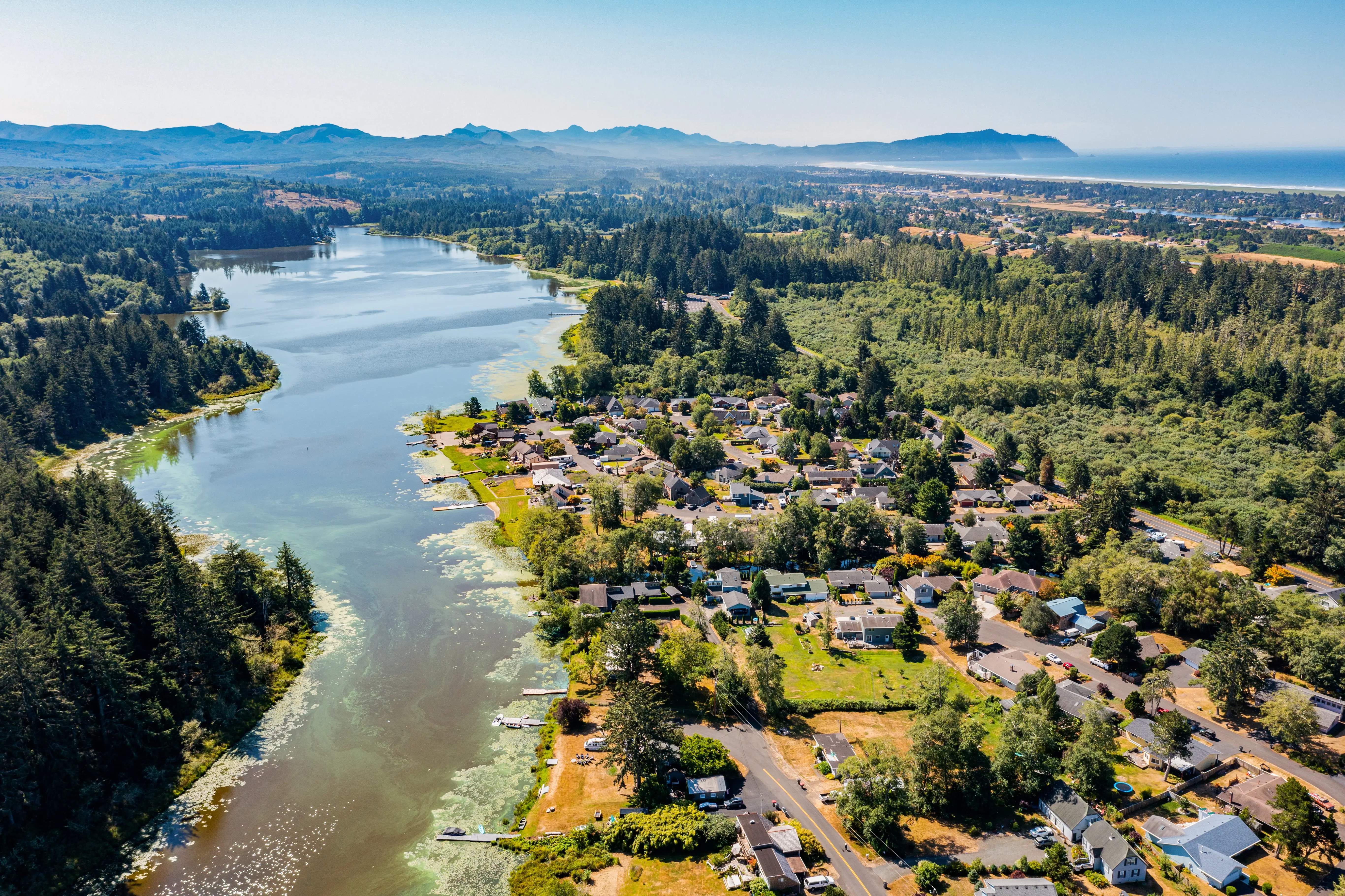
The Bay Area software engineer who finally went remote didn't move to Portland. He bought a three-bedroom house on the Oregon Coast with a yard, a garage, and an unobstructed view of the Pacific — for less than the down payment on a two-bedroom condo in Walnut Creek. The Sacramento family who kept watching their rent climb past what their parents paid for a house stopped waiting and made an offer on a place in Warrenton with a fireplace and a covered porch. The San Diego couple who dreaded their summer electric bill now goes kayaking at Coffenbury Lake on weekday mornings. These aren't hypothetical transplants. They're the pattern that repeats itself in Warrenton, a small coastal city at the mouth of the Columbia River where California equity goes further than almost anywhere else in the Pacific Northwest.
The honest part of this guide is the part most relocation content skips. Warrenton is not California. It is not a California city with Oregon license plates. The winters are gray in a way that surprises people who thought "Pacific Northwest rain" meant Seattle drizzle — Warrenton sees rain roughly 191 days a year and only about 126 sunny days annually. The restaurant scene is small. The pace is genuinely slow. Cultural events and nightlife that California transplants assume are everywhere simply do not exist here in the same form. People who love it really love it. People who expected a coastal California lifestyle with lower taxes typically don't stay.
This guide covers the full picture: what leaving California actually costs and saves you depending on which region you're coming from, what your California home equity realistically buys in Warrenton's market, the real tax comparison, the lifestyle and weather shift in honest terms, and an interactive tool to compare your specific California city directly to Warrenton. If you're serious about this move, read all of it before you make an offer.
| Warrenton, Oregon | Bay Area | Southern CA | Sacramento Metro | Central Valley | |
|---|---|---|---|---|---|
| Median Home Price (approx. 2026) | $405,000 | $1.3M–$1.8M+ | $850,000–$950,000 | $450,000–$500,000 | $320,000–$380,000 |
| Property Tax Rate (effective) | ~0.60% | ~1.1–1.2% | ~1.1–1.2% | ~1.1–1.2% | ~1.1–1.2% |
| State Income Tax (top bracket) | 9.9% | 13.3% | 13.3% | 13.3% | 13.3% |
| State Sales Tax | None | 7.25–10.75% | 7.25–10.75% | 7.25–8.75% | 7.25–8.75% |
| Avg Utilities (monthly est.) | ~$175–$210 | ~$220–$290 | ~$240–$320 | ~$200–$260 | ~$190–$250 |
| Avg 1BR Rent | ~$1,200–$1,600 | ~$2,800–$3,500 | ~$2,400–$3,200 | ~$1,500–$1,900 | ~$1,100–$1,400 |
A Bay Area seller who clears $1.4 million in equity and buys in Warrenton at the $405,000 median isn't just trading down in price — they're potentially eliminating a mortgage entirely and banking seven figures in liquid capital. Even at Warrenton's upper tier in the Surf Pines neighborhood, where oceanfront and premium properties run $800,000 to nearly $5 million, a buyer with Bay Area equity is often purchasing without a lender involved at all. That changes the calculus on everything from offer competitiveness to monthly cash flow.
For Southern California buyers leaving markets like Irvine, Pasadena, or coastal San Diego, the savings are significant but the math is slightly different. A buyer exiting a $900,000 San Diego home with $600,000 in equity can buy Warrenton's median-priced home with a large down payment and a conventional loan at a payment that bears no resemblance to what they left behind. The zero-sales-tax reality in Oregon also compounds over time — a household spending $60,000 annually on taxable goods and services saves roughly $4,300 to $6,500 per year depending on their California county's combined rate.
Oregon does not have zero income tax. That assumption catches California transplants off guard — particularly remote workers who assume any move out of California means escaping the income tax burden entirely. Oregon's top bracket sits at 9.9%, applied to income over roughly $250,000. That figure is still meaningfully lower than California's 13.3% top rate, but for a household earning $150,000 annually, the Oregon rate still results in a substantial state tax obligation. The directional savings are real — they're just not the full relief some buyers anticipate.
Where Oregon delivers unambiguously is on sales tax and property taxes. The state has no sales tax at all — California's combined state and local rates range from 7.25% to nearly 11% depending on the county, meaning the Oregon advantage is felt every month at the grocery store, the hardware store, and the dealership. Oregon's Measure 50 also caps assessed value increases at 3% per year after purchase, which means a Warrenton homeowner who buys at $405,000 today is protected from dramatic reassessment spikes as coastal values appreciate — a structural advantage that compounds significantly over a 10- or 20-year ownership horizon.
| Tax Item | California | Oregon | Net Impact |
|---|---|---|---|
| Top State Income Tax Rate | 13.3% | 9.9% | Oregon saves ~3.4 pts at top bracket |
| Sales Tax | 7.25–10.75% | 0% | Full elimination in Oregon |
| Property Tax Rate (effective) | ~1.1–1.2% | ~0.60% | Oregon roughly half the annual bill |
| Property Tax Assessment Cap | Prop 13 (1% base + adjustments) | Measure 50 (3%/yr cap) | Both protect long-term owners |
| Capital Gains (state) | Up to 13.3% | Up to 9.9% | Oregon lower, not zero |
| Senior Property Tax Deferral | Limited programs | Available at age 62+ | Oregon offers broader deferral option |
For a household carrying a $1 million California property at a 1.1% effective tax rate, the annual property tax bill is roughly $11,000. The same household buying a $405,000 Warrenton home at 0.60% pays approximately $2,430 per year — a reduction of over $8,500 annually, every year, not counting the savings on a lower mortgage or all-cash purchase. The income tax reduction adds further savings for most middle-to-high earners, though the margin narrows compared to states like Washington or Nevada that have no income tax at all.
A buyer leaving Walnut Creek, Palo Alto, or San Jose with $1.4 million in equity can purchase Warrenton's median-priced home outright in cash and still retain nearly $1 million in liquid capital. At that equity level, the conversation isn't about what you can afford — it's about what you want. The Surf Pines neighborhood on Warrenton's northern coastline is where Bay Area equity finds its best local expression: oceanfront and near-ocean properties ranging from $800,000 to nearly $5 million, with custom homes, private beach access, and a permanent resident community that skews toward retirees and remote professionals. Buyers with $1.5M to $1.8M in equity can purchase a premium Surf Pines property in cash and still hold a substantial financial reserve.
For Bay Area buyers who aren't drawn to the premium tier, the same equity can fund a standard Warrenton purchase at $405,000 with cash to deploy in Oregon or elsewhere — rental property, a second coastal lot, or simply a dramatically smaller monthly overhead than they've known for years.
A buyer leaving Irvine, Pasadena, or Carlsbad with $800,000 in equity arrives at the top of Warrenton's conventional market. Properties in the $450,000 to $650,000 range — updated single-family homes in Sunset Beach, Flavel, or the Juniper Ridge area — represent the top 20% of the local market and include features that would run $1.3 million or more in most SoCal submarkets. With equity in this range, most Southern California buyers can purchase comfortably with 30–40% down and carry a mortgage payment that is a fraction of what they were paying in rent or on a California loan.
The Skipanon Peninsula area and the DeLaura Beach corridor also offer well-maintained single-family homes in the $400,000–$550,000 range that Southern California buyers find appealing for the estuary and water access without paying oceanfront premiums.
Sacramento buyers face the closest relative comparison — the city-wide medians aren't dramatically different on paper, but the per-square-foot value in Warrenton shifts significantly in the buyer's favor. A Sacramento buyer exiting a $500,000 home with $350,000 in equity can purchase Warrenton's median-priced property with 50–60% down, a conventional loan on the remainder, and a monthly payment that eliminates the income tax and sales tax burden they were carrying in California. For Inland Empire buyers leaving Riverside or Ontario, homes that were priced out of their realistic range in California become straightforward purchases here.
The no-sales-tax advantage particularly benefits households in this equity tier — it's not just a theoretical saving. A family spending $70,000 annually on taxable goods and services keeps an extra $5,000 to $6,000 per year that was going to Sacramento's or Riverside County's combined tax rate. Over five years, that compounds into real money.
Fresno and Bakersfield buyers are often surprised to find that Warrenton at $405,000 is still within reach — particularly manufactured homes, condos, and smaller lots that can be found in the $280,000 to $370,000 range. The Hammond neighborhood and parts of Carnahan represent the most accessible entry points in the Warrenton-adjacent market for buyers in this equity tier. The relative financial advantage is modest compared to the Bay Area math, but the lifestyle shift — trading Central Valley heat and air quality for a coastal climate with no sales tax and a lower income tax rate — is the primary motivator for many buyers in this group.

Looking to buy in Warrenton? Estimate your payment.
Enter your numbers to see an estimated monthly mortgage payment.
Estimate only. Excludes HOA fees and mortgage insurance.
Nobody who spends 12 years in San Diego is fully prepared for Warrenton's October. The marine west coast climate here is categorically different from any California origin market — not colder in the dramatic way of Bend or the Cascades, but relentlessly gray in a way that is uniquely coastal Oregon. Warrenton sees roughly 191 rainy days per year compared to San Francisco's 71 and Los Angeles's 34. Sacramento gets over 3,600 sunshine hours annually; Warrenton logs approximately 2,154. December drops to about 2.3 hours of sun per day on average. That is not a typo. Californians who have spent a lifetime in places where going outside in January means grabbing a light jacket face a genuinely significant psychological adjustment in their first Oregon winter.
What most California transplants don't expect is how good the summers actually are. July and August in Warrenton are mild, green, and legitimately beautiful — daytime highs in the upper 60s to low 70s, low humidity, and access to Fort Stevens State Park, the Peter Iredale shipwreck, Sunset Beach, and the Warrenton Waterfront Trail without fighting crowds. The traffic that makes summer in Marin County or coastal San Diego feel like a slog simply doesn't exist here at the same scale. After year one, transplants from Sacramento and the Bay Area consistently cite the summer quality of life as the thing that makes the winter worth it. The pace of daily life, the ability to get somewhere without 40 minutes on a freeway, and the yard they couldn't afford in California factor heavily into why people stay.
What they miss is real and worth naming honestly. The restaurant scene in Warrenton is small — dependably good seafood and a handful of local spots, but nothing approaching the culinary depth of San Francisco, San Diego, or even Sacramento's midtown scene. Year-round beach access in California means warm water and sunshine; Warrenton's beach is wild and dramatic, but it is not a swimming beach in any season. Social energy is quieter here. The city's population is around 6,300, which means the spontaneity of a large California metro — the Friday night options, the live music circuit, the diversity of cultural events — requires a 20-minute drive to Astoria or longer for anything larger. Buyers who need urban stimulation regularly should plan honestly for that gap.
If you want to see how Warrenton compares directly to the city you're leaving, use the tool below — it covers the 120 largest California cities with current housing and tax data.
Home prices: Redfin median sale data, Q1–Q2 2026. Select your city to compare.
Ready to talk through what your specific California equity could do in Warrenton? Todd can model your exact scenario in a single call.
Assuming the whole market is one price point. The Warrenton market has a wider spread than buyers realize until they start looking seriously. Active listings range from under $100,000 for manufactured homes to nearly $5 million for premium Surf Pines oceanfront. The $405,000 median sold price reflects genuine mid-market activity, but buyers who drive up Highway 101 and look at Surf Pines listings first sometimes conclude the market is out of reach — and buyers who only search online listings see elevated list prices skewed by premium inventory sitting longer on market. The entry-level product and the standard SFR market are genuinely different from the coastal luxury tier, and navigating that gap requires local knowledge.
Not accounting for Oregon's radon reality. Oregon is classified as a high-radon state by the EPA, and Clatsop County properties are no exception. California transplants who have never encountered radon testing in a real estate transaction sometimes skip this step or treat it as a formality. It is not. Request radon testing as part of your inspection process on any Warrenton property — mitigation systems are inexpensive if needed, but discovering a problem after closing is not a California experience most buyers are prepared for.
Underestimating how different winter outdoor access actually is. California buyers who are active hikers, cyclists, and beach walkers often plan their Warrenton lifestyle around summer-level outdoor access year-round. Fort Stevens State Park and the area trails are beautiful and genuinely accessible in winter — but rain gear, mud, and shortened daylight hours change the logistics of outdoor recreation between October and March in ways that a San Diego lifestyle doesn't prepare you for. This is not a reason not to move here. It is a reason to adjust the mental model before you arrive.
Expecting California-speed permit and construction timelines. Buyers who sell a California property at a substantial gain and plan to build new or substantially renovate in Warrenton frequently underestimate local contractor availability and permit lead times. Clatsop County has a smaller contractor base than any California metro, and coastal building restrictions add layers to any construction project near the shoreline. Buyers who plan to renovate should build realistic lead times — often 12 to 24 months for major work — into their financial planning.
Bay Area sellers with large equity are often best served by an all-cash offer or an extremely low loan-to-value conventional structure. At Warrenton's $405,000 median, a buyer with $1 million or more in equity has no meaningful need for a jumbo product — the entire purchase price falls well below conventional loan limits. Speed and certainty of close matter more than rate optimization at this equity level. For buyers who liquidated a California investment property rather than a primary residence, a 1031 exchange into a Warrenton rental property is worth exploring before closing — the Warrenton 1031 Exchange guide covers the mechanics and timelines in full.
Southern California sellers arriving with $600,000 to $900,000 in equity are firmly in conventional territory for most Warrenton purchases. A 30–40% down payment on the median-priced home leaves a conventional loan balance that most lenders can close efficiently without jumbo products. The priority at this equity tier is confirming Oregon-specific title and escrow timelines, which differ from California's standard process.
Sacramento and Inland Empire buyers with $350,000 to $500,000 in equity are often able to buy Warrenton properties under $350,000 outright, well below the area's $405,000 median, which sidesteps financing and qualification questions entirely for that slice of the market.
Local Expert Takeaway: The single most important thing California buyers underestimate about Warrenton is the combination of a slow average days-on-market figure and a fast-moving core market. The 162-day average is a real number — but it reflects overpriced or condition-challenged listings sitting, not what happens to correctly priced homes. Bay Area and Southern California buyers who arrive with cash or pre-approval, target the $380,000–$550,000 SFR range in Sunset Beach, Flavel, or Skipanon Peninsula, and move within 72 hours of seeing the right property consistently beat out buyers who are still arranging financing. Get your proof of funds or pre-approval before you board the plane north.
✅ California equity travels extremely well to Warrenton — Bay Area and Southern California sellers can purchase at or near the $405,000 median with cash and still retain significant capital, and Oregon's zero sales tax and lower property tax rate change the long-term cost picture significantly.
⚠️ Oregon has a state income tax — the 9.9% top bracket is lower than California's 13.3%, but transplants assuming zero income tax will be surprised. The savings are real but directional, not total.
📍 The lifestyle gap is real and worth planning for — roughly 191 rainy days per year, a small restaurant scene, and a quiet pace are features to some buyers and dealbreakers to others. The summers are genuinely exceptional; the winters require adjustment.
Is moving from California to Warrenton worth it financially?
For most California origin markets, yes — but the degree varies. A buyer leaving the Bay Area with $1.4 million in equity can purchase Warrenton's median-priced home in cash and eliminate a mortgage entirely, which is a structural financial shift that compounds across every subsequent year. Sacramento buyers face a closer comparison, but the elimination of California's sales tax, the lower effective property tax rate of approximately 0.60% versus California's typical 1.1–1.2%, and the reduction in income tax rate from 13.3% to Oregon's 9.9% top bracket still represent meaningful annual savings. The financial case is strongest for Bay Area and Southern California sellers — and still compelling for Sacramento buyers who plan to stay long-term.
How does Oregon property tax compare to California's Proposition 13?
Both states limit assessment increases — California's Prop 13 caps the base rate at 1% of purchase price with limited annual adjustments, while Oregon's Measure 50 caps assessed value increases at 3% per year after purchase. Oregon's effective rate in Warrenton at approximately 0.60% is roughly half the effective rate most California homeowners pay, even accounting for Prop 13 protections. Long-term owners in both states benefit from the assessment caps, but Warrenton's lower base rate means the annual bill is significantly lower from the date of purchase forward.
What neighborhoods in Warrenton are most popular with California transplants?
Buyers arriving from the Bay Area and coastal Southern California tend to gravitate toward Surf Pines for oceanfront access and custom home stock, and toward Sunset Beach and Skipanon Peninsula for well-maintained single-family homes at the $400,000–$550,000 range. Sacramento and Inland Empire buyers more commonly land in Flavel, Juniper Ridge, or the Carnahan area, where standard SFR product is available in the $350,000–$480,000 range with full lots and garages. Hammond attracts buyers looking for the most modest price entry points and a quiet, water-adjacent setting adjacent to Warrenton proper.
Explore the full Warrenton series: The Ultimate Warrenton Relocation Guide · Is Warrenton Safe? · Cost of Living in Warrenton · Best Neighborhoods in Warrenton · Warrenton Schools & Family Life · Warrenton Youth Sports · Warrenton Parks & Recreation · Retiring in Warrenton · 1031 Tax-Deferred Exchange in Warrenton · Warrenton First-Time Homebuyers Guide · Moving to Warrenton from California
Tell us what you need help with and we'll connect you with local resources.

About the Author
Todd Davidson is the founder of Living in Oregon and Living in Washington, where he publishes in-depth city guides, neighborhood resources, and local market insights covering more than 180 communities across the Pacific Northwest. While his background is in home financing and real estate, he created these digital platforms to help families research and compare regions before making a move.
Check Out the Oregon Coast Rankings: Oregon Coast Cost of Living — All 16 Cities Ranked · Best Places to Retire on the Oregon Coast · Best Oregon Coast Cities for Families · Best Oregon Coast Cities for Remote Workers · Oregon Coast Real Estate Market Report 2026 · Oregon Coast vs. Washington Coast