
Oregon Coast · Oregon
1031 Exchange & Investment Real Estate in Seaside (2026)
Most people reading this aren't full-time real estate investors. They're California homeowners who finally sold — maybe a Bay Area rental they held for 20 years, maybe a Southern California primary residence they decided to convert — and now they're sitting on a meaningful gain they don't want to hand over to the IRS. A 1031 exchange into a less expensive, landlord-friendlier market is the move, and Seaside, Oregon keeps coming up in those conversations. With a median home price near $440,000, a near-zero rental vacancy rate, and a short-term rental market generating north of $37,000 in average annual revenue, the numbers are hard to ignore.
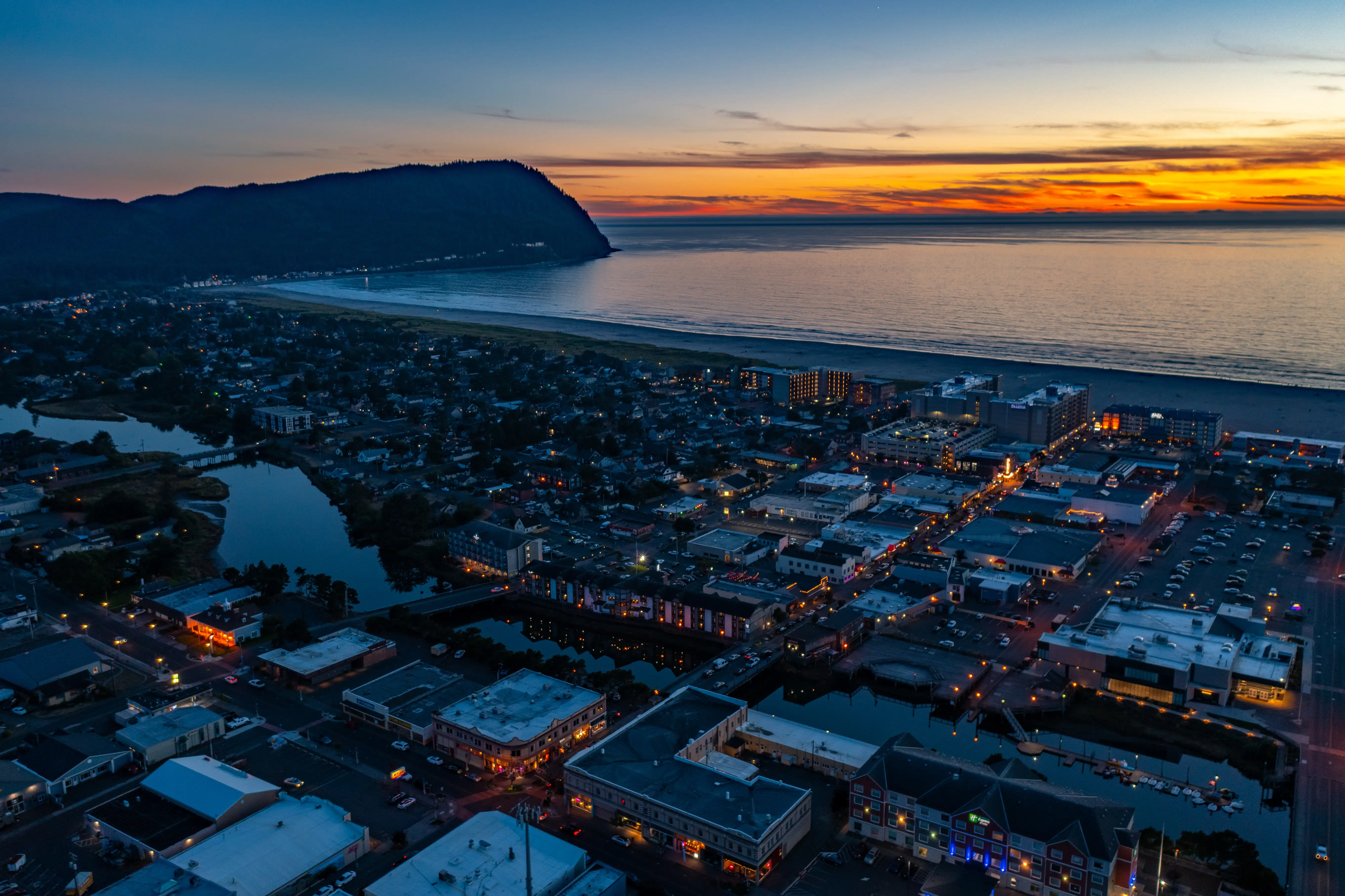
Seaside's rental demand is durable for a specific reason: it's Oregon's most visited coastal city, a 91-minute drive from Portland, and the only place on the Oregon Coast with a mix of year-round residents, seasonal workers, and a steady stream of beachgoers who need somewhere to stay. The properties that trade most often as investment vehicles are single-family homes in the $400,000–$600,000 range, older duplexes near downtown, and the occasional condo along the Promenade — all within reach of a California 1031 buyer who's deploying $500,000 to $1.5 million in proceeds.
This guide walks through 1031 mechanics, what the Seaside investment market actually looks like in 2026, why California capital is flowing to the Oregon Coast, how Oregon's tax structure affects rental income, the management reality for out-of-state owners, and a due diligence checklist built specifically for buyers on a 45-day clock.

The core mechanic is straightforward: sell a qualifying investment property, park the proceeds with a qualified intermediary (QI) before you ever touch the money, then identify a replacement property within 45 days of closing and complete the purchase within 180 days. The QI requirement is non-negotiable — if the proceeds hit your personal account for even a day, the exchange fails and the gain becomes taxable immediately.
The 45-day identification window is where most investors feel the pressure. You must submit written identification of your replacement property (up to three properties under the three-property rule, or more under specific value rules) to the QI within 45 calendar days — no extensions, no exceptions for weekends or holidays. In a slow coastal market with 88–134 days of average time-on-market, this means you need to have Seaside properties under contract or seriously in escrow before your relinquished property closes, not after.
Like-kind is broader than most people think. All real property qualifies — a rental house, a duplex, raw land, a commercial building, even a Delaware Statutory Trust interest. The only thing that doesn't qualify: personal-use property (your primary residence) and property outside the United States. The boot trap catches buyers who either don't trade up in value or take back cash at closing — any excess proceeds not reinvested become taxable, so matching or exceeding your net sale price is the target.
Seaside is currently a buyer's market by most measures — inventory has grown, days on market have extended, and sellers are more negotiable than they were in 2021 or 2022. That's actually a gift for a 1031 buyer on a hard deadline, because competition for investment-grade properties is thinner than it would be in a hot market. The properties moving fastest are well-maintained 3- and 4-bedroom single-family homes, which have seen 12–14% appreciation in median price per square foot even as the broader market softened. One- and two-bedroom units — the classic STR play — have faced softer pricing, down in some cases, which creates entry-level opportunity if you're comfortable with the STR management model.
Long-term rental cap rates in Seaside run in the 2.0%–3.5% range on most conventional listings — compressed, as you'd expect in any coastal vacation market where price appreciation and STR upside are factored into what buyers will pay. Short-term rental cap rates tell a different story: the highest-performing STR properties are posting cap rates of 7.5%–8.5% based on verified STR revenue data. The gap between those two figures is the essential Seaside investment question — are you underwriting a long-term rental or a short-term one?
| Property Type | Typical Price Range | Est. Cap Rate | Avg Days to Close |
|---|---|---|---|
| SFR (3–4 BR, long-term rental) | $420,000–$600,000 | 2.5%–3.5% | 45–60 days |
| SFR (oceanview/Promenade area, STR) | $700,000–$1,200,000+ | 5.0%–8.5% | 60–90 days |
| Duplex / small multifamily | $475,000–$750,000 | 3.0%–4.5% | 50–75 days |
| Inland SFR (Seaside East, Wahanna) | $350,000–$475,000 | 2.0%–3.0% | 30–50 days |
| Commercial / mixed-use (Broadway corridor) | $500,000–$1,500,000 | 4.5%–6.5% | 75–120 days |
The inland residential segments — Seaside East, Wahanna, Seaside Heights — move fastest because they're in the price range where local buyers compete. Oceanfront and Promenade properties take longer to close but carry significantly higher STR revenue potential.

The math is blunt: California's median home prices mean that many sellers are sitting on gains of $600,000 to $1.2 million even after accounting for selling costs. Oregon's coast offers a reset — the same dollars that bought a two-bedroom Bay Area condo can buy two income-producing properties on the Oregon Coast outright.
A Bay Area investor selling a rental that cleared $1.4 million in net proceeds can realistically acquire a Promenade-adjacent condo or SFR and a lower-cost inland rental — both debt-free — and still stay within 1031 value requirements. That kind of buying power doesn't exist in most California replacement markets. Seaside's coastal appeal also functions as a built-in exit strategy: properties here attract both investors and lifestyle buyers, which supports long-term resale liquidity.
Southern California sellers — especially those exiting San Diego or Orange County rentals — are often comparing Seaside to Arizona or Nevada replacement markets. Oregon's no-sales-tax environment and the STR revenue potential on beachside properties frequently tip the analysis toward the coast. The $440,000 median in Seaside is roughly one-third of what a comparable coastal community in Southern California commands.
Sacramento and Inland Empire investors tend to have smaller proceeds — $400,000 to $700,000 — and are looking for a single replacement property that cash-flows from day one. The long-term rental market in Seaside, where average rent for a 3-bedroom runs roughly $1,455–$2,100 per month, supports modest positive cash flow on a debt-free acquisition in the sub-$500,000 range. These buyers are often the most disciplined underwriters in the room, and Seaside's inland neighborhoods are frequently their target.
Looking to buy in Seaside? Estimate your payment.
Enter your numbers to see an estimated monthly mortgage payment.
Estimate only. Excludes HOA fees and mortgage insurance.
Oregon has no state sales tax, which is a material benefit during a rental rehab or a furnished STR setup. Every dollar spent on appliances, flooring, fixtures, and furniture goes straight to the property — there's no 9%–10% tax drag on your renovation budget the way there would be in California.
The flip side: Oregon does tax rental income at state income tax rates up to 9.9%, which applies to net rental income after deductions. In practice, depreciation, mortgage interest (if leveraged), property management fees, maintenance, and insurance tend to absorb most net income on a leveraged property, making the actual tax exposure more modest than the top-line rate implies. Depreciation basis does not step up in a 1031 exchange — you carry the adjusted basis from the relinquished property, which is worth a conversation with your CPA before you close.
| Tax Item | California | Oregon |
|---|---|---|
| State income tax on rental income | Up to 13.3% | Up to 9.9% |
| Property tax rate on new purchase | 1.1%–1.25% (effective, non-Prop 13) | ~0.63% (Clatsop County) |
| State sales tax | 7.25%–10.75% | None |
| Capital gains (deferred in 1031) | Deferred | Deferred |
| Transfer/recordation tax | Varies by county | None statewide |
Clatsop County's approximately 0.63% effective property tax rate is roughly half what a newly purchased California investment property carries — that differential compounds meaningfully over a 10-year hold. For investors who want completely passive exposure without landlord responsibility, a Delaware Statutory Trust (DST) is a valid 1031 replacement vehicle and worth discussing with a DST sponsor if the active management model isn't appealing.
Oregon's landlord-tenant law leans tenant-protective, and the 2026 landscape includes no-cause eviction limits for tenants who have resided in a unit for more than 12 months, plus rent increase notice requirements. Seaside is not subject to Portland-style rent stabilization ordinances, but statewide protections still apply. Out-of-state investors who manage remotely without a local property manager consistently underestimate how quickly a non-responsive maintenance situation turns into a legal exposure.
Typical property management fees in Seaside run 8%–10% of gross monthly rent for long-term rentals, with STR management running higher — often 20%–30% — given the turnover, cleaning, and guest communication demands. A handful of local and regional property management firms operate in Clatsop County, including Pacific Crest Property Management, which covers the Seaside and North Coast market. Building that relationship before you close — not after — is one of the most underrated parts of a 1031 transaction on a 180-day deadline.
Vacancy in Seaside's long-term rental market sits at roughly 1%, which sounds extraordinary until you understand what's driving it: the city has a large year-round workforce of service, hospitality, and healthcare workers with limited housing options and few affordable alternatives. For every renter household, there is effectively just over one rental unit available. That supply-demand imbalance is a structural floor under your occupancy, not a cyclical blip.
| Item | What to Verify | Local Resource |
|---|---|---|
| Title search | Liens, encumbrances, easements | Clatsop County title company (First American, Fidelity) |
| Sewer vs. septic status | City sewer connection vs. private septic system | City of Seaside Public Works |
| Flood zone designation | FEMA flood map — coastal properties carry elevated risk | FEMA Flood Map Service Center |
| Radon levels | Oregon has elevated radon zones; test before close | Oregon Health Authority radon program |
| Rental permit requirements | City of Seaside STR permit status and cap status | City of Seaside Planning & Community Development |
| HOA restrictions on rentals | CC&Rs — some condo complexes restrict STR or nightly rental | HOA documents via escrow |
| Zoning for ADU potential | R-1 vs. R-2 zoning; ADU allowed? Permitted? | City of Seaside Planning |
| Coastal zone restrictions | Oregon Coastal Zone Management — may limit structural changes | Oregon Department of Land Conservation & Development |
| Current lease status | Existing tenant leases, month-to-month vs. term, rent amounts | Listing agent / seller disclosure |
| Deferred maintenance inspection | Roof, windows, siding, foundation — coastal exposure accelerates wear | Licensed Oregon home inspector |
| Property management referral | Confirm management availability before close | Pacific Crest Property Management or local referral |
| School district assignment | Affects long-term tenant pool — Seaside School District 10 | Seaside School District |
| Short-term rental revenue history | Actual STR revenue if currently operating as an Airbnb | Request via seller disclosure or AirDNA data |
| Mold / moisture assessment | High coastal humidity — check crawlspaces, window seals, bathroom venting | Inspector with coastal experience |
Local Expert Takeaway: The most common mistake California 1031 buyers make in Seaside is treating the STR revenue projections as a baseline rather than a ceiling. The top-performing STR properties here are managed by owners who live nearby, respond to guest issues within the hour, and reinvest in the property every off-season. When you're buying remotely and managing through a 30% management fee, your actual net revenue is closer to the long-term rental income — which means the cap rate you underwrote at purchase may need a serious revision before you sign. Run your numbers at both scenarios before you identify the property to your QI.
If you're approaching the end of your 45-day identification window and still haven't found the right property, getting your financing structure locked in now is what keeps your options open. DSCR loans — which qualify based on the property's rental income rather than your personal income — are a strong tool for 1031 investors who want to preserve capital or keep the transaction off their personal debt-to-income ratio. Reach out before the clock runs out.
✅ Seaside's near-zero long-term rental vacancy (roughly 1%) means well-priced, well-maintained rentals don't sit — a real advantage for a 1031 buyer who needs a property performing from day one.
⚠️ STR revenue in Seaside is genuinely seasonal: January occupancy can drop to 23%. Underwrite at annual averages, not peak-summer numbers, before you identify a replacement property.
📍 Oregon's 0.63% Clatsop County property tax rate and zero state sales tax create a measurable cost advantage over California for investors who are buying and renovating a replacement property with 1031 proceeds.
Can I do a 1031 exchange into a duplex or small multifamily in Seaside?
Yes — duplexes and small multifamily properties qualify as like-kind replacement properties as long as they are held for investment or business use, not personal use. Seaside has a limited supply of duplexes trading in the $475,000–$750,000 range, so identifying one before your 45-day window opens is strongly recommended. Inventory in this segment moves faster than larger multifamily.
What is the cap rate on rental property in Seaside?
Long-term rental cap rates in Seaside run approximately 2.0%–3.5% on most conventional residential properties — compressed relative to inland Oregon markets because coastal demand supports higher purchase prices. Short-term rental properties in well-located positions can reach 7.5%–8.5% cap rates based on 2025–2026 STR revenue data, though management costs and seasonality significantly affect net returns. Which number applies to your investment depends almost entirely on how the property is operated.
Are there 1031-eligible properties under $500K in Seaside?
Yes, particularly in inland neighborhoods like Seaside East, Wahanna, and Seaside Heights, where SFR entry points range from $350,000 to $475,000. These properties won't generate STR revenue comparable to oceanfront listings, but they serve a durable long-term tenant pool — service workers, healthcare employees, and year-round residents — with effectively no vacancy risk at current supply levels. For Sacramento or Inland Empire sellers with $400,000–$600,000 in proceeds, this is often the most practical entry point.
Explore the full Seaside series: The Ultimate Seaside Relocation Guide · Is Seaside Safe? · Cost of Living in Seaside · Best Neighborhoods in Seaside · Seaside Schools & Family Life · Seaside Youth Sports · Seaside Parks & Recreation · Retiring in Seaside · 1031 Tax-Deferred Exchange in Seaside · Seaside First-Time Homebuyers Guide · · Moving to Seaside from California
Tell us what you need help with and we'll connect you with local resources.

About the Author
Todd Davidson is the founder of Living in Oregon and Living in Washington, where he publishes in-depth city guides, neighborhood resources, and local market insights covering more than 180 communities across the Pacific Northwest. While his background is in home financing and real estate, he created these digital platforms to help families research and compare regions before making a move.
Check Out the Oregon Coast Rankings: Oregon Coast Cost of Living — All 16 Cities Ranked · Best Places to Retire on the Oregon Coast · Best Oregon Coast Cities for Families · Best Oregon Coast Cities for Remote Workers · Oregon Coast Real Estate Market Report 2026 · Oregon Coast vs. Washington Coast