Oregon Coast · Oregon
Is Seaside Safe? Crime Rates, Safest Neighborhoods & Local Reality (2026)
Seaside carries the reputation that most small coastal tourist towns collect over time: a bit rowdy in summer, quiet in winter, and statistically messy in ways that scare off buyers who look up the numbers before they ever see the place. The property crime figure in particular — hovering around 50 per 1,000 residents — lands with a thud when you first encounter it. But that number is doing something almost every crime index fails to explain: it's measuring crimes against a resident population of roughly 7,100 while the actual foot traffic on a July weekend can multiply that headcount several times over.
What that means practically is that most of what the data is capturing is theft in tourist zones — Broadway Street, the Promenade corridor, the parking lots near the Turnaround. The people most affected are visitors who leave valuables in rental cars, not homeowners in the residential neighborhoods east of Highway 101 or north of the tourist core. Locals in places like Wahanna and Sunset Hills routinely leave their garages open in the morning. That's not naïveté — it's an accurate read of where the risk actually concentrates.
This guide breaks down what those crime numbers really mean for someone considering a move to Seaside, where the safer residential pockets are, which corridors deserve more awareness, and what practical habits longtime residents actually use. It won't tell you the city is crime-free — it isn't — but it will give you an honest picture that the aggregate statistics can't.

The headline numbers are what they are: local police data and FBI estimates put Seaside's overall crime rate notably above both the Oregon average and the national average. The total crime rate runs roughly 89% higher than the national figure and about 47% above the statewide rate. That sounds alarming until you understand the structural reason it looks that way.
Seaside is one of the busiest coastal tourist destinations in the Pacific Northwest, drawing hundreds of thousands of visitors annually to a city with a permanent population that would barely fill a mid-sized high school. Crime rates are calculated per resident — not per person-day of actual human activity in the city. When you adjust for visitor volume, the picture shifts considerably. City-Data's crime index, which does attempt to account for commuters and visitors, placed Seaside at 232 in 2024, just a hair below the U.S. average of 235.3. That's a substantially different story than the raw per-capita numbers suggest. Notably, total crime in Seaside dropped by roughly 31% year over year, and violent crime specifically fell by close to 40% in the same period — a meaningful improvement that doesn't make headlines the way the scary numbers do.
The structural driver here is commercial density concentrated in a small geography. The Broadway Street corridor, the Promenade area, and the retail and restaurant cluster near the Turnaround generate the bulk of the city's property crime. Theft is the most common offense, accounting for roughly 14% of all reported incidents in recent tracking periods. Retail-adjacent neighborhoods and high-foot-traffic zones see more incidents simply because more transactions, more vehicles, and more opportunity exist there. The residential east side and the northern reaches of the city look entirely different.
Violent crime in Seaside runs below both state and national benchmarks — something the property crime numbers tend to obscure entirely. Local police data suggests the violent crime rate sits around 4.6 per 1,000 residents, which is roughly 32% lower than the Oregon average and about 38% below the national rate. Practically, that means the overwhelming majority of people living in Seaside — working parents, retirees, teachers, hospital staff — move through daily life without any meaningful exposure to violent incidents. Over a recent three-month window, zero shootings were recorded in the city. The one-in-448 chance of being a violent crime victim in Seaside compares favorably to the statewide figure of one in 302.
Property crime is where Seaside's numbers genuinely diverge from the norm, and it's worth being honest about that rather than explaining it entirely away. The property crime rate is commonly reported around 50.5 per 1,000 residents — more than twice the national average by most estimates. Theft dominates the category, and it clusters predictably in the tourist corridor: the blocks near the Turnaround, the Broadway shopping and dining strip, and the Promenade-adjacent parking areas. Vehicle break-ins are the most frequently reported individual incident type, and they skew heavily toward visitor vehicles rather than resident-owned cars. Homeowners in quieter residential areas see this crime category at substantially lower rates — directional data suggests the southwest corner of the city, closest to the tourist core, carries a one-in-13 overall victimization risk, while the north residential areas sit closer to one-in-29.
Downtown Seaside — the blocks flanking Broadway Street between Highway 101 and the Turnaround — is the commercial and tourist heart of the city, and it reflects that role in the crime data. This is where theft concentrates, where vehicle break-ins are most commonly reported, and where the late-night bar and restaurant activity creates the occasional disturbance. The area isn't dangerous in a violent sense; the violent crime numbers for Seaside overall are below state averages, and most of what downtown generates is property-related. Residents who live in or near downtown understand that leaving anything visible in a parked car is an invitation, and that practice — locking up and taking belongings in — is the primary local precaution.
Best for: Buyers who want walkable access to restaurants and the beach and can accept busier, more transient surroundings.
The Promenade corridor runs along the beachfront and represents the highest concentration of tourist activity in the city. The safety profile here mirrors downtown's: property crime, particularly theft and vehicle break-ins, is the primary concern, and it's driven almost entirely by visitor activity. The area sees a concentrated version of what makes Seaside's aggregate stats look outsized — thousands of people passing through a small geography every weekend, many of them unfamiliar with basic precautions. Residents who own property here tend to have well-secured homes and treat the area's commercial energy as a feature rather than a problem, accepting the elevated foot traffic as the cost of living steps from the Pacific.
Best for: Buyers prioritizing beachfront lifestyle and rental income potential over quiet residential atmosphere.
North Seaside — including the Wahanna area — is consistently identified in directional crime data as the city's safest zone on a per-capita basis. Residents here face roughly a one-in-29 overall victimization risk, and the area sees the lowest violent crime exposure in the city. The neighborhood sits far enough from the Broadway tourist corridor that transient foot traffic is minimal, and the residential character is stable — owner-occupied homes, established yards, neighbors who've lived in place for years. The Wahanna neighborhood in particular has a tucked-away quality that the highway-adjacent areas simply don't offer.
Best for: Families with school-age children and buyers prioritizing residential quiet over walkability to tourist amenities.
These neighborhoods in the northern and eastern reaches of Seaside share the same safety profile as the broader North Seaside zone — low density, predominantly owner-occupied, and removed from the commercial corridors that drive the city's crime statistics. Thomson Falls Estates specifically sits in an area where total annual crime counts run in the single digits. The catch is that both neighborhoods require a short drive for most errands and are farther from the beach energy that draws many buyers to Seaside in the first place.
Best for: Buyers who want the Seaside address without the tourist-town tradeoffs — retirees and remote workers especially.
The south end of the city, including Seaside Heights and the Blue Heron Pointe area, records the lowest absolute crime counts in Seaside — roughly nine total crimes per year across the zone. That's a remarkably low figure for any small city. These neighborhoods are quieter and more residential in character, with less retail and commercial activity nearby. Proximity to the Necanicum River and the southern coastal access points gives the area its own identity that's distinct from the tourist-forward downtown core.
Best for: Buyers and retirees who want Seaside's coastal access without the downtown energy — and who prioritize the city's safest absolute crime counts.
The Cove sits in the northern coastal area of Seaside and carries a reputation among locals as one of the more desirable and secure residential pockets. It benefits from the same low-traffic, residential character as North Seaside more broadly, combined with coastal access that commands premium pricing. Crime here follows the North Seaside pattern — well below the city average, with minimal exposure to the property crime that dominates the tourism zone. Locals who know Seaside's geography consistently identify The Cove as a place where the "small safe beach town" version of Seaside is most fully realized.
Best for: Buyers seeking the combination of coastal proximity and genuine residential safety — often the first area to see interest from out-of-state relocators who do their homework.
| City | Violent Crime/1K | Property Crime/1K | Overall Safety Profile |
|---|---|---|---|
| Seaside | ~4.6 | ~50.5 | Tourist-inflated; residential zones far safer than aggregate |
| Gearhart | Very low | Very low | Tiny, wealthy, residential — one of the coast's safest towns |
| Cannon Beach | Low | Moderate | Similar tourist dynamic; smaller retail base keeps totals lower |
| Warrenton | Moderate | Moderate | Working-class port town; more consistent year-round population |
| Astoria | Moderate-High | High | Larger city; more persistent property and drug-related crime |
| Tolovana Park | Very low | Very low | Unincorporated, tiny community; minimal crime data |
The comparison that matters most for buyers considering Seaside is the contrast with Astoria. Astoria's crime environment is more persistent and less tied to seasonal tourism — it reflects year-round economic pressures in a larger city. Seaside's elevated numbers are more situational and concentrated in a small tourism geography, which means the residential experience for a homeowner in North Seaside more closely resembles Gearhart than it does downtown Seaside's statistics would suggest.
Looking to buy in Seaside? Estimate your payment.
Enter your numbers to see an estimated monthly mortgage payment.
Estimate only. Excludes HOA fees and mortgage insurance.
The thing that crime apps and neighborhood ranking websites miss about Seaside is that the city operates as two distinct environments in the same ZIP code. From roughly Memorial Day through Labor Day — and on major holiday weekends year-round — the Broadway-to-Turnaround corridor functions as a high-density tourist zone where the rules of small-town coastal life temporarily suspend. Car break-ins cluster along Avenue A, the parking lots near the Promenade, and the beachfront areas west of Highway 101 during these windows. Locals know not to leave anything in a visible car in that corridor during peak season, and most have internalized this habit so thoroughly they don't think of it as a precaution anymore — just common sense.
The second environment is the residential Seaside that exists east of the highway and north of the tourist core: quieter, more stable, and genuinely representative of a small Oregon coast town where people know their neighbors and walk to the beach without incident. Residents in the Wahanna and North Seaside areas report that their day-to-day safety experience has no meaningful connection to the crime statistics that appear when someone Googles the city name. The Nextdoor conversation in those areas runs toward traffic and parking concerns during peak season, not property crime or personal safety.
One practical note for buyers: if you're considering a home with significant street-facing parking or located within two blocks of the main tourist corridor, plan to treat your vehicle the way you would in an urban neighborhood — park inside when possible, leave nothing visible. For everything else in Seaside's residential areas, the habits that work in any quiet small town apply: the city's 4.3 officers per 1,000 residents gives it a patrol presence that's nearly double the Oregon average, and the Seaside Police Department maintains 24-hour patrol coverage with two units on at all times.
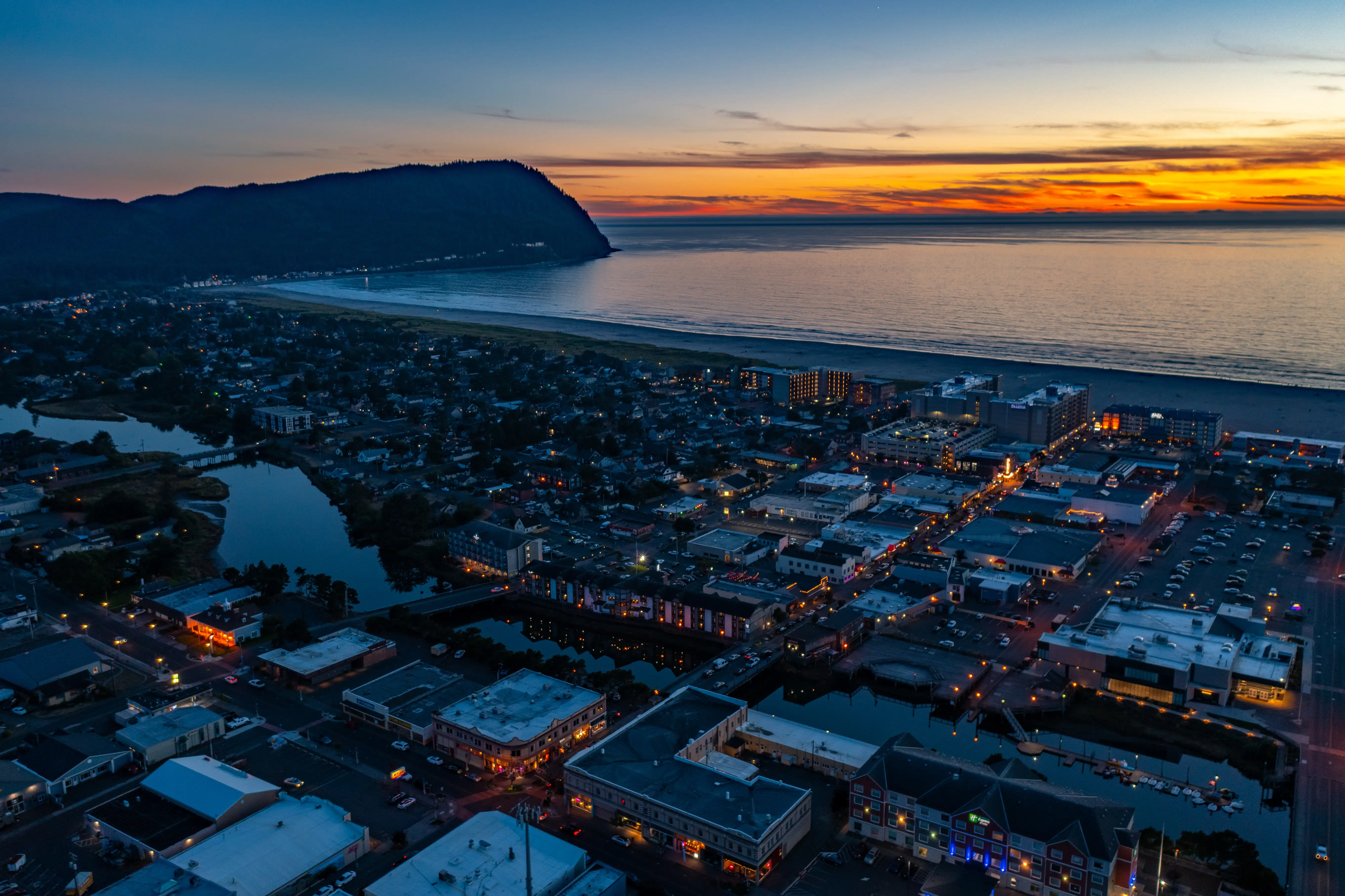
Local Expert Takeaway: The buyers who end up happiest in Seaside are the ones who look at a map before they look at a crime index. North Seaside, Wahanna, Sunset Hills, and The Cove are operating in a completely different safety environment than the Broadway and Promenade corridor. If you're comparing properties, ask specifically whether the home is east or west of Highway 101 and how many blocks it sits from the tourist zone — that single piece of geography explains more about your daily safety experience than any aggregate statistic will.
✅ Violent crime is below both state and national averages — Seaside's roughly 4.6 per 1,000 violent crime rate sits about 32–38% lower than Oregon and national benchmarks, making personal safety a reasonable concern rather than a defining one.
⚠️ Property crime is genuinely elevated in the tourist corridor — The Broadway Street and Promenade area generates the bulk of the city's theft and vehicle break-in activity, and the numbers are real rather than fully explained by tourism math alone.
📍 North Seaside, Wahanna, and South Seaside are the city's residential safety anchors — directional data consistently places these zones at the lowest per-capita victimization risk in the city, with some southern areas seeing as few as nine total crimes annually.
Is Seaside a safe place to live?
For residents in the northern and eastern neighborhoods, Seaside is a genuinely safe small town — violent crime is below both state and national averages, and the residential areas away from the tourist core see very low crime counts. The city's elevated property crime statistics are largely driven by theft in the high-traffic tourist corridor along Broadway and the Promenade, and buyers who understand that geography can make accurate assessments about specific properties rather than reacting to citywide aggregates.
What is the biggest crime concern in Seaside?
Property crime — specifically theft and vehicle break-ins — is the dominant concern, and it concentrates in the commercial and tourist areas west of Highway 101 and along the Broadway corridor. The victimization risk for property crime varies dramatically by neighborhood, ranging from roughly one in 13 in the southwest tourist-adjacent areas to closer to one in 29 in the north residential zones. Avoiding leaving valuables visible in parked cars near the Promenade and downtown is the single most effective precaution locals consistently mention.
How does Seaside compare to Astoria for safety?
Astoria's crime environment is more persistent and distributed across the city — it reflects the challenges of a larger, economically diverse urban center rather than concentrated tourist-zone activity. Seaside's elevated numbers are more seasonal and geography-specific, which means the residential experience in a neighborhood like North Seaside or Sunset Hills is meaningfully different from what the aggregate statistics suggest. Buyers moving from a mid-size city will likely find Seaside's residential areas feel considerably calmer than either city's overall crime numbers imply.
Explore the full Seaside series: The Ultimate Seaside Relocation Guide · Is Seaside Safe? · Cost of Living in Seaside · Best Neighborhoods in Seaside · Seaside Schools & Family Life · Seaside Youth Sports · Seaside Parks & Recreation · Retiring in Seaside · 1031 Tax-Deferred Exchange in Seaside · Seaside First-Time Homebuyers Guide · Moving to Seaside from California
Tell us what you need help with and we'll connect you with local resources.

About the Author
Todd Davidson is the founder of Living in Oregon and Living in Washington, where he publishes in-depth city guides, neighborhood resources, and local market insights covering more than 180 communities across the Pacific Northwest. While his background is in home financing and real estate, he created these digital platforms to help families research and compare regions before making a move.
Check Out the Oregon Coast Rankings: Oregon Coast Cost of Living — All 16 Cities Ranked · Best Places to Retire on the Oregon Coast · Best Oregon Coast Cities for Families · Best Oregon Coast Cities for Remote Workers · Oregon Coast Real Estate Market Report 2026 · Oregon Coast vs. Washington Coast