Oregon Coast · Oregon
Living in Seaside: The Ultimate Relocation Guide (2026)
Maybe your remote job finally freed you from the commute, and you've been scrolling coastal Oregon listings late at night wondering if the beach-town life is actually livable or just a vacation fantasy. Maybe you've visited Seaside a dozen times and kept driving home on Sunday afternoon thinking, why do I keep leaving? Maybe someone told you the Oregon Coast is affordable — and you're trying to figure out if that's still true, or if the pandemic buying surge already closed that window.
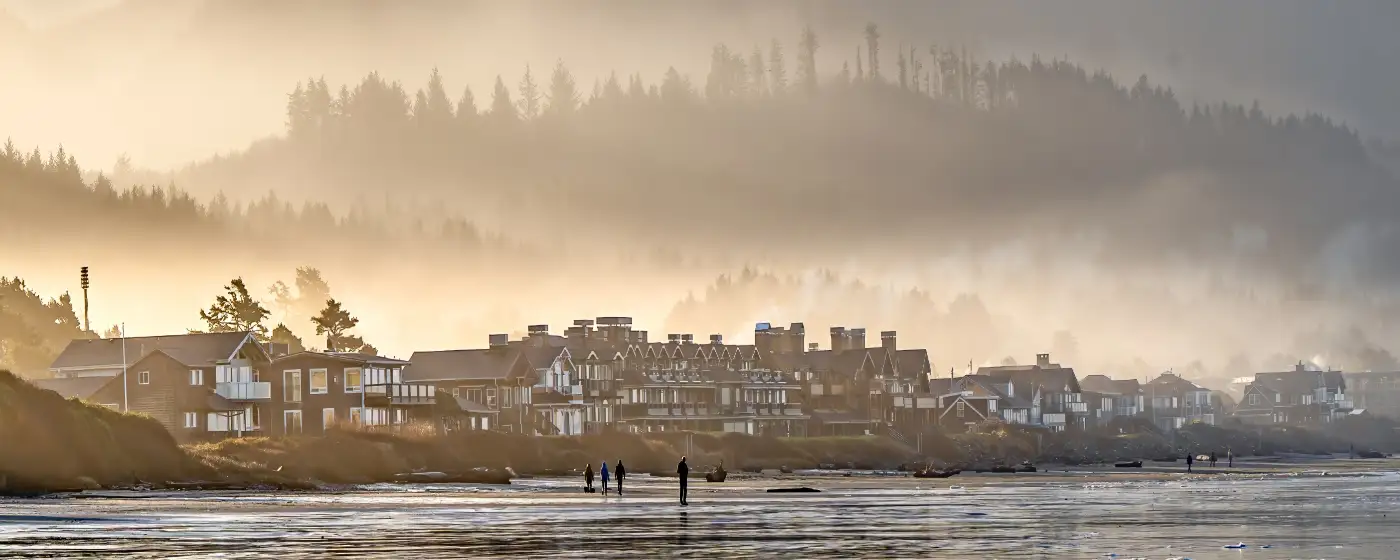
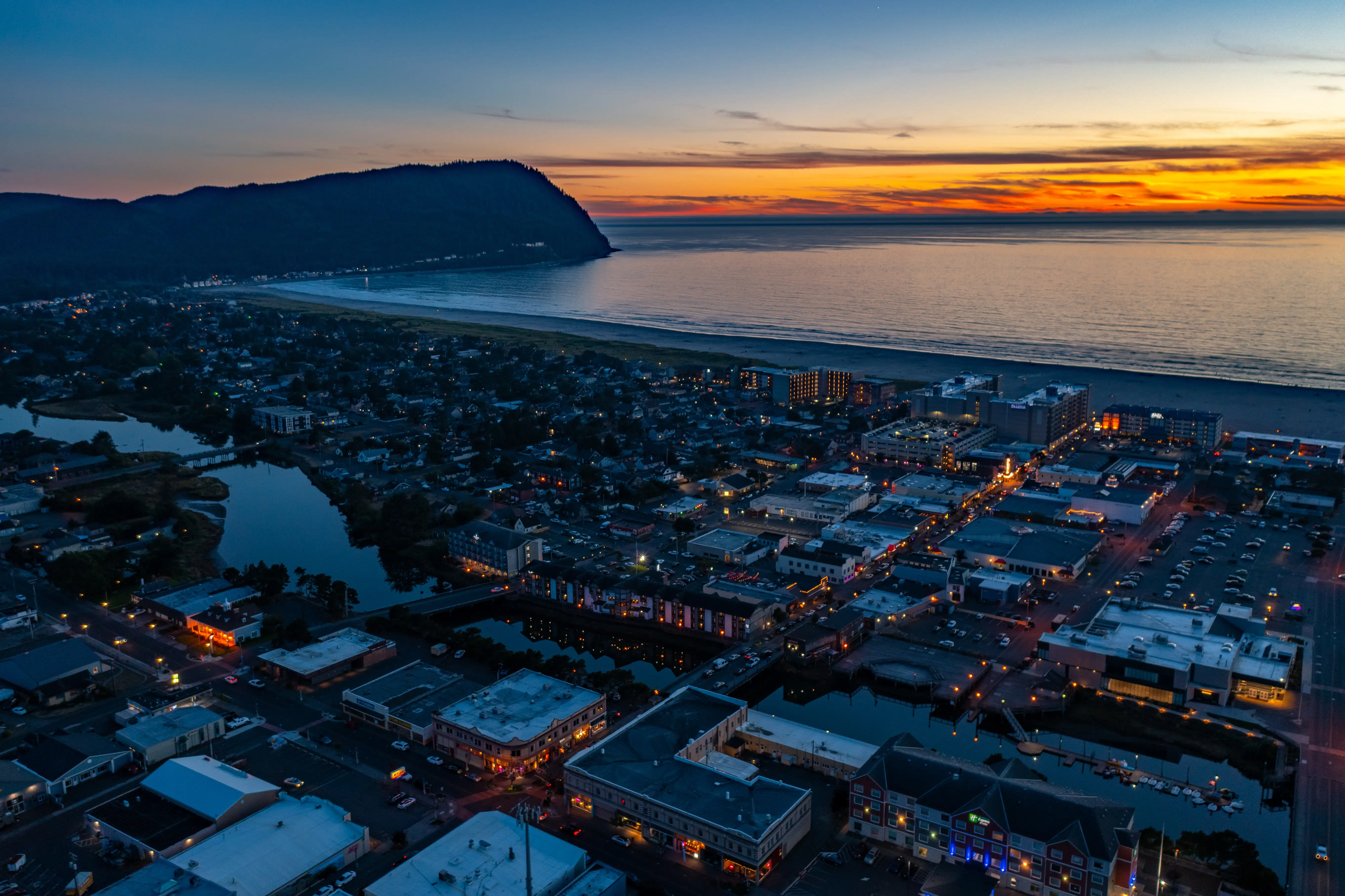
Seaside sits on the northern Oregon Coast, tucked between the Necanicum River and the Pacific Ocean at the foot of Tillamook Head. The town covers just under four square miles, puts you 91 minutes from Portland on US-26 through the Coast Range, and centers everything around its famous 1.5-mile Promenade. It is, in the most honest sense, a real town that also happens to be a tourist destination — and that dual identity shapes nearly every decision a buyer makes here. The same Broadway Street foot traffic that makes summer weekends lively also clogs the same two intersections every Memorial Day. The vacation rental economy that drives property values up also means your neighbor's house might be rented to a bachelorette party next weekend.
This guide is built to help you understand whether Seaside's particular bargain is the right one for you. We'll walk through the real housing market — including why the median sold price of $440,000 understates what you'll see on active listings — the neighborhood differences that actually matter, the school and employment reality, and the honest reasons some people fall in love here while others quietly move back inland after two winters. By the end, you'll know whether Seaside deserves a second look or a respectful pass.

Not every coastal town suits every buyer. Seaside has a genuinely distinct profile — it rewards people who embrace the small-town rhythm and the ocean proximity, and it frustrates people who expected a quieter version of Portland.
| Best For | Why |
|---|---|
| Remote workers from Portland | 91-minute drive is manageable 1–2x per week; ocean lifestyle offsets the commute cost |
| First-time buyers | $440,000 median is among the most accessible entry points on the Oregon Coast |
| Retirees seeking walkability | Promenade, Broadway, and flat street grid allow car-optional daily living |
| Families prioritizing outdoor access | Tillamook Head, Ecola State Park, and The Cove surfing area are minutes away |
| Vacation-home buyers | Strong short-term rental demand; oceanfront properties hold value through market cycles |
| Coastal lifestyle seekers | Real beach-town feel, not a manufactured resort community |
Seaside is the kind of place where the grocery run and the afternoon walk happen in the same 20-minute window. The street grid is flat, Broadway Street puts restaurants and coffee shops within walking distance of most in-town addresses, and the Promenade is never more than a 10-minute walk from anywhere central. That physical compactness shapes daily life here in ways that surprise people coming from Portland suburbs — the town simply doesn't sprawl.
The community skews older, with a median age around 52, and that tone is noticeable at the farmers market, the local coffee shops, and the quieter Tuesday mornings that feel like a different town from the summer weekend crowds. Roughly half of residents own their homes, and the other half rent — a higher renter share than most Oregon coastal towns, which reflects both the seasonal workforce and a housing stock that includes a significant number of older apartment units near the commercial core. The poverty rate runs close to 18%, which means Seaside's economic reality is more complex than the vacation-postcard image suggests.
The commute reality deserves a direct conversation. Ninety-one minutes to Portland is 91 minutes on a clear day with no incidents on US-26 through the Coast Range. Fog delays, winter storm closures, and the notorious Sunday-evening return traffic from the coast can push that well past two hours. For full-time commuters, this is a significant life variable — not a dealbreaker, but something to drive at 7:30 on a Tuesday morning before you make an offer. Those who make it work tend to do so by going into the city two days a week at most or by working entirely remotely.
Where families actually gather in Seaside tends to be the Broadway Street corridor on weekend mornings, the Promenade for evening walks, and the north beach area around the Turnaround where foot traffic from both locals and visitors creates an energetic but approachable social scene. The Sunset Empire Park & Recreation District operates the main community center at 1140 Broadway, which functions as the real hub for year-round residents — the pool, gym, and community programming keep people showing up through the gray November weeks that visitors never see.
The ocean is not a weekend amenity here — it's the backyard. People who move to Seaside from Portland consistently describe the same shift: they expected to visit the beach more, and instead they find themselves doing it daily without thinking. A 10-minute walk to the Promenade for coffee, a lunchtime walk to the Turnaround, an after-dinner stroll with the dog becomes the default routine rather than a planned excursion. That normalization of coastal access is what keeps residents from leaving even when the winters test them.
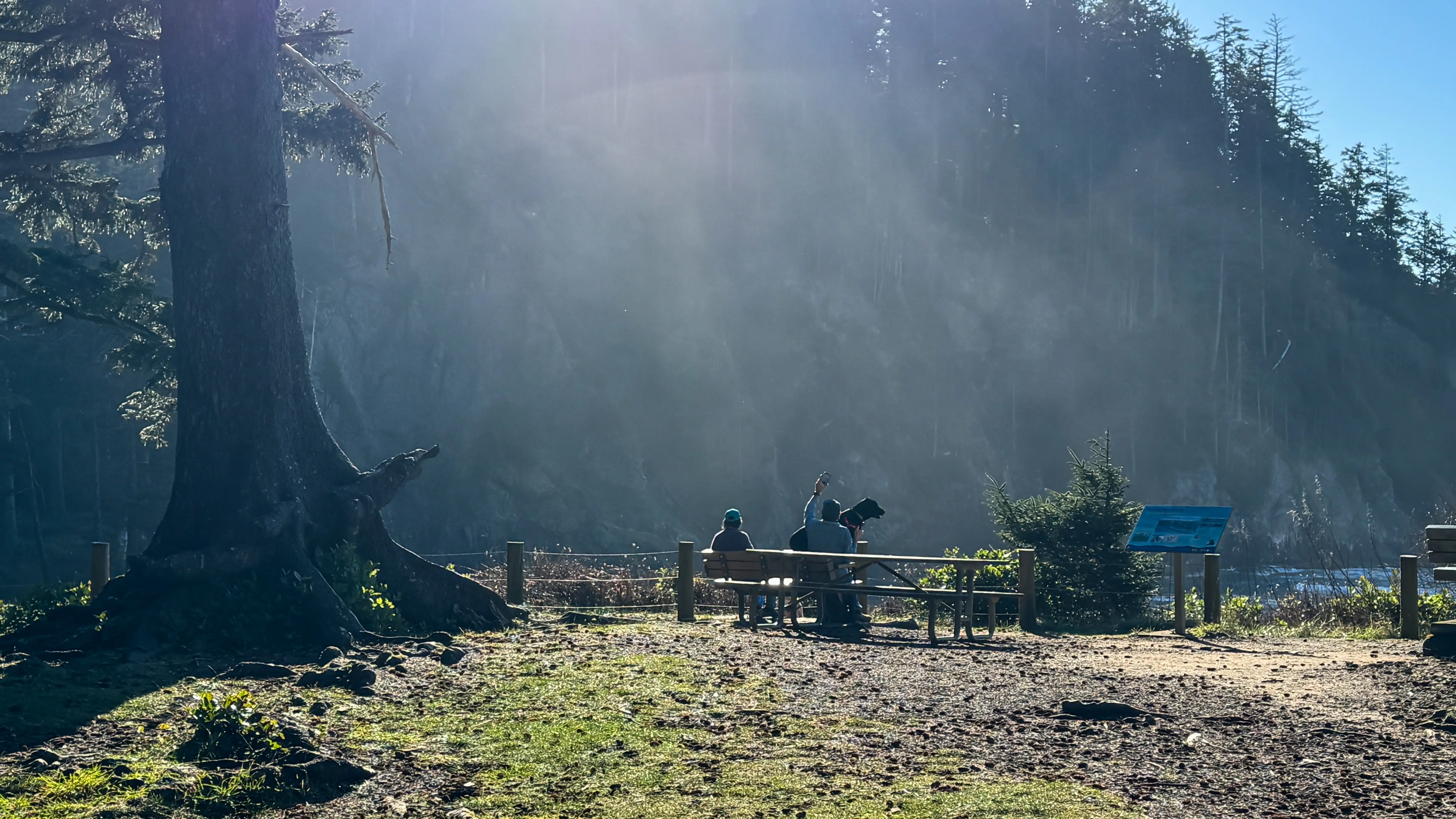
The outdoor range from Seaside is genuinely remarkable. The Tillamook Head Trail connects the south end of town to Ecola State Park above Cannon Beach — a rigorous 6-mile round trip that feels nothing like what you'd expect from a town of 7,000. The Cove at the southern edge of town is one of the more consistent cold-water surf breaks on the northern coast, drawing a tight-knit surf community year-round. The Necanicum River runs through the eastern edge of town and offers kayaking, fishing, and the kind of flat-water paddling that beginners can manage without experience.
The cost of living relative to what you're buying is the other major draw. A $440,000 median sold price in a walkable oceanfront town would be considered an extraordinary bargain in California, Washington, or even the southern Oregon Coast. The 0.63% effective property tax rate — one of the lowest in Oregon — means that a home at the median price carries an annual property tax bill of roughly $2,772. For retirees on fixed incomes or remote workers calibrating housing costs against a lower coastal salary, that math lands favorably.
Seaside's tourism economy also creates a restaurant and retail scene that punches above its population weight. Broadway Street supports multiple sit-down restaurants, coffee shops, ice cream parlors, and specialty retail that would require a city of 20,000 to sustain based on local residents alone. The seasonal tourists effectively subsidize the amenity base that full-time residents enjoy year-round — a dynamic that locals quietly appreciate.
Looking to buy in Seaside? Estimate your payment.
Enter your numbers to see an estimated monthly mortgage payment.
Estimate only. Excludes HOA fees and mortgage insurance.
The property crime rate is the number that stops most buyers mid-conversation. At 50.5 incidents per 1,000 residents, it's significantly elevated above Oregon and national averages. This reflects a combination of factors: a transient seasonal workforce, tourism-related opportunistic theft, and the socioeconomic pressures of an 18% poverty rate in a small town with limited economic mobility. Property crime in Seaside is concentrated around the downtown commercial core and lower-priced rental housing areas — it's not evenly distributed across all neighborhoods, and buyers in South Seaside or The Cove report very different day-to-day experiences than those in some downtown blocks. That said, it's a legitimate consideration, not a statistic to explain away.
The seasonal economy cuts both ways. The summers are alive with energy, foot traffic, and a festive atmosphere that makes Seaside feel like the best possible version of itself. The winters are quiet in a way that some residents find restorative and others find isolating. Several restaurants reduce hours or close entirely from November through February. The population feels smaller than it already is. This rhythm suits retirees and remote workers who control their own schedule — it tends to wear on families with school-age children who need consistent year-round programming and social activity.
Schooling is an honest challenge. The Seaside School District carries a C+ rating, and while dedicated teachers work hard within its constraints, the district doesn't offer the academic depth or extracurricular range that high-achieving families often expect. Families willing to supplement with private tutoring, online programs, and outdoor education — or those who prioritize lifestyle and community over academic rankings — report positive experiences. Families whose children are college-prep focused sometimes find themselves driving to Astoria for resources or reconsidering the move entirely.
Why some people leave comes down to a few specific pressure points: the commute becomes unsustainable when a job situation changes and in-office presence increases; the limited job market within Seaside constrains career growth for working-age adults without remote income; and the town's entertainment options, while good for its size, eventually feel finite for people accustomed to Portland's cultural range. These aren't failures of Seaside — they're honest limitations of a 3.86-square-mile coastal town, and the buyers who thrive here are the ones who moved knowing what they were trading.
Seaside's geography is compact enough that "neighborhood" often means a 10-block stretch with a distinct character. Here are the eight areas that matter most for buyers to understand before making an offer.
Broadway Street anchors downtown Seaside from US-101 to the Turnaround at the Promenade, and the surrounding blocks form the most walkable and commercially active part of the city. Homes range from $200,000 for older fixer-uppers on the fringes to $700,000+ for renovated properties close to the beach. The convenience is real — coffee, groceries, and the ocean are all within walking distance — but so is the noise, the weekend foot traffic, and the concentration of rental housing that affects block-by-block quality. This is the entry point for buyers on a tighter budget who want maximum coastal access.
Best for: Budget-conscious buyers who prioritize walkability and don't mind tourist-season activity at their doorstep.
The stretch of homes and condos fronting or adjacent to Seaside's 1.5-mile Promenade represents the city's most desirable and most expensive real estate. True oceanfront positions and Promenade-facing properties push well past $800,000, with premium homes and condos commonly reaching $1.5 million to $3 million. Demand from vacation-home buyers and short-term rental investors keeps this inventory tight year-round even when the broader market softens. If your priority is direct beach access and investment potential, this is the corridor — but expect limited negotiating room and strong competition when something well-priced hits the market.
Best for: Vacation-home buyers, investors with short-term rental licenses, and buyers for whom oceanfront access justifies a premium.
South Seaside occupies the transition zone between the tourist core and the quieter Cove area near Tillamook Head, offering a mix of older beach cottages and upgraded single-family homes at prices generally in the $400,000–$650,000 range. The access to the Tillamook Head Trail — which climbs to Ecola State Park above Cannon Beach — makes it particularly attractive to outdoor enthusiasts. It's less active than downtown but close enough to Broadway Street that residents don't feel isolated from town services.
Best for: Active buyers who want proximity to hiking and The Cove without being in the tourist core.
North Seaside runs from roughly 12th Avenue toward the Gearhart border, offering a more residential and quieter character than the Broadway corridor. Many properties here sit within walking distance of the beach, and the area draws a mix of retirees and full-time residents who want coastal proximity without the downtown energy. The border with Gearhart is seamless on the ground — buyers who want even quieter, slightly more exclusive residential character sometimes stretch a few blocks north into Gearhart rather than paying a premium for the Promenade.
Best for: Retirees and full-time residents who want walkable beach access without living in the commercial center.
The Cove sits at the southern edge of Seaside where the shoreline transitions from the flat ocean beach to a more rugged stretch at the base of Tillamook Head, creating the cold-water surf break that gives the area its name. Homes here range from cozy surf-adjacent cottages to more modern properties with Tillamook Head views, generally in the $400,000–$750,000 range. The area has historically limited vacation rental activity, meaning The Cove skews toward full-time residents and owner-occupants — a meaningfully different community texture than promenade-adjacent blocks.
Best for: Surf community members, outdoor enthusiasts, and full-time buyers who want a neighborhood with a local rather than tourist character.
Seaside East covers the neighborhoods east of the Necanicum River, where the town's geography shifts from ocean-facing to river-adjacent. Homes here tend to be more affordably priced than their west-side counterparts — typically in the $300,000–$500,000 range — and the area includes a more diverse mix of housing ages and styles. It's the part of Seaside where buyers who've been priced out of oceanfront and downtown blocks find workable inventory. The river access is a genuine amenity, but buyers should understand that some blocks east of 101 have higher renter concentrations and the quality variation is more pronounced.
Best for: First-time buyers and budget-focused buyers who want Seaside's zip code without the promenade price tag.
Seaside Heights sits on the elevated terrain above the flat coastal grid, offering some of the better views in the city without the oceanfront price. Homes here are generally single-family residences with more lot space than downtown blocks allow, and the elevation creates a sense of remove from the tourist activity below. Prices typically run in the $350,000–$600,000 range depending on view quality and condition. The tradeoff is that walkability to Broadway and the beach requires more effort than flat-grid neighborhoods.
Best for: Buyers who prioritize views and quieter residential character over immediate walkability.
Sunset Hills occupies the western ridgeline above town, where the terrain elevation creates some of Seaside's most dramatic Pacific Ocean views. Properties here tend to be larger on the lot, with more established landscaping and a distinctly residential feel compared to the compact downtown grid. Prices vary widely based on view angle and home condition, but well-positioned homes with clear ocean views consistently attract buyers willing to pay above the city median. The catch is that everything requires a car — the elevation and distance from Broadway Street make walking to town a real exercise rather than a casual errand.
Best for: Buyers prioritizing views and privacy who are comfortable driving to town for daily needs.
| City | Best For | Median Home Price | Commute to Portland | Vibe |
|---|---|---|---|---|
| Seaside | Beach access + walkability + value | $440,000 | 91 min | Tourist-meets-residential, energetic summers |
| Gearhart | Quiet exclusivity, golf, privacy | $650,000+ | 95 min | Low-key, residential, minimal tourism |
| Cannon Beach | Premium coastal lifestyle, established arts scene | $900,000+ | 90 min | Upscale resort town, limited inventory |
| Warrenton | Most affordable coast entry, practical | $320,000 | 95 min | Working-class, industrial, limited amenities |
| Astoria | Columbia River character, arts and dining | $385,000 | 100 min | Historic, eclectic, year-round livability |
| Tolovana Park | Quiet enclave near Cannon Beach | $750,000+ | 95 min | Tiny, exclusive, vacation-home heavy |
| Metric | Value |
|---|---|
| Population | ~7,110–7,200 |
| Median Sold Home Price | $440,000 (Redfin, Jan 2026) |
| Typical Home Value Range | $250,000 (condos) to $3M+ (oceanfront) |
| Property Tax Rate | ~0.63% effective rate |
| Median Household Income | ~$45,800–$47,400 |
| Violent Crime per 1,000 | 4.6 |
| Property Crime per 1,000 | 50.5 |
| Commute to Portland | 91 minutes (US-26) |
| School District | Seaside School District 10 (rated C+) |
| Major Employers | Providence Seaside Hospital, Seaside School District, City of Seaside, Sunset Empire Park & Recreation District |
Seaside has a few genuinely local traditions that distinguish it from the generic "coastal town" template. The Hood to Coast Relay — the world's largest relay race, running 199 miles from Mount Hood to the Seaside Promenade — ends every August on the beach in a finish-line celebration that takes over the town. Thousands of runners descend, the Promenade fills with team tents and finisher medals, and for one weekend Seaside becomes something closer to a festival than a beach town. Full-time residents either love the energy or plan their August camping trip specifically to avoid it.
The Lewis and Clark Salt Works site on the south end of town — where the Corps of Discovery spent the winter of 1805–1806 boiling ocean water to make salt — is one of the more underrated historical landmarks on the Oregon Coast. It's a small but genuine piece of American history sitting in a residential neighborhood, and locals take a quiet pride in it that visitors often walk past without registering.
The Sunday Seaside Farmers Market runs during summer months along Broadway and draws a reliably local crowd that feels nothing like the tourist version of the town. It's where you'll meet the year-round residents, the gardeners, the fishing families, and the people who chose this life intentionally — a useful social barometer for anyone trying to gauge whether they'd fit in here.
What I would not do if moving to Seaside: I would not buy within two blocks of Broadway Street between Avenue A and Avenue G without walking those blocks on a Saturday night in July first. The concentration of bars, tourist foot traffic, and parking congestion in that specific zone creates a summer experience that some buyers find energizing and others find completely incompatible with the quiet coastal life they imagined. The homes are often priced attractively precisely because of that dynamic — and the discount is real, but so is the reason for it.
Local Expert Takeaway: The buyers who get the most out of Seaside right now are the ones targeting the $450,000–$650,000 range in South Seaside, The Cove, and North Seaside — areas with genuine residential character and lower short-term rental density, where the spring 2026 market has created real negotiating room that didn't exist two years ago. If oceanfront is the goal, budget significantly above the median and move quickly when something well-priced appears; that inventory still moves faster than the broader market. And before you buy anywhere near downtown, drive those blocks on a summer weekend at 9pm — the vibe matters as much as the price per square foot.
✅ Seaside offers genuine coastal access at the most accessible price point on the northern Oregon Coast — the $440,000 median sold price, combined with a 0.63% property tax rate, makes primary-residence ownership workable for buyers who can't afford Cannon Beach or Gearhart.
⚠️ The property crime rate and tourism-season dynamics are real considerations — not dealbreakers for most buyers, but factors that make neighborhood selection within Seaside matter significantly more than in a typical residential suburb.
📍 The 91-minute Portland commute is the defining lifestyle variable — buyers who've made Seaside work long-term tend to be remote-first, retired, or genuinely willing to calibrate their careers around the Coast Range drive. Those who underestimate it are often the ones who leave.
Is Seaside a good place for families?
Seaside works well for families who prioritize outdoor access and a tight-knit small-town community over top-tier academics. The Seaside School District carries a C+ rating, which means families with high academic expectations may want to supplement or research school options carefully. Outdoor education, surfing, hiking, and a genuine coastal upbringing are real assets — the tradeoff is a smaller extracurricular range than you'd find in a larger metro school district.
What is the crime rate in Seaside?
Seaside's violent crime rate runs approximately 4.6 incidents per 1,000 residents, which is moderate for an Oregon coastal town. The more significant figure is the property crime rate at 50.5 per 1,000 — well above state and national averages — concentrated primarily in the downtown commercial corridor and higher-density rental areas. Neighborhoods like The Cove, South Seaside, and Seaside Heights tend to report a noticeably different day-to-day experience than some downtown blocks.
How does Seaside compare to nearby Cannon Beach?
Cannon Beach commands roughly double Seaside's median home price for a smaller, more curated resort-town experience with stronger arts infrastructure and stricter development controls. Seaside offers more inventory, more walkable commercial activity, a broader range of price points, and the energy of a working tourism town rather than a curated boutique destination. Buyers choosing between the two are usually deciding whether they want the premium quiet of Cannon Beach or the accessible, livelier character of Seaside — both are legitimate choices at very different price points.
Explore the full Seaside series: The Ultimate Seaside Relocation Guide · Is Seaside Safe? · Cost of Living in Seaside · Best Neighborhoods in Seaside · Seaside Schools & Family Life · Seaside Youth Sports · Seaside Parks & Recreation · Retiring in Seaside · 1031 Tax-Deferred Exchange in Seaside · Seaside First-Time Homebuyers Guide · Moving to Seaside from California
Tell us what you need help with and we'll connect you with local resources.

About the Author
Todd Davidson is the founder of Living in Oregon and Living in Washington, where he publishes in-depth city guides, neighborhood resources, and local market insights covering more than 180 communities across the Pacific Northwest. While his background is in home financing and real estate, he created these digital platforms to help families research and compare regions before making a move.
Check Out the Oregon Coast Rankings: Oregon Coast Cost of Living — All 16 Cities Ranked · Best Places to Retire on the Oregon Coast · Best Oregon Coast Cities for Families · Best Oregon Coast Cities for Remote Workers · Oregon Coast Real Estate Market Report 2026 · Oregon Coast vs. Washington Coast