Oregon Coast · Oregon
Living in Reedsport: The Ultimate Relocation Guide (2026)
Maybe you've been priced out of the Willamette Valley and someone mentioned the Oregon Coast as the place where you can still buy a house for under $300,000. Maybe you stumbled across photos of sand dunes the size of small mountains and started wondering what it would actually be like to live ten minutes from them. Or maybe you're a remote worker who realized your job doesn't require you to sit in Portland traffic anymore, and the idea of a small coastal town with reasonable housing has started to feel less like a fantasy and more like a plan worth making.
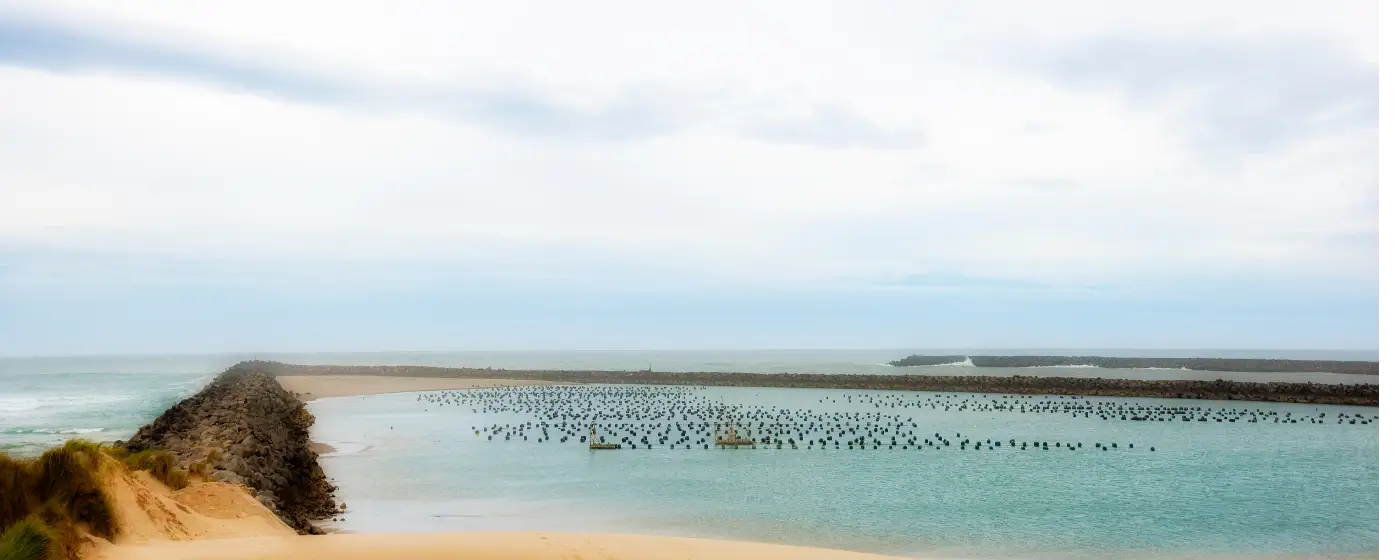
Reedsport sits at the mouth of the Umpqua River on the central Oregon Coast, roughly equidistant between Florence to the north and Coos Bay to the south. It's the gateway community to the Oregon Dunes National Recreation Area, a federally protected stretch of coastal duneland that draws visitors from across the Pacific Northwest — and it's the kind of place where the people who actually live here tend to stay for a long time. The town has approximately 4,300 residents, a walkable downtown core along Highway 101, and a housing market that remains among the most accessible on the entire Oregon Coast.
This guide will help you figure out whether Reedsport genuinely fits your life, not just your budget. The honest answer is that it works extraordinarily well for certain buyers — retirees, remote workers, outdoor-focused households — and is a harder sell for others. Read what follows before you fall in love with the listing photos.
Not every buyer who moves to a small coastal town ends up staying. The people who thrive in Reedsport tend to have a clear reason for being here — the outdoors, the affordability, the slower pace — rather than having simply settled. This table captures the honest picture.
| Best For | Why |
|---|---|
| Retirees | Affordable homeownership, walkable downtown, Lower Umpqua Hospital nearby, strong sense of community |
| Remote workers | Entry-level home prices well below Oregon averages, coastal lifestyle, no state income tax |
| First-time buyers | Median sold prices around $330,000 make ownership achievable where other Oregon markets have closed the door |
| Outdoor-focused households | Immediate access to Oregon Dunes, Dean Creek Wildlife Area, Umpqua River fishing, and ocean beaches |
| Families seeking affordability | Housing costs far below state average; community-scale feel where kids actually know their neighbors |
| Lifestyle downsizers | Lower overhead, smaller footprint, and a genuine pace-of-life shift from metro Oregon |

This breakdown of who Reedsport is best for lines up with what I see working across three decades on this coast — retirees drawn to the walkable downtown and Lower Umpqua Hospital, remote workers chasing lower housing costs, and outdoor-focused households who genuinely use the Dunes and the Umpqua rather than just admiring them in a listing photo.
I've also coached youth soccer here long enough to see which relocating families actually put down roots versus which ones find the pace of a small coastal town isn't for them after all. If you're weighing whether Reedsport genuinely fits your reasons for moving rather than just your budget, I'd welcome the opportunity to talk honestly about which of these categories actually describes you.
Living in Reedsport is quieter than most people expect — even those who think they want quiet. The downtown runs along Highway 101 through the heart of town, and while it has the essentials — a pharmacy, a hardware store, a handful of local restaurants, and the Umpqua Discovery Center overlooking the river — it is not a bustling commercial strip. Most errands happen here or at the modest commercial corridor along the highway, and the things that aren't available locally require a drive. Coos Bay is roughly 25 miles south and Florence about 35 miles north; for a larger Target run, a hospital with specialist services, or a wider restaurant selection, one of those drives is part of the routine.
Commute reality is the city's biggest practical constraint. Reedsport is geographically isolated in a way that matters if your job requires you to be somewhere else. The drive to Roseburg — the closest inland city with significant employment and services — runs close to 196 minutes round-trip along Highway 38 through the Coast Range, a scenic but winding mountain corridor that is not a road you want to drive twice a day in winter. This is why the population of people who move here and stay tends to skew toward retirees, remote workers, and people whose employment is locally rooted at places like Lower Umpqua Hospital or the school district.
Day-to-day, the town has a genuine small-community rhythm. People recognize faces at the Friday farmers market at Rainbow Plaza. The Lions Park and Bicentennial Park along the river give residents an easy outdoor outlet without getting in a car. The Umpqua Discovery Center functions as something of a town gathering point, especially during tourist season when the dunes draw visitors from across the region.
One friction point that surprises newcomers: healthcare access takes adjustment. Lower Umpqua Hospital provides emergency care, surgery, and outpatient services — and it is a legitimate critical access facility with a pharmacy and rehab services — but specialist appointments can run three months out or longer. Residents managing chronic conditions or expecting specialist-level care on a regular basis tend to establish relationships with providers in Coos Bay or Eugene and plan their visits accordingly. It's manageable, but it is a real part of living here that doesn't show up in any listing description.
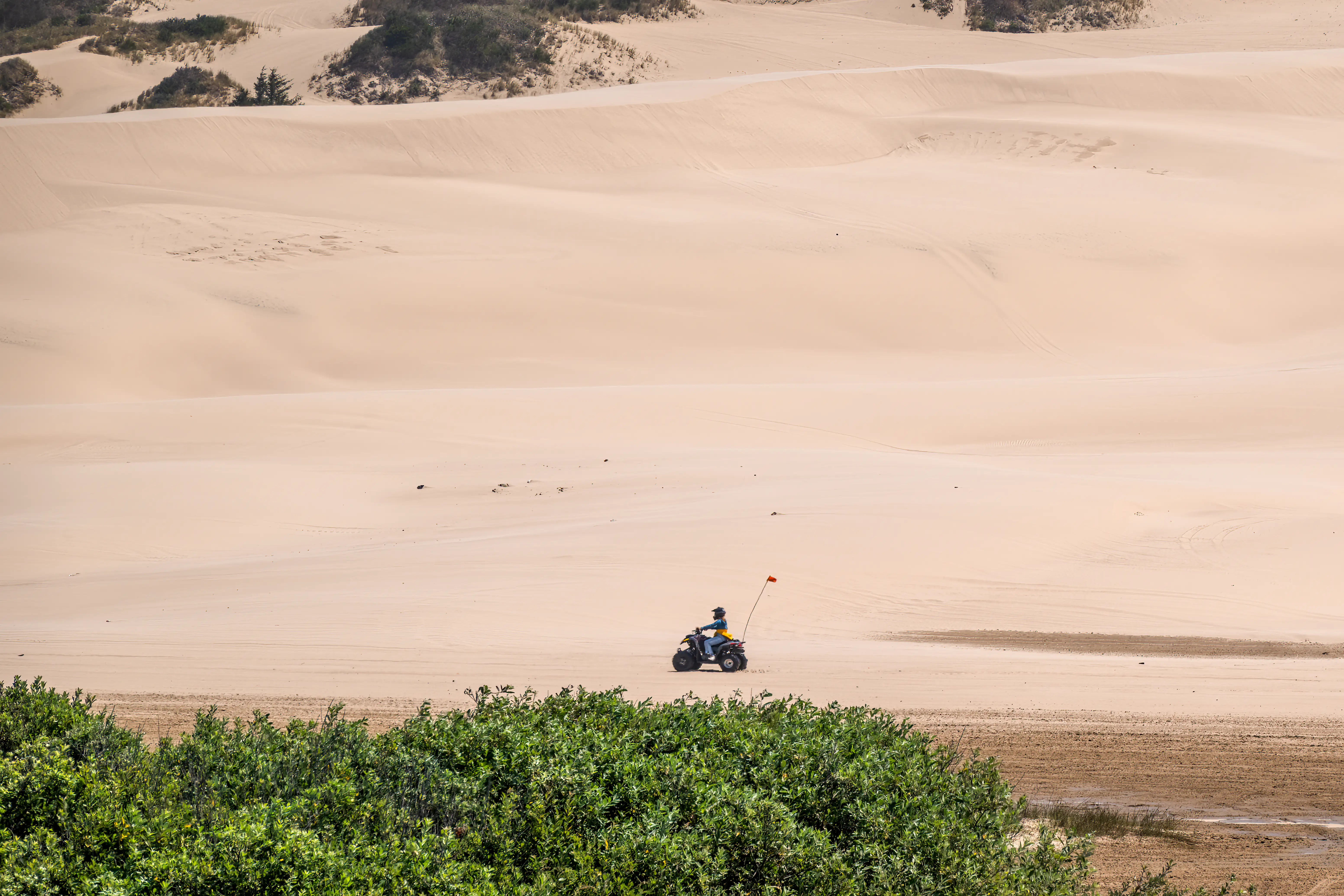
The Oregon Dunes are not a selling point — they are a lifestyle. The Oregon Dunes National Recreation Area begins essentially at the edge of town and extends for over 40 miles along the coast, encompassing the largest expanse of coastal sand dunes in North America. For residents, this means ATVs and off-road vehicles on open dunes, hiking trails through coastal forest and dune fields, beach access that never feels crowded even in summer, and an ever-changing natural landscape that long-term residents describe as genuinely hard to leave. This is not a "nice park nearby" situation — it is one of the most distinctive natural amenities attached to any small town in the Pacific Northwest.
Wildlife access adds another layer. Dean Creek Wildlife Area, just east of town on Highway 38, is a meadow where Roosevelt elk graze year-round and are visible from the roadside almost daily. It's the kind of thing that still surprises people who've lived here for years. The Umpqua River estuary draws kayakers and anglers, and Chinook salmon fishing on the Umpqua has a regional following.
The cost-of-living advantage is real and documented. The overall cost of living index runs approximately 15% below the Oregon state average, and the home price-to-income ratio of roughly 3.7 is dramatically better than what buyers face in Portland, Eugene, or Bend. Oregon's lack of a state income tax compounds the financial picture for remote workers. For someone earning a remote income and paying Oregon Coast prices, the financial math is genuinely compelling.
Community identity in Reedsport is more distinct than most towns of this size. Reedsport holds the official designation as the Chainsaw Sculpting Capital of Oregon, and the annual Chainsaw Carving Championship held every Father's Day Weekend at Rainbow Plaza draws sculptors from around the world. It's the kind of event that feels proudly local — not staged for tourists, but genuinely rooted in the community's identity. The Memorial Day Parade, the weekly Friday farmers market, and the Reedsport Main Street Program's seasonal events give the town a calendar that feels lived-in rather than imported.
Looking to buy in Reedsport? Estimate your payment.
Enter your numbers to see an estimated monthly mortgage payment.
Estimate only. Excludes HOA fees and mortgage insurance.
Reedsport's isolation is the defining feature of life here, and it cuts both ways. The same geographic remove that gives you quiet, uncrowded dunes and an unhurried pace means you are a real distance from the services most households use regularly. There is no hospital with full specialist services in town. The school district's academic outcomes run below state averages. The commercial amenities that most Oregon suburbs take for granted — a gym with multiple options, a range of restaurants, a cinema — are either absent or minimal. Buyers who move here expecting the lifestyle of a small town but the convenience of a suburb tend to be the ones who leave.
Property crime is the most commonly cited local concern. Violent crime is relatively low by national standards — zero murders in the most recent reporting year, and overall violent crime rates that sit below the national average. Property crime is a different story, running about 22% above the U.S. average. Theft and vehicle-related incidents are the primary drivers. Locals generally describe the west side of town as the quieter, safer residential pocket. It's not a reason not to move here, but it is a reason to be intentional about where in town you buy.
The weather from November through April is not Oregon Coast scenic — it is Oregon Coast wet. Annual precipitation runs close to 55 inches, with December averaging over nine inches of rain. The humidity is persistent enough that residents with metal tools, vehicles, or exterior wood surfaces talk about corrosion and rot as ongoing maintenance realities. July brings genuine sunshine — nearly nine and a half hours of daylight average — but the coast is almost entirely overcast during the winter months. Seasonal affective disorder is a real consideration for people moving from sunnier climates.
Why some people leave: The households that most commonly move on tend to be those who arrived primarily for the low home prices but found the trade-offs in amenities, employment, and services harder than anticipated. Families with children navigating a single-school district and below-average academic outcomes sometimes opt to relocate to larger districts in Coos Bay, North Bend, or the Roseburg area when their kids reach high school. And some remote workers who loved the concept discover that the isolation — real isolation, the kind where a power outage or road closure on Highway 38 means you're actually cut off — isn't what they imagined from a coffee shop in Portland.
The commercial and civic core of Reedsport runs along Highway 101 where it intersects with the Umpqua River. Homes here are typically older — many from the mid-20th century — and range from roughly $180,000 for fixer-uppers to $290,000 for updated properties. The proximity to the Umpqua Discovery Center, Rainbow Plaza, and the weekly farmers market gives this area the most walkable character in town. Highway noise is part of the package.
Best for: Buyers who want to walk to downtown events and don't need a quiet suburban setting.
This is the residential pocket locals most commonly describe as the calmer, more settled side of town. The Lower Umpqua Hospital sits along Ranch Road, and the surrounding streets have a mix of modest ranch homes and slightly newer builds. Home prices in this area typically run in the $270,000–$350,000 range, representing a solid mid-market option. The Reedsport Community Charter School is also located in this corridor, which is convenient for families.
Best for: Families with school-age children and buyers who prioritize quiet residential streets over walkable commercial access.
A smaller number of homes along the Umpqua River carry price premiums that push well above the city-wide median. Riverfront lots with dock access or water views can reach $450,000 and above, with the high end of active listings extending considerably further. These are a different buyer profile — often retirees or second-home purchasers drawn specifically by the fishing and the scenery. Supply is limited and these properties move at their own pace.
Best for: Buyers for whom the Umpqua River is the primary draw and budget allows for a premium location.
The streets north of downtown around Elm Avenue and 22nd Street are among the more established residential neighborhoods in the city. The Memorial Day Parade route ends near Hahn Park on Fir Avenue, giving this area a strong community-event presence. Home values here are broadly in line with the city-wide range — $230,000 to $320,000 — with older homes on larger lots common. It's a functioning neighborhood without a lot of flash.
Best for: First-time buyers who want a standard residential setting at accessible price points.
Technically a separate community a few miles south, Winchester Bay functions as Reedsport's closest neighbor and offers a different character — smaller, oriented toward the marina, and popular with fishing households and retirees who want to be even closer to the dunes and ocean. Home prices can run slightly lower than Reedsport proper for comparably sized homes, and the Oregon Dunes are essentially at the doorstep. Winchester Bay has fewer services of its own, so residents are reliant on Reedsport for most shopping and healthcare.
Best for: Retirees and fishing/outdoor households who want maximum proximity to the coast and don't need urban amenities.
Lakeside sits just south of Reedsport along Highway 101 and offers access to Tenmile Lake — one of the largest coastal lakes in Oregon — which supports boating, fishing, and waterfront living. Some buyers considering Reedsport also look at Lakeside for lakefront properties at prices that can still undercut Oregon lake-home averages significantly. It's a quieter residential community with even fewer commercial amenities than Reedsport.
Best for: Buyers whose lifestyle centers on lake recreation and who want a quieter setting than Reedsport proper.
| City | Best For | Approx. Home Price | Commute Access | Vibe |
|---|---|---|---|---|
| Reedsport | Affordability + dunes access | ~$330,000–$380,000 median sold | Isolated; Highway 38 to interior | Small coastal town with strong outdoor identity |
| Coos Bay / North Bend | More services, larger community | ~$280,000–$350,000 | Better coastal highway access | Regional hub; more commercial, more amenities |
| Florence | Retirees, coastal charm | ~$350,000–$420,000 | Highway 101 north; closer to Eugene | Polished coastal retirement community |
| Lakeside | Lake recreation, quiet | Below Reedsport median in most cases | Adjacent to Reedsport | Rural lake community; minimal services |
| Winchester Bay | Fishing, dunes adjacency | Comparable to or below Reedsport | Adjacent south | Marina-oriented; small and quiet |
| Roseburg | Inland amenities, jobs | ~$310,000–$370,000 | Highway 38 inland (long drive) | Growing inland city; full commercial services |
| Category | Data |
|---|---|
| Population | Approximately 4,300 |
| Median Sold Home Price | ~$330,000–$380,000 (current); entry-level around $330,000 |
| Property Tax Rate | Approximately 1.03% |
| Median Household Income | Approximately $53,571–$58,000 |
| School District | Reedsport School District 105 (Reedsport Community Charter School, K–12) |
| Violent Crime per 1,000 | Approximately 2 — below national average |
| Property Crime per 1,000 | Approximately 16 — above national average |
| Annual Precipitation | ~54.8 inches |
| Nearest Major City | Coos Bay (~25 miles south); Eugene (~85 miles northeast) |
Reedsport has one civic title it wears with genuine conviction: the Chainsaw Sculpting Capital of Oregon. Every Father's Day Weekend, Rainbow Plaza transforms into a competition venue where carvers from across the country and around the world shape raw timber into finished sculptures in front of live audiences. The 2026 championship ran June 18–21, and it's one of those events that doesn't feel like a tourism stunt — it feels like something the town invented for itself and then discovered others wanted to watch. The carved work goes on display around town, and longtime residents have accumulated pieces from multiple years' competitions.
The Friday farmers market runs year-round at Rainbow Plaza, 10am to 2pm, and is where local social life happens in a low-key, consistent way. Farm eggs, seasonal produce, and weekly specialty items pull a regular crowd of locals rather than tourists. It's the kind of recurring gathering point that makes a small town feel like a community rather than just a cluster of houses.
The Memorial Day Parade is one of the more earnest small-town traditions on the coast. It starts at the school on North 22nd Street and Elm Avenue and concludes at Hahn Park on Fir Avenue, with military units, veterans' organizations, and local businesses all participating. For newcomers, it's often the first moment Reedsport starts feeling like home rather than a relocation destination.
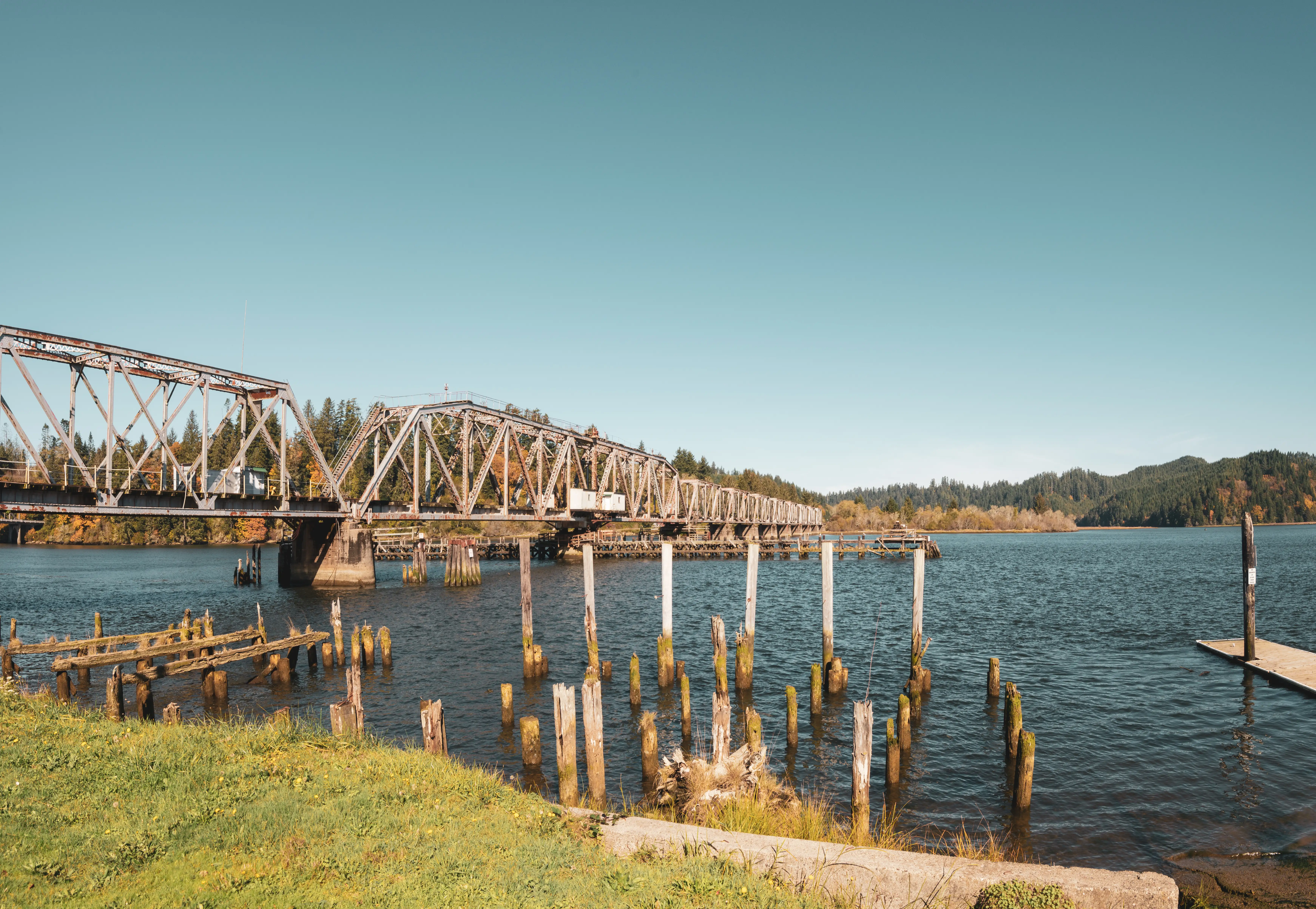
What I Would Not Do: Don't buy in a flood-prone low-lying area near the river without thoroughly reviewing FEMA flood zone maps and factoring in flood insurance costs. Roughly 25% of Reedsport properties carry significant flood risk over a 30-year horizon, and that risk is increasing. This is not a reason to avoid Reedsport, but buying along the lower Umpqua corridor without understanding your specific parcel's flood designation is one of the most costly mistakes buyers make here. The city's sole drinking water source draws from the Clear Lake watershed, and the area has active flood and land conservation efforts underway — which is worth knowing before you assume any given waterfront parcel is build-ready or flood-compliant.
Local Expert Takeaway: If you're seriously considering Reedsport, target the west side of town — specifically the Ranch Road and surrounding residential streets — for the best combination of quiet, proximity to the hospital, and access to the school. Run flood zone verification on any property within six blocks of the Umpqua River before making an offer. And if you're a remote worker or retiree moving from a higher-cost Oregon market, build a realistic picture of the Coos Bay and Florence service corridors early — knowing which medical specialists, grocery options, and commercial services you'll drive to makes the lifestyle work smoothly rather than feeling like a sacrifice.
✅ Reedsport offers some of the most accessible home prices on the Oregon Coast, with a current median sold price around $330,000–$380,000 and a housing cost-to-income ratio significantly below state averages — making it a real option for first-time buyers and remote workers priced out of larger markets.
⚠️ Geographic isolation is the defining tradeoff. The drive to Roseburg runs close to 196 minutes round-trip, specialist healthcare can require months of wait or a drive to Coos Bay or Eugene, and commercial amenities are limited. This town rewards buyers who genuinely want the pace — not those who assume it's like a suburb with a beach view.
📍 The Oregon Dunes National Recreation Area is the lifestyle anchor. For buyers who are drawn to outdoor recreation — ATVs on the dunes, elk watching at Dean Creek, fishing on the Umpqua — the proximity to one of North America's most distinctive natural landscapes is a genuine, daily quality-of-life asset that no comparable-priced inland market can offer.
Is Reedsport a good place for families?
Reedsport works well for families who prioritize affordability and outdoor access over academic prestige. The Reedsport Community Charter School serves K–12 in a single campus setting with a roughly 15:1 student-to-teacher ratio and 100% licensed teaching staff, though graduation rates run a few points below the state average and academic outcomes trail larger Oregon districts. Families who want a broader school environment sometimes look to the Coos Bay or North Bend districts after a few years.
What is the crime rate in Reedsport?
Violent crime in Reedsport is relatively low — approximately 2 incidents per 1,000 residents, with no reported murders in the most recent year — which sits below national averages. Property crime is the more relevant concern, running above the U.S. average and primarily involving theft. Residents generally describe the west side of town as the quieter residential area, and many households take standard precautions around vehicle and property security.
How does Reedsport compare to Florence or Coos Bay?
Florence to the north skews more toward retirement living and carries higher home prices — typically $350,000 and above for comparable properties — along with a more developed tourism-facing commercial corridor. Coos Bay to the south is the regional service hub, offering more employment, medical specialists, and commercial options at price points broadly similar to Reedsport. Buyers who want more amenities and don't need to be specifically in the dunes corridor often find Coos Bay or North Bend the better practical choice; buyers who want the most distinctive natural setting and the lowest entry price tend to land in Reedsport.
Explore the full Reedsport series: The Ultimate Reedsport Relocation Guide · Is Reedsport Safe? · Cost of Living in Reedsport · Best Neighborhoods in Reedsport · Reedsport Schools & Family Life · Reedsport Youth Sports · Reedsport Parks & Recreation · Retiring in Reedsport · 1031 Tax-Deferred Exchange in Reedsport · Reedsport First-Time Homebuyers Guide · · Moving to Reedsport from California · Reedsport Realtor's Perspective · Top 10 Questions a Realtor Gets About Reedsport
Tell us what you need help with and we'll connect you with local resources.

About the Author
Todd Davidson is the founder of Living in Oregon and Living in Washington, where he publishes in-depth city guides, neighborhood resources, and local market insights covering more than 180 communities across the Pacific Northwest. While his background is in home financing and real estate, he created these digital platforms to help families research and compare regions before making a move.
Check Out the Oregon Coast Rankings: Oregon Coast Cost of Living — All 16 Cities Ranked · Best Places to Retire on the Oregon Coast · Best Oregon Coast Cities for Families · Best Oregon Coast Cities for Remote Workers · Oregon Coast Real Estate Market Report 2026 · Oregon Coast vs. Washington Coast