Oregon Coast · Oregon
Living in Newport: The Ultimate Relocation Guide (2026)
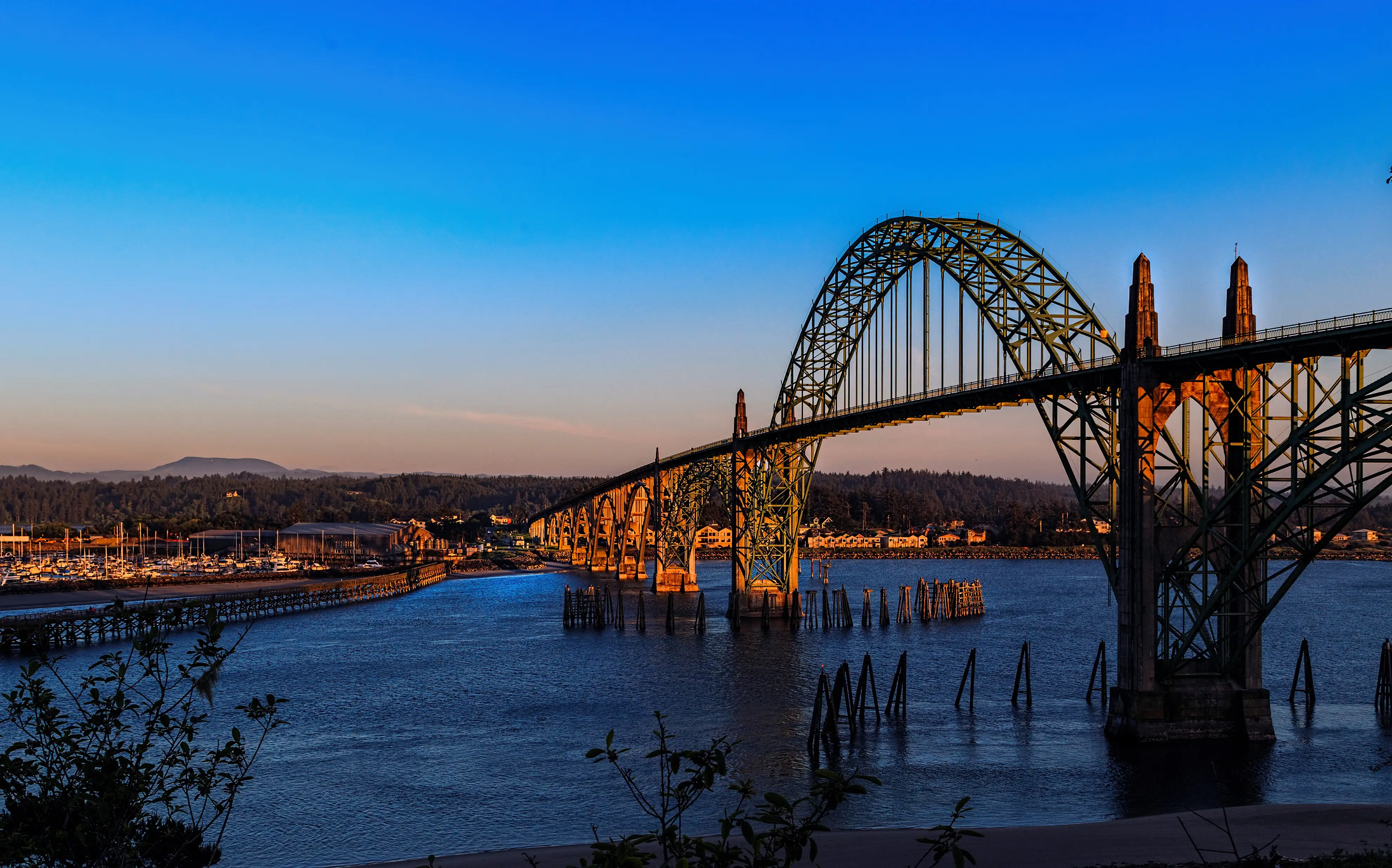
Maybe you've been dreaming about coastal living for years and Newport kept coming up in your research. Maybe a remote job finally untethered you from your inland city and someone who visited the Oregon Coast once told you Newport was "the real one." Maybe you've already driven Highway 101 through town, watched the fishing boats move under the Yaquina Bay Bridge, and started doing the math. The central tension you'll encounter in Newport is one that doesn't show up in any listicle: this is a working fishing and research town that also happens to sit on one of the most dramatic stretches of the Pacific Coast, and those two identities don't always make for easy daily living. The median household income here runs around $60,568 — substantially below the Oregon state average — while home prices have climbed well past what local wages comfortably support.
Newport sits at roughly the midpoint of the Oregon Coast, 143 minutes southwest of Portland on US-101, with the Coast Range and Siuslaw National Forest forming a natural wall to the east. The town is physically divided by Yaquina Bay, with the tourist-facing Historic Bayfront and most of the residential grid to the north, and South Beach — with its marina, RV parks, and the Oregon Coast Aquarium — just across the bridge. Daily life is shaped less by a downtown grid and more by the rhythm of the bay, the fog that rolls in most summer mornings, and the reality that the nearest Target, Costco, or hospital network beyond Samaritan Pacific Communities is a significant drive away. The median age of 51.3 tells you something important about who has already made peace with that trade-off.
This guide is built for people still deciding. It covers what Newport actually feels like to live in versus vacation in, which neighborhoods suit which kinds of buyers, what the housing market is doing in 2026, and the honest reasons some people arrive full of enthusiasm and leave within three years. If you're serious about relocating to the Oregon Coast, use this as your working document — not a highlight reel.
Not every buyer or renter fits Newport equally well. The table below cuts through the general coastal appeal and gets specific about who tends to thrive here and who tends to struggle.
| Best For | Why |
|---|---|
| Retirees seeking coastal lifestyle | Mild climate, walkable Nye Beach and Bayfront, established senior community, no sales tax, lower entry prices than many coastal markets |
| Remote workers with flexible schedules | Fiber internet available in most neighborhoods, lower cost of living than Portland, genuine small-town community — but requires comfort with geographic isolation |
| Marine researchers and STEM professionals | Hatfield Marine Science Center is a major OSU research hub; community is unusually science-literate for its size |
| Fishing, maritime, and trades workers | Pacific Seafood and the working harbor provide stable employment; housing costs are more manageable on trade wages than in larger coastal cities |
| Families committed to outdoor education | Extraordinary access to beaches, tide pools, state parks, and the aquarium; Lincoln County School District requires realistic expectations on academics |
| First-time buyers priced out of metro areas | The $465,000–$485,000 median sold price is below most Oregon metro entry points, and manufactured homes and condos offer paths below $350,000 |
Newport is not a resort town that happens to have residents — it's a working-class coastal city with a serious tourist economy layered on top, and those two things are constantly negotiating space. On a July Saturday, the Historic Bayfront fills with visitors eating fish and chips and watching the sea lions on the docks. On a Tuesday in November, those same docks belong entirely to commercial fishermen unloading Dungeness crab, and the quieter city underneath reveals itself. Most people who stay long-term fall in love with the November version.
The geography creates real friction for daily errands. There is no Costco in Newport. No Target. The closest Fred Meyer is the one in Newport itself on NW 25th Street, which handles most grocery and general merchandise needs adequately, but specialty retail, most medical specialists, and anything requiring a chain store experience means driving to Salem (roughly two hours east through the Coast Range) or making a 143-minute run to Portland. The Coast Range passes, particularly Highways 20 and 34, are fog-prone and occasionally closed in winter. This is not a commute you want to make daily.
What surprises most people after six months of living here is how genuinely small-town the social fabric is. Newport has about 11,000 residents, and within a season of living here you'll recognize faces at the Bayfront Bakery, at the Farmer's Market, at the Saturday tide pool walks hosted by the aquarium. The research community around Hatfield Marine Science Center gives the town an intellectual undercurrent that's unusual for a city this size — your neighbors are as likely to be marine biologists as commercial fishermen, and that mix produces a community culture that is both unpretentious and surprisingly cosmopolitan.
The average commute within Newport is only about 22 minutes — most residents who work locally drive alone, and traffic is genuinely mild by any Oregon standard. The commute problem is exclusively a regional one: if your employer is in Corvallis, Salem, or Portland, you are signing up for a lifestyle that requires planning your life around those trips, not making them casually.
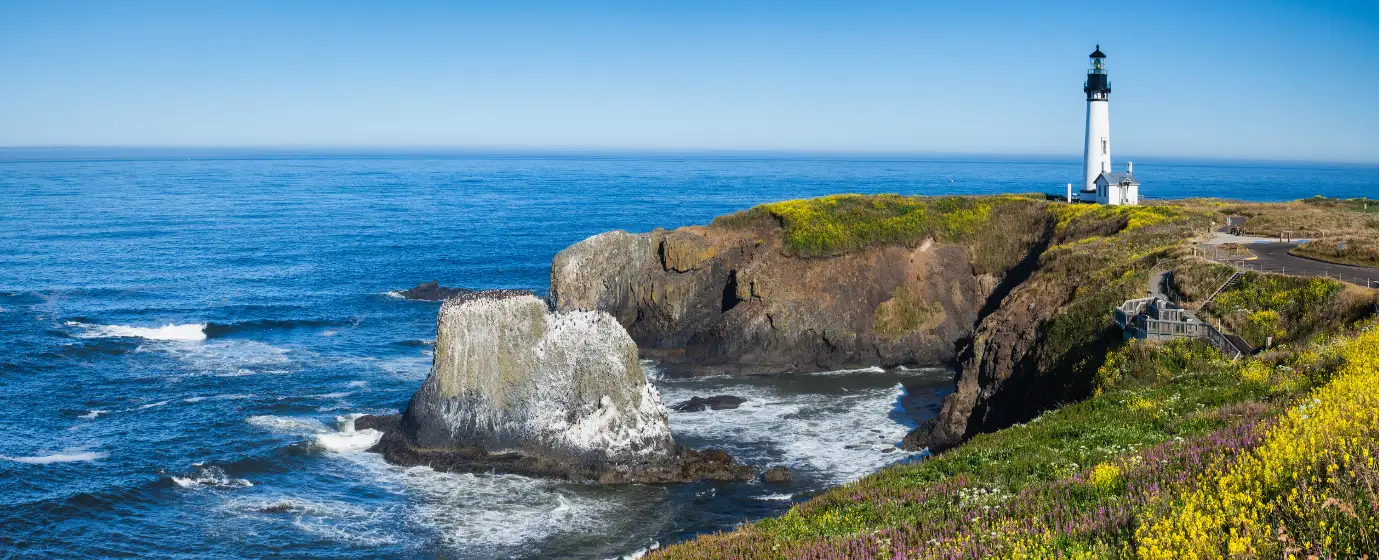
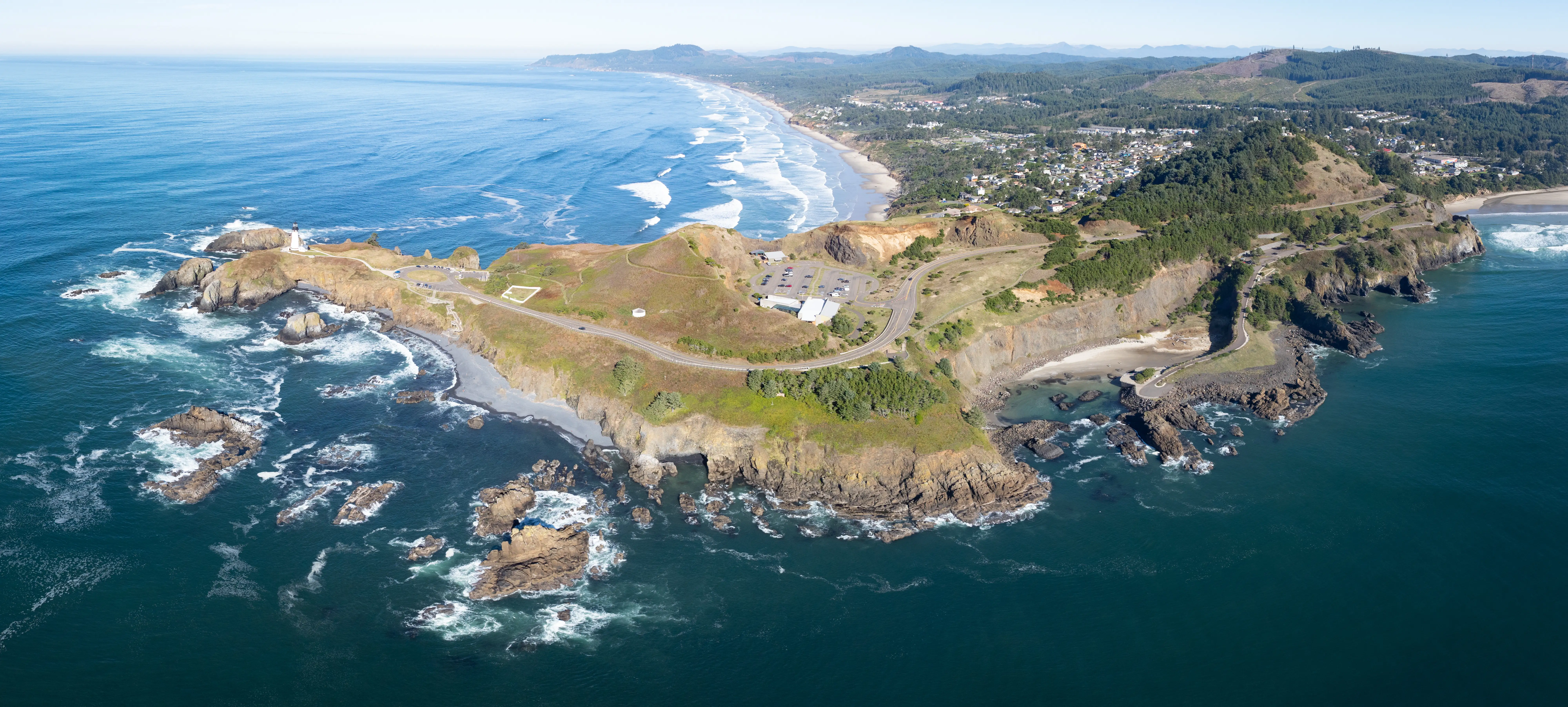
The coastline is not a weekend amenity — it is your backyard. Yaquina Head Outstanding Natural Area, just north of town, protects the tallest lighthouse on the Oregon Coast along with some of the richest intertidal habitat in the Pacific Northwest. Agate Beach sits at its base, stretching for miles with almost no development. Devils Punchbowl State Natural Area, a short drive north in Otter Rock, is one of those places that stops people mid-sentence when they see it for the first time. Living in Newport means accessing all of this on an ordinary Tuesday, not a planned vacation.
The town's food and culture scene punches well above its population weight. Rogue Ales opened its original brewpub on the Bayfront and remains an anchor of the waterfront social scene. The Newport Seafood and Wine Festival, held each February, is one of the longest-running events on the Coast and draws serious regional attention. Mo's Seafood, a Newport institution that has been feeding locals and visitors since 1946, continues to anchor the clam chowder culture of the Bayfront. The presence of Oregon State University's Hatfield Marine Science Center brings public lectures, research exhibits, and a visitor center that locals use year-round.
The cost of living equation, while not simple, has genuine advantages. Oregon has no sales tax — every purchase in Newport is straightforwardly the sticker price, which adds up meaningfully over a year. Utilities are handled through Central Lincoln PUD, which charges among the lower residential electric rates in the state at roughly 11 cents per kilowatt hour. Summer temperatures rarely exceed the mid-60s, meaning air conditioning is largely unnecessary, and winters are damp and overcast but rarely severe in the way that inland Oregon winters can be.
For retirees specifically, the combination of an older-skewing community (median age 51.3), strong Medicare enrollment rates, Samaritan Pacific Communities Hospital, and genuine walkability in neighborhoods like Nye Beach creates conditions that are genuinely hard to find elsewhere on the Pacific Coast at this price point. The 55+ communities and manufactured home parks also provide ownership pathways that bring entry costs well below the city median, which matters enormously when you're on a fixed income.

Looking to buy in Newport? Estimate your payment.
Enter your numbers to see an estimated monthly mortgage payment.
Estimate only. Excludes HOA fees and mortgage insurance.
Geographic isolation is the core issue, and there is no partial version of it. If you need to see a specialist, attend a work meeting in person, fly out of a major airport, or access a comprehensive retail environment, you are looking at a minimum 90-minute drive each way. Portland International Airport is 143 minutes on a good day, longer in winter or if the Coast Range passes are affected by weather. Buyers who underestimate this tend to find it manageable for the first year and genuinely exhausting by year three. Remote workers who need to fly for client work often end up leaving Newport not because of the town itself, but because the airport logistics become unsustainable.
The school district requires honest assessment. Lincoln County School District serves Newport along with the surrounding county and carries a C+ rating on independent assessment platforms. The district-reported graduation rate hovers around 70 to 75 percent — meaningfully below the Oregon state average. For families with school-age children who are accustomed to higher-performing suburban districts, this is a significant consideration. Some families address this through the district's magnet programs or extracurricular engagement; others find the gap too wide and factor it heavily in their decision.
The economic reality of Newport's workforce also shapes the community in ways that matter. With a poverty rate of roughly 16 percent and a median household income well below the state average, there is a visible economic strain here that coastal tourism towns sometimes paper over. Services, amenities, and infrastructure that wealthier communities take for granted can be slower to arrive or maintain in Newport. The City of Newport approved a 6 percent utility rate increase for 2025–2026 to fund water and wastewater infrastructure — a reminder that municipal budgets here operate under real constraints.
Why some people leave: The pattern tends to be remote workers who discover that geographic isolation affects not just errands but professional opportunity, parents who reach a breaking point with school quality when their children approach middle school, and younger residents who find the social and cultural scene too small to sustain long-term. The retirement crowd tends to stay — this city suits that life stage in a way that is genuinely well-matched.
Nye Beach is Newport's most recognizable residential neighborhood to outsiders — it's where the boutique hotels, art galleries, and weekend foot traffic concentrate. For residents, it offers the closest thing to genuine walkability in the city, with the Performing Arts Center, several coffee shops, and beach access all reachable on foot. The median sold price in Nye Beach has come in around $455,500 over the past year, making it slightly below the city median despite the premium location. The honest downside is that summer weekend crowds, parking pressure, and vacation rental saturation can make parts of this neighborhood feel like a tourist district rather than a neighborhood.
Best for: Retirees and remote workers who prioritize walkability and are willing to accept tourist traffic as part of the deal.
Agate Beach runs north of Nye Beach along the coast and represents the premium tier of the Newport residential market. Homes here sit close to the stretch of coastline that borders Yaquina Head Outstanding Natural Area, and the combination of views, quality of newer construction, and general tranquility has pushed the median sold price to around $592,000 — the highest of any named Newport neighborhood. Buyers here tend to be retirees from California and the Pacific Northwest who are purchasing a long-term primary or secondary residence. The area has limited walkability and essentially no retail, so a car is required for all daily needs.
Best for: Buyers prioritizing coastal views and newer construction, with budgets that can reach into the upper-$500,000 range or above.
South Beach occupies the south side of Yaquina Bay, accessed primarily via the Yaquina Bay Bridge on Highway 101. The Oregon Coast Aquarium and Hatfield Marine Science Center both anchor this district, giving it a research and tourism institutional feel. Housing here is more affordable than north-side neighborhoods, with a mix of manufactured homes, older single-family construction, and some newer builds. Residents benefit from proximity to the South Beach Marina and State Park, but the bridge crossing adds a few minutes to any trip into central Newport, and the neighborhood lacks its own retail core.
Best for: Buyers who want lower entry prices, proximity to the marina and aquarium, and don't mind the bridge commute to central Newport.
The Historic Bayfront is Newport's commercial and cultural heart — the sea lion docks, Rogue Ales, Mo's Seafood, and the working fishing piers all anchor this stretch of Bay Boulevard. As a place to live, the Bayfront and its immediate residential edges offer genuine character and proximity to Newport's most active social scene. Residential inventory here is limited and tends toward older construction; buyers looking in this area should budget for renovation costs. It is also Newport's busiest tourist corridor, meaning summer noise and crowds are a genuine quality-of-life variable.
Best for: Buyers who want to be at the center of Newport's social life and can tolerate — or embrace — the seasonal energy of a working waterfront.
Wilder sits in the north-central residential grid and represents one of Newport's more established family-oriented areas. Lots here tend to be larger than in Nye Beach, construction skews toward mid-century and 1970s–1980s era single-family homes, and the neighborhood feels quieter than the coastal-adjacent districts. Pricing runs close to the city-wide median in the $465,000–$485,000 range, and the neighborhood is within reasonable driving distance of Newport's Fred Meyer and most commercial services on NW 25th Street. It won't photograph dramatically, but it delivers practical livability.
Best for: Families with children who need more square footage and yard space than coastal-adjacent neighborhoods typically provide.
The Central Residential district is the workhorse neighborhood of Newport — the part of town where most of the city's workforce actually lives. Older bungalows, ranch homes, and some mid-century construction define the streetscape, with pricing that tracks the low end of the city median and occasionally dips below $400,000 for properties needing work. Proximity to Newport High School, the library, and the central commercial corridor on Highway 101 makes this a practical choice. Aesthetic polish is not the neighborhood's strength, but value-per-dollar is.
Best for: First-time buyers and value-focused purchasers who want to own in Newport without stretching into premium coastal pricing.
The Northwest Residential area occupies the hillier terrain above Nye Beach and the central commercial zone, offering some of the better elevated views in town without the premium pricing of Agate Beach. Homes here tend to be larger than the Bayfront or Nye Beach stock, with more variance in lot size and construction era. This is one of the neighborhoods local agents frequently mention as a practical middle ground — buyers get proximity to Nye Beach on foot while escaping the tourist congestion. Pricing is broadly in line with the city median.
Best for: Buyers seeking a balance between walkable coastal access and residential quiet, without paying the Agate Beach premium.
The Northeast Residential district is among Newport's more affordable areas, sitting farther from the coast and the tourist corridors and closer to Lincoln County's lighter industrial edges. Construction here includes older single-family homes, some manufactured housing, and properties with larger lot footprints than you'll find closer to the ocean. For buyers who work locally in fishing, healthcare, or education and are prioritizing ownership cost over lifestyle amenities, this district offers the most accessible entry points in town.
Best for: Local workers and first-time buyers who prioritize cost of ownership and lot size over coastal proximity.
| City | Best For | Median Home Price | Commute to Portland | Vibe |
|---|---|---|---|---|
| Newport | Coastal lifestyle, retirees, marine industry workers | ~$465K–$485K | 143 min | Working waterfront town with strong tourism layer |
| Lincoln City | Shoppers, casino proximity, more retail options | ~$400K–$430K | 115 min | More commercial, outlet-town feel, less residential character |
| Depoe Bay | Small-scale coastal living, whale watching | ~$500K–$550K | 120 min | Tiny, charming, very limited services and inventory |
| Waldport | Budget coastal ownership, extreme quiet | ~$350K–$380K | 155 min | Very small, minimal services, slower pace |
| Yachats | Upscale retreat, arts community | ~$600K+ | 160 min | Boutique, higher income demographic, very limited inventory |
| Toledo | Lowest-cost entry near Newport | ~$280K–$320K | 150 min | Inland mill town, 10 miles from coast, significantly lower amenities |
| Category | Detail |
|---|---|
| Population | Approximately 11,098 (2026) |
| Median Sold Home Price | $465,000–$485,000 (2026 closed sales) |
| Median Household Income | $60,568 |
| Property Tax Rate | Approximately 0.89% |
| Commute to Portland | 143 minutes (US-101 to I-5/Hwy 20) |
| School District | Lincoln County School District (C+ rating) |
| Median Age | 51.3 years |
| Violent Crime Rate | 2.5 per 1,000 residents |
| Property Crime Rate | 29 per 1,000 residents |
| Major Employers | Samaritan Pacific Communities Hospital, LCSD, Hatfield Marine Science Center, Pacific Seafood, Rogue Ales |
| No State Sales Tax | Yes — Oregon |
Newport has traditions and realities that don't surface in any Chamber of Commerce description.
The February Seafood and Wine Festival is not a tourist event that locals avoid — it is genuinely a community anchor. Held each February at the South Beach Marina since 1977, it remains one of the most attended annual events on the Oregon Coast, drawing thousands of visitors and giving local fishermen, winemakers, and food producers a high-profile platform. Locals who live here year-round often use it as a marker: the people who show up in February are the ones who actually live here, not the ones who summer here.
Sea lion noise is a real variable in real estate. The docks below the Bayfront host a resident sea lion colony, and their vocalizations carry — particularly in the early morning and evening. If you're looking at properties anywhere near Bay Boulevard or within earshot of the docks, spend time there at 6 a.m. before making an offer. Most locals stop noticing it within a few months; some never do.
Fog in July is not a bug, it's a feature — depending on your personality. Newport summers are famously cool and overcast in the mornings, burning off to sunshine by early afternoon on most days. Visitors expecting warm beach weather often leave disappointed. Residents who moved here from hot inland climates describe it as one of Newport's best-kept secrets. If you need hot summers, this is the most important piece of truth in this entire guide.
What I would not do if moving to Newport: I would not buy on the south end of Bay Boulevard near the Bayfront without spending a summer weekend night at the property first. The noise levels, parking chaos, and foot traffic from the tourist corridor can be genuinely disruptive, and the experience at 11 p.m. on a Saturday in July is materially different from what you'll see during a quiet Tuesday afternoon showing.
Local Expert Takeaway: Newport's housing market in 2026 is softer than it has been in recent years — closed sales are coming in between $465,000 and $485,000 while homes are sitting for an average of 79 to 87 days. That's leverage buyers haven't had here in a while. If you're choosing between Agate Beach and a Central Residential property, be honest about whether you're buying a lifestyle or a home — Agate Beach delivers coastal prestige but pushes you toward $590,000 or above, while Central Residential buys you ownership at a price the local economy can actually support. For anyone on the fence about the isolation factor, commit to one full winter in Newport before buying — the community that shows up in January is your actual community, and it's smaller and quieter than the summer version suggests.
✅ Newport delivers authentic coastal Oregon living at price points well below Cannon Beach or Yachats, with a genuine working-waterfront community identity and extraordinary year-round access to beaches, lighthouses, and marine habitat.
⚠️ Geographic isolation is the non-negotiable tradeoff — no major retail, specialist healthcare requires travel, and the Portland commute at 143 minutes is not a daily option for most households.
📍 The market is softer than it looks — active list prices can run to $527,000 or higher, but recent closed sales have been landing in the $465,000–$485,000 range, giving patient buyers real room to negotiate in 2026.
Is Newport a good place for families?
Newport can work well for families who are deeply engaged in outdoor life, community events, and the natural environment the Coast provides. The honest caveat is the Lincoln County School District, which carries a C+ rating and a graduation rate that varies but has been commonly reported in the 70 to 75 percent range — below the Oregon state average. Families who have prioritized academic performance in previous locations should research specific schools and programs carefully before committing.
What is the crime rate in Newport?
Newport's violent crime rate runs approximately 2.5 per 1,000 residents, which is relatively low for a coastal Oregon city of its size. Property crime is more elevated at roughly 29 per 1,000 — above the national average — which is common in tourist-heavy communities where seasonal population swings and commercial activity create more opportunity for vehicle break-ins and theft. Most residents describe feeling safe in their neighborhoods day-to-day, particularly in the more residential areas away from the Bayfront tourist corridor.
How does Newport compare to nearby coastal cities?
Newport offers more services, employment, and community infrastructure than smaller neighbors like Depoe Bay, Waldport, or Yachats, while carrying lower home prices than Yachats and a stronger community identity than Lincoln City's more commercial feel. The comparison most buyers should make carefully is Newport versus Lincoln City — Lincoln City has more retail access, a slightly shorter Portland commute, and lower median prices, but lacks Newport's working waterfront character, research community, and institutional anchors like Hatfield Marine Science Center and the Oregon Coast Aquarium.
Explore the full Newport series: The Ultimate Newport Relocation Guide · Is Newport Safe? · Cost of Living in Newport · Best Neighborhoods in Newport · Newport Schools & Family Life · Newport Youth Sports · Newport Parks & Recreation · Retiring in Newport · 1031 Tax-Deferred Exchange in Newport · Newport First-Time Homebuyers Guide · · Moving to Newport from California
Tell us what you need help with and we'll connect you with local resources.

About the Author
Todd Davidson is the founder of Living in Oregon and Living in Washington, where he publishes in-depth city guides, neighborhood resources, and local market insights covering more than 180 communities across the Pacific Northwest. While his background is in home financing and real estate, he created these digital platforms to help families research and compare regions before making a move.
Check Out the Oregon Coast Rankings: Oregon Coast Cost of Living — All 16 Cities Ranked · Best Places to Retire on the Oregon Coast · Best Oregon Coast Cities for Families · Best Oregon Coast Cities for Remote Workers · Oregon Coast Real Estate Market Report 2026 · Oregon Coast vs. Washington Coast