Portland Metro · Oregon
Retiring in Lake Oswego: Is It the Right Fit for Your Next Chapter? (2026)
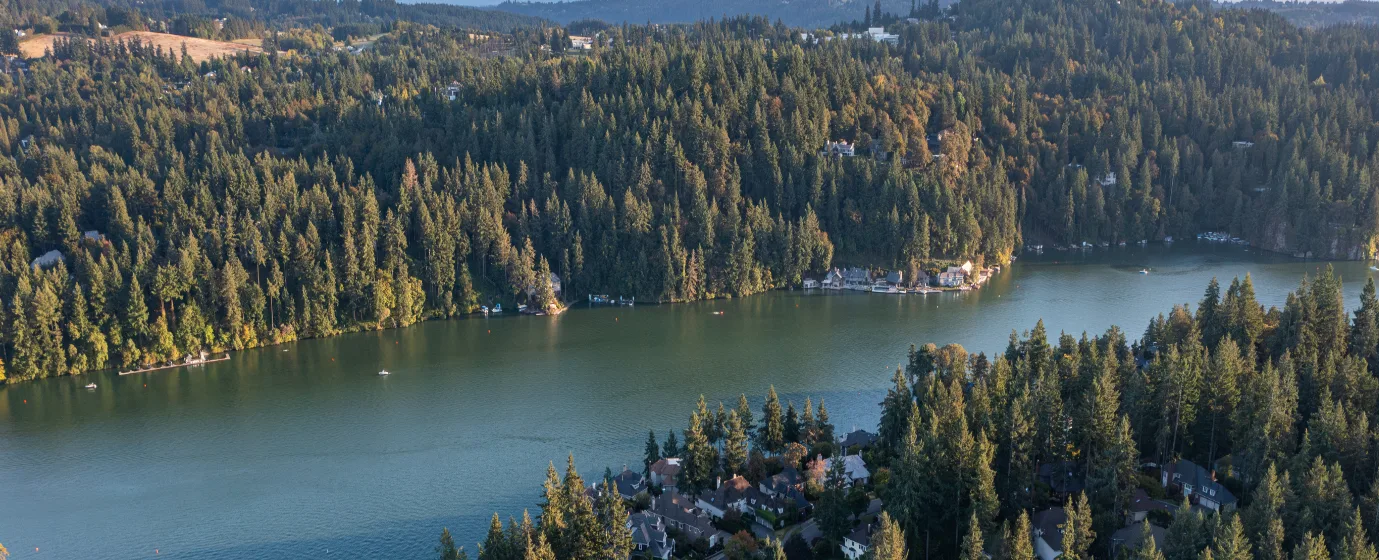
Lake Oswego is not the retirement destination that surprises people — it's the one that confirms what they already suspected. The private lake, the tree-lined neighborhoods, the proximity to Portland without the chaos of living inside it: this is a city that aging buyers have been quietly choosing for decades. But it comes with a price point that demands honesty. The median sold price for a detached home in Lake Oswego runs around $1.1 million, and the lifestyle that makes retirement here genuinely good doesn't come cheap in operating costs either.
The retirees who thrive in Lake Oswego tend to share a few characteristics. They value walkable access to quality restaurants and cultural programming. They want their equity working for them in a stable, appreciating market. They may be downsizing from a larger home elsewhere in the Portland metro — or arriving from California or Seattle with equity that makes that $1.1 million figure feel manageable. What they consistently say after a year is that the quality of daily life here exceeded their expectations.
This guide walks through what retirement in Lake Oswego actually costs, where to live if you're making that move, what healthcare options look like, and — honestly — who should probably look at West Linn, Tualatin, or Oregon City instead.
Oregon's tax treatment of retirement income is one of the most misunderstood topics for people relocating from Washington, California, or other states. This table captures what matters most for the typical Lake Oswego retiree.
| Income Type | Oregon Tax Treatment |
|---|---|
| Social Security | Exempt from Oregon income tax |
| Public pension (federal/state) | Fully taxable as ordinary income |
| Private pension / 401(k) / IRA | Fully taxable as ordinary income |
| Capital gains | Taxed as ordinary income (up to 9.9%) |
| Dividends and interest | Taxed as ordinary income |
| Oregon Retirement Income Credit | Available for taxpayers 62+ with low–moderate income |
| Property tax | 0.96% effective rate; deferral program available |
| Sales tax | None — Oregon has no sales tax |
Oregon's income tax rates — topping out at 9.9% — mean that retirees drawing heavily from 401(k)s or private pensions will feel the bite more than those living primarily on Social Security. For a retired couple withdrawing $120,000 annually from traditional retirement accounts, Oregon's marginal rate puts them in the 8.75% bracket. The silver lining is no sales tax and no tax on Social Security, which matters more to some retirees than others depending on their income structure.
Oregon does offer a property tax deferral program for homeowners 62 and older who meet income thresholds — the state essentially loans you the tax each year, with repayment deferred until the home is sold or transferred. On a $1.1 million Lake Oswego home at the 0.96% rate, that's roughly $10,560 per year that can be deferred for qualifying retirees. Washington residents frequently ask whether crossing the Columbia River would save them money in retirement. Washington has no income tax, which benefits pension-heavy retirees significantly — but Washington's property taxes, home prices in comparable suburbs like Camas or Sammamish, and lack of Oregon's urban amenity concentration often offset the apparent advantage.

Lake Oswego is one of the few markets in the Portland metro where I consistently see buyers in their late 50s and early 60s competing hard — sometimes over the same properties as the family buyers. The neighborhoods that resonate most with this group are First Addition and Lake Grove, where single-level homes and walkable access to downtown restaurants and the lake trail make daily life genuinely convenient. What I find buyers consistently underestimate is how much the entrance fee model at a community like Mary's Woods changes the financial planning conversation — getting your equity out of a paid-off home and right-sizing into a condo or villa before those entrance fees climb further is a move I've watched several clients make very well over the past two years.
The market itself is acting more favorably for buyers than it has in years. Well-priced homes under $1.5 million are moving quickly, but there is real buyer leverage at the $1.5 million to $2.5 million range, which is exactly where many downsizing retirees are shopping. The sale-to-list ratio has softened slightly compared to the frenzied years, which means a patient buyer with a clear picture of what they want can negotiate meaningfully. My advice to anyone considering this move: get clarity on your housing type preference — single-level detached, condo, or a life plan community — before you start touring, because those three paths lead to very different financial structures. If you're considering Lake Oswego and want insight into which neighborhoods align with your priorities and budget, I'd welcome the opportunity to share what I've learned from helping hundreds of families make this move successfully.
The closest major acute care hospital to Lake Oswego is Legacy Meridian Park Medical Center, located in Tualatin — roughly a 10-minute drive south on I-5 or Boones Ferry Road. Licensed for 150 beds and operating 128, it's one of the busiest hospitals in Oregon, serving the entire southern Portland metro corridor from Tualatin to Lake Oswego to Wilsonville. Its services include a nationally recognized stroke program, interventional cardiac catheterization, total joint replacement, cancer treatment, and comprehensive emergency care with dedicated pediatric services. For most routine acute care situations a retiree might face — cardiac events, orthopedic surgery, stroke treatment — Meridian Park handles it well.
Inside Lake Oswego itself, Legacy Medical Group at 412 A Avenue provides primary care and internal medicine on an outpatient basis. These clinics operate as certified patient-centered medical homes, meaning care is coordinated across a team rather than through a single physician. Providence Medical Group at Mercantile and Providence Bridgeport Immediate Care on the Kruse Way corridor round out the local outpatient landscape, giving retirees access to immediate care without the emergency room wait. For retirees managing multiple chronic conditions or requiring subspecialty care, the picture improves dramatically with the drive to Portland. OHSU's Marquam Hill campus — about 15 to 20 minutes north — is consistently ranked among the top cardiac surgery and stroke care centers in the country. Providence St. Vincent Medical Center in northwest Portland carries similar national recognition for cardiac surgery and critical care. Lake Oswego's healthcare access story is really a 20-minute-radius story, not a within-city story, and that radius is impressive.
Lake Oswego has more depth in senior living infrastructure than most cities its size. The table below captures the primary communities and their positioning.
| Community | Type | Location | Est. Monthly Cost |
|---|---|---|---|
| Mary's Woods | Life Plan / CCRC | 17400 Holy Names Drive, Lake Oswego | From $6,700/mo + entrance fee |
| The Springs at Lake Oswego | Independent & Assisted Living | Central Lake Oswego | From $4,500–$7,000/mo |
| The Springs at Carman Oaks | Independent Living | Lake Oswego (SW corridor) | From $4,000–$6,500/mo |
The Springs at Lake Oswego and its sister property at Carman Oaks offer a more conventional independent and assisted living model without the large entrance fee. The Springs at Lake Oswego features an indoor heated pool and spa, rooftop spaces with views across the area, a wine bar, and an on-site physician assistant clinic — the kind of amenity list that reflects what the Lake Oswego market expects. Neither Springs community requires the entrance fee that Mary's Woods does, which makes them accessible to retirees whose equity is tied up in a home they haven't yet sold.

🌅 Portland Metro: Best Places to Retire
Wondering how Lake Oswego compares to all 15 Portland Metro suburbs for retirees? Our complete rankings guide covers every suburb — walkability, healthcare access, cost of living, quiet livability, and retirement lifestyle side by side.
See the Full Portland Metro Best Places to Retire Rankings →Looking to buy in Lake Oswego? Estimate your payment.
Enter your numbers to see an estimated monthly mortgage payment.
Estimate only. Excludes HOA fees and mortgage insurance.
Lake Oswego's downtown core — centered on A Avenue and First Street — is the neighborhood's strongest argument for retirement livability. Within a few walkable blocks, retirees can access independent restaurants, coffee shops, the weekly farmers market that runs through summer, and the shoreline of Oswego Lake. Millennium Plaza Park serves as the informal gathering anchor of downtown, hosting the Farmers Market from May through October as well as the long-running Lake Oswego Festival of the Arts each June, which draws regional artists and typically fills the lakefront corridor for a full weekend.
The cultural calendar adds real texture to daily life. The Lakewood Center for the Arts on State Street — one of the oldest continuously operating community theaters in the Pacific Northwest — stages productions year-round, and its proximity to downtown means a retiree can walk to a show and dinner without a car. The Oswego Heritage House offers local history programming and rotating exhibits. For retirees who want engagement with arts and community rather than just proximity to amenities, Lake Oswego delivers a calendar that holds up.
Getting around without a car is possible but requires intentionality. The downtown core is genuinely walkable, and neighborhoods like First Addition and Lake Grove can reach most daily needs on foot or by bike. TriMet's Line 35 bus connects Lake Oswego to downtown Portland along the Boones Ferry–Barbur corridor, and the Portland Streetcar's Lake Oswego extension project has been discussed for years — though it has not materialized as a functional option. Retirees in Mountain Park or the Palisades area, both set on hillside terrain, will find a car essential for grocery runs and appointments. The honest answer is that Lake Oswego rewards car-optional living only for the minority of retirees who choose the right specific neighborhood.
George Rogers Park, just south of downtown along the Willamette River, is where many retirees spend weekday mornings — the river path, the mature trees, and the relatively flat terrain make it accessible for walkers at most fitness levels. Tryon Creek State Natural Area, bordering Lake Oswego's southwest edge, offers 8 miles of forested trails and is one of the most-used natural areas in the metro. For retirees who want daily outdoor activity woven into their routine without driving to a trailhead, these two parks alone make the case.
Choosing Lake Oswego means trading off against several credible alternatives in the southern Portland metro. This comparison focuses on the factors that matter most to retirees.
| City | Median Home Price | Nearest Hospital | Walkability | Senior Living Depth | Overall Fit |
|---|---|---|---|---|---|
| Lake Oswego | ~$1.1M (detached) | Legacy Meridian Park (10 min) | Good (downtown core) | Strong (CCRC + IL) | Best for equity-rich, culturally engaged retirees |
| West Linn | ~$800K–$950K | Legacy Meridian Park (15 min) | Limited | Moderate | Better value, quieter pace |
| Oregon City | ~$450K–$550K | Providence Willamette Falls (on-site) | Moderate | Moderate | Best for budget-conscious buyers |
| Tualatin | ~$550K–$650K | Legacy Meridian Park (5 min) | Moderate | Limited | Good hospital proximity, less character |
| Tigard | ~$500K–$600K | Legacy Meridian Park (10 min) | Mixed | Limited | More affordable, less cohesive identity |
| Lake Grove area (LO) | ~$900K–$1.1M | Legacy Meridian Park (12 min) | Good | Strong | Premium submarket within LO |
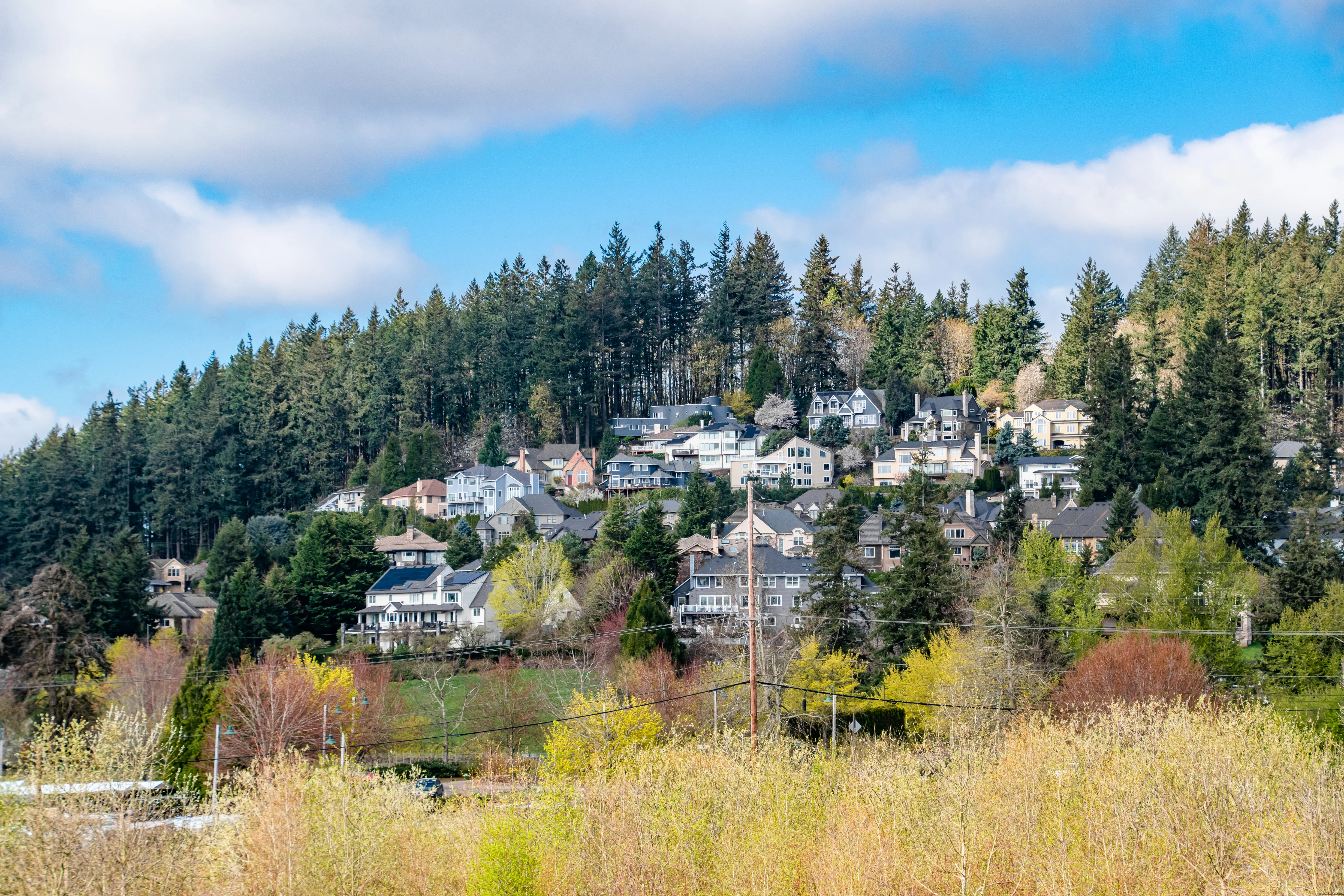
Local Expert Takeaway: Retirees who tend to thrive in Lake Oswego are those who buy or move into First Addition or Lake Grove — where single-level homes and walkable access to the downtown core mean daily life genuinely works without constant car dependence. Couples planning decades-long stays who want to avoid aging-in-place uncertainty are strongest candidates for Mary's Woods, ideally before the Villa entrance fee climbs further. The retirees who commonly report disappointment are those who buy in Mountain Park or Palisades expecting a low-maintenance lifestyle — the hillside terrain and distance from walkable services work against them when mobility becomes a consideration, and resale timing matters more there than in the lake-adjacent neighborhoods.
🌅 Portland Metro: Best Places to Retire
Wondering how Lake Oswego compares to all 15 Portland Metro suburbs for retirees? Our complete rankings guide covers every suburb — walkability, healthcare access, cost of living, quiet livability, and retirement lifestyle side by side.
See the Full Portland Metro Best Places to Retire Rankings →Is Lake Oswego a good place to retire?
For the right retiree, it's one of the best options in the entire Portland metro. The combination of walkable downtown access, strong cultural programming at Lakewood Center for the Arts, deep senior living infrastructure, and 20-minute proximity to OHSU and Providence St. Vincent makes it genuinely competitive with retirement destinations that cost far more. The main barrier is the entry price — at roughly $1.1 million for a detached home, it requires either significant equity from a prior sale or a clear plan to enter a senior living community.
What is the healthcare situation for retirees in Lake Oswego?
Legacy Meridian Park Medical Center in Tualatin — about 10 minutes south — handles most acute care needs well, including a nationally recognized stroke program and interventional cardiac services. Inside the city, Legacy Medical Group and Providence Medical Group provide primary and urgent care options. For complex subspecialty needs, OHSU and Providence St. Vincent are both within 20 minutes north, placing Lake Oswego in one of the better healthcare access positions of any Portland-area suburb.
How does Lake Oswego compare to West Linn for retirement?
West Linn offers a similar physical character — wooded, quiet, river-adjacent — at a meaningfully lower price point, typically in the $800,000 to $950,000 range for comparable detached homes. What it lacks is Lake Oswego's walkable downtown core, the density of senior living options including a full CCRC, and the cultural calendar anchored by Lakewood Center and the Festival of the Arts. Retirees who prioritize equity preservation over daily walkability often find West Linn a better fit; those who want an active, walkable retirement lifestyle tend to choose Lake Oswego despite the premium.
Browse current listings updated daily — filtered for Lake Oswego buyers by Elizabeth Davidson, your local expert.
Powered by Elizabeth Davidson · Cascade Hasson Sotheby's International Realty · 503-939-2035
Explore the full Lake Oswego series: The Ultimate Lake Oswego Relocation Guide · Is Lake Oswego Safe? · Cost of Living in Lake Oswego · Best Neighborhoods in Lake Oswego · Lake Oswego Schools & Family Life · Lake Oswego Youth Sports · Lake Oswego Parks & Recreation · Retiring in Lake Oswego · 1031 Tax-Deferred Exchange in Lake Oswego · Lake Oswego First-Time Homebuyers Guide · · Moving to Lake Oswego from California · The Lake Oswego Realtor's Perspective · Top 10 Questions a Realtor Gets About Lake Oswego
Tell us what you need help with and we'll connect you with local resources.

About the Author
Todd Davidson is the founder of Living in Oregon and Living in Washington, where he publishes in-depth city guides, neighborhood resources, and local market insights covering more than 180 communities across the Pacific Northwest. While his background is in home financing and real estate, he created these digital platforms to help families research and compare regions before making a move.