Southern Oregon · Oregon
Cost of Living in Cave Junction: Housing, Taxes, Utilities & Lifestyle (2026)
The sticker shock runs in reverse in Cave Junction. While most Oregon relocation conversations involve buyers wincing at six-figure price jumps, Cave Junction sits at the opposite end of the spectrum — a small city of roughly 2,000 people in the Illinois Valley where the median home price hovers around $351,000 and average rent still comes in under $800 a month. For buyers fleeing the Bay Area or Portland's westside suburbs, those numbers feel almost suspicious.
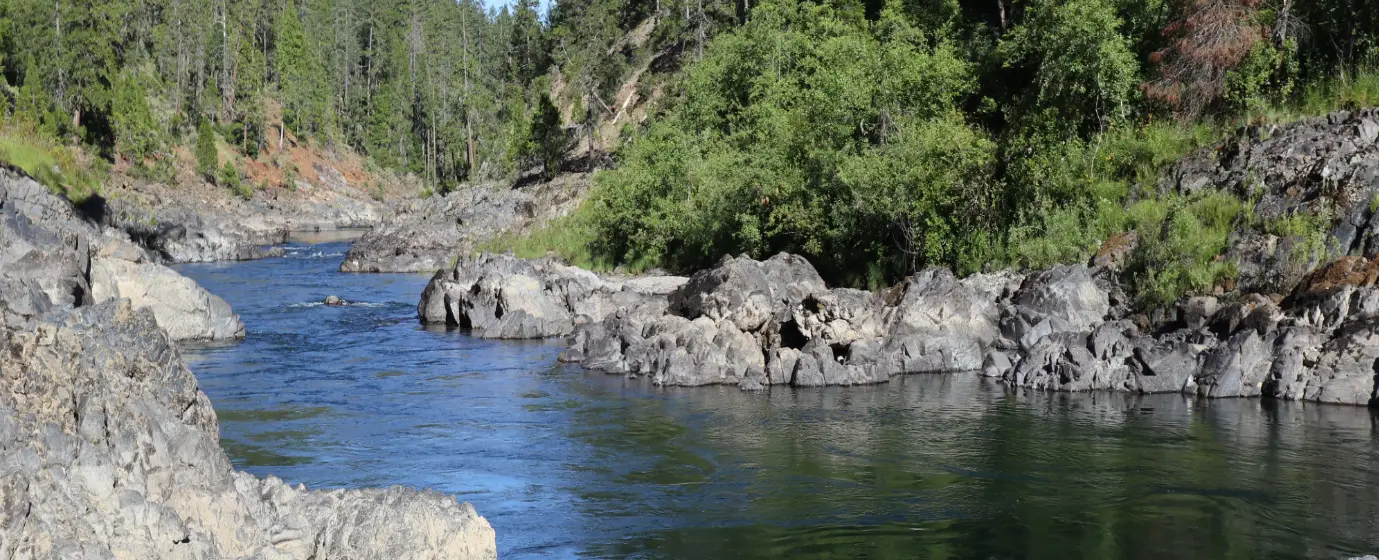
What shapes the cost picture here is geography as much as economics. Cave Junction sits 39 minutes southwest of Grants Pass on US-101, deep in Josephine County, surrounded by national forest and the Siskiyou Mountains. The regional economy is anchored by retail trade, the school district, healthcare, and timber — not tech campuses or corporate headquarters. That reality keeps incomes modest and prices grounded, but it also means buyers need to recalibrate their expectations around what affordable actually costs in everyday life.
This guide breaks down exactly what it costs to live in Cave Junction in 2026 — what you'll pay to buy, what renting looks like, how utilities and transportation stack up, and whether the overall picture makes financial sense for someone considering a move here.

The median home price in Cave Junction sits at approximately $351,000, making it one of the more accessible ownership markets in Southern Oregon. That figure reflects the Zillow middle-tier benchmark for the area, though buyers should understand the range is wide: recent closed transactions have come in closer to $307,000 over the past 90 days, while active listings are priced in the $369,000–$399,000 range. This is a thinly traded market — some months see only a handful of closings — so any single sale can shift the reported median meaningfully.
At that price point, buyers are typically getting a modest single-family home on a standard lot, or stretching into genuine acreage if they're willing to go a bit further outside the city core. The mix of housing stock here is unusually varied: a 1970s ranch-style home on a quarter-acre sits alongside raw parcels marketed to off-grid buyers and newer manufactured homes on larger lots. Homes built after 2000 make up a meaningful share of the inventory, and mobile homes — which average around $168,000 — give budget-constrained buyers a real pathway into ownership. What the market does not have is a deep inventory of move-in-ready updated homes; if you want granite counters and a modern kitchen without renovating, expect to pay list price or close to it.
The market tempo is slow by any measure. Homes are spending an average of 129 to 189 days on the market depending on the period measured, and buyers have recently had strong negotiating leverage — in some months, every closed sale has come in below asking price. If you're patient and willing to negotiate, the current buyer's market conditions favor you considerably.
| Budget Range | What You're Likely to Find |
|---|---|
| Under $200,000 | Manufactured homes, mobile homes on leased or owned land, fixer-uppers needing significant work |
| $200,000–$300,000 | Older single-family homes, small lots, some with acreage, renovation potential |
| $300,000–$425,000 | Updated single-family homes, modest acreage, some newer builds; the core of the market |
| $425,000–$600,000+ | Properties with significant land, views, creek frontage, or homestead infrastructure |
Josephine County carries one of the lower effective property tax rates in Oregon, and Cave Junction falls within that range. The effective rate for Cave Junction properties runs approximately 0.55% to 0.63% of assessed value — on a $351,000 home, that translates to roughly $1,930 to $2,210 per year, or around $160 per month. Oregon's Measure 50, passed in 1997, caps annual assessed value increases at 3% regardless of what the market does, which means long-term owners often pay taxes on an assessed value well below their home's actual market price — a meaningful long-run cost advantage that compounds over time.
The rental market in Cave Junction is unusually affordable by any statewide benchmark. Average rents run roughly $750 to $825 per month for studios and one-bedrooms, sitting approximately 54% below the national average. Two-bedroom units move into the $825 to $1,100 range depending on condition and location, while single-family homes for rent vary considerably — from under $700 for older rural properties to well over $2,000 for larger homes with acreage.
| Unit Type | Average Monthly Rent |
|---|---|
| Studio | ~$750 |
| 1-Bedroom | ~$750–$800 |
| 2-Bedroom | ~$825–$1,100 |
| Single-Family Home (rental) | $650–$3,500 (avg. ~$2,060) |
The rental inventory here is limited. Cave Junction is not a city with apartment complexes on every block — rental housing is predominantly single-family homes and manufactured housing, with availability that fluctuates significantly. The renter-occupied share of housing sits just under 47%, which is high for a community this size, but much of that inventory turns over informally and rarely appears on major listing platforms. Prospective renters should plan on local Facebook groups, word of mouth, and Josephine County-area property management contacts as their primary search channels. The lower end of the rental market — under $800 per month — tends to reflect older housing stock with fewer amenities, while newer or renovated rentals push into the $1,200–$1,500 range.
Utilities in Cave Junction run modestly, reflecting both the climate and the rural infrastructure. A typical household budget for electricity, gas, water, and trash runs in the range of $180 to $250 per month for a standard single-family home. Pacific Power serves the area for electricity. Natural gas service is limited in the Illinois Valley — many homes rely on propane, which adds a variable cost tied to seasonal demand and tank fill frequency. Wood stoves and pellet stoves are common supplements, and buyers purchasing homes with woodstove setups should factor in a cord or two of firewood each season.
Transportation is non-negotiable here. Cave Junction is a car-dependent community — there is no local transit system, no Uber or Lyft coverage, and the rural road network means most residents own at least one reliable vehicle. The 39-minute commute to Grants Pass is the dominant daily drive for those working in the broader regional economy, and fuel costs add up meaningfully on a salary calibrated to local wage levels. The Illinois Valley sits along US-199, which connects to Grants Pass to the northeast and Crescent City, California, to the southwest — a drive of approximately 90 minutes. Budgeting $200 to $350 per month for a single-vehicle household covering commute miles is realistic.
Groceries and daily goods require planning. Cave Junction has a Ray's Food Place location that handles most staples, but specialty grocery runs, Costco trips, and broader retail shopping generally mean a trip to Grants Pass. Dining out locally is limited — a handful of restaurants and cafés serve the area, but this is not a community with a deep food scene. The honest monthly grocery and dining budget for a household here runs $500 to $800, depending on how often you supplement with Grants Pass runs.
Looking to buy in Cave Junction? Estimate your payment.
Enter your numbers to see an estimated monthly mortgage payment.
Estimate only. Excludes HOA fees and mortgage insurance.
| City | Median Home Price | Property Tax Rate | Commute to Grants Pass | Cost of Living Index |
|---|---|---|---|---|
| Cave Junction | ~$351,000 | ~0.55–0.63% | 39 min | 89.7 |
| Grants Pass | ~$375,000 | ~0.85% | — | ~95 |
| Medford | ~$420,000 | ~0.87% | 30 min from Grants Pass | ~97 |
| Ashland | ~$575,000 | ~0.90% | 45 min from Grants Pass | ~103 |
| Klamath Falls | ~$265,000 | ~0.95% | 2 hrs | ~88 |
| Crescent City, CA | ~$280,000 | ~0.75% (CA) | 90 min (south) | ~91 |
Cave Junction's cost advantage over Grants Pass and Medford is real but narrower than buyers sometimes expect. The home price gap versus Medford is roughly $70,000 — meaningful, but offset by the longer commute if you're working in the Rogue Valley. Ashland buyers pay a significant premium for lifestyle and arts amenity; Cave Junction buyers are making the opposite trade. Klamath Falls is actually cheaper by home price, but the geography is entirely different — that's a different climate, a different economy, and a two-hour drive from the Rogue Valley. For buyers specifically weighing rural Southern Oregon options, Cave Junction's combination of price, tax rate, and access to the Illinois River corridor represents a genuinely distinct value proposition.
This table reflects a household purchasing at the $351,000 median price with 10% down, a 30-year fixed mortgage at approximately 6.75%, and typical Cave Junction living costs for 2026.
| Expense Category | Monthly Cost |
|---|---|
| Mortgage (P&I, 10% down) | ~$2,050 |
| Property Tax | ~$160 |
| Homeowner's Insurance | ~$120 |
| Electricity / Pacific Power | ~$100–$140 |
| Propane / Wood Heat | ~$80–$150 (seasonal avg) |
| Water / Sewer / Trash | ~$80–$110 |
| Internet (rural broadband) | ~$60–$100 |
| Vehicle / Transportation | ~$250–$350 |
| Groceries & Household | ~$600–$800 |
| Dining Out (limited locally) | ~$100–$200 |
| Estimated Monthly Total | ~$3,600–$4,130 |
The monthly total for a buying household runs roughly $3,600 to $4,130 — a significant stretch against the median household income of $39,291, which works out to about $3,274 per month before taxes. That income-to-cost gap is the honest reality of Cave Junction's affordability picture: home prices are low by Oregon standards, but local wages are also well below the state median. Buyers who bring outside income — remote work, retirement benefits, Social Security, or a business that doesn't depend on local wages — will find the cost picture compelling. Those relying entirely on Cave Junction-area employment will need to run the numbers carefully.
Oregon's tax structure offers one significant and frequently cited advantage: no state sales tax. Every grocery run, hardware store purchase, and vehicle buy happens without the additional 7–10% that California and Washington residents are accustomed to paying. For a household spending $40,000 to $50,000 annually on taxable goods and services, the savings are real and cumulative.
The counterweight is Oregon's state income tax, which ranges from 4.75% to 9.9% depending on income bracket. At the $39,291 median household income level, most Cave Junction residents fall into the 6.75% marginal bracket — meaningful, but not punishing. Higher earners relocating from no-income-tax states like Nevada, Washington, or Texas should run a full comparison before assuming Oregon is a net tax advantage.
Oregon also offers a property tax senior deferral program that allows qualified homeowners over 62 to defer property taxes until the home is sold. For retirees or near-retirees who purchase in Cave Junction at today's prices and plan to hold long-term, this program — combined with the Measure 50 assessed value cap — creates a genuinely favorable long-run ownership cost structure. Josephine County's median property tax bill of approximately $1,969 per year is already $431 below Oregon's statewide median, and the deferral program can extend that advantage further for eligible households.
Local Expert Takeaway: The buyers who make Cave Junction work financially are almost always bringing income from somewhere other than the local job market — remote salaries, pensions, or rental income from a property they sold elsewhere. If that describes you, the ownership math here is genuinely strong: a $351,000 median price with a sub-0.63% tax rate and no sales tax stacks up favorably against almost any comparable-sized rural Oregon community. The mistake to avoid is over-buying on acreage when you're also carrying a Grants Pass commute — fuel and vehicle costs on that 39-minute drive add up faster than most buyers model.
Is Cave Junction affordable to live in compared to the rest of Oregon?
By headline numbers, yes — Cave Junction's cost of living index sits at 89.7, below the U.S. average, and both home prices and rents are well under Oregon's statewide medians. The nuance is that local wages are also well below state averages, so affordability depends heavily on what income source a household is working from.
What are property taxes like in Cave Junction?
How does Cave Junction compare to Grants Pass for cost of living?
Cave Junction's median home price runs modestly below Grants Pass, and its property tax rate is lower. The trade-off is reduced local amenities, limited dining and retail, and a 39-minute commute for anyone working in the Grants Pass area. Buyers who work remotely or are retired will find the Cave Junction side of that comparison more financially attractive; daily commuters should account for fuel and vehicle wear in their budget modeling.
Explore the full Cave Junction series: The Ultimate Cave Junction Relocation Guide · Is Cave Junction Safe? · Cost of Living in Cave Junction · Best Neighborhoods in Cave Junction · Cave Junction Schools & Family Life · Cave Junction Youth Sports · Cave Junction Parks & Recreation · Retiring in Cave Junction · 1031 Tax-Deferred Exchange in Cave Junction · Cave Junction First-Time Homebuyers Guide · · Moving to Cave Junction from California
Tell us what you need help with and we'll connect you with local resources.

About the Author
Todd Davidson is the founder of Living in Oregon and Living in Washington, where he publishes in-depth city guides, neighborhood resources, and local market insights covering more than 180 communities across the Pacific Northwest. While his background is in home financing and real estate, he created these digital platforms to help families research and compare regions before making a move.