Southern Oregon · Oregon
Moving to Cave Junction from California: The Honest Comparison (2026)
The sequence usually goes something like this: a Walnut Creek software engineer realizes her remote job doesn't require a Bay Area zip code, runs the numbers, and discovers that selling her condo buys a house with land — outright — somewhere in southern Oregon. A San Diego family watches their summer electric bill hit $400 for the third year running and starts wondering what a utility bill looks like in a place where August nights actually cool down. A Sacramento buyer who spent three years losing bidding wars on townhomes under $550,000 finds out that $351,000 in Cave Junction buys a house on nearly an acre. The math is jarring in the best way. Cave Junction, tucked into the Illinois Valley in Josephine County, sits roughly 30 miles southwest of Grants Pass and draws California buyers precisely because it delivers the version of Oregon life they imagined — land, quiet, mountains, and a cost structure that makes their equity look like a superpower.
The honest part comes next. Cave Junction is a small town of roughly 2,087 people, and it functions like one. The winters are long, wet, and genuinely gray from November through February. The nearest significant shopping is a 39-minute drive to Grants Pass. The cultural amenities, restaurant scene, and medical infrastructure that California buyers take for granted do not exist at Cave Junction's scale. These aren't dealbreakers for the right buyer — but they are realities that catch people off guard when they arrive expecting a quieter version of where they came from.
This guide covers what the move actually looks like financially by California region, what your home equity buys here at different price points, how Oregon's tax picture compares to California's, what the weather and lifestyle shift genuinely feel like, and where most California buyers make avoidable mistakes. There's also an interactive comparison tool in Section 6 that lets you look up your specific California city against Cave Junction so you can run your own numbers.

| Cave Junction, OR | Bay Area | Southern CA | Sacramento Metro | Central Valley | |
|---|---|---|---|---|---|
| Median Home Price (approx. 2026) | $351,000 | $1.7M (SF) / $1.1M (Oakland) | $850K–$1.0M | $550K–$620K | $330K–$420K |
| Property Tax Rate (effective) | ~0.55% | ~1.1–1.2% | ~1.1–1.25% | ~1.1–1.2% | ~1.0–1.2% |
| State Income Tax (top bracket) | 9.9% | 13.3% | 13.3% | 13.3% | 13.3% |
| State Sales Tax | None | 7.25–10.75% | 7.25–10.75% | 7.25–8.75% | 7.25–8.75% |
| Avg Utilities (monthly est.) | $150–$185 | $200–$280 | $220–$310 | $180–$250 | $180–$240 |
| Avg 1BR Rent | ~$1,000–$1,100 | $2,800–$3,800 | $2,000–$2,800 | $1,500–$1,900 | $1,100–$1,400 |
A Bay Area seller moving $1.4 million in equity to Cave Junction has a decision most American homebuyers never get to make: whether to pay cash outright and invest the difference, carry a minimal mortgage on a premium property, or buy multiple parcels as income-generating rentals. Even at the upper end of Cave Junction's active listing range — which runs $387,000 or higher for move-in-ready homes — that equity gap is transformative. The conversation stops being "can we afford it" and starts being "what's the highest and best use of this capital."
For Sacramento and Inland Empire buyers, the calculus is tighter but still meaningful. A buyer leaving Elk Grove or Rancho Cucamonga with $500,000 in equity steps into a market where the entry point is roughly 30–40% lower than what they left. Eliminating California's 7.25–10.75% sales tax alone saves a household spending $60,000 annually on taxable goods roughly $4,300–$6,400 per year — money that compounds over time whether it goes toward a lower mortgage payment or sits in savings.
| Tax Item | California | Oregon | Net Impact |
|---|---|---|---|
| State Income Tax (top bracket) | 13.3% | 9.9% | Save 3.4 points at top bracket |
| State Sales Tax | 7.25–10.75% | 0% | Eliminate entirely |
| Property Tax Rate (effective) | ~1.1–1.25% | ~0.55% in Cave Junction | Roughly half |
| Property Tax Cap | Prop 13: 2%/yr increase cap | Measure 50: 3%/yr cap | Similar protection |
| Senior Property Tax Deferral | Available (65+) | Available (62+) | Oregon slightly more accessible |
| Capital Gains Treatment | Taxed as ordinary income | Taxed as ordinary income | Similar |
| Estate/Inheritance Tax | None | None | Even |
The assumption California transplants most often get wrong is that Oregon means no income tax. It does not. Oregon's graduated income tax runs up to 9.9% — meaningful, but still 3.4 percentage points below California's top bracket of 13.3%. For a household earning $150,000, that difference shakes out to roughly $3,000–$5,000 less in state income tax annually depending on filing status and deductions. That's real money, but it's not the headline savings.
The headline savings is the combination: zero sales tax plus a property tax rate that runs roughly half of California's effective rate. A Cave Junction homeowner paying on a $351,000 assessed value owes approximately $1,930 per year in property taxes. A comparable California homeowner in a market where effective rates run 1.1–1.2% on an $850,000 home owes $9,350–$10,200 annually. Oregon's Measure 50 caps assessed value increases at 3% per year after purchase, which means long-term owners in Cave Junction are protected from the kind of tax creep that hits California homeowners in non-Prop-13 situations when they inherit or purchase at market rate.
A buyer leaving San Jose or Berkeley with $1.4 million in equity can purchase the best property currently available in Cave Junction outright and still have $1 million or more left. That means the conversation becomes portfolio strategy, not affordability. At the premium end of the local market — properties with river access, multi-acre parcels, or custom builds in the $600,000–$800,000 range — Bay Area buyers are often paying cash and asking whether to hold the remainder in income-producing property locally or elsewhere. The Illinois Valley's gated communities with private river access and mountain views represent Cave Junction's luxury tier, and they are still priced at what would buy a parking space in San Francisco.
For Bay Area buyers who want to stay under $400,000 and invest the rest, the Eden View subdivision has offered brand-new 3-bed/2-bath construction on 0.16-acre lots — a stark contrast to what new construction delivers in the Bay Area at any price. The Cave Junction market is small enough (17–30 active listings in most months) that cash buyers from the Bay Area move fast and tend to win clean.
A buyer leaving Irvine or Long Beach with $900,000 in equity lands in Cave Junction's market in a position of near-complete flexibility. They can acquire a move-in-ready home in the $350,000–$450,000 range and carry $450,000–$550,000 in remaining capital, or step into one of the premium multi-acre properties and still clear the transaction without a mortgage. Southern California buyers tend to be the demographic most likely to be considering lifestyle alongside finances — they are often done with freeway culture, done with air quality alerts, and done with the density. Cave Junction's pace is not an adjustment for them; it's the point.
The one reality check for SoCal buyers: Cave Junction's listing inventory is thin. The market scored 38 out of 100 on Redfin's competitiveness index, which sounds uncompetitive — but low inventory means that when the right property appears, it can move quickly, and buyers who aren't pre-approved or aren't positioned to act on short notice can miss it.
This group has the most complex financial calculation. A buyer leaving Roseville or Fontana with $550,000 in equity is not going cash-only — they are likely putting 30–50% down on a home in the $350,000–$430,000 range and carrying a modest mortgage. What makes the move compelling is the combination of lower ongoing costs: a property tax bill that drops to roughly $1,930 per year, no sales tax, and utility costs that generally run lower in a smaller rural market. The structural savings accumulate quickly.
Sacramento and Inland buyers should also look at Cave Junction's surrounding market broadly. Raw land parcels in the Illinois Valley — five-acre corner lots with mountain views — have listed in the $400,000–$450,000 range, opening paths to building custom for buyers who aren't in a hurry.
Central Valley sellers — Fresno, Bakersfield, Stockton — have the narrowest relative advantage, and some may find the Cave Junction math less dramatic than buyers coming from coastal markets. A buyer with $380,000 in equity is moving into a market where the median sits at $351,000, which means they are trading one lower-cost market for another. The structural benefits — no sales tax, lower property taxes, more land per dollar — still apply, and buyers in this range can access entry-level homes and manufactured homes on land that deliver more square footage and acreage than anything comparable in their home market. Cedar Brook, a gated 55+ community with city water, sewer, a pool, clubhouse, and RV parking, is one example of the lifestyle infrastructure available at Cave Junction's lower price tier.
Looking to buy in Cave Junction? Estimate your payment.
Enter your numbers to see an estimated monthly mortgage payment.
Estimate only. Excludes HOA fees and mortgage insurance.
Here is what a good friend who moved three years ago would actually tell you. Cave Junction averages 196 sunny days per year and roughly 3,044 annual sunshine hours — which sounds reasonable until you understand that those hours are almost entirely concentrated from May through September. The winters are genuinely cloudy, wet, and long. November through February brings 4 inches of rain per month, and March still sees nearly 19 rainy days. Snow is infrequent — only about 8 days per year — but the persistent gray from late fall through early spring is something California transplants consistently underestimate. People from San Diego or the Central Valley, who are accustomed to 300+ sunny days annually, find the psychological shift to January in the Illinois Valley more pronounced than they expected.
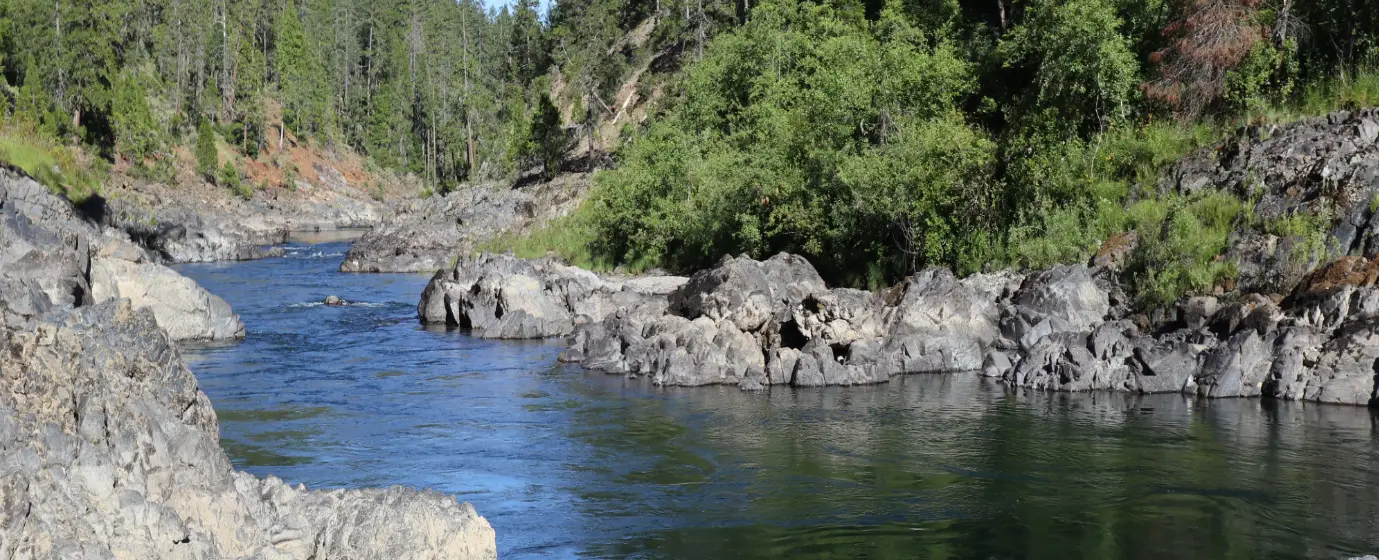
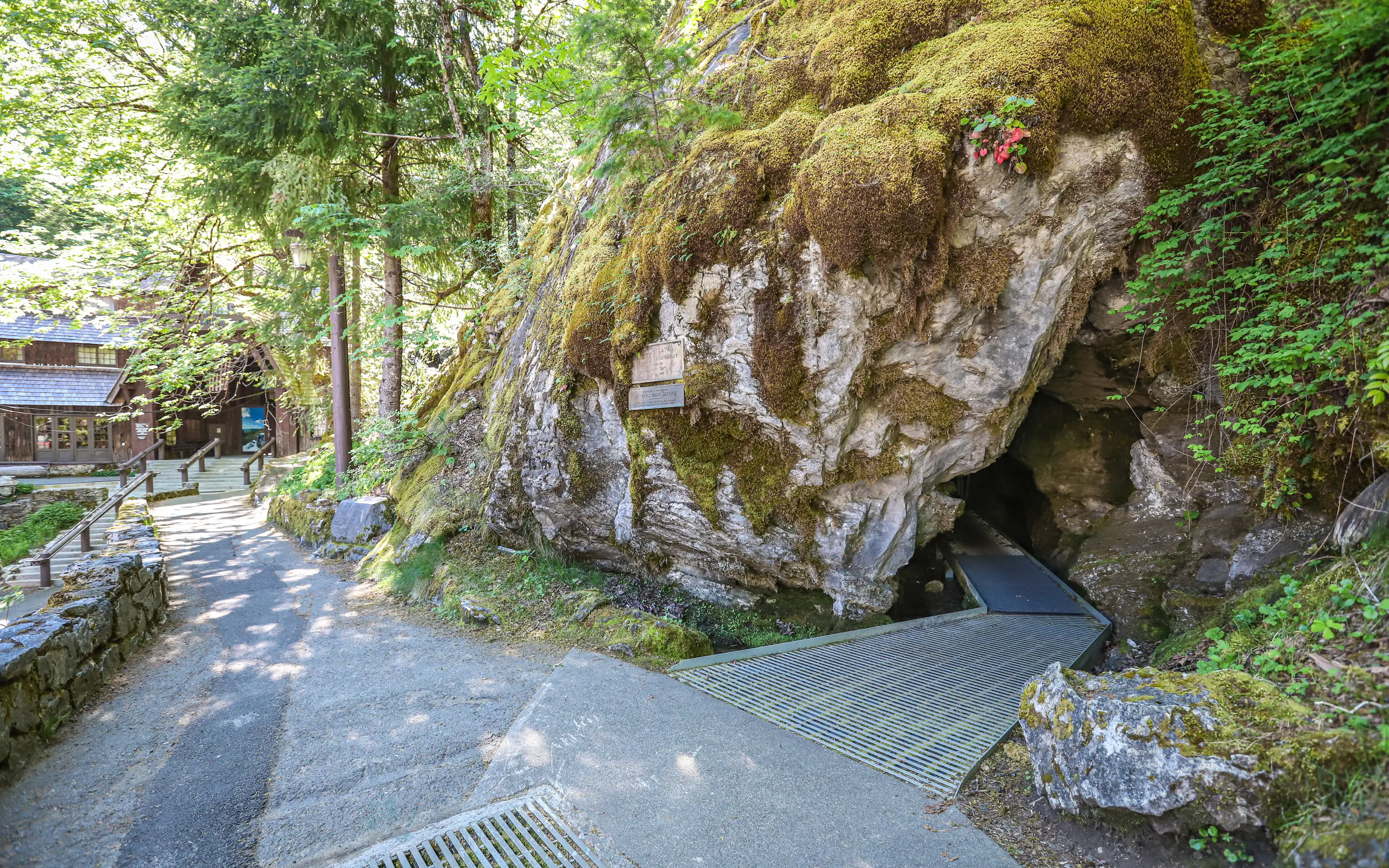
The flip side is the summer. July and August in Cave Junction deliver 11.8 hours of sunshine per day with temperatures regularly reaching the mid-to-upper 80s — warm, dry, and extraordinary for outdoor recreation. The Illinois River runs clear and cold through Illinois River Forks State Park, Oregon Caves National Monument sits within an easy drive, and the Eight Dollar Mountain Botanical Area offers a rare botanical experience that most Cave Junction residents have explored multiple times. Transplants from California who were avid hikers, river swimmers, or outdoor enthusiasts find that summer here punches well above what the town's size would suggest. The lifestyle they imagined when they thought "Oregon" is real — it's just concentrated into five months.
What they genuinely miss: year-round beach access, the food diversity of any California metro, and the social energy that comes from living near a larger population center. Grants Pass at 39 minutes fills some gaps but not all. The nearest Costco is in Medford, about an hour away. The restaurant scene in Cave Junction itself is limited. These are facts, not complaints — but they are worth naming before you make an offer.
If you want to see how Cave Junction compares directly to the city you're leaving, use the tool below — it covers the 120 largest California cities with current housing and tax data.
Home prices: Redfin median sale data, Q1–Q2 2026. Select your city to compare.
Ready to talk through what your specific California equity could do in Cave Junction? Todd can model your exact scenario in a single call.
Assuming the whole Illinois Valley is uniform. Cave Junction proper, Kerby, Takilma, and O'Brien each have distinct characters. Takilma, a few miles south on Holland Loop Road, is a longtime intentional community with a very different culture and land-use pattern than Cave Junction's town center. Buyers who drive through one area and assume the whole valley matches are sometimes surprised. If your priority is proximity to services and a conventional neighborhood feel, Cave Junction proper or the areas around the Illinois Valley Golf Course are more likely matches than the rural outskirts.
Underestimating the commute reality. The 39-minute drive to Grants Pass on US-199 is pleasant in summer and a different experience in winter. Fog settles into the Illinois Valley on cold mornings, and while snow is uncommon at Cave Junction's elevation, the mountain passes toward Medford via the Redwood Highway can complicate travel during winter storm events. Buyers who are used to California freeway culture — predictable if slow — should understand that this is a two-lane mountain highway, not an expressway.
Skipping radon testing. Oregon sits in a moderate-to-high radon zone, and homes in Josephine County — particularly older construction and manufactured homes on crawlspaces — can test elevated. California buyers are accustomed to seismic disclosures and point-of-sale retrofit requirements but often arrive without radon awareness. Every purchase offer here should include a radon contingency and professional testing as a baseline.
Expecting California-pace market dynamics. Cave Junction homes sat a median of 129 days on market in late 2025. That pace is dramatically slower than most California markets, which can create a false sense of time pressure in reverse — buyers think they have months, but the right property at the right price can still generate competitive offers from cash-heavy California transplants. The market's low inventory means any well-priced listing is more competitive than the overall statistics suggest.
Bay Area sellers arriving with $1 million or more in net equity rarely need a conventional mortgage in Cave Junction. For buyers choosing to finance anyway — to preserve liquidity or hedge deployment timing — Cave Junction's price points fall well below conforming loan limits, meaning no jumbo financing is required. Rate matters less here than terms and speed: sellers in this market respond to clean offers with short inspection windows, and all-cash with a 21-day close is a meaningful advantage. If the California property being sold was an investment property rather than a primary residence, a 1031 exchange into an Oregon investment property is worth exploring before closing escrow in California. The Cave Junction 1031 Exchange guide covers the mechanics and timelines.
Southern California sellers with $700,000–$900,000 in equity can structure conventional financing at low LTV on any Cave Junction property and keep meaningful reserves. Because Cave Junction's median sits at $351,000, even buyers putting 40–50% down are well within conforming loan territory. The focus for this group is usually on optimizing what to do with surplus equity — whether to hold cash, pay the property outright, or acquire a second parcel.
Sacramento and Inland buyers with $400,000–$550,000 in equity may find that a purchase near or below Cave Junction's median qualifies for Oregon Housing and Community Services (OHCS) programs if income thresholds apply. The covers current Oregon programs and eligibility. Buyers at this equity level should also run the math on whether carrying a small mortgage at today's rates while keeping equity invested outperforms a cash purchase — the answer depends on rate environment and individual risk tolerance.
Local Expert Takeaway: The single thing California buyers most consistently underestimate about Cave Junction is the combination of thin inventory and long days-on-market — those two facts seem contradictory but both are true simultaneously. There are rarely more than 20–30 active listings at any given time, which means when a well-priced, move-in-ready property appears, California cash buyers are often competing with each other. Arrive pre-approved or positioned to move without financing contingencies, even if you plan to carry a mortgage. The buyers who lose deals in this market are almost always the ones who assumed a 129-day median DOM meant they had time to wait.
✅ Oregon's zero sales tax and property tax rate of roughly 0.55% represent immediate, structural savings that California buyers feel within the first year — not hypothetical long-term benefits.
⚠️ Oregon does have a state income tax up to 9.9% — the "no tax state" assumption does not apply, and buyers earning $100,000+ should model their Oregon income tax bill before assuming net savings match gross savings.
📍 Cave Junction's market is small, slow on average, but competitive on good inventory — cash buyers from the Bay Area and Southern California frequently set the pace, and being unprepared to move quickly is the most common mistake.
Is moving from California to Cave Junction worth it financially?
For most California coastal sellers, the financial case is straightforward: the median home in Cave Junction is $351,000 against Bay Area medians running $1.7 million and Southern California medians between $850,000 and $1.0 million. The savings aren't marginal — they are structural, recurring, and compound through eliminated sales tax, a dramatically lower property tax bill, and reduced cost of living. The question worth asking isn't whether the numbers work; it's whether Cave Junction's rural character, limited services, and pace of life match what you actually want in your next chapter.
What does California home equity buy in Cave Junction?
A Bay Area seller with $1.4 million in equity can purchase Cave Junction's best available properties outright and still hold seven figures in capital. A Southern California seller with $800,000 in equity has complete flexibility across the market. A Sacramento buyer with $500,000 in equity steps into the top tier of available homes with meaningful reserves remaining. At the entry level, brand-new 3-bed/2-bath construction in the Eden View subdivision has listed under $400,000 — a benchmark that would be functionally impossible in any California coastal market.
What is the weather like in Cave Junction compared to California?
The summers in Cave Junction are genuinely excellent — warm, dry, and sunny from May through September, with July and August delivering over 11 hours of sunshine per day. The winters are the honest trade. November through February is persistently wet and cloudy, with only about 4.7 hours of sunshine per day in December. Buyers from San Diego or the Bay Area who are accustomed to mild, sunny winters find the adjustment significant. Buyers from the Central Valley who already deal with tule fog find it more familiar. Cave Junction's Mediterranean climate means the lifestyle gap between California and Oregon is seasonal rather than permanent — which is worth understanding before deciding.
Explore the full Cave Junction series: The Ultimate Cave Junction Relocation Guide · Is Cave Junction Safe? · Cost of Living in Cave Junction · Best Neighborhoods in Cave Junction · Cave Junction Schools & Family Life · Cave Junction Youth Sports · Cave Junction Parks & Recreation · Retiring in Cave Junction · 1031 Tax-Deferred Exchange in Cave Junction · Cave Junction First-Time Homebuyers Guide · · Moving to Cave Junction from California
Tell us what you need help with and we'll connect you with local resources.

About the Author
Todd Davidson is the founder of Living in Oregon and Living in Washington, where he publishes in-depth city guides, neighborhood resources, and local market insights covering more than 180 communities across the Pacific Northwest. While his background is in home financing and real estate, he created these digital platforms to help families research and compare regions before making a move.