Southern Oregon · Oregon
Living in Cave Junction: The Ultimate Relocation Guide (2026)
Maybe you've been priced out of Ashland or Medford and someone in a Facebook group mentioned the Illinois Valley as the last affordable corner of Southern Oregon. Maybe you're a remote worker who's done with city noise and you want five acres, clean air, and a mortgage payment that doesn't consume your life. Or maybe you drove U.S. Route 199 toward the Oregon coast and something about Cave Junction — the way the Siskiyous press in close, the way the town feels genuinely unpolished — made you pull over and look it up. Whatever brought you here, the central tension of Cave Junction is the same for almost everyone who considers it seriously: the life it offers is genuinely compelling, but it asks something real of you in return.
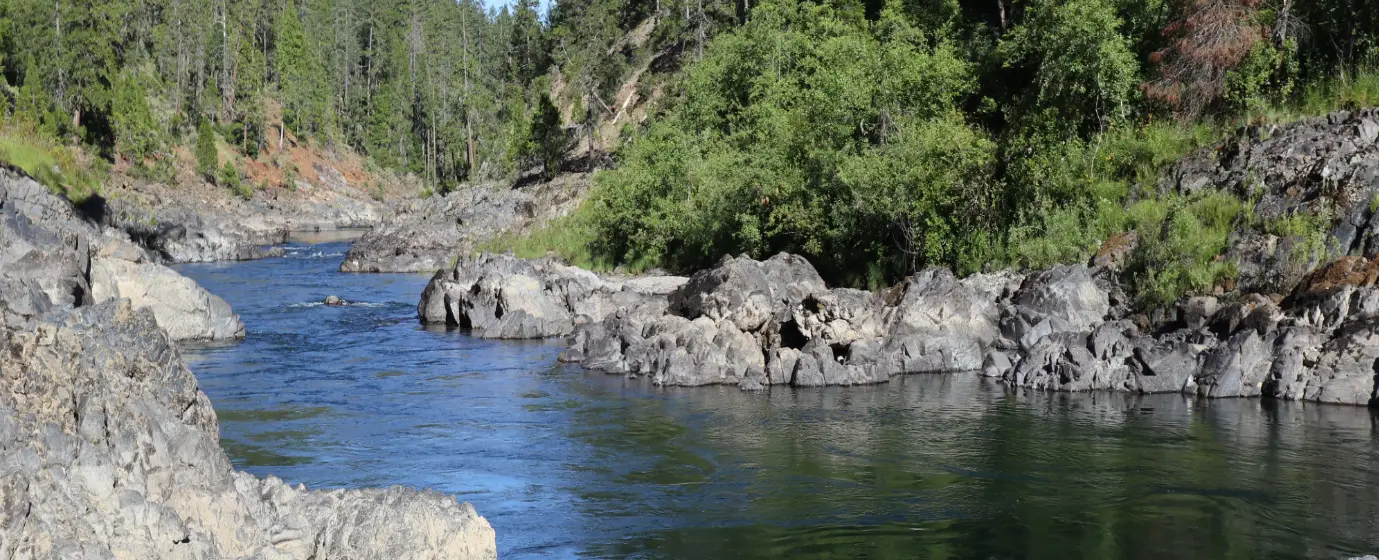
Cave Junction sits in the Illinois River Valley at roughly 1,329 feet elevation, where Redwood Highway (U.S. 199) and the Caves Highway (Oregon 46) meet — which is literally how the town got its name. It's about 39 minutes from Grants Pass, the nearest city with meaningful services, and around 41 miles from Medford's airport and hospital network. The Siskiyou Mountains frame nearly every view, the Wild and Scenic Illinois River runs through the broader valley, and Oregon Caves National Monument is up the road. The town itself covers just 1.64 square miles and has a population of approximately 2,071 — small enough that you will know your neighbors, and small enough that the nearest Target requires a 40-minute drive.
This guide is built for people doing serious due diligence. It will tell you who Cave Junction genuinely suits, which neighborhoods make sense for which buyers, how the housing market actually sits in mid-2026, and what daily life looks like after the romance of the mountains wears off. By the end, you'll know whether to keep scrolling Zillow listings in the 97523 zip code or redirect your search elsewhere.
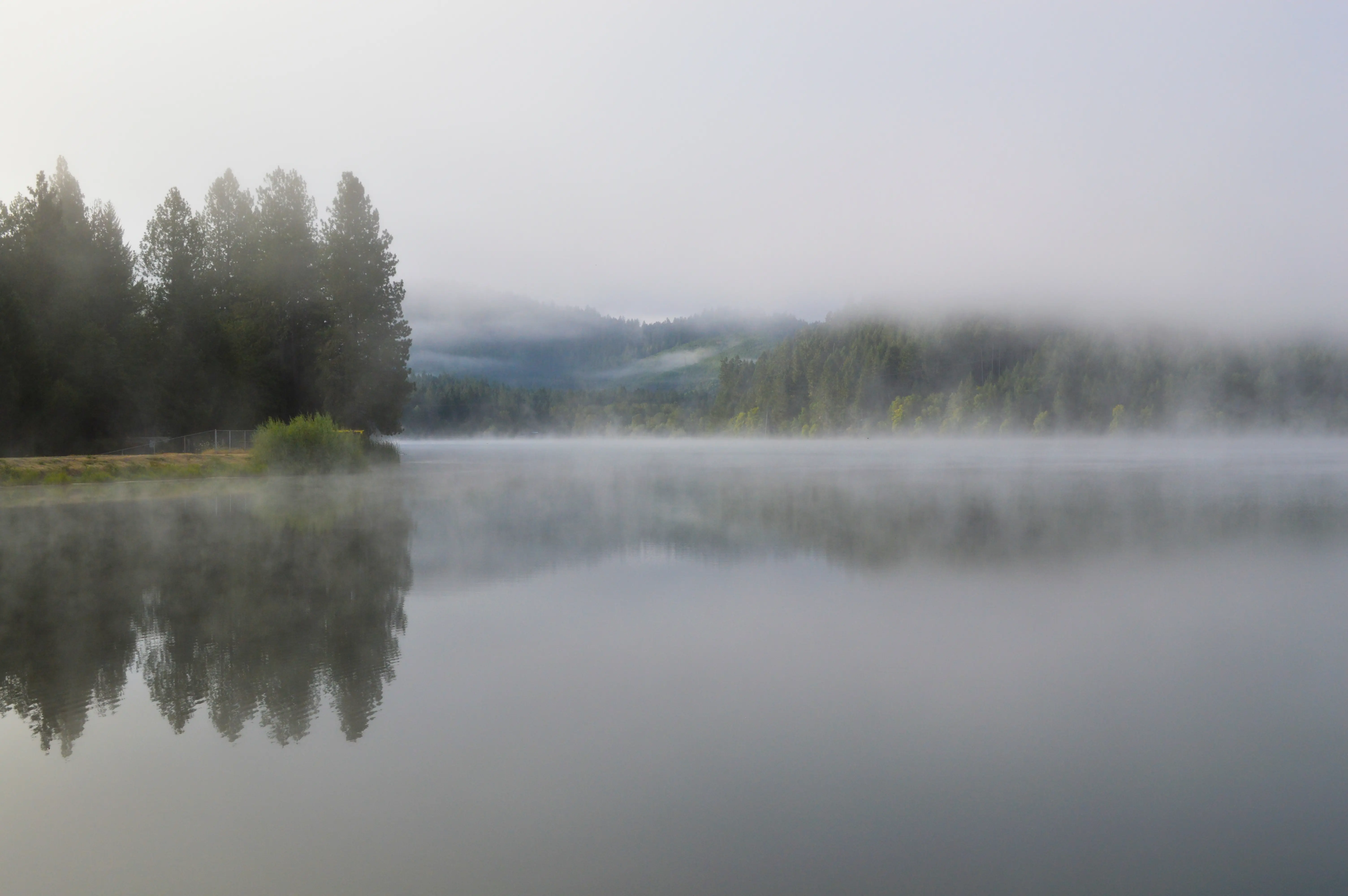
Cave Junction is not a fit for everyone — and it doesn't try to be. The town's identity is specific: rural, self-sufficient, scenery-rich, and intentionally unhurried. The table below gives you an honest read on who tends to thrive here and who tends to leave within two years.
| Best For | Why |
|---|---|
| Remote workers with flexible schedules | Low cost of entry, space, and quiet — internet access is improving but not universally fast |
| Retirees seeking affordability + nature access | Median age of 53+ reflects the community already built around this lifestyle |
| First-time buyers priced out of Medford/Grants Pass | Entry-level homes available well below Southern Oregon metro medians |
| Outdoor enthusiasts | Oregon Caves, the Kalmiopsis Wilderness, and the Illinois River are literal neighbors |
| Back-to-land and off-grid buyers | Strong local culture of self-sufficiency; land parcels available at accessible prices |
| Commuters who can compress their schedule | The 39-minute run to Grants Pass is manageable if you're not doing it five days a week |
The pace of Cave Junction is the first thing transplants notice, and it divides people quickly. A grocery run that would take 12 minutes in Medford routinely takes 30 here — not because the store is far, but because people stop and talk. That's not a complaint from locals; it's a feature. The community is genuinely neighborly in the old-fashioned sense: people know each other's business, wave from trucks, and show up when someone needs help. After six months, most residents either love this or find it suffocating. There is rarely a middle position.
The town center is anchored by U.S. 199, which functions as both the main street and the highway. There's a grocery store, a handful of local businesses, the Illinois Valley Visitor Center, and enough practical services to handle daily needs — but just barely. Specialty medical care, big-box shopping, and most restaurant dining require the drive to Grants Pass. The Siskiyou Smokejumper Base Museum on the edge of town is a genuine local institution, honoring the elite firefighters who have worked these mountain ranges for decades, and it draws curious visitors and provides a small anchor of civic pride.
The commute reality deserves honest discussion. The 39-minute drive to Grants Pass on Highway 199 is straightforward in good weather and genuinely difficult in winter. The road climbs and winds through the Siskiyous, and ice, fog, and occasional debris make it treacherous between November and March. Residents who commute daily build their schedules around weather windows, and the locals' rule of thumb is to leave an extra 20 minutes any morning after a cold night. If your job requires reliable five-day-a-week commuting, that calculation matters.
Roughly 36% of Cave Junction's population is 65 or older — a demographic fact that shapes everything from the pace of local government to what gets built and what gets prioritized. This is not a town buzzing with starter-home buyers and playdate culture. It's a town where people have largely chosen to slow down deliberately, and that ethos permeates daily life in ways both appealing and occasionally isolating for younger families.
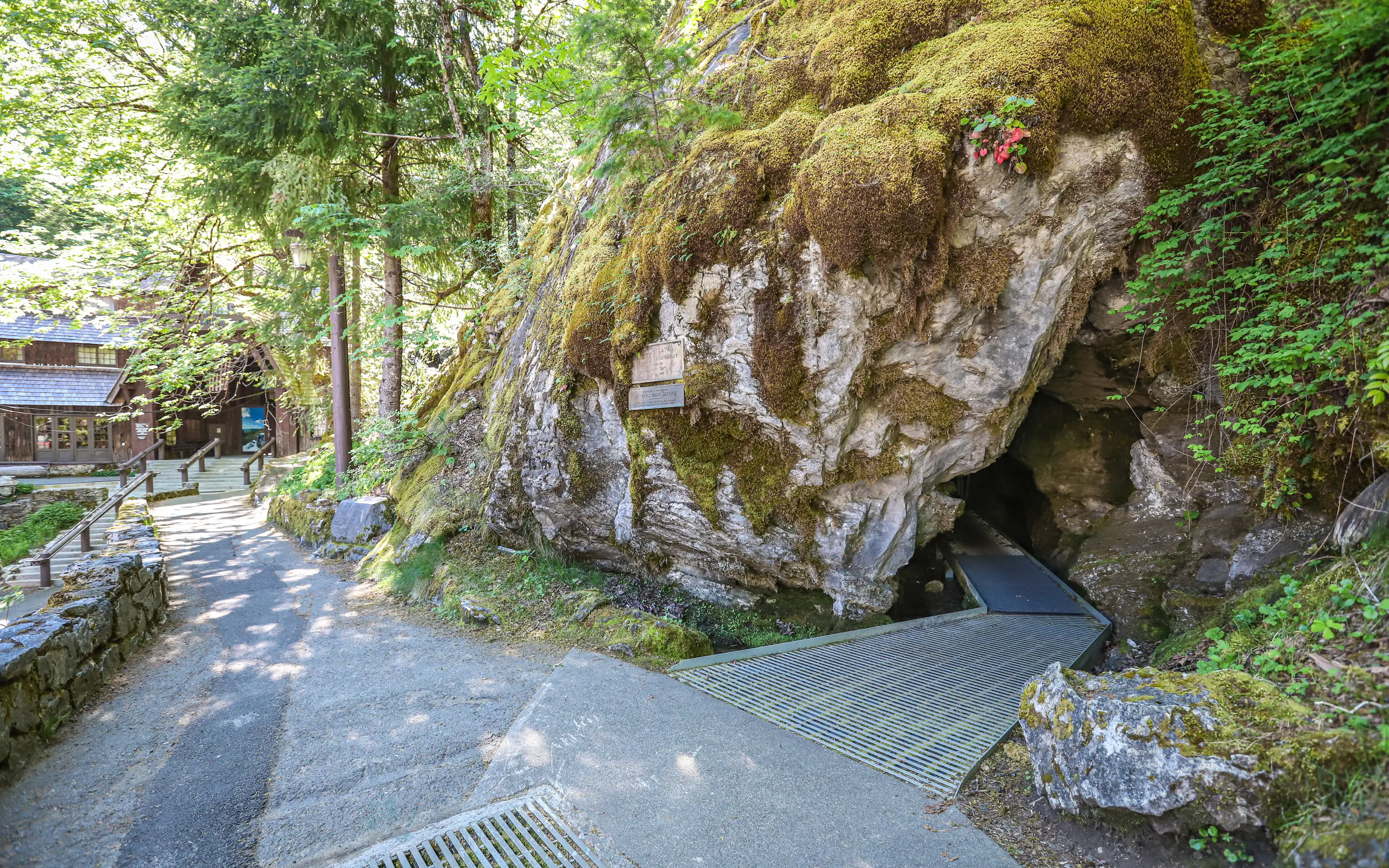
The outdoor access here is not hyperbole. Oregon Caves National Monument is one of the few marble cave systems open to the public in the American West, and while tours run seasonally from late March through November, the surface trails above the cave complex are open year-round at no charge. The constant 41°F cave temperature makes it a genuinely unusual experience — and having it 20 miles from your front door never entirely gets old. The Kalmiopsis Wilderness, Eight Dollar Mountain Botanical Area, and the Wild and Scenic Illinois River add layers of outdoor access that buyers from Portland or the Bay Area consistently describe as life-changing.
The affordability is real and significant. Cave Junction carries a cost of living index well below the national average, and with a median sold price sitting around $307,000 in mid-2026, buyers can access homes on meaningful land for what a small condo costs in Eugene. Property taxes at approximately 0.55% of assessed value remain among the lower rates in Oregon, and the median gross rent around $1,009 a month means that even renters saving for a purchase aren't bleeding money. For buyers who felt permanently locked out of Southern Oregon homeownership, the Illinois Valley changes the math.
The community's self-sufficiency culture produces a genuine richness in local knowledge and mutual aid. Neighbors here know how to handle power outages, know whose truck has a plow blade, and know which local farmers sell direct. That network is invisible to outsiders but enormously valuable once you're in it. The Illinois Valley's history — including the fact that the first gold ever discovered in Oregon, including a 17-pound nugget that remains the largest ever found in the state, came from this valley — gives residents a sense of place that is specific and earned.
Great Cats World Park, a sanctuary housing big cats and other exotic animals, is one of those local landmarks that surprises visitors who weren't expecting it and becomes a quiet point of pride for residents. The Illinois Valley Golf Course provides a recreational anchor for a significant portion of the community. And for anyone drawn to Indigenous history, the Takelma people's connection to the Illinois Valley stretches back thousands of years — a heritage that local cultural institutions are increasingly working to honor and document.
Looking to buy in Cave Junction? Estimate your payment.
Enter your numbers to see an estimated monthly mortgage payment.
Estimate only. Excludes HOA fees and mortgage insurance.
The distance from services is not an abstraction — it is a daily operational reality. Specialty medical care requires Grants Pass at minimum, and serious hospital care means Medford. If you or a family member has chronic health needs, the 39-minute drive becomes a recurring variable in your life, not a one-time inconvenience. Dental specialists, pediatric subspecialties, and urgent care options are all meaningfully limited in the Illinois Valley itself.
The school district carries a C rating, which reflects real challenges in funding, resources, and outcomes for a rural district serving a lower-income population. Families with school-age children should visit the Three Rivers/Josephine County School District's local campuses, talk to parents already in the system, and go in with clear eyes about what supplemental resources they may need to provide at home. The district serves a geographically large, economically stretched area, and expectations should be calibrated accordingly.
The housing market in mid-2026 reflects a buyer's market, but a slow one. Homes are averaging around 189 days on market — a dramatic shift from 50 days the prior year. That's both an opportunity (negotiating room, seller concessions) and a signal about underlying demand. A home in Cave Junction that doesn't sell is difficult to exit quickly. Buyers should think of this as a commitment market: you're likely staying five to seven years minimum to weather any further softening and rebuild equity.
Why do people leave? The honest list is consistent: the distance from family (most transplants don't have roots here), the winters on Highway 199, the limited social infrastructure for younger adults, and the frustration of driving 40 minutes every time you need something that isn't basic groceries. The town's small size — under 2,100 people — means that social circles can feel exhausted quickly, and professional networking is nearly nonexistent locally. For ambitious career-builders, Cave Junction is a place to live, not a place to grow professionally.
Cave Junction's geography is compact enough that "neighborhoods" function more as loose characterizations of different sections of a small town than discrete communities with defined edges. Still, distinct areas have distinct personalities worth understanding before you buy.
The stretch along U.S. 199 through the commercial center is the most accessible part of Cave Junction for anyone who needs services within walking distance or a short drive. Homes here tend toward modest older construction — many built in the 1970s through 1990s — on smaller lots. Prices at the lower end of Cave Junction's range cluster here, with some homes available in the $195,000–$265,000 range. The tradeoff is highway noise and proximity to commercial traffic.
Best for: Buyers on the tightest budgets who prioritize access to local services over quiet and space.
The stretch leading toward Oregon Caves National Monument draws buyers who want to feel the pull of the monument in their daily commute. Lots tend to be larger here, the road climbs into the forest quickly, and the character shifts from town-center to rural residential within a few minutes. Homes in this corridor vary widely from modest cabins to larger custom-built properties depending on how far you travel from the junction.
Best for: Outdoor enthusiasts and buyers who want rural character without fully leaving the town's orbit.
The quieter residential grid west of the main highway holds a mix of single-family homes on modest lots — typical suburban-style development from the 1980s and 1990s. This is where a significant portion of Cave Junction's family households are concentrated, with access to local schools and the practical services on the highway without the road noise of the corridor itself. City-wide median pricing applies broadly here.
Best for: Families with school-age children who want the most straightforward residential experience Cave Junction offers.
Technically outside city limits but deeply tied to Cave Junction's identity, the rural parcels along Illinois River Road, Hwy 199 south toward O'Brien, and the backcountry toward Takilma represent a different kind of purchase. These are the off-grid dreams: five to twenty acres, well water, septic, and Siskiyou views. Pricing varies dramatically based on acreage, improvements, and road access — from under $200,000 for raw land to well over $500,000 for developed farms.
Best for: Self-sufficient buyers, back-to-land households, and remote workers who want land as a primary asset.
Just two miles north on U.S. 199, Kerby functions as a satellite community to Cave Junction with its own character and the Kerbyville Museum as a local landmark. Kerby tends to attract buyers who want to be close to Cave Junction's services without technically being in town. Properties here often have slightly larger parcels than in-city options.
Best for: Buyers who want an alternative address without fully committing to rural isolation.
| City | Best For | Approx. Home Price | Commute to Grants Pass | Vibe |
|---|---|---|---|---|
| Cave Junction | Affordability + nature access | ~$307K median sold | 39 min | Rural, self-sufficient, older population |
| Grants Pass | Services, employment, mid-range suburban | ~$380K–$410K | — (is Grants Pass) | Small city energy, more amenities |
| Selma | True rural isolation, lowest prices | Below $280K typical | 30 min | Tiny, off-grid leaning, very rural |
| Kerby | Proximity to Cave Junction services | $270K–$340K typical | 41 min | Unincorporated quiet, slightly more land |
| Medford | Metro services, employment, medical | $385K–$430K | 55–60 min | Small metro, strong healthcare, more urban |
| Crescent City, CA | Coastal access, California proximity | $300K–$360K | 90+ min | Coastal rural, different state tax structure |
| Metric | Data |
|---|---|
| Population | ~2,071 (2020 Census; recent estimates trend slightly lower) |
| Median Sold Home Price | ~$307,000 (mid-2026, trailing 90 days) |
| Median Household Income | $39,291 |
| Property Tax Rate | ~0.55% of assessed value |
| Cost of Living Index | 89.7 (U.S. average = 100) |
| Median Age | 53.6 years |
| Commute to Grants Pass | 39 minutes via U.S. 199 |
| School District | Three Rivers/Josephine County SD (C rating) |
| Violent Crime per 1,000 | 5.5 |
| Property Crime per 1,000 | 17.3 |
| Owner-Occupied Housing | 71.1% |
| Avg. Days on Market | ~189 days (mid-2026) |
The Oregon Caves Chateau closure shapes the tourist rhythm right now. The historic Chateau inside the monument is currently closed for rehabilitation, which means the seasonal tourism economy in Cave Junction is thinner than usual. For residents, that translates to slightly quieter summers along the Caves Highway and fewer tourism-adjacent businesses running at full capacity. This will change when the Chateau reopens, and long-term buyers should factor the tourism bounce-back into their thinking.
The smokejumper legacy is taken seriously here. The Siskiyou Smokejumper Base Museum isn't just a roadside curiosity — it reflects the genuine relationship between Cave Junction and the firefighting culture that has defined the surrounding mountains for generations. The base itself trained elite wildland firefighters for decades, and locals maintain a deep awareness of fire season in a way that newcomers can underestimate. If you're buying in the Illinois Valley, understanding fire risk, defensible space requirements, and your evacuation routes is part of responsible homeownership here.
The Illinois Valley's gold rush history is unusually specific and real. The largest gold nugget ever found in Oregon — a 17-pound specimen — came out of this valley. That history is not just a fun fact; it reflects the geological character of the surrounding range and the prospecting culture that still exists in small pockets. You will occasionally encounter neighbors who take recreational gold panning seriously, and local conversations about land and water rights often have layers that go back well past the most recent deed.
What I Would Not Do: I would not buy a home on the Highway 199 corridor without first spending a weekday morning and a weekend afternoon on that street. Highway traffic through town is heavier than the small-city scale suggests — logging trucks, tourism traffic in summer, and long-haul vehicles heading to and from California move through the center of Cave Junction at a volume that makes certain blocks genuinely noisy. Buyers who fall in love with a property's price point without accounting for its position relative to the highway commonly find themselves adjusting their expectations within the first season.
Local Expert Takeaway: The buyers who get Cave Junction right in 2026 are the ones treating the extended days on market as leverage, not a warning sign. With homes averaging 189 days before closing and sellers accepting below-asking offers across the board, this is a market where patient buyers can negotiate real concessions — inspection credits, price reductions, and seller-paid closing costs — that weren't available two years ago. Focus your search west of the highway for residential quiet, get a well and septic inspection from a Josephine County-licensed inspector before you remove contingencies, and budget for the Grants Pass drive as a regular operating cost of life here. The land values and the outdoor access are real; the price is the most accessible it's been in years.
✅ Cave Junction offers genuine affordability in a Southern Oregon market where prices have otherwise climbed out of reach — with median sold prices around $307,000, first-time buyers and remote workers can access real land and real homes.
⚠️ The isolation is structural, not incidental. The 39-minute drive to Grants Pass is the minimum for specialty services, and the highway through the Siskiyous is a genuine winter driving challenge.
📍 The community has a distinct identity — older demographic, self-sufficient culture, deep connection to outdoor and environmental heritage — that suits certain buyers profoundly and others not at all.
Is Cave Junction a good place for families with children?
Cave Junction can work for families who go in prepared. The Three Rivers/Josephine County School District carries a C rating, which reflects the funding and resource challenges common to rural Oregon districts. Families who supplement with extracurricular activities in Grants Pass and are active in local school volunteer culture typically report more satisfaction. The outdoor environment for raising children — access to the Illinois River, the Caves, hiking — is genuinely exceptional.
What is the crime situation in Cave Junction?
Cave Junction's violent crime rate runs approximately 5.5 per 1,000 residents, and property crime sits around 17.3 per 1,000 — both elevated compared to the Oregon statewide average and reflective of challenges common to small rural communities with higher poverty rates. The poverty rate in Cave Junction is approximately 27.7%, which correlates with the property crime pattern. Most residents describe the community as safe in daily lived experience, while acknowledging that property security — particularly for vehicles and outbuildings — warrants attention.
How does Cave Junction compare to living in Grants Pass?
Grants Pass offers meaningfully more services — medical specialists, restaurants, retail, employment — at a home price premium of roughly $75,000–$100,000 over Cave Junction's current median. Cave Junction gives you more land for the dollar, a slower pace, and daily immersion in mountain and river landscape that Grants Pass can't match. The decision typically comes down to how often you need urban services and whether the 39-minute commute feels like a reasonable exchange for what you're gaining on the other end.
Explore the full Cave Junction series: The Ultimate Cave Junction Relocation Guide · Is Cave Junction Safe? · Cost of Living in Cave Junction · Best Neighborhoods in Cave Junction · Cave Junction Schools & Family Life · Cave Junction Youth Sports · Cave Junction Parks & Recreation · Retiring in Cave Junction · 1031 Tax-Deferred Exchange in Cave Junction · Cave Junction First-Time Homebuyers Guide · · Moving to Cave Junction from California
Tell us what you need help with and we'll connect you with local resources.

About the Author
Todd Davidson is the founder of Living in Oregon and Living in Washington, where he publishes in-depth city guides, neighborhood resources, and local market insights covering more than 180 communities across the Pacific Northwest. While his background is in home financing and real estate, he created these digital platforms to help families research and compare regions before making a move.