Central Oregon · Oregon
Living in Bend, Oregon: The Ultimate Relocation Guide (2026)
Maybe your company just announced remote-first and you've been watching Bend Instagram for three years wondering if it's real. Maybe you got priced out of Portland, did the math on Central Oregon, and now you're trying to figure out whether $725,000 buys you something reasonable or just a starter home with a view of someone else's garage. Maybe you drove through on a ski trip, saw the Deschutes River glittering through Drake Park in late afternoon light, and started mentally rearranging your life. Whatever brought you here, the central tension of moving to Bend is this: it is genuinely one of the most livable small cities in the American West, and it will cost you considerably more than its size suggests it should.
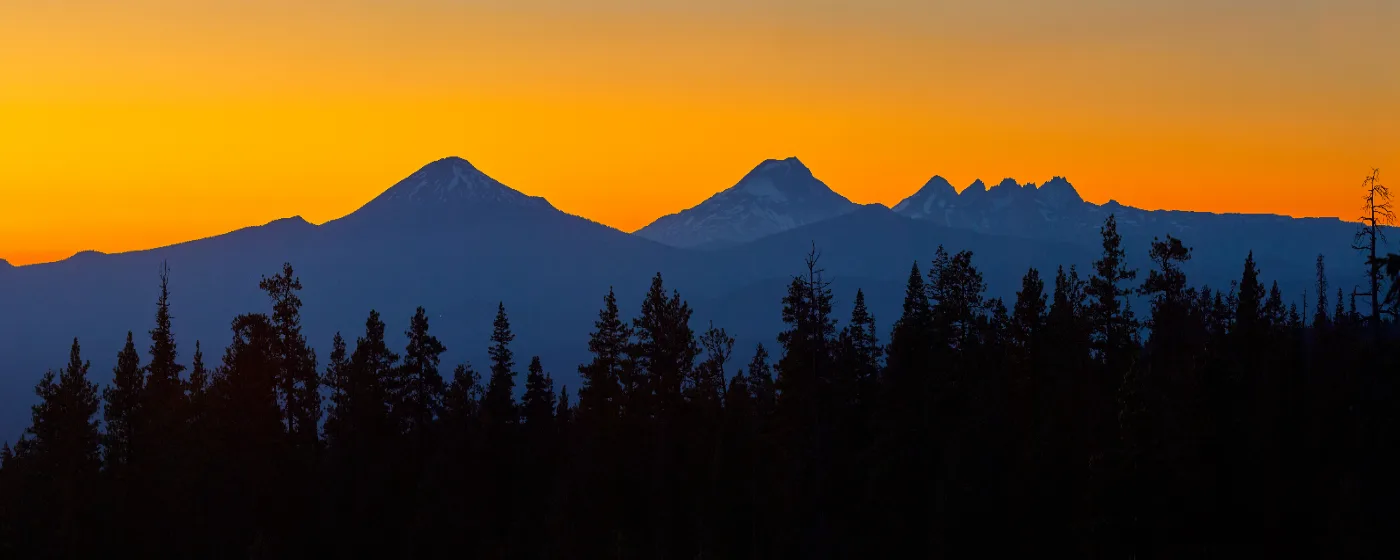
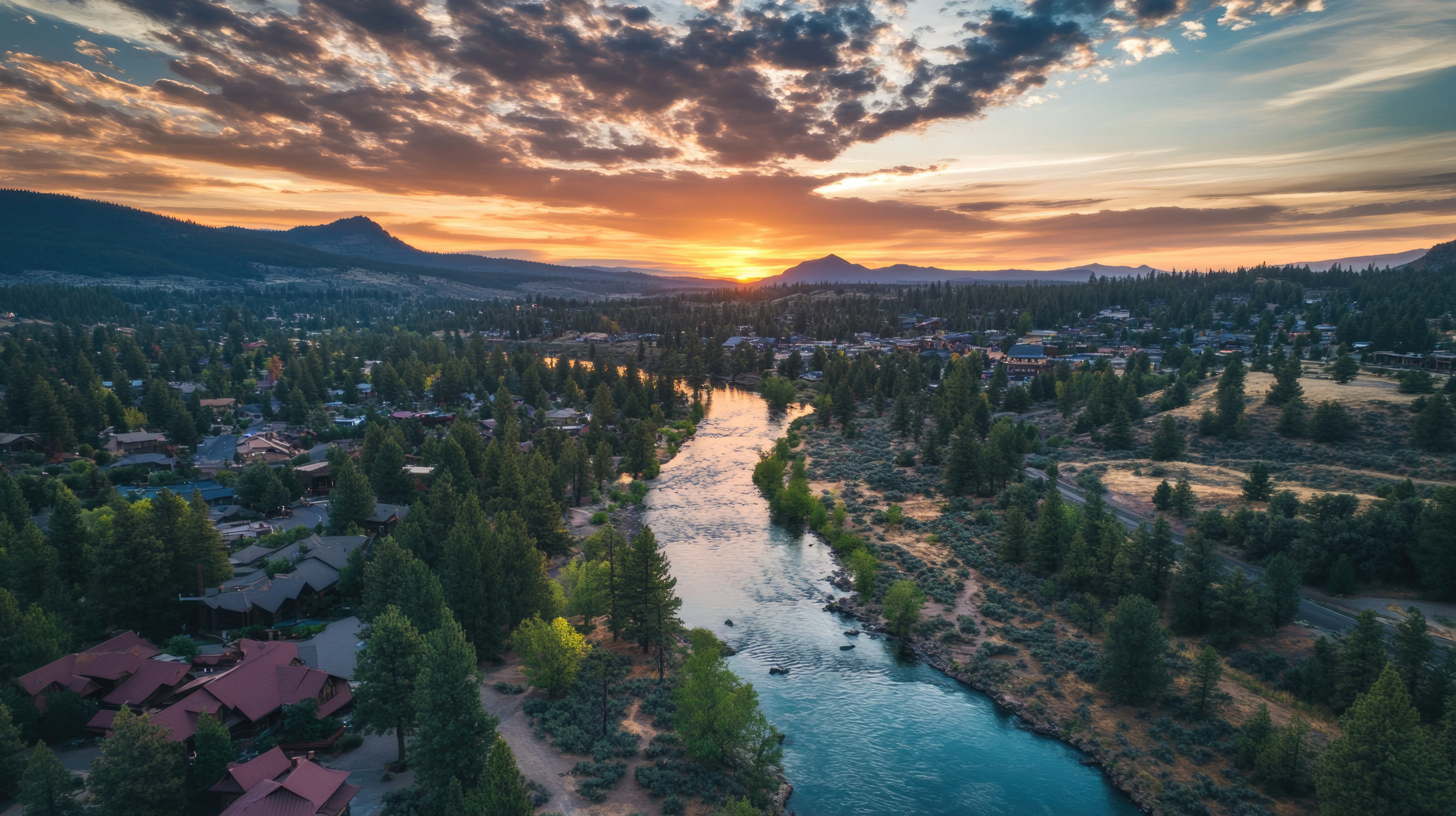
Bend sits at roughly 3,600 feet in Central Oregon, east of the Cascades and a world apart from the Willamette Valley. The mountains that make it spectacular — Bachelor, the Three Sisters, the Broken Top ridgeline — also make winter access complicated and summer wildfire smoke an annual reality. The Deschutes River runs right through downtown, connecting the Old Mill District to Drake Park in a way that shapes where people live, what they do on weekends, and how much a zip code costs. The city has grown from a mill town to a mid-sized outdoor recreation hub, adding roughly 9,000 residents since the 2020 census, and that growth has permanently reshaped both the housing market and the daily experience of living here.
This guide is built for the person who wants the unvarnished version — not the Chamber of Commerce pitch, not the Instagram reel. You'll find honest neighborhood breakdowns, a clear-eyed look at what life here actually costs, who thrives in Bend and who tends to leave, and the specific local knowledge that separates people who land well from people who buy in the wrong neighborhood for their lifestyle. By the end, you'll know whether Bend is the right call.
Before diving into the details, it helps to know whether Bend fits your life at a structural level. The table below gives you honest intent-based verdicts — use it as a first filter.
| Best For | Why |
|---|---|
| Outdoor enthusiasts | Mt. Bachelor, Deschutes River trails, Smith Rock, and hundreds of miles of singletrack within 30 minutes of downtown |
| Remote workers | Strong fiber internet infrastructure, coworking options, and a lifestyle that rewards flexibility — no Portland commute required |
| Families with school-age children | Bend-LaPine Schools, strong youth sports culture, and neighborhoods purpose-built for families (Northwest Crossing, Larkspur) |
| Active retirees | Year-round recreation, High Desert Museum, Tetherow and Broken Top communities, excellent healthcare at St. Charles |
| Move-up buyers from other Oregon cities | Equity from Portland or Eugene can land you a meaningful upgrade in square footage and lifestyle here |
| First-time buyers with flexibility | East side neighborhoods like Larkspur and Mountain View offer the most realistic entry points under the city-wide median |
The first thing longtime residents will tell you is that Bend no longer feels small. That's not a complaint exactly — it's an acknowledgment that the city hit a threshold somewhere around 2018 where the infrastructure started struggling to keep pace with the arrivals. Newport Avenue on a Saturday afternoon, the roundabouts off 27th Street during afternoon pickup, the line at Bend's most popular breakfast spots stretching onto the sidewalk by 8:30 a.m. — these are the textures of a city that has grown faster than its road network anticipated.
That said, the average commute inside Bend runs around 15 minutes, which is genuinely remarkable for a city its size. Most people live close to where they work, and the trail network — particularly the Deschutes River Trail and the Phil's Trail complex — makes human-powered commuting viable in a way that's rare outside of college towns. For Portland commuters, the math is brutal: driving the roughly 160 miles over the Cascades on Highway 26 or Highway 20 takes three hours in good conditions, longer in winter. Bend is not a commuter suburb of Portland. If your job requires weekly in-person time in the metro, this move needs a hard look at the logistics.
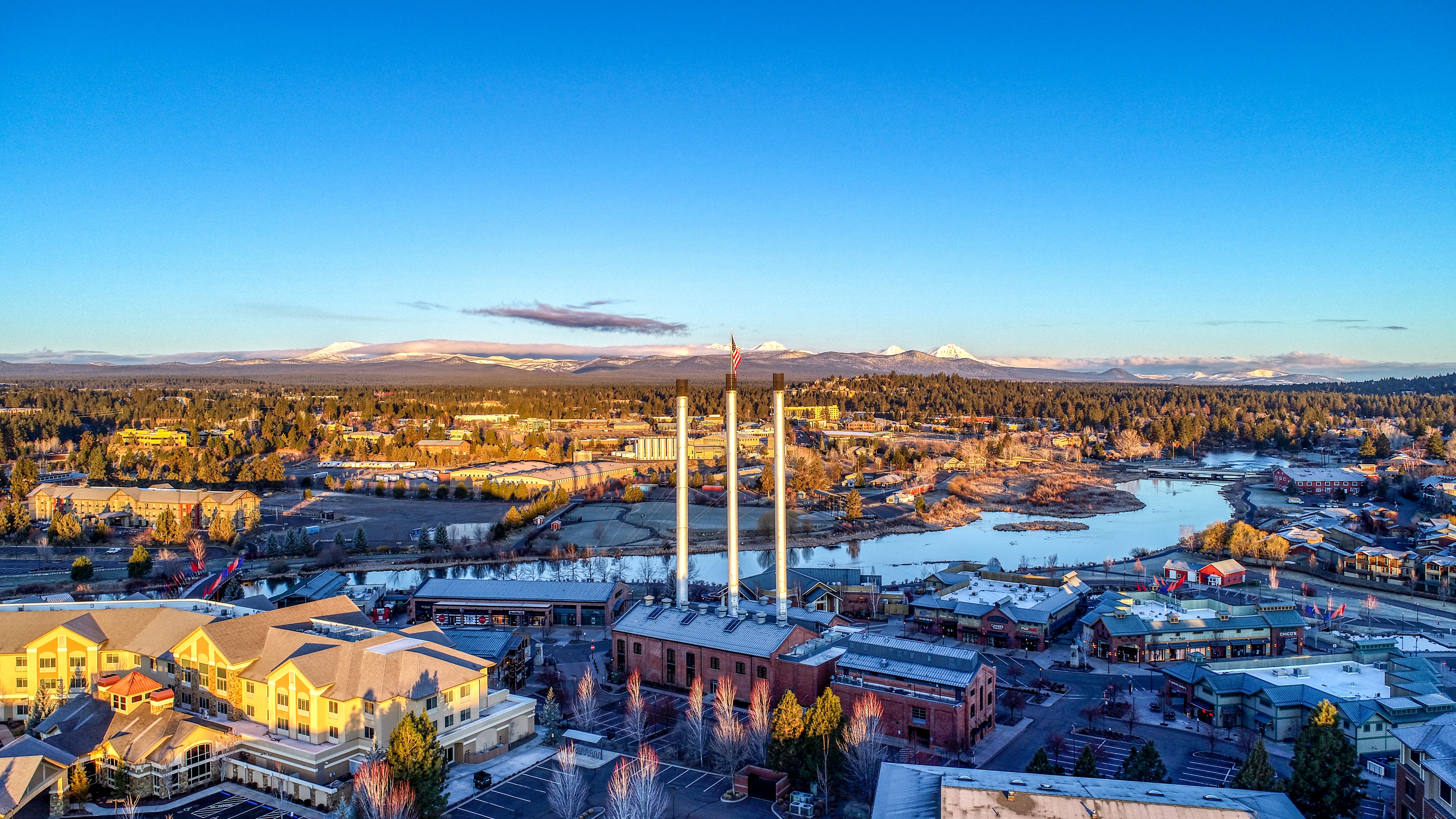
The town center is genuinely functional. The Old Mill District anchors the south end of downtown with a mix of national retailers, local restaurants, and the Les Schwab Amphitheater (now Hayden Homes Amphitheater) along the river. Wall Street and Bond Street make up the core of downtown proper — locally-owned boutiques, wine bars, restaurants, and the kind of walkable blocks that people from Portland feel immediately comfortable in. Mirror Pond and Drake Park give the whole thing a natural centerpiece that most cities twice Bend's size would envy.
The community vibe leans active and outdoorsy, which is real but not universal. There is a genuine arts scene, a strong craft beverage culture anchored by Deschutes Brewery and a dozen other craft operations, and a local food scene that punches well above its weight for a city of 109,000. What surprises most people after six months of living here is how quickly they stop driving to Portland for things. The city has developed enough retail and dining depth that the "we'll just go to Portland" reflex fades — sometimes faster than expected, sometimes not fast enough.
Access to the outdoors is not a marketing line — it is the actual daily experience. Mt. Bachelor is 22 miles from downtown, and a season pass there is a realistic purchase for working families, not just weekend warriors. Smith Rock State Park sits 30 minutes north in Terrebonne and draws international climbers while remaining a reasonable weeknight hike for locals. The Deschutes River runs cold and fishable through the center of the city itself. People who move here for the outdoor access almost universally report that the reality exceeds what they expected — the proximity is that good.
The medical infrastructure is serious. St. Charles Health System is the dominant regional employer and operates a full-service medical center in Bend that serves all of Central Oregon. For a city of Bend's size east of the mountains, having Level II trauma capability and specialty care locally is not something to take for granted — it is one of the primary reasons active retirees choose Bend over smaller Central Oregon communities.
The absence of sales tax compounds over time. Oregon's no-sales-tax structure is meaningful for everyday purchasing, and in a city with Bend's retail density, the savings add up in a way that partially offsets the higher housing costs. Paired with a relatively low property tax rate — approximately 0.60% effective rate on assessed value — the carrying cost of homeownership here is lower than in many comparably priced California or Washington markets.
The craft culture and independent business ecosystem create a downtown that feels genuinely local rather than chain-dependent. Deschutes Brewery has been here since 1988 and remains a landmark; the broader beer and spirits scene has grown around it into something that visiting food and beverage journalists consistently notice. For people relocating from larger cities, the quality-to-crowd-size ratio of Bend's food and drink scene is one of the most frequent sources of pleasant surprise.
The smoke season is real and getting longer. Central Oregon sits in a bowl that traps wildfire smoke during August and September, and in recent years some of that smoke has extended into late July and early October. Residents manage it — air purifiers, monitoring apps, adjusted outdoor schedules — but buyers coming from the Pacific Coast or the Willamette Valley should understand that Bend's summer air quality is not reliably clean. In bad years, the smoke disrupts outdoor recreation for weeks at a stretch.
The housing affordability ceiling is lower than the city's income data suggests. The median household income of approximately $96,394 sounds reasonable until you place it next to a $725,000 median home price — a ratio that makes ownership deeply challenging for single-income households and anyone without significant equity from a previous property. Renters face it even more acutely: nearly half of Bend's renter households are cost-burdened, spending more than 30% of their income on housing. The city needs to build an estimated 15,700 homes over the next eight years to address the shortfall, and that construction pace has not historically matched demand.
Winter access over the Cascades creates a real sense of geographic isolation. Highway 20 and Highway 26 both close or face chain requirements during heavy snow, and while the drives to Portland, Eugene, or Salem are manageable in good conditions, a bad winter can make the logistics genuinely inconvenient. This affects everything from visiting family to attending Portland concerts and sporting events. People who relocated from the metro area for Bend's lifestyle often underestimate how much they relied on casual city access until it's gone.
Why some people leave. The most common reasons residents eventually depart are not about lifestyle quality — they're about money. Families who bought at the peak and need to cash out, young professionals who cannot get into ownership and don't want to rent indefinitely, and remote workers whose companies return to in-person policies all find themselves in difficult positions. Oregon's state income tax — reaching up to 9.9% at higher income levels — also comes as a genuine shock to California transplants who expected lower taxes across the board.
Not every neighborhood in Bend deserves equal attention from a relocating buyer. The eight below represent the most practically distinct choices based on price point, lifestyle fit, and honest tradeoffs.
Northwest Crossing is the closest thing Bend has to a walkable neighborhood built from the ground up with intention. Brooks Resources master-planned it with an alley-loaded garage system, a neighborhood commercial core, pocket parks, and trail connections that reach Shevlin Park within a 10-minute walk. Homes run $900,000 and above, with the adjacent Discovery West addition — the neighborhood's newest chapter featuring high-end sustainable construction — pushing luxury pricing further. The honest catch is that the walkability, while real, depends on what you're walking to; the commercial core is pleasant but not a substitute for downtown, which is a 10-minute drive.
Best for: Buyers who want a planned, trail-connected community with a genuine neighborhood feel and don't mind west side pricing.
Awbrey Butte rises northwest of downtown, and the homes that occupy its ridgeline offer some of the most unobstructed Cascade views in the city — Three Sisters, Broken Top, and Bachelor visible on clear days from living room windows. Custom and semi-custom construction dominates, with Awbrey Glen Golf Club providing an anchor amenity. View-premium properties command $200,000 to $400,000 above comparable homes without ridge-top positioning, and buyers should be aware that not every address on the Butte delivers those views — elevation and lot orientation vary significantly. Entry points sit around $1 million, with the most desirable view lots considerably above that.
Best for: Luxury buyers prioritizing Cascade views, privacy, and golf access without the gated community structure of Broken Top or Tetherow.
Old Bend is the historic core — craftsman bungalows, older homes on established lots, and a walkability score that reflects proximity to Drake Park, Mirror Pond, and the Deschutes River Trail. This is the neighborhood for buyers who want to feel most connected to Bend's original identity: tree-lined streets, genuine older architecture, and a five-minute walk to the farmers market or the river. Inventory is limited and competition tends to be consistent precisely because everyone who wants character and location wants Old Bend. Expect prices well above the city-wide median in most cases, with condition varying considerably between properties.
Best for: Buyers who prioritize walkability, river access, and historic character over square footage or newer construction.
River West runs along the west bank of the Deschutes just north of downtown, and its premium is built almost entirely around proximity to the river and Drake Park. The mix of older custom homes and newer infill construction means condition and layout vary, but the location does not — this is as close to the river as residential Bend gets. Pricing reflects that reality at $900,000 and above for most transactions, with a tight inventory that rarely softens regardless of broader market conditions. Buyers here tend to know exactly what they're buying: location, not footage.
Best for: Buyers for whom river proximity and walkability to downtown are non-negotiable, and who have the budget to pay for both.
Larkspur sits on Bend's east side and functions as the primary landing zone for first-time buyers and families who need to be in the city but cannot absorb west side pricing. Homes generally range from the mid-$500,000s to the low $600,000s, giving buyers meaningful savings relative to the city-wide median without leaving Bend's city limits. The neighborhood is established and family-oriented, with reasonable access to Bend's east side commercial corridors. The tradeoff is distance from downtown and the river — not far on a map, but practically distinct from the walkable west side experience.
Best for: First-time buyers and families who need to own in Bend and want the most realistic entry point.
Mountain View occupies northeast Bend and shares Larkspur's role as an affordable-by-Bend-standards landing spot. New construction appears here more readily than in many other parts of the city, which means buyers can sometimes find updated layouts and systems at prices in the mid-$500,000 range. The neighborhood is straightforward residential — functional without much distinctiveness — and the commute to downtown or the west side commercial corridors adds 10 to 15 minutes in afternoon traffic. For buyers whose priority is ownership over aesthetics, Mountain View delivers.
Best for: Buyers prioritizing newer construction, value, and ownership — and who are comfortable trading centrality for affordability.
Tetherow is a resort-style community in southwest Bend built around a David McLay Kidd-designed golf course, and it functions almost as a self-contained lifestyle enclave. Residents can walk to the Tetherow Lodge and The Row restaurant, access trails from their backyard, and leave for months knowing the HOA maintains the exterior — making it disproportionately popular with second-home buyers and active retirees who want a lock-and-leave property. Pricing sits at $1 million and above, with high-finish construction throughout. The tradeoff is that Tetherow's lifestyle is most rewarding if you're actually using its amenities; buyers who would rarely access the golf course or lodge may find the premium harder to justify.
Best for: Active retirees, second-home buyers, and golf-oriented households who want a resort lifestyle embedded in a residential community.
Broken Top is the gated address that Bend's long-established families and executives have gravitated toward for decades. The Tom Weiskopf-designed golf course provides the anchor, but the appeal is more broadly about privacy, estate-sized lots, mature landscaping, and a community culture that values discretion over visibility. Homes start at $1 million and climb well above that for the best lots and renovated estates. Broken Top's prestige is real, but so is the commitment it represents — gated communities require membership alignment with a particular lifestyle model, and buyers who prefer neighborhood permeability may find the format less appealing than the real estate itself.
Best for: Buyers seeking a prestige gated address with golf, privacy, and a long-established community identity.

Bend's geography shapes property values in meaningful ways that matter when you're planning a long-term move. Neighborhoods like Northwest Crossing and Awbrey Butte tend to hold value well due to walkability, views, and overall neighborhood quality — and well-priced homes there routinely go under contract within days. River West draws buyers who want proximity to the Deschutes River corridor, and inventory stays tight. If your budget is under $750,000, being strategically focused on which areas align with your priorities is important, because you won't have the luxury of slow decision-making in this market.
Before you start touring homes, please talk to a lender. Not because it's a formality, but because your true monthly payment includes property taxes, homeowner's insurance, any HOA dues, and your loan structure — and that number is often meaningfully different from what an online calculator suggests. I always encourage buyers to identify a comfortable payment, not just chase the maximum they're approved for. Relocating is already a big transition; knowing your real numbers before you fall in love with a home makes the whole process far less stressful.
| City | Best For | Median Home Price | Commute to Bend | Vibe |
|---|---|---|---|---|
| Bend | Full amenity set, outdoor access, schools | $725,000 | — | Active mid-size city |
| Redmond | Affordability, families, airport access | ~$430,000–$470,000 | 18 min | Growing suburb, practical |
| Sisters | Small-town charm, quiet lifestyle | ~$600,000–$650,000 | 22 min | Artsy mountain village |
| Sunriver | Resort living, second homes, vacation rental | Varies widely | 25 min | Resort community |
| La Pine | Maximum affordability, rural land, space | ~$300,000–$380,000 | 40 min | Rural high desert |
| Prineville | Workforce housing, rural character | ~$300,000–$350,000 | 30 min | Working-class high desert |
| Category | Detail |
|---|---|
| Population | ~109,105 (2026) |
| Median Home Price | $725,000 (Zillow index, mid-2026) |
| Median Household Income | ~$96,394 |
| Property Tax Rate | ~0.60% effective rate |
| School District | Bend-LaPine School District (B rating) |
| Average Commute (local) | ~15 minutes |
| Drive to Portland | ~3 hours (Hwy 20 or 26) |
| Violent Crime per 1,000 | 2.7 |
| Property Crime per 1,000 | 14 |
| Major Employers | St. Charles Health System, Mt. Bachelor, Les Schwab, Deschutes Brewery, Lonza, Epic Aircraft |
| No State Sales Tax | Yes — Oregon statewide |
First Friday Bend has been a downtown institution for years — galleries, studios, and shops open late on the first Friday of each month, drawing locals out of their routines and giving the Wall Street corridor a block-party energy that doesn't happen any other night. It's genuinely community-rooted rather than tourist-staged, and it's one of the clearest windows into the arts and small-business culture that longtime residents cite when explaining why Bend is more than a ski town.
Pole Pedal Paddle is the annual multi-sport relay race in May that captures something essential about Bend's competitive-but-community character. Teams race through alpine skiing, Nordic skiing, cycling, running, canoeing, and a sprint finish — and the event has been running since 1977. It's not a spectator event in the traditional sense; it's the kind of thing where your neighbor is on a team and you're on a team and you'll see each other at the finish line on the Deschutes.
The Tuesday and Saturday Bend Farmers Market on Oregon Avenue runs late spring through fall and is one of the genuinely social anchors of the city's warm-weather calendar. It is not a tourist market — it runs on regulars, and the same vendors appear week after week through the season.
What I would not do if moving to Bend: I would not buy on the east side without first spending a Saturday afternoon driving the route between that address and the places I'd use most — Drake Park, downtown, the west side trailheads. The distances look manageable on Google Maps, but the cross-town pattern — particularly on 3rd Street or Reed Market Road during afternoon hours — adds meaningful friction to daily life. A 20-minute drive at 10 a.m. becomes a 35-minute drive at 5 p.m., and that gap compounds over years of living. Know what you're accepting before you accept it.

Local Expert Takeaway: If you're deciding between west side and east side, don't optimize for the median price — optimize for where your daily life actually happens. A buyer who works remotely, hikes the Phil's Trail system three mornings a week, and walks to dinner on Bond Street should absorb the west side premium; it will pay off in daily quality of life in a way that shows up every morning. A buyer who works at St. Charles, coaches youth soccer at Riverbend Park on weekends, and doesn't need to walk anywhere should take a hard look at Larkspur or Southeast Bend — that $150,000 to $200,000 in savings is real money that doesn't disappear from your life just because you chose east side.
✅ Bend's outdoor access, medical infrastructure, and downtown quality are genuine — not marketing. The lifestyle case for moving here holds up under scrutiny.
⚠️ The affordability math is harder than the headlines suggest. A $725,000 median against a $96,394 household income requires careful financial planning, not just enthusiasm.
📍 Your neighborhood choice is effectively a lifestyle choice. West side and east side are different cities in terms of daily experience — choose based on where your real life will happen, not where the best views are.
Is Bend a good place to raise a family?
Bend consistently delivers for families with children. The Bend-LaPine School District earns a solid B rating, the youth sports infrastructure is extensive, and neighborhoods like Northwest Crossing and Larkspur are purpose-built for family life. The outdoor access that draws adults here functions even better for kids — year-round skiing, river access, and trail systems that create an active childhood most urban families can only approximate.
What is the crime rate in Bend?
Bend's violent crime rate runs approximately 2.7 per 1,000 residents — well below the Oregon state average — and property crime sits at roughly 14 per 1,000. The city is generally considered safe for a growing mid-size Western city, though property crime rates trend higher in commercial corridors and the Old Mill area compared to established residential neighborhoods. Most residents report feeling safe in daily life throughout the city.
How does Bend compare to Portland for people considering the move?
Portland offers higher median incomes, more diverse employment options, and cultural infrastructure that a city of 109,000 cannot replicate. Bend offers lower violent crime, dramatically better outdoor access, a smaller and more cohesive community feel, and arguably better quality-of-life metrics for households that can absorb the housing cost. The critical difference is the three-hour drive separating them — Portland residents think of Bend as a weekend destination, and Bend residents eventually stop thinking of Portland as easily accessible. If your life requires regular Portland access, that commute will define your experience here.
Explore the full Bend series: The Ultimate Bend Relocation Guide · Is Bend Safe? · Cost of Living in Bend · Best Neighborhoods in Bend · Bend Schools & Family Life · Bend Youth Sports · Bend Parks & Recreation · Retiring in Bend · 1031 Tax-Deferred Exchange in Bend · Bend First-Time Homebuyers Guide · Bend Down Payment Assistance Guide · Moving to Bend from California