
Central Oregon · Oregon
1031 Exchange & Investment Real Estate in Bend, Oregon (2026)
Not everyone doing a 1031 exchange is a seasoned portfolio investor. A surprising share of the capital flowing into Bend right now belongs to California homeowners — people who bought in the Bay Area or Southern California twenty years ago, finally sold, and are now sitting on proceeds large enough to buy outright in a market where $725,000 still gets you a real house. Bend has become a serious replacement property destination because the fundamentals are real: a growing population of 109,000, a tourism economy that drives short-term rental demand, and a long-term employment base anchored by St. Charles Health System, Lonza, and Mt. Bachelor that keeps year-round renters in the market.
The rental picture in Bend is more nuanced than the headline numbers suggest. About 39% of Bend's housing is renter-occupied — over 16,000 units — and the demographic is diverse: traveling medical professionals, resort-industry workers, remote workers who came for the lifestyle and stayed for the trails, and families priced out of ownership at the current median. The property types that trade most often as investment vehicles are single-family rentals in established neighborhoods, duplexes and small multifamily buildings along the city's older corridors, and new construction ADU-equipped homes where an investor can house-hack or rent both units. Vacancy rose above 10% in 2024 and 2025 after a historic wave of new apartment supply hit the market simultaneously — but with significantly fewer projects breaking ground in 2025 and 2026, the consensus among local analysts is that conditions are tightening again heading into 2027 and 2028.
This guide covers the mechanics of a 1031 exchange, the Bend investment property market by property type with realistic cap rate expectations, why California investors specifically keep landing here, Oregon's tax environment for landlords, and what out-of-state buyers consistently get wrong when they're working against a 45-day identification clock in a market they've never operated in. If you're deploying exchange proceeds and considering Bend as a replacement property, this is the local context you need before you start writing offers.

The core mechanic is straightforward: sell an investment or business-use property, park the proceeds with a qualified intermediary (QI) — never touching them yourself — and roll the gains into a like-kind replacement. "Like-kind" in practice means any real property for any other real property, so a California commercial strip can become a Bend duplex without issue. The two hard deadlines are 45 days from closing on your relinquished property to identify replacement properties in writing, and 180 days total to close on those replacements. Miss either window and the entire gain becomes taxable in the year of sale.
The boot trap is where investors lose money quietly. If your net proceeds from the sale are $900,000 and you buy a replacement property for $825,000, the $75,000 difference — the "boot" — is taxable in the current year. To defer 100% of the gain, you need to spend equal to or greater than the net sales price and replace the debt load at equal or greater levels. Many Bend buyers in this position either identify two properties instead of one or use a DSCR-based loan to top up the purchase price above net proceeds without impacting their personal debt-to-income ratio.
One structural option worth knowing: a Delaware Statutory Trust (DST) qualifies as a 1031 replacement property and can absorb partial exchange proceeds when a buyer can't find a single suitable property in time. DSTs are passive — no landlord responsibilities, no tenant calls — which makes them a viable safety valve for investors who are close to the 45-day deadline and haven't yet identified a property that pencils in the Bend market. They're not a long-term strategy for investors who want appreciation exposure, but they are a legitimate tool for deadline management.
The current median sold price in Bend sits in the $680,000–$725,000 range depending on the trailing window you're measuring — down from a peak that had pushed significantly higher in 2022 and 2023, but with stabilization evident in early 2026. Homes are averaging roughly 68 days on market and selling at approximately 2% below list price, which means a well-priced investment property still attracts competition but buyers are no longer writing $50,000 over ask without contingencies. Cash transactions jumped to 33% of closed sales in April 2026, up from 23% the prior year — a signal that exchange capital and liquidity-flush buyers are actively in the market.
Cap rates vary significantly by property type, and Bend has never been a market where the numbers scream obvious cashflow. The yield compression during the pandemic appreciation era pushed most SFR cap rates below 4%, and while prices have normalized, rents haven't surged proportionally. A 5.7% cap rate on new construction with an ADU — cited in local market reporting from early 2026 — is genuinely exceptional here and tends to generate significant buyer interest quickly.
| Property Type | Typical Price Range | Est. Cap Rate | Avg Days to Close |
|---|---|---|---|
| Single-Family Rental (SFR) | $650,000–$850,000 | 2.5%–4.0% | 60–75 days |
| SFR with ADU (new construction) | $750,000–$950,000 | 4.5%–5.7% | 45–60 days |
| Duplex / Small Multifamily | $750,000–$1,100,000 | 4.0%–5.5% | 45–60 days |
| Small Commercial / Mixed-Use | $800,000–$2,000,000+ | 5.0%–5.8% | 60–90 days |
Properties with existing tenants at below-market rents move fastest — buyers price in the upside. Vacant SFRs priced above $850,000 have been sitting longer in 2026, as that price point requires rents above $3,500/month to pencil at any reasonable cap rate.
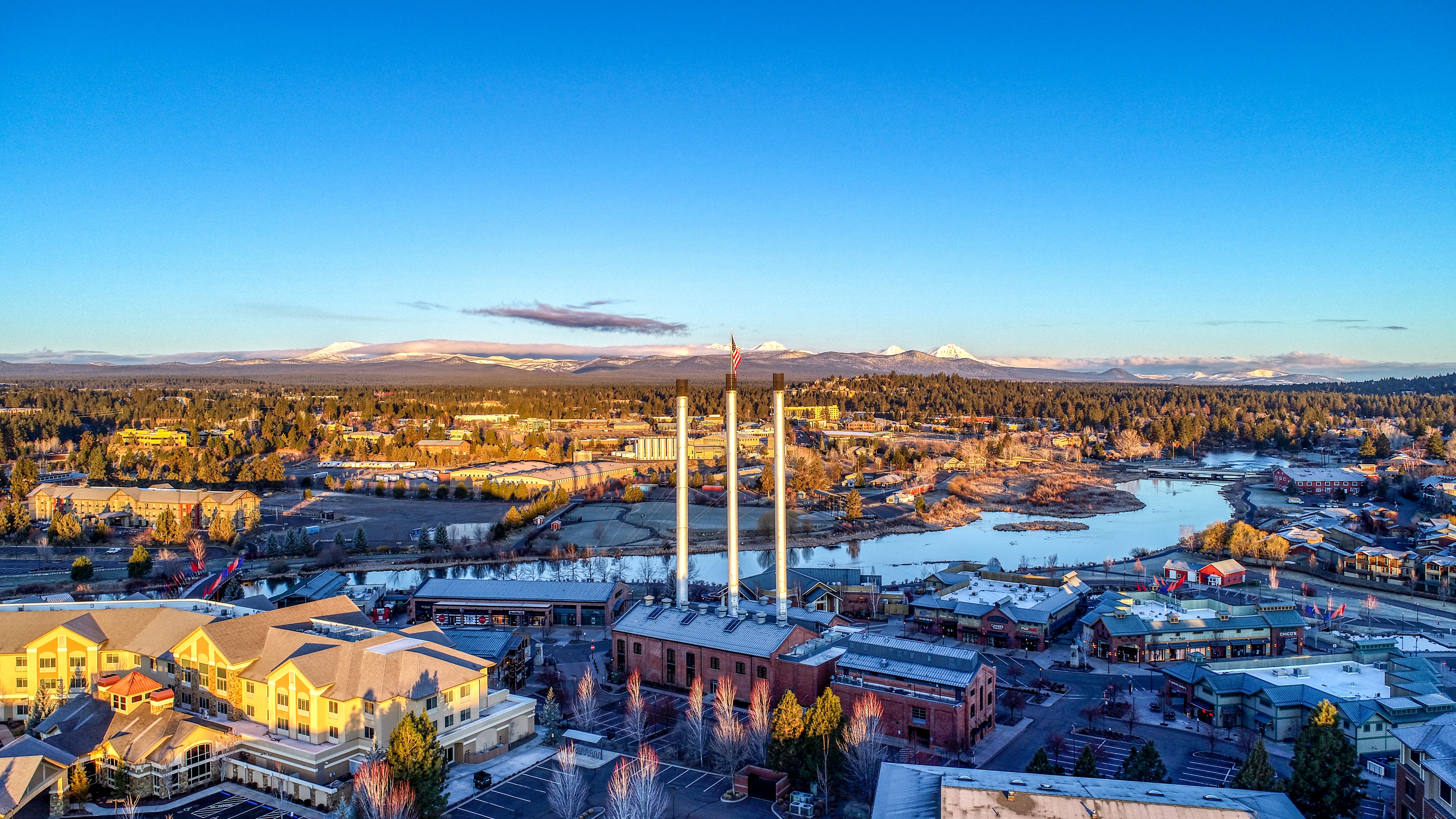
The flow of California exchange capital into Central Oregon is not accidental. Oregon's landlord environment — while not as investor-friendly as states like Texas or Arizona — offers meaningful advantages over California's framework, and Bend's entry prices are a fraction of coastal California markets. The math that motivates this move is specific to where that capital originates.
A Bay Area homeowner who sold a $1.4 million property can realistically acquire both a duplex in Bend's Orchard District and a single-family rental in Mountain View for a combined purchase price near $1.3 million — debt-free. That same capital deployed in the East Bay or South Bay buys a single condo. The rent-to-price ratios favor Bend significantly, and California's capital gains treatment on residential sales (combined state and federal often reaching 30%+) makes deferral through a 1031 particularly valuable for Bay Area sellers.
Southern California investors, particularly those selling in Orange County, San Diego, or the Westside of Los Angeles, are finding that Bend competes well against Phoenix and Las Vegas as a replacement market. The lifestyle pull is real — many investors plan to eventually occupy the property or use it as a vacation base — and Bend's short-term rental market (where Oregon does not impose a statewide ban) adds optionality that inland Southwest markets don't offer in the same way.
Sacramento and Inland Empire investors selling mid-range rentals in the $600,000–$900,000 range often arrive in Bend with exchange proceeds that work best as a single-property purchase. Duplexes and ADU-equipped SFRs in the $750,000–$950,000 range are the natural target, and the combination of Oregon's 0.60% effective property tax rate versus California's new-purchase effective rate (Prop 13 does not help buyers — it only helps long-term holders) represents a meaningful annual operating cost difference.
Looking to buy in Bend? Estimate your payment.
Enter your numbers to see an estimated monthly mortgage payment.
Estimate only. Excludes HOA fees and mortgage insurance.
Oregon's zero sales tax is genuinely useful for landlords doing property rehabs or furnishing short-term rentals. Every appliance, flooring material, and piece of furniture purchased in Oregon comes tax-free — a 0%–8.25% savings versus various California jurisdictions depending on purchase county.
| Tax Item | California | Oregon |
|---|---|---|
| State income tax on rental income | 9.3%–13.3% marginal | Up to 9.9% marginal |
| Property tax rate on new purchase | 1.1%–1.3% (assessed) | ~0.60% (Deschutes County) |
| State sales tax | 7.25%–10.25% | 0% |
| State capital gains treatment | Ordinary income rate | Ordinary income rate |
| Depreciation carryover in 1031 | Yes (no step-up) | Yes (no step-up) |
Oregon income tax applies to rental income at rates up to 9.9%, but for most leveraged properties, depreciation and operating expenses offset the majority of taxable net income. An investor who carries a mortgage on the replacement property, claims annual depreciation, and deducts management fees, insurance, and maintenance often reports minimal taxable rental income in the early years of ownership.
One item that catches California investors off guard: the depreciation basis does not reset in a 1031 exchange. The carried-over basis from the relinquished property — already partially depreciated — becomes the starting basis for the replacement property. This means the depreciation shield on the Bend property may be smaller than expected in the first year. A CPA who understands exchange accounting is worth the cost before you close.
Oregon's Residential Landlord and Tenant Act is comprehensive and tenant-protective. Statewide rent stabilization under SB 608 caps annual increases at 9.5% for 2026 for properties more than 15 years old — a meaningful constraint in a market where rents have moved significantly in some years. New construction is exempt from these caps for the first 15 years, which is one reason investors have been paying attention to Bend's newer north-side developments. No-cause evictions are prohibited after a tenant has occupied a property for 12 months, and rent increases require 90 days' written advance notice.
Out-of-state owners consistently underestimate Oregon's eviction timeline. Even for-cause evictions — non-payment, lease violations — can take 60–90 days to resolve in Deschutes County when tenants contest the process. A local property manager who knows Oregon's statutory procedures is not optional for a California investor managing from a distance. Typical management fees in Bend run 8%–10% of gross collected rent, plus leasing fees typically equal to half to one full month's rent per new placement. Build this into your underwriting before you make an offer.
For an out-of-state buyer, working with an established local property management company is the difference between a passive investment and a part-time job. Bend Premier Real Estate and several local full-service property management operations are active in the market — ask your Bend buyer's agent for a referral to firms currently accepting new management contracts, as capacity varies.
| Item | What to Verify | Local Resource |
|---|---|---|
| Title search | Clear title, no liens or encumbrances | Deschutes County title company |
| Sewer vs. septic status | City sewer connection or private septic system | Deschutes County Environmental Soils |
| Radon testing | Oregon has elevated radon zones — test required | Oregon Health Authority radon map |
| Flood zone | FEMA designation — affects insurance cost significantly | FEMA Flood Map Service Center |
| Rental permit requirements | City of Bend short-term rental permit status if applicable | City of Bend Development Services |
| HOA restrictions on rentals | CC&Rs may prohibit STR or limit lease terms | HOA governing documents |
| Zoning for ADU potential | R-1/R-2 zoning allows ADUs — verify lot size and setbacks | City of Bend Planning Division |
| School district boundary | Bend-LaPine School District attendance zone affects tenant pool | Bend-LaPine Schools website |
| Current lease status | Existing tenant, lease terms, rent level, security deposit held | Request current executed lease |
| Deferred maintenance inspection | Roof age, HVAC, foundation, siding condition | Local general inspector — get references |
| Property management referral | Confirm firm is accepting new contracts | Buyer's agent referral |
| Title company recommendation | Use a QI-approved local title company for 1031 compliance | QI should provide preferred vendor list |
| Rental income documentation | Verify actual collected rent vs. stated income | Request 12 months of bank statements or Buildium/AppFolio exports |
| HOA financials (if applicable) | Reserve fund adequacy, pending assessments | Request HOA balance sheet and minutes |

Local Expert Takeaway: The single most common mistake California 1031 buyers make in Bend is underwriting to the asking rent rather than the as-is rent. Oregon's 9.5% annual cap means if the current tenant is paying $400 below market, it will take two to three years to close that gap legally — during which time your cap rate is 60–80 basis points lower than you modeled. Before you make an offer, request 12 months of actual rent collected, not the pro forma the seller's agent prepared. The properties worth buying in this market have tenants at or near market rent already — or are vacant and priced to reflect that reality.
If you're working against a 45-day identification clock, get pre-approved for an investment property loan before your relinquished property closes — not after. DSCR (Debt Service Coverage Ratio) loans are the tool of choice for investors who want to leverage a Bend replacement property without adding to their personal debt-to-income calculation, since DSCR underwriting qualifies the property on its rental income rather than your W-2. Reach out to Todd through this site and he can connect you with lenders actively writing DSCR loans in Deschutes County and walk you through what the Bend market looks like right now for investment-grade properties.
✅ Bend's median sold price in the $680,000–$725,000 range, combined with Oregon's 0.60% property tax rate, gives California investors a fundamentally different ownership cost structure than anything available on the California coast.
⚠️ Oregon's rent stabilization law and no-cause eviction prohibition require a landlord-tenant law orientation before your first lease is signed — this is not a state where you can manage a property the same way you would in Nevada or Texas.
📍 New construction with an ADU in Bend's north-side corridors has been generating cap rates in the 5%+ range — rare for this market — and represents the most compelling yield story for 1031 buyers entering in 2026.
Does a 1031 exchange work for out-of-state property?
Yes, a 1031 exchange has no geographic restriction within the United States — you can sell a California property and use the proceeds to acquire a replacement property anywhere in the country, including Oregon. The key requirements are the qualified intermediary structure, the 45-day identification deadline, and the 180-day closing deadline, all of which apply regardless of where the replacement property is located.
What is the cap rate on rental property in Bend?
Cap rates in Bend vary significantly by property type. Most single-family rentals currently trade in the 2.5%–4.0% range, with ADU-equipped properties and new construction pushing into the 4.5%–5.7% range in 2026. Small multifamily and commercial properties tend to pencil at 4.5%–5.8%. The market has never been a cashflow-first market — appreciation and tenant demand stability are what most investors are underwriting here.
Do I need a local property manager for a 1031 investment in Oregon?
For an out-of-state owner, a local property manager is effectively non-optional. Oregon's landlord-tenant law is procedurally specific — notice periods, rent increase timing, eviction procedures — and the penalties for missteps are real. Management fees in Bend typically run 8%–10% of gross collected rent. Build that into your underwriting from day one and the math still works; try to self-manage from California and it rarely does.
Explore the full Bend series: The Ultimate Bend Relocation Guide · Is Bend Safe? · Cost of Living in Bend · Best Neighborhoods in Bend · Bend Schools & Family Life · Bend Youth Sports · Bend Parks & Recreation · Retiring in Bend · 1031 Tax-Deferred Exchange in Bend · Bend First-Time Homebuyers Guide · · Moving to Bend from California
Tell us what you need help with and we'll connect you with local resources.

About the Author
Todd Davidson is the founder of Living in Oregon and Living in Washington, where he publishes in-depth city guides, neighborhood resources, and local market insights covering more than 180 communities across the Pacific Northwest. While his background is in home financing and real estate, he created these digital platforms to help families research and compare regions before making a move.