
Central Oregon · Oregon
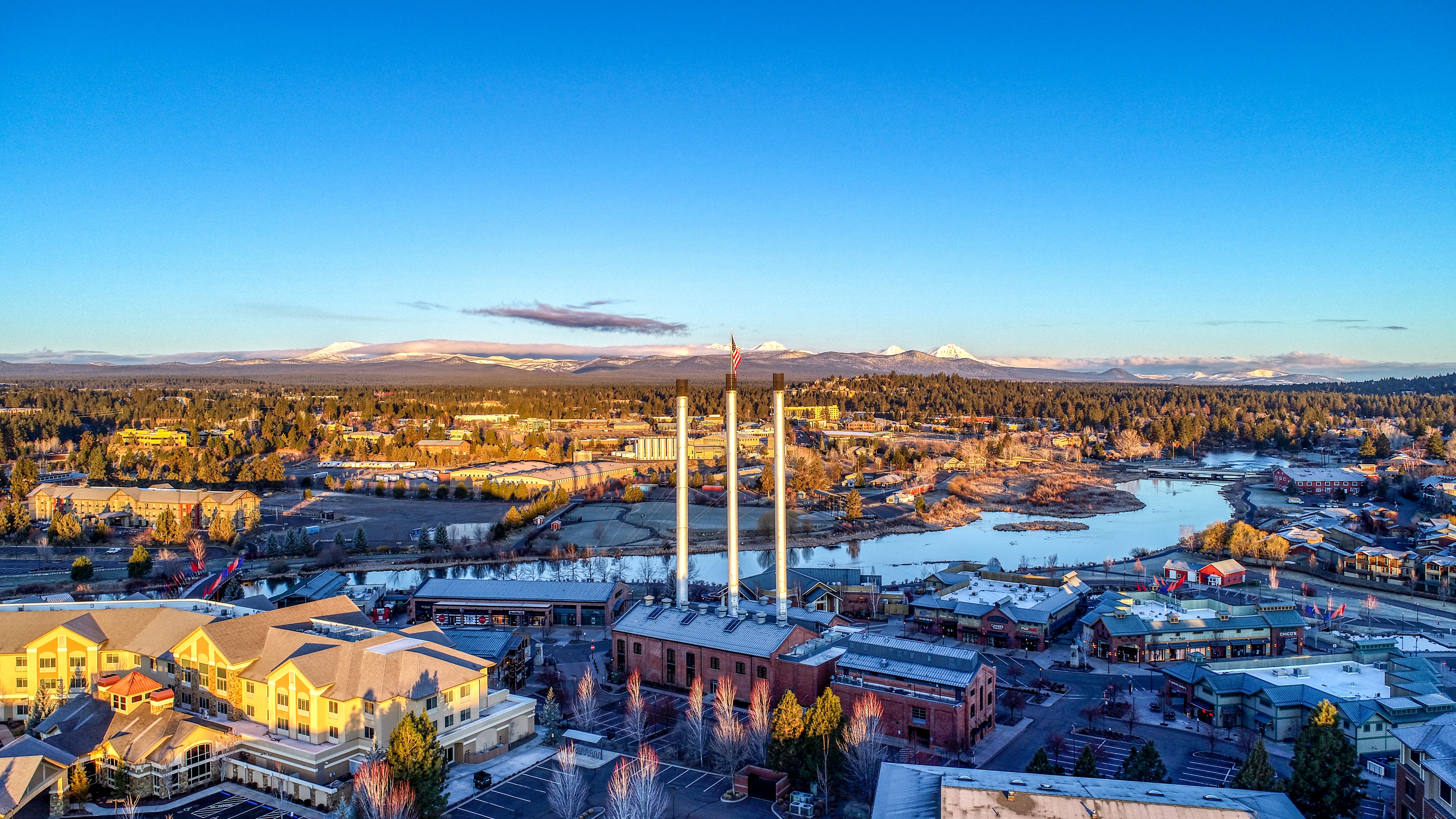
There's a moment every first-time buyer in Bend hits — usually sometime between their second rejected offer and their third conversation with a lender about what "pre-approved" actually means. The number on the screen doesn't feel real. The median home price here is $725,000, and you're standing in a kitchen that needs work wondering if this is actually happening. It is. And the buyers who make it through that moment are the ones who went in with clear eyes about what Bend demands and what it gives back: outdoor access most cities charge a premium to be near, a genuinely strong job market anchored by St. Charles Health System, Les Schwab, and a growing manufacturing base, and neighborhoods that hold value precisely because people want to live here.
At $725,000 median, you're not shopping in an entry-level market. A first-time buyer budget in Bend — realistically somewhere between $400,000 and $550,000 — gets you into the lower tier of the market, which means older construction, smaller square footage, or neighborhoods farther from the Old Mill District and the Deschutes River. Meanwhile, a two-bedroom apartment in Bend runs roughly $1,600 per month. The gap between renting and owning is real, but so is the equity case for getting in.
This guide walks through the entire Bend buying process from the ground up — what credit score you actually need, what your budget realistically gets you neighborhood by neighborhood, what first-time buyers consistently get wrong in this specific market, and where down payment help is available. If you've been reading generic Oregon real estate advice and wondering how it applies here, this is the translation.

Bend works for first-time buyers who go in with honest expectations. The school district — Bend-LaPine — earns a solid B rating, the violent crime rate sits at 2.7 per 1,000 residents, and the outdoor quality of life is genuinely exceptional. Those things are real and they're baked into the price. What doesn't work for first-time buyers is trying to force a Portland-priced budget into a Bend market. Entry-level inventory — homes priced under $450,000 — is thin and tends to move quickly, often in the 30–45 day range even in a market where average days on market has stretched to around 59 days overall.
The realistic first-time buyer entry points in Bend are neighborhoods like the Orchard District, Boyd Acres, Southeast Bend, and parts of Mountain View — areas where older ranch-style homes and smaller lots bring prices down relative to the westside. These neighborhoods aren't the Instagram version of Bend, but they're solid, they're close to employers, and they've held value. Buyers trying to land in Northwest Crossing or River West at a first-time buyer budget will find themselves either stretching dangerously or consistently losing to buyers with more equity to roll forward.
| Price Range | What You Typically Find | Neighborhood Examples | Competition Level |
|---|---|---|---|
| Under $350K | Condos, manufactured homes, significant fixer-uppers | Outer Southeast Bend, some Orchard District condos | Low–moderate |
| $350K–$450K | Older 2–3 bed ranch homes, small lots, dated finishes | Boyd Acres, Orchard District, parts of Mountain View | Moderate |
| $450K–$550K | Updated ranches, townhomes, newer condos | Southeast Bend, Mountain View, some Century West | Moderate–competitive |
| $550K–$650K | 3 bed / 2 bath homes with garages, decent condition | Southern Crossing, parts of Old Bend, Larkspur edges | Competitive |
| $650K+ | Move-up homes, newer construction, desirable westside | Northwest Crossing, River West, Summit West | High |
The honest first-time buyer scenario in Bend puts most buyers in the $400,000–$525,000 range — which means the Orchard District, Boyd Acres, and Southeast Bend are your primary hunting grounds. You'll find 2–3 bedroom homes built between the 1960s and 1990s, often on smaller lots, with original kitchens and bathrooms that may need updating within five years. That's not a dealbreaker — it's the trade. The best value entry point right now sits in that $430,000–$490,000 band, where sellers have been willing to negotiate and cash offers aren't dominating the way they do at higher price points.
For buyers who need to be under $400,000, the realistic options narrow to condos — some in the Orchard District, occasionally in older complexes near Highway 97 — and manufactured homes on owned land. These can be solid purchases with the right inspection, but they come with HOA considerations and sometimes financing restrictions depending on the structure type. Going in eyes open matters more in this price band than anywhere else in the Bend market.
| Step | What Happens | Typical Timeline | What First-Timers Get Wrong |
|---|---|---|---|
| Get finances in order | Review credit, pay down debt, save for down payment + reserves | 3–12 months before buying | Only focusing on down payment; ignoring cash reserves for closing costs |
| Pre-approval | Lender reviews income, credit, assets; issues letter | 1–3 business days | Treating pre-qualification as pre-approval |
| Find an agent | Interview 1–2 Bend-area buyer's agents | 1–2 weeks | Skipping this step or using an out-of-area agent unfamiliar with Deschutes County |
| Active search | Tour homes, track market, refine criteria | 2–8 weeks average in current market | Waiting for the "perfect" listing rather than acting on a strong one |
| Making offers | Agent prepares offer; negotiate price, terms, earnest money | 24–72 hours per offer cycle | Lowballing in a market where homes close at ~98% of list |
| Under contract | Signatures, earnest money delivered (typically 1–2% of purchase price in Deschutes County) | Day 1–3 | Missing earnest money deadlines |
| Inspection | Licensed inspector reviews property; buyer reviews report | Days 5–12 | Skipping inspection on older Bend homes to compete |
| Appraisal | Lender orders appraisal to confirm value | Days 10–21 | Not understanding what happens if appraisal comes in low |
| Final walkthrough | Verify property condition before closing | Day before or day of closing | Skipping this step entirely |
| Closing | Sign documents, funds transfer, keys received | 30–45 days total from accepted offer | Not reading the Closing Disclosure carefully before signing |
Bend's market has cooled enough that most first-time buyers no longer face the waive-everything pressure of 2021. Inspections are back on the table, and sellers are less likely to reject contingencies outright. That said, earnest money matters — coming in at 1% on a $475,000 purchase when competing buyers are offering 2% signals an uncommitted buyer to a Deschutes County seller. The buyers who move fastest when a well-priced Orchard District or Boyd Acres home hits the market are the ones who close.
Closing timelines in Bend run 30–45 days for conventional financing and slightly longer for FHA due to appraisal requirements. The roughly 33% cash transaction share as of April 2026 means that in competitive pockets, a pre-approved buyer is still competing against all-cash offers — which is why having a clean pre-approval letter, not just a pre-qualification, is non-negotiable before you start touring.
Looking to buy in Bend? Estimate your payment.
Enter your numbers to see an estimated monthly mortgage payment.
Estimate only. Excludes HOA fees and mortgage insurance.
Conventional financing requires a minimum 620 credit score, but the number that actually matters for your interest rate is 680 and above. The difference between a 650 and a 740 score on a $420,000 loan isn't trivial — it can swing your rate by 0.5% to 0.75%, which translates to roughly $130–$200 per month in payment difference over the life of the loan. If your score is sitting between 620 and 660, spending three to six months paying down revolving credit before applying can save you more than any rate negotiation.
FHA loans accept scores as low as 580 with 3.5% down, and go down to 500 with 10% down. The catch is mortgage insurance — FHA MIP stays with the loan for the life of the loan if you put down less than 10%, which adds meaningful cost over time. For a first-time buyer in Bend with a score below 680, FHA is often the path in, but the long-term plan should include refinancing to a conventional loan once equity builds and credit improves.
Income qualification in plain English: most lenders use 28% of your gross monthly income as the ceiling for your housing payment (principal, interest, taxes, insurance). To qualify for a $400,000 home at current rates, you need roughly $90,000–$95,000 in annual household income. At $450,000, that figure rises to approximately $100,000–$108,000. Your debt-to-income ratio — the percentage of your gross monthly income going to all debt payments combined — needs to stay below 43–45% for most loan programs. If you have a car payment, student loans, and credit card minimums, those all count against you before the mortgage payment is calculated.
Mistake 1: Confusing list price with what homes actually close at. Bend homes close at roughly 98% of list price right now, which means a $499,000 listing is likely to sell in the $487,000–$499,000 range — not the $470,000 that felt reasonable six months ago. Coming in 8% under asking in Boyd Acres or Southeast Bend doesn't start a negotiation; it ends the conversation before it begins.
Mistake 2: Skipping inspection on older Bend ranch homes. The Orchard District and Boyd Acres are full of 1960s–1980s construction — exactly the homes in a first-time buyer's price range — and they frequently carry deferred maintenance that doesn't show on the surface. HVAC systems, roof conditions, and insulation in older Central Oregon construction deserve a thorough look. Waiving inspection to compete works in some markets; in Bend's current market, where homes are sitting for nearly two months on average, it's rarely necessary and often expensive.
Mistake 3: Shopping at the top of the qualification number, not the top of their comfort. A lender can qualify you for $525,000. That doesn't mean a $525,000 purchase in Bend is comfortable when you factor in property taxes at 0.60% of assessed value, HOA fees if applicable, and the inevitable first-year maintenance on an older home. Most experienced Bend buyers suggest targeting 10–15% below the top of your qualification ceiling to leave room for real life.
Mistake 4: Waiting for prices to drop. The year-over-year price change in Bend sits at roughly 0% to 1.6% — values are holding, not collapsing. Buyers who've been waiting since 2023 for a meaningful correction have largely sat out the market while renters continued paying. In a market with flat appreciation and motivated sellers, the opportunity cost of waiting tends to outweigh the benefit of any modest price softening.
Mistake 5: Underestimating how school district boundary lines affect resale. Bend-LaPine School District covers the city, but specific elementary and middle school assignments vary by neighborhood, and those assignments influence buyer demand at resale. Homes that feed into higher-rated schools command a consistent premium. Before you buy in a neighborhood at the edge of a school boundary — particularly in Southeast Bend or parts of Mountain View near the district perimeter — verify the exact school assignment with the district directly.
Boyd Acres is one of the most realistic first-time buyer neighborhoods in Bend. Situated in northeast Bend near Highway 20, it offers older single-family homes — mostly 3-bed, 2-bath ranches built in the 1970s and 1980s — in the $380,000–$470,000 range. It's not a flashy neighborhood, but it's a legitimate owner-occupant community with reasonable lot sizes and easy access to employers along the Highway 97 corridor. The trade-off is distance from the Deschutes River amenities that make Bend famous, but the commute to St. Charles or Les Schwab headquarters is straightforward.
Orchard District, in north-central Bend, offers a mix of older homes and condominiums that can bring first-time buyers into the market under $450,000 in some cases. It sits between Downtown and the northwest neighborhoods and has seen gradual improvement over the past decade. Entry-level condos here can come in under $350,000, though HOA fees and financing restrictions on certain older condominium complexes require attention before making an offer.
Southeast Bend is the largest geographic entry point for first-time buyers. The area covers a wide range of conditions and price points — from lower $400,000s for homes needing work to upper $500,000s for updated properties near Bear Creek and the Southeast Bend recreational corridor. The median sold price in Southeast Bend ran around $698,000 citywide, but pockets closer to Highway 97 and away from the river trails offer more accessible entry points. This is where buyers with budgets in the $420,000–$500,000 range should spend their open house time.
Mountain View, in east Bend, blends older ranch homes with some newer subdivisions and offers generally more square footage per dollar than westside neighborhoods. Homes in the $440,000–$520,000 range are more common here than in most other Bend neighborhoods, and the area has direct access to schools and commercial corridors along Highway 20. It's a practical choice for buyers prioritizing value and space over walkability.
✅ Bend is a legitimate first-time buyer market if you target eastside and southeast neighborhoods — Boyd Acres, Mountain View, and Southeast Bend are where first-time budgets compete.
⚠️ At $725,000 median, the citywide average is above first-time buyer reach — focus your search on the $400K–$525K tier and expect to compromise on condition or location, not both.
📍 FHA financing is worth checking here if a lower down payment would help you get into the market sooner.
Can I buy a home in Bend as a first-time buyer?
Yes — but it requires realistic expectations about price point and neighborhoods. First-time buyers in Bend are most competitive in the $400,000–$525,000 range, targeting older single-family homes in Boyd Acres, Southeast Bend, and Mountain View. With solid pre-approval, adequate reserves, and a willingness to move quickly, first-time buyers are closing deals in Bend's current market.
Is FHA financing a good option for first-time buyers in Bend?
FHA financing is a popular choice for first-time buyers in Bend, since it allows a lower down payment and more flexible credit requirements than most conventional loans — though it does come with mortgage insurance. A local lender can walk you through your specific numbers based on today's rates.
What credit score do I need to buy a house in Oregon?
The minimum for most loan programs is 620 — that covers both conventional financing and FHA through most lenders. However, the rate you receive improves meaningfully at 680 and again at 740. Buyers with scores in the 620–659 range are often better served spending a few months improving their credit before locking in a rate, as the long-term savings can be substantial on a Central Oregon purchase price.
Explore the full Bend series: The Ultimate Bend Relocation Guide · Is Bend Safe? · Cost of Living in Bend · Best Neighborhoods in Bend · Bend Schools & Family Life · Bend Youth Sports · Bend Parks & Recreation · Retiring in Bend · 1031 Tax-Deferred Exchange in Bend · Bend First-Time Homebuyers Guide · · Moving to Bend from California
Tell us what you need help with and we'll connect you with local resources.

About the Author
Todd Davidson is the founder of Living in Oregon and Living in Washington, where he publishes in-depth city guides, neighborhood resources, and local market insights covering more than 180 communities across the Pacific Northwest. While his background is in home financing and real estate, he created these digital platforms to help families research and compare regions before making a move.