
Central Oregon · Oregon
Retiring in Bend, Oregon: Is It the Right Fit for Your Next Chapter? (2026)
The honest answer is: Bend is an extraordinary place to retire if you came here intentionally. The outdoor access, the healthcare infrastructure, the dry high-desert sunshine — these are real and meaningful advantages. But Bend is also expensive, car-dependent in ways that compound with age, and still very much a young-family and outdoor-recreation town. Retirees who arrive expecting a sleepy, affordable mountain village are often surprised by the median home price, the pace of the city, and how much driving daily life requires.
The retiree who thrives here is active, financially comfortable, and genuinely drawn to Central Oregon's landscape — not just fleeing the rain. A retired physician couple from Portland who hike the Deschutes River Trail three mornings a week and catch concerts at the Hayden Homes Amphitheater in summer is exactly who Bend is built for. Someone downsizing on a fixed income who needs walkable errands and frequent specialist care will find the math and logistics harder than expected.
This guide covers what you actually need to evaluate: Oregon's retirement tax treatment, Bend's hospital and healthcare depth, where the senior living communities are and what they cost, what daily life realistically looks like without a commute, and how Bend stacks up against the other Central Oregon and Pacific Northwest retirement destinations you may be weighing.

Oregon has no sales tax, which provides real daily savings for retirees, but the state does tax most retirement income — a distinction that surprises many buyers relocating from Washington or Nevada. Understanding the full picture before you move is worth more than any price negotiation.
| Income Type | Oregon Tax Treatment |
|---|---|
| Social Security Benefits | Exempt from Oregon income tax |
| Federal/Oregon Public Pensions | Partially exempt — up to $6,250 deductible (single) or $12,500 (joint) for qualifying pension income |
| Military Retirement Pay | Fully exempt up to $6,250; remainder taxed at regular rates |
| IRA / 401(k) Distributions | Taxed as ordinary income at Oregon rates (up to 9.9%) |
| Private Pensions | Taxed as ordinary income |
| Capital Gains | Taxed as ordinary income (no preferential rate) |
| Investment Dividends & Interest | Taxed as ordinary income |
| Property Tax | Approximately 0.60% effective rate |
| Sales Tax | None |
| Estate Tax | Oregon estate tax applies on estates over $1 million |
On the property side, Bend's effective rate of approximately 0.60% keeps annual taxes manageable relative to most West Coast metros. On a $725,000 home, that's roughly $4,350 per year — lower than what you'd pay in California, Washington, or most of the Willamette Valley. Oregon also offers a property tax deferral program for homeowners 62 and older who meet income thresholds — the state essentially loans you the tax each year, with repayment triggered only when the home is sold or transferred. For retirees who are asset-rich but managing cash flow carefully, this program can be a meaningful tool. Washington state, by comparison, exempts Social Security entirely but taxes capital gains above $262,000, making Oregon the better fit for retirees living primarily on pension or Social Security income while Washington edges ahead for those with large brokerage portfolios and heavy capital gains activity.
St. Charles Medical Center at 2500 NE Neff Rd is the healthcare anchor for all of Central Oregon — and for retirees evaluating whether a smaller city can support their medical needs, it carries more weight than its size might suggest. With over 300 beds and Level II Trauma Center designation, St. Charles Bend handles emergency surgery, complex orthopedic cases, cardiac events, and stroke care on-site around the clock. U.S. News rates the facility among the top regional hospitals in Oregon and designates it high-performing across 18 adult procedures and conditions — a meaningful distinction for a city of 100,000.
The specialties most relevant to retirees are particularly well-represented. St. Charles Bend has earned recognition for spine surgery and vascular surgery nationally, and holds the Outpatient Joint Replacement Excellence Award — which matters given how many active retirees in Bend eventually need a knee or hip replacement. Cardiology, pulmonology, and cancer care are all available within the St. Charles system, which operates four hospitals across a 32,000-square-mile region and employs more than 220 physicians. For primary care and routine specialist visits, the geography is manageable — most practices are concentrated near the NE Neff Road corridor and the surrounding medical district.
Where the system has limits: subspecialty care at the level of a major academic medical center — complex neurosurgery, specialized oncology protocols, transplant services — is not available in Bend. Oregon Health & Science University (OHSU) in Portland is roughly three hours by car, and most St. Charles physicians have established referral pathways there. For the vast majority of retirement-age health needs, Bend's medical infrastructure is genuinely strong. For retirees managing serious chronic conditions requiring quarterly subspecialist visits, the drive to Portland is a real consideration worth building into the lifestyle calculus.
Bend's senior living landscape has more depth than most people expect for a city its size — but it skews toward the higher end of the market, and a few structural realities are worth understanding before you tour. The city does not have large master-planned 55+ subdivisions in the Trilogy or Sun City mold. Most dedicated age-restricted options are either rental apartment communities, land-lease manufactured housing parks, or full-service senior campuses with bundled care. Retirees who want to own land outright in a neighborhood of peers generally end up in non-age-restricted communities.
| Community | Type | Location/Area | Est. Monthly Cost |
|---|---|---|---|
| Touchmark at Mount Bachelor Village | Independent / AL / Memory Care | Deschutes River corridor | $3,800–$6,000+ |
| The Alexander | Luxury Independent Living | Central Bend | $2,650–$3,725+ |
| Stone Lodge | Independent Living | Near medical centers | $2,800–$4,200 |
| Cascades of Bend | Independent / Assisted Living | 2599 NE Studio Rd | $3,000–$5,500 |
| Whispering Winds Retirement | Independent Living | Near downtown | $2,200–$3,500 |
| Affinity at Bend | 62+ Active Adult Rentals | Near dining/entertainment | $1,900–$3,200 |
| Pilot Butte Village | 55+ Rental | Hospital District | $1,600–$2,400 |
| Cascade Village | 55+ Land-Lease Manufactured | Northeast Bend | Land lease ~$750/mo |
| Aspen Ridge Memory Care | Memory Care | 1025 NE Purcell Blvd | $5,500–$7,500 |
| Mt. Bachelor Assisted Living | Assisted / Memory Care | Central Bend | $4,500–$6,500 |
| Awbrey Place | Assisted Living | Foothills / East side | $4,200–$6,000 |
For those drawn to the higher-end rental model without the commitment of a full continuing care contract, The Alexander offers a pub, cinema, and hotel-style amenities starting around $2,650 for a studio. Affinity at Bend serves the 62+ crowd looking for social programming and included utilities in a more modest price range, with resident-led activities and weekly happy hours that generate real community quickly.
The land-lease model at Cascade Village warrants a frank word: the 55+ resort-style manufactured community in northeast Bend is genuinely attractive, but the ongoing lot rent of roughly $750 per month never goes away — even after a home is paid off. Over a 20-year retirement, that's $180,000 in lot fees, which changes the math considerably versus buying in a conventional neighborhood.
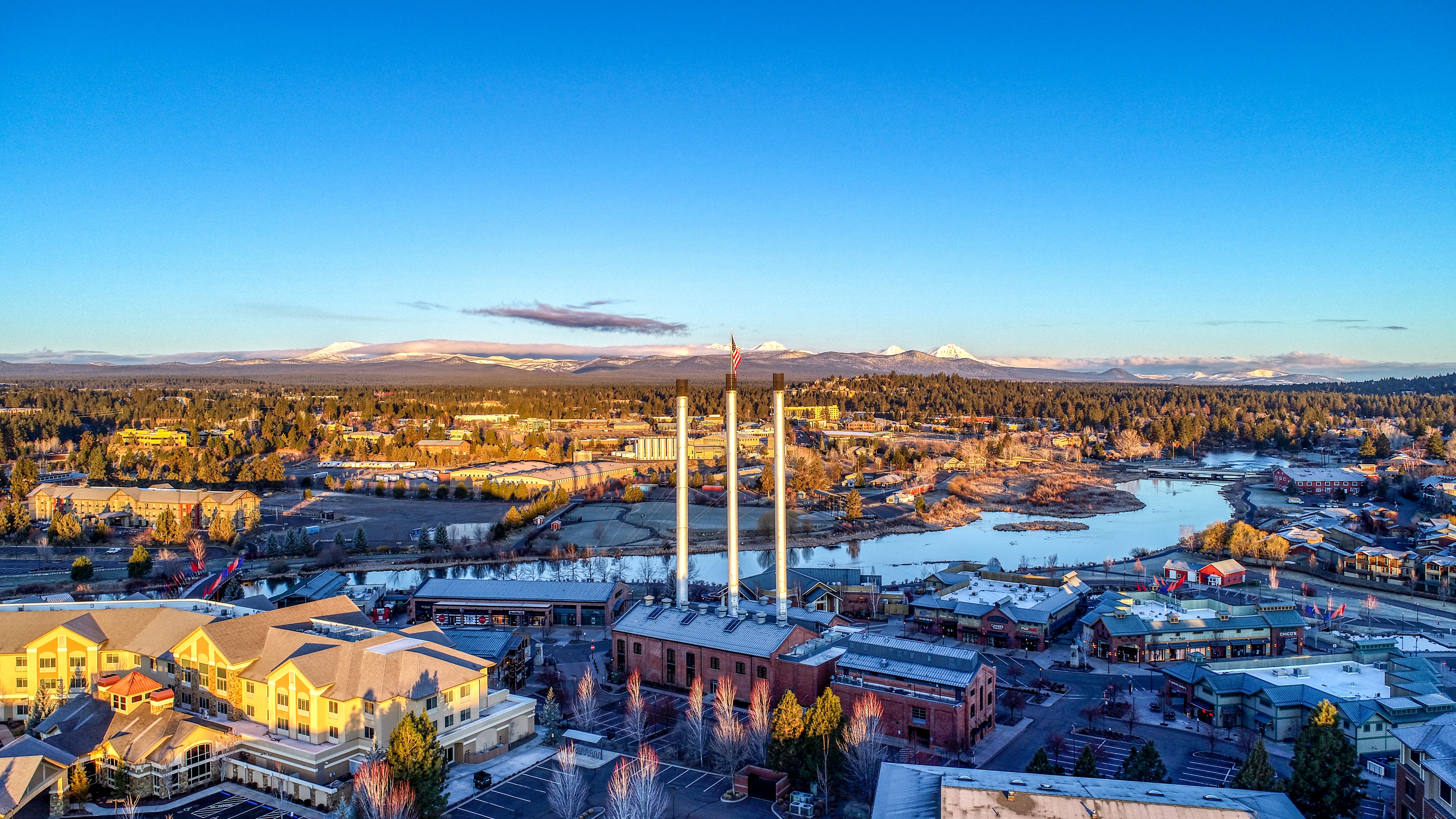
Bend's livability for retirees is real, but it's not evenly distributed across the city. The most walkable retirement experience concentrates around the Old Mill District, Drake Park, and the Mirror Pond area — where a retiree can walk from a condo to coffee, a river trail, a farmers market, and a restaurant without touching a car. That specific geography is narrow, and most of Bend requires a vehicle for routine errands.
The cultural calendar is legitimately robust for a city this size. The High Desert Museum on US-97 — a legitimate natural and cultural history institution — draws retirees who volunteer and return repeatedly as members. The Bend Summer Festival, the Les Schwab Amphitheater concert season, and the Tower Theatre's performing arts programming give retirees the kind of cultural texture usually associated with larger cities. The Tower Theatre on Oregon Avenue hosts concerts, comedy, and film year-round, filling a particularly important niche in the winter months when outdoor activity slows.
Winters are the genuine variable. Bend sits at 3,600 feet elevation and receives real snow — not Portland's occasional dusting, but actual accumulation that can strand drivers and create fall risks for older adults. The flip side is 300 days of sunshine per year and a dry climate that many retirees with joint issues or Pacific Northwest weather fatigue find genuinely therapeutic. What surprises most people after six months of living here is how quickly the dry air becomes a non-negotiable — people who left Bend often say the rain they returned to felt heavier than they remembered.
Getting around without a car is technically possible but practically limited. Cascades East Transit serves Bend with fixed routes, and the Deschutes River Trail offers non-motorized connectivity through several central neighborhoods. But for medical appointments, grocery runs, and the airport — Redmond Regional, about 20 miles north — a car remains essential for most retirees. The realistic approach is planning your retirement in Bend around a neighborhood where at least some daily needs are walkable, then keeping a reliable vehicle for everything else.
The farmers markets, breweries, and outdoor gear scene skew young — Bend's median age of 40.9 reflects a city still shaped by outdoor recreation culture and remote workers more than retirees. That's not a problem for active retirees who want energy and vitality around them; it can feel isolating for those seeking a community where retirement is the dominant life stage.

Bend's neighborhoods each tell a different story for retirees thinking about long-term value. Awbrey Butte and Northwest Crossing tend to attract strong buyer demand because of their views, walkability, and proximity to outdoor amenities — and well-priced homes there regularly go under contract within days, not weeks. If a quieter pace appeals to you, Old Bend offers character and convenience in a more established setting, with options that can still come in under $750,000 depending on size and condition. Where you land within Bend genuinely shapes both your lifestyle and how your home holds value over time.
Before you fall in love with a floor plan, have a real conversation with a lender. Your full monthly obligation includes not just principal and interest, but property taxes, homeowner's insurance, and any HOA dues — and together those can shift your comfort level significantly. Retirement income structures, Social Security timing, and asset drawdown strategies all factor into how a lender qualifies you, so knowing your comfortable number — not just your maximum approval — means you're ready to move when the right home shows up.
| City | Median Home Price | Hospital Access | Walkability | Senior Living Depth | Overall Retirement Fit |
|---|---|---|---|---|---|
| Bend, OR | ~$700,000–$726,000 | Level II Trauma (St. Charles) | Moderate (corridor-dependent) | Strong (11+ communities) | ★★★★☆ |
| Redmond, OR | ~$500,000–$540,000 | St. Charles Redmond (critical access) | Low | Limited | ★★★☆☆ |
| Sisters, OR | ~$650,000–$750,000 | Closest: St. Charles Bend (20 mi) | Low | Very limited | ★★★☆☆ |
| Sunriver, OR | ~$700,000–$850,000+ | Closest: St. Charles Bend (25 mi) | Resort-only | HOA resort model | ★★★☆☆ |
| La Pine, OR | ~$380,000–$420,000 | Closest: St. Charles Bend (35 mi) | Very low | Minimal | ★★☆☆☆ |
| Eugene, OR | ~$430,000–$480,000 | PeaceHealth Sacred Heart (Level II) | High | Very strong | ★★★★☆ |
Eugene is the comparison most retirees don't make but should. At roughly half Bend's median price, Eugene offers a Level II trauma center, a large university cultural calendar, genuine walkable neighborhoods, and a more developed senior living market. Retirees who are drawn to Bend primarily by price and climate rather than the specific outdoor recreation lifestyle often find Eugene a better overall fit.
Sunriver appeals to the resort-and-isolation crowd, but it's worth being clear-eyed about what it is: a vacation resort repurposed as a year-round address. HOA fees are substantial, medical access requires a 25-minute drive to Bend, and the social infrastructure lacks the depth of a real city.

Local Expert Takeaway: Retirees who do best in Bend tend to cluster in three areas: River West and Old Bend for walkability and proximity to Drake Park and the Old Mill District; Northwest Crossing for newer construction and a highly walkable internal street grid; and Broken Top or Tetherow for lock-and-leave resort living with golf and trail access. Retirees who want to own land, not rent it, and need walkable medical access should prioritize the neighborhoods within a mile of the St. Charles campus on NE Neff Road. Anyone whose retirement plan depends on not owning a car should be honest with themselves — Bend rewards the mobile retiree and complicates life for those who aren't.
Is Bend a good place to retire?
Bend is an excellent retirement destination for active, financially comfortable retirees who want year-round outdoor access, legitimate healthcare infrastructure, and a culturally engaged small city. The lifestyle — hiking, cycling, concerts, river trails, high-desert sunshine — is hard to replicate elsewhere in the Pacific Northwest. Retirees on tight fixed incomes or those with significant specialist care needs may find the cost of living and the distance to academic medical centers challenging.
What does senior living cost in Bend?
Independent living in Bend runs roughly $2,200 to $4,500 per month at most communities, with luxury options at The Alexander and Touchmark reaching $6,000 and beyond for larger units or higher care levels. The 55+ land-lease community model at Cascade Village adds an ongoing lot rent of approximately $750 per month on top of home ownership costs — a detail that changes the long-term financial picture significantly versus buying in a conventional neighborhood.
How does Bend compare to Eugene for retirement?
Eugene is roughly half Bend's median home price, has a larger and more developed senior living market, offers higher walkability, and sits next to the University of Oregon's cultural calendar. Bend wins on climate — drier, sunnier, and less rainy — and on outdoor recreation access. The decision usually comes down to whether the specific Bend lifestyle (trail running, skiing, river kayaking, high-desert landscape) genuinely motivates you, or whether you're drawn to Bend by reputation and would honestly thrive just as well in a more walkable, affordable setting.
Explore the full Bend series: The Ultimate Bend Relocation Guide · Is Bend Safe? · Cost of Living in Bend · Best Neighborhoods in Bend · Bend Schools & Family Life · Bend Youth Sports · Bend Parks & Recreation · Retiring in Bend · 1031 Tax-Deferred Exchange in Bend · Bend First-Time Homebuyers Guide · Bend Down Payment Assistance Guide · Moving to Bend from California