Portland Metro · Oregon
Living in Beaverton, Oregon: The Ultimate Relocation Guide (2026)
Maybe your company is relocating you to the Portland metro and someone on the hiring team mentioned Beaverton as the smart choice — close to work, good schools, easier to afford than you'd expect. Maybe you've spent a weekend in Portland, fallen in love with the Pacific Northwest, and started pulling up Zillow listings in the suburbs. Or maybe you already know about Nike and Intel and the tech cluster people call the Silicon Forest, and you're trying to figure out whether Beaverton is a genuine place to put down roots or just a corporate campus surrounded by strip malls. The central tension is this: Beaverton is one of the most economically powerful suburban cities in the Pacific Northwest, shaped by world-class employers and a high-earning workforce — yet it still carries the reputation of a place you pass through on the way somewhere more interesting. That reputation is increasingly out of date.
Beaverton sits seven miles west of Portland in the Tualatin River Valley, tucked into Washington County between Hillsboro to the west, Tigard to the south, and the West Hills that separate it from inner Portland to the east. That geography is the key to everything. The US-26 corridor and MAX Light Rail connect Beaverton to downtown Portland in roughly 20 minutes off-peak, making it one of the most transit-accessible suburban cities in Oregon. What you get for that commute is a city of nearly 98,000 people that has quietly built real infrastructure — a performing arts center, a beloved farmers market, nature parks that would be the crown jewel of most cities, and neighborhoods ranging from affordable condos near the Beaverton Town Square to half-million-dollar homes nestled against Cooper Mountain.
This guide is built for the person trying to make an actual decision. Not just "is Beaverton nice?" but "Is Beaverton right for my life, my budget, my family?" You'll find the real neighborhood breakdown, the honest tradeoffs, the commute reality, what locals know that the internet doesn't tell you, and who genuinely thrives here versus who tends to leave.
The case for Beaverton is different depending on where you're sitting. Here's a honest snapshot of who tends to thrive here.
| Best For | Why |
|---|---|
| Nike, Intel & tech employees | Nike's 400-acre HQ and Intel's campuses are inside or adjacent to the city — Beaverton offers the shortest commute combined with the widest range of housing options in the metro |
| Families with school-age children | Beaverton School District earns an A- on Niche, ranked #5 among Oregon districts, with strong graduation rates above the state average |
| Commuters who want MAX access | Blue and Red Lines connect Beaverton to downtown Portland in about 26 minutes — one of the metro's most reliable transit corridors |
| First-time buyers priced out of Portland | Central and South Beaverton offer entry points in the mid-$400s to low-$500s, rare in the current metro market |
| Remote workers who want lifestyle proximity | Affordable relative to Portland, with nature parks, a farmers market, and the Patricia Reser Center for the Arts — without the noise and density of inner SE or NE Portland |
| Retirees seeking suburban amenities | Providence Health facilities, walkable retail at Progress Ridge TownSquare, and the Jenkins Estate cultural venue make retirement genuinely comfortable here |

The thing relocating buyers consistently underestimate about Beaverton is the depth of the housing stock. You can find a 1960s ranch in Cedar Hills for under $550,000, a newer townhome near Progress Ridge in the mid-$500s, or a four-bedroom craftsman in Murrayhill pushing toward $750,000 — all within the same city. That range is unusual in the Portland metro, where most cities cluster tightly around one price band. Buyers coming from Seattle or the Bay Area are often stunned that they can get into a quality neighborhood here for less than $600,000 with an A-minus school district behind them.
What I've seen more of in the past 18 months is buyers who come in expecting a seller's market and find themselves with real negotiating leverage. Inventory has risen, days on market have extended, and contingencies that would have been laughed out of a 2021 offer are back on the table. The buyers who win in this market are the ones who know which neighborhoods are holding their value — Bethany, Murrayhill, and Sexton Mountain consistently attract strong demand from tech employees — and which corridors offer the most upside for buyers willing to be a little patient. If you're considering Beaverton and want insight into which neighborhoods align with your priorities and budget, I'd welcome the opportunity to share what I've learned from helping hundreds of families make this move successfully.
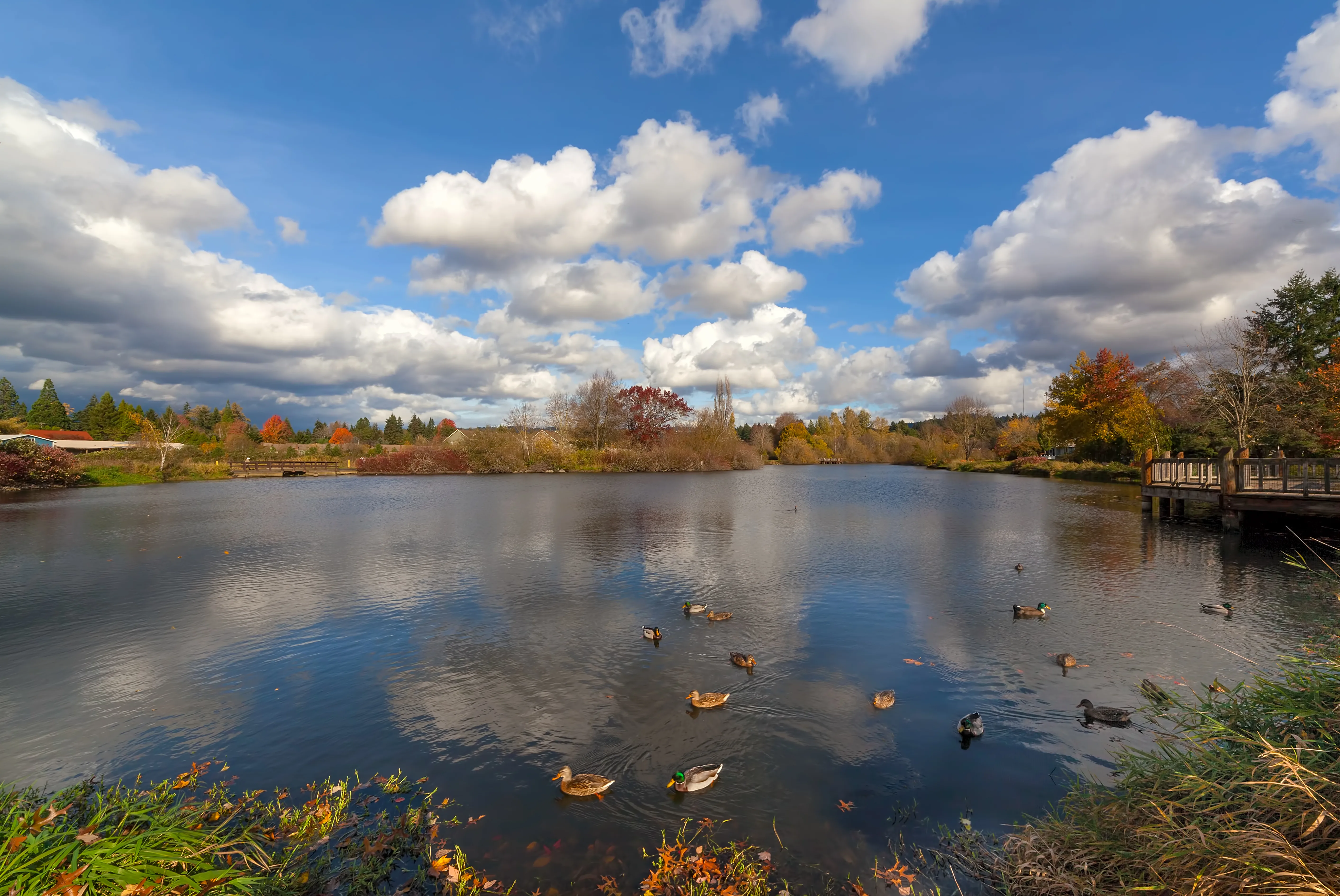
The first thing that surprises most people after six months in Beaverton is how much green space exists inside a city of nearly 100,000. Tualatin Hills Nature Park alone covers 222 acres of old-growth forest with five miles of trails within the city limits. Cooper Mountain Nature Park adds another 231 acres of oak savanna and meadow habitat on the city's southwestern edge. These aren't afterthoughts — they're genuinely wild spaces where you can spend a full Saturday morning without seeing a parking lot.
The city has two distinct daily-life rhythms depending on where you live. The northern and central neighborhoods — Cedar Hills, Five Oaks, Central Beaverton — feel like classic inner-ring suburbs, with walkable retail corridors, older tree-lined streets, and easy MAX access to Portland. The southern half of the city, anchored by Progress Ridge TownSquare and the Murrayhill and Sexton Mountain neighborhoods, feels newer, more planned, and more self-contained. Families in those areas often spend entire weekends without leaving Beaverton, which is either a selling point or a caution depending on what you're after.
The Beaverton Farmers Market runs Saturday mornings from February through November on SW Hall Boulevard in downtown Beaverton, drawing an estimated 10,000 to 14,000 visitors weekly at its peak. It's one of the largest farmers markets in the Pacific Northwest and the event most consistently cited by longtime residents as the thing that makes the city feel like a real community. If you want to understand Beaverton's personality in a single morning, that's the place to start.
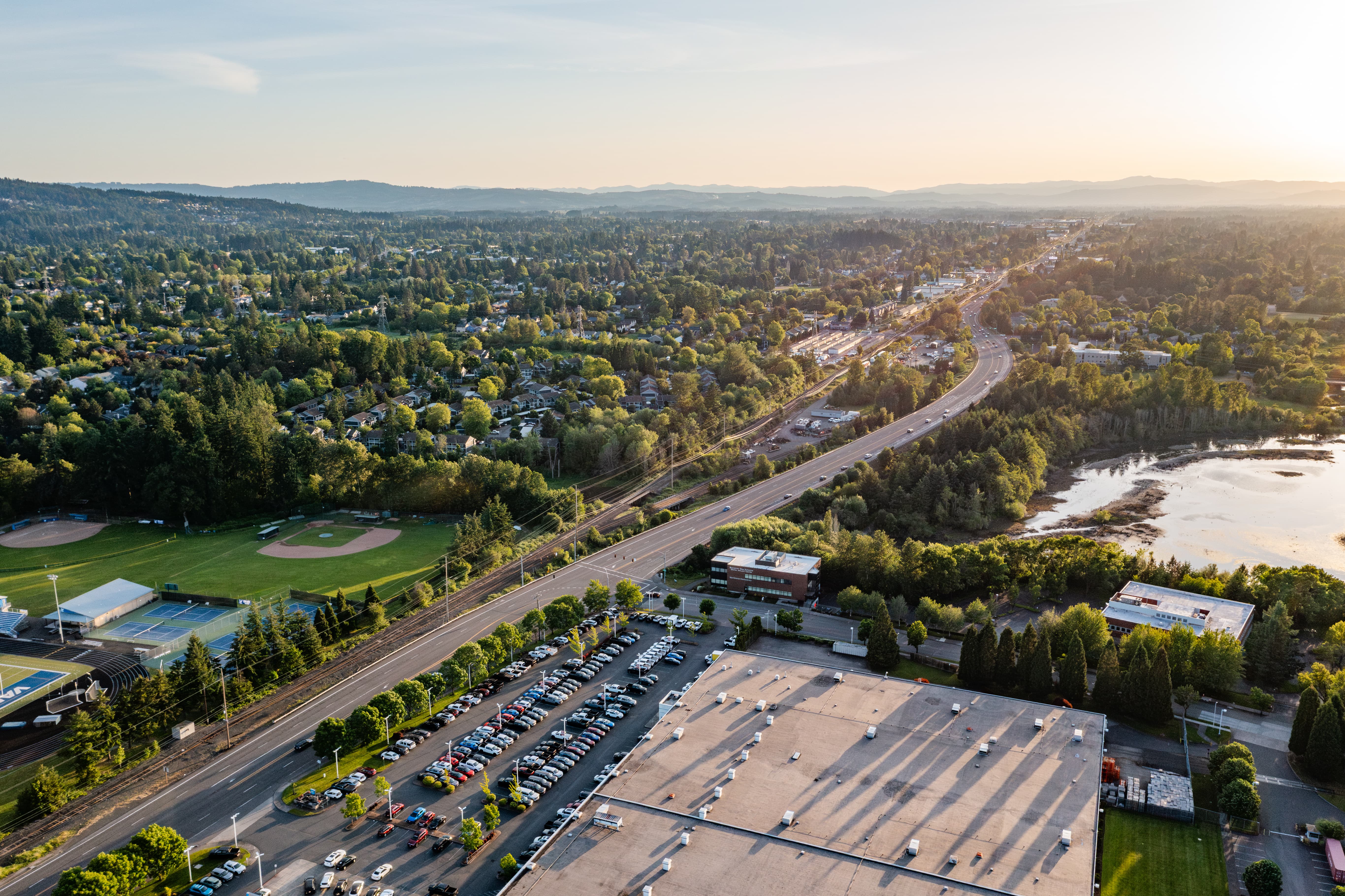
Traffic is the honest friction point that no amount of enthusiasm can paper over. US-26 eastbound toward Portland between 7:00 and 9:00 a.m. is genuinely punishing, with the stretch between the Murray Boulevard interchange and the Sunset Tunnel regularly backing up to 30 or 40 minutes in heavy conditions. The MAX Blue Line is the serious commuter's answer — the Beaverton Transit Center connects to both Blue and Red Lines, plus the WES Commuter Rail south toward Tualatin and Wilsonville — but that only helps if your destination is in a served corridor.
The employer ecosystem is unlike anywhere else in Oregon. Nike's World Headquarters sits on a 400-acre campus along SW Murray Boulevard, employing more than 15,000 people in roles ranging from product design and sports research to supply chain and marketing. Intel's campuses straddle the Beaverton-Hillsboro border, and Tektronix, Columbia Sportswear, and Leupold & Stevens all have meaningful local presences. For households where at least one partner works in tech or advanced manufacturing, Beaverton is simply the most logical place to live in the metro — not by a little, but by a lot.
The school district is a legitimate draw in itself. Beaverton School District serves nearly 38,000 students across more than 50 schools, with spending roughly $15,490 per student — above average for the region. The International School of Beaverton and Hope Chinese Charter School both rank in Oregon's top five schools. Southridge High School and Sunset High School are the two most commonly cited high schools by relocating families, with graduation rates that consistently exceed the state's 83% average. For parents moving from districts where "good schools" means one highly rated school surrounded by mediocre alternatives, the consistency across Beaverton's network is what sets it apart.
There's no state sales tax in Oregon — a fact that genuinely changes daily spending math, especially for large purchases. A $60,000 car purchase that would cost $4,800 in California sales tax costs nothing at a Beaverton dealership. For households coming from Washington State, Texas, or the Southwest, this represents real annual savings that compound meaningfully over time.
Nature access is closer and better than most newcomers expect. Beyond Tualatin Hills and Cooper Mountain, the Fanno Creek Trail connects Beaverton to Tigard and into Portland's trail network — you can run or bike from a Beaverton neighborhood to downtown Portland without touching a road if you're willing to piece the route together. The Jenkins Estate, a 68-acre historic property on Bull Mountain Road, hosts weddings, concerts, and the kind of rambling garden walks that make you feel like you've stumbled into rural England without leaving Washington County.
The Patricia Reser Center for the Arts opened in 2022 and changed the cultural conversation about Beaverton. Before it existed, the city was regularly dismissed as lacking any cultural anchor. Now it hosts the Oregon Symphony, visiting Broadway productions, and a year-round performance calendar that draws audiences from across the metro. It's located in downtown Beaverton on SW Hall Boulevard, and its presence has anchored a slow but real revitalization of the surrounding blocks.
Looking to buy in Beaverton? Estimate your payment.
Enter your numbers to see an estimated monthly mortgage payment.
Estimate only. Excludes HOA fees and mortgage insurance.
Beaverton is not a walkable city in the way inner Portland neighborhoods are. Most of the city was built around the car, and while the MAX corridor helps in specific corridors, getting around on foot or by bike for everyday errands in much of South Beaverton or West Beaverton requires genuine planning. The Progress Ridge TownSquare area is an exception — its outdoor retail configuration allows residents of nearby developments to walk to a grocery store, coffee shop, and movie theater — but it functions as an island of walkability in an otherwise car-dependent landscape.
The city's identity still skews toward suburban utility over urban personality. Downtown Beaverton has improved significantly, and the Reser Center has given it a cultural anchor, but the independent restaurant and bar scene is modest compared to what you'd find in Portland's inner eastside or even Lake Oswego. Buyers who prioritize a dense, walkable dinner-and-a-show lifestyle centered in their own city often find themselves driving into Portland more frequently than they'd anticipated, which starts to feel like an inconvenience around month six.
Why some people leave comes down to a very specific buyer archetype: people who moved to Beaverton from Portland primarily to get more house for the money, and who underestimated how much they'd miss Portland's neighborhood density and spontaneity. They land in a newer development in South Beaverton, the commute back to Portland turns out to be longer than the map suggested, and they end up in the same daily-use areas but without the Portland access they assumed they'd maintain. This is genuinely the most common regret pattern among people who leave Beaverton within three to four years.
Housing prices are not cheap. At a $594,000 median, Beaverton is well above the national median and sits near the top of the affordable-for-Portland-metro tier, not at the bottom. Buyers who arrive expecting dramatic savings compared to Portland proper often find the gap narrower than expected in the mid-range single-family segment. The real value is in the combination of price plus schools plus employer proximity — not the price alone.
Cedar Hills is the most established neighborhood in Beaverton, developed primarily in the 1950s and 1960s with the kind of mature tree canopy that newer developments can't replicate. Single-family homes here typically range from the upper $400s to the mid-$600s, and the neighborhood sits adjacent to Cedar Hills Crossing, a major retail hub anchored by a Fred Meyer, REI, and multiple dining options. The Cedar Hills Boulevard MAX station makes this one of the most transit-accessible neighborhoods in the city, though some of the older homes show their age in deferred maintenance.
Best for: Portland commuters who want MAX access, a walkable retail corridor, and a neighborhood with genuine character and street trees.
Murrayhill was developed primarily in the 1990s and is consistently among the most sought-after neighborhoods in Beaverton for families with children, anchored by Nancy Ryles Elementary, Conestoga Middle School, and Southridge High School — all within the neighborhood's footprint. Homes here run from the mid-$600s to the low-$800s, with newer construction on larger lots than you'd find in Cedar Hills. The downside is its distance from MAX, which means most residents are car-dependent for any Portland-bound commute.
Best for: Families prioritizing school continuity from elementary through high school and proximity to Nike's campus.
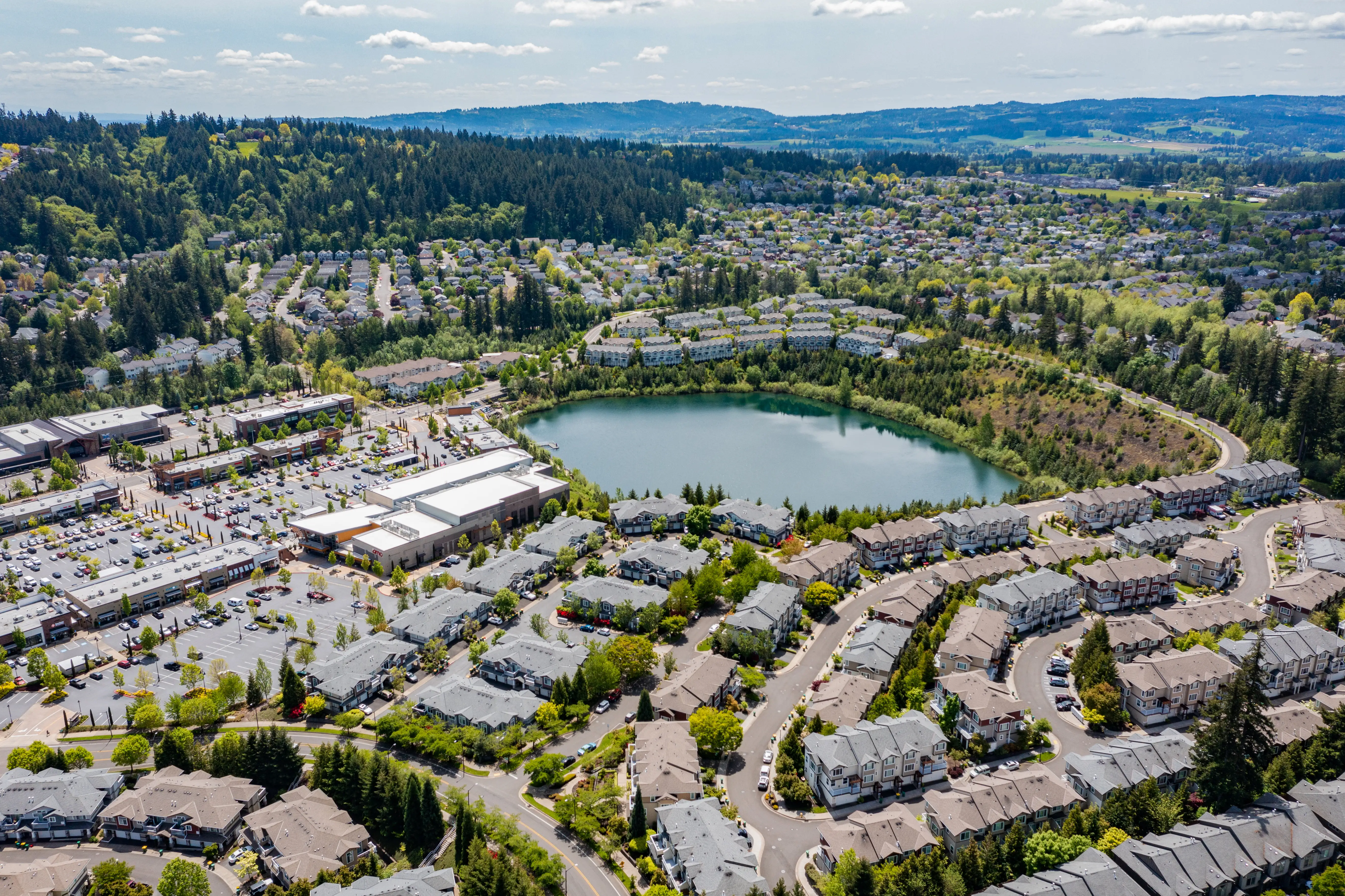
South Beaverton is a broad zone covering everything from the Progress Ridge TownSquare retail district to the quieter residential blocks south of Scholls Ferry Road. Homes here span a wide range — roughly the mid-$400s to the mid-$600s for single-family homes — reflecting the variety of development eras and lot sizes. The Progress Ridge commercial corridor is the area's social hub, with an AMC theater, multiple restaurants, and a New Seasons Market serving as the neighborhood's de facto gathering point.
Best for: Buyers who want suburban retail convenience in walking distance and don't need daily MAX access.
West Beaverton sits between the established Cedar Hills corridor and the newer Murrayhill developments, with a housing mix that skews toward 1970s and 1980s construction on moderately sized lots. Prices here typically run in the mid-$400s to low-$600s, making it one of the more accessible segments of the Beaverton single-family market. The area has fewer standout amenities than its neighbors but benefits from its central position between the city's main commercial corridors.
Best for: Buyers who want a detached single-family home in the mid-$500s without committing to either the older-stock challenges of Central Beaverton or the car-dependence of outer South Beaverton.
Central Beaverton, anchored by the Beaverton Town Square area and the blocks surrounding the Beaverton Transit Center, is the city's most urban-feeling neighborhood and its most affordable entry point for buyers. Condos and townhomes here commonly list in the mid-to-upper $300s, with some single-family homes in the $440s to $520s. The Patricia Reser Center for the Arts and the Beaverton Farmers Market are both within easy walking distance, giving this area genuine weekend-life energy that the southern neighborhoods can't match.
Best for: First-time buyers, remote workers, and Portland commuters who want the city's best transit access and lowest price floor.
Sexton Mountain sits on a ridgeline in the southern part of Beaverton, offering sweeping views of the Tualatin Valley that arrive as a genuine surprise to buyers who haven't visited in person. Median home values here are commonly reported around the mid-to-upper $500s, with larger lots and newer construction than most of the city's other neighborhoods. The tradeoff is that Sexton Mountain is among the more car-dependent addresses in Beaverton — transit options are limited and the commute to either Portland or Hillsboro requires navigating surface streets before reaching a freeway.
Best for: View-property buyers who work primarily from home or have a short westside commute and want new construction at a relatively accessible price point.
Five Oaks, located in the northern part of Beaverton near the Aloha border, is one of the more affordable and less frequently discussed neighborhoods in the city. Homes here tend toward the mid-$400s to upper-$500s, with a mix of 1980s ranch-style homes and some newer infill. The neighborhood is family-oriented and quiet, with lower traffic volumes than the US-26 corridor neighborhoods, though it has fewer walkable amenities and sits farther from both the MAX line and the city's main commercial hubs.
Best for: Budget-conscious buyers who prioritize space and quiet over transit access, and families who are less focused on walkability metrics.
Bethany occupies the northeastern corner of Beaverton — technically within city limits but feeling distinctly different from the rest of the city, with a newer, more affluent character. Homes here commonly land in the mid-to-upper $600s into the $800s, reflecting newer construction on larger lots with mountain views in some locations. Bethany Village serves as the area's retail and dining hub. The neighborhood lacks MAX service, which makes the commute to Portland a legitimate planning question for households with downtown Portland employment.
Best for: Higher-budget buyers seeking newer construction, top-performing Beaverton School District schools, and a quiet residential setting with Beaverton's address without its older housing stock.
| City | Best For | Median Home Price | Commute to Portland | Vibe |
|---|---|---|---|---|
| Beaverton | Tech employees, families, transit commuters | $594,000 | 20 min / 26 min MAX | Suburban with genuine amenities; still evolving urban identity |
| Hillsboro | Intel employees, value buyers, newer construction | $500,000–$540,000 | 30–35 min | More sprawl, lower density, strong tech corridor |
| Tigard | South corridor commuters, young families | $520,000–$560,000 | 20–25 min | Quieter suburban; improving downtown corridor |
| Portland (SW) | Urban lifestyle seekers, walkability priority | $550,000–$620,000 | 10–15 min | Urban density, independent businesses, more congestion |
| Cedar Hills (unincorporated) | Cedar Hills buyers who want Beaverton proximity | $480,000–$550,000 | 20 min | Older residential, very similar feel to Beaverton's north side |
| Aloha (unincorporated) | Maximum affordability, larger lots | $420,000–$480,000 | 25–30 min | Very suburban, fewer amenities, improving over time |
| Category | Details |
|---|---|
| Population | Approximately 97,922 |
| Median Home Price | $594,000 |
| Property Tax Rate | Approximately 1.00% |
| Median Household Income | $98,622 |
| School District | Beaverton School District (A-, #5 in Oregon) |
| Commute to Downtown Portland | ~20 min by car (off-peak); ~26 min by MAX |
| Violent Crime Rate | 3.4 per 1,000 residents |
| Property Crime Rate | 26 per 1,000 residents |
| Sales Tax | 0% (Oregon statewide) |
| Major Employers | Nike, Intel, Tektronix, Providence Health, Columbia Sportswear |
| Transit | MAX Blue & Red Lines, WES Commuter Rail, TriMet bus network |
The Beaverton Farmers Market is not optional. That sounds like hyperbole, but longtime residents talk about it the way Portlanders talk about Powell's Books — it's not just a shopping errand, it's the Saturday morning social ritual that ties the community together. Running from February through November on SW Hall Boulevard, it's one of the largest markets in the Pacific Northwest, and showing up for the first time in mid-July, when the tomato and berry vendors are peak-stocked, is a Beaverton rite of passage.
Nike Run Club culture bleeds into the city's everyday rhythms. This isn't unique to Nike employees — Beaverton has more running clubs, weekend 5K events, and trail-use culture than almost any comparable suburb in the metro. The Fanno Creek Trail and the Tualatin Hills Nature Park trails see heavy weekend use from residents who treat them as an extension of their living room. If you're a runner or cyclist, Beaverton's infrastructure will feel like infrastructure built for you. If you're not, you'll still benefit from the green corridors.
Progress Ridge TownSquare has its own gravitational pull. For residents of South Beaverton and Murrayhill, Progress Ridge functions as a kind of town square that city planners dreamed it would be when it opened — weekend movie nights at the AMC theater, Saturday morning coffee runs to the shops along the waterfront corridor, and the New Seasons Market serving as the anchor that everyone orbits around. It was developed to feel like a Main Street, and for many South Beaverton residents, it actually functions as one.
What I would not do if moving to Beaverton: Buy in Central Beaverton or along the TV Highway corridor without driving it during a weekday morning first. The TV Highway (Oregon Route 8) through the center of the city is one of the more congested surface streets in Washington County during peak hours, and buyers who choose homes near it for the "central location" often find that the arterial noise and traffic are more intrusive than they expected. The Beaverton-Hillsboro corridor along that road is in an ongoing redevelopment cycle that will eventually improve it — but "eventually" is doing a lot of work in that sentence.
Local Expert Takeaway: If you're relocating for Nike, Intel, or any westside tech employer, anchor your search in Murrayhill or Bethany first — both offer the best combination of Beaverton School District quality and proximity to the US-26/Murray Boulevard corridor without fighting the worst of the morning commute traffic. If budget is the priority, Central Beaverton near the Transit Center gives you MAX access and the lowest price floor in the city, and the neighborhood's improving quickly now that the Reser Center is drawing people downtown regularly. The buyers who struggle in Beaverton are the ones who choose based on square footage alone and don't account for whether the neighborhood matches how they actually want to spend their time.
✅ Beaverton gives Nike, Intel, and tech-sector employees an unmatched combination of employer proximity, school district quality, and housing variety — at a $594,000 median that's competitive for what you get in this market.
⚠️ The southern and western neighborhoods are car-dependent in ways that genuinely matter to daily life. If proximity to MAX or a walkable daily-errand environment matters to you, Central Beaverton and Cedar Hills are the zones to focus on — everything south of Scholls Ferry Road requires a car for most errands.
📍 The Beaverton Farmers Market, the Tualatin Hills Nature Park trail network, and the Patricia Reser Center for the Arts are the three amenities that local residents cite most consistently as what they'd miss if they left — worth visiting before you decide.
Is Beaverton a good place for families?
Beaverton is genuinely strong for families with school-age children. The Beaverton School District is ranked #5 in Oregon, consistently earns an A- on Niche, and spends roughly $15,490 per student annually. Neighborhoods like Murrayhill offer the rare advantage of elementary, middle, and high school all within the same zone, which eliminates a lot of the anxiety around school transitions.
What is the crime rate in Beaverton?
Beaverton's violent crime rate runs approximately 3.4 incidents per 1,000 residents, which is comparable to similar suburban cities in the Portland metro and well below Portland proper. Property crime is more present at roughly 26 per 1,000 — consistent with a mid-sized suburban city with significant retail density. Neighborhoods away from the TV Highway corridor and downtown commercial areas tend to have quieter property crime profiles.
How does Beaverton compare to nearby Hillsboro?
Hillsboro offers slightly lower home prices and newer housing stock, and it's the better choice if Intel's main campuses are your daily destination. Beaverton wins on transit access — MAX service is significantly more useful for Portland-bound commuters from Beaverton than from most of Hillsboro — and on cultural amenities, where the Reser Center and Farmers Market give Beaverton a downtown draw that Hillsboro is still developing. The choice between them almost always comes down to where you work and how often you plan to go into Portland.
Browse current listings updated daily — filtered for Beaverton buyers by Elizabeth Davidson, your local expert.
Powered by Elizabeth Davidson · Cascade Hasson Sotheby's International Realty · 503-939-2035
Explore the full Beaverton series: The Ultimate Beaverton Relocation Guide · Is Beaverton Safe? · Cost of Living in Beaverton · Best Neighborhoods in Beaverton · Beaverton Schools & Family Life · Beaverton Youth Sports · Beaverton Parks & Recreation · Retiring in Beaverton · 1031 Tax-Deferred Exchange in Beaverton · Beaverton First-Time Homebuyers Guide · · Moving to Beaverton from California · Beaverton Realtor's Perspective · Top 10 Questions a Realtor Gets About Beaverton
Tell us what you need help with and we'll connect you with local resources.

About the Author
Todd Davidson is the founder of Living in Oregon and Living in Washington, where he publishes in-depth city guides, neighborhood resources, and local market insights covering more than 180 communities across the Pacific Northwest. While his background is in home financing and real estate, he created these digital platforms to help families research and compare regions before making a move.