Oregon Coast · Oregon
Living in Astoria, Oregon: The Ultimate Relocation Guide (2026)
Maybe you've been watching real estate prices climb in Portland and someone mentioned Astoria as the move that makes financial sense. Maybe you stumbled across a photo of the Astoria Column at golden hour and started clicking Zillow listings from 2,000 miles away. Or maybe you've been to the coast a handful of times, loved the way this town feels — the old Victorian rooflines, the fog rolling in off the Columbia, the sense that something genuinely historic happened here — and you're wondering if the everyday reality matches the weekend version. The central tension in any Astoria relocation decision is this: you can buy a real house, in a real community with 130 years of character, for a median price well below most Pacific Northwest metros — but you're also accepting a 109-minute drive to Portland as your commute reality, a rental market that's genuinely tight, and a town of about 10,000 people where Amazon delivers slower and the nearest IKEA requires planning.
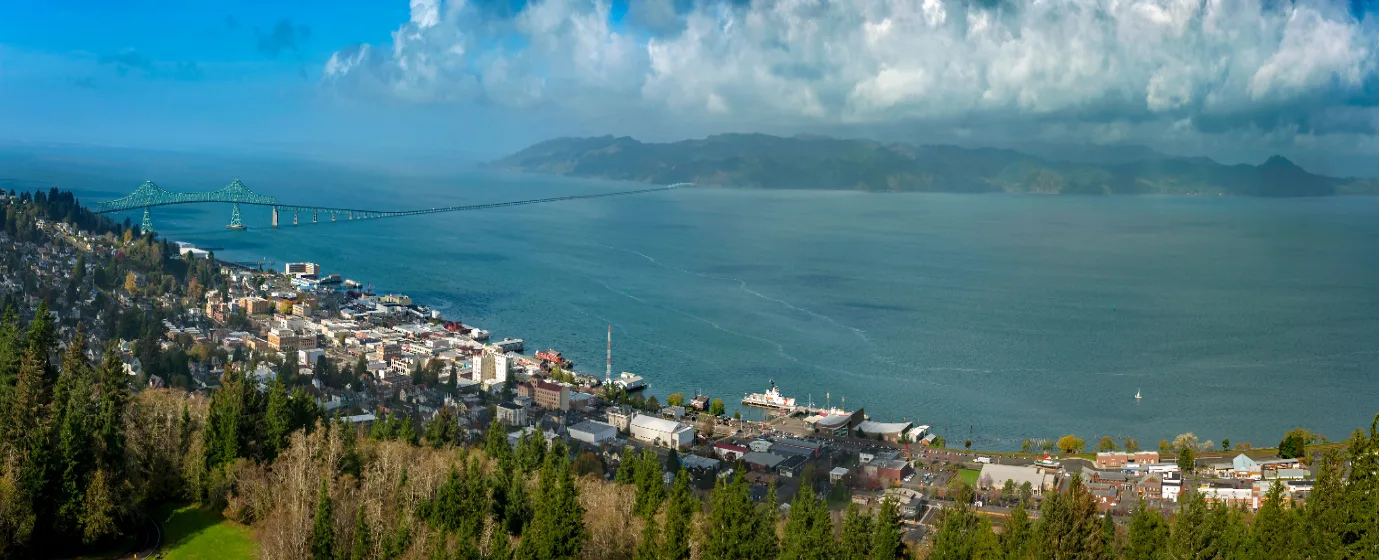
Astoria sits at the northwest corner of Oregon, where the Columbia River meets the Pacific — literally the last city before you run out of continent heading west. It's the county seat of Clatsop County, the oldest American settlement west of the Rocky Mountains, and a place that still operates like a small city with civic pride, a functioning arts scene, and working waterfront infrastructure. Columbia Memorial Hospital anchors the local healthcare economy. The Port of Astoria, Georgia-Pacific's Wauna Mill, and Clatsop Community College provide stable blue-collar and professional employment. The Astoria-Megler Bridge connects Oregon to Washington across a stretch of water that's as dramatic as any landscape in the state.
This guide is designed to help you answer the question that spreadsheets can't: is Astoria the right town for your actual life, or just for a long weekend? You'll find honest takes on the neighborhoods, real pricing context across a market that varies significantly by hillside elevation and proximity to the river, and the tradeoffs that nobody mentions until month three. If you're seriously considering a move here, read this before you make an offer.
Not every buyer or renter will find what they're looking for in Astoria. The table below cuts to the core of who tends to thrive here — and who tends to move on.
| Best For | Why |
|---|---|
| Remote workers | Fiber internet access improving, low home prices relative to Portland, extraordinary quality of life per dollar — no commute required |
| Retirees | Walkable historic core, Columbia Memorial Hospital on-site, strong arts and food scene, manageable home prices for equity-rich downsizers |
| First-time buyers | Entry-level homes still available in the $350,000–$430,000 range for older construction; far more attainable than any Portland metro suburb |
| Families with kids | Small-town school environment, low traffic, easy access to outdoor recreation, stable community institutions |
| Outdoor lifestyle seekers | Direct access to Pacific beaches, Columbia River, Fort Clatsop, Saddle Mountain, and 100+ miles of coastal hiking |
| Portland commuters | Feasible only for a few days per week — the 109-minute drive is real and highway 30 is unforgiving in winter |
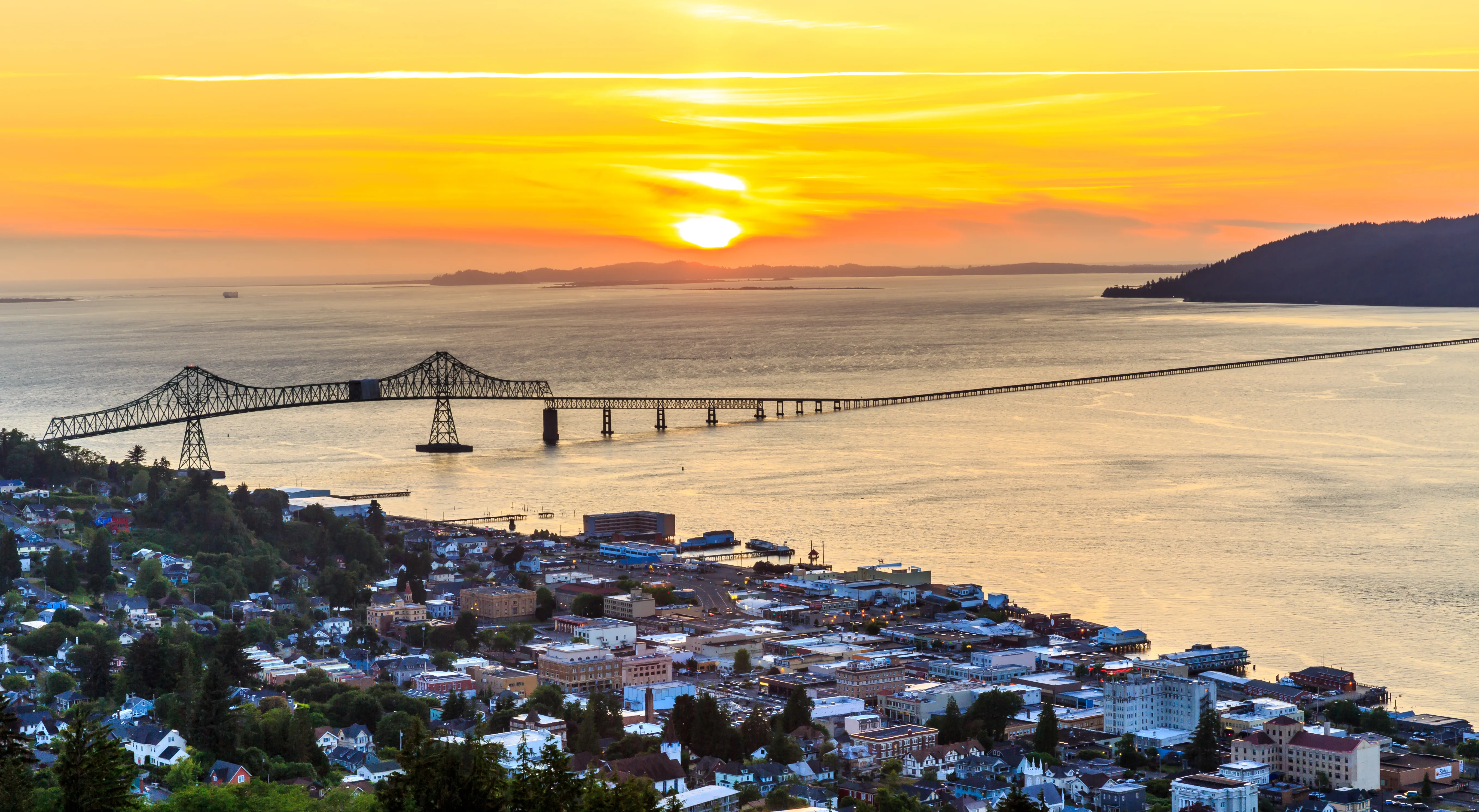
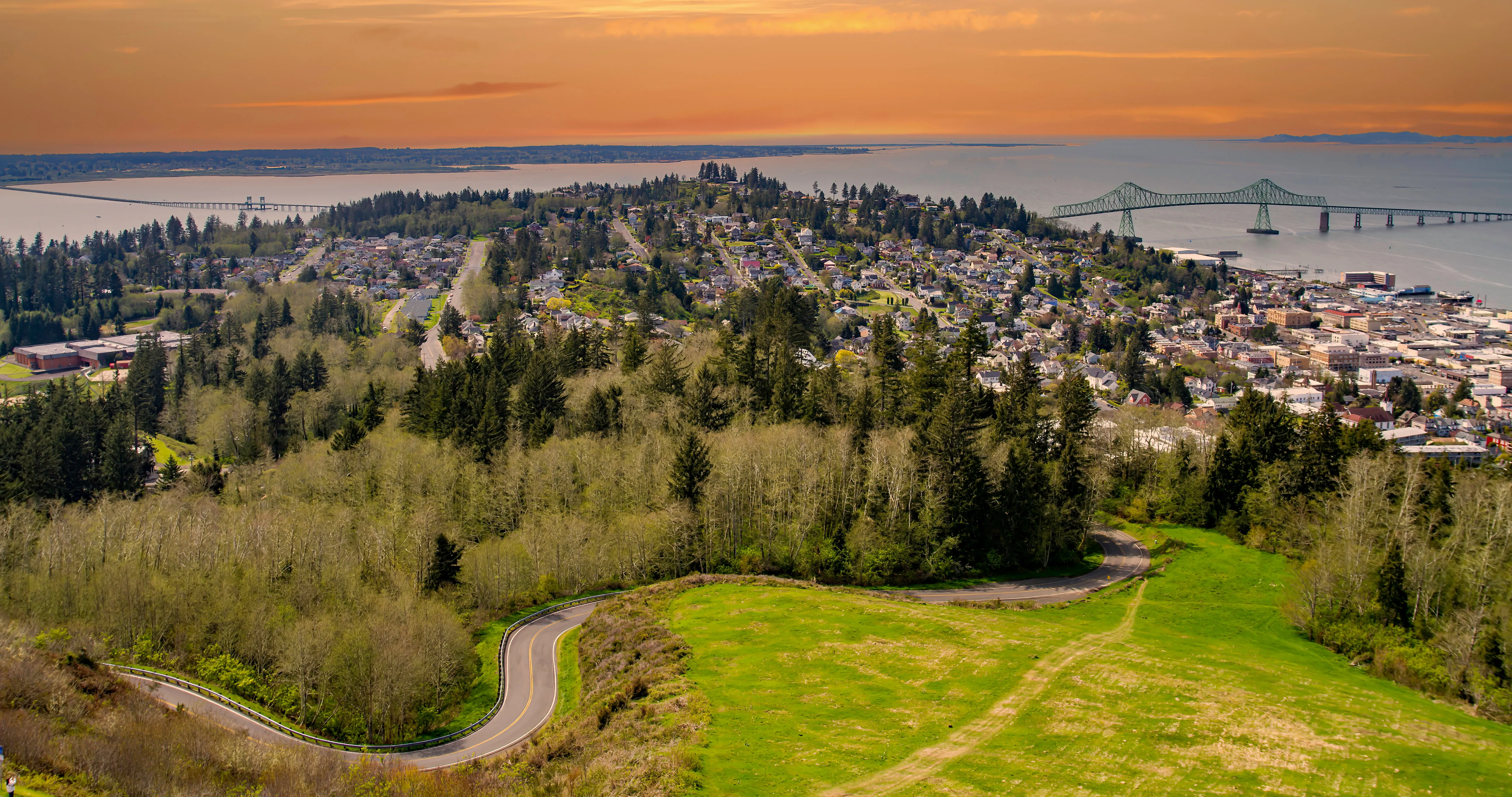
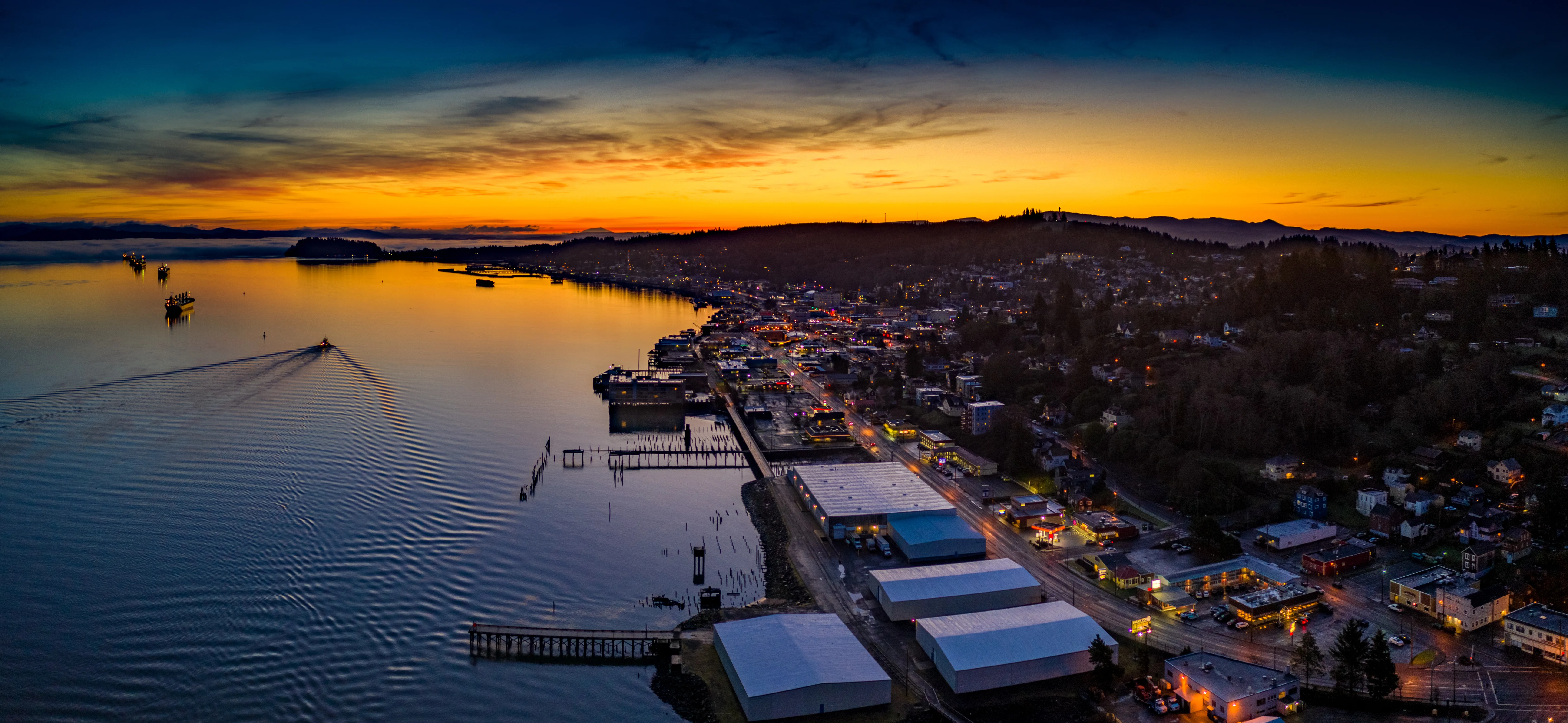
The geography here shapes everything. Astoria runs along a series of steep ridges above the Columbia River, which means most residential neighborhoods require a car to navigate even short distances — the hills are real, and they're not casual. Downtown sits along the waterfront corridor at the base of those ridges, with the Riverwalk stretching along the river's edge and connecting the city's commercial spine. On a clear day, the Astoria-Megler Bridge disappears into Washington in a way that looks implausible for a structure built in 1966.
Daily life has a small-city rhythm that surprises people who've only visited on weekends. The Astoria Co+op on 14th Street is where a significant portion of the community runs into each other on Saturday mornings. Fort George Brewery — open daily and locally owned — functions as something between a neighborhood pub and a community gathering point. The Liberty Theater on Commercial Street, a 1925 Spanish Colonial Revival performance venue, hosts live events year-round and anchors the city's cultural identity in a way that most towns of 10,000 people can't claim.
The commute reality needs to be stated plainly. Highway 30 east to Portland is 109 minutes on a good day — no highway in between, no express lane, no bypass. In winter, that number climbs. If you're considering Astoria with a five-day-per-week Portland office requirement, you're looking at a lifestyle that eats two to four hours of your day. The people who make Astoria work for a Portland connection are largely doing it three days or fewer per week, or they've transitioned fully remote. The Warrenton-Astoria area does have local employers that matter — the hospital, the mill, the college — and many residents simply work locally.
The fog is its own category. Astoria receives roughly 66 inches of rain per year and sits in near-permanent marine layer through much of fall and winter. Locals don't talk about it much because they've made peace with it — the low gray light becomes atmospheric rather than depressing after a season or two. Summer in Astoria, particularly July and August, is genuinely beautiful: mild temperatures, long days, and the kind of Pacific Northwest light that makes every Victorian roofline look like a film set. There's a reason the movie industry has filmed here repeatedly.
The most consistent thing longtime Astoria residents say is that they stayed because the quality of life per dollar is something they couldn't find anywhere else in the Pacific Northwest. For a household that has $487,000 to spend on a home — the midpoint of Astoria's current pricing — you're looking at a genuine historic property with architectural detail, a yard, and a neighborhood where your neighbors have names. That same money doesn't buy a garage in most Portland suburbs.
The food and arts infrastructure is absurdly good for a city this size. Fort George Brewery produces nationally recognized craft beer and runs a full restaurant on Exchange Street. Bridgewater Bistro on the river is a legitimate fine dining destination. Josephson's Smokehouse, operating since 1920, still cold-smokes Columbia River salmon in the traditional manner. The Columbia River Maritime Museum on Marine Drive is one of the best maritime museums on the West Coast — not a local superlative, but a nationally recognized institution with a U.S. Coast Guard lightship permanently docked outside. The Astoria Sunday Market, running May through mid-October on 12th Street, draws up to 200 vendors and functions as the town's weekly social anchor.
The outdoor access is direct and varied in a way that's genuinely difficult to replicate. The Pacific Ocean beaches at Fort Stevens State Park are 15 minutes west. Saddle Mountain State Natural Area, one of the higher coastal peaks in the range, is 30 minutes south and offers one of the more rewarding day hikes in the region. The Astoria Riverwalk itself is a flat, paved trail running along the Columbia that connects neighborhoods and gives residents a daily exercise loop most cities would spend millions engineering. Fort Clatsop, where Lewis and Clark wintered in 1805, is a short drive and genuinely worth revisiting as a resident rather than a tourist.
People who stay in Astoria also tend to mention the community investment in its own institutions. Clatsop Community College brings a steady influx of students and continuing education resources. The Flavel House Museum, a Queen Anne mansion from 1886, is maintained as one of the best-preserved historic homes in the state. The town takes its history seriously — not as a tourism gimmick, but as lived identity.
Looking to buy in Astoria? Estimate your payment.
Enter your numbers to see an estimated monthly mortgage payment.
Estimate only. Excludes HOA fees and mortgage insurance.
The 109-minute Portland commute isn't just inconvenient — it's a lifestyle constraint that filters who Astoria works for. There's no Amtrak, no express bus with reliable Pacific Northwest scheduling, and no realistic prospect of the drive getting significantly faster. Buyers who purchase in Astoria with a vague plan to "figure out the commute" typically find themselves either changing jobs within 18 months or selling. The people who love living here have usually already made peace with working locally or working remotely.
The rental market is genuinely hard. With roughly 64% of households renting citywide and vacancy rates that multiple sources describe as competitive, renters arriving in Astoria without an advance lease signed often spend weeks looking. The approximately $1,250 per month average for a one-bedroom puts monthly housing cost well above what Astoria's median household income of $68,007 comfortably supports at standard ratios. This creates an affordability squeeze that coexists somewhat awkwardly with the city's relatively modest home purchase prices.
The winter weather requires honest assessment. The combination of heavy rainfall, coastal fog, and the occasional Columbia River wind event means that Astoria winters are not for people who struggle with limited sunlight. The town has a higher-than-average poverty rate, approximately 17%, which is visible in certain commercial corridors. Property crime at 17 incidents per 1,000 residents is elevated compared to smaller Oregon towns, and buyers purchasing near the lower commercial zones of downtown should research specific block-level context before committing.
Why do some people leave? The most common reasons are career ceiling — there are only so many professional-level positions in a city of 10,000 — and social isolation for transplants who haven't yet built local networks. Astoria has strong community institutions, but they function through participation, not proximity. Buyers who move here expecting Portland-level amenity density typically recalibrate within a year. Those who lean into what Astoria actually is — a small, historically layered coastal city with outsized cultural infrastructure — are usually the ones still here a decade later.
Astoria's hillside topography means that elevation, river views, and proximity to the commercial core are the three variables that drive neighborhood character more than street grids. Here are the eight neighborhoods worth understanding before you start scheduling showings.
Downtown is where the city's identity is most concentrated — the Riverwalk, Fort George, the Sunday Market, and the Columbia River Maritime Museum all anchor this corridor. Victorian and Craftsman-era homes line the streets above the commercial spine, and the median sale price over the past year has been approximately $489,000, up sharply year-over-year. Homes move slowly here — averaging around 99 days on market — which gives buyers time to evaluate, but don't mistake slow movement for softness; the area's desirability among out-of-state remote workers has been real and sustained. The walkability here is the best in the city, with grocery options at the community-owned Co+op and Safeway both accessible without a car.
Best for: Remote workers and retirees who want to walk to dinner, the market, and the waterfront without getting in a car.
Uniontown sits along the western waterfront below the hillside neighborhoods and carries some of the city's most photogenic Victorian architecture — Queen Anne facades, river views, and the Cannery Pier Hotel & Spa establishing a boutique anchor. The neighborhood is on the Oregon Film Trail, connected to the 1986 filming of Short Circuit, and Alameda Park above Uniontown is one of the more pleasant elevated green spaces in the city. It's walkable to the Port of Astoria's West End Marina and has a neighborhood character that feels more residential and quieter than downtown's commercial energy.
Best for: Buyers who want historic character and river proximity with slightly less foot traffic than the downtown core.
Alderbrook runs along the southern edge of the city near Highway 30 and Leif Erikson Drive, with Riverwalk trailheads within the neighborhood and LaPlante Park providing wooded shoreline access. The median sale price here has reached approximately $605,000 — the highest of any Astoria neighborhood in current data, though a small transaction sample may be inflating the year-over-year figure. The neighborhood skews heavily toward renters, with roughly 71% of households renting, which creates a different community texture than the owner-occupied hillside neighborhoods. Easy Riverwalk access and proximity to Lewis and Clark National Historical Park are genuine lifestyle assets.
Best for: Renters and outdoor-focused buyers who prioritize trail access and don't need the historic streetscape of downtown.
Astor Heights climbs the ridge above downtown and delivers what many consider Astoria's best value proposition: panoramic views of the Columbia River and Astoria-Megler Bridge, a mix of historic and mid-century homes, and prices that still trail the coastal vacation-home markets. The elevation makes it car-dependent for daily errands, but the sight lines from these hillside lots are the kind that keep buyers from ever seriously considering other neighborhoods once they've stood on the porch. Pricing here tends to run above the citywide midpoint, with view-premium homes pushing toward and occasionally above $600,000.
Best for: Buyers who prioritize views and quiet residential streets and are comfortable with a short drive to downtown amenities.
Peter Pan is a working-class residential neighborhood named after and centered around Peter Pan Park, a beloved local green space that functions as a genuine neighborhood gathering point. Homes here are modest — single-family bungalows and smaller Craftsman-era houses that represent some of the more attainable entry-level buying in the city. The neighborhood's proximity to downtown and to local schools makes it practical for families with children, and its unpretentious character attracts buyers who want community without the premium of a hillside address.
Best for: First-time buyers and families with school-age children looking for the most attainable price point in a walkable location.
South Slope offers quiet residential streets with bungalows, glimpses of Youngs Bay visible from upper lots, and the kind of covered back patios and fenced yards that listings elsewhere in the city charge a premium to include. It has a neighborhood feel that's genuinely removed from the tourist-facing energy of downtown, which longtime residents tend to value. The area is more car-dependent than downtown but not isolated, and pricing runs modestly below the citywide median for comparable square footage.
Best for: Buyers who want a calm residential setting with Youngs Bay views and no interest in the weekend market crowds.
Upper Astoria encompasses the higher ridgeline neighborhoods above the downtown core, where lots get steeper, views get wider, and the community skews toward established homeowners who've been in place for years. Homes here range from mid-century ranches to larger view homes that can push well above $600,000 when the Columbia River and bridge are fully visible from the main living areas. The trade-off is complete car dependency — nothing is walkable from the upper ridge — but buyers who prioritize privacy and views over walkability consistently rank this as some of the most livable real estate in the city.
Best for: Move-up buyers and retirees who want maximum views, privacy, and are fully comfortable relying on a car for daily life.
Doughboy is a smaller residential pocket named for its neighborhood landmark, with a community character that's more working-class and intact than some of the gentrifying downtown-adjacent areas. Homes are typically modestly sized, the streets are quieter, and pricing tends to come in at or below the citywide median. It's not a neighborhood that shows up on most out-of-state buyers' radar, which is part of what keeps it relatively accessible.
Best for: Buyers looking for an authentic, lower-profile Astoria residential experience without the price premium of hillside view properties.
| City | Best For | Median Home Price | Portland Commute | Vibe |
|---|---|---|---|---|
| Astoria, OR | Historic character, remote workers, retirees | ~$487,000 | 109 min | Small city, waterfront, arts-forward |
| Warrenton, OR | Affordability, families, military connection | ~$350,000–$380,000 | 115 min | Suburban, practical, Fort Stevens access |
| Seaside, OR | Beach lifestyle, tourism economy jobs | ~$480,000–$520,000 | 90 min | Resort town, summer crowds, boardwalk |
| Gearhart, OR | Quiet coastal retreat, golf, privacy | ~$600,000+ | 95 min | Low-density, upscale, second-home market |
| Cannon Beach, OR | Vacation home, investment, beauty | ~$850,000+ | 90 min | High tourism, boutique, premium pricing |
| Longview/Kelso, WA | Portland commuters, lower cost | ~$330,000–$360,000 | 55 min | Industrial, practical, across Columbia |
| Metric | Data |
|---|---|
| Population | ~10,162 (city estimate) |
| Median Home Price | $487,000 (midpoint index; sold prices range $430K–$530K) |
| Property Tax Rate | Approximately 0.69% of assessed value |
| Median Household Income | $68,007 |
| Median Age | 40.3 years |
| Commute to Portland | 109 minutes via Highway 30 |
| Violent Crime Rate | 4 per 1,000 residents |
| Property Crime Rate | 17 per 1,000 residents |
| School District | Astoria School District 1 (B- rating) |
| Cost of Living Index | 118 (national average = 100) |
Astoria has a relationship with cinema that goes beyond tourism branding. The Goonies was filmed here in 1985, and Kindergarten Cop, Short Circuit, and several other productions used Astoria streets and buildings as locations. The city genuinely leans into this — there's an annual Goonies Day celebration that draws nostalgic visitors from across the country and has evolved into a legitimate community event, not just a hashtag. Living here means accepting that strangers will occasionally be photographing the blue Victorian house on 38th Street, and most locals have made peace with this in the way that comes from decades of repetition.
The Astoria Regatta — held annually every August — is one of the oldest festivals on the Oregon Coast, dating to 1894. It runs for five days, features a parade, boat races on the Columbia, carnival events, and a coronation ceremony that the community takes seriously. For new residents, the Regatta is one of the fastest ways to understand how Astoria thinks about its own identity: it's proud, historically anchored, and genuinely participatory rather than performative.
The fog horn culture here is real. Astoria sits in one of the foggier stretches of the Pacific Northwest coast, and longtime residents develop an affection for the ambient sound of maritime fog signals on the Columbia that functions as a kind of geographic identity marker. People who struggle with this in month one sometimes come to love it by year two. People who never adjust usually know by the first November.
What I would not do: Don't buy a home in the lower commercial blocks of Marine Drive without driving through on a Tuesday night in February. The area has charm in tourist season and a harder edge when the waterfront empties out. The blocks nearest to the working port have more foot traffic from transient populations than the hillside neighborhoods, and buyers who don't account for that often find themselves surprised by the reality versus the weekend impression.
Local Expert Takeaway: If you're choosing between renting first or buying on your initial visit, rent first — even for six months. The difference between a hillside Astor Heights home with Columbia River views and an Alderbrook bungalow near the Riverwalk is not just price; it's a completely different daily experience of the city. Spend a winter here before committing to a specific neighborhood. The fog, the quiet, and the commercial rhythm after Labor Day will tell you more about long-term fit than any summer weekend visit ever could. Buyers who've done that step almost universally report feeling confident in their purchase. Those who skipped it are the ones who call 18 months later.
✅ Astoria delivers genuine historic character, a functioning arts and food scene, and home prices well below most Pacific Northwest metros — making it one of the most compelling value plays on the Oregon coast for remote workers and retirees.
⚠️ The 109-minute Portland commute is the single biggest limiting factor for anyone with a regular office requirement — plan your employment situation before you plan your moving date.
📍 Neighborhood choice matters more in Astoria than in most small cities — the difference between Alderbrook, Astor Heights, and Downtown Astoria is a difference of character, price, and daily lifestyle, not just geography.
Is Astoria a good place for families?
Astoria offers a small-town school environment through Astoria School District 1, direct access to outdoor recreation, and a genuine community infrastructure that many families find appealing. Class sizes tend to be smaller than in suburban Portland districts, and the city's compact geography means children can often walk or bike to school and parks. The tradeoff for families is the limited professional job market and the distance from major metro amenities — families who need specialized healthcare, a wide range of extracurriculars, or frequent access to Portland tend to feel the isolation more acutely.
What is the crime rate in Astoria?
Astoria's violent crime rate runs approximately 4 per 1,000 residents, which is broadly comparable to similarly sized Oregon coast cities. Property crime at 17 per 1,000 is more elevated and is concentrated in the lower commercial waterfront corridors rather than distributed evenly across all neighborhoods. Hillside residential areas like Astor Heights and Upper Astoria report significantly less property crime activity than the downtown-adjacent commercial blocks.
How does Astoria compare to nearby Seaside and Warrenton?
Seaside offers a slightly shorter Portland commute — around 90 minutes — but operates more as a resort economy with seasonal employment patterns and a boardwalk-driven tourism culture that not every buyer wants year-round. Warrenton, just seven miles south, is considerably more affordable with median home prices in the $350,000–$380,000 range, more suburban in character, and better suited for buyers who prioritize cost over historic architecture and cultural infrastructure. Astoria is the only one of the three with a functioning small-city identity — hospital, college, arts venues, working port — that functions independently of tourist season.
Explore the full Astoria series: The Ultimate Astoria Relocation Guide · Is Astoria Safe? · Cost of Living in Astoria · Best Neighborhoods in Astoria · Astoria Schools & Family Life · Astoria Youth Sports · Astoria Parks & Recreation · Retiring in Astoria · 1031 Tax-Deferred Exchange in Astoria · Astoria First-Time Homebuyers Guide · · Moving to Astoria from California
Tell us what you need help with and we'll connect you with local resources.

About the Author
Todd Davidson is the founder of Living in Oregon and Living in Washington, where he publishes in-depth city guides, neighborhood resources, and local market insights covering more than 180 communities across the Pacific Northwest. While his background is in home financing and real estate, he created these digital platforms to help families research and compare regions before making a move.
Check Out the Oregon Coast Rankings: Oregon Coast Cost of Living — All 16 Cities Ranked · Best Places to Retire on the Oregon Coast · Best Oregon Coast Cities for Families · Best Oregon Coast Cities for Remote Workers · Oregon Coast Real Estate Market Report 2026 · Oregon Coast vs. Washington Coast