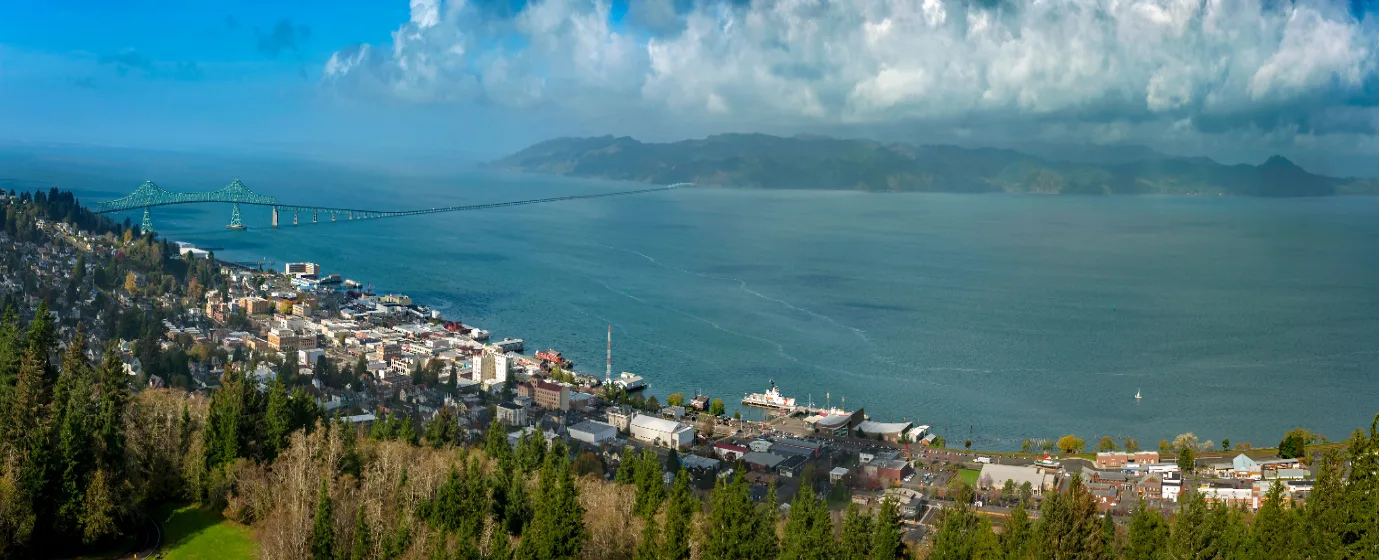
Oregon Coast · Oregon
Best Neighborhoods in Astoria, Oregon: Where to Buy or Rent (2026)
Choosing the wrong neighborhood in Astoria isn't just an inconvenience — it can mean buying a home that never appreciates, a commute that turns a scenic city into a daily frustration, or a lifestyle that simply doesn't match what brought you here in the first place. With a housing stock that spans pre-1900 Victorians, hillside view homes, and flat working-class bungalows all within a few square miles, the difference between a $380,000 purchase and a $900,000 one can come down to a single ridgeline.
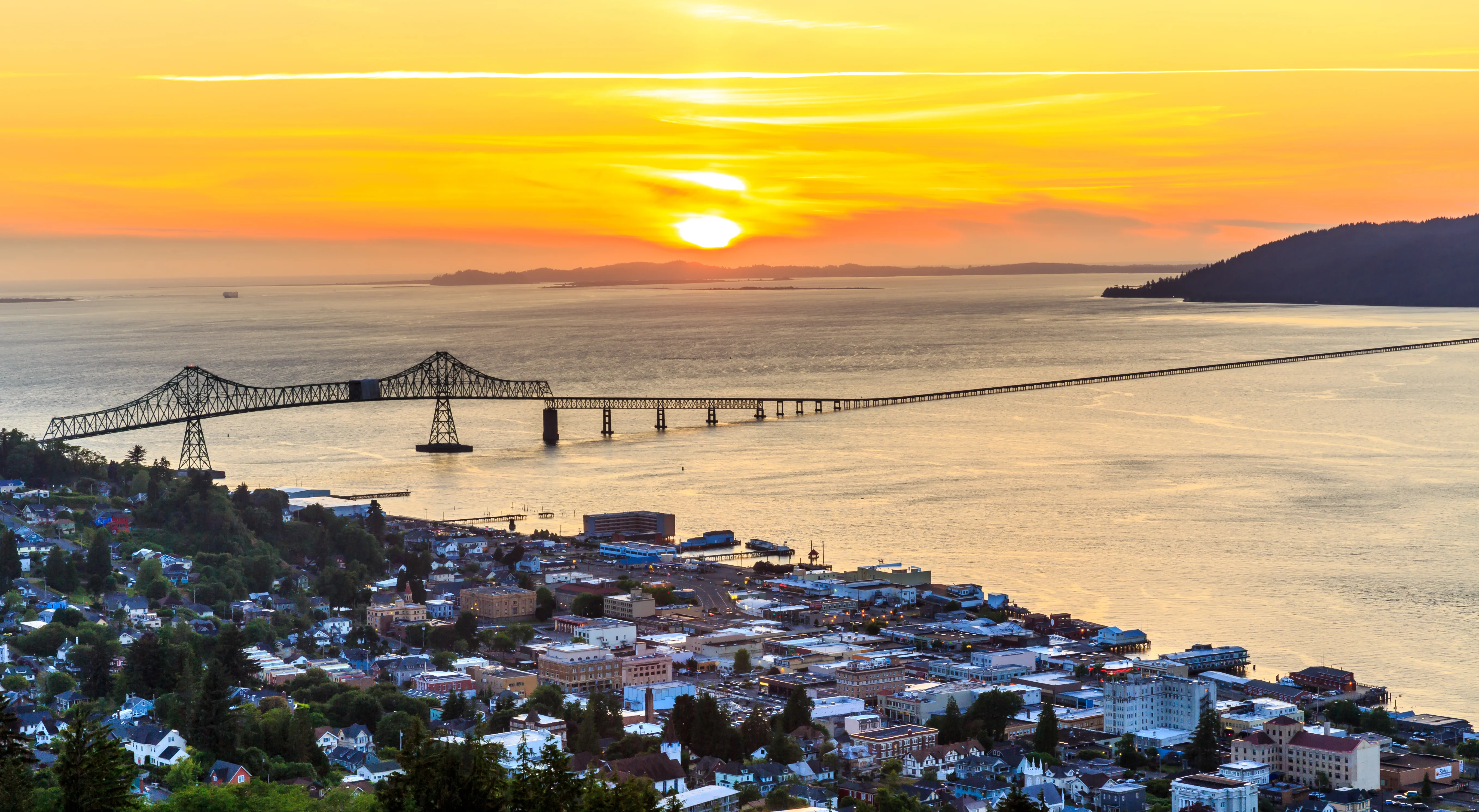
The single most important divide in Astoria is vertical. Homes above the hillside corridor — where the Columbia River spreads out to the horizon and Victorian architecture dominates the skyline — occupy a fundamentally different market than the flatlands closer to the waterfront. That elevation difference shapes everything: views, walkability, flooding risk, lot size, and price. Understanding where you fall on that spectrum is the first decision any serious buyer needs to make.
This guide walks through eight of Astoria's most distinct neighborhoods, breaks down where different buyer profiles fit best, and flags the mistakes that relocating buyers most commonly make. Whether you're weighing a hillside Victorian against a flat-lot starter home, or deciding between renting near downtown and committing to a purchase on the South Slope, the neighborhood-level picture here will give you a clearer framework than any Zillow map can.
| Neighborhood | Best For | Price Range | Vibe |
|---|---|---|---|
| Downtown Astoria | Walkability seekers, renters | $420K–$580K | Historic, artsy, pedestrian-friendly |
| Uniontown | First-time buyers, artists | $350K–$480K | Working-class roots, rising momentum |
| Alderbrook | Families, value buyers | $380K–$520K | Quiet, suburban feel, flat terrain |
| Astor Heights | Luxury buyers, view chasers | $650K–$1.1M+ | Hillside Victorians, panoramic views |
| South Slope | Mid-range buyers, families | $440K–$580K | Residential, solid schools access |
| Upper Astoria | Luxury/premium buyers | $600K–$1.2M+ | Ridge-top views, large lots |
| Peter Pan | Mid-range buyers, families | $430K–$570K | Neighborhood feel, park access |
| Doughboy | Entry buyers, renters | $320K–$460K | Dense, urban-adjacent, mixed-use |
| River Point | Families, school-focused buyers | $460K–$600K | Newer, school district strength |
| Lewis & Clark | Large-lot buyers, privacy seekers | $380K–$560K | Wooded, outer residential, quiet |
| Buyer Type | Best Neighborhood | Why |
|---|---|---|
| First-time buyer | Uniontown | Entry price points with upward momentum; walkable to downtown |
| Luxury buyer | Upper Astoria or Astor Heights | Columbia River views, historic architecture, top of market |
| Walkability seeker | Downtown Astoria | Sunday Market, Fort George, Riverwalk all within blocks |
| Families with kids | River Point or South Slope | Strongest school access, quieter residential feel |
| Commuters (Portland) | Lewis & Clark / South Slope | Faster US-30 access, less navigating through downtown core |
| Large lot buyers | Lewis & Clark or Upper Astoria | Wooded parcels, more space, less density |
| Renters | Downtown Astoria or Doughboy | Highest rental inventory, most walkable to services |
Astoria's neighborhood market moves differently than most Oregon coastal cities. Inventory is genuinely limited — the historic core is built out, and there's almost no new construction happening within the city itself. That means buyers who find the right street rarely get a second chance at it.
What experienced buyers understand is that the view premium here is real but nuanced. A home on the Uniontown flats with no river view might trade for $280,000–$340,000, while a comparable-sized Victorian on the upper hill with a panoramic Columbia River view can push $450,000–$550,000 or more. The bones of the houses are often similar — it's the elevation that drives the price.
The other thing worth knowing: Astoria's historic homes require a buyer who understands what they're getting into. Many of the Craftsman and Victorian properties in the Old Town and upper residential areas have been lovingly maintained, but some haven't. A pre-inspection from someone familiar with older coastal construction — especially around moisture intrusion and foundation work on hillside lots — is not optional here. It's essential.
For buyers relocating from the Portland Metro or from California, the price-per-square-foot in Astoria still looks like a relative value. You're buying into a town with genuine character, a walkable historic downtown, and one of the most dramatic natural settings in the Pacific Northwest. The tradeoff is remoteness — Astoria is 95 miles from Portland, and that distance is real when you need to see a specialist or catch a flight.
First-time buyers tend to do best in the Alderbrook and upper residential areas east of downtown, where prices are more accessible and the neighborhood feel is quieter and more residential. Move-up buyers and retirees often gravitate toward the hilltop streets above 8th Avenue, where the views justify the premium and the sense of place is hard to replicate anywhere else on the Oregon coast.
Looking to buy in Astoria? Estimate your payment.
Enter your numbers to see an estimated monthly mortgage payment.
Estimate only. Excludes HOA fees and mortgage insurance.
Downtown Astoria is the city's cultural and commercial spine, and buying here means trading a yard for front-door access to everything that makes Astoria worth moving to. The housing stock leans Victorian and Craftsman, much of it dating to the late 19th and early 20th centuries, and the walkability to Fort George Brewery, the Astoria Co+op, Josephson's Smokehouse, and the Columbia River Maritime Museum is genuinely unmatched anywhere else on the North Coast. The Astoria Sunday Market runs from May through mid-October with up to 200 vendors within walking distance of most Downtown addresses. The catch is that older housing stock means maintenance costs can run high, street parking is genuinely competitive, and the neighborhood's density means noise travels — the Riverwalk trolley is charming until it's running past your living room window on a Sunday morning.
Best for: Buyers who want walkability and cultural access over square footage and suburban quiet.
Uniontown sits just west of downtown and carries the working-class history of Astoria's fishing and cannery era in its bones — and that authenticity is exactly what's drawing a new wave of buyers. Prices here have historically represented the more accessible end of the Astoria market, with entry-level homes still available in the $350,000–$480,000 range, though that floor has been rising as the neighborhood gains momentum. The proximity to downtown is a genuine advantage, and several blocks have seen thoughtful renovation without the full gentrification premium. The honest downside is that parts of Uniontown still show the wear of decades of disinvestment — buyers should walk the specific block, not just the neighborhood boundary, before writing an offer.
Best for: First-time buyers, artists, and buyers who want downtown proximity at a below-median price.
Alderbrook occupies Astoria's flatter eastern terrain, and the trade-off is immediately visible: no Columbia River views, but more usable yard space, more recent construction mixed in, and a quieter pace that some families prefer over the denser hillside. Trailing 12-month sold data puts the neighborhood median around $605,000 — a figure that reflects strong demand from buyers priced off the hillside who still want Astoria proper. The flip side of that demand is limited inventory, and the 73% year-over-year price movement in recent trailing data suggests this neighborhood's sample pool is small enough that individual sales can skew the averages significantly. Buyers should look at per-square-foot figures here rather than median-sold comparisons.
Best for: Families with kids who want more outdoor space and a suburban feel without leaving city limits.
Astor Heights is where Astoria's hillside Victorian character is most concentrated, and the view premium here is real and non-negotiable. Homes with unobstructed Columbia River sightlines — the kind where you can watch container ships pass and see the Astoria-Megler Bridge from your kitchen — regularly list above $700,000 and can reach well past $1 million for fully restored examples with original woodwork intact. The architecture alone draws buyers who've spent years hunting for something this specific. The practical challenge is that steep driveways, older plumbing systems, and the cost of maintaining a 100-year-old home are part of the package — budget accordingly, and get a thorough inspection before falling in love with the wraparound porch.
Best for: Luxury buyers, history enthusiasts, and anyone for whom a Columbia River view is non-negotiable.
The Peter Pan neighborhood sits in the mid-city tier and derives much of its identity from Peter Pan Park, one of Astoria's most used recreational anchors, making it a natural landing spot for households with children. Prices here run roughly in line with the citywide median, in the $430,000–$570,000 range, and the housing stock is a mixed bag of mid-century bungalows and older two-stories on modest lots. The neighborhood is residential without being remote, and commute access to US-30 is reasonable. The weakness is that Peter Pan doesn't have a strong commercial corridor of its own — daily errands require a short drive, and the walkability score lags behind downtown considerably.
Best for: Families with school-age children who want park access and a genuine neighborhood feel.
South Slope occupies the southern ridgeline of the city and offers one of the better combinations of view access, residential quiet, and mid-range pricing in Astoria. Homes here sit in the $440,000–$580,000 range and tend to attract buyers who've done enough research to know that the hillside premium doesn't require going all the way to Astor Heights. Access to US-30 for the long commute toward Portland is more straightforward from here than from Downtown, which matters for the percentage of households still making that drive. The limitation is that South Slope is a driving neighborhood — the terrain means walking to downtown or the Riverwalk involves a significant hill, and that hill becomes a real calculus in winter.
Best for: Mid-range buyers who want partial view access and quieter residential streets without the full hillside premium.
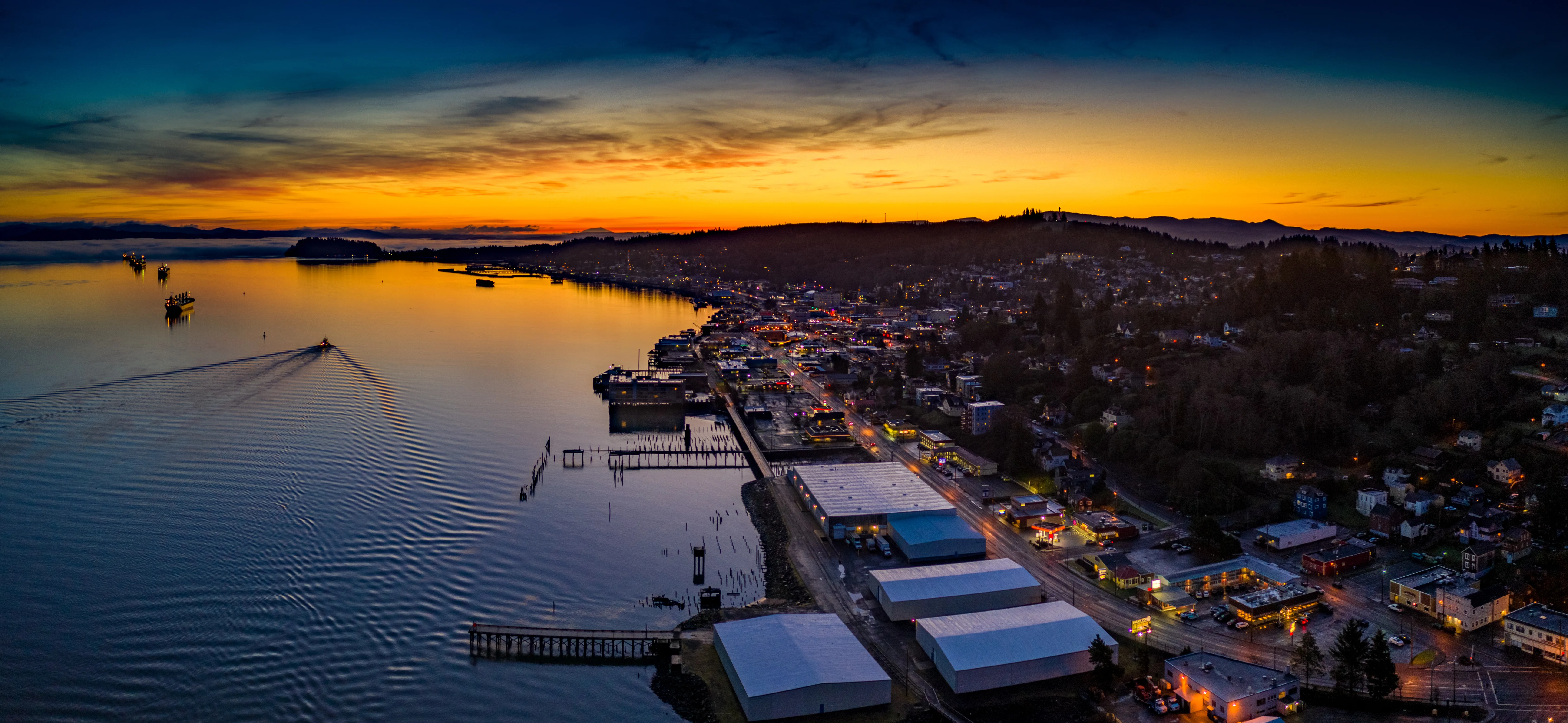
Upper Astoria represents the top tier of the Astoria market, sitting on the ridgeline where views are panoramic and lots tend to run larger than the compressed hillside parcels below. The price range here spans $600,000 to well over $1.2 million depending on view quality, lot size, and condition, and the gap between a well-maintained property and a deferred-maintenance fixer on this ridge can be $300,000 or more. For buyers with the budget, Upper Astoria offers something genuinely rare on the Oregon Coast — room to breathe, architectural character, and a view that doesn't require craning your neck around a neighboring roofline. The honest trade-off is that the isolation comes with fog, wind, and steep access roads that require a capable vehicle in winter.
Best for: Premium buyers who want maximum view, space, and architectural character and are prepared for the maintenance reality of a hilltop property.
Doughboy is one of Astoria's denser, more urban-adjacent neighborhoods, and it functions largely as the city's most accessible entry point for both buyers and renters. Prices at the lower end of the Astoria spectrum — starting around $320,000 for the most modest inventory — make it relevant for first-time buyers who've been priced out of Uniontown's recent momentum or Alderbrook's rising medians. The neighborhood is named after the Doughboy war memorial, and it sits close enough to downtown services that car-optional living is feasible for the right household. The practical reality is that proximity to denser commercial activity and the city's older infrastructure means Doughboy homes require careful inspection for deferred maintenance, and the neighborhood character varies block by block.
Best for: Entry-level buyers and renters who need proximity to downtown services at the lowest price point in the city.
Assuming all hillside properties are equal. The elevation gradient in Astoria is steep enough that two homes a single block apart can have dramatically different view quality, driveway accessibility, and resale appeal. Buyers coming from flat-terrain markets often treat the hillside as a monolith and then discover after closing that their "hillside home" has a partial view of a neighboring roofline rather than the Columbia River they were imagining. Walk the lot at different times of day and confirm the view line before making any offer above the citywide median.
Underestimating US-30 as a bottleneck. The drive to Portland averages around 109 minutes under normal conditions, but US-30 has limited passing lanes through the Youngs Bay and Knappa corridor, and a single accident or logging truck situation can stretch that to two and a half hours without warning. Buyers who plan to commute to Portland — even once or twice a week — often don't fully stress-test this drive before committing to Astoria. If the Portland commute is a real part of your life, South Slope's US-30 access is meaningfully better than navigating out from Downtown.
Buying a historic home without a specialized inspection. A substantial share of Astoria's housing stock was built before World War II, and many of the most visually appealing homes on the hillside have had decades of owner-managed "repairs" layered over original systems. Buyers who fall in love with the Victorian details and skip a thorough structural and systems inspection — or use a generalist inspector unfamiliar with pre-war construction — frequently discover significant foundation, plumbing, or electrical surprises after closing. Budget for a specialist who knows 1890–1920 construction before you bid on anything in Astor Heights or Upper Astoria.
Treating Astoria as a uniform rental market. Renters who search Astoria broadly and take the first available unit without understanding neighborhood character often end up in a location that requires a car for every errand, far from the cultural amenities that made the city appealing in the first place. The rental inventory near Downtown and Doughboy serves a very different lifestyle than units in the outer residential areas — and the price differential between them is smaller than most renters expect.
| Area | Ideal For | Typical Rent Range | Trade-off |
|---|---|---|---|
| Downtown Astoria | Singles, remote workers, walkability seekers | $1,300–$1,900/mo | Limited parking, older units, street noise |
| Uniontown | Artists, young renters, budget-conscious | $1,100–$1,600/mo | Variable block quality, limited newer inventory |
| Alderbrook | Families, longer-term renters | $1,400–$1,900/mo | Car-dependent, limited rental inventory |
| Doughboy | Entry-level renters, service workers | $950–$1,400/mo | Older units, maintenance variability |
| South Slope | Remote workers, couples | $1,300–$1,800/mo | Driving required for most errands |
Astoria's rental market is genuinely tight by small-city standards. Inventory turns over slowly, and the most desirable units — particularly anything with a river view or walkable downtown access — can receive multiple applications within days of listing. Remote workers have added steady pressure to the Downtown and South Slope rental zones over the past two to three years, and that demand hasn't been matched by meaningful new construction. Renters relocating to Astoria should plan to begin their search at least 60 days before their target move date and be prepared to commit quickly on anything in the $1,300–$1,700 range.
Local Expert Takeaway: In Astoria, the single most important question to resolve before making an offer is whether you're buying a view or buying square footage — because the market prices those two things very differently, and conflating them leads to overpaying or permanent disappointment. If a Columbia River view is a priority, focus your search on Astor Heights and Upper Astoria where the view lines are verified, and budget for the maintenance reality of older hillside homes. If value and neighborhood momentum matter more, Uniontown and the South Slope offer the best combination of upside and livability at prices closer to the $487,000 city median.
Is Astoria a good place for families?
Yes, Astoria has a real family infrastructure for a city its size, including the Astoria Aquatic Center, Peter Pan Park, and a school district that gives families reasonable options across elementary, middle, and high school. River Point and South Slope are the neighborhoods local families most frequently mention when discussing where they'd buy again, primarily for school access and quieter residential character. The honest caveat is that the limited local job market means many family households are managing a Portland commute, which adds real strain to the daily picture.
What is the cost of living like in Astoria compared to Portland?
Housing is the primary cost advantage — with a median sold price of approximately $487,000, Astoria runs significantly below Portland metro medians, and property taxes at roughly 0.69% are lower than most Oregon metro areas. Groceries, utilities, and most services are broadly comparable to other Oregon small cities. The hidden cost is the commute: households making regular Portland drives absorb real fuel, vehicle wear, and time expenses that partially offset the housing savings.
Which Astoria neighborhoods are best for first-time buyers?
Uniontown and Doughboy represent the most accessible entry points in Astoria, with homes available below the citywide median and enough inventory turnover to give first-time buyers a realistic shot. Alderbrook is also worth a look for buyers who want more outdoor space and are comfortable in a car-dependent setting. The advice most local agents give first-timers is to spend a full weekend walking each neighborhood — day and night — before narrowing to a specific zone, because the block-by-block character variation within each of these areas is significant enough to matter.
Explore the full Astoria series: The Ultimate Astoria Relocation Guide · Is Astoria Safe? · Cost of Living in Astoria · Best Neighborhoods in Astoria · Astoria Schools & Family Life · Astoria Youth Sports · Astoria Parks & Recreation · Retiring in Astoria · 1031 Tax-Deferred Exchange in Astoria · Astoria First-Time Homebuyers Guide · · Moving to Astoria from California
Tell us what you need help with and we'll connect you with local resources.

About the Author
Todd Davidson is the founder of Living in Oregon and Living in Washington, where he publishes in-depth city guides, neighborhood resources, and local market insights covering more than 180 communities across the Pacific Northwest. While his background is in home financing and real estate, he created these digital platforms to help families research and compare regions before making a move.
Check Out the Oregon Coast Rankings: Oregon Coast Cost of Living — All 16 Cities Ranked · Best Places to Retire on the Oregon Coast · Best Oregon Coast Cities for Families · Best Oregon Coast Cities for Remote Workers · Oregon Coast Real Estate Market Report 2026 · Oregon Coast vs. Washington Coast