
Oregon Coast · Oregon
Moving to Astoria, Oregon from California: The Honest Comparison (2026)
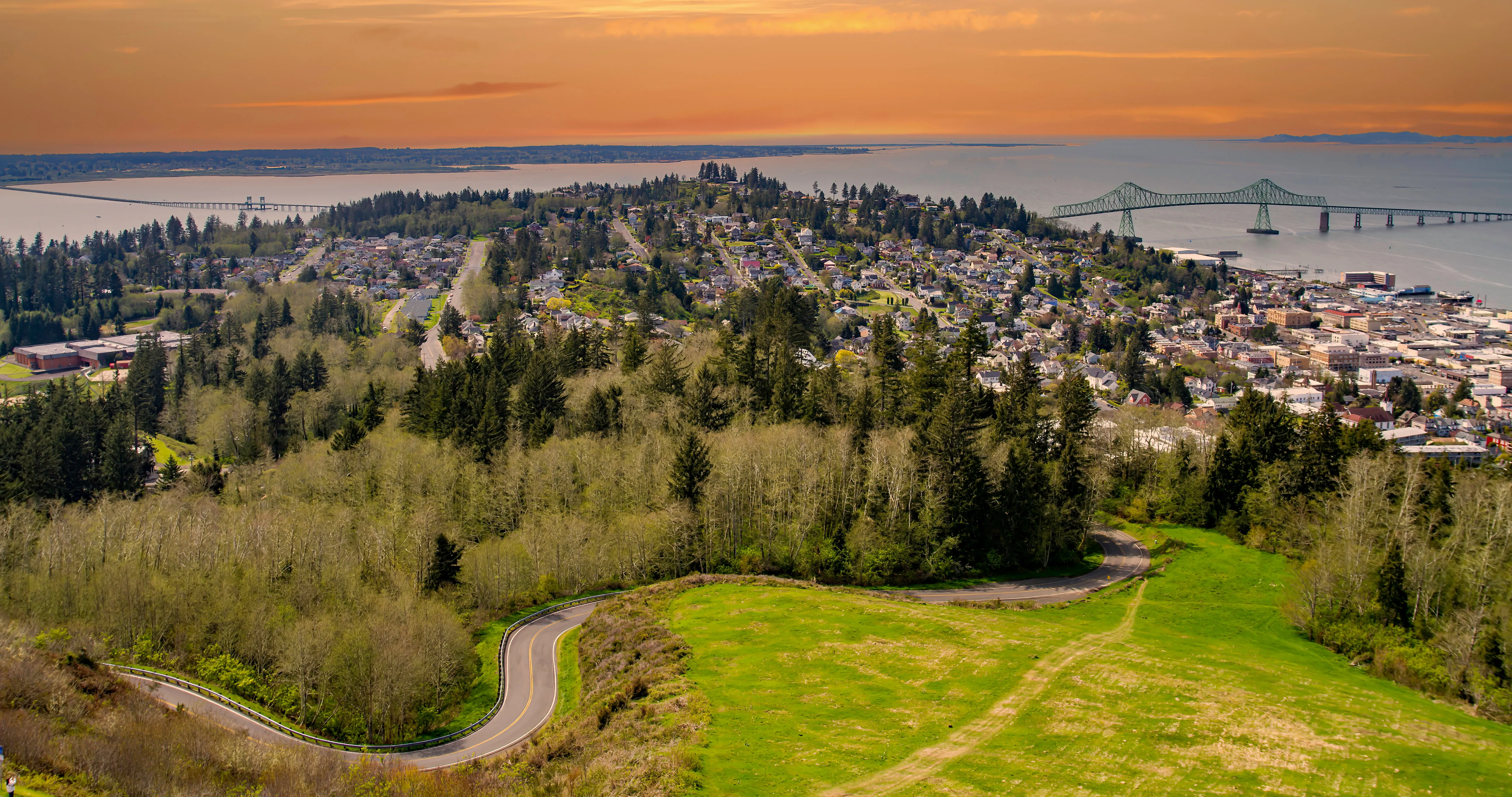
The Bay Area software engineer who finally got a yard. The San Diego family who stopped dreading the July utility bill. The Sacramento buyer who purchased a four-bedroom Victorian with Columbia River views for less than their old townhome cost. California-to-Oregon migration isn't a new story, but Astoria keeps appearing on shortlists for a specific reason: it offers something most Oregon cities can't match at this price point — genuine character, walkable historic neighborhoods, and a pace of life that feels earned rather than manufactured. A remote worker leaving Walnut Creek can buy a fully renovated Craftsman here and still have equity sitting in the bank.
The hard part deserves equal time. Astoria is not California. December delivers roughly two hours of sunlight per day. The nearest major grocery chain is in Warrenton. The food scene is small, and the nightlife scene is smaller. The rain doesn't just visit — it moves in. Californians who move here without understanding the winter adjustment period often spend their first year quietly shocked at how different daily life feels from November through March.
This guide covers the full picture: a cost comparison broken down by California region, what your specific equity actually buys here, the real tax story (Oregon has an income tax, and it matters), the weather reality, and the four mistakes California transplants commonly make in this market.

| Astoria, Oregon | Bay Area | Southern CA | Sacramento Metro | Central Valley | |
|---|---|---|---|---|---|
| Median Home Price (approx. 2026) | $487,000 | $1.3M–$1.8M+ | $700K–$900K | $520K–$580K | $350K–$430K |
| Property Tax Rate (effective) | ~0.69% | ~1.0–1.1% | ~1.0–1.2% | ~1.1–1.2% | ~1.0–1.1% |
| State Income Tax (top bracket) | 9.9% | 13.3% | 13.3% | 13.3% | 13.3% |
| State Sales Tax | None | 7.25–10.75% | 7.25–10.50% | 7.25–9.0% | 7.25–9.0% |
| Avg Utilities (monthly est.) | ~$130 | ~$180–220 | ~$170–210 | ~$160–200 | ~$150–190 |
| Avg 1BR Rent | ~$1,200–$1,500 | ~$2,800–$3,500 | ~$2,000–$2,600 | ~$1,500–$1,900 | ~$1,000–$1,400 |
A buyer leaving Walnut Creek and selling a $1.5 million home to purchase in Astoria at the $487,000 median is either eliminating their mortgage entirely or financing a fraction of what they carried before. Even after transaction costs on both sides, the financial reset is substantial — and unlike most Pacific Northwest cities in this conversation, Astoria's entry point is still accessible without jumbo financing. The move from Southern California tells a similar story: a Long Beach or Pasadena seller with $800,000 in equity lands in Astoria's top price tier with money left over.
The Sacramento comparison is closer — those buyers see the smallest absolute housing gain — but the sales tax elimination, lower property taxes, and reduced overall cost of living still move the needle meaningfully, especially for households spending $60,000–$80,000 per year on non-housing expenses.
Oregon's income tax catches California buyers off guard because they often assume that any state cheaper than California is cheaper across the board. The income tax picture is more nuanced. Oregon's top bracket hits 9.9% — lower than California's 13.3% top rate, but not dramatically so at high income levels. The graduated structure means moderate earners ($50,000–$125,000 household income) pay somewhere in the 6–8% effective range, which is a genuine improvement over California's comparable brackets.
Where Oregon wins decisively over California is on the two taxes that affect daily spending the most. Oregon has no state sales tax. A household spending $70,000 annually on taxable goods and services in San Jose — where the combined rate runs 9.375% — saves roughly $6,500 per year simply by crossing the state line. That's a permanent, compounding savings that doesn't require any behavioral change whatsoever. Astoria's effective property tax rate runs approximately 0.69%, compared to California's statutory 1% base rate plus special assessments that push most California homeowners well above 1.1%. On a $487,000 Astoria home, that's roughly $3,360 per year in property taxes. A comparable California property at $700,000 at 1.15% effective costs approximately $8,050 — a $4,690 annual difference.
Oregon also has Measure 50, which caps assessed value increases at 3% per year regardless of market appreciation. A California buyer who purchased under Prop 13 has enjoyed similar protection, but a buyer purchasing new in California gets no such cap — their assessed value resets to purchase price with full exposure to California's tax rates from day one. In Astoria, long-term owners see predictable, modest property tax growth even as market values climb. For buyers planning to hold a home through retirement, that structural difference has meaningful long-term value.
A buyer leaving Palo Alto or San Jose with $1.5 million in equity can purchase any property in Astoria outright — with cash remaining. The top end of the Astoria market runs to roughly $1.2 million for fully renovated historic Victorians with panoramic Columbia River views, and even those represent a fraction of what comparable waterfront character homes cost along the California coast. At this equity level, buyers are choosing between an all-cash purchase in Alderbrook or Upper Astoria with a paid-off home and invested surplus, or a luxury property with renovation budget included.
The most compelling value at this equity level is Astoria's stock of historic multi-unit properties. A six-plex near the Riverwalk with Columbia River and Megler Bridge views — the kind of investment that would require $3M+ in any Bay Area submarket — is available here in the $600,000–$800,000 range. Bay Area buyers with 1031 exchange proceeds from investment properties find Astoria's multi-family inventory particularly compelling.
A buyer leaving Pasadena, Long Beach, or Irvine with $900,000 in equity lands at the top of Astoria's market with options. That equity covers an outright purchase of Astoria's finest hillside properties and still leaves meaningful cash reserve. The Astor Heights and Upper Astoria neighborhoods — where sweeping Columbia River views and larger lots command the city's highest prices — are fully accessible to Southern California sellers without financing. For buyers who want to preserve liquidity rather than buy all-cash, a 30% down payment on a $700,000 Astoria property leaves them with $650,000+ in investable assets alongside a low-LTV mortgage.
What buyers from San Diego specifically tend to notice: for the first time in their adult lives, they can buy a detached single-family home with a real yard, in a walkable neighborhood, within a short drive of the ocean, without a seven-figure mortgage attached to it.
Sacramento sellers see the closest comparable market — Astoria's median and Sacramento's median are in the same general range — but the relative gain is still real. A buyer leaving Elk Grove or Rancho Cordova with $550,000 in equity can purchase near Astoria's median with a small down payment, carry a modest mortgage, and eliminate California's sales tax and higher property tax rate simultaneously. The net monthly cost improvement is meaningful even if the home price itself isn't dramatically cheaper.
Where Sacramento buyers get the best relative value is in Astoria's older stock below the median — three-bedroom Craftsman homes in the $380,000–$450,000 range that need cosmetic updating but sit on full lots in established neighborhoods. For buyers with construction equity from a California sale, the renovation math in Astoria is favorable compared to virtually any California submarket.
Central Valley sellers — Fresno, Stockton, Modesto — have the most modest relative housing advantage, and some buyers in this equity tier will actually find themselves financing a larger percentage of an Astoria purchase than they carried in California. What still makes the move financially compelling is the long-term cost structure: no sales tax on a lower household income base is proportionally more impactful, property taxes on a $487,000 home at 0.69% run roughly $3,360 per year compared to roughly $5,000–$5,800 at California's effective rates, and utilities in Astoria run below the national average.
For Central Valley buyers, the honest conversation is less about pure equity arbitrage and more about lifestyle trade — they're getting a coastal Oregon small city with genuine character, lower crime, and a dramatically different daily environment in exchange for a comparable or marginally higher housing cost.
Looking to buy in Astoria? Estimate your payment.
Enter your numbers to see an estimated monthly mortgage payment.
Estimate only. Excludes HOA fees and mortgage insurance.
Nobody who's honest about Astoria sugarcoats December. With roughly two hours of sunlight on the shortest winter days, 193 days per year that see measurable rainfall, and an annual precipitation total of approximately 82 inches, Astoria is one of the wettest cities in the continental United States. A buyer leaving San Diego, where sunny days number well over 260 per year, is making a genuine lifestyle trade — not a minor climate adjustment.
The flip side is real and specific. Astoria's summers are genuinely extraordinary. July averages 11 hours of sunshine per day, August highs sit around 70°F, and the shoulder seasons of May and September regularly deliver the kind of mild, clear days that feel rare anywhere in California because they are rare. The outdoor culture here in summer — kayaking the Columbia estuary, hiking Saddle Mountain, the Fort Stevens State Park coastline, the Saturday farmers market on the Riverwalk — matches or exceeds what most California transplants were doing in their best California summers. The difference is that the Oregon version comes without the crowds, the $50 parking fees, or the coastal highway gridlock.
What California transplants commonly say they miss after a year in Astoria: consistent year-round beach access without a wetsuit, their specific food scenes (Astoria has good restaurants for its size, but it is not San Francisco's Mission District or LA's Koreatown), the social velocity of a larger city, and predictable winter sunshine. What they say they don't miss: the commute, the housing payment, the summer heat if they came from the Central Valley or inland Southern California, and the feeling that the neighborhood is permanently out of their financial reach.
If you want to see how Astoria compares directly to the city you're leaving, use the tool below — it covers the 120 largest California cities with current housing and tax data.
Home prices: Redfin median sale data, Q1–Q2 2026. Select your city to compare.
Ready to talk through what your specific California equity could do in Astoria? Todd can model your exact scenario in a single call.
Mistake 1: Treating the entire city as a uniform market. Astoria's neighborhoods vary significantly in character, price trajectory, and daily livability. Alderbrook's median climbed 73% year-over-year in recent data — buyers who bought there two years ago made a very different investment than buyers in comparable square footage on the South Slope. Downtown Astoria's walkability and Victorian density appeal to one kind of California transplant; the quieter hillside neighborhoods above Lexington Avenue appeal to another. Touring a single neighborhood and deciding you understand the city is one of the most common mistakes incoming buyers make.
Mistake 2: Skipping radon testing. Oregon has elevated radon zones, and Clatsop County properties are no exception. California buyers are often unfamiliar with radon as a purchase consideration because California's radon risk profile is lower. In Astoria, testing is standard practice and remediation — if needed — is typically affordable. Waiving the radon inspection because it feels unfamiliar is a mistake worth naming explicitly.
Mistake 3: Not accounting for winter driving and access. The hills in Upper Astoria and Astor Heights are steep. During the rare but real winter ice and frost events — Astoria gets only about an inch of snow annually, but freezing rain happens — streets like Irving Avenue and the upper reaches of Exchange Street become genuinely treacherous. California buyers accustomed to flat coastal suburbs sometimes purchase on the upper hillside without thinking through what that means in December and January. Ask your agent to drive the route in wet conditions before committing.
Mistake 4: Assuming California outdoor lifestyle translates directly. A buyer from Santa Barbara or Marin who runs outside every morning in January, surfs in December, and bikes to dinner in October will find that routine requires significant adjustment here. The Oregon coast is accessible year-round, but participation drops dramatically in winter. The buyers who thrive in Astoria are the ones who actively adopt indoor hobbies, community involvement, and Pacific Northwest winter culture — not the ones who wait for spring to resume their California outdoor schedule.
Bay Area sellers with substantial equity often have the cleanest path: an all-cash purchase or a very low LTV conventional loan where rate sensitivity matters less than closing speed and certainty. In a market where the strongest Astoria properties receive two or more offers, a cash buyer has a meaningful structural advantage. For Bay Area sellers who owned investment property and want to defer capital gains, a 1031 tax-deferred exchange is worth modeling before you close the California sale — the identification and closing timelines are strict, but Astoria's inventory is sufficient to find replacement property within the 45-day window if you've done preliminary market work.
Southern California sellers typically arrive with enough equity for a substantial conventional down payment — often 30–50% — which keeps them well below the jumbo threshold in Astoria's price range. The median home here at $487,000 falls comfortably under conventional conforming limits, meaning standard 30-year financing without the rate premium of a jumbo product. For buyers in the $600,000–$800,000 range, conventional financing remains available with the right qualifying income, and the monthly payment at 30% down is a fraction of what they carried on a comparable California home.
Sacramento and Inland Empire buyers entering Astoria at or below $350,000 are often well-positioned to buy outright rather than finance, especially on older inventory that could use renovation dollars redirected from what would otherwise be a monthly payment. Buyers who'd rather finance and keep more cash on hand can still land comfortably within conventional guidelines at these price points.

Local Expert Takeaway: The single most underestimated factor for California buyers arriving in Astoria is the microclimate reality paired with neighborhood elevation. Buyers focused exclusively on the price advantage sometimes purchase on the upper hillside neighborhoods — where views are best and prices are highest — without experiencing an Astoria winter first. Spend at least one January weekend in the city before closing. If the upper-hillside isolation and December darkness feel manageable in person, you'll thrive. If they feel heavier than expected, a Downtown or Uniontown location offers walkability and community density that dramatically changes the winter experience.
✅ The financial case is strong across most California equity levels. A Bay Area seller can purchase all-cash in Astoria's top tier with equity remaining. Even Sacramento sellers see meaningful property tax and sales tax relief that compounds over time.
⚠️ The weather adjustment is real and should be experienced before closing. With 193 rainy days per year and roughly 127 sunny days against California's 250+, this is a genuine lifestyle trade — not a minor climate shift.
📍 Neighborhood selection matters more than most buyers expect. The character difference between Downtown Astoria's walkable Victorian blocks and the upper hillside neighborhoods is significant. So is the price trajectory — Alderbrook's recent appreciation has outpaced the broader market considerably.
Is moving from California to Astoria worth it?
For buyers who've stress-tested the weather reality and want the financial reset, the answer is yes for most California equity levels. The combination of eliminated sales tax, lower property taxes at 0.69%, genuine housing affordability relative to California coastal markets, and a small city with real character and an established remote-worker community makes the move financially and practically compelling.
How much cheaper is housing in Astoria vs California?
At the $487,000 median, Astoria homes run approximately 65–73% less than Bay Area medians, roughly 35–45% less than major Southern California markets, and are broadly comparable to Sacramento — though with a materially lower property tax rate and no sales tax adjusting the overall cost picture in Oregon's favor.
What do I need to know about moving from California to Oregon?
Oregon has no state sales tax, a 0.69% effective property tax rate in Astoria, and an income tax with a 9.9% top bracket — lower than California's 13.3%. Oregon's Measure 50 caps annual assessed value increases at 3%, providing long-term property tax stability. Practically, the biggest adjustment is the climate: Astoria is one of the wettest cities in the continental U.S., and buyers from Southern California in particular should spend time here in winter before committing.
Explore the full Astoria series: The Ultimate Astoria Relocation Guide · Is Astoria Safe? · Cost of Living in Astoria · Best Neighborhoods in Astoria · Astoria Schools & Family Life · Astoria Youth Sports · Astoria Parks & Recreation · Retiring in Astoria · 1031 Tax-Deferred Exchange in Astoria · Astoria First-Time Homebuyers Guide · · Moving to Astoria from California
Tell us what you need help with and we'll connect you with local resources.

About the Author
Todd Davidson is the founder of Living in Oregon and Living in Washington, where he publishes in-depth city guides, neighborhood resources, and local market insights covering more than 180 communities across the Pacific Northwest. While his background is in home financing and real estate, he created these digital platforms to help families research and compare regions before making a move.
Check Out the Oregon Coast Rankings: Oregon Coast Cost of Living — All 16 Cities Ranked · Best Places to Retire on the Oregon Coast · Best Oregon Coast Cities for Families · Best Oregon Coast Cities for Remote Workers · Oregon Coast Real Estate Market Report 2026 · Oregon Coast vs. Washington Coast