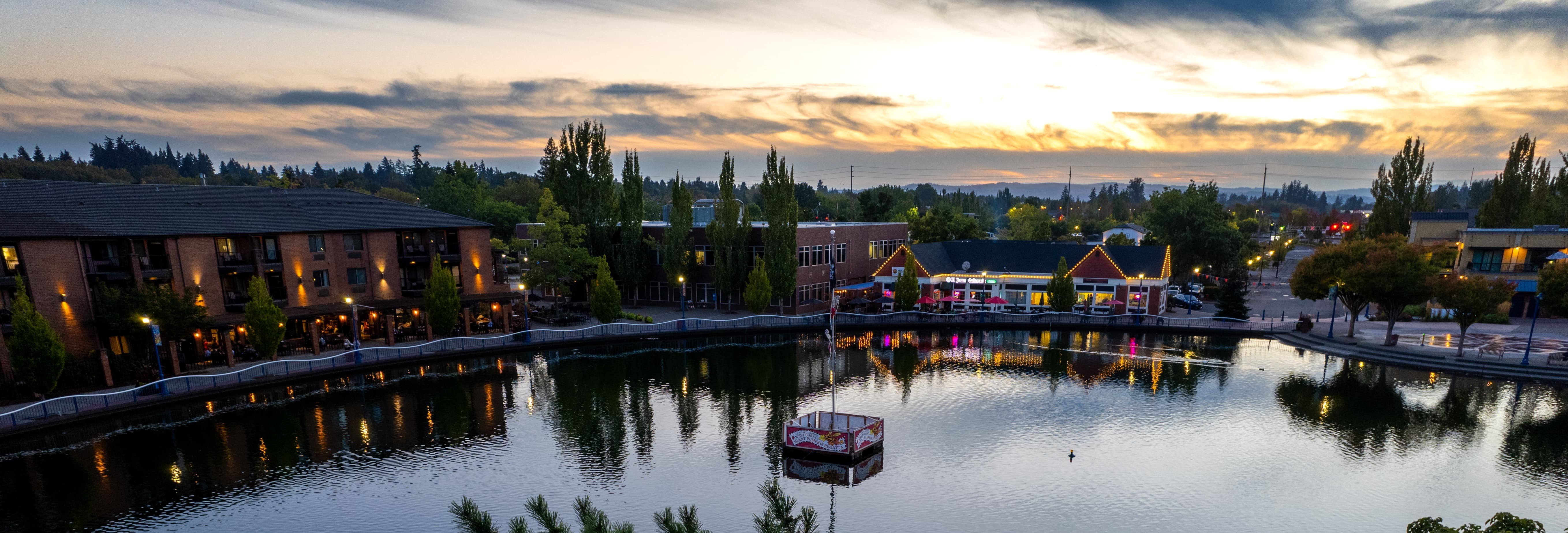
Portland Metro · Oregon
Retiring in Tualatin: Is It the Right Fit for Your Next Chapter? (2026)
The honest answer is: probably yes, but not for every retiree. Tualatin delivers on the fundamentals that matter most in retirement — a well-regarded hospital within city limits, several senior living options at below-state-average costs, parks and trails along the Tualatin River, and a suburban pace that rewards low-stress daily living. What it doesn't offer is the kind of walkable urban core that retirees who envision downtown coffee shops and gallery strolls are picturing when they imagine Oregon retirement.
The retiree who thrives here typically values proximity to Portland without living in it. They want a manageable home — likely a single-level or downsized property in the $575,000 range — good medical access, and a community that doesn't require a car for every errand but doesn't punish you for owning one either. About 19% of Tualatin's 28,000 residents are over 55, and that demographic has shaped the city's senior infrastructure meaningfully.
This guide walks through the tax picture, the healthcare landscape, what senior living actually costs here, and how Tualatin stacks up against Lake Oswego, Sherwood, and three other nearby retirement options. By the end, you'll have a clear picture of whether this is your next chapter or a city you should admire from a different zip code.
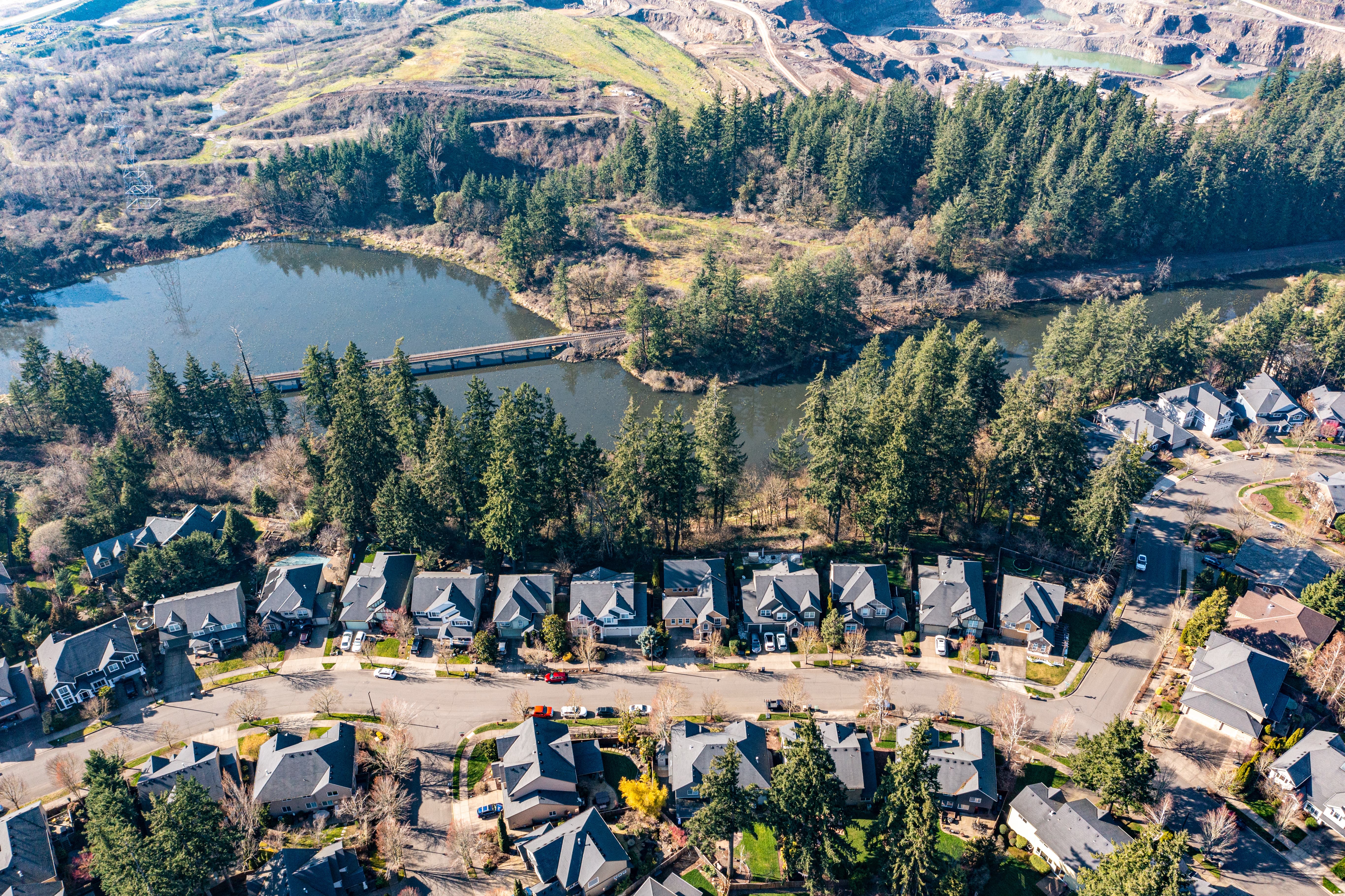
Oregon's tax environment for retirees is genuinely mixed — and worth understanding before you sign anything. The state imposes no sales tax, which matters for day-to-day spending, but income tax rates run among the higher end nationally.
| Income / Asset Type | Oregon Tax Treatment |
|---|---|
| Social Security Income | Not taxed at state level |
| Public Pension (federal/state/local) | Taxable; partial exemption up to $6,250 for qualifying recipients |
| Private Pension / 401(k) / IRA Distributions | Fully taxable as ordinary income |
| Capital Gains | Taxed as ordinary income (up to 9.9%) |
| Dividends & Interest | Fully taxable as ordinary income |
| Sales Tax | None — Oregon has no state sales tax |
| Property Tax (Tualatin rate) | Approximately 0.96% of assessed value |
| Estate / Inheritance Tax | Oregon estate tax applies above $1M threshold |
For a retiree drawing primarily from Social Security, the Oregon picture looks better than the headline income tax rate suggests. A household relying on a mix of Social Security and pension income will find the $6,250 exemption meaningful but not transformative — the bulk of pension distributions will still face Oregon's graduated rate structure. Retirees with heavy IRA or 401(k) withdrawals should run the numbers carefully; income above roughly $125,000 hits the top bracket.
On the property side, Washington County administers a property tax deferral program for qualifying seniors — generally those 62 and older meeting income thresholds — that allows eligible homeowners to delay property taxes until the property is sold or transferred. On a $575,000 home, the annual tax obligation runs roughly $5,520, so the deferral option carries real weight for retirees on fixed incomes. Oregon as a whole doesn't compete with Washington state's zero-income-tax advantage, but the absence of sales tax meaningfully offsets the income tax burden for retirees who spend more than they invest.

Tualatin has become one of the stronger value propositions in the Portland metro for retirees who've been watching Lake Oswego and West Linn creep out of reach. With a median home price around $575,000, buyers are finding single-level homes and ranch-style properties that would cost $150,000–$200,000 more just ten minutes north. The neighborhoods closest to Legacy Meridian Park — particularly the corridors off Boones Ferry Road — have seen consistent demand from buyers in the 55-plus range specifically because of that hospital proximity.
What buyers consistently underestimate is how much of Tualatin's senior infrastructure is concentrated in a relatively compact area. Marquis Tualatin, Brookdale River Valley, and Legacy Meridian Park are all within about a one-mile radius on the southwest side of the city. Buyers who purchase on the northeast side near the Amazon distribution area often find themselves adding 10–15 minutes to every medical errand. If healthcare access is a retirement priority — and it should be — neighborhood placement relative to that SW 65th Avenue corridor matters more than most buyers realize. If you're considering Tualatin and want insight into which neighborhoods align with your priorities and budget, I'd welcome the opportunity to share what I've learned from helping hundreds of families make this move successfully.
Legacy Meridian Park Medical Center at 19300 SW 65th Avenue is the centerpiece of Tualatin's healthcare infrastructure, and it's a genuine asset. U.S. News rates it high-performing in five adult procedures and conditions: spinal fusion, stroke care, hip replacement, knee replacement, and prostate cancer surgery. Healthgrades has recognized it with both a Patient Safety Excellence Award and an Outstanding Patient Experience Award.
The emergency department averages a 21-minute wait time — well below Oregon's statewide average of around 30 minutes. For cardiac emergencies, the numbers are particularly reassuring: PCI within 90 minutes of arrival for heart attacks comes in at 100%, compared to a 94% statewide average. For a community hospital, those are standout figures.
What Legacy Meridian Park is not is a Level I trauma center or academic research hospital. Complex cancers, rare neurological conditions, and major cardiovascular surgeries will typically route to Oregon Health & Science University in Portland — about 20 miles north. That drive is manageable, but it's a factor retirees with complex chronic conditions should weigh. Providence St. Vincent Medical Center in Portland and Kaiser Permanente's Westside campus in Hillsboro round out regional access options, both within roughly 25–30 minutes.
Within Tualatin itself, the specialist footprint is solid for a suburb of this size. Cascade Spine Center handles spine surgery and pain management. The Oregon Clinic Endoscopy Center covers GI care. Two separate dialysis facilities — DaVita Meridian Park and Fresenius Kidney Care — serve patients with kidney disease. Kaiser Permanente operates a medical office in Tualatin offering primary and specialty care. For most retirees managing common chronic conditions, the in-city and near-city specialist network is sufficient without requiring regular trips into Portland.
Getting to appointments without a car is possible but requires planning. TriMet bus routes connect to the broader metro system, and the WES Commuter Rail has a Tualatin station that links south Washington County to Beaverton. Ride Connection specifically serves seniors and people with disabilities, and most senior living communities in the area run their own shuttle services for medical appointments.
Tualatin's senior living market is genuinely deep for a city its size. U.S. News counts 33 independent living communities in and around the area, and several facilities offer the full continuum from independent living through memory care on a single campus. The cost picture sits slightly below Oregon's statewide averages for most care levels.
| Community | Type | Address | Est. Monthly Cost |
|---|---|---|---|
| Marquis Tualatin – Assisted Living | Assisted Living | 19945 SW Boones Ferry Rd | ~$3,900 |
| Marquis Tualatin – Independent Cottages | Independent Living | 19945 SW Boones Ferry Rd | ~$3,100–$3,900 |
| Marquis Tualatin – Post-Acute Rehab | Skilled Nursing / Rehab | 19945 SW Boones Ferry Rd | Varies |
| Brookdale River Valley | Assisted Living + Memory Care | 19200 SW 65th Ave | ~$4,500–$5,300 |
| Farmington Square Tualatin | Assisted Living | Tualatin | ~$3,500–$4,500 |
| Prestige Senior Living Riverwood | Assisted Living | 18321 SW Pacific Hwy | ~$4,000–$5,000 |
| Cedar Crest Alzheimer Special Care | Memory Care | 18325 SW Pacific Hwy | ~$4,500–$5,500 |
Brookdale River Valley offers a different model — assisted living and memory care for up to 120 residents, with Brookdale's HealthPlus program embedding an on-site RN Care Manager to handle preventive care and chronic condition management directly in the community. For families whose primary concern is coordinated medical oversight alongside housing, this model reduces the friction of managing care across separate providers.
Citywide, independent senior living runs roughly $3,100 to $4,400 per month depending on the community and unit size. Assisted living averages around $4,975 — slightly below Oregon's $5,045 statewide average and meaningfully below what comparable care costs in Lake Oswego. Skilled nursing runs significantly higher, roughly $10,661 per month, consistent with regional market rates.
🌅 Portland Metro: Best Places to Retire
Wondering how Tualatin compares to all 15 Portland Metro suburbs for retirees? Our complete rankings guide covers every suburb — walkability, healthcare access, cost of living, quiet livability, and retirement lifestyle side by side.
See the Full Portland Metro Best Places to Retire Rankings →Looking to buy in Tualatin? Estimate your payment.
Enter your numbers to see an estimated monthly mortgage payment.
Estimate only. Excludes HOA fees and mortgage insurance.
Tualatin Village is one of the city's more established residential corridors, with a mix of single-level ranch homes and smaller lot layouts that attract buyers looking to downsize without sacrificing outdoor space. The neighborhood sits close to Tualatin Community Park and the river trail system, making it genuinely walkable for daily recreation in a way that many suburban neighborhoods in this price range are not. Home values here tend to run in the $500,000–$580,000 range, keeping them near the city median without the premium that newer construction commands.
Best for: Retirees who want established tree cover, single-level home options, and trail access within walking distance.
The Jurgens Park neighborhood centers on one of Tualatin's more pleasant community green spaces — a park with open lawn, restroom facilities, and connections to the broader greenway system along the river. Housing here skews toward mid-size family homes that were built primarily in the 1980s and 1990s, which means buyers often find opportunities for value-add updates while landing below newer construction prices. The area has a quiet, settled feel without the isolation of neighborhoods farther from the commercial center.
Best for: Buyers who want park-adjacent living at a price point below the newest developments in the city.
Ibach Park Estates offers some of Tualatin's more polished residential product, with larger lots and homes that reflect the city's growth periods from the late 1990s onward. The neighborhood is close to Ibach Park, which includes sports fields, picnic areas, and open recreation space. For retirees who prefer a neighborhood with younger surrounding demographics and well-maintained streetscapes, this area delivers that energy without requiring constant activity.
Best for: Retirees who want a larger home footprint, newer construction, and proximity to a full-service community park.
The most important thing to understand about daily life in Tualatin is that a car remains the primary tool for independence. The city is walkable in pockets — the Tualatin Community Park area and the river trail network allow for genuine on-foot recreation — but most shopping, dining, and errand-running requires driving. Retirees who give up driving entirely will find TriMet bus routes and Ride Connection serviceable for medical appointments, but spontaneous daily independence diminishes without personal transportation.
What surprises most people after six months of living here is how much of the social infrastructure revolves around outdoor spaces rather than indoor venues. The Tualatin River National Wildlife Refuge, accessible near the city's southern edge, draws regulars who walk the trail system multiple mornings a week — it becomes a community of its own, with familiar faces and a pace that suits retirement well. Tualatin Community Park hosts summer concerts and community events that draw mixed-age crowds, creating the kind of intergenerational normalcy that some seniors miss when they move into age-restricted communities.
The commercial landscape along Tualatin-Sherwood Road and Nyberg Street handles most daily needs — multiple grocery options, pharmacies, medical offices, and restaurants. The city doesn't have a dedicated cultural arts district, and the dining scene skews toward chains and casual options rather than destination restaurants. Retirees who want regular access to theater, live music, or a broader restaurant range typically build Portland or Lake Oswego into their monthly rhythm rather than expecting to find it in Tualatin.
For active retirees, the more than 260 acres of parks, natural areas, and greenways are genuinely valuable. The trail connections along the Tualatin River offer flat, accessible walking regardless of fitness level, and several parks include covered shelters and benches that make them usable year-round in Tualatin's mild but reliably rainy winters. The Tualatin Country Club serves members who want golf and social programming in a private setting, and the Parks and Recreation department offers programming for adults year-round through the Tualatin Community Park facilities.
| City | Median Home Price | In-City Hospital | Walkability | Senior Community Depth | Overall Fit |
|---|---|---|---|---|---|
| Tualatin | $575,000 | Legacy Meridian Park (in-city) | Moderate | Strong – 33+ options | ★★★★☆ |
| Lake Oswego | $800,000+ | No in-city hospital | Moderate–High | Limited in-city options | ★★★☆☆ |
| Sherwood | $575,000–$625,000 | No in-city hospital | Low | Limited | ★★★☆☆ |
| Tigard | $550,000–$600,000 | Adjacent to Tualatin hospital | Low–Moderate | Growing | ★★★☆☆ |
| Wilsonville | $525,000–$575,000 | No in-city hospital | Low | Moderate | ★★★☆☆ |
| Oregon City | $460,000–$510,000 | Providence Willamette Falls (in-city) | Moderate | Moderate | ★★★☆☆ |
The column that most distinguishes Tualatin in this comparison is the combination of an in-city hospital and deep senior living infrastructure at a price point that undercuts Lake Oswego by $200,000 or more. Lake Oswego has the lifestyle amenities — the lakefront, the boutique dining, the arts programming — but it doesn't have a hospital within city limits, and its senior living options are thinner. Sherwood is comparably priced but more car-dependent and without meaningful senior living depth. Tualatin's value case for retirement is strongest precisely because the healthcare and housing pieces align without requiring a premium zip code price.
Local Expert Takeaway: Retirees who thrive in Tualatin are typically those who plant themselves within a half-mile of the SW 65th Avenue and Boones Ferry corridor — close to Legacy Meridian Park, the Marquis campus, and Brookdale River Valley. That's where healthcare access is fastest and where senior infrastructure is most concentrated. Buyers who prioritize downsizing from a larger Portland home, want Oregon's no-sales-tax advantage, and don't need a walkable urban core will find Tualatin delivers strong value. Those who genuinely want to live without a car or crave walkable cultural programming should look harder at neighborhoods closer to Portland's inner eastside before committing here.
🌅 Portland Metro: Best Places to Retire
Wondering how Tualatin compares to all 15 Portland Metro suburbs for retirees? Our complete rankings guide covers every suburb — walkability, healthcare access, cost of living, quiet livability, and retirement lifestyle side by side.
See the Full Portland Metro Best Places to Retire Rankings →Is Tualatin a good place to retire?
For retirees who want suburban comfort, in-city hospital access, and a manageable home price below what Lake Oswego commands, Tualatin is a strong fit. The combination of Legacy Meridian Park, multiple senior living communities, and over 260 acres of parks makes the city's retirement infrastructure more substantial than its size suggests. Retirees seeking dense walkability or a vibrant cultural calendar will want to weigh those gaps honestly.
What does senior living cost in Tualatin?
Independent senior living in the area runs roughly $3,100 to $4,400 per month depending on community and unit. Assisted living averages around $4,975 monthly — slightly below Oregon's statewide average — while skilled nursing runs roughly double that figure. Marquis Tualatin's assisted living side comes in below the city average at approximately $3,900 per month and carries the highest possible CMS quality rating.
How does Tualatin compare to Lake Oswego for retirement?
Tualatin offers comparable suburban comfort at a significantly lower price point — the median home runs around $575,000 versus $800,000 or more in Lake Oswego. Critically, Tualatin has an in-city hospital while Lake Oswego does not, which matters considerably for retirees who prioritize medical proximity. Lake Oswego offers a more polished lifestyle scene and greater walkability in its downtown core; the decision between the two typically comes down to how much those amenities are worth in dollars and whether healthcare access or lifestyle aesthetics rank first on your list.
Browse current listings updated daily — filtered for Tualatin buyers by Elizabeth Davidson, your local expert.
Powered by Elizabeth Davidson · Cascade Hasson Sotheby's International Realty · 503-939-2035
Explore the full Tualatin series: The Ultimate Tualatin Relocation Guide · Is Tualatin Safe? · Cost of Living in Tualatin · Best Neighborhoods in Tualatin · Tualatin Schools & Family Life · Tualatin Youth Sports · Tualatin Parks & Recreation · Retiring in Tualatin · 1031 Tax-Deferred Exchange in Tualatin · Tualatin First-Time Homebuyers Guide · · Moving to Tualatin from California · The Tualatin Realtor's Perspective · Top 10 Questions a Realtor Gets About Tualatin
Tell us what you need help with and we'll connect you with local resources.

About the Author
Todd Davidson is the founder of Living in Oregon and Living in Washington, where he publishes in-depth city guides, neighborhood resources, and local market insights covering more than 180 communities across the Pacific Northwest. While his background is in home financing and real estate, he created these digital platforms to help families research and compare regions before making a move.