Portland Metro · Oregon
Living in Tualatin: The Ultimate Relocation Guide (2026)
Maybe your company is relocating you to the south Portland metro and someone circled Tualatin on a map. Maybe you've been watching home prices in Lake Oswego and Tigard climb out of reach and a friend told you Tualatin is where the value quietly lives. Maybe you drove through on I-5 and saw the highway interchange, the big-box retail corridor, and figured there wasn't much more to the story. That first impression is exactly the tension this city lives with: Tualatin looks like a pass-through from the freeway, but residents who know it well will tell you the city has a genuine civic identity, a walkable town center, and a quality of life that doesn't announce itself loudly. The gap between what Tualatin appears to be from the interstate and what it actually is for the people who live here is the central thing to understand before you make a move.
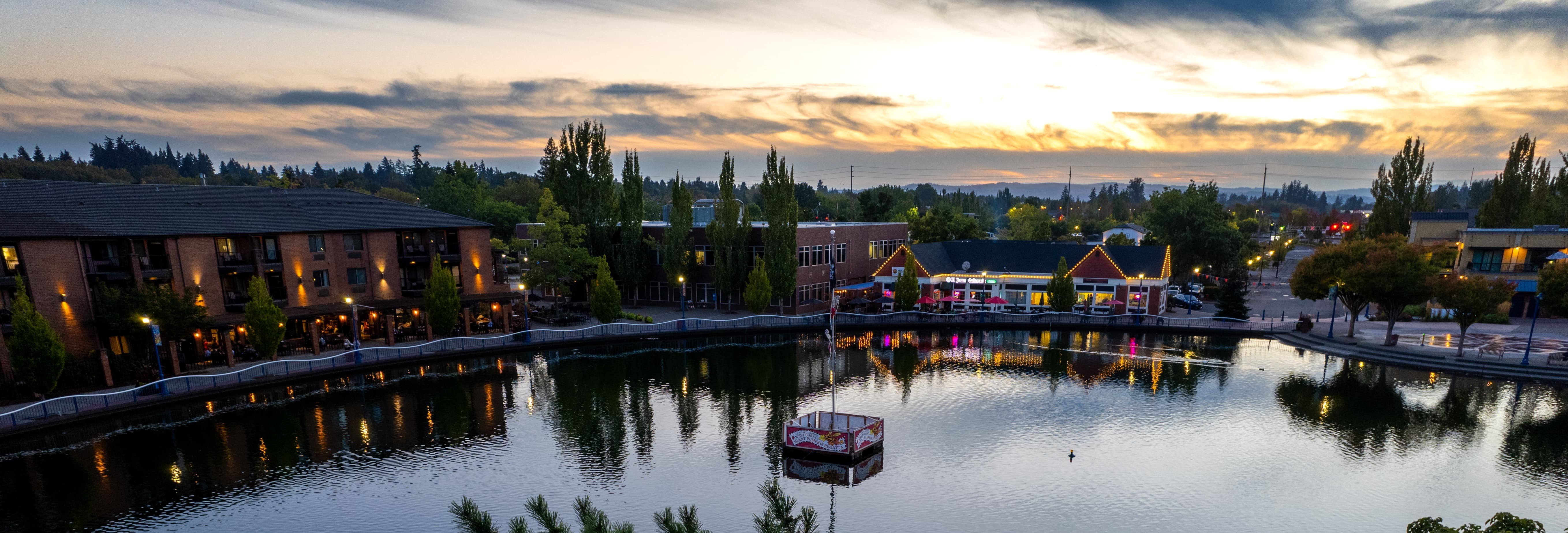
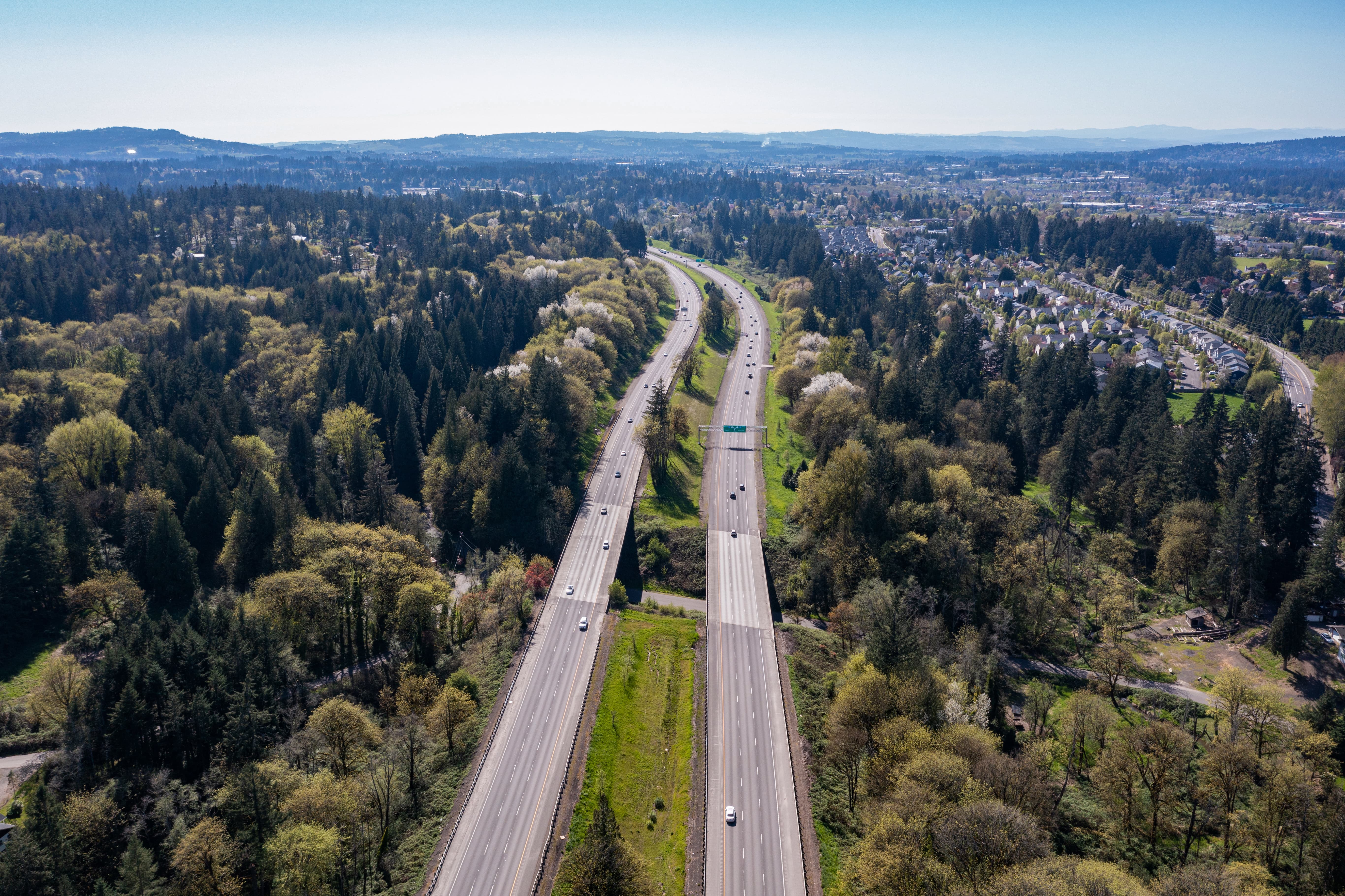
Geographically, Tualatin sits at the intersection of I-5 and I-205, about 12 miles south of Portland and 30 miles north of Salem. It's fully urban — no rural pockets, no farm roads — with a population of roughly 28,000 spread across established residential neighborhoods, a commercial corridor along Tualatin-Sherwood Road, and a walkable town center anchored by the Lake of the Commons. Washington County's infrastructure and services surround it, and neighboring cities like Tigard to the north, Lake Oswego to the northeast, and Sherwood to the southwest give it a genuinely connected position within the metro. Daily life here is shaped by that freeway access — commutes to Portland typically run around 25 minutes in normal traffic — and by the city's unusual mix of corporate employers, local parks, and a tight neighborhood association culture that keeps civic engagement surprisingly active for a city this size.
This guide is built to answer the questions that matter before you sign a purchase agreement: which neighborhoods suit which buyers, what the honest tradeoffs look like, how the schools actually perform, where the friction is in daily life, and whether the version of Tualatin you've imagined matches the one people actually live in. By the end, you'll have a clear-eyed picture of whether this city fits your life — or whether one of its neighbors would serve you better.
Not every city is the right fit for every buyer, and Tualatin is genuinely better suited to some lifestyles than others. The table below cuts through the ambiguity.
| Best For | Why |
|---|---|
| Commuters to Portland | A 25-minute drive on I-5 or I-205 puts most of Portland within reach without living inside it |
| Families with school-age children | Tigard-Tualatin School District ranks among Oregon's top 15 districts, with Tualatin High School's graduation rate above 90% |
| First-time buyers priced out of Lake Oswego | A $575,000 median home price offers more square footage and newer construction than most comparable north-metro options |
| Retirees wanting low-maintenance convenience | Proximity to medical corridors, flat walkable areas near the Commons, and quiet established neighborhoods |
| Remote workers who need occasional airport access | Portland International Airport is roughly 30 minutes via I-205, avoiding city traffic entirely |
| Buyers who prioritize safety at a suburban price | Lower poverty rate (roughly 4%), strong city services, and Washington County's infrastructure investment |

Tualatin is one of those markets that rewards buyers who do their homework before the open house. What I consistently tell clients is that the $575,000 median price point here buys you something you genuinely can't replicate in Tigard or Lake Oswego at that level: newer construction on larger lots, with access to a school district that outperforms most of its peers in the Portland metro. Over the past 18 months, I've watched neighborhoods like Ibach Park Estates and Tualatin Village hold their value more steadily than some of the trendier pockets in inner Southeast Portland — that durability matters for buyers thinking long-term. Homes are averaging around 49 days on market right now, which gives buyers a little more breathing room than the frenzied pace of 2021–2022, but well-priced listings in the established residential neighborhoods still move decisively.
The mistake I see most often from relocating buyers is focusing exclusively on the Bridgeport Village corridor and writing off the west-side residential neighborhoods entirely. The Bridgeport area is convenient and walkable, but some of the best value in Tualatin right now is in the quieter streets closer to Ibach Park and the Jurgens Park area — where you get the same school access and commute geometry, often with more lot size and less street noise. Buyers who spend time in those neighborhoods before making an offer tend to be the ones who call me six months later to say they're glad they looked past the obvious. If you're considering Tualatin and want insight into which neighborhoods align with your priorities and budget, I'd welcome the opportunity to share what I've learned from helping hundreds of families make this move successfully.
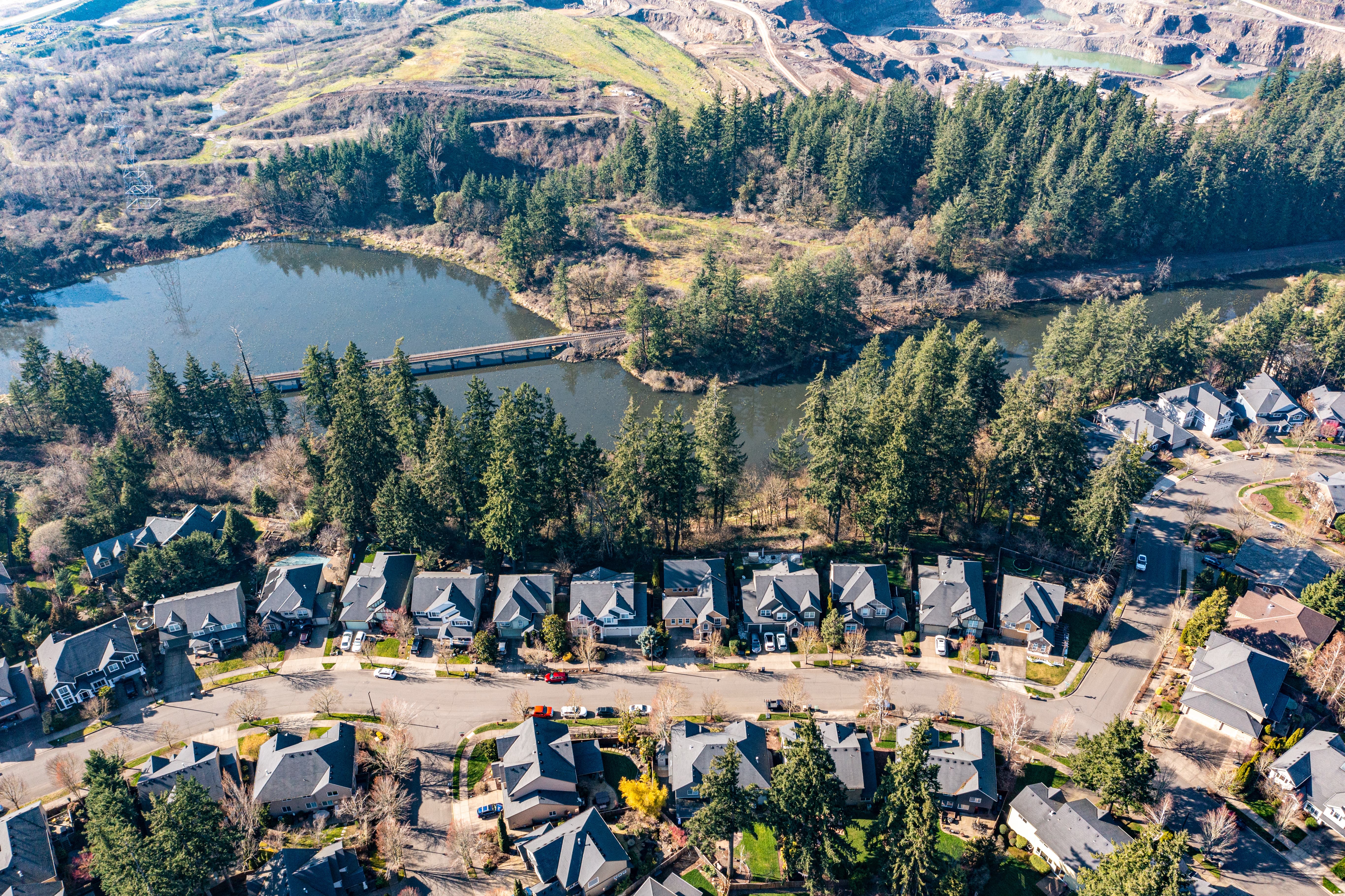
The geographic reality of Tualatin is that I-5 doesn't just pass through the city — it divides it. The commercial corridor along Tualatin-Sherwood Road and the retail density near Bridgeport Village occupy the eastern and central zones, while the quieter residential west side unfolds into established neighborhoods with mature trees and lower traffic volumes. Buyers who don't understand this distinction sometimes purchase near the freeway interchange expecting suburban quiet and find themselves adjusting to more road noise and commercial activity than they anticipated. Understanding which side of that divide you're buying into is one of the most practical questions to ask early in your search.
The town center, anchored by the Lake of the Commons along Nyberg Street, is Tualatin's most underappreciated asset. It's a genuine gathering place — a small lake with a paved loop path, seasonal events, and restaurants and coffee shops within walking distance. On weekday mornings it fills with dog walkers and remote workers. On summer evenings it hosts community concerts and the kind of casual neighborhood interaction that most suburbs can't manufacture. This isn't a fabricated lifestyle amenity dropped in by a developer — it evolved over decades and gives central Tualatin a civic texture that surprises people who expected strip-mall monotony.
Commuting from Tualatin works better than many buyers expect. The on-ramp geometry from the west-side neighborhoods to I-5 northbound avoids the worst of the Tigard merge, and the 25-minute Portland average holds reasonably well outside of peak hours. The chokepoint that locals know is the Tualatin-Sherwood Road and Boones Ferry Road intersection during the 7:30–8:30 a.m. window, where school drop-off traffic compounds the commercial corridor congestion. Remote workers who can shift their occasional office trips to a 9:30 a.m. departure effectively sidestep the worst of it.
What surprises most people after six months of living here is how much community infrastructure Tualatin quietly maintains for a city of its size. The Parks and Recreation department runs a robust calendar of events, the neighborhood associations are active and accessible, and the city has a low poverty rate — roughly 4% — that reflects a broadly stable economic base. The city doesn't feel like it's trying to be Portland, and longtime residents seem to prefer it that way.
The school district is the single most frequently cited reason families choose Tualatin and don't leave. Tigard-Tualatin School District (TTSD) ranks among the top 15 districts in Oregon by commonly cited education rankings, with a student-teacher ratio of 17:1 — below the state average of 18:1. Tualatin High School, located on SW Boones Ferry Road, carries a graduation rate of roughly 90%, meaningfully above the Oregon state average of 83%. For families with school-age children, that outcome data translates directly into long-term commitment to the city.
The location math is simply favorable. Tualatin sits at the I-5/I-205 interchange, which means it connects north to Portland, east toward Oregon City and Clackamas County, and south toward Salem without requiring residents to navigate city streets to reach the freeway. Amazon's regional presence brings a significant employment base, and Tualatin Valley Fire & Rescue — one of the largest and most well-regarded fire districts in the state — serves the community directly (its command headquarters sits just north in neighboring Tigard), adding both employment and a high level of emergency services to the area. The combination of freeway access and institutional employers gives Tualatin a stability that purely residential suburbs sometimes lack.
The parks system is stronger than its reputation suggests. Tualatin Community Park, located on SW Tualatin Road, is the city's flagship facility — nearly 21 acres of sports fields, playgrounds, a community pool, and picnic areas that serve the entire city. Jurgens Park draws families specifically for its sand play area, an unusual amenity that has made it a consistent local favorite. Atfalati Park covers the basketball and playground needs on the city's north side. The density and quality of these facilities mean that families with young children rarely feel like they're driving across the city for recreational access.
For buyers who care about fiscal stability in their community, Tualatin's profile is reassuring. Washington County consistently ranks as one of Oregon's better-managed counties for infrastructure and public services. The city's 0.96% property tax rate sits slightly below the county average, meaning the tax burden for a home at the $575,000 median lands around $5,520 annually — competitive with neighboring cities while still funding a high level of services. That combination of low taxes and strong services is unusual enough to be worth naming directly.
Looking to buy in Tualatin? Estimate your payment.
Enter your numbers to see an estimated monthly mortgage payment.
Estimate only. Excludes HOA fees and mortgage insurance.
Tualatin's retail and dining scene is concentrated and, outside of the Bridgeport corridor, fairly limited. Bridgeport Village is a well-designed outdoor shopping center with legitimate restaurant options, but it skews heavily toward national chains. Residents who grew up in walkable urban neighborhoods and want the ability to spontaneously find an independent bookshop or a diverse restaurant row may find the dining geography frustrating. The city has grown enough in population to support more independent commercial development, but zoning and available land haven't yet produced the kind of varied retail culture that nearby Tigard or Lake Oswego offers in pockets.
The freeway noise reality deserves honest treatment. Homes within half a mile of I-5 or I-205 experience road noise that becomes part of the ambient soundscape, particularly in the evenings when traffic thins and sound carries differently. This affects a meaningful swath of eastern Tualatin neighborhoods. Buyers who prioritize outdoor quiet — backyard evenings without traffic hum — should focus their search specifically on the west-side residential areas and ask about noise orientation before making an offer.
The city's walkability is concentrated, not distributed. The Lake of the Commons area and portions of Bridgeport are genuinely walkable. Much of the broader residential grid is not — it's a driving city for groceries, most errands, and dining. Buyers who walk or bike as a primary transportation mode will find Tualatin functional near the town center and limiting elsewhere. This isn't a fatal flaw, but it's a mismatch worth knowing about before you assume suburban Oregon equals easy biking.
Why some people leave Tualatin comes down to three recurring patterns: families who outgrow the available housing stock in their preferred neighborhood and can't find their next home locally, buyers who relocated expecting more of an urban independent-retail feel and eventually migrate to Tigard or Lake Oswego, and remote workers who discover that the commute advantage they valued no longer applies to their work situation and they'd rather prioritize walkability or acreage. None of these are indictments of the city — they're mismatches between buyer expectations and what Tualatin actually is.
Tualatin Village sits close to the Lake of the Commons and benefits from the walkable fabric of the town center more than almost any other neighborhood in the city. Housing here tends to be a mix of older single-family homes and some attached product — it's not the newest construction in the city, but the location premium is real and consistent. Buyers who want to walk to the Commons loop path, reach coffee shops on foot, and still have freeway access within five minutes of their driveway tend to be very satisfied here.
Best for: Buyers who want the most walkable version of Tualatin and are willing to trade newer construction for location.
The Jurgens Park neighborhood takes its name from the park that anchors it, and the family-oriented character of that park reflects the neighborhood around it. Single-family homes dominate, lots tend to be generous, and the neighborhood's established character means mature landscaping and a settled residential feel rather than the slightly sparse look of newer construction zones. The sand play area at the park itself has made this a destination for parents with young children across the city.
Best for: Families with young children who want a quiet, established residential feel with strong park access built into the neighborhood.
Ibach Park Estates is frequently cited as one of Tualatin's most popular neighborhoods for buyers looking for relative value within the city. Homes here run mid-sized and are generally priced somewhat below the city's median compared to areas closer to the Commons or Bridgeport. The adjacent Ibach Park — with playgrounds, sports fields, picnic areas, and walking paths — gives the neighborhood a recreational anchor, and proximity to Tualatin High School and Hazelbrook Middle School makes school commutes straightforward for families.
Best for: Families and first-time buyers who want solid school access, neighborhood park amenity, and the best entry-level value available in Tualatin's established residential areas.
| City | Best For | Median Home Price | Commute to Portland | Vibe |
|---|---|---|---|---|
| Tualatin | Families, commuters, value buyers | $575,000 | ~25 min | Established suburban with genuine town center |
| Lake Oswego | Luxury buyers, top-tier schools, lakefront living | $850,000+ | ~20 min | Upscale, polished, image-conscious |
| Tigard | Urban-adjacent buyers, diverse retail access | $550,000 | ~20 min | Transitional, denser, more commercial energy |
| Sherwood | Buyers wanting newer construction and more space | $575,000–$620,000 | ~35 min | Newer suburb, quieter, fewer amenities |
| Wilsonville | Retirees, remote workers, MAX light rail access | $520,000 | ~30 min | Planned community feel, strong senior amenities |
| Metric | Figure |
|---|---|
| Population | ~28,000 |
| Median Home Price | $575,000 |
| Property Tax Rate | 0.96% |
| Median Household Income | ~$104,000 |
| Commute to Portland | ~25 minutes |
| School District | Tigard-Tualatin School District (TTSD) |
| Violent Crime per 1,000 | 12 |
| Property Crime per 1,000 | 28 |
| Homeownership Rate | ~58% |
| Median Age | ~37 years |
Tualatin has a few traditions that don't make the Wikipedia page but tell you more about the city's character than any demographic table. The Lake of the Commons summer concert series — held at the amphitheater along the lakefront in the town center — has been drawing families and neighbors out on warm Thursday evenings for years. It's genuinely communal in a way that feels unforced: people bring lawn chairs and kids, local food vendors set up nearby, and for a few hours the town center becomes exactly the kind of gathering place small cities spend decades trying to create. If you want to take the pulse of Tualatin's social character before committing to a move, attending one of those evenings tells you more than a weekend open house tour.
The Tualatin Country Club gives the city a private golf and social anchor that has historically shaped the western residential character of Tualatin. It's not accessible to everyone, but its presence near the west-side neighborhoods adds green buffer and a certain residential stability to the surrounding area. Long-term homeowners in the adjacent areas consistently cite it as part of what keeps their neighborhood's character coherent.
Tualatin also has a small but active historical identity — the Tualatin Historical Society and the presence of genuinely old civic infrastructure give the city a sense of continuity that pure bedroom suburbs lack. The city incorporated in 1913, which by Oregon standards makes it one of the longer-established municipalities in Washington County.
What I would not do if moving to Tualatin: I would not buy on the east side near the I-5 and I-205 interchange without spending a weekend evening in the backyard of any home I was considering. The road noise in that corridor is real, persistent, and underestimated by buyers doing daytime walkthroughs. The Tualatin-Sherwood Road and Boones Ferry Road intersection area specifically — convenient as it is for errands — carries ambient commercial and traffic noise that becomes tiring for buyers who prioritized peace and quiet in their decision to leave the city.
Local Expert Takeaway: If you're choosing between Tualatin and Sherwood, the decision usually comes down to commute tolerance — Sherwood offers newer construction and more space but adds 10 minutes each way that compounds quickly over a working week. Within Tualatin, buyers who spend their search budget on the west-side residential neighborhoods near Ibach Park or Jurgens Park tend to feel better about their purchase six months out than those who defaulted to proximity to Bridgeport Village. The school district is the city's most durable asset — if that's what's driving your decision, you're unlikely to regret the move.
✅ Tualatin's school district is a genuine competitive advantage — TTSD ranks among Oregon's top 15 districts, with Tualatin High School carrying a 90%+ graduation rate and 100% licensed teaching staff.
⚠️ Freeway noise is a real factor in eastern Tualatin — homes near the I-5/I-205 interchange and the Tualatin-Sherwood Road corridor carry road and commercial noise that doesn't show up on listing photos.
📍 The town center is the city's best-kept secret — the Lake of the Commons area offers the kind of walkable, community-scaled gathering space that most Portland-area suburbs spent decades trying to build and never quite pulled off.
Is Tualatin a good place for families?
Yes, Tualatin offers one of the stronger school district situations in the south metro, a parks system with genuine youth amenities, and a community fabric that tends to retain families once they arrive. Tigard-Tualatin School District's graduation rate sits above the Oregon state average, and the city's low poverty rate and stable employment base support the kind of neighborhood consistency that families with school-age children prioritize.
What is the crime rate in Tualatin?
Tualatin reports a violent crime rate of approximately 12 per 1,000 residents and a property crime rate of roughly 28 per 1,000 — figures that are broadly consistent with outer-ring Portland suburbs of similar size and density. Property crime is the more relevant concern for most residents, and it tracks closely with the commercial corridor density on the city's eastern side rather than being uniformly distributed across all neighborhoods.
How does Tualatin compare to nearby cities like Lake Oswego or Sherwood?
Lake Oswego sits at a meaningfully higher price point — typically $850,000 and above for comparable square footage — and carries a more image-conscious, polished character that appeals to a different buyer profile. Sherwood offers similar pricing to Tualatin but adds commute time and a newer-construction character with fewer established amenities. For buyers who want the school district quality and commute geometry of the south metro without Lake Oswego's price premium, Tualatin tends to come out as the pragmatic choice.
Browse current listings updated daily — filtered for Tualatin buyers by Elizabeth Davidson, your local expert.
Powered by Elizabeth Davidson · Cascade Hasson Sotheby's International Realty · 503-939-2035
Explore the full Tualatin series: The Ultimate Tualatin Relocation Guide · Is Tualatin Safe? · Cost of Living in Tualatin · Best Neighborhoods in Tualatin · Tualatin Schools & Family Life · Tualatin Youth Sports · Tualatin Parks & Recreation · Retiring in Tualatin · 1031 Tax-Deferred Exchange in Tualatin · Tualatin First-Time Homebuyers Guide · · Moving to Tualatin from California · The Tualatin Realtor's Perspective · Top 10 Questions a Realtor Gets About Tualatin
Tell us what you need help with and we'll connect you with local resources.

About the Author
Todd Davidson is the founder of Living in Oregon and Living in Washington, where he publishes in-depth city guides, neighborhood resources, and local market insights covering more than 180 communities across the Pacific Northwest. While his background is in home financing and real estate, he created these digital platforms to help families research and compare regions before making a move.