Portland Metro · Oregon
Living in Scappoose: The Ultimate Relocation Guide (2026)
Maybe you've been priced out of Portland proper and someone at work mentioned Scappoose as the alternative nobody talks about. Maybe you pulled up the map, saw "20 miles northwest of Portland along US-30," and thought: that's actually close enough. Or maybe you drove through on a weekend, watched a floatplane taxi across Scappoose Bay, and found yourself wondering what life looks like when a town still feels like a town. The central tension in every Scappoose buying decision is the same one: how much Portland proximity do you actually need, and how much genuine small-town life are you willing to trade for it?
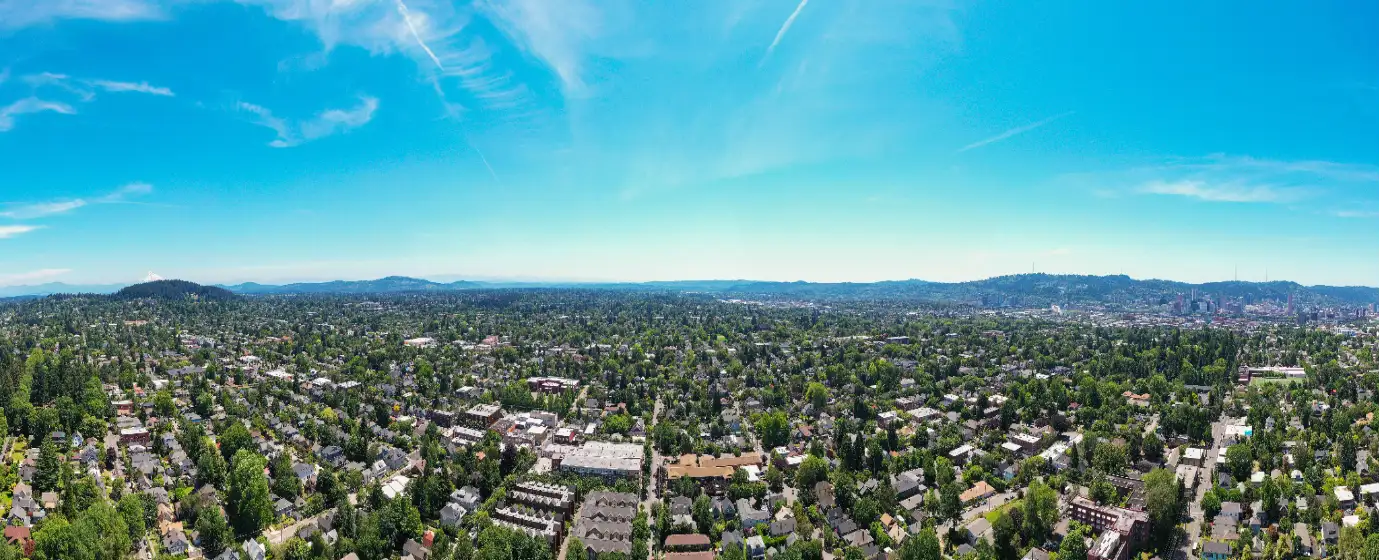
The answer depends heavily on your daily reality. Scappoose sits on the west bank of the Columbia River in Columbia County, connected to Portland's St. Johns neighborhood by a mostly straightforward run down US-30. The drive averages around 30 minutes on a normal day — longer when freight traffic bunches up near the St. Johns Bridge corridor. With a median sold price tracking around $482,000 and a homeownership rate approaching 69%, this is a community of people who made a deliberate choice: more house, more land, more quiet, and a commute they consider acceptable.
This guide is built for the person weighing that choice seriously. You'll find an honest breakdown of who Scappoose works well for and who it tends to disappoint, which neighborhoods are worth your attention, how it compares to the surrounding Columbia County towns and closer-in Portland suburbs, and the things locals know that don't show up in any listing. By the time you finish reading, you should know whether Scappoose belongs on your short list or whether a different city fits your life better.
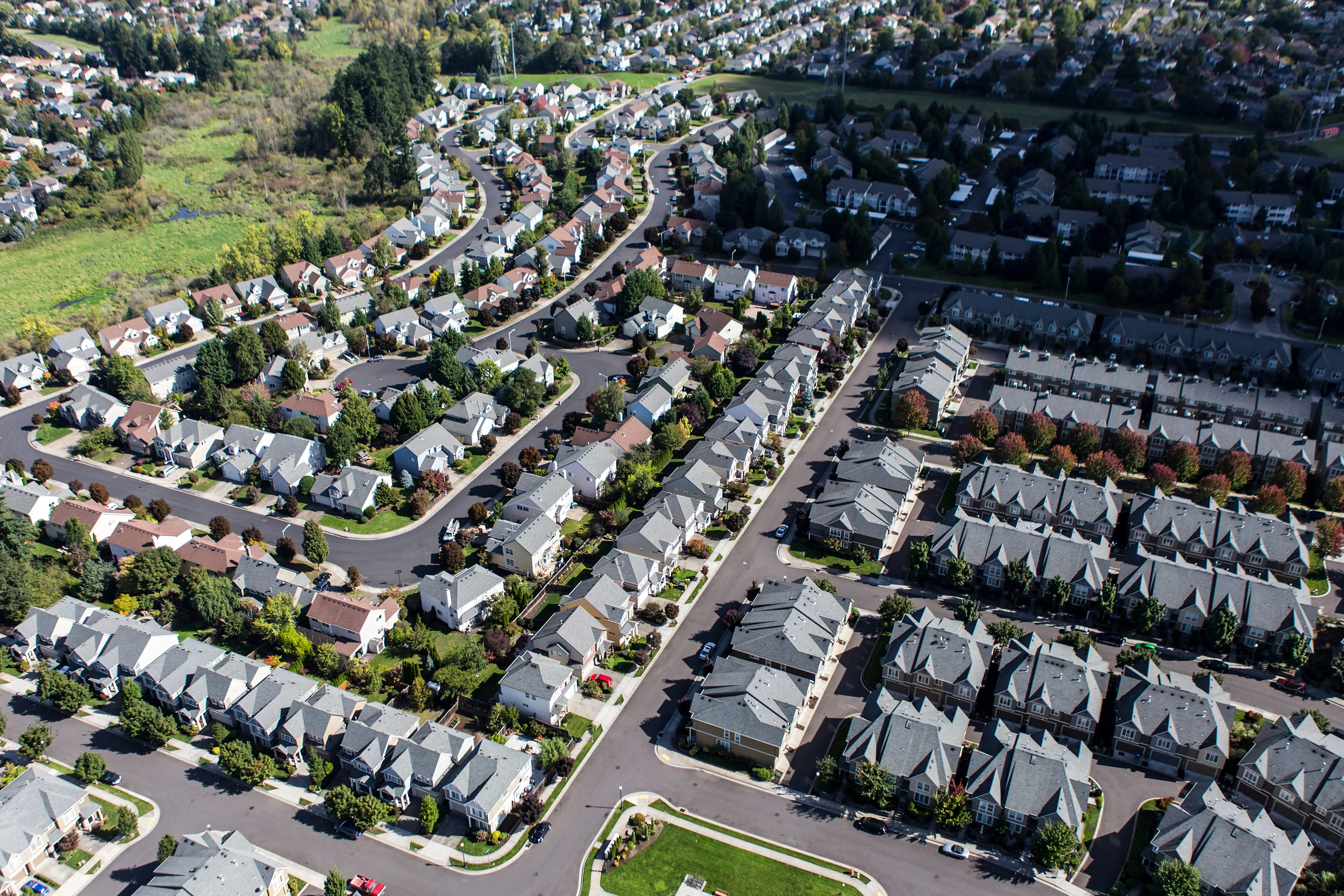
Not every buyer is the right fit for a small Columbia County city with a single main highway in and out. But for the people it does fit, Scappoose tends to fit exceptionally well.
| Best For | Why |
|---|---|
| Portland commuters who drive | A 30-minute run down US-30 is manageable; no MAX line exists, so this only works if you're comfortable behind the wheel |
| Families with school-age children | Scappoose School District 1J posted an 87% Class of 2025 graduation rate, well above the state average |
| First-time buyers priced out of closer suburbs | Median sold prices around $482,000 with a 0.83% property tax rate represent genuine value in the Portland metro |
| Remote workers who want space | Strong broadband penetration (88.5% of households) and single-family home dominance (79.4%) mean you can find a real home office |
| Retirees seeking a quieter pace | Crime rates 28% below the national average, river and trail access, and a genuine small-town social fabric |
| Outdoor-focused households | Direct Columbia River access, proximity to Sauvie Island, and the Crown Zellerbach Trail system all within a short drive |

I've been working the Portland metro for over two decades, and Scappoose is one of those markets that consistently surprises buyers who arrive with modest expectations. The price point is real — you're buying a detached single-family home with a proper yard and, in many cases, territorial views or river proximity, for money that would get you a townhome in Beaverton or a 1970s ranch on a postage-stamp lot in outer Northeast Portland. What buyers consistently underestimate is just how tight inventory has stayed even as list prices have softened slightly. When a well-presented home hits the market in a neighborhood like Dutch Canyon or along the Riverside corridor, it still moves quickly — typically under two weeks for the homes priced honestly.
The thing I tell every buyer considering Scappoose is this: the value isn't just in the price per square foot, which runs around $314 on sold transactions. It's in the lifestyle math. You're getting Columbia River proximity, a school district that genuinely outperforms what the zip code would suggest, and a community that still holds together socially in ways that inner-ring suburbs stopped doing fifteen years ago. The buyers I've seen regret the move are almost exclusively people who underestimated how much they'd miss being able to walk somewhere on a Tuesday night. If your life runs on walkable errands and spontaneous restaurant visits, factor that honestly into your decision. If you're considering Scappoose and want insight into which neighborhoods align with your priorities and budget, I'd welcome the opportunity to share what I've learned from helping hundreds of families make this move successfully.
Scappoose is not trying to become a bedroom suburb in the Tigard or Lake Oswego mold. It has a working-town identity that goes back generations — manufacturing facilities still operate here, the Scappoose Industrial Airpark functions as a genuine general aviation hub, and West Coast Shoe Company and Cascade Tissue Group represent the kind of industrial anchors that give a small city economic texture beyond just serving Portland commuters. That working identity shapes everything from the social fabric to the layout of the town center along Columbia Avenue.
The town center itself is modest and honest about what it is. You'll find the basics — pharmacy, hardware, a handful of locally owned restaurants and coffee stops — without the curated retail density that defines closer-in suburbs. The farmers market runs seasonally and draws a loyal local crowd. Heritage Park and Scappoose Veterans Park provide gathering space that actually gets used on weekends, especially in summer when the Columbia River corridor brings out kayakers and cyclists. The Peace Candle of the World, a landmark near town that lights up during the holidays, has been a local tradition for decades and remains one of those small-town details that tells you something real about the community's character.
The commute reality deserves an honest look. US-30 is a two-lane highway for much of its run between Scappoose and St. Johns, and it carries both commuter traffic and heavy freight. The morning window between 7:15 and 8:30 a.m. is when it slows meaningfully — particularly through the Linnton corridor as you approach Portland. Buyers who live closer to the southern edge of Scappoose, or who have flex start times, report the commute feeling genuinely easy. Those who are locked into a 8:00 a.m. office arrival in downtown Portland sometimes find the math tighter than the map suggests.
What surprises most people after six months here is how quickly they stop thinking of Scappoose as a suburb and start thinking of it as a place. The 3.4-square-mile footprint forces a kind of community density that doesn't happen in sprawling exurban cities — you recognize faces at the grocery store, you run into your kids' teachers at the hardware store, and you get pulled into the rhythms of a town that still has genuine civic participation. For people who moved from anonymous subdivisions in larger suburbs, that transition is often the thing they mention first when you ask them if they made the right call.
The price-to-space equation is hard to beat in the Portland metro. A $482,000 median gets you a detached single-family home — built around 1991 on average — with a real yard, off-street parking, and in many cases a garage. That same budget in Hillsboro buys something comparable but in a denser, louder environment; in Tigard or Tualatin it gets you significantly less house. The 0.83% property tax rate, one of the lower rates in the metro, keeps the monthly ownership cost picture in proportion.
The school district consistently outperforms its size. With roughly 2,282 students across all grades and a student-teacher ratio of 19:1, Scappoose School District 1J operates at a scale where individual students don't get lost. The Scappoose School District's 87% graduation rate for the Class of 2025 reflects a district that takes completion seriously. Families who come from larger suburban districts often comment on how much more accessible teachers and administrators are here.
Safety in Scappoose is a genuine selling point, not just a talking point. Overall crime runs 28% below the national average, with violent crime landing 60% below the national benchmark. At 1.5 violent incidents per 1,000 residents, this is among the safer communities in the Columbia River corridor — and that safety profile holds across neighborhoods rather than being concentrated in a single corner of town.
Outdoor access is immediate, not theoretical. The Crown Zellerbach Trail system puts multi-use trail access within reach of most neighborhoods. Scappoose Bay and the Columbia River waterfront offer kayaking, fishing, and bird-watching environments that larger metro cities charge premium prices to live near. Sauvie Island, one of the most beloved natural areas in the entire Portland region, sits just a short drive south. Locals who moved here specifically for access to this corridor uniformly report it exceeded expectations.
The employment base matters more than it looks on paper. With Oregon Aero, Armstrong World Industries, West Coast Shoe Company, and Cascade Tissue Group all maintaining significant local operations, Scappoose isn't a pure bedroom community dependent on Portland for every paycheck. That industrial diversity acts as a buffer against the economic vulnerability that hits single-employer small towns hard. The unemployment rate holding around 2.3% reflects a labor market with genuine local depth.

Looking to buy in Scappoose? Estimate your payment.
Enter your numbers to see an estimated monthly mortgage payment.
Estimate only. Excludes HOA fees and mortgage insurance.
Scappoose has one real infrastructure limitation, and there's no diplomatic way to frame it: there is no public transit connection to Portland. TriMet doesn't reach here, there is no MAX line, and the Cascades commuter rail doesn't stop in Columbia County. If you or your partner cannot drive — or if you're planning a one-car household and imagining bus options as backup — this is a hard stop. Every trip to Portland is a car trip, every time.
The restaurant and retail ecosystem is thin. Scappoose has the essentials — a grocery store, a hardware store, a few decent local spots — but it is not a place where you spontaneously decide to try a new Thai restaurant on a Wednesday. For a household that eats out frequently, runs errands at specialty stores, or expects urban-level retail access within walking distance, the adjustment from a closer-in suburb can feel significant. St. Helens, about 10 miles north, adds some options, but the honest answer is that most Scappoose residents drive to the Portland metro for anything beyond basics.
Flood and wildfire risk deserve a real look before you commit. Approximately 18% of properties carry severe flooding risk over a 30-year horizon, a figure that's particularly relevant for homes near the Columbia River corridor and low-lying areas closer to Scappoose Bay. Separately, 99% of properties have some documented wildfire risk — a number that sounds alarming but reflects Oregon's statewide exposure rather than imminent danger. Still, the insurance implications of both of these are worth understanding before you fall in love with a specific home.
Why some people leave: The buyers who move away from Scappoose after a few years tend to fall into two categories. The first is people who underestimated how much their life depended on urban spontaneity — the ability to walk to dinner, pop into a bookstore, or catch a show without planning a 40-minute round trip. The second is households whose commute situations changed: a new job in Hillsboro, a partner who works in Beaverton, or a promotion that requires more frequent downtown presence. When the commute math shifts from US-30 to a cross-metro drive, Scappoose's geographic position starts working against it.
Scappoose is small enough — 3.4 square miles — that "neighborhood" sometimes means a dozen streets rather than a distinct district. But real micro-geography exists here, and where you land shapes your daily experience meaningfully.
Oliver Landing sits along the southern edge of Scappoose near the Columbia River corridor, offering some of the closest residential access to waterfront recreation in town. Homes here tend to be newer construction with open-concept layouts and prices that sit above the city median — expect to see figures in the $530,000–$600,000 range depending on the specific lot and river proximity. The tradeoff is that flood risk is higher in portions of this area, and the drive to US-30 adds a few minutes compared to more centrally located neighborhoods.
Best for: Outdoor-focused buyers who prioritize Columbia River proximity and don't mind paying a premium for it.
The neighborhoods closest to Columbia Avenue and the town center offer the most walkable daily life Scappoose has to offer — which is modest by urban standards but real by small-town ones. Home prices here tend to run slightly below the city median, with older housing stock from the 1970s and 1980s that attracts buyers willing to renovate. The proximity to Heritage Park, the farmers market, and the handful of local businesses makes this the most connected you can feel to the community's social core.
Best for: First-time buyers, retirees who want to stay active in the community without needing a car for every outing, and buyers who value neighborhood character over new construction.
South Scappoose covers residential areas along the city's southern boundary, with good access to US-30 for commuters heading toward Portland. The housing stock is a mix of mid-century homes and infill construction from the 1990s, with lot sizes that tend to be more generous than what you'd find closer to the town center. Prices track roughly in line with the city-wide median, making this a reliable area for buyers who want value without sacrificing commute time.
Best for: Commuters who want the shortest possible drive to the US-30 on-ramp without sacrificing residential quiet.
Dutch Canyon is one of Scappoose's more desirable established neighborhoods, sitting on the hillside east of town with views of the valley and the Columbia River corridor below. Homes here are typically larger, built in the 1990s and 2000s, and priced in the $520,000–$650,000 range depending on view, condition, and lot size. The elevation provides some natural separation from the commercial center while keeping town access practical — though the roads into the canyon require comfort with winding residential streets.
Best for: Families and move-up buyers who want established neighborhood character, territorial views, and more space than the flatland neighborhoods offer.
The neighborhoods adjacent to the Scappoose Industrial Airpark attract a specific buyer: general aviation enthusiasts who want hangar access or fly-in properties, and households employed in the light industrial and aerospace operations based at the airpark. Oregon Aero operates here, and the facility functions as a working general aviation hub rather than just a local novelty. Home prices near the airpark vary widely based on whether the property includes aviation infrastructure, but residential land in the surrounding area generally tracks near or slightly below the city median.
Best for: Pilots, aviation hobbyists, and buyers connected to the airpark's industrial tenants who want a short commute between home and hangar.
Meadowbrook is a mid-Scappoose residential area with a mix of 1990s single-family homes and some newer construction, generally priced near the city median. It offers solid everyday livability — reasonably flat terrain, family-oriented streets, and proximity to the elementary school corridor — without the premium that comes with view lots or waterfront proximity. The neighborhood tends to attract families with younger children who want a settled residential feel at an accessible price.
Best for: Families with young children who want proximity to schools and a quiet residential setting at a price that doesn't stretch the budget.
Heron Meadows sits in the northern part of the city and represents some of Scappoose's newer residential development, with homes built primarily in the 2000s and early 2010s. The streets are wider, the lots well-proportioned, and the overall feel is of a planned residential neighborhood rather than an organically grown one. Prices here sit near or slightly above the city median, reflecting the newer housing stock. The neighborhood is quiet but doesn't offer anything distinctive beyond that — it's solid, predictable, and exactly what a lot of buyers are looking for.
Best for: Buyers prioritizing newer construction, clean streetscapes, and a low-maintenance ownership experience.
The Riverside corridor refers to residential areas with the closest proximity to the Columbia River banks, offering the most direct access to waterfront recreation, boat launches, and the natural character of the river environment. Properties here range widely — from modest older homes to more substantial riverfront parcels — with pricing that reflects both location premium and, in some cases, the flood risk that comes with low-lying Columbia River real estate. Buyers drawn to morning river fog, eagle sightings, and kayak-launch convenience often describe this as the most distinctively Oregonian part of Scappoose.
Best for: Nature-driven buyers, boaters, and anyone who moved to the Pacific Northwest specifically for the Columbia River environment and wants to live close to it.
| City | Best For | Median Home Price | Commute to Portland | Vibe |
|---|---|---|---|---|
| Scappoose | Space, value, small-town feel | $482,000 | ~30 min via US-30 | Working-town community with outdoor access |
| St. Helens | More urban amenities, historic downtown | $350,000–$400,000 | ~40 min | Riverfront historic city, slightly more retail depth |
| Columbia City | Quiet waterfront living, lower density | $350,000–$420,000 | ~35 min | Tiny, scenic, very limited services |
| Warren | Rural acreage, maximum privacy | $400,000–$500,000 | ~35 min | Unincorporated rural, no town center |
| North Plains | Washington County access, Hillsboro proximity | $480,000–$550,000 | ~35–40 min via US-26 | Suburban growing edge, agricultural surroundings |
| Ridgefield, WA | No Oregon income tax, newer construction | $500,000–$570,000 | ~30–35 min to Vancouver | Fast-growing suburb, less established community feel |
The Scappoose vs. St. Helens decision tends to come down to one question: how much do you care about a walkable commercial district? St. Helens has a genuine historic downtown along the Columbia that offers more dining and retail options. Scappoose wins on school district quality and a slightly tighter commute to Portland's inner west side.
| Category | Detail |
|---|---|
| Population | Approximately 8,179 (ACS 2024 estimate) |
| Median Sold Home Price | $482,000 (2026) |
| Property Tax Rate | Approximately 0.83% |
| Median Household Income | $97,708 |
| Commute to Portland | ~30 minutes via US-30 |
| Violent Crime (per 1,000) | 1.5 — 60% below national average |
| Property Crime (per 1,000) | 13.5 — 22% below national average |
| School District | Scappoose School District 1J |
| Graduation Rate (Class of 2025, ODE) | 87% |
| Homeownership Rate | 68.8% |
| Median Gross Rent | $1,250/month |
| No State Sales Tax | Yes — Oregon statewide |
The Peace Candle of the World is legitimately worth experiencing once. This massive roadside landmark, which dates back decades, lights up during the holiday season and has become one of those small-town traditions that new residents either find endearing immediately or slowly come to love once they've been through their first Scappoose December. It's the kind of thing that gets mentioned in every "you know you live in Scappoose when..." conversation.
The Scappoose Bay kayak community is more organized than you'd expect. The bay, tucked off the Columbia River south of town, hosts a consistent recreational paddling community that runs informal gatherings throughout spring and summer. New residents who kayak or canoe tend to find their social footing here faster than anywhere else in town — it's one of those activity communities where you meet people quickly and genuinely.
The Watts House Pioneer Museum is small but real. If you want to understand why the town is the way it is — the timber and manufacturing history, the Columbia River agricultural economy, the working-class civic identity — an hour at the Watts House Pioneer Museum on Scappoose's east side gives you more context than any newcomer orientation would. Locals who've taken the time report it reframes their relationship to the community.
What I would not do if moving to Scappoose: I would not buy a home in the low-lying areas along the Scappoose Bay margin without a specific flood insurance conversation first. The 18% of properties carrying severe 30-year flood risk are heavily concentrated near the bay and the Columbia River flatlands — and in a market where home prices are strong, the ongoing insurance cost on a flood-zone property can meaningfully shift the ownership math. Walk the elevation carefully before you fall in love with a view.
Local Expert Takeaway: If you're comparing Scappoose to St. Helens, lean Scappoose if school quality or Portland commute time is the deciding factor — the difference in graduation rates and the US-30 drive time advantage are real. If you're comparing it to North Plains or outer Washington County suburbs, the decision usually hinges on whether you need access to the Hillsboro employment corridor; Scappoose's geography pulls you toward Portland, not west. For first-time buyers specifically, the combination of a $482,000 median, a 0.83% property tax rate, and a school district that genuinely outperforms its size makes this one of the better-value entries into Columbia County homeownership right now.
✅ Scappoose delivers genuine Portland metro value — a $482,000 median with a strong school district, low crime, and Columbia River access is a combination that's hard to replicate at this price point in the region.
⚠️ The commute is car-only and highway-dependent — US-30 is the single connection to Portland, and it has real congestion windows in the morning. Budget time honestly before committing.
📍 Flood risk is real in specific pockets — particularly near Scappoose Bay and the Columbia River flatlands. The city as a whole is safe, but the low-lying areas deserve due diligence.
Is Scappoose a good place to raise a family?
Scappoose consistently earns strong marks for families with children. The school district's 87% Class of 2025 graduation rate (per Oregon Department of Education data), and an overall crime profile that runs well below national averages create a foundation that families relocating from larger metro areas often find genuinely reassuring. The town's outdoor access — Crown Zellerbach Trail, Scappoose Bay, proximity to Sauvie Island — adds the kind of free-range outdoor childhood environment that's increasingly rare in suburban Oregon.
What is the crime rate in Scappoose?
Scappoose reports approximately 1.5 violent crimes per 1,000 residents and 13.5 property crimes per 1,000 residents — figures that place it 60% below the national violent crime average and 22% below the national property crime average. The city's Areavibes livability score of 84 out of 100 reflects a safety profile that's among the stronger in Columbia County and holds across neighborhoods rather than being driven by a single low-crime enclave.
How does Scappoose compare to St. Helens?
The two Columbia County cities serve similar buyer profiles but with meaningful differences. St. Helens offers a more developed historic downtown with greater dining and retail depth, and its median home prices run somewhat lower than Scappoose's $482,000 figure. Scappoose wins on school district quality, a slightly shorter Portland commute via US-30, and a more established employment base with anchors like Oregon Aero and West Coast Shoe Company. Buyers who prioritize walkable retail lean toward St. Helens; buyers who prioritize school performance and commute efficiency tend to land in Scappoose.
Browse current listings updated daily — filtered for Scappoose buyers by Elizabeth Davidson, your local expert.
Powered by Elizabeth Davidson · Cascade Hasson Sotheby's International Realty · 503-939-2035
Explore the full Scappoose series: The Ultimate Scappoose Relocation Guide · Is Scappoose Safe? · Cost of Living in Scappoose · Best Neighborhoods in Scappoose · Scappoose Schools & Family Life · Scappoose Youth Sports · Scappoose Parks & Recreation · Retiring in Scappoose · 1031 Tax-Deferred Exchange in Scappoose · Scappoose First-Time Homebuyers Guide · · Moving to Scappoose from California · The Scappoose Realtor's Perspective · Top 10 Questions a Realtor Gets About Scappoose
Tell us what you need help with and we'll connect you with local resources.

About the Author
Todd Davidson is the founder of Living in Oregon and Living in Washington, where he publishes in-depth city guides, neighborhood resources, and local market insights covering more than 180 communities across the Pacific Northwest. While his background is in home financing and real estate, he created these digital platforms to help families research and compare regions before making a move.