Portland Metro · Oregon
Cost of Living in Scappoose: Housing, Taxes, Utilities & Lifestyle (2026)
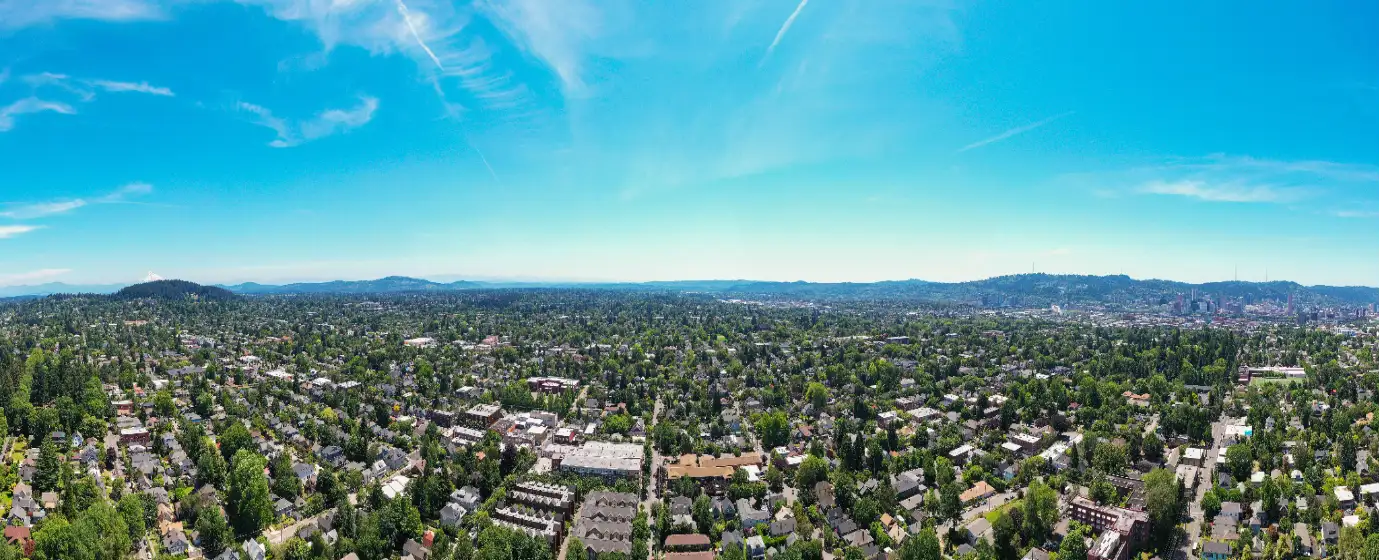
The most common misconception about Scappoose is that it's a budget alternative to Portland — a place you move when you've been priced out of the metro and need somewhere cheap to land. That's not quite right. The median home price in Scappoose sits at $482,000, which puts it slightly below Oregon's statewide median and meaningfully below Portland proper. You're not getting a bargain-bin suburb. You're getting genuine value in a small town that happens to sit 30 minutes from downtown Portland, with a tight housing supply and real demand from relocators coming from as far away as Seattle and the Bay Area.
What shapes the cost picture here is a combination of geography and restraint. Scappoose is boxed in by the Columbia River to the east, Dutch Canyon to the west, and Columbia County land-use patterns that limit sprawl. That constraint keeps inventory lean and supports prices even as other Northwest markets soften. The local economy runs on manufacturing — footwear, paper, aerospace — rather than tech salaries, which means household incomes are solid but not inflated. The median household income of $97,708 tracks almost exactly with what it costs to qualify for a mortgage on the median home here, which tells you something important about who this market is built for.
This guide will walk you through every layer of what it costs to live in Scappoose: what your housing dollar actually buys, how property taxes compare to the rest of the metro, what rent looks like if you're not ready to buy, and how your full monthly budget stacks up against neighboring cities. By the end, you'll have a realistic financial picture — not a sales pitch.
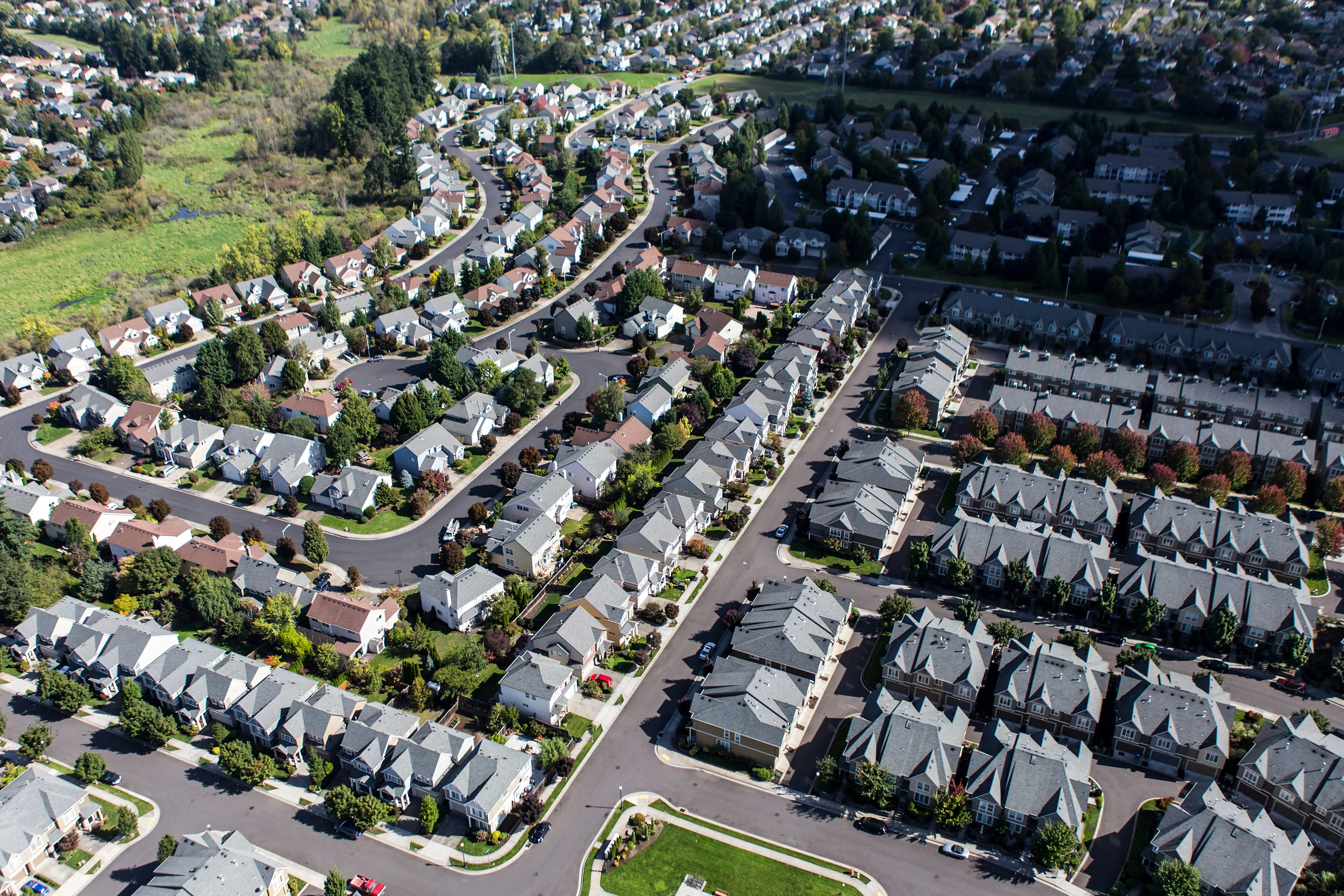
The median home price in Scappoose is $482,000, and that number buys you something meaningfully different here than it does in Portland. A typical purchase in this range gets you a three-bedroom, two-bath single-family home with a two-car garage, somewhere between 1,400 and 1,900 square feet, likely built in the late 1980s or 1990s on a modest lot. Entry-level homes — older construction, smaller footprint, less desirable location — start in the low-to-mid $400,000s. At the upper end of the market, particularly in Dutch Canyon or hillside areas with mountain views, prices climb toward the mid-$500,000s.
The market has been moving through a buyer-friendly window in early 2026. Price per square foot has come down roughly 8% year-over-year, list prices dropped notably from late 2025 into spring 2026, and median days on market for listed homes stretched longer than the prior year's brisk pace. That said, competitively priced homes in good condition still move quickly — Redfin's sold-price data from recent transactions shows a median of $482,000, with well-positioned listings receiving offers within two weeks.
Out-of-area buyers have been an underappreciated force in this market. Seattle-area buyers search Scappoose at higher rates than almost any other Oregon market, drawn by the relative affordability and the remote-work calculus that makes a 30-minute Portland commute feel optional rather than mandatory. That external demand is part of what keeps the floor under Scappoose prices even when the broader Oregon market softens.
| Budget Range | What You're Likely to Find |
|---|---|
| Under $420,000 | Older homes (pre-1985), smaller sq footage, may need updates; some mobile homes |
| $420,000–$482,000 | 3-bed/2-bath, 1,300–1,600 sq ft, standard suburban lots, 1990s construction |
| $482,000–$540,000 | Updated homes, newer builds, larger lots, some Dutch Canyon and Heron Meadows inventory |
| $540,000+ | Dutch Canyon upper tier, acreage properties, new construction, elevated view lots |
Columbia County's property tax rate for Scappoose runs approximately 0.83%, which translates to roughly $4,001 per year on the median-priced home — or about $333 per month added to your housing cost. Oregon's Measure 50, passed in 1997, limits assessed value increases to 3% per year regardless of market appreciation, which means longtime homeowners often pay taxes on assessed values well below what their homes would sell for today. New buyers get assessed at closer to current market value, but that 3% annual cap still provides meaningful long-term cost stability compared to states where tax bills track market swings directly.

Scappoose is genuinely one of the more interesting value plays in the Portland Metro right now, and I don't say that lightly. The combination of a softening list-price environment, motivated sellers, and an income-to-price ratio that actually makes sense is rare in 2026 Oregon real estate. In neighborhoods like Dutch Canyon and the newer inventory near SW Callahan Road — where Lennar has been building — buyers are finding three-bedroom homes with views and updated finishes in the $480,000–$530,000 range. That's a figure that would get you a townhouse without a yard in many Portland close-in neighborhoods.
One thing buyers consistently underestimate here is the Measure 50 benefit over time. When I run five-year projections for clients, the combination of a relatively low starting tax rate and that 3% assessed-value cap creates meaningful savings compared to comparable purchases in Washington County or Clark County. Add Oregon's lack of a sales tax, and the effective total cost of ownership in Scappoose often looks better than the sticker price suggests. The buyers who hesitate because the commute feels long are often the ones who end up calling me back after another year of losing Portland bidding wars. If you're considering Scappoose and want insight into which neighborhoods align with your priorities and budget, I'd welcome the opportunity to share what I've learned from helping hundreds of families make this move successfully.
Scappoose has a small rental market — roughly 25% of occupied housing units are renter-occupied, which means true apartment inventory is limited. Most rentals are single-family homes, smaller duplexes, and a handful of apartment complexes serving the town's working population. Average monthly rents for a two-bedroom unit generally fall in the $1,500–$1,650 range, while one-bedroom units typically come in around $1,400–$1,450. Studios, when available, are often found in the $1,100–$1,300 range.
| Unit Type | Avg Monthly Rent |
|---|---|
| Studio | $1,100–$1,300 |
| 1 Bedroom | $1,400–$1,450 |
| 2 Bedroom | $1,500–$1,650 |
| 3 Bedroom | $1,600–$1,800 |
| Single-family home rental | $1,800–$2,400+ |
Rental inventory turns over slowly here. There is no large apartment complex pipeline actively under construction, and the owner-occupied rate of nearly 75% means landlords face limited competition. If you're planning to rent while you search for a home to buy, expect to start your search early — available units don't sit on the market long, and the selection at any given time can be thin. Single-family rental homes, when they appear, lease quickly and often at the higher end of that range.
Utility costs in Scappoose run close to Oregon state averages. Electric service comes through Portland General Electric (PGE), and a typical single-family home's monthly electric bill falls in the $80–$130 range depending on season and home size. Natural gas service is provided by NW Natural, with monthly bills commonly ranging from $40–$60 in summer and $100–$160 in colder months. Water and sewer are handled by the city of Scappoose, adding roughly $60–$90 per month for a typical household. Combined utilities for a 1,800-square-foot home typically run $250–$380 per month.
Car ownership is essentially mandatory in Scappoose. There is no meaningful transit network, no light rail, and no park-and-ride infrastructure. Residents drive to Portland, drive to the grocery store, drive to appointments. Highway 30 is the primary artery into the city, and the 30-minute Portland commute is realistic during off-peak hours — but rush-hour travel, particularly inbound on Highway 30 through St. Johns and into the city, can stretch to 45 minutes or more on bad days. Residents commuting to the Intel Ronler Acres campus in Hillsboro face a longer, multi-leg drive unless they're routed through Highway 26. Fuel costs and vehicle maintenance are genuine line items in any Scappoose household budget.
Grocery access has improved but isn't comprehensive. Fred Meyer in Scappoose (on Columbia Boulevard) handles most day-to-day shopping, and a Grocery Outlet is available for budget staples. For specialty items, Trader Joe's, New Seasons, or Whole Foods require a trip toward Portland. Dining options in town include local spots along Columbia Avenue in downtown Scappoose, though the restaurant scene remains modest. Residents who want broader dining variety tend to drive toward St. Helens or into the Portland metro. Internet service is available through multiple providers including Xfinity and CenturyLink, with typical monthly costs running $60–$100 for standard broadband.

Looking to buy in Scappoose? Estimate your payment.
Enter your numbers to see an estimated monthly mortgage payment.
Estimate only. Excludes HOA fees and mortgage insurance.
Understanding where Scappoose sits in the regional cost picture requires an honest look at the alternatives. The table below compares median home prices, property tax rates, and commute times for the cities buyers most often consider alongside Scappoose.
| City | County | Median Home Price | Effective Property Tax Rate | Avg Commute to Portland |
|---|---|---|---|---|
| Scappoose, OR | Columbia | $482,000 | ~0.83% | 30 min |
| St. Helens, OR | Columbia | ~$350,000–$390,000 | ~0.90% | 40 min |
| Columbia City, OR | Columbia | ~$340,000–$380,000 | ~0.88% | 38 min |
| North Plains, OR | Washington | ~$510,000–$540,000 | ~1.10% | 28 min |
| Ridgefield, WA | Clark | ~$520,000–$560,000 | ~0.95% | 35 min (into Vancouver) |
| Warren, OR | Columbia | ~$400,000–$440,000 | ~0.85% | 32 min |
| Sauvie Island, OR | Multnomah/Columbia | Varies widely | ~1.00% | 25 min |
Scappoose generally sits in the middle of this regional range — more expensive than Columbia County neighbors like St. Helens and Columbia City, but less expensive than Washington County markets like North Plains. The lower property tax rate compared to Washington County cities is a meaningful advantage for buyers doing five- and ten-year cost projections. Ridgefield, Washington draws buyers who want newer development and no Oregon income tax, but that calculus only favors Washington residents if their employment income is high enough that the income tax savings outweigh the longer commute and higher home prices.
The table below models a realistic monthly cost picture for a household purchasing at the $482,000 median with 10% down ($48,200), resulting in a $433,800 loan. Mortgage figures assume a 30-year term at a prevailing 2026 rate in the 6.75%–7.0% range.
| Expense Category | Estimated Monthly Cost |
|---|---|
| Mortgage (P&I on $433,800) | $2,820–$2,890 |
| Property Tax | ~$333 |
| Homeowner's Insurance | ~$120–$150 |
| Electric (PGE) | $90–$130 |
| Natural Gas (NW Natural) | $70–$130 |
| Water/Sewer (City of Scappoose) | $65–$90 |
| Internet/Phone | $90–$130 |
| Groceries (household of 2–4) | $600–$900 |
| Transportation (2 vehicles, fuel + maintenance) | $400–$600 |
| Dining out/entertainment | $250–$400 |
| Healthcare (employer-sponsored, employee share) | $300–$600 |
| Estimated Monthly Total | $5,138–$6,023 |
This budget reflects a household with solid but not exceptional income — the kind of family where both adults work, one or both may commute to Portland or Columbia County employers, and the lifestyle is comfortable but not extravagant. The household income needed to sustain this without being cost-burdened (defined as spending more than 30% of gross income on housing) is roughly $130,000–$140,000 annually, depending on down payment and debt load. At the median household income of $97,708, buyers in Scappoose are stretching somewhat — consistent with the broader Oregon housing affordability picture.
Oregon runs one of the more unusual tax environments in the country, and it cuts both ways for Scappoose buyers. There is no sales tax in Oregon, which matters more than most transplants initially expect. Buying a car, furnishing a house, making large purchases — none of it triggers a sales tax bill, and over the course of a year those savings add up to several hundred dollars for a typical household. For buyers comparing Scappoose to Ridgefield or other Clark County, Washington towns, this is a direct offset to Oregon's higher income tax rates.
Oregon's income tax is among the higher state income tax rates in the nation, with the top marginal rate reaching 9.9% for higher earners, though most middle-income households pay in the 8%–9% range. For a household earning $97,708, the Oregon income tax burden runs approximately $6,000–$7,500 annually after standard deductions. Washington has no state income tax, which is why some high earners choose Clark County even with longer commutes and higher home prices — but for households earning at or near the Scappoose median, the math doesn't automatically favor Washington when home prices and commute costs are factored in.
Oregon also offers a property tax deferral program for seniors and disabled homeowners, administered through the Oregon Department of Revenue. Qualifying households can defer property taxes until the property is sold or transferred, which is a meaningful financial tool for retirees on fixed incomes who own their homes outright. Columbia County also participates in Oregon's veterans' property tax exemption program, which provides partial relief for qualifying veterans. These programs don't change the headline numbers but matter significantly for specific buyer profiles.

Local Expert Takeaway: The buyers who get the best long-term value in Scappoose are the ones who commit to the 30-minute commute and stop treating the distance as a liability. The Measure 50 property tax cap, the no-sales-tax environment, and a median price that still sits below the Portland metro average create a genuine cost-of-ownership advantage — but only if you're buying with a five-plus-year horizon. If you're torn between Scappoose and North Plains, run the 10-year property tax comparison side by side: the difference in effective tax rates can add up to $15,000–$20,000 over a decade on comparable homes. That's a number worth knowing before you choose.
Is Scappoose an affordable place to live?
Relative to the Portland Metro, Scappoose is on the more accessible end of the cost spectrum. The $482,000 median home price is below Portland and most Washington County cities, the property tax rate is among the lower rates in the region, and Oregon's lack of a sales tax reduces everyday purchase costs. Housing relative to income is still a stretch for many households, as it is throughout Oregon, but Scappoose offers better alignment between income and home prices than most metro-adjacent communities.
How much do property taxes cost in Scappoose?
At Scappoose's approximately 0.83% effective property tax rate, the annual tax bill on the median-priced home runs roughly $4,000 — about $333 per month. Oregon's Measure 50 limits assessed value increases to 3% annually, which provides long-term cost predictability for buyers who stay in their homes. New buyers are assessed closer to current market value, but that cap kicks in immediately after purchase and compounds in your favor over time.
How does Scappoose compare to St. Helens for cost of living?
St. Helens generally comes in lower on purchase prices — median homes there run roughly $350,000–$390,000 — but the trade-off is a longer commute to Portland (closer to 40 minutes), a smaller job base, and fewer amenities. Scappoose's slightly higher prices reflect its tighter proximity to the metro, a somewhat more established housing stock, and demand from out-of-state relocators. For buyers who work remotely or commute only a few days a week, St. Helens can offer genuine savings; for daily Portland commuters, Scappoose's location advantage typically offsets the price difference.
Browse current listings updated daily — filtered for Scappoose buyers by Elizabeth Davidson, your local expert.
Powered by Elizabeth Davidson · Cascade Hasson Sotheby's International Realty · 503-939-2035
Explore the full Scappoose series: The Ultimate Scappoose Relocation Guide · Is Scappoose Safe? · Cost of Living in Scappoose · Best Neighborhoods in Scappoose · Scappoose Schools & Family Life · Scappoose Youth Sports · Scappoose Parks & Recreation · Retiring in Scappoose · 1031 Tax-Deferred Exchange in Scappoose · Scappoose First-Time Homebuyers Guide · · Moving to Scappoose from California · The Scappoose Realtor's Perspective · Top 10 Questions a Realtor Gets About Scappoose
Tell us what you need help with and we'll connect you with local resources.

About the Author
Todd Davidson is the founder of Living in Oregon and Living in Washington, where he publishes in-depth city guides, neighborhood resources, and local market insights covering more than 180 communities across the Pacific Northwest. While his background is in home financing and real estate, he created these digital platforms to help families research and compare regions before making a move.