
Portland Metro · Oregon
There's a specific moment most first-time buyers describe — somewhere between getting pre-approved and realizing what that approval actually buys — where the whole thing starts to feel real and terrifying at the same time. In Scappoose, that moment often arrives at a showing: a three-bedroom ranch on a quiet street, older but solid, updated bathroom, a backyard that needs work. The price is $429,000. The monthly payment is more than you expected. And you start doing the math on what you've been paying in rent and wonder why you waited this long. That combination — affordable relative to Portland, enough inventory to actually compete, and a community with real roots — is what makes Scappoose worth the effort for a first-time buyer in 2026.
The median home price in Scappoose sits at $482,000, though recent sold data suggests many transactions are closing in the $490,000–$520,000 range. That number sounds heavy until you compare it to what $482,000 buys in North Portland, Beaverton, or Hillsboro. Here, that figure gets you a 3-bedroom, 2-bathroom single-family home — often on a decent lot, often with a garage, sometimes with updates. Renting a comparable home in the area runs roughly $2,000–$2,400 per month, which means the gap between renting and owning is narrowing. At current rates, a buyer who puts 5% down on a $482,000 home is looking at a total monthly payment in the range of $3,200–$3,400. That's more than rent — but it's also equity, stability, and a mortgage that doesn't go up when the landlord decides it should.
This guide walks you through everything that actually matters for a first-time buyer in Scappoose: what your budget gets you in real neighborhoods, how the buying process works in Columbia County specifically, what credit and income you need to qualify, and the five mistakes buyers in this market make most often. If you've been reading general Oregon real estate advice and none of it quite fits what you're seeing in Scappoose, that's because it wasn't written for this market. This one is.
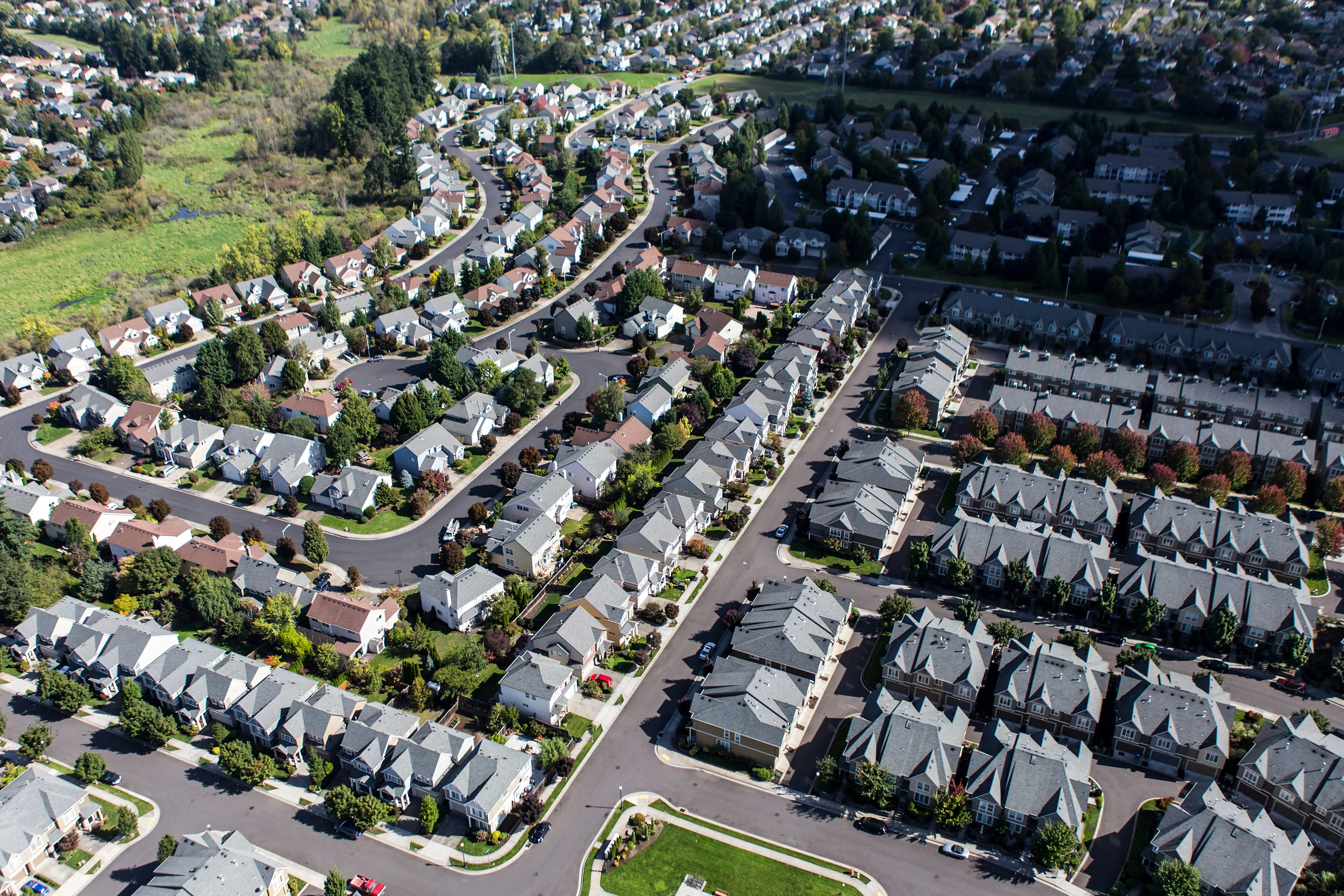
Scappoose makes a compelling case for first-time buyers on several fronts. The price point is meaningfully lower than the Portland suburbs most people default to — you're looking at a $482,000 median versus $550,000–$650,000+ in Beaverton or Hillsboro. The Scappoose School District carries a B rating, the commute to Portland runs about 30 minutes on US-30, and the community has a genuine small-town character that's rare this close to the metro. Violent crime sits at just 1.5 per 1,000 residents, which is low by any regional comparison. For buyers who don't need to be 10 minutes from the Pearl District, the trade-off is real and favorable.
The honest limitations: inventory under $400,000 is genuinely thin. There are typically fewer than a handful of homes listed below $350,000 at any given time, and many of those are fixer-uppers or manufactured homes. The realistic first-time buyer entry point in Scappoose is the $400,000–$500,000 range, which still requires a meaningful down payment and solid qualification. Neighborhoods like Downtown Scappoose and South Scappoose offer the most accessible price points, while newer areas like Oliver Landing and Heron Meadows sit closer to or above the median. If your maximum comfortable payment puts you under $380,000, Scappoose is still worth exploring — but go in with clear eyes about what's available.

Scappoose is one of the markets I'm most excited to talk to first-time buyers about right now. The price point relative to quality of life is genuinely one of the best arguments in the entire Portland metro. I've watched buyers get outbid repeatedly in Hillsboro and Beaverton, then come to Scappoose and find a move-in-ready ranch with a real backyard at a price point that actually works with their life. The market has softened slightly — list prices are trending down year-over-year, homes are sitting a bit longer, and sellers are negotiating. That combination is rare, and first-time buyers who are qualified and ready can use it.
What most first-time buyers underestimate in Scappoose is how quickly the well-priced, well-located homes move. A home in the $450,000–$500,000 range that's been updated, has a functional floor plan, and sits in a neighborhood like Oliver Landing or near Heritage Park can still go pending in under a week when priced right. The homes sitting 60–90 days are sitting for a reason — usually condition, location within the city, or pricing that doesn't match what buyers are finding at open houses. My advice to every first-time buyer I work with in Scappoose: do not let the average days-on-market statistic make you casual. The good ones still move fast. If you're considering Scappoose and want insight into which neighborhoods align with your priorities and budget, I'd welcome the opportunity to share what I've learned from helping hundreds of families make this move successfully.
| Price Range | What You Typically Find | Neighborhood Examples | Competition Level |
|---|---|---|---|
| Under $350K | Manufactured homes, fixer-uppers, small lots; very limited inventory | Scattered listings, older South Scappoose | Low — condition issues reduce buyer pool |
| $350K–$450K | Older 3-bed/1-2-bath ranch homes, ~1,100–1,400 sq ft, pre-2000 construction, cosmetic updates needed | Downtown Scappoose, South Scappoose, older Meadowbrook | Moderate — more buyers, but condition narrows field |
| $450K–$550K | Move-in-ready single-family, 3-4 bed, 1,400–1,700 sq ft, updated kitchens/baths, some newer construction | Oliver Landing, Heron Meadows, Meadowbrook | Moderate to competitive — best value tier |
| $550K–$650K | Newer construction, larger lots, 4-bed floor plans, two-car garages, better finishes | Dutch Canyon Estates, Mountain View, Scappoose Heights | Less competitive — fewer buyers at this tier |
| $650K+ | Acreage, custom builds, premium views, Airpark Area properties | Dutch Canyon Estates, Riverside Area, Skyline Terrace | Lower inventory, patient buyer market |
The $450,000–$550,000 range is where the best value is concentrated right now for a first-time buyer. At roughly $262 per square foot, that budget yields approximately 1,500–1,700 square feet — enough for a genuine 3-bedroom home with usable space, a yard, and move-in condition that doesn't require an immediate renovation budget on top of your down payment.
If your budget is firmly in the $350,000–$450,000 range, the play is South Scappoose and the older sections of Downtown Scappoose, where ranch-style homes from the 1980s and 1990s come up regularly. These homes are solid, functional, and often in need of cosmetic work that a motivated buyer can address over time — but they require an inspection you take seriously, which we'll come back to in the mistakes section.
| Step | What Happens | Typical Timeline | What First-Timers Get Wrong |
|---|---|---|---|
| Get finances in order | Pull credit, eliminate revolving debt, verify income docs | 1–3 months before searching | Waiting until they find a house to check their credit |
| Pre-approval | Lender reviews income, assets, credit; issues letter | 1–5 business days | Getting pre-qualified instead of pre-approved — very different things |
| Find an agent | Interview 1–2 local agents familiar with Columbia County | 1 week | Assuming any licensed agent knows Scappoose's specific quirks |
| Active search | Tour homes, track price reductions, monitor new listings | 4–12 weeks typical | Shopping only online, not visiting to understand neighborhood feel |
| Making offers | Submit purchase agreement, earnest money, terms | As fast as 24 hours on new listings | Offering list price on a home that's been sitting 60+ days |
| Under contract | Inspection and appraisal periods begin | 2–5 days after accepted offer | Not having inspection funds ready immediately |
| Inspection | Licensed inspector examines property; report in 24–48 hours | 7–10 days into contract | Skipping or waiving inspection to compete — a serious risk in Scappoose |
| Appraisal | Lender orders appraisal; value must support loan | 1–3 weeks into contract | Not understanding what happens if appraisal comes in low |
| Final walkthrough | Confirm condition matches contract terms | 24 hours before closing | Skipping it — condition can change between contract and close |
| Closing | Sign documents, wire funds, receive keys | Typically 30–45 days from contract | Being surprised by exact cash-to-close figure |
In Columbia County, the earnest money norm runs between 1%–2% of the purchase price — on a $480,000 home, expect to bring $4,800–$9,600 as a good-faith deposit when your offer is accepted. That money goes toward your down payment at closing, but it's at risk if you back out outside of a contingency window, so understand what you're signing.
The inspection question is one of the most important conversations to have with your agent before you ever make an offer. Scappoose has a meaningful stock of homes built in the 1970s–1990s — older construction that may have aging roofs, outdated electrical panels, or foundation settling common to homes on sloped lots near the hills. Waiving inspection to compete might work in a frenzied seller's market, but in 2026 Scappoose — where most homes are sitting 80+ days — there is very little reason to do it. Keep your inspection contingency.

Looking to buy in Scappoose? Estimate your payment.
Enter your numbers to see an estimated monthly mortgage payment.
Estimate only. Excludes HOA fees and mortgage insurance.
For a conventional loan, the minimum credit score is 620, but the rate you get at 620 versus 680 versus 740 is meaningfully different. On a $420,000 loan, the difference between a 650 and a 740 score can translate to a rate spread of 0.5%–0.75% — which works out to roughly $130–$200 more per month. That's real money compounded over 30 years, and it's why spending six months improving your score before applying is almost always worth it if you're hovering in the 630–660 range.
FHA loans allow a 580 minimum credit score with 3.5% down, or 500–579 with 10% down. The downside is mortgage insurance — FHA charges both an upfront premium (1.75% of the loan amount) and an annual premium that doesn't go away until you refinance out of the loan. On a $460,000 purchase with 3.5% down, the upfront MIP alone adds roughly $7,700 to your loan balance. FHA still makes sense for buyers with lower scores or smaller down payments, but go in understanding the full cost picture.
On income: lenders generally want your total housing payment — principal, interest, taxes, and insurance — to be no more than 28% of your gross monthly income. To comfortably qualify for a $400,000 home, you typically need gross income around $90,000–$95,000 annually. At $450,000, that figure rises to approximately $100,000–$108,000. At $500,000, you're looking at roughly $110,000–$118,000. Scappoose's median household income of $97,708 means a two-income household is in reasonable range for the market median — but it also means stretching to the top of your qualification number leaves very little room for the unexpected.
Mistake 1: Confusing list price with close price. Homes in Scappoose are currently selling at approximately 1% below list price on average, with well-priced homes occasionally clearing above ask. But homes sitting 60–90 days in South Scappoose or older Meadowbrook sections often have room for negotiation that buyers leave on the table by defaulting to list price. Ask your agent what comparable homes have actually closed at — not what they listed for.
Mistake 2: Skipping inspection on 1970s–1990s ranch homes. A significant portion of Scappoose's sub-$450,000 inventory is older construction, and those homes carry real inspection risk — roofs, electrical panels, crawl space moisture, and foundation issues are not uncommon. The market is soft enough in 2026 that you rarely need to waive inspection to win an offer. Buyers who skip this to save a few hundred dollars in inspection fees commonly face $15,000–$40,000 in deferred maintenance surprises within the first two years.
Mistake 3: Shopping at the top of qualification, not the top of comfort. A lender may approve you for $520,000, but if making that payment requires perfect months with no car repair, no vet bill, and no travel, you've bought a financial trap. Scappoose's real advantage is that the $450,000–$480,000 range offers genuinely solid inventory — you don't need to stretch to the edge of your approval to find a good first home here.
Mistake 4: Misreading school district boundary lines near the edges of the city. Scappoose School District 1J covers the city and surrounding area, but buyers purchasing on the fringes of the city limits near Warren or North Plains should verify exact district boundaries before assuming enrollment. This matters for resale — buyers with children will research school districts, and a home that looks like it should be in Scappoose proper but falls outside the preferred boundary can sit longer when it's time to sell.
Mistake 5: Waiting for prices to drop significantly. Scappoose's market has softened modestly — list prices are down about 5% year-over-year. But the homes in the $450,000–$520,000 range that are well-maintained and well-located are not sitting. Buyers who wait six months hoping for a 10%–15% correction tend to watch the homes they want sell to buyers who acted, then face higher interest rates or the same prices with less inventory.
Downtown Scappoose is the most accessible entry point in the city for first-time buyers on a tighter budget. The housing stock here includes older single-family homes and smaller ranches, and the $380,000–$450,000 range regularly has inventory. The catch is that homes need more love — plan for updates if you're buying near the bottom of this tier. The upside: you're central to everything Scappoose has, walkable to Heritage Park and local shops, and positioned for steady appreciation as the city grows.
South Scappoose offers a similar price range with a quieter, more residential character. Ranch homes on reasonable lots come up in the $390,000–$460,000 range, and the neighborhood tends to be stable, family-oriented, and practical. It's not the flashiest entry point, but for a buyer who wants to get in, build equity, and not overpay, it's one of the more logical places to start.
Oliver Landing is the newer-construction neighborhood that first-time buyers in the $480,000–$540,000 range should be watching. The homes are modern, the layouts are functional, and the build quality removes much of the deferred-maintenance risk that comes with older Scappoose housing stock. If your budget can stretch here, the case for a newer home over a cheaper older one in South Scappoose is worth having with your agent.
Meadowbrook sits in the middle of the market — a mix of older and mid-era homes, accessible price points in established sections, and solid neighborhood infrastructure. For buyers who want a blend of value and stability, the $420,000–$490,000 range in Meadowbrook often offers the best combination of move-in condition, lot size, and commute convenience.
✅ Scappoose's $482,000 median is meaningfully lower than most Portland suburbs, and a softening market gives first-time buyers real negotiating room in 2026.
⚠️ Inventory under $400,000 is thin — the realistic entry point for a move-in-ready single-family home is $420,000–$480,000, which requires solid qualification and a planned down payment strategy.
📍 Oliver Landing, South Scappoose, and Meadowbrook offer the best combination of value, neighborhood stability, and first-time buyer price points in the city right now.
Can I buy a home in Scappoose as a first-time buyer?
Yes — Scappoose is one of the more accessible markets in the Portland metro for first-time buyers. The median is lower than comparable suburban cities, the market has softened, and there is real inventory in the $420,000–$500,000 range across neighborhoods like South Scappoose, Meadowbrook, and Oliver Landing.
Is FHA financing a good option for first-time buyers in Scappoose?
FHA financing is a strong option for many first-time buyers in Scappoose, since it allows a lower down payment and more flexible credit requirements than most conventional loans. A local lender can walk you through your specific numbers based on today's rates.
What credit score do I need to buy a house in Oregon?
The minimum for a conventional loan is 620, and the minimum for an FHA loan is 580 with 3.5% down. In practice, getting your score above 680 meaningfully improves your interest rate, and above 740 gets you the best available pricing. If your score is currently in the 620–650 range, spending a few months paying down revolving balances before applying is almost always worth it.
Browse current listings updated daily — filtered for Scappoose buyers by Elizabeth Davidson, your local expert.
Powered by Elizabeth Davidson · Cascade Hasson Sotheby's International Realty · 503-939-2035
Explore the full Scappoose series: The Ultimate Scappoose Relocation Guide · Is Scappoose Safe? · Cost of Living in Scappoose · Best Neighborhoods in Scappoose · Scappoose Schools & Family Life · Scappoose Youth Sports · Scappoose Parks & Recreation · Retiring in Scappoose · 1031 Tax-Deferred Exchange in Scappoose · Scappoose First-Time Homebuyers Guide · · Moving to Scappoose from California · The Scappoose Realtor's Perspective · Top 10 Questions a Realtor Gets About Scappoose
Tell us what you need help with and we'll connect you with local resources.

About the Author
Todd Davidson is the founder of Living in Oregon and Living in Washington, where he publishes in-depth city guides, neighborhood resources, and local market insights covering more than 180 communities across the Pacific Northwest. While his background is in home financing and real estate, he created these digital platforms to help families research and compare regions before making a move.