
Portland Metro · Oregon
Is Scappoose Safe? Crime Rates, Safest Neighborhoods & Local Reality (2026)
Scappoose doesn't have the crime reputation of a bigger city, and that reputation is largely deserved — but the full picture is more layered than a single safety grade suggests. With a population under 9,000 and a community culture built around homeownership, outdoor recreation, and small-town familiarity, this Columbia County city sits well below Oregon and national crime averages on most measures. What complicates the story isn't danger — it's the patchwork of methodologies different rating sites use, which can make the same city look dramatically safer or riskier depending on which tab you have open.
In daily life, what the numbers translate to is this: the odds of being directly affected by violent crime here are genuinely low. Property crime is the more realistic concern, and even that tracks below the Oregon state average by a significant margin. Where incidents do happen, they tend to cluster around commercial corridors and higher-traffic zones — not the quiet residential streets where most of Scappoose's families actually live.
This guide breaks down what the crime data actually means for someone considering a move to Scappoose, which neighborhoods consistently rank as the most peaceful, and what residents have learned to be aware of that no app will tell you.
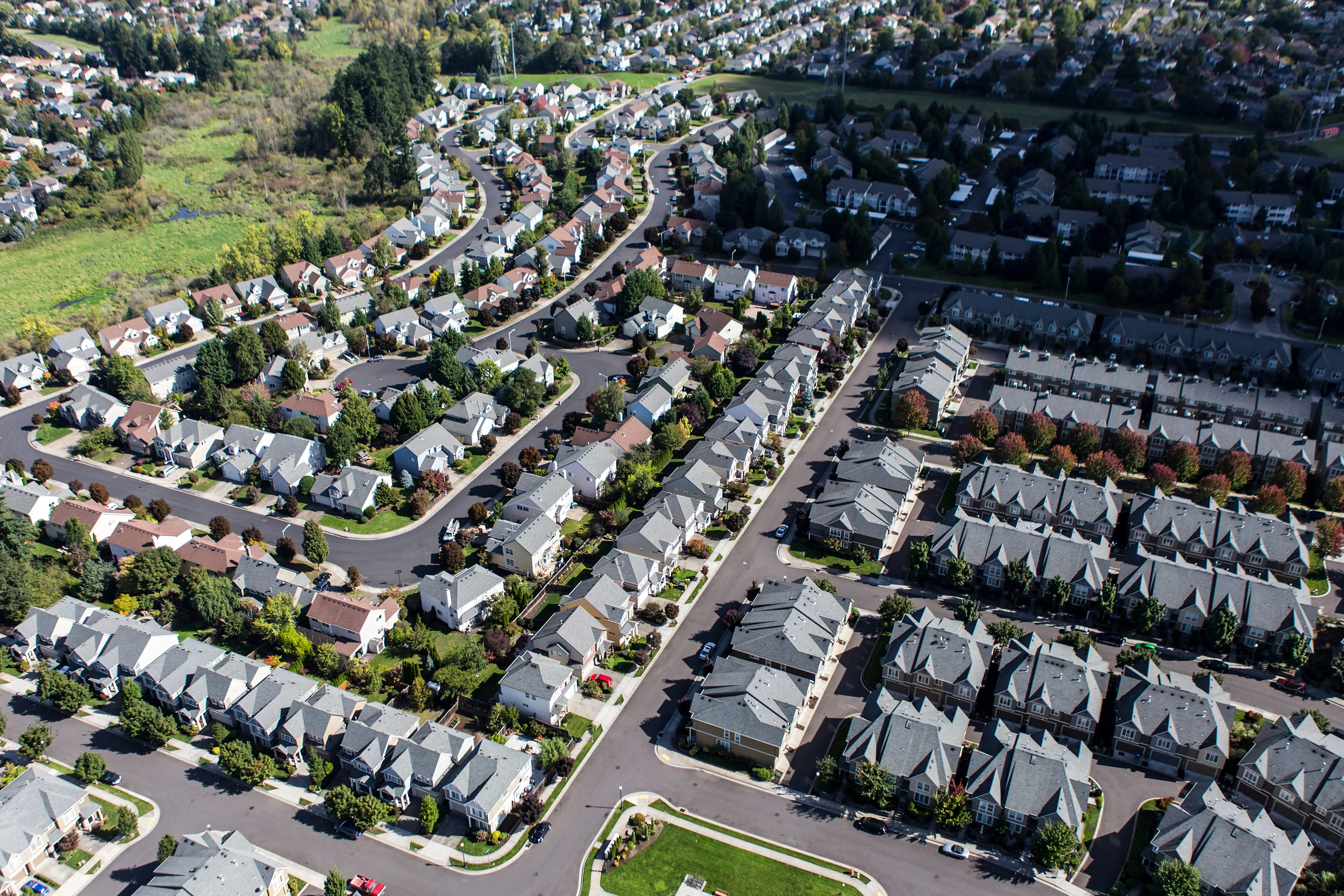
The most credible read of Scappoose's crime landscape comes from FBI data covering the 2024 calendar year, released in late 2025. By that measure, the city's overall crime rate runs roughly 35% below the national average — a meaningful gap that reflects both the town's residential character and its distance from urban density. The violent crime rate, commonly reported around 1.5 per 1,000 residents, sits approximately 60% below the national average. Property crime, the more relevant metric for most households here, comes in at approximately 13.5 per 1,000 — still below U.S. norms and nearly 50% lower than the Oregon state average.
One confounding factor worth understanding: some national ranking sites compare Scappoose to all U.S. cities of all sizes, which can produce a misleading result. When compared to cities of similar size and character, local police data suggests Scappoose lands near the middle of the pack — not unusually safe and not unusually risky. The more grounded comparison is against Oregon peers, where Scappoose consistently outperforms the state average on both violent and property crime. The city has also shown a downward trend across roughly 14 years of reported data, with overall crime falling roughly 11.7% year over year in the most recent reporting period.
What structurally keeps these numbers in check is Scappoose's high rate of owner-occupied housing, limited nightlife density, and relative distance from high-traffic freight and transit corridors. Cities with significant commercial strip development or regional retail tend to see higher property crime rates simply because opportunity and foot traffic overlap more often. Scappoose has some of that dynamic near its southern commercial zone, but the residential core remains largely insulated from it.
The violent crime picture in Scappoose is about as reassuring as small-town Oregon gets. FBI estimates for 2024 recorded 12 violent incidents citywide — no murders, and assault and robbery rates well below national norms. The practical reality for most residents is that violent crime rarely enters daily awareness; the chance of being a victim in a given year is roughly 1 in 675, compared to a statewide rate closer to 1 in 343. That gap is significant, and it reflects the kind of community-level stability that comes from low transience, strong neighborhood familiarity, and a town where people tend to know their neighbors.
Property crime is where residents need to pay modest attention. Theft accounts for the dominant share of incidents — primarily opportunistic vehicle break-ins and minor theft rather than home burglaries, which run well below national averages. Motor vehicle theft is the one category where Scappoose slightly exceeds the national rate, a pattern shared by many smaller Oregon cities with limited secure parking infrastructure. Incidents tend to cluster around the commercial stretches of Highway 30 and the southern retail corridor, where higher foot traffic and visible parked cars create more opportunity. Residential areas away from those corridors see comparatively little activity.

From my experience working with buyers across the Portland Metro's northwest corridor, Scappoose is consistently one of the most underappreciated markets when it comes to the safety-value combination. The west side neighborhoods — Oliver Landing, Meadowbrook, and Heron Meadows in particular — offer the kind of settled, residential calm that buyers often associate with far pricier zip codes. You get newer construction, owner-occupied streets, and neighbors who actually introduce themselves, all at a median home price of $482,000 that remains accessible compared to almost anything closer to Portland.
What I tell buyers who are nervous about small-town crime data is this: context matters enormously. The numbers that look higher on some ranking sites are almost entirely driven by commercial corridor activity — the Highway 30 stretch and the southern retail zone. Buyers purchasing in the established residential neighborhoods aren't experiencing that reality. The west side in particular posts some of the lowest incident counts in Columbia County. If you're weighing Scappoose against St. Helens or North Plains, the safety profile here is genuinely competitive, and the community stability — long-term residents, active schools, real employer base — tends to hold property values through market cycles better than many people expect. If you're considering Scappoose and want insight into which neighborhoods align with your priorities and budget, I'd welcome the opportunity to share what I've learned from helping hundreds of families make this move successfully.
Oliver Landing sits on the western edge of Scappoose and consistently ranks among the lowest-crime zones in the city according to crime mapping data. The neighborhood's residential, owner-occupied character means limited foot traffic and strong informal community oversight — the kind of street-level familiarity that naturally deters opportunistic incidents. Buyers here tend to find newer homes, well-maintained streets, and neighbors who have lived in place long enough to notice when something is off.
Best for: Families and first-time buyers who prioritize quiet streets and residential stability.
Downtown functions as Scappoose's commercial and civic core, and like any town center, higher foot traffic means property crime metrics run slightly elevated compared to purely residential areas. That said, the risk here is concentrated in vehicle break-ins and minor retail theft rather than anything that affects daily resident life in a serious way. The presence of small businesses, the post office, and regular community activity actually provides natural street activity that tends to deter more serious incidents.
Best for: Buyers who want walkable access to local services and don't mind a mildly more active commercial environment.
The southern portion of the city carries a statistical quirk worth understanding: its retail and commercial density inflates per-capita crime figures in a way that doesn't reflect the lived experience of its residential streets. Homes here are predominantly owner-occupied single-family properties, many built between 1970 and 1999, with a vacancy rate reported at under 1%. That near-zero vacancy is a reliable indicator of neighborhood stability — vacant homes attract significantly more property crime than occupied ones, and South Scappoose simply doesn't have many of them.
Best for: Buyers seeking established neighborhoods with strong owner-occupancy and suburban spacing.
Dutch Canyon sits further from the commercial corridors and offers a countryside feel that naturally limits crime exposure. Spacious lots, quiet streets, and a community culture oriented around privacy and outdoor living create conditions where incidents are genuinely rare. New construction continues through phases including Phase 4, which is nearing completion with 33 additional homes — meaning the neighborhood is growing its residential base, which typically strengthens community oversight over time.
Best for: Buyers who want newer construction in a peaceful, semi-rural setting with room between neighbors.
Meadowbrook sits on the west side of the city alongside Oliver Landing and Heron Meadows, sharing the same low-incident profile that defines that quadrant. Crime mapping consistently places the west side as Scappoose's quietest zone, with the west portion of the city estimated to see roughly 3 crimes annually — a figure that reflects how insulated these streets are from commercial corridor spillover. The neighborhood is primarily single-family residential with stable long-term occupancy patterns.
Best for: Buyers prioritizing the lowest-crime residential environment the city offers.
The Heritage Park neighborhood benefits from its proximity to green space and community facilities, which tends to anchor a neighborhood socially and keep resident engagement high. Strong community identity — residents who use the park regularly and participate in local events — creates the kind of informal oversight that keeps property crime low. The area sees genuine use across age groups, which means streets rarely feel deserted, a practical deterrent in its own right.
Best for: Families who value walkable access to parks and a tight-knit neighborhood feel.

| City | Violent Crime/1K | Property Crime/1K | Overall Safety Profile |
|---|---|---|---|
| Scappoose | ~1.5 | ~13.5 | Below Oregon & national averages; downward trend |
| St. Helens | ~3.2 | ~28.4 | Elevated; largest city in Columbia County |
| Columbia City | ~1.1 | ~9.8 | Small, low-incident; very limited commercial activity |
| North Plains | ~1.3 | ~11.2 | Comparable to Scappoose; smaller commercial base |
| Ridgefield, WA | ~1.6 | ~14.1 | Similar profile; fast-growing Clark County suburb |
| Warren | ~0.9 | ~7.4 | Unincorporated; very low incident counts; small community |
Looking to buy in Scappoose? Estimate your payment.
Enter your numbers to see an estimated monthly mortgage payment.
Estimate only. Excludes HOA fees and mortgage insurance.
The gap between Scappoose's safety data and what residents actually experience day-to-day comes down to one practical reality: the Scappoose Police Department is running leaner than a city its size should be. As of mid-2024, the department operated with roughly 10 sworn officers — about half the staffing level the lieutenant publicly stated the city needs. Competing pay from Columbia County and neighboring agencies has made recruitment difficult, which means there are shifts when patrol coverage is limited. Locals don't panic about this, but they do know that response times can run longer than you'd expect, and the department's public call logs — available through the city website — show how that plays out in practice.
What that means practically is that Scappoose residents tend to be more self-reliant on home security than their low crime numbers might suggest they need to be. Ring cameras and motion-activated lights are common on residential streets not because the neighborhood is dangerous, but because people know that response times have variability. On Highway 30 and the southern commercial strip between Portland Way and East Columbia Avenue, vehicle break-ins are the most commonly reported nuisance — locals avoid leaving anything visible in parked cars as a matter of habit rather than fear.
The apps that rate neighborhood safety — NeighborhoodScout, SpotCrime, CrimeGrade — often disagree sharply on Scappoose because their methodologies handle small-city data very differently. The most grounded read is to look at the FBI's actual incident counts: 12 violent crimes and 109 property crimes in a city of roughly 8,200 people over the past year. Those are real numbers. The variability in how sites score them reflects statistical modeling choices, not meaningful differences in what people experience walking to the mailbox or leaving for work in the morning.

Local Expert Takeaway: If safety is your primary concern, focus your search on the west side of Scappoose — Oliver Landing, Meadowbrook, and Heron Meadows all post the city's lowest incident counts and offer the residential stability that keeps those numbers low year after year. Avoid leaving valuables in vehicles parked overnight anywhere near the Highway 30 corridor or the southern commercial zone around East Columbia Avenue. For families evaluating Dutch Canyon or Heritage Park, both areas offer strong community identity and low property crime despite sitting closer to busier streets.
✅ Scappoose's violent crime rate runs roughly 60% below the national average, making serious incidents genuinely rare in everyday life.
⚠️ Motor vehicle theft is the one category where Scappoose slightly exceeds national norms — a common pattern in smaller Oregon cities with limited secure parking.
📍 The west side neighborhoods (Oliver Landing, Meadowbrook, Heron Meadows) consistently post the lowest incident counts in the city; the Highway 30 and southern commercial corridors see the most property crime activity.
Is Scappoose a safe place to live?
By most credible measures, yes. FBI data places Scappoose's overall crime rate approximately 35% below the national average, with violent crime running well below both Oregon and U.S. norms. The residential neighborhoods on the west side of the city are among the most stable and lowest-incident areas in Columbia County.
What is the most common crime in Scappoose?
Theft and vehicle break-ins make up the dominant share of reported incidents, consistent with the pattern for most Oregon cities of this size. Burglary rates run below the national average, and violent crime is uncommon enough that most long-term residents have never personally experienced it. Opportunistic property crime near commercial corridors is the realistic concern, not serious violent incidents.
How does Scappoose compare to nearby St. Helens for safety?
Scappoose generally posts lower crime rates than St. Helens, which as the county seat and largest city in Columbia County carries higher incident counts across both violent and property crime categories. Buyers choosing between the two who prioritize safety tend to find Scappoose's numbers more favorable, though St. Helens offers more urban amenities and services in exchange for that tradeoff.
Browse current listings updated daily — filtered for Scappoose buyers by Elizabeth Davidson, your local expert.
Powered by Elizabeth Davidson · Cascade Hasson Sotheby's International Realty · 503-939-2035
Explore the full Scappoose series: The Ultimate Scappoose Relocation Guide · Is Scappoose Safe? · Cost of Living in Scappoose · Best Neighborhoods in Scappoose · Scappoose Schools & Family Life · Scappoose Youth Sports · Scappoose Parks & Recreation · Retiring in Scappoose · 1031 Tax-Deferred Exchange in Scappoose · Scappoose First-Time Homebuyers Guide · · Moving to Scappoose from California · The Scappoose Realtor's Perspective · Top 10 Questions a Realtor Gets About Scappoose
Tell us what you need help with and we'll connect you with local resources.

About the Author
Todd Davidson is the founder of Living in Oregon and Living in Washington, where he publishes in-depth city guides, neighborhood resources, and local market insights covering more than 180 communities across the Pacific Northwest. While his background is in home financing and real estate, he created these digital platforms to help families research and compare regions before making a move.