Central Oregon · Oregon
Living in Redmond: The Ultimate Relocation Guide (2026)
Maybe you've been tracking the Central Oregon real estate market for a year and keep getting outbid in Bend. Maybe your employer is relocating you to the region and someone on a Facebook group mentioned Redmond as the smarter financial move. Maybe you drove through on the way to Smith Rock, stopped for gas, looked around, and thought — wait, what is this place? Whatever brought you here, Redmond doesn't announce itself the way Bend does. It doesn't have the craft-brewery-and-mountain-bike-trail identity that makes Bend so immediately legible to outsiders. What it has is something more useful if you're actually trying to build a life here: room to breathe, prices that don't require a second income just to cover the mortgage, and a community that's been growing steadily long enough to develop real infrastructure.
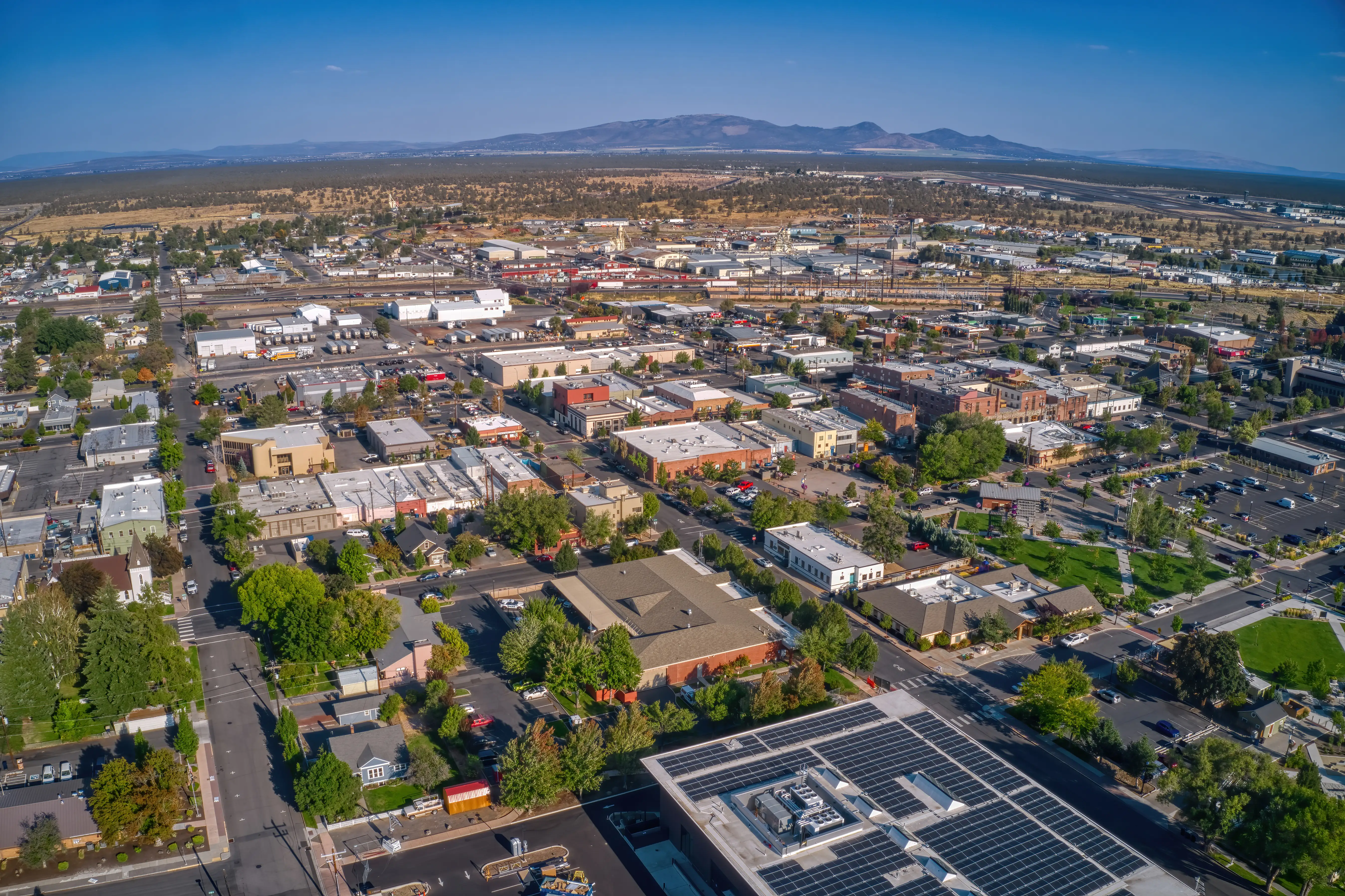
The central tension in Redmond is one that every relocating buyer eventually confronts: you're 25 minutes from one of the most desirable mid-size cities in the American West, but you are not in Bend. That distinction matters more than it sounds. Redmond sits at roughly 3,000 feet elevation on the high desert plateau of Deschutes County, framed by juniper scrubland, the Cascade foothills to the west, and the Ochoco range to the east. The Dry Canyon Trail bisects the city like a green spine, Redmond Airport (Roberts Field) handles regional flights without the chaos of a major hub, and the city's population — now approaching 39,500 — has grown over 16% since the 2020 Census. This is a city in motion, with the infrastructure catch-up to prove it.
This guide will help you figure out whether that trade-off works for your life. You'll get an honest look at the neighborhoods, a clear-eyed read on what Redmond does well and where it falls short, who thrives here and who tends to leave after a year or two, and the specific local knowledge that separates buyers who make confident decisions from buyers who make offers based on Zillow photos and wishful thinking.
Not every city suits every buyer, and Redmond is no exception. The table below cuts through the noise.
| Best For | Why |
|---|---|
| First-time buyers | Median home prices roughly 30–35% below Bend make entry far more achievable; more inventory, bigger lots for the money |
| Commuters to Bend | A consistent 25-minute drive on Highway 97 with manageable traffic outside of peak summer tourism season |
| Families with school-age children | Redmond School District holds a B+ rating, newer neighborhoods like Canyon Rim Village and Obsidian Trails sit close to schools and parks |
| Remote workers | Lower housing costs free up budget; outdoor access (Smith Rock, Dry Canyon, BLM land) is immediate; Redmond Airport offers direct flights |
| Retirees | St. Charles Health System's Redmond campus, single-story inventory in established neighborhoods, Juniper Golf Course, and a quieter pace than Bend |
| Outdoor-focused buyers | Direct trail access from multiple neighborhoods, proximity to Smith Rock State Park, Cline Buttes BLM land, and Cascade foothills |
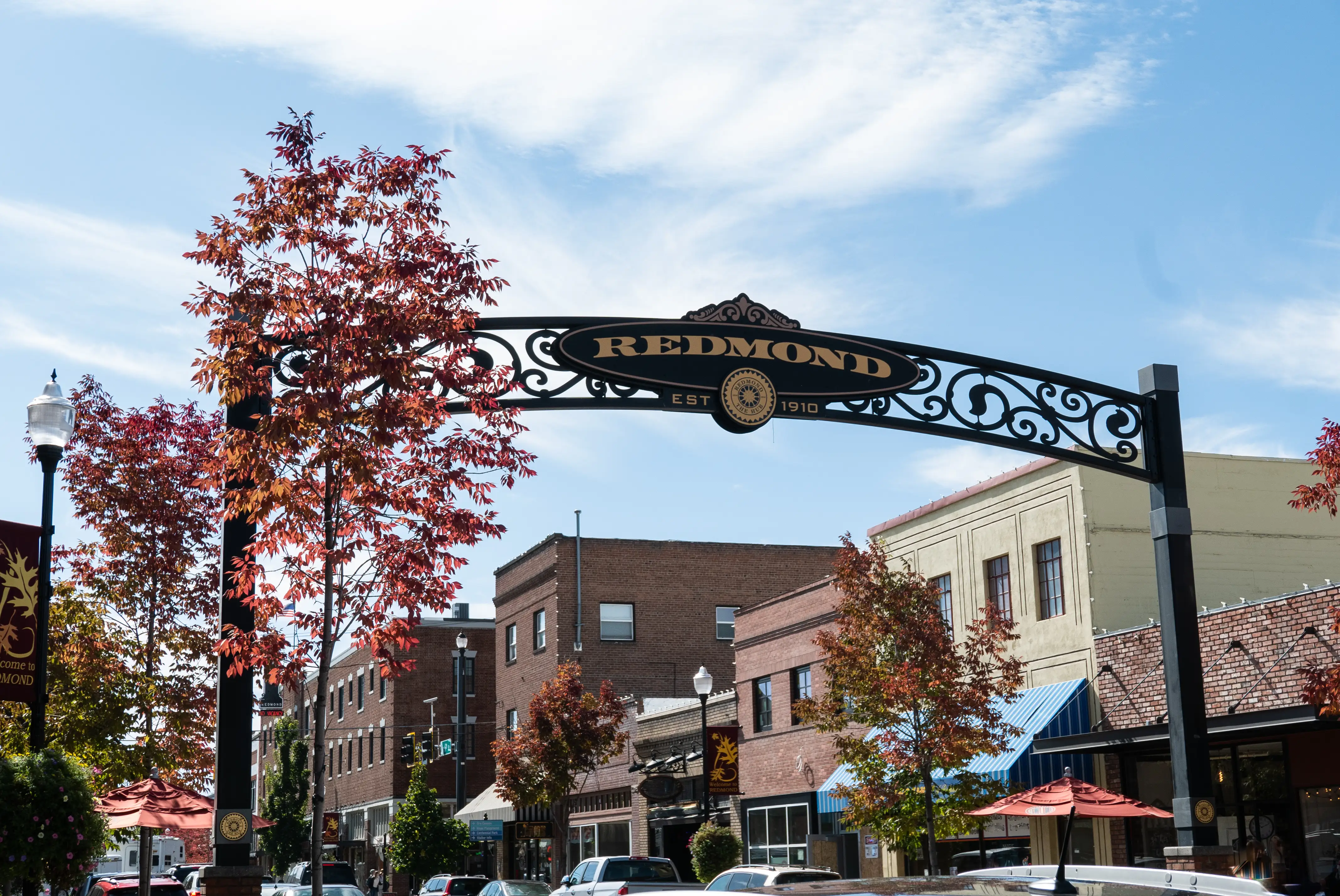
Downtown Redmond — particularly the corridor around 6th Street and the blocks leading toward the historic core — has been quietly reinventing itself. Wild Ride Brewing, Initiative Brewing, and Porter Brewing have anchored an emerging food-and-drink scene that didn't exist a decade ago. Loft apartments have opened above storefronts, and the bones of a walkable downtown are there, even if you still need a car for most errands. The feeling isn't urban exactly, but it's not purely suburban either — it's a high-desert working town that's becoming something more interesting than it used to be.
The commute reality is that Highway 97 between Redmond and Bend flows well most mornings and evenings, with the notable exception of summer weekends when tourist traffic heading south toward Sunriver or west toward the ski resorts backs things up. The 25-minute average holds reliably on weekday mornings. What surprises most people after six months of living here is how rarely they actually go to Bend — Redmond has added enough retail, dining, and services that day-to-day life is largely self-contained. The Redmond Expo Center hosts events year-round, the Cascade Swim Center handles lap swimming and youth programming, and Sam Johnson Park is large enough to feel like a real destination on its own.
The community vibe leans toward working families and longtime Central Oregon residents more than the destination-lifestyle crowd that dominates Bend's identity. Redmond's median age is roughly 36, its median household income sits at approximately $84,000, and the population includes a meaningful share of people who work in healthcare, education, government, and aviation — stable industries that give the city an economic grounding that isn't entirely dependent on tourism or remote-work migration. That stability is something you feel in the city's institutions, its school district, and its public facilities.
One honest friction point: the intersection of Highway 97 and Veterans Way during the evening rush, roughly 4:30 to 6:00 p.m., can stack up in ways that surprise people who only visited on a weekend. If your commute routing takes you through that corridor, give yourself a buffer or find a back-road alternative through the residential streets west of the highway.
The price-to-space equation is the most compelling reason Redmond keeps residents. At the city-wide median, buyers are getting square footage, yard size, and lot dimensions that would be impossible in Bend for the same budget. Newer construction in neighborhoods like Obsidian Trails on the west side brings energy-efficient builds with modern layouts at prices that still leave room for retirement contributions. Redmond lots tend to run larger than what buyers find in comparable Bend subdivisions, and that matters to families who actually want a yard.
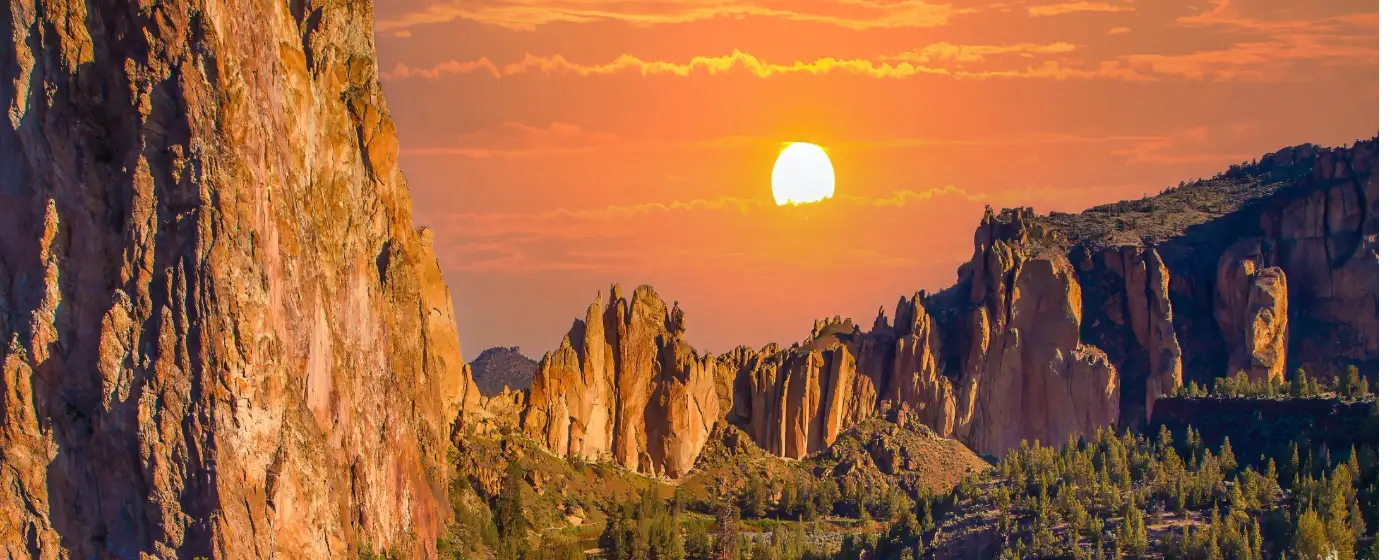
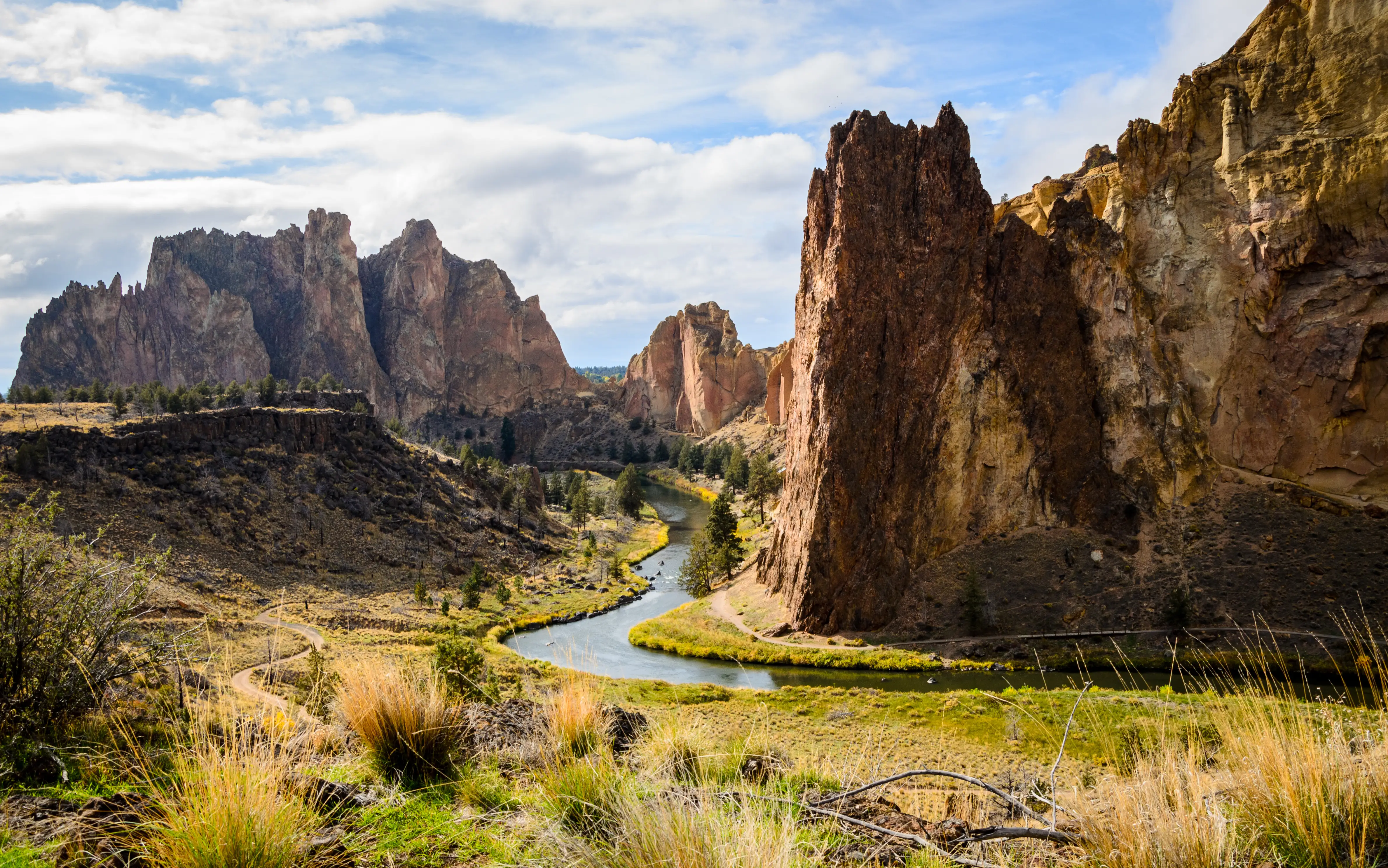
The outdoor access here is genuinely exceptional and often undersold. Smith Rock State Park — one of the most photographed landscapes in the American West — is roughly a 10-minute drive from most Redmond neighborhoods. The Dry Canyon Trail runs through the heart of the city, giving residents an accessible green corridor for running, walking, and cycling without getting in a car. Cline Buttes BLM land borders the city's northwest edge, and the Eagle Crest area opens up into trail systems that connect to larger high-desert riding and hiking. This isn't proximity to outdoor recreation — it's integration with it.
Redmond Airport, officially Roberts Field, handles regular commercial flights through American and United with connections to major hubs. For remote workers or anyone who travels for work, having a regional airport that functions without the chaos of a major metropolitan hub is a quality-of-life factor that doesn't show up in any spreadsheet but absolutely shapes daily life. Parking is easy, security lines are short, and you can leave your house 45 minutes before departure and make your flight comfortably.
The employment base is more diverse and stable than many people realize before moving here. St. Charles Health System operates a significant campus in Redmond, the Redmond Air Center serves as a critical base for aerial firefighting operations that employ year-round staff, Hillsboro Aero Academy trains pilots at the airport, and Consumer Cellular runs a substantial call center operation in town. The Redmond School District and the City itself are among the largest employers. That institutional employment base creates economic resilience that a purely tourism-dependent economy wouldn't have.
Looking to buy in Redmond? Estimate your payment.
Enter your numbers to see an estimated monthly mortgage payment.
Estimate only. Excludes HOA fees and mortgage insurance.
Redmond's restaurant and retail options, while improving, still trail Bend's by a meaningful margin. Buyers who have been living in Portland or Seattle, or even Eugene, will notice the gap. There's no large-format natural grocery — New Seasons, PCC, Whole Foods — and the dining scene, while growing, is centered on a relatively small downtown strip. For specialty items, certain medical specialists, or a wider variety of entertainment options, you're making the 25-minute drive to Bend, which becomes routine and rarely feels burdensome, but does add up in time and fuel over months.
The growth pace is a double-edged reality. Redmond has expanded faster than some of its infrastructure — certain road corridors, particularly on the west side where new development is most active, feel like they're being built around construction equipment rather than completed neighborhoods. Obsidian Trails and other newer west-side subdivisions are still filling in, which means some residents are living next to active build sites. The city is investing in infrastructure to catch up, but buyers expecting a fully realized neighborhood from day one should factor in that timeline.
Why do some people leave Redmond? Commonly, it's the entertainment and cultural gap — young professionals who moved here for affordability find the after-work social scene limited compared to Bend's, and some drift toward Bend proper once their finances stabilize. Healthcare specialists, arts programming, and weekend nightlife consistently pull residents toward Bend, and for people who need those things weekly rather than occasionally, the commute friction eventually tips the scale. It's not a criticism of Redmond — it's a honest read on what the city is and isn't.
Winters in Redmond are colder and windier than Bend in ways that surprise people who only visited during the summer. The high desert plateau sits exposed to weather patterns that blow through with real force, and the juniper-and-scrub landscape holds none of the thermal insulation that forested areas provide. Average January lows drop into the mid-teens Fahrenheit, and wind chill can push those numbers significantly lower. Buyers coming from the Pacific Northwest coast or the Willamette Valley frequently underestimate how different high desert winter feels in practice.
Canyon Rim Village represents some of Redmond's most successful newer development — clean subdivision layouts, newer construction built to modern energy standards, and a location that puts residents close to schools and parks without sacrificing access to the broader city. Prices track close to the city median, and this neighborhood consistently ranks among the most active for both buyers and sellers in 2026. The community feel is genuinely family-oriented, and homes here have been holding their value well through the market's recent softening.
Best for: Families with children who want newer construction, proximity to schools, and a neighborhood that functions as advertised.
The Dry Canyon neighborhood's primary asset is obvious: direct, walkable access to the Dry Canyon Trail, which runs north-south through the city and connects to Sam Johnson Park and the broader green corridor system. Homes here tend to be 1990s and 2000s ranch-style construction on decent-sized lots, with a mix of original and updated finishes. The summer concert series at the community park draws residents out regularly and gives the area a social cohesion that newer subdivisions are still building toward. Inventory is limited because developable land along the canyon is essentially gone, which keeps demand steady and days-on-market short.
Best for: Buyers who prioritize trail access, established neighborhood character, and walkable connections to Redmond's green spaces.
The historic core around 6th Street is Redmond's most interesting neighborhood to watch right now. Vintage architecture and tree-lined streets that connect directly to the emerging brewery and restaurant district give Old Town a character that's genuinely distinct from the newer subdivisions filling out the city's edges. Homes here are often thoughtfully restored rather than gut-renovated, and the walkability to downtown dining and shops is the strongest of any Redmond neighborhood. The catch is what always comes with limited historic inventory: fewer options, faster sales when good homes appear, and a premium for anything in truly turnkey condition.
Best for: Buyers who want walkability, neighborhood character, and proximity to Redmond's emerging downtown food scene.
Fieldstone Crossing delivers a balance of price accessibility and build quality that has made it consistently competitive in Redmond's market. Homes sell quickly and tend to hold value — both markers of genuine demand rather than speculative interest. The neighborhood reflects Redmond's broader approach to planned residential development: serviceable infrastructure, family-friendly layout, and enough density to support nearby retail without feeling overcrowded.
Best for: First-time buyers and families seeking reliable value in a well-established subdivision without the price premium of Old Town or the uncertainty of a still-building neighborhood.
Obsidian Trails is where you see Redmond's westward growth most clearly. Newer construction from active builders, walking paths integrated into the subdivision design, and proximity to open land and schools make this one of the city's most watched addresses. When Redmond saw home prices spike by roughly $16,000 in a single month during mid-2025, it was largely new inventory in neighborhoods like this one meeting buyers who had been waiting for the right entry point. Some sections are still under active construction, so buyers should ask specifically about build timelines on adjacent parcels.
Best for: Buyers who want new construction, energy-efficient builds, and a west-side location with trail access — and who are comfortable with a neighborhood still filling in around them.
The northwest corner of Redmond, anchored by the Eagle Crest area, offers a different lifestyle than the city's core subdivisions. Larger lots back up to Cline Buttes BLM land, Championship golf courses through Eagle Crest Resort (now managed by Grand Pacific Resorts since July 2025) are minutes from the front door, and the overall feel runs quieter and more spacious than most Redmond neighborhoods. This is the area for buyers who want the Central Oregon outdoor experience integrated directly into their backyard without paying Bend prices for the privilege.
Best for: Golf enthusiasts, outdoor-oriented buyers, and retirees who want more space and BLM access without the downtown proximity that drives prices up elsewhere.
Southwest Redmond is a working neighborhood in the best sense — established single-family homes, accessible prices, and a community that's been here long enough to feel rooted rather than transitional. It lacks the trail-adjacent cachet of Dry Canyon or the new-build appeal of Obsidian Trails, but buyers who prioritize value per square foot and proximity to Highway 97 for commuting will find this area worth a serious look. It's not the neighborhood that shows up first in lifestyle marketing, but it performs consistently in the actual market.
Best for: Value-focused buyers and commuters who want reliable access to Highway 97 without paying a premium for address prestige.
Northeast Redmond ties into the established older residential fabric of the city, with a mix of housing stock that reflects decades of organic growth rather than master-planned development. Prices on this side of town tend to run at or slightly below the city median, with more variability in condition and lot size than the newer west-side subdivisions. Buyers willing to spend on updates can find genuine value here, particularly in blocks that have benefited from the downtown revitalization spillover.
Best for: Buyers who are comfortable with older construction and want to be close to Redmond's downtown core and historic district without the limited inventory of Old Town proper.
| City | Best For | Median Home Price | Commute to Bend | Vibe |
|---|---|---|---|---|
| Redmond | Value, space, airport access | ~$480,000–$500,000 | N/A — this is Redmond | High-desert working city, growing fast |
| Bend | Lifestyle, dining, outdoor culture | ~$650,000–$700,000+ | — | Pacific Northwest lifestyle destination |
| Sisters | Small-town charm, mountain proximity | ~$550,000–$600,000 | 25 min west | Arts-and-outdoors village, limited inventory |
| Prineville | Maximum affordability | ~$340,000–$380,000 | 35 min east | Rural, slower-paced, limited services |
| Terrebonne | Rural space near Smith Rock | ~$400,000–$450,000 | 30 min south | Unincorporated, limited infrastructure |
| Crooked River Ranch | Retirement, large lots, quiet | ~$380,000–$420,000 | 40 min | Resort-community feel, minimal walkability |
| Metric | Detail |
|---|---|
| Population (2026 est.) | ~39,492 |
| Median Household Income | ~$84,164 |
| Median Home Price | $501,307 (Zillow Home Value Index); recent sold prices ~$480,000–$500,000 |
| Property Tax Rate | ~0.72% |
| Violent Crime Rate | 2.9 per 1,000 residents |
| Property Crime Rate | 21 per 1,000 residents |
| School District Rating | B+ (Redmond School District) |
| Commute to Bend | ~25 minutes via Highway 97 |
| County | Deschutes |
| Elevation | ~3,077 feet |
| Major Employers | St. Charles Health System, Redmond Air Center, Redmond School District, Consumer Cellular, Hillsboro Aero Academy |
Redmond takes its air operations seriously in a way that shapes local identity. The Redmond Air Center is one of the premier aerial firefighting bases in the Western United States, and during fire season — which can run from June through October — you'll see tankers and helicopters moving through Roberts Field in ways that make a normal Tuesday feel momentarily cinematic. Locals treat this as background reality; newcomers find it genuinely interesting, at least for the first season.
The Cascade Cycling Classic has historically used Redmond as a stage city, and the broader cycling culture in the area reflects that history. The Dry Canyon Trail sees serious riders year-round, and the combination of smooth trail connections and light auto traffic on many residential streets gives Redmond a quiet cycling infrastructure that doesn't always get credit in outdoor recreation conversations dominated by mountain biking in Bend.
Sam Johnson Park and the Dry Canyon corridor host Redmond's summer concert series, a free outdoor event series that draws genuine local attendance rather than the tourist-facing programming that dominates similar events in Bend. It's the kind of thing that tells you a lot about a community's relationship with its own public spaces — people actually show up, week after week, without being imported from elsewhere.
What I would not do if moving to Redmond: I would not buy on the far west side of active construction zones in Obsidian Trails without walking the adjacent parcels and checking the city's current permits. A home that backs up to open BLM land today can back up to a new subdivision road in 18 months, and buyers who didn't ask those questions have been caught off guard. The city is growing fast enough that what feels like the edge of development is often just the current edge — not the final one.
Local Expert Takeaway: If you're choosing between Redmond and Bend and the price difference is more than $150,000 on comparable homes — and it usually is — run the 25-minute commute math seriously before dismissing Redmond. The buyers I've seen thrive here are the ones who treat Bend as a destination rather than a daily necessity. Focus your search on Canyon Rim Village or the Dry Canyon corridor for proven value, and if new construction is appealing, get into Obsidian Trails sooner rather than later — that neighborhood's prices have only moved one direction over the past 18 months.
✅ Redmond delivers genuine Central Oregon living at median home prices roughly 30–35% below Bend — with big lots, newer construction, and a 25-minute commute to everything Bend offers.
⚠️ The trade-off is real: dining, specialty retail, and cultural programming lag behind Bend, and the western growth corridors are still filling in — buy in an established neighborhood if that matters to you.
📍 Smith Rock State Park is 10 minutes away. Not "nearby." Not "accessible." Ten minutes. For outdoor-focused buyers, that proximity alone changes the calculation.
Is Redmond a good place to raise a family?
Redmond holds a B+ district rating through the Redmond School District, and neighborhoods like Canyon Rim Village and Fieldstone Crossing are built around family-oriented infrastructure — parks, schools, and community programming within easy reach. St. Charles Health System's Redmond campus covers pediatric and primary care without requiring a drive to Bend, and the outdoor environment gives families with active kids more room than they'd typically find in a comparably priced Willamette Valley suburb.
What is the crime rate in Redmond?
Redmond's violent crime rate runs at approximately 2.9 per 1,000 residents and property crime at roughly 21 per 1,000 — figures that place it in a moderate range for Oregon cities of similar size and growth trajectory. The city is not crime-free, and as with any growing high-desert community, property crime tends to track with transient population patterns during summer months. Established residential neighborhoods — Old Town, Canyon Rim Village, Dry Canyon — consistently report fewer incidents than commercial corridors near Highway 97.
How does Redmond compare to Bend for someone relocating to Central Oregon?
Bend offers more immediate lifestyle amenities — a broader restaurant and bar scene, more retail depth, and a stronger short-term rental market if that's relevant — but at a price premium that's difficult to justify for buyers whose primary goal is homeownership and long-term stability. Redmond gives you the same access to the Cascades, Smith Rock, and the high desert landscape with a lower entry cost, a quieter pace, and a growing local identity that's becoming more interesting year by year. The buyers who choose Redmond intentionally almost never regret it; the ones who choose it reluctantly, because Bend priced them out, sometimes take longer to settle in.
Explore the full Redmond series: The Ultimate Redmond Relocation Guide · Is Redmond Safe? · Cost of Living in Redmond · Best Neighborhoods in Redmond · Redmond Schools & Family Life · Redmond Youth Sports · Redmond Parks & Recreation · Retiring in Redmond · 1031 Tax-Deferred Exchange in Redmond · Redmond First-Time Homebuyers Guide · · Moving to Redmond from California
Tell us what you need help with and we'll connect you with local resources.

About the Author
Todd Davidson is the founder of Living in Oregon and Living in Washington, where he publishes in-depth city guides, neighborhood resources, and local market insights covering more than 180 communities across the Pacific Northwest. While his background is in home financing and real estate, he created these digital platforms to help families research and compare regions before making a move.