
Central Oregon · Oregon
There's a specific moment most first-time buyers describe: you've been pre-approved, you've toured a dozen homes, and you're standing in the driveway of a house that actually works — right neighborhood, right layout, right price — and suddenly it hits you that this is real. That moment comes sooner in Redmond than in most Central Oregon communities right now. While Bend has pushed median prices into a range that locks out many first-time buyers entirely, Redmond has held a price point where ownership is genuinely achievable, and the city's growth has only made that ownership more meaningful.
The median sold price in Redmond currently sits in the $470,000–$482,000 range, based on closed sales through spring 2026. That number lands very differently depending on what you're comparing it to — it's about 20–30% below what comparable homes trade for in Bend, and it's low enough that a buyer earning the city's median household income of $84,164 can realistically pencil out a purchase with a conventional loan and disciplined savings. What's particularly notable right now is that homes under $450,000 are moving briskly — sales in that segment are up 41% year-over-year — which tells you where buyer demand is concentrating.
This guide walks through everything a first-time buyer needs to navigate Redmond's market: the step-by-step process as it actually unfolds here, what your budget realistically gets you at different price points, what credit and income you need to qualify, and the five mistakes that cost first-time buyers the most in this specific market. If you've been reading general Oregon real estate advice and wondering how it applies to Redmond, this is where that translation happens.
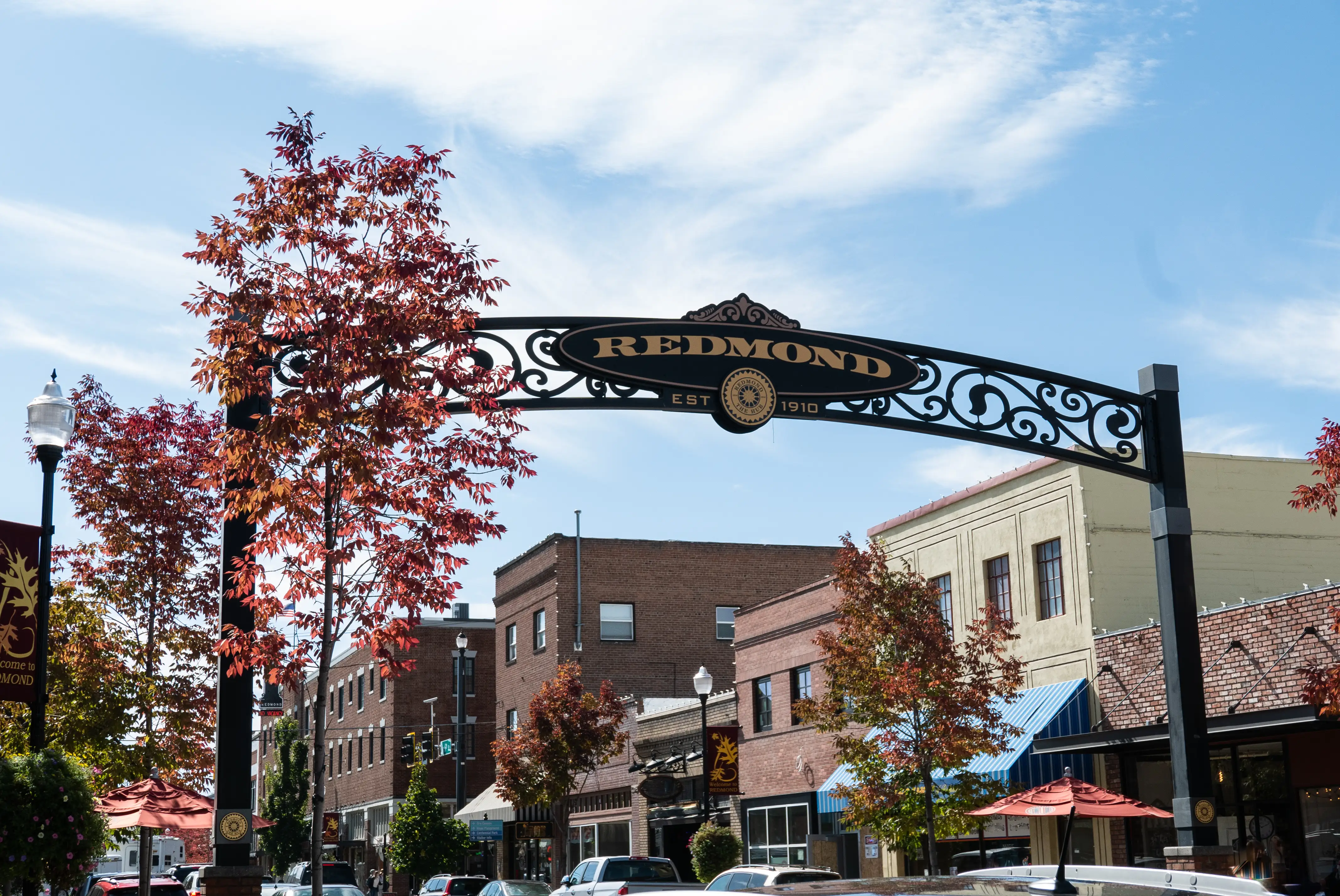
Redmond's case for first-time buyers isn't subtle. You're 25 minutes from Bend, close enough to access its employers, restaurants, and hospital system, while paying significantly less for the privilege of a roof over your head. The Redmond School District carries a B+ rating, the violent crime rate sits at 2.9 per thousand residents, and the city has invested meaningfully in infrastructure — the Dry Canyon Trail, Cascade Swim Center, and Sam Johnson Park give the community a livability quotient that punches well above its price point.
The honest caveat is that Redmond is not a walkable city by design — a Walk Score of 29 means you'll need a car for nearly everything, and buyers who've lived in denser urban environments often underestimate how much that shapes daily life. Entry-level inventory under $400,000 skews toward townhomes, older ranch-style construction, and smaller footprints, so buyers with specific space requirements may find the sub-$400K tier disappointing. The neighborhoods that make the most sense for first-time buyers on realistic budgets are areas like Northwest Redmond, Southwest Redmond, and pockets of the older Dry Canyon-adjacent neighborhoods, where pre-2000 construction still trades at accessible prices and HOA-free lots give buyers flexibility.
Understanding what your money actually buys in Redmond's different price tiers is more important than any general market stat. The table below reflects what closed sales and active inventory consistently show across the city's neighborhoods through mid-2026.
| Price Range | What You Typically Find | Neighborhood Examples | Competition Level |
|---|---|---|---|
| Under $350K | Older manufactured homes with land, fixer-upper ranch homes pre-1985, small lots in transitional areas | East Redmond, older pockets near 6th St | Low — motivated sellers, condition trade-offs |
| $350K–$450K | Entry-level townhomes, 800–1,100 sq ft new construction, 1990s–2000s single-family homes | Northwest Redmond, SW Redmond, Cinder Butte Village | Moderate — strongest first-timer volume here |
| $450K–$550K | Clean 3-bed/2-bath single-family homes, newer construction, some Craftsman-style finishes | Fieldstone Crossing, Obsidian Trails, Canyon Rim Village | Moderate to high — competitive, move-in ready |
| $550K–$650K | Larger footprints, newer builds, better finishes, established neighborhoods | Greens at Redmond, Northwest Redmond newer sections | Lower buyer volume but well-priced for quality |
| $650K+ | Multi-acre parcels, upscale two-story homes, Eagle Crest resort community | Eagle Crest, Cline Falls, rural edges of Terrebonne | Limited competition, different buyer profile |
The $350K–$450K tier is where most first-time buyers in Redmond spend their time — and rightfully so. Townhomes in this range often come with modern finishes and lower maintenance demands, while older single-family homes in Northwest and Southwest Redmond give buyers land and privacy that attached product can't offer. The sweet spot that agents frequently mention is the $400K–$470K range in neighborhoods like Obsidian Trails and Fieldstone Crossing, where newer construction delivers value that simply doesn't exist at that price point in Bend. If you're stretching toward $500,000, the quality jump is meaningful — you're looking at 3-bedroom homes with updated kitchens, attached garages, and neighborhoods that photograph well when it's time to resell.
| Step | What Happens | Typical Timeline | What First-Timers Get Wrong |
|---|---|---|---|
| Get finances in order | Pull credit, pay down revolving debt, stop opening new accounts | 1–6 months before buying | Waiting until they "feel ready" — starting early saves thousands |
| Pre-approval | Lender reviews income, credit, assets; issues a letter | 1–5 business days | Getting one pre-approval instead of comparing at least two lenders |
| Find an agent | Interview 2–3 buyers' agents with Redmond-specific transaction history | Before active searching | Working with whoever answers the phone first |
| Active search | Touring homes, understanding what's realistic at your budget | 2–6 weeks depending on market | Falling in love with homes listed $50K above their approval |
| Making offers | Competitive written offer with earnest money | Same day to 24 hours in hot conditions | Offering list price assuming that's "safe" — closing data tells a different story |
| Under contract | Seller accepts, timelines start for inspection, appraisal | Day 1–3 | Not reading the contract deadlines carefully enough |
| Inspection | Licensed inspector reviews the home; buyer reviews report | Typically days 5–10 | Waiving inspection entirely to compete — risky on older Redmond construction |
| Appraisal | Lender orders appraisal to confirm value | Days 10–21 | Not understanding what happens if appraisal comes in low |
| Final walkthrough | Confirm condition before closing | 24–48 hours before closing | Skipping it — things can change between inspection and close |
| Closing | Sign documents, wire funds, receive keys | 30–45 days from acceptance typical | Not having closing funds wired 24 hours early |
Redmond's market has tightened faster than many first-time buyers expect. Homes are selling in around 26 days on average as of spring 2026 — down from 45 days the prior year — which means the leisure of extended deliberation is mostly gone. Earnest money norms in Deschutes County typically run 1%–2% of the purchase price, so budget $4,700–$9,400 in good-faith funds for a home near the median. Buyers waiving inspection is less common here than it became during the 2021–2022 frenzy, but on older ranch homes and pre-2000 construction — which represent a meaningful share of sub-$420K inventory — skipping inspection is a risk that regularly comes back to bite buyers after keys change hands.

Looking to buy in Redmond? Estimate your payment.
Enter your numbers to see an estimated monthly mortgage payment.
Estimate only. Excludes HOA fees and mortgage insurance.
Conventional loans require a minimum 620 credit score, but 620 and 740 are not the same experience. On a $420,000 loan, the difference between a 650 credit score and a 740 can be three-quarters of a percentage point in rate — which translates to roughly $200 more per month. Over 30 years, that's more than $70,000. Getting your score above 740 before applying isn't optional homework — it's one of the highest-return financial moves you can make in the months before buying.
FHA loans open the door at 580 with a 3.5% down payment, or as low as 500 with 10% down, though most lenders apply overlays that push the practical minimum to 620. The downside of FHA is mortgage insurance that stays for the life of the loan unless you refinance — on a $450,000 purchase, that adds roughly $300–$350 per month to your payment that isn't building equity. It's a real trade-off worth modeling before you commit to the FHA path.
On income: using the 28% front-end debt-to-income guideline, qualifying for a $400,000 home requires roughly $6,800–$7,200 in gross monthly income, or about $82,000–$86,000 annually. A $450,000 home bumps that to approximately $93,000–$97,000, and a $500,000 purchase approaches $103,000. DTI — your total monthly debt payments divided by your gross income — is often the number that surprises buyers more than credit score. Your car payment, student loans, and credit card minimums all count, and lenders typically want your total DTI below 43%–45% for conventional loans. Clearing down high-balance revolving debt before applying often improves qualification more dramatically than any other single action.
Mistake 1: Treating list price as the ceiling. In Redmond's $400K–$500K range, homes are frequently closing at or modestly above asking, particularly in Fieldstone Crossing and Obsidian Trails. Buyers who budget exactly to a list price and leave no room for competing offers often lose homes that were squarely in their range — then wonder why.
Mistake 2: Skipping inspection on older ranch homes. Redmond has substantial inventory of 1970s–1990s ranch-style construction — solid bones, affordable prices, and occasionally serious deferred maintenance. Older HVAC systems, original electrical panels, and aging roofs are common enough in this housing stock that buying without a full inspection is genuinely risky. The $400–$600 inspection fee has saved more than a few buyers from five-figure surprises.
Mistake 3: Not understanding school district boundaries. Redmond School District serves the city, but neighborhood proximity to specific elementary schools affects resale values in ways that don't always show up in a Zillow search. Buyers in the western growth corridors sometimes assume they're buying into one school boundary when they're actually in another. This matters most to families planning for the long term — and to the buyers you'll eventually sell to.
Mistake 4: Shopping at the top of their qualification number. Being approved for $530,000 doesn't mean $530,000 is a comfortable payment. Property taxes at roughly 0.72% of assessed value, homeowner's insurance, and any HOA dues stack on top of principal and interest. Many first-time buyers in Redmond find that the payment on a $480,000 home feels significantly different from what the pre-approval letter implied, because qualification math doesn't factor in lifestyle expenses.
Mistake 5: Waiting for prices to fall. Redmond prices are down year-over-year heading into mid-2026 — but buyer competition in the sub-$450K tier is increasing, not decreasing. That 41% volume increase in lower-priced sales means more buyers are chasing the same inventory. Waiting for a further price correction while rates stay elevated often means competing with more buyers for fewer homes, not fewer.
Northwest Redmond is the neighborhood most first-time buyers discover first for good reason. Newer construction, walkable street layouts within the neighborhood itself, and pockets of attached townhomes and smaller single-family homes give buyers options in the $380,000–$470,000 range. Areas around Cinder Butte Village offer like-new finishes at prices well below what comparable product sells for in Bend's northwest growth corridors.
Obsidian Trails and Fieldstone Crossing sit in Redmond's newer development zones and appeal to buyers who want move-in ready homes without the uncertainty of older construction. Expect to compete for well-priced listings here — these neighborhoods attract both first-time buyers and people downsizing from larger homes — but the $420,000–$490,000 range delivers quality that resells well.
Southwest Redmond offers a mix of price points that works for buyers who need flexibility. Older homes in this area can be found under $400,000, and the neighborhood's proximity to Highway 97 makes commutes toward Bend or Prineville reasonably manageable. It's not the flashiest entry point, but buyers who prioritize land and space over finishes often find more per square foot here than anywhere else in the city.
Dry Canyon-adjacent neighborhoods, particularly those within a few blocks of the trail system near Canyon Rim Village, offer a different value proposition: walkable access to one of Redmond's signature outdoor amenities combined with a mix of housing vintage. Older homes near the canyon edge require more due diligence, but buyers willing to do a careful inspection often find strong value — and the trail access makes for a compelling resale story.
✅ Redmond's median sold price of $470,000–$482,000 makes it one of the most accessible first-time buyer markets in Central Oregon — 20–30% below comparable Bend properties.
⚠️ The sub-$450K segment is Redmond's most competitive price tier right now, with year-over-year sales volume up 41% — have your pre-approval ready before you fall in love with a house.
📍 Northwest Redmond, Obsidian Trails, and Southwest Redmond offer the most realistic entry points for first-time buyers at today's prices, with a mix of new construction and established neighborhoods.
Can I buy a home in Redmond as a first-time buyer?
Yes — Redmond is genuinely one of the more accessible markets in Oregon for first-time buyers in 2026. With median sold prices in the $470,000–$482,000 range and active inventory in the $350,000–$450,000 segment growing, buyers who are pre-approved and realistic about their budget can find solid homes, particularly in Northwest Redmond and Southwest Redmond.
How much do I need to buy my first home in Redmond?
At the $450,000 price point with a conventional loan and 5% down, you're looking at approximately $22,500 for the down payment plus closing costs typically running 2%–3% of the purchase price — so budget $31,000–$36,000 in total cash to close as a reasonable working estimate. FHA loans allow 3.5% down at 580+ credit, which lowers the down payment but adds mortgage insurance to your monthly payment for the life of the loan.
What credit score do I need to buy a house in Oregon?
Conventional loans require a minimum 620, though scores of 680 and above unlock meaningfully better rates. FHA loans are technically available starting at 580 for 3.5% down. The practical reality is that buyers who take 6–12 months to improve a 620 score to 720+ often save enough in interest over the loan term to outperform even the most generous assistance programs.
Explore the full Redmond series: The Ultimate Redmond Relocation Guide · Is Redmond Safe? · Cost of Living in Redmond · Best Neighborhoods in Redmond · Redmond Schools & Family Life · Redmond Youth Sports · Redmond Parks & Recreation · Retiring in Redmond · 1031 Tax-Deferred Exchange in Redmond · Redmond First-Time Homebuyers Guide · · Moving to Redmond from California
Tell us what you need help with and we'll connect you with local resources.

About the Author
Todd Davidson is the founder of Living in Oregon and Living in Washington, where he publishes in-depth city guides, neighborhood resources, and local market insights covering more than 180 communities across the Pacific Northwest. While his background is in home financing and real estate, he created these digital platforms to help families research and compare regions before making a move.